Welcome to Ben Greenfield’s Weekly Roundup!
In this weekly post, I share with you my most interesting discoveries of the week, including the latest news on the fronts of fitness, nutrition, health, wellness, biohacking, and anti-aging research. I also recap my upcoming events and special announcements so you can keep up with opportunities to learn, giveaways, discounts, and more!
New Discoveries
Want to Build More Muscle? Stop Doing the *Same Exercises* Over & Over (+ How to Deload Without Losing Gains) 💪🏋️
If you’re trying to build muscle, repeating the exact same exercises week after week can mean you’re leaving some growth on the table.
One interesting study put 22 detrained young men through nine weeks of resistance training, with one group repeating the same exercises and another varying exercises for the same muscle groups. Both groups grew muscle, but the variety group increased muscle thickness at every site researchers measured along the thighs, biceps, and triceps.
The group repeating the same exercises failed to show significant growth at two of those sites.
Why? A muscle doesn’t necessarily grow uniformly from one exercise. Different movements, joint positions, and angles can emphasize different regions of the same muscle.
So strategically varying your exercises can help produce more complete hypertrophy compared to hammering the same movement pattern over and over.
For time efficiency, one of my favorite ways to do this is with supersets that train the same general muscle group from different angles. Think dumbbell bench presses paired with incline pushups, close-grip pullups paired with lat pulldowns, or reverse lunges paired with walking lunges.
All of that said, the study was small, lasted only nine weeks, and involved detrained men, so I wouldn’t take it as evidence that endless “muscle confusion” is superior.
Instead, think strategic variety: keep enough consistency to progressively overload your muscles while using different exercises and angles to provide slightly different stimuli.
And while we’re talking about smarter resistance training, here’s another strategy I use when my body is telling me it needs a break: the deload week.
A new Strength & Conditioning Journal review recommends planned deloads roughly every four to eight weeks depending on your training cycle and recovery needs, or when fatigue and performance start heading in the wrong direction.
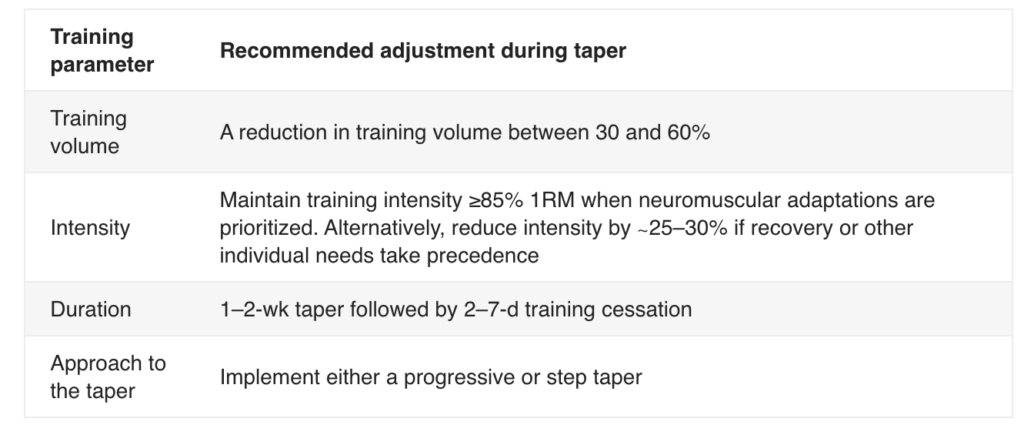
A deload doesn’t necessarily mean sitting on your butt for a week. It involves reducing your training volume and intensity while generally maintaining your normal training frequency. The authors suggest cutting volume based on how much recovery you need, backing off load or staying farther from failure, and typically deloading for about five to seven days.
If you’re dealing with extreme fatigue, that’s when reducing frequency or taking a few days completely off can make more sense.
If you’d like a personalized workout and recovery plan, you can head to Triumph Coaching to book a free strategy call.
And if you want to learn more about building muscle, breaking through training plateaus, and recovering smarter, check out some of my related strength, hypertrophy, and workout resources below:
- How to Banish Frustrating Fitness “Plateaus” with Science-Backed MINIMUM Effective Dose Exercise (+ the *Ultimate* Blueprint for a Boundless Body).
- Functional Forever: My Top Tips For Maintaining & Building Muscle, Strength, Energy, and Confidence With Age.
- The Ultimate “Body Weight Only” System For Building Athletic & Resilient Bodies, With Foundation Training’s Dr. Eric Goodman and Jessie Salas.
- Ancient Spartan Training Secrets, The Most Biologically Badass US Presidents, Who Was *Really* The Greatest Athlete Of All Time & More, With James Pieratt.
- How To HACK Plant Protein For Muscle Building, How *Little* Can You Train To Maintain Muscle (& A Sauna Strategy For Muscle), The Best Time To Take Melatonin, & More! Solosode #482.
- The Truth About Zone 2 Cardio, Mitochondrial Health & How REHIT Beats It (In Less Time!) With Ulrich Dempfle.
Nothing Fixing Your Sleep? Two Unconventional “Reset” Protocols I’ve Used 😴🌙
If you’ve tried all the usual sleep hacks and still can’t seem to get your circadian rhythm back on track, here are two more advanced strategies I’ve personally experimented with and used with clients.
One is a roughly 20-day course of the peptide Epitalon, which has been investigated for potential effects related to the pineal gland and melatonin production. My personal protocol has been around 500 micrograms, sourced from Peptual (you can use code BGL10 to save 10%).
The other is a 30-day high-dose melatonin protocol, typically around 200 milligrams taken orally or via suppository, which I source from MitoZen (code BEN saves you 5%).
I use these as either/or approaches, not together, and consider them advanced protocols rather than everyday sleep supplements.
P.S. This isn’t medical advice. A 200 mg dose of melatonin is extremely high compared with doses typically studied for sleep, and Epitalon isn’t an established treatment for insomnia, so this is something I’d discuss with a qualified healthcare professional rather than experiment with blindly.
And if you’re concerned about recent headlines linking melatonin to heart problems, I recently broke down the study behind those claims, what it actually found, and why the results aren’t as clear-cut as they sound. You can listen to my full take in this recent podcast episode.
It’s Official: Boundless Is HERE & Ready to Stream 🔥 🎬
After years in the making, Boundless: The Man Who Became Human is officially available to stream on Apple TV and Amazon.
For two decades, I measured nearly everything I could about my body and performance. I built my life around optimization, longevity, better biomarkers, and pushing the limits of what a human being could do.
And a lot of it worked.
But Boundless is about what none of those numbers could measure, and what that relentless pursuit nearly cost me.
The film follows my journey from extreme self-optimization and physical mastery to a much deeper reckoning with my family, relationships, faith, purpose, and what a life well-lived actually looks like.
Losing my father and nearly losing my family forced me to confront a question no protocol, wearable, blood test, or biohack could answer: What are you optimizing for in the first place?
So if you know me for biohacking, fitness, or longevity, you may be surprised by this film. It’s ultimately less about mastering your body and more about everything that mastery can’t reach.
Watch Boundless: The Man Who Became Human now on Apple TV or Amazon.
This Week in Health & Performance: What the Latest Research Says
🦵💪 Injured One Side? Keep Training the Other: Your brain and nervous system can transfer some of the benefits of training one limb to the opposite side, a phenomenon known as “cross-education.” In a new randomized trial of people recovering from ACL reconstruction, adding six weeks of training for the non-operated knee to standard rehab led to significantly greater improvements in function of the operated knee. Pretty cool reminder that an injured limb doesn’t necessarily mean you should stop training its healthy counterpart (full study here).
⏰🥑 Does Intermittent Fasting Mess With Your Hormones? A new meta-analysis of 15 randomized trials found that fasting and calorie restriction had largely neutral effects on reproductive hormones, with no consistent evidence of widespread hormonal disruption. But there’s an important caveat: much of this research involves people with overweight or obesity, so I’d be cautious about applying the findings to lean, highly active people, especially women. In my opinion, this isn’t a green light for athletes to start piling on long fasts (read the full study).
😴❤️ Does Melatonin Really Increase Heart Failure Risk by 90%? A large observational analysis found that people with chronic insomnia and documented long-term melatonin use had higher rates of heart failure and death over five years. But the study relied on electronic medical records rather than directly measuring actual melatonin intake, couldn’t account for insomnia severity, and may have misclassified OTC users as nonusers. In countries where melatonin requires a prescription, documented users might also represent people with more significant sleep problems to begin with. In other words, this study shows an association, not that melatonin caused the increased risk. I unpack this one in much more detail in this recent podcast episode (read more about the analysis here).
🔴🩸 Can 15 Minutes of Red Light Blunt a Blood Sugar Spike? In a small human study, researchers exposed participants to 670-nm red light for 15 minutes before an oral glucose tolerance test. Compared with placebo, red light reduced the overall rise in blood glucose over the following two hours by nearly 28% and lowered the maximum glucose spike by 7.5%. This is intriguing early evidence that photobiomodulation may influence glucose metabolism, although larger studies are needed (full study here).
Key Takeaway: Keep training what you safely can during injury recovery, don’t assume fasting affects every population the same way, be skeptical of scary observational headlines about supplements, and keep an eye on red light therapy as researchers uncover potential benefits that extend beyond recovery and skin health.
Want to dive deeper? Click the links above to explore the research, and click here to follow me on X for all the latest health and performance news hot off the press!
Product Of The Week
::: Neck & Shoulder Tension? Try This Wearable + Get $50 Off ⚡:::
Tension is an edge killer, and most people do nothing about it. It chips away at how freely you move, how clearly you think, and how much you’ve got left to give to your work, training, and the people who matter.
Your neck gets tight, your shoulders hunch, your lower back starts acting up. And then you do what most people do: you keep going. You sit through the meeting, finish the drive, push through the work, and tell yourself you’ll stretch, recover, and deal with it later.
But later often becomes never.
The Harmoniq Limitless Neckband is one solution. Open the app, choose the Relief blend, put on the Neckband, and feel your energy change as the tension that blunts your edge starts to ease.
The neckband is designed to relieve everyday tension that stacks up from desk time, travel, stress, and long days that don’t let up. It isn’t an injury treatment or a substitute for medical care when pain is persistent, but it’s there when you need it, whether mid-afternoon, during travel, or after exercising.
Less time carrying tension means more time moving freely, thinking clearly, and staying sharp.
Podcasts I Recorded This Week:


The Man Who Coined AGI: How To Actually Solve Aging With AI, With Ben Goertzel
The Latest Content I Was Featured On This Week:
Am I Biohacking? ft Ben Greenfield | The Golden Hour #203 w/ Chris D’Elia & Erik Griffin
Ben Greenfield: Stop Over-Optimizing Your Health! Here’s What Actually Matters | The Bossticks
He Sent His Kids Off Into the Wilderness At 16 | Momentum Shift w/ Antonio Vaglica
Why And How To Max Out Every Area Of Your Life | Myron Golden
Biohacking Isn’t the Answer — Ben Greenfield | B Dr Elie
Master Biohacker Teaches Me the Secrets to Optimization | Bryan Callen
Health Hacks Big Pharma Doesn’t Want You To Know — Biohacking Roundtable | Modern Wisdom
Ben Greenfield | 2miles with Giacomo Sanvitale
Why I Stopped ‘Biohacking’ and Started Living | The Dr. Hyman Show
My Article Feed:
My full article feed and all archives of my articles are here.
This Week’s Most Popular Instagram Post:
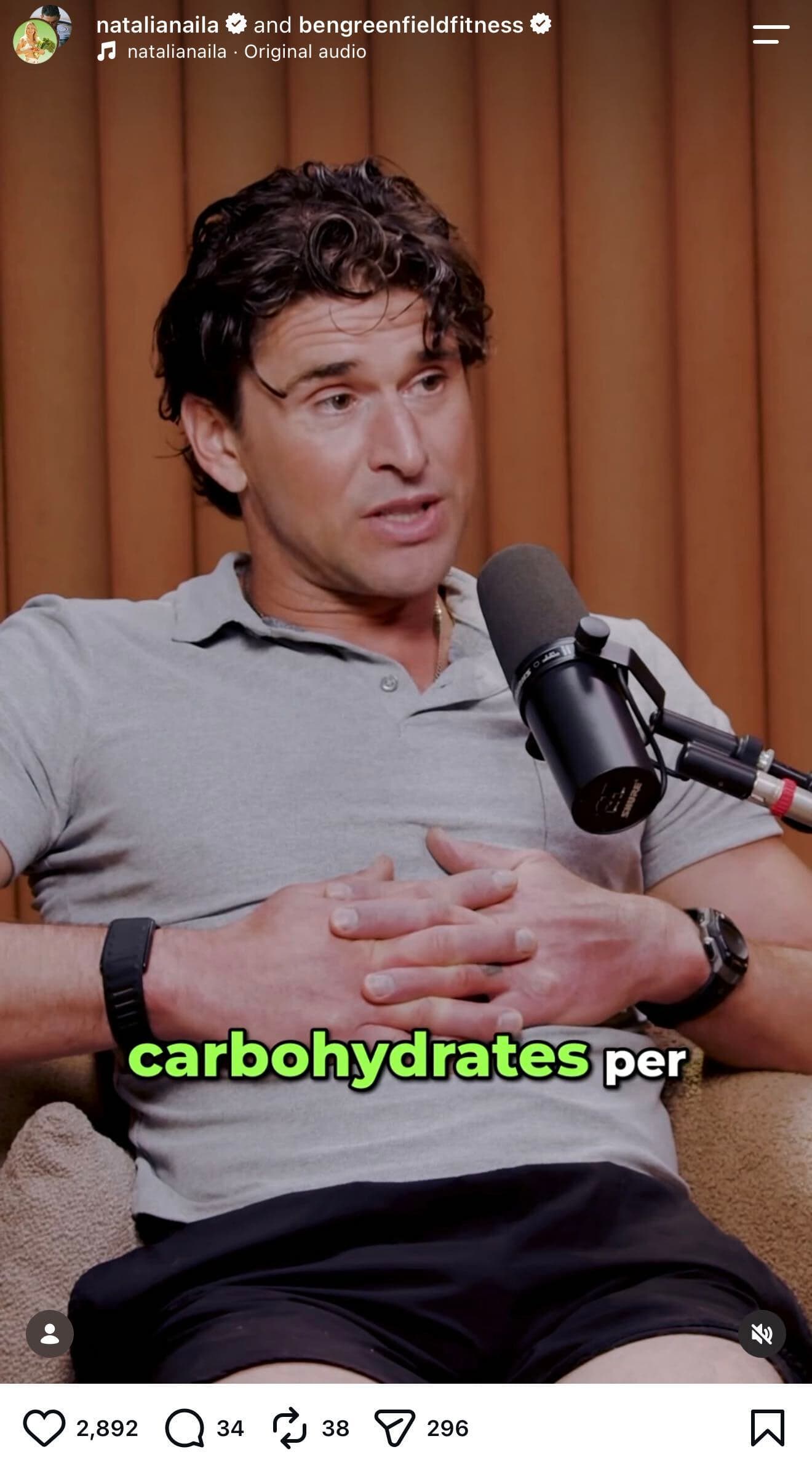
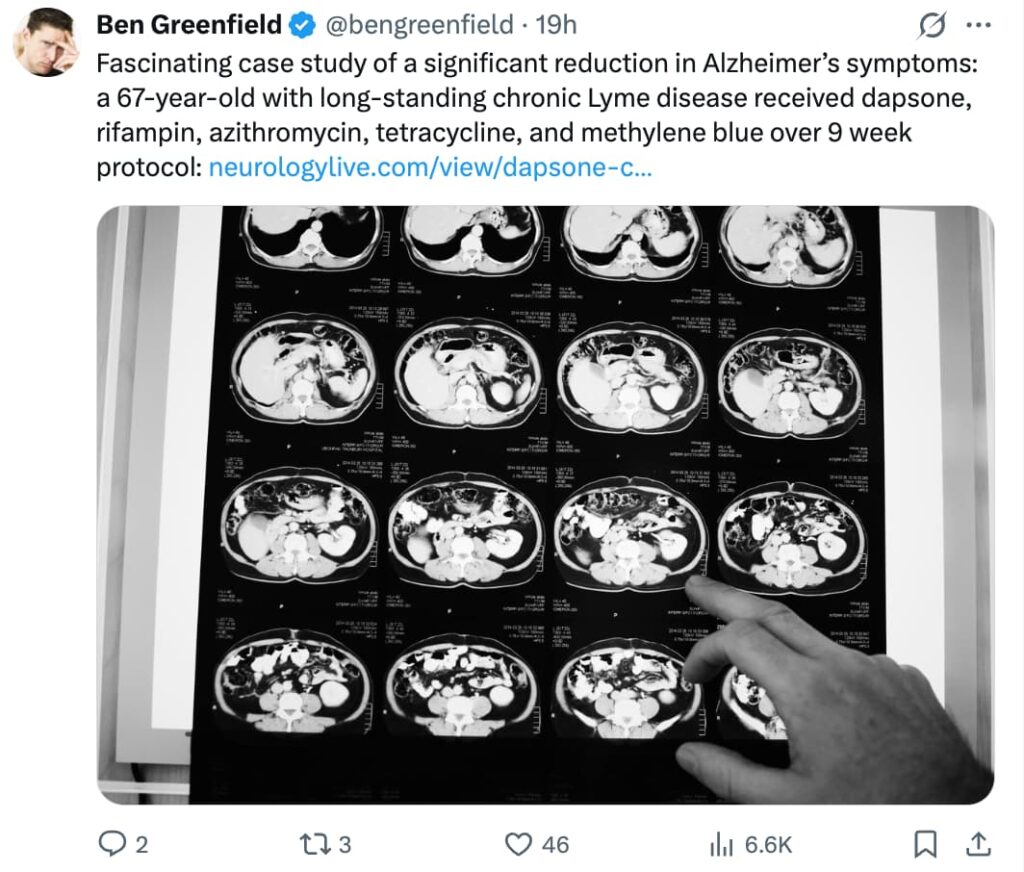
This Week’s Most Popular Tweet:
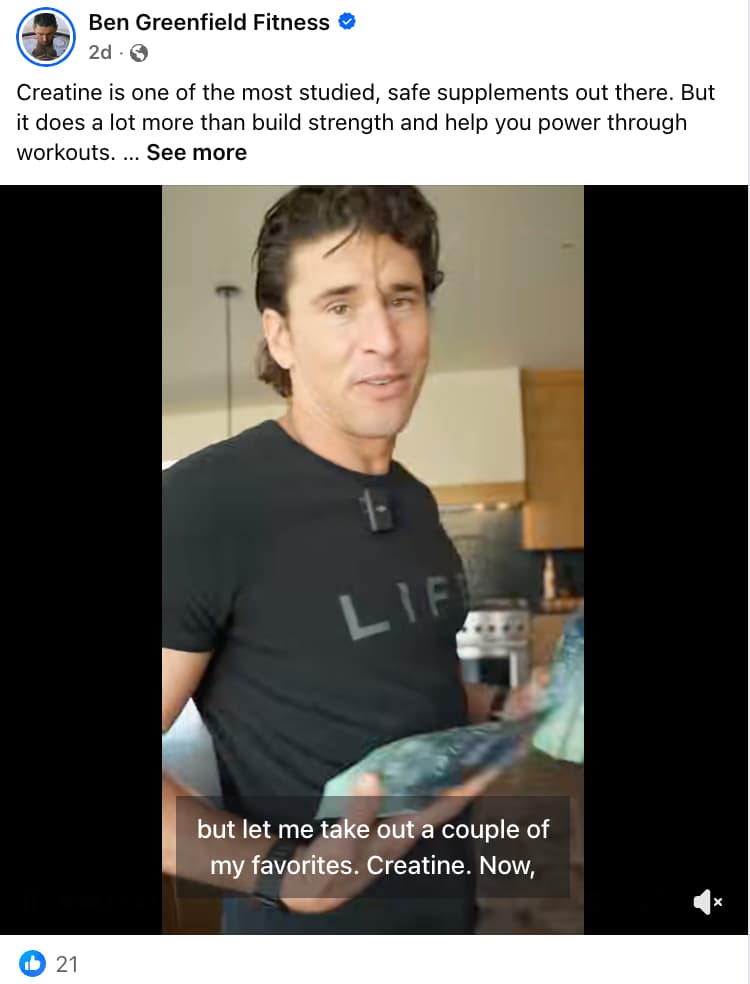
This Week’s Most Popular Facebook Post:
Cheers,
Ben