Home » Podcast » The Little-Known “Throwaway” Gland That Is CRITICAL For Immunity (& The Unexpected Peptides To Support It) – With Abud Bakri

The Little-Known “Throwaway” Gland That Is CRITICAL For Immunity (& The Unexpected Peptides To Support It) – With Abud Bakri

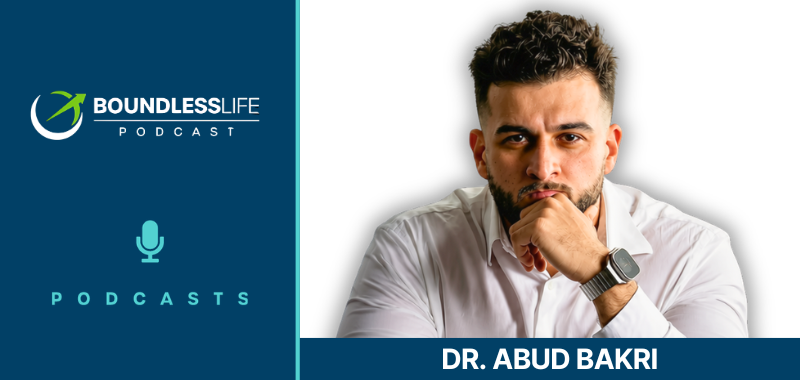
Boundless Life Podcast promotional graphic featuring guest Dr. Abud Bakri, a man with short dark hair and a beard, resting his chin on his hand, wearing a white button-up shirt and a smartwatch, against a white background. A dark blue sidebar on the left displays the podcast logo, a microphone icon, and the word ‘PODCASTS,’ with ‘DR. ABUD BAKRI’ labeled in a blue banner at the bottom right.

Listen on:

Reading time: 6 minutes

What I Discuss with Dr. Abud Bakri:

  • How a myostatin mutation (a gene that normally caps muscle growth) let Dr. Abud Bakri deadlift 500 pounds three months into training, and why it raised his injury risk…01:33
  • Why he saw immunity falling in his hospital patients, why the thymus shrinks after puberty, and the Nature study tying a healthier thymus to lower mortality…04:31
  • Why birth control and testosterone replacement therapy may shrink the thymus, possible links to autoimmunity and polycystic ovary syndrome, and why Korean eunuchs outlived other men of their era…09:24
  • The thymus biomarkers worth tracking, from a Prenuvo MRI to your lymphocyte-to-monocyte ratio and your helper-to-killer T cell ratio (CD4-to-CD8 ratio), which feed into immune health grades…11:36
  • Why thymulin (a zinc-dependent hormone made only by the thymus) drops before blood zinc does, the mouse study where it calmed age-related inflammation and made tumors respond better to immunotherapy, and the thyroid link…14:24
  • Thymosin alpha-1 for hepatitis, why thymulin’s half-life is too short to use directly, and the Russian thymus extract Thymalin, tested in hospitalized COVID patients and a longevity study of older adults…17:31
  • Whether eating sweetbreads (the thymus gland, served as food) does anything, how Vladimir Khavinson found organ-specific peptides, and why oysters beat a zinc pill…21:57
  • My bedtime stack of injectable epitalon and oral Pinealon (two sleep-supporting peptides), the vivid dreams his patients report, and how peptide bioregulators survive digestion…25:58
  • Whether natural killer (NK) cell treatments help clear the lingering infections that keep your thymus small, and why he shines red light on his sternum, where the thymus sits…30:38
  • The melanocortin peptide bremelanotide (PT-141) and its weight loss trial with tirzepatide, and why he takes BPC-157 (a body protection compound peptide) at 40 times my dose for injuries…34:48
  • The overlooked thymus and testicle link, the rat study where adding thymulin to human chorionic gonadotropin (hCG, a fertility hormone) raised testosterone, and why poor immunity may blunt testosterone-boosting drugs…40:31
  • How epitalon, high-dose melatonin (use code BEN10 for 10% off) and elamipretide (SS-31, a mitochondria-protecting peptide) may support fertility, and why nonstop stress shrinks ovarian and thymus tissue…43:32
  • How lipopolysaccharide (LPS, a gut bacterial toxin) shrinks the thymus, and Abud’s gut stack of KPV (lysine-proline-valine), an anti-inflammatory peptide (use code BGL10 for 10% off), lactoferrin and colostrum…45:52
  • The red flags he watches for before anyone injects a peptide, how poor light habits can undermine epitalon’s effect on sleep, and his epitalon trick for jet lag…47:45

In this episode, I sit down with internal medicine physician Dr. Abud Bakri to talk about the thymus, the small gland on top of your heart that trains your immune system and starts shrinking as soon as you hit puberty. You’ll hear what speeds that shrinkage up, from birth control and testosterone therapy to chronic infections and stress, and which blood markers give you a window into how your thymus is doing, including your absolute lymphocyte count, CD4 count, and CD4-to-CD8 ratio.

We get into thymulin and zinc, thymosin alpha-1, the Russian thymus extract Thymalin, and whether eating sweetbreads does anything at all. You’ll also hear about my bedtime stack of epitalon and Pinealon, why he uses red light on his sternum, where the thymus sits, the surprising link between the thymus and testosterone, the peptides he uses for injuries and gut issues, the ones he’s watching for fertility and weight loss, and the red flags to check before you inject anything.

Dr. Abud Bakri is a board-certified internal medicine physician and a graduate of the University of Colorado School of Medicine. He cares for complex, long-running cases with a focus on cardiometabolic and hormonal health. His work lives in the parts of medicine most visits rush past: circadian timing and sleep, peptides, hormones, and metabolism. He reads the whole picture of a patient’s day, energy, and patterns alongside their labs. He’s the Medical Director at The Systems, a performance and longevity medicine practice. You can find more of his work on his website and follow his writing on his Substack.

Abud’s free Calibrate plan can also walk you through building your own daylight and sleep schedule.

Episode Sponsors

Hiya: Give your kids the full-body nourishment they need to grow into healthy adults. I’ve secured a special deal with Hiya on their best-selling children’s vitamin. Get 50% off your first order today! To claim this deal, you must go to hiyahealth.com/BEN (it is not available on their regular website).

Tecton Ketones: Tecton Ketones deliver bioidentical D-beta-hydroxybutyrate (BHB), the same ketone molecule your body naturally produces during ketosis, providing clean cognitive support, stable energy, and performance without the conversion step required by many ketone precursors. Visit tectonketones.com/ben and use code BEN for 16% off your first order.

Timeline: Give your cells new life with high-performance products powered by Mitopure, Timeline’s powerful ingredient that unlocks a precise dose of the rare Urolithin A molecule and promotes healthy aging. Mitopure now starts at $79 when you visit timeline.com/BEN.

Qualia Stem Cell: Qualia Stem Cell is a science-backed supplement designed to support your body’s natural repair system by enhancing stem cell function, helping you recover, renew, and maintain healthy tissues as you age. Taken just four days per month and formulated with premium, clinically supported ingredients, it’s an easy way to support long-term healing and vitality. Visit qualialife.com/boundless and use code BOUNDLESS for 15% off.

Manukora: You haven’t tasted or seen honey like this before, so indulge and try some honey with superpowers from Manukora. If you head to manukora.com/ben or use code BEN, you’ll automatically get $25 off your Starter Kit.

Episode Resources

People

Companies & Products

Podcast Episodes

Studies & Research

Articles Referenced


Upcoming Events:

A4M LongevityFest | December 10–13, 2026 | Las Vegas, Nevada

I’ll be speaking at A4M LongevityFest this December, joining more than 150 experts and 10,000+ clinicians for one of the biggest events in longevity, regenerative medicine, and cutting-edge health science. I’ll be presenting two sessions: Leveling Up the Human Machine: Biohacker Insights on Peptide Therapies and Systems Over Symptoms: Building the Resilient, Regenerative Human. If you’re interested in the latest biohacking innovations, peptide therapies, and strategies for optimizing health and performance, I’d love to see you there! Check out the full event details at A4M LongevityFest.

The Manzo x Ben Greenfield Table Private Dinner | Throughout 2026

If you want to taste one of the world’s rarest cuts of beef and experience my North Idaho biohacking compound firsthand, my family and I are hosting The Manzo x Ben Greenfield Table, an intimate, chef-catered VIP dinner on a few limited 2026 dates. The evening includes biodynamic wine, a live cooking demo, a multi-course Piedmontese feast finer than Wagyu, and a night of deep sleep in an EMF-free, fully grounded, circadian-optimized guest room. Anyone who reserves a half or whole Piedmontese bull from Manzo qualifies for a spot, so reserve your allocation and dinner here.

Stay tuned for future updates—and you can always keep up with my LIVE appearances by checking out bengreenfieldlife.com/calendar!

Do you have questions, thoughts, or feedback for Dr. Abud Bakri or me? Leave your comments below, and one of us will reply!
Ben Greenfield

My name is Ben Greenfield, and on this episode of the Boundless Life Podcast

Dr. Abud Bakri

That's the big concern is that the combined estrogen progesterone birth control is simulating really pregnancy. The concern is what if this is shrinking the thymus earlier for these ladies and that's maybe contributing to this autoimmune disease risk in ladies? And on top of that, is that contributing to the risk of PCOS and all these other conditions? No one has a good answer, but I'm kind of sounding the alarm bell. I'm like, people should be looking at this because we're putting millions of young girls on these treatments without really telling them that there are some risks.

Ben Greenfield

Welcome to the Boundless Life with me, your host, Ben Greenfield. I'm a personal trainer, exercise physiologist, and nutritionist, and I'm passionate about helping you discover unparalleled levels of health, fitness, longevity, and beyond. My guest on today's show is Dr. Abud Bakri. He's a board-certified internal medicine doctor, a graduate of the University of Colorado School of Medicine. And he's a he's an active practicing physician, but he also has a deep knowledge of circadian timing, sleep, peptides, hormones, metabolism. I recently had a chance to get to know him a little better and decided I really wanted to interview him about one of his areas of expertise, the thymus. So Brace yourself. we're gonna talk about some stuff we haven't discussed before, some cool stacks, some cool peptides. bengreenfieldlife.com/thymuspodcast is where the show notes reside. Let's go talk with Abud. Abud, dude, we just hung out in Washington DC, which is pretty cool.

Dr. Abud Bakri

Yeah. We should have done this person now.

Ben Greenfield

Yeah, well, well, I actually, yeah, we probably could have. we didn't have better things to do. I usually like my ears perk up when I hear somebody who's done podcasts before who kind of knows what they're talking about, but then like I could kind of tell you practice what you preach because you look like you're, you know, pre fit, you maintain some muscle. So have you kind of like been into fitness parallel to getting into medicine or how did the two co evolve?

Dr. Abud Bakri

I think fitness led me to medicine actually. I was you know bodybuilder power lifter before I was a doctor. computer powerlifting. Yeah, I used to have the state deadlift record in deadlift in Colorado when I was in med school. So

Ben Greenfield

interesting. Yeah. Wow. Crazy. is so you were bodybuilding and powerlifting starting when?

Dr. Abud Bakri

Like sixteen, seventeen years old.

Ben Greenfield

Wow. what do you mean when you say like that got you into medicine?

Dr. Abud Bakri

Yeah, like you know, the physiology, the anatomy of it all, like studying the body, trying to optimize both the aesthetic proportions, the physical mass. And then when I discovered that I had the mystat mutation, that made me realize that like there's there's there's a whole genetic component to this muscle game.

Ben Greenfield

You have the myostat mutation.

Dr. Abud Bakri

I have heterozygous for the Mysat knockout, so

Ben Greenfield

Interesting. Okay, so for people who don't know what that means, explain.

Dr. Abud Bakri

Yeah, so myestan is a protein secreted that limits the amount of muscle you make. So if you've seen those really muscular cows, you probably have seen them around. They have a double knockout of that gene. So men in my family on my father's side, there's about fifty percent of them have this gene, so they're very muscular and built, despite not really lifting weights. but when I did start lifting weights, it like, well, like three months in five hundred pound deadlift wasn't a big deal. So it's interesting little thing. But it also comes with a higher injury risk when it comes to your ligaments and tends

Ben Greenfield

Yeah, I was gonna say, like, there's gotta be a downside somewhere because you hear about like I don't know, there's like guys who are like big and inspirational, like Tony Robbins, for example. I know he has some kind of a pituitary growth hormone gigantism thing going on. And I interviewed him and he said he gets a lot of joint pain from that. So it's not all, you know, not all just pure muscle without any side effects. So for you, it's higher risk of injury.

Dr. Abud Bakri

Yeah, yeah. So like when I did jujitsu, I tore my ACL pretty easily, actually, unfortunately. So that was unfortunate. But like cardiometabolic markers, like I could be eat whatever almost and my A one Z is gonna be like four point nine, my lip is gonna be pretty good. Wow. So it's interesting.

Ben Greenfield

Yeah. That's super cool. For people listening, the hemoglobin A1C of four point nine is good. that's kind of like a snapshot of a running multi month level of your blood glucose values. So that's super interesting. I did not know that about myostatin knockout. So do you still lift?

Dr. Abud Bakri

Yeah, yeah, it's a left. less aggressively nowadays, but more s for ma maintenance of you know, health and aesthetic yeah goals.

Ben Greenfield

Yeah. Yeah. You know, when it when I met you at that dinner that we were at a couple weeks ago, I had come across your name before. I think on a podcast somewhere where you were kind of like positioned as the peptide guy. Yeah. and I kind of assume that's that was your general area of expertise. But then you started filling in on thymus. Yep. and what it does and how important it is. And Why that's one of your key areas of interest. And I was like, dude, we should do a podcast about the thymus because I've never really kind of unpacked that in detail before. So I would love to open that up. so first of all, is this indeed like your area of specialty? Like, do you work with people who have thymus issues or where did that come into the picture?

Dr. Abud Bakri

I'm an internal medicine doctor, so I see patients in the hospital. I admit patients from the floor, to the floor, rather, and to the ICU from the ER. what I started noticing over the last you know six, seven years is that people's lymphocyte counts was lower, people had less immunity. A lot of my colleagues and myself, like you know, 21, 22, we started getting sick, seven times a winter, which was not normal by any means. So I started investigating this. I had the interest in peptides, been in the peptide space for quite some time, and a lot of the peptides are thymus-derived peptides. But what is a thymus? We don't really learn about it. No one really hears about it. It's kind of this ignored organ. And until recently, people kind of considered it a vestigial organ. I don't really buy the vestigial organ. For the audience, vestigial organ means an organ that we no longer need, the appendix and other parts of the body. But it is an important organ that grows with you until you hit puberty and then starts to shrink. So it's one of the first organs that actually tend tends to age before your other organs catch up. Sure.

Ben Greenfield

So when you when you say shrink, that's synonymous with aging?

Dr. Abud Bakri

Yep, yep. So like as soon as you hit puberty, the testosterone, estrogen, progesterone will start to involute or shrink the thymus down. And it starts out as this giant tissue on top of your heart. And then within a few years, you start having smaller and smaller and smaller amount. By the time you're seventy, eighty, you have a couple of specks left in the fat on the chest.

Ben Greenfield

Hmm. Interesting. So why is that like from a biological standpoint that puberty or hormones would cause a shrinkage of the thymus?

Dr. Abud Bakri

Yeah, no one has a good answer about why it exists like evolutionarily to logically. There's some fonts, maybe number one, for another time period that the thymus shrinks is during pregnancy, and that allows the mother's immune system not to attack the growing baby inside of her. So theoretically you can have a poetic look at it and say that we have our actual longevity is through our offspring. And in order to have offspring, we have to sacrifice some of our own immunity. The other explanations could be that like it's such an energy demanding tissue, like it takes a lot of energy. to produce those lymphocytes and to train the immune system. And we can say that, you know, after puberty, these lymphocytes that are created in the thymus can last fifteen, twenty years and biology didn't doesn't seem to optimize for a longer lifespan.

Ben Greenfield

Okay, got it. So it's almost like a resource allocation type of thing where early in life you really need to have training wheels on your immune system and then eventually the thymus shrinks and you still get effects from it for fifteen to twenty years afterwards.

Dr. Abud Bakri

Yeah, at least and then s some people they'll get into old age and still have larger thymuses. This nature paper came out this year just it was kind of a landmark paper, and it showed that on CT scans, and you could do this on MRIs, people that had larger thymuses could be could have less mortality and morbidity across a number of different diseases. And there was a there's a correlation between chemotherapy and immunotherapy outcomes related to thymus size.

Ben Greenfield

Okay, so I know a lot of people right now, including me, would be thinking like, Well, wouldn't it be good then to figure out ways to avoid shrinkage of the thymus? Yes. So you get some of the health and longevity benefits that you just described. Right. But then also my brain asks, you know, kinda like the myostatin thing, like what could be the downside of that?

Dr. Abud Bakri

Right, right. And I think that there's a there's a no free lunch in biology, let's say. I think the goal is to preserve thymic size. there are there are some trials going on about growing thymuses. so far there isn't a negative signal. Like I could imagine that there could be thymomas. Those are those are tumors of the thymus that are associated with certain autoimmune diseases. and then is there a concern for like a T cell lymphoma? Because the T cells are being trained in the thymus. Could there be, you know, you muck around with biology and you get thymic damage? But I think we have accelerated thymic involution that's happening in modern living. 'cause it's really a let's call it a place where your whole biological systems aggregate together and you can kind of get a readout system of what's going on. Your hormones, your lifestyles, your kid and rhythms, nutrient status plays a big role. We can kind of unpack all that. But all these different systems kind of funnel into the thymus.

Ben Greenfield

Well, I know one thing that is rampant is the use of birth control, which I know has an effect on hormones and women are using that at an earlier age. Would that be one of the issues?

Dr. Abud Bakri

Yeah, that's the big concern, is that the combined estrogen, progesterone, and birth control is simulating really pregnancy for the these young ladies that are avoiding getting pregnant. But the concern is what if this is shrinking the thymus earlier for these ladies, and that's maybe contributing to this autoimmune disease risk in ladies. The autoimmune diseases are much more common in the females compared to males. And on top of that, is that contributing to the risk of PCOS and all these other conditions? No one's has a good answer, but I've I'm kind of sounding the alarm bell. My people should be looking at this because we're putting millions of young girls on these treatments without really telling them that there are some risks.

Ben Greenfield

Yeah, has there ever been a study that looked at like prevalence of autoimmunity in women specifically who have been on birth control versus those who have not?

Dr. Abud Bakri

I don't think so. I've looked for that. I haven't found that study, but if I would be hard to see that. Yeah.

Ben Greenfield

Yeah. What else besides birth control?

Dr. Abud Bakri

Yeah, so th the thymus shrinks in response to all hormones, really. that's the estrogen, progesterone, t R T. So eunuchs actually have very large thymuses. Those are guys that are castrated before puberty. This was done in mo pre modern times for slavery and it was done for singing capacity because eunuchs have they can keep their voices that they had in for longer times, right? Right.

Ben Greenfield

See, the secret to American Idol finally revealed.

Dr. Abud Bakri

But the interesting thing is there was a study came out that showed that eunuchs had about a fifteen year mortality benefit. So they lived about fifteen years longer than the average man. Now, that's not a worthwhile trade for us. We're not gonna go snip. Not worth it. No, not gonna snip for that purpose. So but the question is TRT affecting thymuses? Because a lot of men they have low testosterone. We tr we love testosterone and when we treat patients to get them, you know, back into action, but is that decreasing

Ben Greenfield

Probably not worth it.

Dr. Abud Bakri

their immunity and having a longevity signal. So far doesn't seem to be a negative longevity effect to T R T, but those studies are short and we don't have like a twenty, thirty year follow up to see what's actually going on.

Ben Greenfield

Yeah, how would you know, by the way, you know, when you when you say something like TRT could affect immunity via its effects on the thymus, how would you know? Like what kind of biomarkers are you looking at? or are you literally talking about just like MRI to analyze involution?

Dr. Abud Bakri

Yeah, so the you want to look at the thymus from both a functional perspective and a anatomical perspective. So when we have our patients, we'll pull up their pinuvos usually and then try to find the thymus on the on the different MRI slices and see if we can find the size. We're working on trying to get a vibe coded app to kind of just measure it for us. But that's one thing. The other thing is looking at what does the thymus do? The thymus creates some hormones. those are thymus one, thymulin, those peptide hormones, but it also trains the lymphocytes. So When somebody has a low lymphocyte count, there's multiple associations with morbidity and mortality that comes with that, especially when it comes to cancer risk. so that's an important thing to look at. There's the lymphocyte to monocyte ratio. So everybody's got a CBC before. When you get a differential, they kind of have lymphocytes, monocytes, neutrophils, all these different cell counts. You can almost type up any disease and put lymphocyte to monocyte ratio, and you'll get a cor a correlation between low lymphyte to monocyte ratio and increased risk. of mortality, morbidity with that disease, whether that's next to diabetes, cancers, dementia even.

Ben Greenfield

Okay. I'll what I'll do in the show notes for those of you listening in, if you didn't track all of that, if you go to Ben Greenfield Life.com slash thymus podcast, I'll put some of the biomarkers that Abu just dropped, just in case you want to take a look at your own labs.

Dr. Abud Bakri

other one to mention too, I think, sorry to cut you off, is the C D four to C D eight ratio. So the C D four to C D cells are the T cells that are trained by the thymus to last you your whole lifetime. HIV, for example, lowers both of those cell counts. there's an there's an immune health grade. This is like they did a large study of multiple thousands of people and they created four immune health grades based on your C D four to C D eight ratio. So you have your lymphocytes, and amongst your lymphocytes you have your T cells, your B cells, and your NK cells. So the amongst the T cells, those go down into C D four and C D eight. the C D four to C D eight, if you have a greater than eight hundred C D four and a ratio of C D four to C D eight above one, that's considered an immune health grade one, which is associated with less mobility and mortality as you age. and as you get older, those shift down to IHG two, immune health grade two, three, and four. And the four is the worst one there. hasn't really caught on to like, you know, modern medicine or even the longevity of the alternative medicine space. But I think that's gonna be an interesting biomarker to track, especially post pandemic.

Ben Greenfield

Okay, so the correlation would be a trending lower C D four to C D eight, right?

Dr. Abud Bakri

Ratio. Yep, yep. Okay. You want that above one and then you want the C D four count above eight hundred to be considered a the top level there.

Ben Greenfield

Okay, so we have hormonal issues like birth control and TRT. You had mentioned I forget if you said nutrient or micronutrient status.

Dr. Abud Bakri

Yep. So the thymus makes a peptide hormone called thymulin, and that's not to be conf confused with thymulin, which is everyone online will confuse those and we can unpack that.

Ben Greenfield

Is it is it is it a U and an A time mulin and time?

Dr. Abud Bakri

Yes, thymulin is a nine amino acid peptide secreted by the thymus. It's only made by the thymus. So some of these other thymus peptides you people might have heard of, thymusin alpha one, thymus and beta four, are made in the thymus, but also can be made peripherally. But thymulin is only made by the thymus and requires zinc to be active. now what they found in animal models is bet before blood levels of zinc even get low, if you deprive the animal of zinc and then check their blood levels. Their serum thymulin levels will drop off before the serum zinc levels by like three, four, six months. So the first marker actually of zinc deficiency would be thymulin levels, but we don't have clinical assay publicly available to check thymulin levels. That's why zinc sufficiency is a very important part of the immunity. You hear people talk about zinc for immunity, and when you have a cold, take zinc, and really it's about not being deficient in zinc. So you have this thymulin hormone that's

Ben Greenfield

Yeah.

Dr. Abud Bakri

That trains yes, that trains lymphocytes. It makes N K cells work better. It they did a animal study just earlier this year where they did immunotherapy for cancers in animals, and where they gave them thymulin on top of the immunotherapy, they had much better outcomes. 'Cause I mean the immune cells work better.

Ben Greenfield

Okay, and there really is no good way to test for thymulin.

Dr. Abud Bakri

Nope, nope, no one's developed that. We're talking to some people to see if the that can be developed. but it's a very interesting thing because that's like an actual functional metric of how much levels you have. And that thymulin levels also track very closely with your high fifteen year old and then goes down twenty, thirty, forty, fifty and

Ben Greenfield

Okay, okay. Got any other nutrients you can think of beyond zinc?

Dr. Abud Bakri

Yes, it's gonna be the critical one. the other nutrients is going to be more indirect, like argy there's a whole arginine link to thymus metabolism, nitric oxide synthase, and the immune cells themselves, so they require a lot of arginine. There's some talk about like is there's this creatine help out with thymus and immunity in general. That seems to be a trending topic. but zinc is gonna be the key one. the all the other nutrients are gonna be reported on any thyroid nutrients because of its indirect effects on the thymus. Now There is a paper that showed that there is a positive correlation between T3 and T4 levels and thymulin levels, in that because the thymus is such an energetically demanding tissue, if you have sufficient thyroid activity, you have better thymus activity.

Ben Greenfield

Okay. From a semantic standpoint, is i is there really a link between the reason that they're named Thyroid and Thymus that the names are f are similar?

Dr. Abud Bakri

They come from a similar embryonic development. They come from this embryonic cleft together, so they that the thymus is named after the thyme tree, 'cause the plant actually. The plant is it's kinda shaped like a thymus, so they named it that way. the thyroid is isn't is not named for that, but they do have an embryonic similar development, but otherwise no kind of link there.

Ben Greenfield

Okay, got it. Now, now a couple of times the idea of peptides have come up, and people when they hear words like thymus, they might think of thymolin, which is a peptide that you can get. And I'd love to hear you explain what these are. Thymusin alpha one is another one. those are the two that I can think of. Yeah, yeah, thymus support. Yep. Yeah. so when it comes to peptides, what role do they play potentially in thymus support?

Dr. Abud Bakri

Yeah for water. Yeah, so when it comes to peptides, we'd look at let's let's look do the thymus peptides and then go zoom out and like look at other peptides that might influence the thymus indirectly. The thymus peptides are interesting. Thymulin is too short of a half-life. Like you'd have to inject a lot of it. Now, th this animal model did show that there was positive effects. There's no human models to show that thymulin injectable would be useful. there are there are some oral formulations that seem to maybe multiply lymphocytes in the gut tissue, because about 70% of your lymphocytes hang out in your gut after they leave the thymus. So that may be an interesting Path to take. Now thymosin alpha-1 is a twenty one amino acid peptide that is immune stimulatory. It stimulates the lymphocytes to kill infections more appropriately. It can be used as a support tool for like hepatitis B and hepatitis C. It's it's not approved as an FDA drug in the US. It has orphan drug status in the US, which is another topic. But in other countries it's actually used as a treatment for thymus for hepatitis B and hepatitis C, also as an adjuvant treatment to certain other infections.

Ben Greenfield

But right now that is a peptide that people would only really get through like research use only websites.

Dr. Abud Bakri

Yeah, so some of those compound pharmacies still make it, although they're not s supposed to be making it. they still will get us. A lot of doctors still prescribe it in these like longevity clinics. but RDUO companies is where they're they're getting thymosin alpha-1. Thymusin beta four and then its fragment TB five hundred, which is the five hundred Dalton fragment thymusin beta four, was just moved was just voted to be moved because it's thanks to some of our friends that were in DC from category two do not compound list to category one. Okay to compound. but that move hasn't officially happened at the FDA just.

Ben Greenfield

Yeah, it hasn't manifested yet. You still can't go to like a telemedicine website and get thymusin T B five hundred or the precursor is what, thymusin beta four?

Dr. Abud Bakri

Yeah, Thompson four is a big peptide and yeah T B five is a small one.

Ben Greenfield

Okay. All right. So we've got those two. Any others?

Dr. Abud Bakri

Yeah, th there's the Russian polypeptide mix that's called thymulin. So thymulin is a they took young cows, like these calves, and they took their thymuses when they were still at the peak and they ground up the thymuses and then extracted thirty, forty different peptides from the thymus and then made that into an injection. That's an FDA or whatever the Russian FDA is proof drug in Russia that's used to treat diseases. And it's actually was studied during the pandemic as a treatment for hospitalized patients during the during the COVID. outbreak and had positive effects. That one's an interesting one because it has maybe thirty, forty different peptides that seem to stimulate the immune system, increase lymphocytes, and also make you more resilient to infections.

Ben Greenfield

And that one's also that would be R U O in the US research use only.

Dr. Abud Bakri

not even REOs. So RUO sites will list fine melon, but they're actually selling you fine mulin they're they don't know what they're talking about. fine melon is a polypeptide mix that has to come from a there's like there's one in Belarus, one in Ukraine, and one in Russia that actually make this as a as a pharmaceutical. So you have to get cows, you have to like tip their thymuses out and do this whole extraction process. So REO sites don't have the actual goods. It has to come like in a box from Russia, in Russian language that has it. So you'll find vendors online that. Try to sell it. There's a bunch of oral thymus extracts, kind of similar thing that exist. But the thymelin actually studied, you know, human trial, people complain about peptides, there's no human studies. Thymelin has 40 years of human studies. In fact, probably the longest longevity study ever done was on epitelon, a pineal peptide and thymelin. epithelamine, technically, epithelon. Epithalamine is the big pineal grand extract, and thymelin is the peptide extract from the thymus. Together that had a fifteen year study for nursing home patients where they had a two X less mortality risk amongst different diseases with that combination.

Ben Greenfield

W was that a like a Russian study? Interesting. Yeah, it seems like a lot of these longer term human studies are coming out of Russia.

Dr. Abud Bakri

Yes, yes. If we if we if we believe their data, but they seem pretty reliable.

Ben Greenfield

Yeah. Yeah. Okay. So I mean, this talk about like grinding up the gland or producing something like thymolin kind of makes me think of this idea of like supports like, right? So whatever Rocky Mountain oysters or bowl testicles to increase testosterone or maybe having some liver for liver support. I've even heard, and you might know more about this than I do, about like amino acid tracer studies that have actually proven this might have some legitimacy to it. But specific to the thymus gland, and feel free to comment on just the whole idea of likes and what's like, anyways. would it make sense to eat what's commonly called in the culinary industry, sweetbreads, but that's basically just like thymus glands?

Dr. Abud Bakri

Yeah, yeah. So the like sports like is called organotherapy. It's like how do you take organs and use them for therapeutic effects? we use organ therapy for like thyroid, like people that have thyroid disease, they take desiccated thyroid. And there's pharmaceutical preparations of that, like arbor thyroid and NP thyroid for that. Now, if you ask me five years ago, I'd be that's kind of crazy. There's no way that eating the liver is gonna help your liver. But Vladimir Kavanson, the doctor in Russia that discovered thymelin and maybe twenty other peptide extracts, he f showed. that within these extracts, there are specific organ-specific peptides in each of these extracts that have seem to have positive effects on each organ system. So he actually has liver peptides that come out of liver that seem to actually make the effect. So it's not necessarily that you take liver and then there's a magical woo that fixes your liver. There's actually peptides within the liver that are two, three, four amino acids that could be orally available that would then has support liver health or restore, whatever it may be. Interesting. For example, fine melon The polypeptide mix has phylon, thymogen, and chrystogen. Those are two or three amino acid peptides that seem to on their own have some clinical effects. they've been sold as supplements in Russia for quite some time. But like for example, Vylon seems to activate I L2 and kind of prune senescent lymphocytes and then increase healthy lymphocytes. So there's there's an interesting theory of like, hey, life supports like, for example, you mentioned the oysters. There are peptides in oysters to increase the ability to absorb zinc. So that's why taking oysters and eating them would be a far better way to get your zinc levels up and increase testosterone. And we'll we'll dive into why thymus and testosterone are linked from the testicle side. But the oyster peptides would be better than taking it like a zinc supplement, although if you don't like oysters, then you can still get the stuff.

Ben Greenfield

Yeah, yeah, as my son say, nature's pretty neat. Yes. the idea of like these small peptides that go to specific organs kind of brings to mind for me the idea of peptide bioregulators. Yep. You know, I see these around these and they're typically like oral capsules that you take that support specific organ groups. Is that kind of a similar idea of what we're talking about?

Dr. Abud Bakri

That's that's that's it. Yeah, Vladimir Cavinson is the originator of the bioregulator peptides. the first ones he made were the thymus and the pineal gland x polyextracts. He then the so like in Europe, people for 100 years or so, they were injecting organs into different people. Like they would take testicles and inject it into people and they would get a virility boost and they'd do all these different things. He kind of took the next step because he kind of studied what are the actual effects of these organ tissues and what's causing this effect. Is it the peptide extracts and when he when he For example, took the pineal gland and ground it up. He could restore the sleep cycle of you know submarine guys and pilots and astronauts and all these things. Then he kind of isolated what is the active ingredient in this peptide extract that's causing that. And then he found the four amino acid peptide epitalon, which is kind of popular in longevity circles nowadays. But that he showed that was causing the increase in melatonin production and the restoration of the circadian rhythm. So that he's the father of the bioregular.

Ben Greenfield

That's interesting. And it agrees with what I've experienced subjectively. And obviously this is an anecdote, but I'm right now getting some of the best sleep scores of my life. just like knocked out eight hours. And when I travel, I use higher dose melatonin and CBN, which is kind of like a Cambodyl extract that's Pretty good for sleep as like an anxiolytic. And that works really well when I travel. But at home, I've started to do a small dose of epitalon, about 500 micrograms, and a couple capsules of this pineole bioregulator, this pineal. And doing I'm doing that like 30 to 60 minutes before bed. I would love to hear your feedback on this. You know, if you think it's just in my head or if this really has some legitimacy to it. Like I am sleeping so well with this stat.

Dr. Abud Bakri

Yeah, no, I'm on the epitallon penilon stack too. it's it's amazing. Epitalon is interesting because it's orally bioavailable, it seems. The injectable seems to be more effective at systemic effects. What we found is that oral epitallon probably doesn't go systemic, but it increases melatonin production in C2 locally in the

Ben Greenfield

And by the way, I'm doing the epitalon as injectable and then the pinny allen I'm doing that as an oral capsule.

Dr. Abud Bakri

Yeah, yeah. So the epitalon, what I've noticed is the injectable works really good for circadian issues. Before I travel, I take some epithalon when I get on a reset and use epithalon. I share your high dose melatonin for travel that's a good protocol. the pineleon is only three amino acids. It's called penilion, but it doesn't actually come from the penile band. It actually comes from the cortex. There was a Russian drug called cortexin. It's like the cousin of cerebral lysin, which are ground up brains of animals. He found Dr. Cavinson found this biregulator called Penelion. I don't know why he named it Peneleon, despite not coming from the Penilion. Their naming conventions are very confusing, as you've seen with the thymulin and the thymulin. But Pineleon is a cerebral cortex biregulator, and it's well studied for its effects on improving brain function, improving brain function under stress, and brain metabolism. what we've noticed is amongst almost like seventy, eighty percent of our patients is that anyone put on Peneleon, they have like a 50 to 60% improvement in the REM sleep. So I'm I'm seeing guys that are getting twenty and a half, three hours of REM and very vivid, like my friend called it, like eight K dreams from the Pinelon. So the one-two combo of epitallon and pinilon is a pretty effective stack at like boosting your sleep because you're getting circadian rhythm effects of the epitalon with the brain performance effects of the Pinelon. And like w when we talk to a patient, I asked them, like, do you dream? How vivid are your dreams? Do you have like colorful dreams? Because that's kind of my marker of what's your brain doing? Because if your brain's not producing dreams, I know it's not producing the right amount of chemical concoctions during the day to have that cognition that you want.

Ben Greenfield

Yeah. What is it about peptide bioregulators that make them bioavailable when taken orally?

Dr. Abud Bakri

Yeah. So the next thing Dr. Cavinson did is like, hey, I know these are working orally, but let's find out why. And he identified that they actually get absorbed through LAT and PEP transporters. So we have amino acid transporters that can get two and three amino acid peptides if they fit into the transporter to be orally bioavailable. so that's how KPV works. it goes to the same kind of transporter, because it's three amino acids. But he found that certain bioregulators, not all of them, can be used orally for that effect. And Pineleon is only three amino acids. So it fits in pretty nicely into that transporter.

Ben Greenfield

Yeah, I'm sure people are gonna blow up the comment section on sourcing. I have a stash of bioregulators I had ordered from Vesalius. Prior to that, I think I had gotten some at one point from anti aging systems. It's like antiaging systems dot com or something like that. I'll I'll put links in the show notes. as far as far as like sourcing for those, do you have any tips for people, Abud?

Dr. Abud Bakri

Yeah, one of my friend's company, so biased there, but your protocol.co has pretty good oral pineleon at a high enough dose that's your yeah, yeah, yeah. That's a friend's company. He has a encapsulated version, so it kind of survives the stomach acid a little bit better. so you can get more of it bioavailable to the intestinal absorption peptide transporters. So that's a good one. and then the injectables, epitalon is gonna be probably moved from category two to category one, so that should be

Ben Greenfield

Your protocol.co.

Dr. Abud Bakri

Easier to source the injectable here shortly. once the FDA moves that. Penelon is not on any category bulk list. There are a number of compound pharmacies that are still producing it, especially it's popular in nasal spray as well. So if someone wants a prescriptive nasal spray, th those are available through a physician too.

Ben Greenfield

Okay, okay, got it. Now I know a couple of functional medicine doctors who are doing like NK killer cell treatments where they take a patient's blood and they shift it off to like freaking Lithuania and then it comes back after the NK cells have been concentrated and they do like an infusion or a treatment. That seems like it's like you know, when I when I describe it, I'm sure a lot of people think it sounds like top of the totem pole for immune system support. But as somebody who understands the thymus What do you think about that? Just like dumping a bunch of killer cells from your blood back into your body.

Dr. Abud Bakri

Yeah. What seems to happen is as your thymus ages, you get less good at clearing out infections. So you'll notice you have a fungal infection, you have a little bit of a rash that lasts around longer, like things aren't as effective at being cleared out. And it seems that post-pandemic, post whatever happened to our immune systems, we are just far less capable of clearing out infections. And chronic infections on their own lead to further thymus atrophy. So when you have these chronic infections hanging around, that inflammation can be negative to the thymus itself. So what usually happens is when you get sick. Your thymus shrinks, you then kind of convalesce, you rest, you recover, and your thymus kind of grows back and you get back to health. Nowadays you get sick, you board a flight the next day, you go back to work. Like no one really cares about that recovery process. And it seems what they're doing is they're taking these NK cells to help clear out any kind of lingering infections that may be in the periphery. And this should then free up your thymus to rejuvenate and restore itself and then allow you to be more resilient from an immuneological perspective. Now, these low-grade infections are associated with Alzheimer's. Dementia, and all this low grade inflammation. So it seems to be an interesting thing. Now, we'd like to be see more trials, so you don't want to want with that car T cell therapy, there's like autoimmune risk that happens. You get all this immune support, but are you risking autoimmunity? But it seems to be an interesting concept that I think as we so notice that people have low NK cells, they're gonna need some kind of exogenous support to help boost that immunity to clear out any kind of lingering infections.

Ben Greenfield

Yeah. Okay, cool. That's helpful. I also increasingly see for organ support claims or uses of red light therapy, you know, like on the testicles for stimulated the latex cells to produce more testosterone or on the on the head or intranasally to support mitochondria and neural tissue. when it comes to the thymus, have you come across anything like that, like you like using red light therapy to somehow like stimulate it?

Dr. Abud Bakri

Mm-hmm. I do red light therapy on the thymus like a few times every week. there's a paper that's that was like a postulation like, hey, can photobiomodulation be a positive resource to help rejuvenate immune tissue? The thymus, as we mentioned, is very energetically demanding. It means a lot of mitochondria. Red light therapy is good for the mitochondria. The thymus is pretty shallow right here, right underneath the sergum. So even red light from the sun should be able to penetrate and go through and get that there. Yep. Yeah. So you got your lungs, you've got your heart, and then right on the top of that where your thymus is hanging out.

Ben Greenfield

Underneath the st like right here where I'm pointing.

Dr. Abud Bakri

there.

Ben Greenfield

Okay. So you could like use like a panel or even like a like a spot treatment device, like those you know how they make like those little squares? Like if you're laying in bed at night, you could potentially just like put that over your sternum.

Dr. Abud Bakri

Yeah, yeah. So little device I just I just put it on there and get some related therapy to the thymus. if I feel like I'm getting sick or I'm traveling, kind of a it's a boost. I don't have good data to support that it's good, but it's pretty cost effective and low risk. So I'm hey let's let's try

Ben Greenfield

Yeah, yeah, I've I've I've heard similar claims about P EMF. Have you come across the use of that for similar reasons?

Dr. Abud Bakri

Yeah, no, there's an interesting thing about thymus and like the frequencies and all these things is that there's certain pulsations that should be restored with the thymus. So I would love to see if there's some kind of EMF negativity to the thymus because when Cavinson noticed that the submarine guys got their thymus, they would shrink actually faster. It was from the radiation that was happening to the chest. So what if you use some kind of you know preventative treatments, whether that's PMF or grounding or earthing or whatever it may be, to kind of protect against that process?

Ben Greenfield

Okay, yeah. Or defin definitely don't keep your cell phone in your bra or near your I mean yeah. Really try to have your cell phone against your skin anywhere, preferably, but that's interesting.

Dr. Abud Bakri

Yeah. Exactly. Yeah, I noticed you kept it away from your body during that dinner, so kudos to you.

Ben Greenfield

yeah. Yeah. You don't want to know how many I've been at a restaurant and the waiter like picks up my cell phone from the floor and they're like, You drop this. I'm like, well, it's it's it's intentionally underneath my chair. so you obviously know, as I alluded to earlier in the show, like a lot about other peptides. as far as like other peptide treatments that might even go beyond thymus, what are some of the things that you're really keen on using in your patient population or in yourself right now?

Dr. Abud Bakri

Yeah, like the bi regulars are very interesting. We're exploring that further. Like we're using Pinella and Epitolon, we talked about some of the thinest peptides are very interesting there. Of course, everybody's on GLP nowadays and is figuring out how to get the optimal protocol without the negative side effects from that process. some of the melanocortans are interesting from a perspective of immune stimulation and also weight loss. I think there's going to be a boom there. Those are the melanotans of the world, the PC one forty ones. Right now, PC one forty one is the sexual peptide, right? But the s the company that owns the patent is actually studying it as a combination with turzepatide for further weight loss. So that's an

Ben Greenfield

Well what would be what would be the link between a melanocyte stimulating hormone or melanocyte stimulating peptide like P T one forty one and weight loss or metabolism?

Dr. Abud Bakri

Yeah. When you think about metabolism, the key pathway is the leptin melanocortin pathway. Leptin is a is a hormone produced by fat cells. It signals to the brain how much resources we have. So every night your brain's doing a c calculation of do we have resources? Do we not have resources? If we have resources, we produce hormones. If we don't, we kind of shut down metabolism, increase appetite. So leptin binds to these POM C neurons in the in the brain, which makes proopial melanocortin, which then c gets cleaved into ACTH, which then makes cortisol in the adrenals, and then MSH. Lancite stimulating hormone that you mentioned, that then turns on these MC4R neurons. They increase metabolic rate and decrease appetite. So people that take PT141, they get like a little bit of nausea. That nausea is because you're really decreasing appetite. So anything in your stomach, your body's like, we don't want to metabolize this right now. So it's going to be a, I think the next pharmaceutical receptor people go after is the MC4R receptor for obesity. it happens to be that the GLP1 receptor is on these POMC neurons, where the leptin is also binding. So there's probably gonna be a one two punch that gets produced here pharmaceutically, in short order.

Ben Greenfield

Okay. And from what I understand there's not any type of melanoma risk for the receptor that P T one forty one would target.

Dr. Abud Bakri

So far there isn't. There's a theoretical risk. If you have like PT141, despite being an MC4R more specific, it still could activate. there's five melanocortins, one, two, three, four, five. It could activate other ones still. But that the in the it's an FDA approved drug, and so far the there's no phase four post-market studies that show that it does increase Lomar risk. There is that concern with melanin too, which is the non-FDA-approved peptide that people use for LuxMaxing. But that's that's still a theoretical risk that some no one has really

Ben Greenfield

Yeah. Tan masking. Tan ma tan maxing. Yes. what other peptides do you have up your sleeve as far as ones that you use frequently in your protocol?

Dr. Abud Bakri

Yeah, like of course BPC, but at higher doses, you know, given the miceat mutation muta injuries are more frequent for me than others. But I found, with N of one looking at myself that if you have an acute injury, somewhere closer maybe and not medical advice, but five to ten milligrams seems to for me to work a lot better.

Ben Greenfield

Yeah. Like when I inject I do like two hundred and fifty micrograms.

Dr. Abud Bakri

Yes, yes. Which is like the kind of b baseline dose. Yeah. I found that like if you have an acute infection, that's that's what really kind of pushes you over the edge to getting the real blood flow and the healing factors in there. And a one of course guys.

Ben Greenfield

But you're taking up to forty X dot amount.

Dr. Abud Bakri

Yes. Wow. Yeah. And I've I found that to be like what when I when I had my ACL surgery, I was taking the BPC post surgically, it was helping out, reaggravated the injury, took VPC, took BPC, didn't get effects. And I like, you what? Last vial, I'm just gonna slam the vial and see what happens. Slammed the vial, I'm like, whoa, this is interesting. Like woke up the next morning and the meniscus was w was way better, less of a glide. The next day I got another vial. I'm like, Okay, let's see what happens now. Ten milligrams again. And I'm like, Okay, this is this is something. Yeah. So I think I think we're gonna f the problem is People want B P C studies. We don't even know what the efficacious dose is of B P C for injuries. No one's really kind of explored it properly.

Ben Greenfield

Yeah, yeah. Super interesting. when you're doing high dose BPC, do you also use higher doses of T B five hundred?

Dr. Abud Bakri

Yeah, I at that instance I did not. I like T V four more than T B five hundred. I think there's there's other effects of T B four that are interesting.

Ben Greenfield

And as a reminder to people, T B five hundred is a smaller fragment, kind of like broken off from T V four.

Dr. Abud Bakri

Yes, yes. Okay. So it's yeah, it's it's the fra fragment. It seems to have more of the r the healing effects. But I think there's effects from T B four that are that are good. My biggest you know, complaint to the peptide industry is like which injury benefits from one or the other and which b injury would not benefit from the combination. So I because I think there's gonna be injuries where like, hey, you only want to use BPC, you wouldn't want to use T B. I don't know the answer there. I think we need to kind of put our heads together instead of just you know peptides are great, like let's let's think critically about when to use which peptide and for what patient.

Ben Greenfield

When you say the injury, you mean injury location or do you mean like strain versus sprain versus full tear? Like you know, the actual mechanism of the injury?

Dr. Abud Bakri

Yes, yes. Is it a muscular tear? Is it is it a ligamentous? Is it like is it a blood fl blood flow issue? Is that I think we need to think about that more critically. It's a peptide field.

Ben Greenfield

Right, right. 'Cause if you look at the meniscus, for example, an area of poor blood flow would make sense that BPC one fifty seven would fit well into that protocol and maybe a tissue with adequate blood flow could benefit from T B four or T B five hundred alone.

Dr. Abud Bakri

Yeah, yeah. So that's that's at least the theory that we need to kind of flush out.

Ben Greenfield

Yeah. Okay. Got it. so we talked about sleep, muscle recovery, yep, the thymus gland, a little bit about weight loss. a little while ago you had mentioned something else about testosterone or the testicles and the thymus. What is it you were referring to?

Dr. Abud Bakri

So the interesting thing there is that not only is the thymus active from an immunological perspective, it's also a very important endocrine gland in that the thymus peptide thymulin is a hormone activator of the pituitary and of the gonads. And th this research was done in the late eighties, nineties and kind of abandoned. But in the animals that they remove their pituitary gland, so they don't make LH and FSH. And for the audience, LH and FSH is made in the brain that goes to the testicles and that tells the testicles to make sperm and testosterone. Right. And if you remove that gland, the testicles no longer can respond to that tissue signal. When you inject the animals with HCG alone, they make testosterone again. But if you inject them with HCG and thymulin, they make more testosterone per unit of HCG. So that shows that there's an immunological regulatory signal between the thymus pituitary gonadal axis, which then now regulates endocrine production. Now, why does this matter? The From an evolutionary perspective, from a lacsiological perspective, if you have low immunity, it makes sense that you shouldn't be making testosterone and sperm because you don't enough resources to then go take care of that offspring, especially for a female. But for us, like in clin in practice, if we have a patient that we want, we have low testosterone, they also have really bad immunological markers. So we're assuming they have poor thymus function. When we give them ACG or enclomophene, they don't respond to it well. And this is anecdotal from a small patient population. But we're like, hey. There must be some kind of a mechanism that limits their ability to respond to these signals from an immunological perspective. and it makes sense from that kind of fertility and resources perspective.

Ben Greenfield

Okay, so would it make sense then that supporting your thymus gland might make you more sensitive to or receptive to something like a hormone replacement therapy protocol?

Dr. Abud Bakri

From like the HCG and N clomophene, like if you're replacing the LH and FSH signal, that's gonna be in interesting to see if that plays out. Cause in the animal models, thymulin with HCG makes H C G more effective. So I would I postulate that would happen in humans too. Now, interestingly enough, it kind of makes sense because if you think of the thymus as this gland that's shrinking under the influence of testosterone, then your body should have a regulatory mechanism that if your gland is too small, hey, stop making testosterone so we can kind of

Ben Greenfield

Right, exactly. Like again, like a resource allocation type of thing.

Dr. Abud Bakri

Yep, yep. It seems to be a very resource allocation. On top of that, corticosteroids seem to really shrink thymus mass. And that might explain why a lot of these people that have these long COVID syndromes, these postviral infections, they have like fatigue always. Because if your body is not having the immunological resources, it's not gonna allow you to make as much corticosteroids from ACTH. So that there's also an ACTH regulation. So if you like it look at thymulin, it regulates almost all the hormones that come out of the pituitary C S H, ACTH, LH, and FSH. And that's that's kind of ignored in this modern endochronology discussion.

Ben Greenfield

Yeah. Yeah. Kind of paired with the discussion around hormones. I know so many people ask me constantly about fertility. and we've talked about a lot of things, you know, like, you know, keeping the balls cool, not spending a lot of time in a sauna or a hot tub, specific nutrient replenishment protocols, et cetera. But from a peptide standpoint, or anything else that you might commonly use in your practice, do you do anything related to fertility?

Dr. Abud Bakri

Yeah, so epithalon seems to be interesting on that front. There's some there's some ovarian data sets that aren't that strong, but seem to be at least interesting where epitalon seems to be p preservative of ovarian health. so epitallon's gonna be interesting. That makes sense because there's a melatonin pineal kind of access there. So even high dose melatonin has been se seemed to be an interesting avenue to explore for that. the mitochondrial peptides seem to be interesting, especially S thirty one. These ovarian cells that have the eggs, they've been existence since the female was in her own mother's uterus. So that's an older cell that maybe will benefit from some mitochondrial support on that side.

Ben Greenfield

Right. So you're supporting the mitochondrial membrane with S thirty one.

Dr. Abud Bakri

Exactly. Exactly. That's gonna be an interesting target. Dr. Caventon came up with ovarian bioregulators that I haven't explored yet, but I think it will be interesting to see if those pan out. There's some interesting interest there. In fact, the parent compound of epitalon epithylamine got rebranded as piniamine, and it's given in Russia as an approved drug for menopausal symptoms by making the ovaries respond better to the LH MSH signals that happen after menopause. So there seems to be An interesting thing where you don't look necessarily at just the ovaries, like what's happening upstream. Is it thymus? Is it pineal? Is it the pituitary? Kind of see if that those signals can help out. And then directly in the ovary, there's the thought about the metal the mitochondria there with SS31 and all these other tissues. I think the key thing is a lot of these ladies that come to us that want more fertility benefits, they're living a very fast-paced life, they're not recovering, they're under high stress. They're usually, you know, successful ladies that have big companies or they're lawyers, doctors, and they're not kind of slowing their life down and allow them to become fertile again because those corticosteroids are shrinking thymus tissue, ovarian tissue, all these things.

Ben Greenfield

Yeah, yeah, it's kind of a newer issue humanity has faced women being in warrior mode and going into like matriarchal mode thing. Yeah.

Dr. Abud Bakri

Yep, yep, exactly. I don't think it's conducive to fertility.

Ben Greenfield

Yeah. And then speaking of stress, like the gut is obviously another huge target that a lot of people want to address. I've talked about KPV, larozotide, BPC, you know, as a few options that people are turning to, you know, for inflammation or for you know, permeable gut type of issues. Anything that you particularly focus on in your practice when it comes to the gut?

Dr. Abud Bakri

Yeah. So th the gut is interesting because LPS produced from bacteria that it leaks through if you're someone has like a leaky gut, that's a very bad thing for the thymuses. L P S really shrinks the thymus, those signals are not good. So when someone has the gut problems, we they usually have an immunological problem that goes with it, downstream from it. So we like to figure out like what's going on, what's the actual cause. because you think about it, like what actually makes the gut membranes connect together well. You need energy for that. So is that is there's sufficient thyroid. hormone to produce that tissue. but from a peptide perspective, BPC KPV is a nice combo, especially if you get like an inter-coded BPC to get into the lower parts of the digestive tract to kind of support there. we like to use lactoferrin too. Lactoferrin's a very interesting compound that I think will become very popular over the next you know months to years.

Ben Greenfield

Yeah, don't you find a lot of that in colostrum?

Dr. Abud Bakri

Yep. Yep. And I think that's why colostrum is very effective from that perspective. And it seems that there's maybe some thymus peptides or similar peptides in colostrum. there's a they did a study on breast milk from others. For the first three months, there's a high level of thymosin alpha-1 in breast milk.

Ben Greenfield

Yeah. Well that would make sense based on the need for the immune support that's already highlighted by you know the delay of the shrinkage of the thymus. So colostrum would help that also, right?

Dr. Abud Bakri

Right. Yeah, And it seems that colostrum has both an effect at the gut itself, through lactoferin and other peptides, but also it seems to have an immunological stimulating effect at the thymus. I think colostrum's gonna catch on as a as a thymus maxing.

Ben Greenfield

Yeah. Yeah. Obviously people are probably like scribbling down the names of all these peptides, you know, wondering where they're gonna get them, et cetera. Are there particular precautionary steps that people should take or red flags when it comes to getting andor administrating peptides?

Dr. Abud Bakri

Yeah, and I think you have to think about like each peptide itself and then the category in general. The category in general, you want a good source, you want reliable injections, you want to be sure you're not getting you a sterile technique to make sure or as sterile as possible, you know, wiping the down the skin, wiping down the bottle so you don't get infection. If you have weak immunity to start with, that's more likely to have cellulitis as a consequence of a of a faulty infection, injection, rather. when it comes to certain peptides, we have to think about the risk profile of them in dosing properly. So, like when it comes to BPC, like Although we don't have the data that shows that there's a cancer risk, I wouldn't want somebody that has a low grade colon cancer to be taking oil BPC. Like out of abundance of caution, I'm like, hey, stay away from that. If you have a family history of that, like probably stay away for an abundance of caution.

Ben Greenfield

Or for colon cancer specifically.

Dr. Abud Bakri

Yeah, yeah. And then cancers in general, there's there's the concern about BPC. I know it's kind of exaggerated, but it's still like w just don't want to do harm to a patient. So we're we're more careful to tell them to avoid that. the growth hormone secretologs are interesting, like the tesomoral and sermon of the world, they increase growth hormone, but there's also the same concerns. You have a smoldering cancer and then you increase the gas pedal on the when it comes to epithalon for example, if you have poor circadian habits. Epitalon might actually be hurting you more than helping you because if you're taking epitallon, epitalon seems to have retinal effects on top of its penal gland effects. and it's been studied to help rejuvenate retinas in Russia.

Ben Greenfield

Where you're going, like if your light habits are poor in the evening, then epithalon is going to concentrate the effects of that. Yeah, okay.

Dr. Abud Bakri

Yeah. So our patients are if they don't wanna, you know, get into the light habits where the blue blockers do all those things, like hey, maybe epitalon is not the best choice for you at this time. Although it does seem to help out with shift workers, but for some people it really makes them sensitive to blue light. So like

Ben Greenfield

That is interesting too. You could almost use that, you know, for the opposite effect and reverse engineer shifting your sleep clock forward or backwards if you were to for example, like if you're you know traveling east and you want to stay up for later, you know, basically inject yourself and then get exposed to blue light to ship the clock.

Dr. Abud Bakri

Yep, that's kinda that's that's my protocol. How'd you find it? That's what I do when I w when I travel. It's like use the epitallon as a circadian maximizer. and then and then you use the blue blocking to make you more sensitive to that thing.

Ben Greenfield

Right, right. And then high dose melatonin when it finally is time to knock out.

Dr. Abud Bakri

There you go. And I think b but hydrosmeltonin, the one concern there is that it seems to f make you f more photosensitive also. So like you would wanna block blue light and br harsh light when you're taking the hydrosmeltonin as to not theoretically create any risk for you.

Ben Greenfield

Right. Right. Yeah. Super interesting. And this is fascinating. Do you have like a like a blog or a website or do you mostly just do podcasts as the way you get content out?

Dr. Abud Bakri

Yeah. Sumpstack that I'm starting to get more active on. there's a bootbacker. in Twitter is where I post most of the content. that's the that's the fun stuff.

Ben Greenfield

You mean X. You're still stuck in the you're still stuck in the aughts.

Dr. Abud Bakri

I'm still stuck, man. Sorry. I don't know if I'm ever gonna change stacks.

Ben Greenfield

No, I d I do it too. all right, cool. Well, I'll link to your stuff in the show notes. So for those of you listening, it's again it's bengreenfieldlife.com/thymuspodcast. it's super interesting. And if you're listening, if you have questions or comments or feedback, you can also leave them there in the show notes and I'll check them out. And occasionally I send comments I can't figure out over to the guests. So yeah. so a boot, thank you so much for doing this, dude.

Dr. Abud Bakri

It's awesome, thanks for having me, bro.

Ben Greenfield

Yeah. Thanks so much for watching folks again. The show notes are at Ben GreenfieldLife.com slash Thymus Podcast. Have an incredible week. To discover even more tips, tricks, hacks, and content to become the most complete, boundless version of you, visit ben greenfieldlife.com. In compliance with the FTC guidelines, please assume the following about links and posts on this site. Most of the links going to products are often affiliate links of which I receive a small commission from sales of certain items, but the price is the same for you, and sometimes I even get to share a unique and somewhat significant discount with you. In some cases I might also be an investor in a company I mention. I'm the founder, for example, of Keon, LLC, the makers of Keon branded supplements and products, which I talk about quite a bit. Regardless of the relationship, if I post or talk about an affiliate link to a product, it is indeed something I personally use, support, and with full authenticity and transparency recommend in good conscience. I personally vet each and every product that I talk about. My first priority is providing valuable information and resources to you that help you positively optimize your mind, body, and spirit, and I'll only ever link to products or resources, affiliate or otherwise. That fit within this purpose. So there's your fancy legal disclaimer.

Ben Greenfield

Ben Greenfield is a health consultant, speaker, and New York Times bestselling author of a wide variety of books.

Thoughts on The Little-Known “Throwaway” Gland That Is CRITICAL For Immunity (& The Unexpected Peptides To Support It) – With Abud Bakri

One Response

  1. Hi!
    I have a dear friend, a 66 year old post menopause female, who had a thymectomy about a decade ago, to help reduce symptoms of myasthenia gravis. Are there any protocols Dr. Bakri would suggest for someone who no longer has a thymus? She does have some autoimmune issues – long Lyme, etc.

    Thank you for any thoughts & insights on this!

Leave a Reply

Your email address will not be published. Required fields are marked *

Related Podcasts

Dr. Navaz Habib & JP Errico WP

What You’ve Been Told About the Vagus Nerve Is WRONG (& How to Increase HRV Based on *Science*!) With Dr. Navaz Habib and JP Errico.

Listen on: Reading time: 8 minutes What I Discuss with Dr. Navaz Habib & JP Errico: How the vagus nerve...

Maria Ensabella WP

An “Ice Bath On Steroids”? Comparing Cryotherapy, Cold Water Immersion, The Latest Cold Therapy Tech & More With Maria Ensabella.

Listen on: Reading time: 5 minutes What I Discuss with Maria Ensabella: Maria’s book, ReInventing Cool, her work at LondonCryo,...

Dr Jay Wiles WP

Reset Your Nervous System in THREE MINUTES Flat?! The Science Of Resonance Breathing (& A *Lamp* That Makes It Easy!) With Dr. Jay Wiles

Listen on: Reading time: 5 minutes What I Discuss with Dr. Jay Wiles: The overwhelming pressures of daily life, how...