Home » Podcast » A Memory & Learning Expert Reveals His Secrets To Training Your Brain & MASTERING Your Mind, With Jim Kwik

A Memory & Learning Expert Reveals His Secrets To Training Your Brain & MASTERING Your Mind, With Jim Kwik

Listen on:

Reading time: 6 minutes

What I Discuss with Jim Kwik:

  • Why Jim followed up Limitless with Limitless Daily, a one-page-a-day book to reset, rewire, rise, and radiate…02:24
  • The hydrogen bathtub in my garage surrounded by red lights, and how many hydrogen tablets it would take to do the same job…03:10
  • How to write an affirmation your brain will not argue with without sounding like Stuart Smalley, and why it’s so hard to outperform how you see yourself…11:32
  • Using movement for brain optimization rather than exercise, and how it drives brain-derived neurotrophic factor (BDNF), fertilizer for new brain cells…13:38
  • Why racket sports and dance beat swimming and jogging for lifespan, and how they build cognitive reserve, the buffer that protects thinking as you age…15:38
  • Whether an audiobook on a walk teaches you as much as reading a book in a chair, and why faster playback can actually sharpen your focus…17:13
  • Jim’s mantra of human intelligence over artificial intelligence, and the MIT study that scanned the brains of three groups of essay writers…24:16
  • What London cabbies’ brains looked like before satellite navigation, and the deliberate discomfort training Jim uses to keep his own memory working…27:20
  • Why WALL-E is Jim’s picture of digital dementia, and how atrophied critical thinking makes a population easier to manipulate…31:15
  • Jim’s BUILD framework (brainstorm, understand, imagine, leverage, decide) for using AI as a critic instead of an answer machine…32:17
  • The white bear effect, and why the 15-45 minutes of sleep inertia after you wake sets your focus for the whole day…43:30
  • Attention as the currency you spend rather than give away, and the cognitive rigidity that killed Blockbuster and Kodak…51:20
  • The four daily basics Jim ranks above every device in his house, and the relationships he puts right alongside them…56:02
  • My afternoon 40 Hz gamma protocol (the brain’s fastest wave band) and how it impacts how quickly he falls asleep…58:57

In this episode, you’ll hear repeat guest Jim Kwik on cognitive offloading and where the line sits between using your phone as a second brain and letting your own memory go slack. We dig into the MIT study that scanned essay writers’ brains and found the ChatGPT group remembered the least of what they wrote, why movement drives BDNF, and why racket sports sit at the top of the longevity list. Plus, we explore the white bear effect that makes “don’t check your phone” the least useful instruction you can give yourself.

You’ll also learn Jim’s BUILD framework for using AI as a critic rather than an answer machine, how to write an affirmation your brain will not immediately reject, why the 15 to 45 minutes of sleep inertia after you wake carries more weight than any other window in your day, and the four daily basics Jim ranks above every device in his house. We close with the 40 Hz gamma protocol I now use in the early afternoon, and the surprising effect it’s had on how quickly I fall asleep at night. All of this comes straight out of Jim’s new book, Limitless Daily, designed to give you one simple, actionable lesson each day for an entire year.

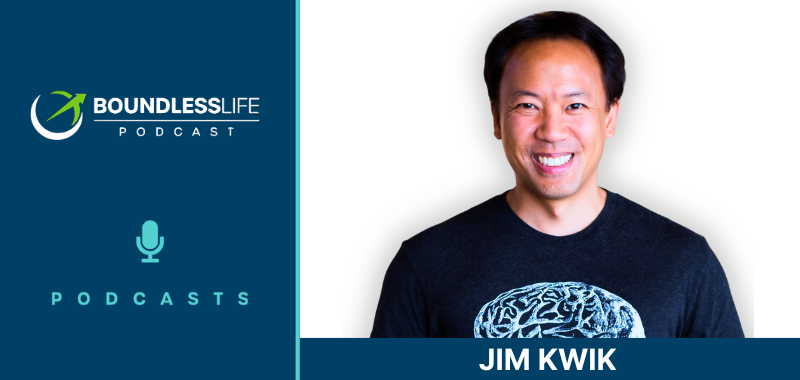
Jim Kwik is one of the world’s leading experts in memory improvement, brain optimization, and accelerated learning. For more than 30 years, he has served as the brain coach to professional athletes, political leaders, business magnates, and Hollywood icons. His corporate clients include Google, Virgin, Nike, Zappos, SpaceX, GE, 20th Century Studios, and Cleveland Clinic, as well as institutions such as the United Nations, U.S. Air Force, Caltech, and Harvard. He reaches over 200,000 people annually through live keynotes, hosts the Kwik Brain podcast with over 100 million downloads, and his Kwik Learning online courses are used by students in 195 countries. Beyond his coaching work, he funds Alzheimer’s research and the creation of schools in Guatemala and Kenya, providing healthcare, clean water, and education to children in need. His mission: No brain left behind.

For additional insights, you can check out our previous show together below:

You can find his new daily reader, Limitless Daily, here.

Episode Sponsors

Tecton Ketones: Tecton Ketones deliver bioidentical D-beta-hydroxybutyrate (BHB), the same ketone molecule your body naturally produces during ketosis, providing clean cognitive support, stable energy, and performance without the conversion step required by many ketone precursors. Visit tectonketones.com/ben and use code BEN for 16% off your first order.

ULTRA: ULTRA is a clean, nicotine-free, and caffeine-free pouch designed to deliver smooth, sustained energy and focus using clinically backed nootropics and adaptogens without the jitters, crashes, or sleep disruption. With flavors like their new Blue Razz, it’s a simple, effective way to stay sharp throughout the day. Visit takeultra.com and use code BENGREENFIELD for 15% off.

Forkful: Forkful delivers chef-cooked, fresh, ready-to-eat meals made with premium ingredients like grass-fed bison, wild-caught salmon, and fresh vegetables, with zero seed oils and no meal prep or cleanup required. Choose from options including gluten-free, dairy-free, keto, plant-based, GLP-1, and low-carb meals, delivered fresh to your door and ready in under 3 minutes. Visit ForkfulMeals.com and use code BEN50 for 50% off your first order.

Just Thrive: If you’ve accepted bloat, cravings, and sluggish digestion as normal, the Just Thrive Gut Essentials Bundle pairs a probiotic clinically proven to arrive 100% alive in your gut with Digestive Bitters, a blend of 12 science-backed herbs that support digestion and GLP-1 production. Visit justthrivehealth.com/BEN and save 20% with promo code BEN, or get a full refund if you don’t notice a difference.

Episode Resources

People

Companies & Products

Books

Podcast Episodes

Studies & Research


Upcoming Events:

Eudēmonia | November 5–8, 2026

I’m speaking at Eudēmonia (November 5–8, 2026, in West Palm Beach, FL), a prevention-focused, science-based health, well-being, and longevity summit designed to add years to your life and life to your years. Across 3 days and 15 venues, you’ll experience 200+ talks from 120+ experts, 300 treatments, and 160+ brands covering everything from biohacking, longevity, and hormonal health to gut health, brain health, peptides, mobility, and more. I’ll be leading a talk and a movement session alongside some of the brightest minds in health today. Use code BGREENFIELD-EUD-100 for 10% off when you register here!

The Manzo x Ben Greenfield Table Private Dinner | Throughout 2026

If you want to taste one of the world’s rarest cuts of beef and experience my North Idaho biohacking compound firsthand, my family and I are hosting The Manzo x Ben Greenfield Table, an intimate, chef-catered VIP dinner on a few limited 2026 dates. The evening includes biodynamic wine, a live cooking demo, a multi-course Piedmontese feast finer than Wagyu, and a night of deep sleep in an EMF-free, fully grounded, circadian-optimized guest room. Anyone who reserves a half or whole Piedmontese bull from Manzo qualifies for a spot, so reserve your allocation and dinner here.

Summit Basecamp | February 4–7, 2027

Join me in Lake Tahoe for four days of world-class programming, outdoor adventure, live music, wellness, and real connection, all part of Summit’s global community of entrepreneurs and world-changing creatives. This is an exclusive, apply-to-join event—apply through my link, and you’ll be fast-tracked with a priority invitation. Apply to join Summit Basecamp here. 

Stay tuned for future updates—and you can always keep up with my LIVE appearances by checking out bengreenfieldlife.com/calendar!

Do you have questions, thoughts, or feedback for Jim Kwik or me? Leave your comments below, and one of us will reply!

Ben Greenfield

My name is Ben Greenfield, and on this episode of the Boundless Life podcast,

Jim Kwik

digital dementia is real. You rely on technology to remember things for you. You know, your to do list, your grocery list, your calendar, things that you don't want to memorize. That's a scary place to be, because think about not just offloading our memory, but our thinking, our critical thinking, our judgment, our decision making, our creativity. You want to you don't want to weaken those muscles because also at a societal level, a managed civilization that is cognitively surrendering all that and all those muscles are atrophied. Like that's a scary place. How how much easier is it to be manipulated? You know, when you can't critically think you can't filter information you can't you can't discern.

Ben Greenfield

Welcome to the Boundless Life with me, your host, Ben Greenfield. I'm a personal trainer, exercise physiologist and nutritionist, and I'm passionate about helping you discover unparalleled levels of health, fitness, longevity and beyond. My guest on today's show is Jim Quick. He just wrote this book, Limitless Daily. It's fantastic. But as I'm prone to do, I didn't want to just talk with you about all the things you can easily just find in his book. So we have a wide ranging conversation from A.I. to gamma frequencies for sleep to a whole bunch of other topics. Jim, for 30 years, has served as a brain coach to pro athletes, political leaders, business magnates, Hollywood icons, super impressive guy. And all the show notes, including links to another podcast I've done with Jim a few years ago, are going to be at bengreenfieldlife.com slash Limitless Daily. All right, Jim, I got my hands on it. Limitless Daily. I think the last time we talked, I interviewed you for your book Limitless, I believe.

Jim Kwik

Yeah, Limitless came out in 2020. That was my first book. People thought I was like, you know, I had a lot of books, but that was the first one after 30 years. Yeah.

Ben Greenfield

Yeah. And we're kind of like brothers from another mother because I've got boundless.

Jim Kwik

I love it. I love it. I've gifted out a hundred copies of this to make it confusing

Ben Greenfield

for people, though. Do you have no boundaries? Do you have no limits or

Jim Kwik

do you both? Dude, that book is huge. Like even when you see it on my shelf, I had to like put it on a very, you know, on a big shelf that

Ben Greenfield

can make it awesome. Pretty, pretty thick, too. But I didn't even realize like this probably should have registered when I saw the word daily. But I didn't realize until I started to read it that it literally is like one day or one reading per day or a year in the way that you laid it out.

Jim Kwik

Yeah, I felt like, you know, when Limitless took off, people were asking for another, you know, what's the next book going to be about? And I felt like people didn't need another book. And I love books. Right. But for me, I think they what they really needed was a daily practice, you know, something where they can live it. You know, and especially starting their morning off, you know, mind before media, you know, setting their intention before all the interruptions.

Ben Greenfield

Yeah, I actually read the whole thing in a day because I didn't have the luxury of time to wait an entire year to interview. OK, so and so I have a bathtub in the garage and that's like my reading tub. And I literally have all of the books that I'm kind of like preparing specifically for podcasts out by the bathtub. So you probably know the name of this more than I do. Like what you call it when you make a pleasurable trigger like taking a bath associated with a routine work like tasks. Yeah.

Jim Kwik

Well, so you're actually taking a you're not sitting in an empty bath. You're actually you're actually far as I'm trying to get a visual here. You know, a

Ben Greenfield

book full of books or. Oh, this this the bath to conquer all baths. It's a hydrogen bathtub. So like it's actually infused with molecular hydrogen that I absorb transdermally. I found a company called Lumadi in San

Jim Kwik

Diego,

Ben Greenfield

and they sell like a hydrogen concentrator. So that's next to the bathtub. And

Jim Kwik

the water

Ben Greenfield

comes out of the wall, goes through the concentrator and then into the bathtub. And then I have it surrounded by red lights. So it's like hydrogen red lights. And then my book and it's in the garage, though, because that was the one section of the house where I had the ability to like modify and build literally like a little bathtub section. So it's kind of funny because my wife will come home from shopping for groceries or whatever and pull into the garage. And she can see like the red light glowing from behind the curtain. And she'll be like, you know, I've been you working. I'm like, yeah, so.

Jim Kwik

Wait, how many hydrogen tablets would I need to throw into a tub? A lot. I

Ben Greenfield

looked into it like literally thousands. OK. Yeah. Yeah. Because my other option was I thought, well, why don't I just like get a bunch of hydrogen tablets and keep them next to the hot tub? Right. And do it that way. But the bath works out pretty well. So, yes, I went through the whole thing in a day. And you break it into three sections. This was last week that I read it. And I should I probably should have taken more memory tips from you because

Jim Kwik

I don't

Ben Greenfield

remember the name of each of the three sections. But they all start with an R. Can you remind me?

Jim Kwik

Yeah. So instead of so it's a daily book, just like a daily devotional that pulls on Christianity or Judaism or Buddhism or Stoicism, like Daily Stoic, great book. I pull on psychology, science, psychology of the mind, science of the mind, psychology or science of the brain, neuroscience. Then, you know, for most ideas. But instead of doing like a month, like January's motivation and February's focus. And I just feel like people kind of after a few days kind of get it. I broke it down into seasons and actually four seasons. You know, it's it's like winter, spring, summer and fall, because I feel like sometimes we go through that with our biology and our relationships, our business, you know, find the economics of it. So it's for ours. It's it's goes from reset to rewire, to rise, to radiate and kind of break it down. The subject matter into those kind of for four seasons. So like reset is like, you know, before you can improve your life, you have to interrupt the patterns that are kind of holding you back. You know, so those kind of topics and rewire is about building new habits and new beliefs and strengthening like new neural pathways. And rise is more the daily practice compounding into the emergent property of performance or confidence. And then and radiate is where it really emanates and actually spreads out beyond yourself into community. And, you know, our social networks, leadership and everything. But

Ben Greenfield

got it. Yeah, I remembered it is three hours, but you're right. It was for what do you do if you get the book and you don't start reading it on January 1st? Like, is it OK to just like jump in on whichever day you got it?

Jim Kwik

Yeah, I mean, so I could have organized it by like day one, day two, day three, which would be fine. But I wanted everyone to be literally on the same page, you know, is your books are in other languages. I want people all around the world to be literally on the same page because then I could go live and talk about. Oh, cool. Yeah, everything. OK, post a social media post and ask people questions about that day. And everyone's on the same page. And so that was that was important for me. You know, even the you mentioned it's purple. I chose purple because my son and I, he's an early riser. It's only three and a half. We watch the sun come up in the morning. And I took a picture one time and I color matched it. And it was like this this hue of purple only from night to day. But I asked people to read it first thing in the morning, you know, take care of their mind before before media. And purple is interesting. I don't know if you I don't know if you've done like research, how much I mean, I would call color psychology is and stuff like that.

Ben Greenfield

All I did read that book, Drunk Tank Pink, the marketing book on using color in marketing years ago. All I know about purple is like it was a color of royalty and considered like an expensive dye. But what was the I

Jim Kwik

mean,

Ben Greenfield

what's the brain trick behind?

Jim Kwik

Yeah, for me, it wasn't so much branding as it is becoming. I mean, certainly it'll stick out on your shelf, but it's not meant to be a book you put on your shelf. It's supposed to be on your nightstand or ideally replacing your device in a perfect world. But it's purple. I chose for match the morning time for me. And it's also it is royal. It's used in robes and with royalty because it was one of the most expensive treasured colors because it was the hardest to extract for thousands of years. I mean, they would go to the Mediterranean and it would have to extract it from snail shells, you know, so it's very hard to come by. And that's why and I and that rarity is what I feel like that our readers are, you know, it's rare to be intentional about your life, you know, and really claim that pilot seat of your mind in your day. Purple and color psychology is the two words that always often come up. I don't know how much I buy into that as a science, but is sovereignty and wisdom, you know, and this really a book about sovereignty, you know, that we don't have to be the effect that we have more influence than we realize and responsibility and then wisdom. And yeah, yeah,

Ben Greenfield

yeah. Interesting, and you have it laid out in addition to like the four different hours and then the day by day, there's like the essay and then the quick step playing your name.

Jim Kwik

Yeah, it was an

Ben Greenfield

affirmation.

Jim Kwik

It was so anyone who read Limitless, you know, the Limitless models, this Venn diagram of three M's that you could their levers, basically, that you want to unlimit if there's a gap, you feel like you're in a box like stuck, like limits, like balance, not being perfect, just about advancing, right, progressing. But if you feel like you're the opposite, you're stuck. That box is cube is three dimensional. So the three forces that contain you and then these are the three force that liberate you. So I claim in Limitless and the Venn diagram where they overlap three circles, it's mindset, motivation and methods. Somebody can have great methods and some motivation, but their mindset is I don't deserve this. I'm not capable of this. You know, I can't do it. Then they're stuck in that box. They can have a limitless mindset and great methods for losing weight or having energy or living longer, but they're not motivated to do it. They're stuck in the box. Or some have mindset and motivation. You know, they know everything's possible and they're motivated to do it, but they're using the wrong methods, right? They got they're using this information. They're using stuff that's old and not and outdated. So but when they cross over, you have three eyes. You have you have ideation with mindset and motivation. You have to target inspiration, you know, when your mindset and your motivation crossover inspiration. So I wanted to write an inspiring piece each day. But then mindset methods gives you ideation. I want to give them a brand new idea to think about. And then the third one is motivation and methods. You're motivated and you know what to do. So that's implementation. So I wanted each passage of all three, a new idea or in an inspiring way, some kind of story gives them some drive. And then an implementation strategy they could do in two minutes. And then the fourth thing I added was the identity statement at the end, which I feel like the affirmation. Yeah. So yeah, all four eyes. And it's a five minutes, literally a three minute read, as you have you seen. And then an exercise. And I personally in the morning. Yeah.

Ben Greenfield

The affirmations piece. I mean, I won't lie. I think a lot of people sometimes associate affirmations with cheesiness or make jokes about life coaching. And, you know, the old Stuart Smalley Saturday

Jim Kwik

Night Live.

Ben Greenfield

I'm good. I'm great. I'm wonderful. I got started. People

Jim Kwik

like me

Ben Greenfield

with the affirmations. Like, how do you actually do that? Like, hopefully it's

Jim Kwik

not a

Ben Greenfield

dumb question. Like, you'd like look in

Jim Kwik

the mirror and

Ben Greenfield

say it or you just.

Jim Kwik

No, no, I read this. I'm rereading this in bed. You know, it's at the time of this recording. If I go to like this one, you know, just I just said to grab this this this entry on this day. We're recording is around little by little. A little becomes a lot. But the affirmation, though, is I take small, simple steps towards my future self, trusting that little by little, little becomes a lot. You know, I am limitless. But it's not it's less. I don't think it's this. I think it's less cliche and less cheesy than I'm good enough because I think there's definitely some kind of positive toxicity where your brain pushes back, you know, saying, no, it's not true. No, abundance does not flow to me, you know, in different ways. But I kind of focus each one around something that matches what they believe and then kind of transition to them, something a little bit greater. Because I think what a coach does, it's always forward facing. Even our self-taught. You think about the affirmations, the incantations, you know, we say to ourselves, you know, mine as a kid was I am broken because of my brain injury and I'm slow because of my learning disabilities. But I also feel like, you know, that talk is the longest conversation you're going to have with another human being. It's the one you have with yourself. Yeah. And so, you know, I feel like it's so important to be able to use. You know, mine's always eavesdropping on your self-talk. So I feel like sometimes we don't rise to a level of our ambitions under pressure, you know, or stress. We fall to the level of our stories that we're saying to ourself and also our self-image. It's really hard to outperform how you see yourself. Yeah, that's the purpose of the identity. But I read it in bed. I don't go to a special place or the mirror or anything or kind of play music to it or anything like that. Right.

Ben Greenfield

Got it. Soft piano, elevator music. The like, I think the nature of having a bunch of little essays spread out throughout the year allowed me to kind of like see patterns arise in your writing, like like certain themes, things that I could kind of tell going through the book that you think are pretty important because they kept getting revisited. So, for example, like one of the themes that I noticed I am doing right now, like I'm walking while I'm interviewing you and I walk a lot during work. Like I have a Bluetooth remote. I use Whisper Flow, you know, to review slides to write. Believe it or not, I don't spend the whole day in the bathtub. But you talk about movement a lot. Yeah. You know, you're you're a real expert in the brain and how it works. So how do you describe to people how movement enhances learning and how to use that to your advantage?

Jim Kwik

For me, movement isn't just I mean, I think the primary reason we have a brain is to control our movement. You know, even just having a three and a half and a one and a half year old and just watching them transition from their movement, crawling, you know, and eventually walking. You know, I lost a family member, you know, who said she's she's older. But she she broke her hip. And she was very, very sharp. But she there was a there was a sharp, steep kind of fall, the decline in her cognition after she lost her own movement. You know, so I was really concerned about that. But, you know, I would say as your body moves, your brain grooves. You know, we've all heard like sitting and smoking, those kind of things. But movement isn't just exercise. For me, it's brain optimization, right? It's part of the protocol. Our ancestors, you know, learned while they used to move, right? They weren't sitting in classrooms for eight hours a day, you know, and the obvious benefits that your audience is so sophisticated. They probably forgotten more about, you know, all this stuff than most of their friends and family will ever learned. But, you know, exercise increases blood flow, you know, to the brain. Oxygen stimulates BDNF, brain derived neurotropic factors, which is helps with so many different like fertilizer for your brain, you know, because through neuroplasticity, right, which is our brain's ability to remodel itself based on new stimulus and, you know, novelty and nutrition. It's it's it's powerful and it's not fixed. But I feel like movement engages like your cerebellum. And, you know, it's just it's involved in not just involved in things like coordination, but also learning cognition. Yeah. Some of my favorite exercises, you know, that is like racket like you racket sports, you know, it is just a true an

Ben Greenfield

actual longevity sport that is, I think, rank the highest unless you count chess as a sport.

Jim Kwik

Yeah. Somebody somebody I saw recently was like nine years. I don't that's accurate, but it did better than swimming and jogging. But dance. Right. And notice a lot of this stuff, whether it's tennis, it's reaction time and coordination, balance, thinking speed, strategy, memory, right? State regulation. When you have a bad point or whatever it is, dance also. But they're social, too. Right. If you want to build cognitive reserve where let's say you have like two older individuals, but they have similar developed brains. But one of them is completely independent and the other one's more dependent and reliant and maybe show, you know, some cognitive more serious cognitive decline. Some scientists are attributing that to cognitive reserve, which is kind of like a retirement account that we're always making these deposits every day. And it's usually like physical activity, social activity and mental activity that's going to kind of buffer that. And so, yeah, movement is definitely a big theme. I try to plant that in there, you know, throughout.

Ben Greenfield

Yeah, I'm kind of curious, though, when it comes to movement, like, you know, you just described kind of like learning movement and then also learning through movement, learning movement being, let's say, like dance, tennis, et cetera, where, you know, the movement is tied to what you're actually learning. And then learning while moving might be like me learning from you right now while I'm walking on a treadmill or me listening to an audio book or a podcast, say, at the gym or again, like on a walk. I'm just curious if you know the answer to this or if you've looked into this, like if there is a difference in the way that you learn or even in the quality of learning, if you're sitting like focused on a book that you're reading, say, like just like in a lazy chair in your living room versus like listening to an audio book while you're walking. And then the reason I ask is for me, like walking or hiking or listening to an audio book is more convenient. But I always wonder, like, am I missing out on what I might have gotten, you know, compared to being curled up on a couch when I was a kid reading a book, for example?

Jim Kwik

Yeah, I would. I don't know how much. So I this wouldn't be my specialty, but I would I would hallucinate a couple of things just because we have a lot of students and a lot of feedback, even working with kids. There's certain kids that just I feel like learn best when they could move, you know, and, you know, those sometimes we label hyperactive and we punish them. They can't go out of recess, make them sit even more in detention or what have you. You know, at our events that we do, you know, a lot of times you can see certain individuals, they sit in the back and they're stretching and they're getting in their body. You know, there's definitely this kinesthetic intelligence. I like going for walks, listening to audio books. You know, my my my challenge with audio books and I love audio books, especially when I'm traveling is sometimes the comprehension retention is not there because people are multitasking because they are working out or they're driving or cleaning their house and moving, but still not completely focused on the act of learning, you know, as opposed to like reading, you know, and, you know, listening is great, you know, and especially when you can listen to it at a faster speed. I don't know. Do you do that and like put out like one point? Yeah, I think

Ben Greenfield

I

Jim Kwik

do a

Ben Greenfield

lot of times if I'm in the car and I play what my speed is, people who are also in the car say, dude, like, why are you playing this so fast? And for me, it sounds normal. And then when I listen to it at normal speed, it sounds slow. So I feel like the brain is somehow becoming accustomed to the faster speeds and acquiring information at a faster pace. At least that's what I tell myself.

Jim Kwik

No, no. I mean, same with reading. Also, people reading at greater speed, sometimes it helps them focus better also because if it goes too slow, you start your mind wanders, right? Your brain.

Ben Greenfield

Yeah.

Jim Kwik

If you don't give your brain the stimulus it needs, it'll seek entertainment elsewhere in the form of distraction. You know, if we talk really slow in this podcast, people probably get distracted, think about something else, fall asleep, you know, right? The speed directs the focus, which leads to comprehension and better, better understanding, better memory.

Ben Greenfield

Yeah, I don't I don't recall where I heard this anecdote, but it was something along the lines of the ideal scenario being hearing something and then seeing it. And maybe there's there's some kind of evolutionary psychology behind that. But literally, like listening to a podcast like this one with the author of the book Limitless Daily, kind of wrapping your head around like the big picture forest for the trees overview and then actually reading the book would be the best way to learn. And I don't know why it's that order, like listening and then reading. Obviously, you could probably sit in a lecture at a university, have it recorded, go out and listen to it afterwards and also get some benefit. But the order that I heard was like, listen first and then read.

Jim Kwik

Yeah. And I think there I don't think it's learning styles, but there are people certainly have certain preferred learning channels that they like to consume information. So I think that would play a little bit of a role also as well. But certainly having different modalities, you know, would just just employ more of your cognitive networks, you know. So I would imagine there'd be deeper understanding, you know, from hearing hearing it, reading it, you know, certainly teaching it. Even when I'm doing note taking for years. I mean, maybe this was just intuitive because I came from a more, you know, challenged position when it came to learning, you know, something called marginalia, where people are writing, you know, for hundreds of years, they would write in the margins. Even in libraries, you would see books all the time with margins. People would actually comment, you know, to what other people have written, you know, and so there's this whole discourse going on. But, you know, I would in the beginning when I was teaching myself to how to read better because I was such a slow reader, took me three years longer to learn how to read when I was a kid. And all the other kids. But I would I would write a sentence off of every single paragraph, you know, like a summary of what that is. And it forced me to really, you know, focus, first of all, because I knew I had to write something about it. So I started asking questions and direct, you know, my my that spotlight. And then also it's really cool for review because then I wouldn't have to read the whole thing. I could just see my summary, you know, notes. And it's also really cool. Even I do this with Limitless Daily because you don't have to stop at the end of the year, right? And you start on whatever date there is and you go through. And like many dailies, you go through it again because it's not that the book is different, but hopefully we're different. Right. Yeah. And you see something that you didn't catch before. It's particularly meaningful because of the life stage, you know, cycle that you're in or, you know, what's going on. So and it's interesting to see my notes, like even going going through it in terms of what I was thinking, because hopefully it's a little bit different. You know, we talk a lot about, you know, cognitive flexibility where it's as opposed to and just like physical. There's so many adaptations. So interesting, you know, whether it's our metabolism or it's our bones, like, you know, how we how we challenge and resistance. We get stronger. I'm very concerned, though, where AI is taking out all the friction. Yeah, I

Ben Greenfield

actually yeah, I want to ask you about AI for for sure. I sometimes think about that, by the way, like, well, if I were blind, I would probably become even a better audio book learner and listener. And if I were deaf, I would probably just speed up the pace at which I acquired knowledge through reading. And so you're right. You know, it's like in my world in nutrition, there's plasticity, right? So if if fat is your preferred fuel and you're eating, say, a ketogenic diet, in many cases, your body shifts towards fat oxidation as its primary mechanism of generating ATP. Whereas if you shift towards more carbohydrate as your primary fuel source or maybe to a slightly higher carb diet like a Southeast Asian or or Pacific Islander type of diet, rich in rice, fruits, things like that, you could actually shift towards a healthier form of carbohydrate metabolism. And I think perhaps the same could be said for for learning. You brought up AI. And I'm curious, you know, I'm really curious for you, especially, you know, being someone who's who's so knowledgeable about learning and memory and this idea of like offloading things to AI. Love to hear how you're using it and where you draw the line.

Jim Kwik

The line is constantly moving because, you know, it's kind of like, you know, in the business, I always say kind of skate where the puck is going with both AI, the puck is like teleporting, you know, all kinds of places. And it's really hard to keep track. What I would say is my mantra is human intelligence over artificial intelligence. I do use technology and I do use AI. Our team uses AI. It's just, you know, for me, AI can scale and amplify, but it only scales and amplifies what a human brings to it. If somebody is very confused and chaotic, it'll amplify and magnify that. If somebody is very clear, they're competent, you know, they're educated, it'll scale, it'll scale that, right? And AI is no longer, you know, a competitive advantage. Everybody has access to AI, just like information. Everyone has access to all the information, you know, and some people could use it where it's, you know, they could use it to create nice social media posts. Somebody else could use it to create the next, you know, health and wellness, you know, billion dollar venture. You know, but it's the human intelligence that's the difference. You know, my challenge is the cognitive offloading. It's like, because it's doing the work for us, many people listening, you know, read or heard about the MIT study that came out in about a year ago. Okay. It's like, so at MIT, they took students, they'd write essays. Group A used ChatGPT, Group B used Google, Group C used

Ben Greenfield

neither.

Jim Kwik

And

Ben Greenfield

Google, by the way, is just using Google for research because Google now also has AI as a top search result.

Jim Kwik

Yeah, yeah, that's right.

Ben Greenfield

I mean, Google is the way we traditionally might have thought of it.

Jim Kwik

Very much so. And so the summary of it is they scan their brains and see like also which, you know, whose brains were the most active, what group, and certainly it was C, right? Because they had more cognitive load. Group A, I mean, when you're copying and pasting, it doesn't take a lot of, you know, a lot of effort. But when they're tested though for comprehension and memory of what was the final product of that essay, you know, Group A had the least, you know, remembrance of it because, you know, because they didn't have to work for it, you know, and Group C obviously had the most because they earned it. And just like, you know, you can't buy a fit body, you can't buy, you know, an incredible romantic relationship. You have to work for it, right? And always just, and you know this, but it's just like the things that we often want, we have to employ. Like if you want more energy, you have to use your energy. You can't just sit on a couch and binge watch stuff. You're not gonna get more energy that way, right? If you want more strength, you have to use your strength. If you want more focus, you have to use your focus. If you want more, you know, memory, better memory, you have to use your memory. But when we surrender it to a device, it's like going to the gym and asking your friends to lift the weights for you, right? There's no way that, you know, that there's any benefit for that. So I'm concerned about that. And technology over history has always changed the way humans think, you know, and use their minds, right? When we started using, you know, the written word, you know, when we started, the printing press changed things. I mean, even fast forward all the way... GPS

Ben Greenfield

changed New York taxi cab drivers' brains, right?

Jim Kwik

Absolutely. GPS, if your device is telling you when and where to turn, you know, and some people follow it blindly and they end up like, how do I get, you know, all these kind of errors, especially when it first came out, but that's surrendering, right? So then what happens? We don't exercise our visual spatial intelligence, right? If we use a calculator, you know, then, you know, I think it's important to learn, you know, arithmetic, you know, and that based knowledge for logic. But, you know, so many people now can't do some mental, easy mental math.

Ben Greenfield

But when it comes to cognitive offloading, okay, so here's like this blue Post-it pad. I've already written down four things on it since we started recording two related to this podcast, two unrelated, just a couple of things like I literally thought of while you were talking and wrote them down to get them out of my brain and onto paper, right? And I've been a fan for a very long time, ever since college of the concept of a second brain, right? I used to go everywhere with a notepad. I'd write things down, ruminating thoughts, tasks I wanted to remember, et cetera. And that practice that's now largely transferred to cognitive offloading to the notes app in my phone and occasionally calendar or Siri-based reminders, I think has allowed me to keep a clear head and accomplish more. But like, do I need to be worried about just not allowing my brain to just remember things on its own?

Jim Kwik

So this would be, who am I to say like what people should be focused on, but the principle to set the process aside, but the principle behind it is we make these choices, right? So I like, I use AI to automate things that are lower, like lower mental tasks, so I could free that space. Cause you said that, so you could accomplish more, so you can put your energy or focus, you know, your vitality, your creativity, your technicality. So I'm

Ben Greenfield

not getting derailed by rumination, basically.

Jim Kwik

Right, right. And so I feel like that's absolutely valid. I mean, like, I don't want to memorize 500 phone numbers, but it should be concerning though that we've lost the ability to remember one or something we just read or a pin number or what hotel room were you checked in or where we parked the car or someone's name, those kinds of things. So it's just like physical fitness. Like if somebody's, if someone's office or apartment's on the eighth floor, an elevator is a form of technology, right? Just like AI or anything else and great, very convenient, but then we don't take the stairs, right? If we take a car or an Uber Lyft to go 10 blocks to run an errand, convenient technology is great, but then we don't get our steps in. So it's always these, so I would do this deliberate discomfort training where I'll memorize, like, you know, when I'm driving to solve the license plate here or whatever, just so I get, so I can- Oh, and you do

Ben Greenfield

do that. Okay, that's what I was going to ask you was like, now that cognitive offloading is so convenient and accessible to everyone, do you artificially, if you want to use that word,

Jim Kwik

create some memory? Yeah, sometimes I'll make the choice to turn off my GPS and then do, and explore, and knowing that the consequence of being a few minutes late something is okay, I'm willing to pay that price. But sometimes like, you know, like, yeah, yeah. Digital dementia is real. Like, it's, you rely on technology to remember things for you. You know, your to-do list, your grocery list, your calendar, you know, things that you don't want to memorize, the thousand phone numbers. But I still think we should maintain the ability to still be able to do that. Like if someone's climbing up a hill, somebody who's just really fit and healthy like yourself, you'll be able to do it with ease and make it look really easy through technique and just having the energy and the fitness, right? And the form. But like somebody who's unhealthy, like it's going to take more, you know, because they're not physically where you are at, either in skill or strategy, you know, in state, you know, in terms of your biology. And it's just going to work harder. And so I just feel like we never want to, like on the plane, I just got off of like a plane and I was watching what somebody was watching there. They're watching WALL-E. You ever see this? And they had their headset in. So I didn't, I still remember when I first saw it, but it was in the future where they're, everyone's like morbidly obese and they're in these little pods being, you know, moved around and then one of them falls over and five robots have to come to carry him up because he's lost the ability to do that. He's in front of the screen at this big gulp soda, you know, and that's a scary place to be. Because think about like, not just offloading our memory, but our thinking, our critical thinking, our judgment, our decision-making, our creativity. You don't want to weaken those muscles. Because also at a societal level, imagine a civilization that is cognitively surrendering all of that and all those muscles are atrophied through non-use, like that's a scary place. How much easier is it to be manipulated? You know, when you can't critically think, you can't filter information, you can't discern, right? You can't use basic common sense or logic. And we don't want those muscles, you know? So my rule, just as practical, is I build before I borrow. I want to build my own intelligence before I borrow. So let's say somebody listening here, you're going to go to Claude or Chachi or whatever to do something, some kind of situation, you wanted to do something. Before that, just take five minutes, build. Build your own intelligence. So the B is brainstorm. So I literally would do this every time because now it's a habit. I'll just brainstorm this situation myself before I go to the answer, right? The U is I want to understand what the real problem here is. Because you know this, like we've been asking prompts way before AI, we're asking our own human intelligence prompts all the time, asking ourselves questions. And I think a lot of times I think we're asking, we're optimizing for the wrong question, right? Like we're asking questions like, oh, how do I just lose this weight? Or why don't people like me? Or if you put this into an AI, it would be like, oh, here's all the evidence why, because it's a poor prompt. So it's attributed to Einstein. If he had an hour to solve a problem, he'd spend like 50 minutes. Who knows if it's really attributed to him, but he spent not 50 minutes really defining what the real problem is.

Ben Greenfield

Sharpening the ax to cut the

Jim Kwik

tree. Yes, absolutely. So that's the understanding, really understand the problem. The I in build, so you brainstorm, understand. The I's imagine, and come up with three answers. Imagine three solutions to this problem before you're spoon fed the answer. And I would also say, using your imagination, I could be like facing this health situation, and just thinking like, oh, what would Ben do? And how would Ben look at this? Or if I'm looking at a problem, I'll say like, how would a five-year-old look at this problem? Because maybe it's just so obvious, because they're so creative and they don't have the same limitations and boundaries. Or what would somebody 10 times smarter than me, how would they look at this? How would they solve

Ben Greenfield

this problem? Right, kind of reminds me of the Tim Ferriss question, what if this were easy?

Jim Kwik

Yeah, or using the six thinking hats, right? You take it from different points of views, logically, emotionally, gives you the permission to be able to step out. So I would, and so again, you brainstorm, you understand the problem, really clarify it. You imagine three answers to it. And then the L in build is leverage AI. But I also want to point out, AI will placate a lot, unless you give it specific instructions. It'll, it's very, it's like a sycophant, right? It can make the dumbest person feel like they're the smartest person on planet. But you know, with their responses, so. AI

Ben Greenfield

has, as they say, a very brown nose.

Jim Kwik

Yes, very, very much so. So the L is leverage AI, and how you'd be thinking about it is not just putting that prompt, that question that you defined, is like, pressure test your ideas, right? Or say like, hey, you are the expert, you know, of the exact opposite of what I believe. Make an argument against this, right? Or point out my blind spots or my cognitive biases. What are my false assumptions here that might not be real, right? So I would use it more, less than more convenient, but more as maybe even a critic or a coach, right? Yeah. And then the D in build is decide. Because ultimately, human being, AI could process and compute way more information than human beings will ever be able to do. But ultimately, human beings, their human intelligence has to decide, you know, what this stuff means, right? What is important? What do I do with this data? You know, because once you know more, you can do more. When you know better, you can do better. So I'm optimistic. You know, I actually am optimistic that technology can make, it's going to force us to be more human. I think that's a big conversation. Like how do we, in our time right now, how do we remain deeply human in an age of AI? Like how, what's our value if AI could do this? Because there's an identity crisis too, right? Somebody's spent years studying radiology and they've been like 13 years as a radiologist and there's AI could do it a thousand times better with a hundred percent accuracy, better than the human eye. And you know, and like, then who is that person?

Ben Greenfield

I know, just imagine. I mean, hopefully that would free you up to do something like produce a, you know, radiology creator type of channel to educate people or something like that. But yeah, those type of creative pivots, I think are going to become increasingly common. And then the idea of like cognitively challenging yourself in an era where there are potentially fewer cognitive challenges, I think makes sense. Yeah, you could certainly say there are some people who are like, I don't know, not to stereotype, but like a blue collar worker who goes out, who does work with their hands and their body, who can fulfill Maslow's hierarchy of needs by just like picking stuff up and putting it down and painting and roofing, et cetera. And they're using cognition, but maybe they don't require as much memory or learning compared to someone who might be in a creator position, right, who's actually, I don't know, making art or music or something like that. But I think that, you know, whether it's your job or whether it's your passion, the idea of challenge, especially from like a memory or creative standpoint, is something that's tied into human happiness and fulfillment. Meaning like, I think musical instruments are great. And I think even people who suck at music can eventually learn to find the happiness and fulfillment that like learning to read notes or memorize a chord or a lick can create. And for me personally, Jim, that's like one way that in an era in which I can offload so much cognitively, I can still challenge myself, like with my guitar or with the piano, or another example might be, like we gather as a family every night and we're a Christian family, so we memorize a Bible verse like every night. And it's working memory muscles, but it's also allowing us to dwell on something positive and kind of like pre-program our brains with something positive before bed. But yeah, we do kind of have to seek those things out a lot more now.

Jim Kwik

Yeah, and I'm even doing that with my kids. Like I'm just going, you know, my kids going, you know, even the books of the Bible, Genesis, Exodus, Leviticus, Numbers, Geronimo, Joshua, Judges, we're like, we're just doing it. And it's just actually, it's just in a world, I mean, this also leaning into, you know, cognitive fitness and cognitive anti-fragility. You know, I feel like resilience is bouncing back to like a default, right? You're under some kind of stress or whatever, you bounce back, right, to some kind of the default setting. But, you know, cognitive anti-fragility is where you're just, you're actually bouncing forward. I mean, and it's modeled, you know, like think muscles, right? If you never stress them, they don't grow, right? If you stress them appropriately and you have a recovery, you can repeat the process, they'll adapt. I mean, that's, you know, you think about, you know, hermetic response or heat adaption, right? The same biological pattern shows up in all these different systems in the body. Like my children, when they're exposed to more bacteria or soils, they're gonna have more robust immune system, right? Because that's, you know, or if you're lifting weights, what was once hard becomes easier because we're adapting. You know, one of the challenges, you know, like think about the industrial age, right? It took a lot of the physical load from people, right? Because machines were doing the work that, you know, humans' muscles would be. AI is taking a lot of the cognitive load off, right? And so that could be a challenge. You know, I'm concerned with modern living that's optimized for convenience, right? You know, it's removing all the cognitive resilience, just like physical resilience, you know, like temperature control, door dash. I mean, I don't have to do anything nowadays.

Ben Greenfield

This the, what you're describing, Jim, is kind of like the one version of the gray man theory in that aliens are us from the future after being on GLPs for so long that we've become sarcopenic, protein-deprived and weak. And then our brains have just swollen because of the mass amounts of information. And so it's kind of like a different version of WALL-E, right? Like we're like weak and have done a great deal of cognitive offloading, but it's not like it's made us stupid. Rather, it's just like almost giving us too much to think about. I'm no neuroscientist, but I think the interesting thing, and again, I don't know if you've come across this, Jim, is that, you know, you mentioned hormesis, and if we break down the muscles, they become inflamed, and then we get new mitochondria and hypertrophy and satellite cells and new muscle fibers. And very similarly, if you like spend a lot of time in the sauna, you produce heat shock proteins, and yes, you lose some water and electrolytes, but then you replace that and you bounce back stronger. With learning, like I haven't really seen much about whether the brain actually gets like damaged if you think too hard and then needs recovery to bounce back or if it just grows in a different way.

Jim Kwik

Yeah, I think we... All right, so I compare a lot of it and just like some metaphors aren't 100% accurate, but when it comes to the muscles, I compare it, your mind, like a muscle, you know, it's use or lose it, it can atrophy, but it also needs the same thing. It still needs novelty, it still needs nutrition, it still needs recovery and sleep. When you sleep, you- Yeah, that's a good point, I guess, like sleep- Short to long-term memory and all that, you know, that's happening, and also a lot of stuff that's going on unconsciously or non-consciously, you know, as people dream and come up with ideas, you know, in terms of their creativity and the different brainwave states. You know, I think, you know, going back to the cognitive load thing, I'm just concerned about like, you know, when we're talking about GPS navigating for you or AI writing for you, you know, or searching and remembering where everything is, you know, these are incredible tools, but, you know, if we never exercise those capacities ourself, we shouldn't be surprised if we become less practiced over time because a lot of things are perishable skills, right? You know, that if we get out of the habit of it and your brain, your nervous system fundamentally is when you're doing something, you're telling your brain what's important, right, for survival, meaning that if somebody ever, if people listen to this podcast and they don't make any changes in their life or they read a book and they're not making any changes, one of the reasons there's a forgetting curve is because your brain's like, okay, I have all this information and we're not doing anything with it, so it must not be important, right? So it's not doing the modeling, right? It's not strengthening those cognitive webs based on necessity, but you do something a certain amount of times and you're like, okay, this important, I want to be very efficient because the brain, I mean, the brain's probably what, 2% of your body mass requires like 20% of the energy. Like I work with chess players that'll burn like 6,000 calories just sitting down. Yeah, it's

Ben Greenfield

crazy. And you're not just making that up. Like I've actually seen like metabolic studies on the amount of glucose utilized and

Jim Kwik

the

Ben Greenfield

increase in metabolic rate when

Jim Kwik

chess

Ben Greenfield

players are freaking like thinking.

Jim Kwik

Oh yeah, and they want to, and I can even feel it even when I'm in deep, like I have like pulling on these kinds of reserves, but then I could crash if I hit a certain wall, just like physically, being exhausted, or just not having the calories or anything else or the sleep or recovery to be able to do that. Yeah,

Ben Greenfield

yeah, it's less damage and more deprivation, I think. Like whether it's nutrient deprivation or just like cognitive deprivation that's occurring, but you do make a good point about sleep. I know you talk about that and I've kicked that horse to death so much on the podcast,

Jim Kwik

I don't

Ben Greenfield

have to take a deep dive into that, but then there's the other thing that you talk in the book and it's like the idea of distractions and digital distractions particularly. You have a little bit of what some people might consider to be a paradoxical approach when you talk about this so-called white bear effect. I hadn't come across that before, but can you describe what that is?

Jim Kwik

So white bear effect is basically in psychology, they're saying if I say something like, don't think of a white bear, it is extremely difficult not to think of a white bear. Very similar to

Ben Greenfield

like the purple elephant thing.

Jim Kwik

A purple, any of that, because your mind can't process the negative, it has to think about the negative instead. Now, how I use it in one of the entries in Limitless Daily, I think was like, don't check your phone, right? Don't check your phone, so don't check your phone. Then it's almost, you're basically the command where you can't process a negative, it's gonna do that more likely. Don't think of the color purple. Right. For a million dollars, don't think of the color purple, right, we're gonna be more likely to do that. Even

Ben Greenfield

harder when I've got your book in front of me, which is purple.

Jim Kwik

Right, and then so it does activate our focus. And the thing about this like, when we're thinking about those prompts, I would be thinking about like, what is the best use of this time? What deserves my focus in this moment, right? And also spot check, because it's never a direct line. We're always like, if we're just like with an airplane going from here to there, or even a boat, we're always kind of navigating turbulence and resetting our course, you know? And it's interesting, like a bit of Limitless Daily, I'm at people to do it in the morning, because when I was doing research on it specifically, and this is, I think, useful, whether people buy the book or not, is I was talking to Dr. Michael Bruce and other sleep experts on this, there's something called sleep inertia. Sleep inertia is where you transition from a sleep state to a waking state. So imagine what comes online, your conscious awareness comes online, your alertness comes online, your attention's coming online. I mean, you think about your working memory, you know, it's empty, because you haven't filled it with anything. It's like you're waking up to like, you rebooted your computer, and nobody else had access to open up all tabs and put their agendas and everything else and flood your messages and everything else. So there's all possibility. Like you wake up to a beautiful, like snow, untouched from traffic and footprints and other people's stuff. So you can really create something possible. So that window, when I was doing this research and talking to people like Dr. Michael Bruce, is like 15 to 45 minutes. And it depends on your circadian rhythm. From when

Ben Greenfield

you wake up.

Jim Kwik

From when you wake up, approximately. So sleep inertia is like where everything's coming online, you're transitioning, it's like your computer is rebooting. It's about, it can be 15 to 45 minutes, depending on how much sleep you got, your circadian rhythm, what stage of sleep you woke up in, right? It's about, you know, up to an hour. But the reason why this so precious like I was just seeing a video with Simon Sinek I had on Facebook memories nine years ago, where I was just saying like, don't touch your phone 30 minutes a day, I was saying and not at the last minute, you know, stuff that's pretty standard now for a lot of people. It's because what happens is there's something called attentional priming. And attentional priming is like the mental inputs in that window can have a disproportionate effect on the rest of your day. Specifically in areas that I'm focused on, which is focus. So the mental inputs, what you decide to let in into your nervous system during that window could have a disproportionate effect on what you focus on later that day, because you're intentionally priming your mind in terms of focusing on what's important. Number two, how you feel. And we know that, if you check your phone, which you get a message from somebody and it puts you in like, or social media comments or whatever, you know, or something from family or whatever, could put you in a mood for hours, right? Because there's this individual. It's the

Ben Greenfield

worst idea ever to have the phone in the bedroom without an airplane mode, much less disabled airplane mode when you first wake up. That's like- Completely.

Jim Kwik

And now the kids are just like sleeping with their phones underneath their pillows and all kinds of, which is, I'm gonna talk about like, you know, the EMFs and everything else. And then not only does it affect disproportionately your focus and your feelings, but also how you frame situations throughout the day. You know, if you're like, think about if you, like most people, doom scroll, like nobody would invite first thing in the morning, 200 strangers into their bedroom to talk about whatever the heck they wanna talk about. It's kind of like what we're doing, you know, first thing if people are going on their messages. And so it's not only wiring your brain for more distraction throughout the day, you wonder why you can't focus because that's what's magnified and amplified, but also it's also magnifying like reactivity, right? All of a sudden, like you get an inbox, you have to fight fires, you're on the defense, you're on your heels, right? How are you gonna like go forward? So I would just say mind before media, right? You, direction before disruption, right? And you know, intention before interruption. And good, powerful ways of using that first thing in the morning, bonding with your spouse, right? That gets handled,

Ben Greenfield

prayer, right?

Jim Kwik

Absolutely, yeah. And by the

Ben Greenfield

way, I hate to say this, but the idea of simply not turning on your phone being a kind of form of stoic meditation-like activity, I think has something to be said for it because you are suppressing an urge that typically you do succumb to at multiple points throughout the day and you have an opportunity to train your brain the same way you might train it by stepping into the gym when you don't want to or closing your eyes to meditate when you feel like you're just too busy. I think it's just like one extra notch in your belt to be able to say, I don't turn my phone on for an hour after I wake up because from a neurotransmitter standpoint, you're also training more slow dopamine clearance when you do that as well. Like if you wake up to a bunch of dings from the minute you wake up, you're training quick dopamine hits and that builds up over time. I mean, if you look at

Jim Kwik

how you build

Ben Greenfield

your day is how you build your life.

Jim Kwik

Right, and you don't even have to earn that dopamine, right? When you're scrolling or binge watching or watching porn or do anything or snacking on something, there's no effort that's required, even when we're designing limits daily. Well, there is,

Ben Greenfield

but most people don't think about how they're paying for their 300 to $400 per month cell phone bill.

Jim Kwik

There's effort,

Ben Greenfield

but yeah, you don't think about it at the time.

Jim Kwik

Yeah, no, that's a great reframe also. And also at nighttime also, like I was talking to a client who just, she's very successful, but she's telling me, I was asking her to map out her calendar and what her morning and evening looks like, those bookends. And at night she's like, you know, I'm in the mid, you know, I do, I scroll. And I'm like, okay. And we looked in like the usage and it's about two hours and 15 minutes a night on average. And I was like, wow. And then she was defending it, right? She was like, no, well, I have a lot of responsibility. You know, I have a lot of people that work for me. I have a lot of like stress and this my way of de-stressing. And I was like, okay, let me just like get this really, cause obviously her sleep's all jacked up and everything from the blue light or the content is so stimulating and the rumination. But then I was like, okay, would you, you go to bed at nine, you do this for a couple hours and then you get up at six. Would you get up at, that two hours you spend at night, would you get up two hours earlier? Would you get up at four o'clock to do what you're doing right now? And she was like, no, that wouldn't even make any sense. I'm like, okay. But you know what I mean? It's just like, it's kind of, it's kind of silly the choices that we make because we're just on autopilot, you know? And Duke University, I saw some studies that says that about 40% of our behaviors daily is habitual. Like it's on autopilot and your brain must be very efficient, right? It doesn't want to have to expend all that energy to think differently or do differently. Yeah.

Ben Greenfield

And then that, by the way, is also a great reframe. Anything that you do, whether it's the silly YouTube video or doom scrolling or porn or whatever, like I challenge you, try to set your alarm for 5 a.m. and get up and do it. And it just feels like such a waste of time. And then in the evening when you've got, you know, a reduced cognitive resistance and willpower has faded, it seems a little bit more right. But like to frame the unproductivity of it, like just do it during your peak productivity hours and you can feel like how off it is.

Jim Kwik

Yeah, another reframe I had in one of the dailies, entries is just like that attention is currency. What if we actually, just like our attention is being sold because it's free on social media and everything else to advertisers, if attention really is currency and you had to pay for it, like paying attention, like it's even built into the vernacular. If every time someone went on Facebook, they had to take out their credit card or put bank wire money into it every single time, they would treat it differently. And then all of a sudden Instagram had to do the same thing. Right, it's

Ben Greenfield

kind of sort of like when we used to have to pay more for data, like we did think about that a little more.

Jim Kwik

Exactly that, but they would save their attention, they would invest their intention in things that gave them a greater return, whether it's happiness, fulfillment. But yeah, in that sleep inertia time, prayer, gratitude. Like I promise you people pray and then gratitude and really give thanks, they're gonna see more blessings throughout the day because they've done attentional and emotional priming and protected that window. And so, just like in that window, you would never eat like a bunch of muffins and croissants for breakfast, because there's things that affect your focus, your feeling, how you frame situations, because you know, your blood sugar and everything else, it's out of whack. Same thing with the mental inputs you put in, which is,

Ben Greenfield

you know, even- Muffins, AKA cake. I remember my parents used to buy the Costco muffins and tell us that like, they got in healthy muffins and it wasn't until like college and I was studying nutrition, I'm like, oh, we were eating cake for breakfast every morning.

Jim Kwik

And then just in the last thing on this like, just like how people are overfed and undernourished, you know, in society with all these empty calories, I think that's what we're putting in our minds all the time is like, we're overfed, you know, and undernourished because the quality of the stuff that's being presented. And also because the algorithms, we only see one point of view, which could lead to cognitive rigidity, which means like whatever you're engaging with, it's always gonna show you that political angle or that diet angle or whatever, because whatever you're engaged with, they show you more of, right? You don't even see my followers on social media anymore. I just see whatever, you know, I happen to be like we're looking into and that can be a challenge because then you're in an echo chamber, right? And so having cognitive flex, like just like physical flexibility, like doing mental parkour is so very important just like physically, because you're in a bend, you're not gonna break, right? You're gonna be nimble, you're gonna be faster. And also like cognitive rigidity, you see that all the time. Like cognitive rigidity is where you break, where Blockbuster Video, where are they? Right, because they were cognitively rigid. Where's Kodak? Kodak, one of their engineer created the first digital camera back in 1975, you know, and they shelved it, right? Because they were so vested, they're so rigid in terms of the way things were, you know, and I think that also happens with us. And I know like, I, you know, as you evolve, and I'm sure you, there are beliefs that you had about health and wellness and longevity, anti-aging, biohacking, that you no longer believe, you know, and I hope everyone feels the same way. Otherwise, you know, then they haven't, you know, what's the growth there? But we adapt, you know, new information, like you gotta have strong, you know, strong opinions loosely held, that a part of intelligence is being flexible. I change your opinion based on new data, right? Yep,

Ben Greenfield

yeah, exactly. I remember the, one of the first books I wrote, 100 Ways to Boost Your Metabolism, I would estimate like 15 to 20% of the metabolism boosting tactics in that book actually don't move the needle for fat loss. But at the time, I was just looking at research that showed like an increase in metabolic rate and, you know, thought, oh, well, this gonna translate to weight loss, and that's not necessarily the case. And I could come up with many other examples. But just in a little bit of time that I still have you, Jim, for people watching bengreenfieldlife.com slash Limitless Daily, we kind of just scratched the surface of what's in the book, but I can tell you, I'll ask Jim a little bit of a bonus question here that is based on, at least as far as I could tell, from my bathtub, is not discussed in his book. And that's this whole modern field of cognitive enhancing tactics. Like, you know, ironically, there's the old movie Limitless, right? About the Limitless

Jim Kwik

pill.

Ben Greenfield

You're more like, you become Limitless by doing the work. But there's like vagal nerve stimulators and light-sized

Jim Kwik

stimulation

Ben Greenfield

machines and peptides and nootropics and biohacks and supplements. Do you use any of that type of thing?

Jim Kwik

I phase in and out, even with wearables and metrics. Part of it is, you know, like even when some of the stuff I used to do before kids, I'm like, yeah, I have a couple hours. Like I could hop into my hyperbaric chamber this morning and then I was experimenting with a flow tank and I play some audio when I'm listening there to see if I can learn it faster. So I'll experiment myself. It's less and less just because of where work is and where family is. So it is a different kind of cycle, but I'm fascinated by the science. You know, I think meds are X is what I focus on. You know, M is my meditation. I have to disconnect to reconnect. It's just interesting, like a machine, if you pause your treadmill or you pause your computer or you pause this camera, machines stop working when you pause it, right? But human beings, I find, it's been my experience that when I pause, certain things come online. I actually start working. I start recalibrating. I start rethinking, you know, I start restoring and recovering, right? All these things come online when I do take a pause. So the M is some kind of meditation, which I do have. And I have devices, you know, many as you have that I get because I, you know, I listen to your podcast and you interview a lot of these founders. The E is exercise, right? And then the D is diet, right? And then the S is sleep. So meds, I really focus on those four mostly. And then the RX is relationships, right? It's my connections with my community, with our clients, with my family, with my friends, which is so important. I also want to say, because, you know, we've all, you know, I'm sure you've interviewed the, you know, the director of the Harvard, you know, the long distance study at Harvard, eight years. I didn't

Ben Greenfield

interview him, but I've talked about it, yeah.

Jim Kwik

Yeah, so it's like, we had him on and, you know, we talk about, yes, diet's important, exercise. And what actually moves me more is your social, it's not just your neurological connections or biological connections, it's your social connections and the taps and safety. Because also, and this not what you said, but you borrow, you will regulate around someone's nervous system, right? You'll be around somebody that's incredibly calm and I just feel it, right? Or also with people, like I will borrow courage from someone's belief in me, right? You know, and so like, yeah, so relationships. And then the X is the extras that I would put underneath there. But I just, I wouldn't do it in replacement of getting good sleep and eating good diet. What'd you say the

Ben Greenfield

X is?

Jim Kwik

Is the extras, extras. Extras, okay, got it. Like the stuff, like the neurofeedback stuff, like the hyperbaric, like the red light and the nootropics. And I still like it all, you know? But I think, you know, like before I would do nootropics and I do them, all right? But I would still focus on my sleep, my movement, my metabolic health, my stress levels, meaningful relationships, continuous learning, purpose, purpose and community is a big one, you know? Yeah, huge, yeah. But I would love your recommendations, you know? I follow your work for a very long time. And there's a lot.

Ben Greenfield

I mean, like, I think if I could name one thing, not to leave you hanging, I think that the field of electrical medicine is young and the idea of brain stimulation with light, with sound, with vibration, and even with under the right supervision, things like neurofeedback or transdirect cranial stimulation is huge. And what I mean by that, to give you one example, is I recently was reviewing several studies on gamma stimulation of the brain the day, assisting with sleep onset and sleep quality at night. And gamma is kind of the quick ones, 40 Hertz. And the timing of the gamma Hertz signal was not like while you're laying in bed at night, but earlier in the day. Well, it turns

Jim Kwik

out- How much earlier? Because I have some, you know, I have a vibration bed with light and sound and it has gamma protocol. But don't do it when I'm ready for bed, but do it how much earlier?

Ben Greenfield

Typically, like afternoon is a good time because looking at it from a logistical standpoint, it seems to wane after about eight hours, right? So if you do it like right when you're laying in bed in the morning, it's probably gonna be gone by the time you're in bed. And then afternoon, at least for me personally, I bake in time right after lunch to do something that's restorative. So what I've been doing, back to just like the logistics of it, is I have one device called a V-Light that produces a 40 Hertz signal. I also have a device called a Roxiva lamp that does a 40 Hertz signal. And I've been trying to do anywhere from 20 to 45 minutes of gamma Hertz training, which

Jim Kwik

is usually like 1

Ben Greenfield

.30, 2 p.m. And it has improved, I wouldn't say my sleep quality in terms of like time in bed, but sleep latency dramatically improved as far as like how quickly I fall asleep.

Jim Kwik

That's great. No, I have the same unit. So I'll... Yeah. That's good. You

Ben Greenfield

have the Roxiva or the V-Light?

Jim Kwik

Oh, I have the Roxiva, but I also have a V-Light also. Yeah, the

Ben Greenfield

best, Roxiva has a few different gamma sessions, but the best one for entrainment, cause kind of like hearing the same sounds and seeing the same signals over and over again is important. They have a one called Tropical Calm, and it's, I believe the session lengths are 30, 45, and 60. Right, so you can kind of like choose based on how much time you have available, but you're getting a similar signal. They just vary in length. So that one is, it's pretty good. So anyways, we're in the weeds now, and I know we're

Jim Kwik

out of time,

Ben Greenfield

but bengreenfieldlife.com slash Limitless Daily is where you can get this book. You don't have to read the whole thing in a bathtub in a day. I don't

Jim Kwik

recommend you

Ben Greenfield

do that. Go through it bit

Jim Kwik

by

Ben Greenfield

bit. I actually am going to reread it and do the daily route, just because again, like this a pretty short time commitment to

Jim Kwik

be able to go through. I also realized when I was designing it, it's like, again, you don't floss for three hours and then you're good for the year. It doesn't come to these occasional bursts of effort. It's what you're doing consistently that makes the difference. Great, great on flossing.

Ben Greenfield

All right, bengreenfieldlife.com slash Limitless Daily. Jim, thank you so much for doing this, man.

Jim Kwik

Thanks, buddy. Thank you everyone for joining us.

Ben Greenfield

To discover even more tips, tricks, hacks, and content to become the most complete, boundless version of you, visit bengreenfieldlife.com. In compliance with the FTC guidelines, please assume the following about links and posts on this site. Most of the links going to products are often affiliate links of which I receive a small commission from sales of certain items, but the price is the same for you, and sometimes I even get to share a unique and somewhat significant discount with you. In some cases, I might also be an investor in a company I mention. I'm the founder, for example, of Kion LLC, the makers of Kion-branded supplements and products, which I talk about quite a bit. Regardless of the relationship, if I post or talk about an affiliate link to a product, it is indeed something I personally use, support, and with full authenticity and transparency recommend in good conscience. I personally vet each and every product that I talk about. My first priority is providing valuable information and resources to you that help you positively optimize your mind, body, and spirit, and I'll only ever link to products or resources, affiliate or otherwise, that fit within this purpose. So there's your fancy legal disclaimer.

Ben Greenfield

Ben Greenfield is a health consultant, speaker, and New York Times bestselling author of a wide variety of books.

What's Blocking You From Living Boundless?

Thoughts on A Memory & Learning Expert Reveals His Secrets To Training Your Brain & MASTERING Your Mind, With Jim Kwik

Leave a Reply

Your email address will not be published. Required fields are marked *

Related Podcasts

Dr. Amie Hornaman wp

How Fixing Your THYROID Improves Fat Loss, Hair, Skin & Energy, With Dr. Amie Hornaman

Listen on: Reading time: 6 minutes What I Discuss with Dr. Amie Hornaman: How Dr. Amie Hornaman gained 25 pounds...

Best of - Longevity WP

Longevity MASTERCLASS: Biological Age, Mitochondrial Repair & The Superhuman Protocol

Listen on: Reading time: 6 minutes What I Discuss with Gary Brecka, Dr. Anurag Singh & Dave Pascoe: How Gary...

Boundless Life Podcast promotional graphic featuring guest Dr. Tyna Moore, a smiling woman with short gray hair, wearing a black top with layered necklaces, against a white background. A dark blue sidebar on the left displays the podcast logo, a microphone icon, and the word 'PODCASTS,' with 'DR. TYNA MOORE' labeled in a blue banner at the bottom right.

How To Microdose GLP-1s Correctly: Lose The Fat, And KEEP The Muscle – With Dr. Tyna Moore

Listen on: Reading time: 6 minutes What I Discuss with Dr. Tyna Moore: Why I’m re-airing this conversation, where Tyna...