Home » Podcast » In DEFENSE Of Sunlight: The *Real* Truth About The Sun, Vitamin D, UVA, UVB, Sunscreen & More, With Rowan Jacobsen

In DEFENSE Of Sunlight: The *Real* Truth About The Sun, Vitamin D, UVA, UVB, Sunscreen & More, With Rowan Jacobsen

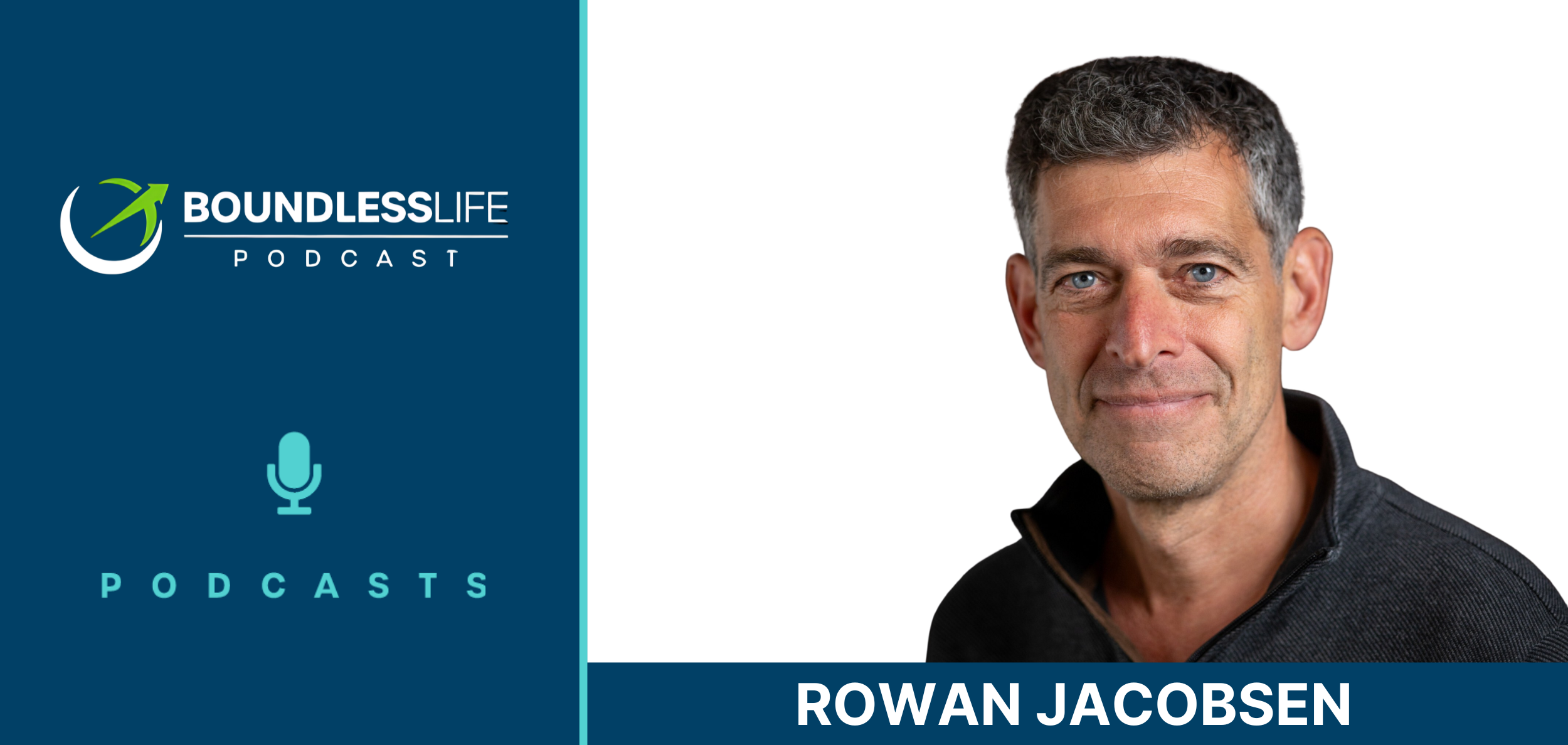
Boundless Life Podcast graphic with the show logo and microphone icon on a dark blue background at left, and a photo of a smiling man with short gray hair in a dark collared shirt at right. A banner across the bottom reads "Rowan Jacobsen."

Listen on:

Reading time: 5 minutes

What I Discuss with Rowan Jacobsen:

  • The central thesis of In Defense of Sunlight, and its seven-word rule of thumb: get sun, not too much, go outside…03:13
  • How the sun went from the darling of 1920s heliotherapy (sunlight-based medical treatment) to a bane we’re told to hide from…06:33
  • Why melanoma rates kept skyrocketing even as we moved indoors, which points to something other than everyday sun…07:56
  • The distinction that changes everything: melanoma tracks with intermittent sunburns, not steady lifetime sun exposure…11:06
  • The 2024 National Cancer Institute study suggesting UVA (ultraviolet A, the longer, deeper-penetrating rays) is linked to more melanoma, while UVB (ultraviolet B, the shorter, higher-energy rays that make vitamin D) looked protective…14:08
  • Why window glass, car side windows, and airplanes may be a hidden part of the melanoma story (they block UVB but let UVA through)…16:33
  • The real story on vitamin D that Rowan lays out in In Defense of Sunlight, why the supplement trials mostly flopped, and the two dozen other compounds your skin makes in sunlight…19:06
  • How sunlight lowers blood pressure through nitric oxide (the molecule that widens your blood vessels), and why leafy greens help…23:56
  • Why sunlight triggers natural opioids, and whether that “feel-good” response is a reward system pointing at real benefits…26:05
  • Where Rowan lands on sunscreen: why the first generation of sunscreens may have done harm, and why hats and shirts beat lotion…28:43
  • Why sunscreen is bad for coral reefs, and the Environmental Working Group (EWG) sunscreen guide, a nonprofit’s ratings of cleaner options…33:54
  • What to know about bemotrizinol, the big new sunscreen ingredient the FDA just approved after decades of use abroad…34:14
  • The lifeguard study on sun-loving skin microbes, and whether over-washing strips protective bugs before a day outside…37:31
  • How your ideal sun exposure shifts with skin tone, latitude, and season, and why darker skin needs far more sun for the same vitamin D…40:41
  • The month-long experiment Rowan runs near the end of In Defense of Sunlight, living in an Airstream in the Sonoran desert with no artificial light, and what it did for his sleep…45:09.

In this episode, journalist Rowan Jacobsen, author of In Defense of Sunlight, challenges everything you thought you knew about sun exposure. Modeled after Michael Pollan’s In Defense of Food, Rowan’s book argues people have been gaslit into a “zero-sun policy” that the science does not actually support. You’ll hear why melanoma is tied to intermittent sunburns rather than steady sun, the surprising 2024 research suggesting UVB may be protective while UVA is the real concern, and how office culture, window glass, and car windows may all be hidden pieces of the skin cancer puzzle.

You’ll also learn why the vitamin D supplement story is more complicated than the pills suggest, how sunlight lowers blood pressure through nitric oxide and lifts your mood through natural opioids, where sunscreen genuinely helps and where hats and shirts do better, what to make of the new sunscreen ingredient bemotrizinol, and how a simple 30-day reset of your light exposure could transform your sleep.

Rowan Jacobsen writes about science and nature and the less-explored corners of the world for Harper’s, Outside, The Atlantic, Scientific American, Smithsonian Magazine, The New York Times, The Washington Post, MIT Technology Review, Businessweek, and others, and his work has been anthologized in The Best American Science and Nature Writing and other collections. He has received awards from the James Beard Foundation, the Society of American Travel Writers, and the Overseas Press Club. He is the author of nine books, including A Geography of Oysters, Fruitless Fall, and Truffle Hound, several of which have been named to Best Book of the Year lists by The Washington Post, The Wall Street Journal, The Boston Globe, NPR, and Publishers Weekly. He has performed with Pop-Up Magazine, lectured at Harvard and Yale, and appeared on CBS, NBC, and NPR.

Want to read his latest book that reframes everything you know about sun exposure?

You can check out In Defense of Sunlight here

Episode Sponsors:

Dr. Murray Natural Products – ThymoQuin®: ThymoQuin® is a clinically researched black seed oil formulated to support healthy cortisol levels, improve resilience to everyday stress, and promote overall well-being. It’s the only black seed oil that meets U.S. Pharmacopeia guidelines and is backed by human clinical research. Visit doctormurray.com/ben and use code BEN25 for 25% off all Dr. Murray Natural Products.

Hiya: Give your kids the full-body nourishment they need to grow into healthy adults. I’ve secured a special deal with Hiya on their best-selling children’s vitamin—get 50% off your first order today! To claim this deal, you must go to hiyahealth.com/BEN (it is not available on their regular website).

ButcherBox: Stock your freezer with premium, responsibly sourced protein delivered right to your door. Choose from 100% grass-fed beef, pasture-raised chicken, wild-caught seafood, and more, all customizable to fit your routine. New customers can choose ground beef for life, chicken thighs for a year, or top sirloins for a year, plus $20 off your first box and free shipping when you visit ButcherBox.com/BEN.

TruDiagnostic: TruDiagnostic is an advanced at-home health test that uses epigenetic analysis to measure over a million biomarkers, giving you personalized, data-driven insights into your aging, energy, and overall health so you can stop guessing and start optimizing with a clear plan. Visit TruDiagnostic.com and use code BEN20 for 20% off.

Episode Resources:

People

Companies & Products

Studies & Research

Books Referenced

Podcast Episodes Referenced


Upcoming Events:

Eudēmonia | November 5–8, 2026

I’m speaking at Eudēmonia (November 5–8, 2026, in West Palm Beach, FL), a prevention-focused, science-based health, well-being, and longevity summit designed to add years to your life and life to your years. Across 3 days and 15 venues, you’ll experience 200+ talks from 120+ experts, 300 treatments, and 160+ brands covering everything from biohacking, longevity, and hormonal health to gut health, brain health, peptides, mobility, and more. I’ll be leading a talk and a movement session alongside some of the brightest minds in health today. Use code BGREENFIELD-EUD-100 for 10% off when you register here!

The Manzo x Ben Greenfield Table Private Dinner | Throughout 2026

If you want to taste one of the world’s rarest cuts of beef and experience my North Idaho biohacking compound firsthand, my family and I are hosting The Manzo x Ben Greenfield Table, an intimate, chef-catered VIP dinner on a few limited 2026 dates. The evening includes biodynamic wine, a live cooking demo, a multi-course Piedmontese feast finer than Wagyu, and a night of deep sleep in an EMF-free, fully grounded, circadian-optimized guest room. Anyone who reserves a half or whole Piedmontese bull from Manzo qualifies for a spot, so reserve your allocation and dinner here.

Summit Basecamp | February 4–7, 2027

Join me in Lake Tahoe for four days of world-class programming, outdoor adventure, live music, wellness, and real connection, all part of Summit’s global community of entrepreneurs and world-changing creatives. This is an exclusive, apply-to-join event—apply through my link, and you’ll be fast-tracked with a priority invitation. Apply to join Summit Basecamp here. 

Stay tuned for future updates—and you can always keep up with my LIVE appearances by checking out bengreenfieldlife.com/calendar!

Do you have questions, thoughts, or feedback for Rowan or me? Leave your comments below, and one of us will reply!

Ben Greenfield My name is Ben Greenfield, and on this episode of the Boundless Life podcast,

Rowan Jacobsen U.S. sunscreens are definitely a generation behind. And the reason is that in the U.S. sunscreens are regulated as an over-the-counter drug. But the scientists all know this. This is not news to most of the researchers in this field. It's baked into us to seek sunlight, it can be a really helpful tool, but it comes after things like hats and shirts.

Ben Greenfield Welcome to the Boundless Life with me, your host Ben Greenfield. I'm a personal trainer, exercise physiologist, and nutritionist, and I'm passionate about helping you discover unparalleled levels of health, fitness, longevity, and beyond. All right, if you're ready to upend everything you thought you knew about sun exposure, get ready for this episode. The author of the book In Defense of Sunlight, Rowan Jacobsen, joins me, and this book was great. It was kind of like Michael Pollan's In Defense of Food, except an entire treatise on how we've kind of been gaslit, I guess pun intended, when it comes to sunlight. Talk about sunscreen and UVA and UVB. Rowan writes about science and nature. He's a journalist, and you can find his work in Harper's, Outside, The Atlantic, Scientific American, New York Times, Washington Post. It's all over the place, and just a great author and a really, really kind of a pattern interrupt of a book. So, In Defense of Sunlight is the book. All the show notes are at BenGreenfieldLife.com/SunPodcast. Let's go talk with Rowan. I am late for today's podcast episode because I was out in the sunshine and justifying to myself the morning sun exposure based on my guest's book, which I listened to fittingly enough last week in Florida. Well, I was getting plenty of sun, and this book made me proud of that fact. So, Rowan, welcome to the show, man.

Rowan Jacobsen Thanks, man. Sounds like you're doing it all right.

Ben Greenfield Yeah. Well, you know, I'm trying, and you know, I actually listened to your book, and I hadn't come across you before. Take no offense. I just like you were just a new author for me, I'm like, gosh, I gotta like, I gotta get Rowan on the podcast and unleash him to the world, and so I'm literally like getting ready to drive from one side of Florida to the other on this hunt, and so I've got you know contact Rowan, figure out a way to contact Rowan in my notes, and then I flip on my phone, and a Joe Rogan podcast with you appears. Like, dang, crap, he beat me to it. So yeah, I mean Joe gets

Rowan Jacobsen around.

Ben Greenfield Yeah, I'm sure many more people know about you now after having been on that show. But anyways, the book In Defense of Sunlight, like I mentioned earlier, for those of you listening in, I'll put all the show notes at BenGreenfieldLife.com/SunPodcast. In Defense of Sunlight, obviously there was the old book, Rowan. I guess old at this time. Michael Pollan's In Defense of Food, so a little bit of a pollen-esque thesis there, but what is the central thesis? If you could come at it from kind of a simple standpoint for the audience,

Rowan Jacobsen yeah. So the basics are that the book is questioning the current paradigm we're in, where the standard recommendations are for people to avoid any unprotected sun exposure on their skin to basically wear sunscreen 365 days a year and basically avoid the sun in general and one like once I got into the research I realized that those recommendations were not really supported by the science so the book is just calling for a reconsideration of what would be a good, like healthy amount of sun to be getting,

Ben Greenfield right? So Michael's was, eat food, mostly plants, not too much, something like that, and then how would you phrase your version of that for the sun?

Rowan Jacobsen Get sun,

Ben Greenfield okay,

Rowan Jacobsen not too much. Go outside,

Ben Greenfield okay. Get sun, not too much, go outside.

Rowan Jacobsen But so the reason, yeah. So I like because people are not used to thinking of light as a type of input that can affect health. I thought, you know, what Pollan's book did so well was to show how some, you know, a couple of decades of bad nutritional science had led us into a bad place regarding how food can affect our health, and you know, he was calling for sort of a return to a more primeval understanding of what those inputs should be, and light is kind of like the missing input. So that's why I wanted to reference Pollan's book in my title.

Ben Greenfield Yeah, have you gotten a lot of pushback from like dermatologists or sunscreen companies or just the general, I guess, like anti-sun world, after writing this book,

Rowan Jacobsen I think indirectly, yeah, like no one wants to talk to me about it too directly because you know the science is the science. And one thing you find in this field, the scientists all know this. This is not news to the most of the researchers in this field that the sun has all these benefits. So the part that's missing is that that has never been brought into the consideration of what we should do about it. So that's where I think the conversation is actually going to work out pretty well. But right now we're definitely in that early stage where certain parties are like, "Don't listen to that misinformation."

Ben Greenfield Yeah. So Sun researchers, did you actually wind up like meeting Sun researchers or going to I don't know like if they have these sun conferences or something like that, and as a part of writing the book,

Rowan Jacobsen I did. Yeah, it started for me like eight or nine years ago when I started getting in touch with them and interviewing them, and I did end up going to the conferences. I was often the only journalist there, and yeah, it was like this whole alternative universe of people who had been studying the effects of sunlight on the body for sometimes decades, and it clearly established these health benefits. But they were working their little fields, and like that information was just never transferring to the public, and that amazed me. And so that's when I realized it'd be a good subject for a book.

Ben Greenfield Yeah, yeah. I mean, and there's so much fascinating history in the book. You have this article. I think you mentioned it in the Lancet, like back in the 20s, that calls sunbathing like this, you know, great aid to maintaining and acquiring proper health. And then, of course, you know, here we are, like 100 years later, and as you've already alluded to, it seems kind of backwards, but a little bit of an involved question. But you know, obviously, we used to have like sun therapy or heliotherapy clinics. There might still be a few around the world, but it seems like sun went from being something that was generally accepted as somewhat healthy to being like a bane on our existence. So, what exactly happened?

Rowan Jacobsen Yeah, that's exactly right. Like back in the 20s and 30s, which was this beautiful era of heliotherapy, like across the board, the top medical authorities were convinced that sun was really good for you, and they recommended that people get you know decent amounts of it without burning. And then, as you said, that flipped hard, and it really flipped after World War II. Like starting in the 50s, rates of melanoma, which is the most dangerous kind of skin cancer, like it kind of appears out of nowhere. Like in 1950, incidence rates were like two per 100,000 in the country. Melanoma was almost unknown, and then it starts just doubling, like decade after decade, and it goes from two per 100,000 in the 50s to like 10 to 15 per 100,000 in the 60s and 70s, then up to 20 to 25 per 100,000, and now we're up somewhere around 30 per 100,000. So from two per 100,000 to 30 during that whole era, through from the 50s through the 2000s, when everyone was saying stay out of the sun, so basically they kept saying stay out of the sun. People did to a certain extent, but melanoma rates kept skyrocketing, so the warnings got bigger and bigger.

Ben Greenfield So it wasn't that melanoma rates went up, and it was because people were ignoring the sage advice or whatever to stay out of the sun, like sun exposure did not go up correlative to the melanoma increase.

Rowan Jacobsen Well, that's a really interesting point, an interesting question because sort of the party line that we got from the authorities was that this whole rise in melanoma and other skin cancers was because we were all being so irresponsible and just you know flopping down in the sun all day and frying ourselves, and that before say 1950, 1940, nobody ever exposed themselves to the sun, right? But that doesn't pass the sniff test. It's pretty easy to look and see that at that same time we were moving from an agricultural society when most people were outside doing farming work or other outdoor jobs to an indoor office culture after World War II. Yeah, it's a

Ben Greenfield good point. Yeah,

Rowan Jacobsen yeah, and when you do look at the data, the data is not great, but you can see that like average hours outside for children, like outdoor playing time went from like three and a half hours a day in the 50s, and now we're down to under an hour per day. So it's pretty clear that you know the culture has switched to less and less outdoor exposure. At the same time, that skin cancer rates were going in the other direction.

Ben Greenfield Okay, cool. So we had the increase in melanoma, and is it that sparked the advice to begin staying out of the sun, or is it just happenstance that melanoma rates went up, and it was something else that caused this you know rampant widespread advice to stay out of the sun?

Rowan Jacobsen Well, that's a big question. Like it was. In 1928, that the first scientist basically took a UV lamp, zapped a mouse hard with it, and produced tumors. And sort of like that was the first evidence we had that ultraviolet radiation could actually trigger skin cancer. And then through the 30s and 40s, doctors kept sort of like looking at it. They weren't convinced it was a big problem in the real world, but by the 50s, you know, when skin cancer starts to go up, they're increasingly convinced that ultraviolet light is the issue that's causing most skin cancers. So at the same time, they're seeing this at what looks like an epidemic of skin cancer. They're starting to figure out that UV must be responsible, and if you can, you know, if you look back at pictures of like the 60s and 70s, you can definitely, you know, the Beach Boys were probably not practicing great sun prevention strategies. So you can see why everyone kind of freaked out, and so the messaging got really strident, kind of like when your teenager, you know, doesn't do what you tell them to do, so you kind of keep amping up the threats.

Ben Greenfield Yeah. So do you think that's what was causing the increase in melanomas was ultraviolet exposure?

Rowan Jacobsen I think yes, but it wasn't that simple because obviously people got a lot of UV back in the past. They weren't all getting melanoma, so something else was happening during that stretch, and if you look at the data on melanoma, gets super interesting because unlike some of the other skin cancers, melanoma we should say is the really dangerous one, the one that is most likely to turn into like a mortality. So it's the one that they mostly worry about, but it is not associated with lifetime sun exposure. What it is associated with, and people, yeah, this is surprising to a lot of people. What it is associated with is intermittent sun exposure or a history of sunburns.

Ben Greenfield Oh, that now that's an important distinction. That's kind of like, and I'll let you continue. But what this reminds me a little bit of is the advice that any alcohol at all is bad for you, and no differentiation between research that is looking at a glass of wine a night at say family dinner, and that being an average of seven drinks a week, or a seven drink Saturday night bender being seven drinks a week, and so there's a distinction between you know voluminous exposure all at once or small daily doses.

Rowan Jacobsen You have just hit on another one that drives me crazy that the alcohol one where they don't differentiate between like light and like hard bender like collapsed in the alley.

Ben Greenfield Yeah, weightlifting is bad for you if you decide you are going to spend eight hours on a Sunday afternoon at the gym. But it's a lot different going to the gym for 45 minutes every morning.

Rowan Jacobsen And I often actually compare sun exposure to exercise. It's kind of like exercise for your skin, where gradual amounts that kind of build up your skin's capacity seem to be very beneficial. But you can you could overdo it, especially if you're not in shape for it and hurt yourself.

Ben Greenfield Yeah. So intermittent sun exposure and melanoma is more of the issue, not just sun exposure in general.

Rowan Jacobsen Exactly. So like outdoor workers have lower rates of melanoma than indoor workers. So it looks like what the like that formula for melanoma is to have really pale skin that is totally unprepared for any kind of sun exposure because you work in an office and then you know you go on vacation for a week in Cancun, flop down on the beach for eight hours and completely like destroy skin cells that were not ready for that and have not seen that one coming. So that's what you want to avoid, especially if you have fair skin and like lighter reddish hair. Like that's the phenotype that has a much higher risk of melanoma.

Ben Greenfield So it almost seems like you could theorize that the post industrial increase in indoor office time, paired with perhaps just like hitting the beach or getting massive amounts of sun on the weekend, could be what's responsible for that increase in melanoma, especially when you consider the fact that prior to that point, people may have been just getting daily consistent exposure from more, say, jobs being outdoor in the sun.

Rowan Jacobsen Exactly, all the evidence like fits is consistent with that idea. And there's another really interesting piece of the puzzle dropped recently. I think it was 2024. Some scientists from the National Cancer Institute published the first study that looked that tried to differentiate between UVA and UVB and melanoma. So the ultraviolet light we divide it into two parts, UVA and UVB. UVB is the really high energy part of the spectrum. UVA is lower energy, but still higher energy than any of the visible light. And for a long time, we thought UVB was the main problem for melanoma because it can directly scramble DNA if it hits your DNA. It can mutate them. UVA isn't strong enough to directly mutate DNA, but it does create a lot of free radicals in the body, so it can screw up molecules and create reactive oxidative stress. But it doesn't directly hurt DNA, so for a while they thought UVA was not a problem and UVB was the problem, so during that you know like office worker era, all the sunscreens in the 60s and 70s blocked UVB but not UVA because they thought UVA was not a problem. So now this group of scientists at the National Cancer Institute they compared the impact on melanoma of UVA and UVB separately, so they tend to always come together, but in different proportions depending on where you are, what time of year it is. But so when they looked at UVA without UVB, it was definitely connected with much higher rates of melanoma. Like the highest exposed people were like two or three times more likely to get melanoma, but UVB without UVA was just the opposite. It was actually highly protective of melanoma, where the people getting the most UVB had less than half the rate of melanoma compared to the people getting the least. So it looks like we had it backward, and the reason that maybe UVB could potentially be protective is because UVB is the wavelength that makes vitamin D and a lot of other compounds in the skin that we know are completely protective and are there to protect you from cancer. Basically,

Ben Greenfield which one does Windows block? Like a glass window in your home, UVA or UVB?

Rowan Jacobsen That's the yeah really important question. UVB, but it lets quite a bit of the UVA in. So again, there's another data point that fits with this whole rise of melanoma during the 20th century. When before the 20th century, there wasn't all that much window glass out there. Actually, there were not office workers working in glass buildings. So that might actually be one part of the story as well. So car window glass also doesn't block all the UVA except through the windshield. The windshield has a different type of lamination on it, so it blocks all the UV. But your side windows and sunroof, if you have one, they block the UVB, but not all the UVA. So car culture might be a little bit of the story too.

Ben Greenfield Yeah, it might be. Do you know if they do anything with airplane windows? Because that's one I always think about, especially if I'm in an aisle seat and have no say over whether my window mate is going to close their shade. But you know, to me, just theorizing the, I don't know, altitude, proximity to the sun, etc. It seems like a good idea to close the shades on the airplane, but I don't know if do you think they coat the glass on the airplane window with anything, or if you're just getting even more UVA on an airplane.

Rowan Jacobsen Yeah, you know it's so funny. Like three days ago, literally, I was riding on an airplane. Like a lot of light was coming in through the window, and I had that exact question. And I don't know the answer, but it's an important one. I know that pilots tend to have very high rates of melanoma. Yeah, I've heard

Ben Greenfield that. Yeah, the

Rowan Jacobsen higher you are, the less atmosphere you have filtering out that UV. So you'd think they at least would coat the front windshield of the plane, but I don't know about the side windows. It's an important question to ask.

Ben Greenfield Yeah, and then you see those photos. You know, a few have gone viral of people who are like long haul truck drivers, and one side of their face, the face on the side of the window, I believe, shows remarkably greater signs of aging.

Rowan Jacobsen Yeah, for yeah, totally. There's one famous study with like that exact photo that you're talking about, where the guy looks like the left side of his face is almost like melting off. He's got so much photo aging, and there actually was a study that found that skin cancer rates in the U.S. are ever so slightly higher on the left side of people's bodies than the right, which would make sense for driving. And then you look in the U.K. and it flipped that they have slightly higher rates, yeah,

Ben Greenfield yeah. That's so interesting. Yeah, yeah. All these, all these little epidemiological clues. So you mentioned vitamin D and how there might be a little bit of a protective element there, especially if we're getting sun exposure not through glass, but from the full spectrum outdoors. But what is the story on vitamin D? Because of course we're told that we can supplement with it and maintain relatively high blood levels. Yeah, other people claim you should be getting it from the sun. I know you've got a few chapters that mention vitamin D in the book, but what did you find?

Rowan Jacobsen Yeah, D is a really important part of the story. So when UVB light in particular hits your skin. It makes vitamin D, makes it out of a cholesterol molecule. Basically, it like breaks a bond in the molecule, and molecule flips around into so a thing that becomes vitamin D. So back in like the 80s, scientists started noticing that people who had naturally high levels of vitamin D in their blood. Had lower rates of like all the classic diseases of aging, so all the cardiovascular diseases, heart attack, stroke, diabetes, many cancers, autoimmune diseases, dementia. Everything was lower in people who had higher levels of vitamin D, and they were making that D through sunlight. So suddenly, we kind of assumed that D was the answer to that whole story, and that D was kind of a you know a magic pill. So then the era of vitamin D supplements began because you could like telling people to get their D through more sun exposure could raise their risk of skin cancer. So everyone said, "Don't do that. Stay out of the sun. Take D pills." And then they did these very large clinical trials just to just make sure that raising everyone's D level artificially would achieve those same benefits as the natural D, and they didn't. Like almost all those trials, kind of like flamed out without showing benefits for people, unless you had very low D to begin with.

Ben Greenfield And did they do any actual head-to-head comparisons of increases in vitamin D from sunlight exposure with increases in vitamin D from supplementation?

Rowan Jacobsen Not that I've seen. It was all placebo versus supplementation, and that didn't seem to work. But so yeah, the people who are getting it through the skin seem to derive all those benefits. But it could be it means one of a few different things. Maybe the D being made in the skin is different somehow. Maybe it was something else about sun exposure, and D was just kind of like a measure that was along for the ride. But it's probably both of those. Like we now know, as usual, we with science we often simplify too much at first, and the reality turns out to be more complex. So we now know that D is just one of a whole like family of compounds, a couple dozen of them, that are produced in the skin by different combinations of amounts of sunlight and different enzymes that are in the skin, and if you take a D pill orally, you're just going to get the one classic, you know, canonical D. But if you do it in your skin, you're going to have two dozen different metabolites that are all like you know hydroxylated versions of vitamin D, but they all little are a little different. And the ones that have been tested have all been shown to have like anti-cancer, anti-inflammatory, antioxidant properties. Probably they're working in synergy somehow. Some of these things they probably each have their own slightly different.

Ben Greenfield Yeah, it is interesting. I didn't know that about the multiple forms of vitamin D, but I mean, vitamin D alone. If you look at what a lot of people are turning to red light beds and red light panels and you know red light mats for the whole idea of the mitochondrial support from red light, you know, the collagen, the elastin support, etc. You're getting a lot of that from the sun, also, and I would imagine that in addition to the vitamin D, there's some, you know, multi-system protective effects of just the red light exposure alone.

Rowan Jacobsen Absolutely, and red and infrared is a huge percentage of the solar spectrum. Like anytime we're in sunlight. About 53% of that light is infrared. We can't see it, but it penetrates the body pretty deeply. And yeah, I think you're right. I think mitochondria are going to end up being a big part of this story, as in so many like health stories. Like they're kind of right at the crux of it. And it's pretty clear that yeah, when you get that red light, that infrared light penetrating the body, it seems to make like they make ATP a little bit more efficiently. It looks like

Ben Greenfield yeah, it hit what is the cytochrome c oxidase. It upregulates ATP production with that particular part of the complex. You know, I interviewed this guy wearing this ring that like continuously monitors blood pressure, we did a whole podcast on just like the silent killer that is blood pressure, nitric oxide, you know, which vasodilates a lot of your vascular system, came up during that show, and you know we briefly talked about red light, but I figured you might know when it comes to blood pressure, cardiovascular health, risk of heart attack, anything like that. Did you come across anything that correlated protective effects of sunlight for those factors?

Rowan Jacobsen Yeah, for sure. And blood pressure is the other big part of the story. And like you said, it all goes back to nitric oxide. So yeah, it was like 15 years ago that some dermatologists discovered unexpectedly that when sunlight hits skin, it produces nitric oxide in the skin that then circulates throughout the body, dilates your blood vessels, lowers blood pressure. Our bodies basically pack our skin with nitrates from the food we eat, especially like leafy greens, root vegetables, stuff like that. And when sun hits those nitrates under the right circumstances, breaks them down into nitric oxide, which circulates through the body, dilates blood vessels. The clinical trial that I have looked at showed that like 20 minutes of UV light, sort of like simulate simulating summer sunlight in the UK, was enough to lower blood pressure like four to six points in volunteers. So that's enough, you know, four to six points, and that was just 20 minutes of exposure. So that level of blood pressure reduction would translate to you know globally millions of lives saved in terms of heart disease, stroke, and so on. And so it seems to be like red. Red produces some nitric oxide in the skin, and but blue produces a little more, and UV produces even more. So all those wavelengths have some effect on that.

Ben Greenfield Yeah, interesting. You know, there's this, this. I think it was not that long ago, 2014, I believe. You mentioned this in the book about how when sunlight hits your skin, it triggers the release of natural opioids. Right? Maybe one of the reasons people feel good when they're out in the sunlight. Do you think that? And it was kind of funny, by the way, because I think people were warning about tanning addiction because of that, and you know your increased cancer risk because you feel good when you're out in the sun, which is so funny. But do you think that there's like maybe an evolutionary biological mechanism via which we feel good and release natural opioids when we're out in the sun because of some of these potential mortality-reducing benefits of the sun,

Rowan Jacobsen yeah. To me, it's a clear evolutionary. It's a clear reward system. Like we were, it's baked into us to seek sunlight, and because it works. Like if it didn't work, you know, evolution would have stomped that one out a long time ago. We would no longer be seeking sunlight if it was that deleterious. And yeah, you're right. When it was first this was first discovered back in 2014, the concern was that people were would literally get addicted to the sun because of this release of opiates, but that they didn't really think about it from an evolutionary perspective, where there's obviously a reason that the reward system works that way. Like the people who are getting out and seeking sun are doing well, and you know their kids are doing well.

Ben Greenfield Yeah, I think it's kind of like a flawed mental approach because you could say, well, there's a definite opioid and dopaminergic response to ultra processed, heavily palatable foods rich in fats and sugars; therefore, it would be a good idea to avoid those foods. And you could interpret the findings on sun like that, like sun is nature's junk food. But then, when you look at sauna or exercise or thermal stress, cold plunge, you know anything like that that offers long-term protective effects from a wide variety of chronic diseases. There's also an internal reward mechanism. You know whether it's the enkephalins or endorphins from running, or the opioids from weightlifting, or the dynorphins from hitting the sauna. These are all reward mechanisms that keep us coming back to those activities because those activities are in the long run good for

Rowan Jacobsen us. Yeah, and everything you've just mentioned is it's hormesis, right? Like cold plunge, sauna. Like you're pushing yourself a little bit, and your body responds in ways that end up being super healthy long term. So yeah, the takeaway from all of this stuff and like just adds to that whole list of hormetic agents is you know you don't want to go too easy on yourself. You need to beat yourself up just a little tiny bit every day.

Ben Greenfield Yeah. So, what's your take on sunscreen? And the reason I'm curious about this is, you know, obviously in the health world, and probably for many people already listening to this podcast, their take would be, well, it could protect you from excess burning or the skin cancer risk that might be associated with that, but it's got forever chemicals in it, and they're either destroying the body or destroying the coral reef or whatever else. And then there's other people that say, "Well, if you use natural sunscreen, you're fine." Although you might be missing out on some of the benefits from the sun. So, what's your general take on sunscreen after writing this book?

Rowan Jacobsen Yeah, sunscreen is a really interesting one, and it's a good moment to talk about it because the formulations are about to change here in the U.S. But I think when you look back at the data, those sunscreens, that first generation of sunscreens in like the 50s, 60s, and 70s, they look pretty bad now. Like they were just blocking UVB, not UVA, and you know the privilege of hindsight, we can look back and go like that might have actually did the opposite of what you wanted to

Ben Greenfield do. Been worse than not wearing sunscreen at all. Yeah,

Rowan Jacobsen probably worse. Like the studies from that you from those 1970s era sunscreens, the sunscreen users had like twice the incidence of melanoma as non-users. Which kind of always got explained away, like you know maybe they're just the ones who needed sunscreen more because they had lighter skin. But no, it looks like by blocking UVB, which is what causes sunburn, and letting all that UVA in, and allowing people to stay out much longer in the sun and not burn and believe they were safe. You might have actually been contributing to melanoma with those, like those PABA based.

Ben Greenfield And by the way, I'll also name a little bit of a demographic factor here, which is that, and I'm sure you've seen this, Rowan, as have many people listening in. People might put on sunscreen and spend more time in the sun, and pretty inadequately apply that sunscreen because you see people leaving the beach and their face is all white, but then their back is just like peeling and red like a lobster because they never bothered to get that part of it. So I think there's also that factor of you know no matter how much of a UVA UVB imbalance there might be from the sunscreen applied areas of the body, if you're just like baking to the point of extreme burning, I don't care if sunlight's good for you. Like that's skin cancer territory.

Rowan Jacobsen Totally, absolutely, and that's why you know the smartest scientists that I speak to on this they generally say, you know, sunscreen, it can be a really helpful tool, but it comes after things like hats and shirts, you know, hats and shirts have a really awesome track record. Yeah, yeah. Shirts umbrellas. Yeah, those early studies showed sunscreen users tend to have higher rates of melanoma, and then that kind of goes away as the ingredients get better. Like by the '90s, it's kind of like even Stephen. Like sunscreen users don't have lower, higher rates of melanoma, but they don't have lower. So it was kind of a wash, and that's kind of where we're at now. Most studies don't show that sunscreen impacts melanoma much. It does lower your risk of squamous cell carcinoma, which is a less dangerous type of skin cancer that's much more common, actually. Yeah, and you get tend to get that when you're old. Like you know, the 85 year olds who are in the golf course every day, they get the squamous cell carcinomas and the basal cell carcinomas, and you usually just have to cut those off. They you know scarring. There's a lot of reasons you don't want to get them, but they don't tend to become deadly. Squamous cell does seem to be reduced about 30 to 40% by current sunscreens.

Ben Greenfield I want to ask you about this new sunscreen ingredient, but before I do, my take on the whole sunscreen piece is, if I'm going to be out long enough to burn, I generally apply a sunscreen that is as natural as possible to the areas of the body most likely to burn, and whether or not I have risk of burning, I have again like a natural sunscreen that I apply to the thinner areas of my body that I don't want to show signs of excessive aging, and that's namely just like the upper neck and like the ears and face area. So that's kind of like my strategy with sunscreen, and obviously with the rest of the body exposed except the face, I'm still getting ample, you know, infrared light and you know that UVA UVB combo.

Rowan Jacobsen Totally, and infrared it will it'll actually go right through your clothing, so you can get that even clothing. But yeah, like basically, you don't like you want to make vitamin D and these other super healthy compounds, nitric oxide, etc. You don't want your face and hands to be doing all that work, or they're going to get just way too much exposure. And sun exposure definitely does lead to skin aging, you know, photo aging, wrinkles, and so on. So yeah, like cruising around for short amounts of time in as little clothing as possible seems to have served people really well for hundreds of 1000s of years, so that's still a pretty good practice. But then, yeah, use sunscreen to avoid overexposure. Use clothing. Use like strategies, like time of day that you're out, all those things.

Ben Greenfield Yeah, I should name that the EWG thing called EWG.org. They have a good list of sunscreens on there that don't have too many of the like forever chemicals and endocrine disruptors in them. So that's a good resource for people.

Rowan Jacobsen Those guys are great. They do a good job. I tend to point people to them too.

Ben Greenfield Yeah, exactly. Yeah. So bemotrizinol, bemotrizinol. I don't even know how it's pronounced, but it's like the new sunscreen that a few weeks ago just got approved by the FDA. I don't know that much about. I've never used it. Do you know anything about it? I

Rowan Jacobsen do, and it looks good. It looks like it's about time. So yeah, bemotrizinol. People pronounce it different. I don't think anyone knows.

Ben Greenfield I think beam is pretty good just because of sunbeam. It makes sense. Yeah,

Rowan Jacobsen right. So bemotrizinol is an ingredient that's been used in the in Europe and Asia since about 2000, so probably like 25 years now, and it's become the main ingredient in their sunscreens, and it's pretty obviously better than what we've been using in the U.S. U.S. sunscreens are definitely a generation behind, and the reason is that in the U.S. sunscreens are regulated as an over-the-counter drug, but everywhere else they're just a cosmetic. So bemotrizinol has never gone through the safety testing that was required for the FDA to say, "Okay, you can use it in these U.S. sunscreens." And so what we have been using doesn't work nearly as well as that. So the reason that bemotrizinol looks pretty good is that they're big molecules, so they look too big to be absorbed easily into the body. Like the stuff we've been using here, like oxybenzone, avobenzone, definitely gets absorbed into the body at much higher rates than we've been led to believe, and you know the FDA, its own testing on that, like eight years ago, bemotrizinol is not absorbed into the body nearly as easily. It blocks all the UVA and UVB much more successfully than what we've got now, which doesn't block all of the UVA, and it just performs quite well. It's like oil soluble, so it feels good going on. So it looks like better across the board. And so it the FDA just last month approved it. You know the company had to kick in $18 million to do the safety testing. So that's why it hadn't been done before. But it's approved. It's going to start appearing this fall in sunscreens. And personally, I would make sure mine had that in it going forward.

Ben Greenfield Yeah, I wonder if based on the molecular size and the oil solubility, if there's any concern about the environmental impact. Because I just briefly alluded to the issue with coral reefs. I forget. Do you talk about that in the book? What sunscreen is doing to the reefs?

Rowan Jacobsen Yeah, and that's pretty clear. Even NOAA says sunscreen is clearly bad for reefs. Like it, it definitely affects coral and other marine life if it's in high enough concentrations. And you know, like places like Hawaii have tried to ban oxybenzone and certain of the other suspect ingredients, but that's a good question about the molecular weight. I haven't seen what the environmental impacts of it might be. So, but that's I think that'll be the next thing that people start looking at.

Ben Greenfield Yeah, that'll be interesting. You know, anytime you get into a pool or a cold plunge or whatever, and you have sunblock on, you see that like oily film accumulating around you, just got like multiply that by a million sunbathers, you know, on the average beach throughout the summer, and it's doing something to the reef for sure, or to just aquatic life in general. So speaking of aquatic life, there was the study on lifeguards. I think you've talked about this one in the book, where they found that their skin had a bunch of like beneficial microbial bugs that protected them against UV radiation at like millions of microorganisms on the skin, so it got me thinking. You know, when it comes to the skin microbiome, whether it be harnessing the benefits of the sun or somehow these microorganisms like limiting the amount of UVA or UVB radiation, is there something to the idea of like not lathering up too much and like rinsing off all your superbugs before you go out for a day in the sun?

Rowan Jacobsen I have wondered that same thing because yeah, like so. There's this is a growing body of research. I think it's going to become pretty important on the skin microbiome and its relation to the gut microbiome and to health in general, and yeah, it's clear that those skin bugs can be quite good for you. They reduce inflammation, among other things, if you have the right ones. And they like light, and they like sweat, and they like oil. So we sort of evolved to feed these bugs and sort of maintain a healthy population of them. And it's interesting because we developed we sweat like crazy, like we sweat like 10 times as much as chimps or other apes. That intensity of sweat glands seems to have evolved at the same time that we kind of moved from a forest environment in Africa to more of a savanna environment and lost all our fur, right? Became basically hairless. So it seems like that all happened so that we could sweat, probably so that we could perform better and cool better, as you know, under like tropical conditions, and that's probably when we started like cultivating this microbiome on the skin. So yeah, the lifeguard survey you referenced showed that at the end of the season, the lifeguards had a lot more of these sun loving bugs on their body than at the beginning. What I've looked at the basic research on the skin microbiome, it doesn't look like soap and water affects them too much, but I my suspicion would be like using like antibacterial soaps, like really like strong antibiotic types of products might be detrimental to them. Right,

Ben Greenfield like some of. Stuff like jujitsu athletes use, like the MRSA defense, that type of thing. That is interesting. You know what's going to happen if it hasn't happened already is somebody's going to come up with some kind of like a probiotic bacterial spray that is specifically designed to harness benefits of sunlight or act as a natural, you know, UVA protection or something like that. I would be shocked if that doesn't exist already, or isn't about to.

Rowan Jacobsen There is a company that was marketing a spray for your skin microbiome.

Ben Greenfield Yeah, I remember that they weren't marketing it specifically for sun benefits, but I do remember. Yeah, it was like I forget the name, but I know the one you're talking about. And then they did the same. I think the same company came out with one for the home, for like mold protection, so there's obviously a market around it. If you look at sun exposure, you know you mentioned briefly there are like skin types or the amount of melanin on the skin. Obviously, there's like latitudes, there's seasons. I know there's entire apps, you know, simply devoted to how much vitamin D can you get at different times of the day, based on where you're at. But if you were to provide people with kind of like practical recommendations based on what you know, having written the book, what do you think people should focus on? And not to make the question too complex, but how that might change based on your ethnicity, for example.

Rowan Jacobsen Yeah, I'm glad you asked that because the skin tone part of the question is key because we are so different in the amount of sunlight that we can block and the amount that we absorb and the amount of vitamin D that we can make. So people who have really dark skin, their melanin is just incredibly good at blocking almost all of that ultraviolet light and other light too, visible light too. That dark skin phenotype evolved in a tropical environment where you were just getting more than enough light. So the goal, like the challenge, was to filter it enough that it wouldn't be too much. So people who have dark skin need a lot more light, like five to 10 times as much sun exposure, to make an equivalent amount of vitamin D and probably all these other related compounds that we haven't really measured how much it takes. But so you can kind of use D as like the marker for all of them. If you have pale skin, like you know, if your ancestors evolved in northern Scandinavia, you are much more susceptible to overexposure from sun. So, and you're much better at making vitamin D. So that it's clear that pale skin phenotype evolved as people migrated into these cold northern environments where they were wearing a lot more clothing. There was just a lot less light over the course of the year, so they had to do what they could to make D and other healthy compounds using limited amounts of light. So where you are and who you are matters a lot. But I think like as a general recommendation for everyone, keeping your D high looks to be really important. And again, D is kind of a proxy for all these things. So that, like, I don't think a supplement is a bad idea, especially like it's kind of shocking the number of people who are vitamin D deficient now because you know we're all averaging 23 plus hours a day indoors. We're not hunter-gatherers anymore, so most of us have very low levels of D. So supplement probably isn't a bad idea, but even beyond that, you want to try to keep your D high with a little like midday exposure every day, and possibly supplementing with devices as well. I think is going to be the other big thing. Like there's a new device just coming on the market. That's what I was asking about. Your device behind you, if it was one of them, produces a very narrow wavelength of UBB, and only that designed to give you a big shot of vitamin D in like 60 seconds of exposure.

Ben Greenfield Okay, so it's like one of those vitamin D lamps.

Rowan Jacobsen Yes, this is a really high tech one. FDA cleared, so it's like the scientists are on board. So I think, especially people who live in more northern environments where they're they can't sort of naturally make a lot of vitamin D and get a lot of sun exposure, will probably benefit. Like it'll become the new tanning bed. Like tanning beds don't work because they're mostly UVA; they're the wrong rays. But using light to supplement what you're not getting from the sun because of where you live, I think will become a no brainer for a lot of people.

Ben Greenfield I interviewed the guy that made this one a while ago. It's UVA, UVB, and then LED based light therapy, but the UVA and UVB is you need certain super short exposure. It's like five minutes that it stays on for like a little bit of a daily vitamin D dose. And then I think the other thing that a lot of people maybe don't do with vitamin D, which I've said for a long time on the podcast, is to make sure that if you're taking it, you're taking the cofactors that increase absorption. I learned this from Dr. Carolyn Dean years ago, and that's your vitamin K complex and magnesium. You towards the end of the book did something I think is super cool, a little guinea pig self-experiment where you just like went off and tried to reboot your circadian rhythm or your relationship with light or something like that. Tell people what you did.

Rowan Jacobsen Yeah, well, part of the problem. I live in Vermont, right? I live in one of those like dark, cold northern environments, and so I'm working on this book, right? And I'm like going deep on the research and realizing how bad the environment I live in can be for people, especially you know winter six months long where I live. So in the midst of doing that research, I you know I'm starting to get a little more freaked out. And by March, I was like, I gotta see if like changing my environment can will like impact me. Like if this is all real, then I should be able to tell. And a big part of that was something we haven't talked about yet, which is circadian rhythms and the way light impacts that. So there's quite a bit of evidence now that too much artificial light at night will screw up your sleep. Like you won't start making melatonin early enough, and then you'll have more trouble falling asleep or more trouble staying asleep,

Ben Greenfield or a delay in sleep clock advancement from absence of natural light during the day. Yeah,

Rowan Jacobsen exactly, and yeah, and so that and so it's not just light at night; it's lack of light during the day, so that your body's internal clock doesn't really get to like get strong senses of what's daytime and what's nighttime. Like you want a lot of amplitude there. So I was like, "All right, I'm going to get some amplitude." So it was March, and I just booked a an old 1960s airstream in the Sonoran Desert in southern Arizona, kind of near Kit Peak Observatory. Like no artificial light for like 100 miles in any direction. So my experiment myself was I spent a month in the airstream in the middle of the desert and didn't use artificial light at night at all. So when the sun went down, it got dark, stayed dark till morning. So and I was curious, like what would that do to my sleep, but also just my general like my patterns of energy and wakefulness and so on, and so the upshot was, I was still working on my laptop during the day because, like, it was like during the day, there's light everywhere, so I was like, all right, that I can work on my laptop during the day. Plus, I had stuff to get there. Your

Ben Greenfield laptop kind of like pales in comparison, literally, to not a ton you're getting in the Sonoran Desert in the day. Yeah,

Rowan Jacobsen yeah, and so the first couple weeks, my sleep did not improve that much, even though my nights were insanely dark. But then I kind of had delivered, you know, the articles I was writing, and I was free to just like climb mountains during the day. So I got a ton of exercise during the day, an insane amount of light exposure. You know, I had a hat on and stuff, so I didn't get burned. But like my eyes and my skin were getting a lot of light, and my nights were super dark. And I had you know during the winter I had suffered from insomnia, where I you know the classic middle age insomnia where you wake up for a couple hours in the middle of the night. That all went away, and so by like with that really strong difference in amplitude, it was I could tell that you know my brain was just getting a very strong sense of when the day began, when the day ended, and when it was time to sleep. And in addition to good sleep, that my energy levels were just way better during the day.

Ben Greenfield Yeah, it's so interesting. So many people suffer with sleep issues, and if they didn't even move to the Sonoran Desert for a month, but literally just like did a reboot where they're like, okay, 30 days solid. I'm going to be super strict about blue light blockers at night, dimming the screens, super dark bedroom, you know, and then morning curtains open, blasting myself with sunlight, getting blue light, getting natural light, and just rinse, wash, and repeat that for 30 days. Bedroom, cold, dark cave, and then sunlight or sunlight phobia absence during the day. It would solve sleep issues for a lot of people.

Rowan Jacobsen Absolutely, and beyond sleep issues, a lot of other metabolic issues too. I think presents that. So yeah, that I mean, then that is the easiest action item of all. Just like get that morning light. Try to get yourself as much like daylight exposure as you can. Keep your exposure to especially blue light low in the evenings, and that's just going to having like downstream. It's going to affect everything in a positive way.

Ben Greenfield Yeah, In Defense of Sunlight, you document like not just the heart health stuff that we talked about, but like stroke, obesity, diabetes, dementia, depression, Parkinson's, myopia, like lung health, autoimmune issues. I mean, we kind of scratched the surface on the benefits that you get into, and just kind of like the shocking history of being gaslit and thinking that sunlight bad for you. So for those of you listening in, check out the book. It's really good. I did the audio version, which was super good. That was you reading it, wasn't it? It

Rowan Jacobsen was. I hope you could. I don't know. I hope you couldn't tell when I got a sore throat on like day three.

Ben Greenfield So I'll link to the book and everything. If you go to BenGreenfieldLife.com/SunPodcast, and then if you have questions, comments, feedback, if you know the answer to that question about airplane windows that we were wondering, anything like that, let me know. I like to read the comments and like to hear what you guys think. So, BenGreenfieldLife.com/SunPodcast. Rowan, thanks so much for doing this, man.

Rowan Jacobsen Thanks. Great conversation.

Ben Greenfield To discover even more tips, tricks, hacks, and content to become the most complete, boundless version of you, visit BenGreenfieldLife.com. In compliance with the FTC guidelines, please assume the following about links and posts on this site. Most of the links going to products are often affiliate links, of which I receive a small commission from sales of certain items. But the price is the same for you, and sometimes I even get to share a unique and somewhat significant discount with you. In some cases, I might also be an investor in a company I mention. I'm the founder, for example, of Kion LLC, the makers of Kion branded supplements and products, which I talk about quite a bit. Regardless of the relationship, if I post or talk about an affiliate link to a product, it is indeed something I personally use, support, and with full authenticity and transparency, recommend in good conscience. I personally vet each and every product that I talk about. My first priority is providing valuable information and resources to you that help you positively optimize your mind, body, and spirit. And I'll only ever link to products or resources, affiliate or otherwise, that fit within this purpose, so there's your fancy legal disclaimer.

Ben Greenfield

Ben Greenfield is a health consultant, speaker, and New York Times bestselling author of a wide variety of books.

What's Blocking You From Living Boundless?

Thoughts on In DEFENSE Of Sunlight: The *Real* Truth About The Sun, Vitamin D, UVA, UVB, Sunscreen & More, With Rowan Jacobsen

Leave a Reply

Your email address will not be published. Required fields are marked *

Related Podcasts

Dr. Amie Hornaman wp

How Fixing Your THYROID Improves Fat Loss, Hair, Skin & Energy, With Dr. Amie Hornaman

Listen on: Reading time: 6 minutes What I Discuss with Dr. Amie Hornaman: How Dr. Amie Hornaman gained 25 pounds...

Best of - Longevity WP

Longevity MASTERCLASS: Biological Age, Mitochondrial Repair & The Superhuman Protocol

Listen on: Reading time: 6 minutes What I Discuss with Gary Brecka, Dr. Anurag Singh & Dave Pascoe: How Gary...

Boundless Life Podcast promotional graphic featuring guest Dr. Tyna Moore, a smiling woman with short gray hair, wearing a black top with layered necklaces, against a white background. A dark blue sidebar on the left displays the podcast logo, a microphone icon, and the word 'PODCASTS,' with 'DR. TYNA MOORE' labeled in a blue banner at the bottom right.

How To Microdose GLP-1s Correctly: Lose The Fat, And KEEP The Muscle – With Dr. Tyna Moore

Listen on: Reading time: 6 minutes What I Discuss with Dr. Tyna Moore: Why I’m re-airing this conversation, where Tyna...