Home » Podcast » Eat 5 Pounds A Day of Broccoli OR Do *This* (+ Get Microplastics Out of Tissue Fast?!)

Eat 5 Pounds A Day of Broccoli OR Do *This* (+ Get Microplastics Out of Tissue Fast?!)

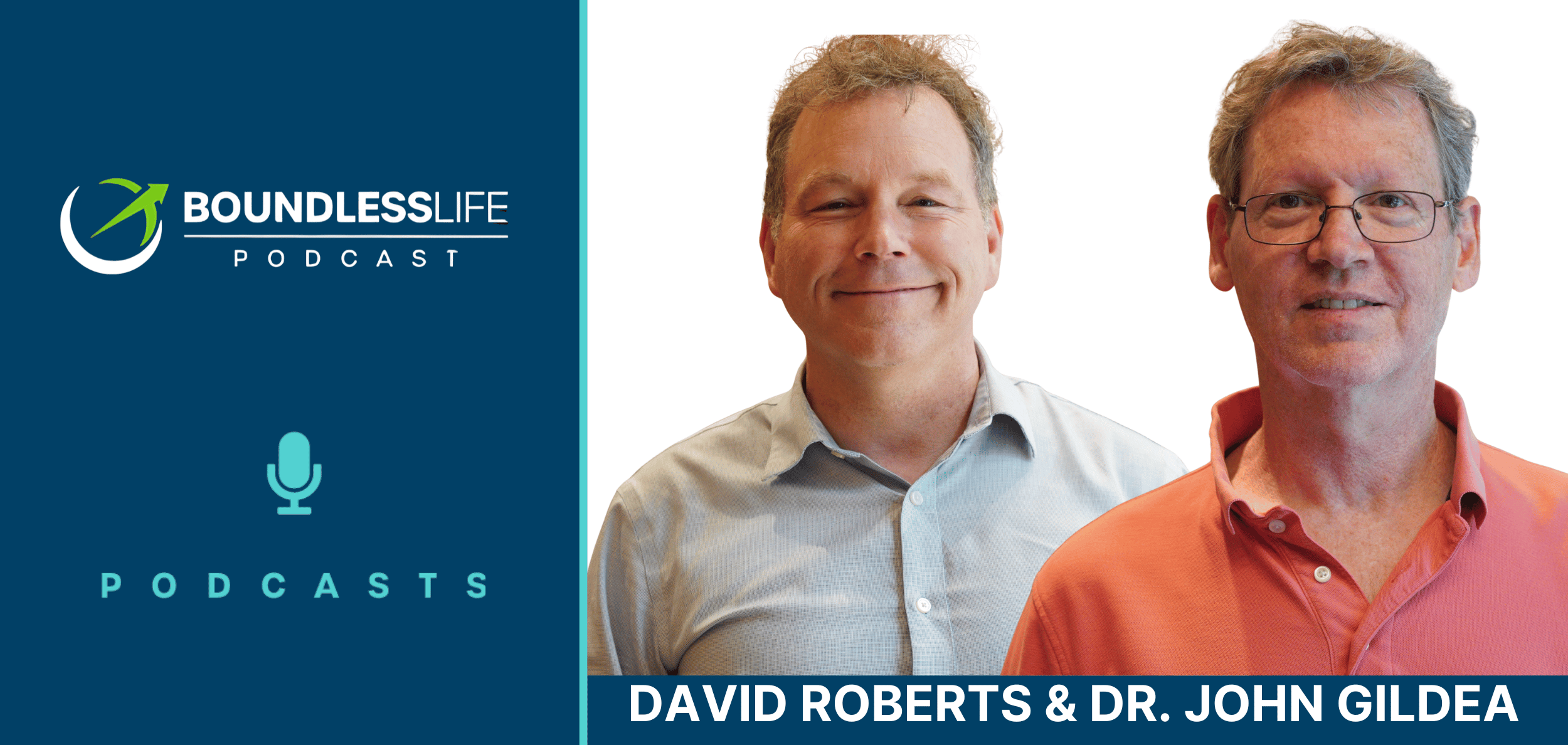
Boundless Life Podcast promotional graphic featuring headshots of David Roberts and Dr. John Gildea, both smiling men wearing glasses, against a light background with the podcast logo and microphone icon.

Listen on:

Reading time: 8 minutes

What I Discuss with David Roberts & Dr. John Gildea:

  • The touching origin story of Mara Labs, how they tested 60 compounds directly on David's wife's cancer cells and sulforaphane ranked third in killing them, and why the company was named in her honor…06:49
  • How the daily hassle of growing and juicing fresh broccoli sprouts drove the search for a stable capsule form, and how John’s breakthrough stabilizing sulforaphane became the foundation for BrocElite®…07:52
  • How sulforaphane activates the Nrf2 pathway and why that triggers a cascade of antioxidant and detox genes that glutathione alone cannot match…09:53
  • Why sulforaphane is a hormetic stressor like exercise or cold, how sulforaphane switches on your body's built-in cellular defense system more directly than exercise, and the key finding that sulforaphane induces Nrf2 in older people even when exercise no longer can…21:57
  • Why most broccoli supplements do not actually contain sulforaphane, how your cooking method affects broccoli's nutrient absorption, and how to read a label so you know what you are buying…24:41
  • How Mara Labs solved the shelf stability problem that made most sulforaphane supplements useless, why keeping the full family of compounds from the broccoli intact matters, and what happens to the Nrf2 signal when you add watercress to the mix…28:54
  • John's BrocElite timing: morning and night to match your circadian Nrf2 pulses, plus a dose after exercise…33:17
  • Why about a quarter of people who take BrocElite report unusually vivid dreams, how sulforaphane upregulates brain-derived neurotrophic factor (BDNF), and why it's included in the SleepElite® alongside berberine…36:24
  • Which biomarkers to track to measure whether sulforaphane is working for you…40:14
  • Why the theoretical concern about NRF2 being hijacked by tumors to resist chemo does not apply to exogenous sulforaphane supplementation, and what the breast cancer stem cell data shows…55:48
  • How sulforaphane triggers your cells to push microplastics out through the digestive system rather than letting them accumulate in tissue, and the follow-up study tracking microplastics across saliva, urine, blood, and feces…1:00:17
  • Why resveratrol is paired with sulforaphane in the microplastics detox bundle, and how it activates the CLEAR network to make your lysosomes more efficient at clearing microplastics…1:04:43

In this episode, you will hear the origin story of Mara Labs, a company built around sulforaphane, the active compound found in broccoli that has been studied across thousands of papers covering almost every major chronic disease, and why most people are not actually getting it from their broccoli supplements. You will discover why the way your broccoli supplement is made determines whether any of it reaches your cells at all, what dose of the active compound moves the needle on inflammation, detox, and cellular defense, and how a single compound compares to eating five pounds of broccoli a day. You will also hear something that has not been discussed publicly before: a pilot study showing that this same compound can trigger your cells to release microplastics, synthetic particles now found in human blood, lungs, and breast tissue, and push them out through your digestive system.

David Roberts is the co-founder and managing partner of Mara Labs. After his wife Mara was diagnosed with breast cancer in 2012 and passed away in 2017, David channeled his experience into building a supplement company grounded in clinical science rather than ingredient trends. Under his leadership, Mara Labs developed BrocElite® Plus, the first naturally stabilized sulforaphane supplement, and BerbElite®, a highly bioavailable berberine for metabolic and sleep support.

Dr. John Gildea is Chief Science Officer and co-founder of Mara Labs. He holds a PhD in molecular biology and has studied redox biology, gene expression, and the NRF2 pathway for over 20 years at the University of Virginia. Author of more than 60 peer-reviewed publications, he developed the proprietary stabilization method that made shelf-stable sulforaphane in capsule form possible and has since led research on sulforaphane's effects on microplastics, cancer stem cells, and kidney oxidative stress markers.

For the next week, you can save 15% off all Mara Labs products using code BEN at checkout. 

Biomarkers to Track:

  • IL-6 (blood): inflammatory marker, drops quickly with sulforaphane
  • CRP (blood): general inflammatory marker
  • LDL and cholesterol profile (blood): LDL receptor upregulation increases liver reuptake
  • Blood pressure: especially relevant for angiotensin-dependent hypertension
  • 8-OHdG (urine): the oxidized DNA marker, and 8-OHG for RNA. Worth tracking but interpret with caution as sulforaphane activates OGG1-mediated DNA repair, which initially increases urinary 8-OHdG as oxidized DNA is cleared from cells and excreted via the kidneys. Levels may rise before falling over time, so a short-term increase does not mean the supplement is not working. Available via the Genova Diagnostics Oxidative Stress 2.0 Urine Test and the DUTCH Complete
  • Microplastics (blood/saliva): Lumati test used by Ben monthly
  • Sleep scores on wearables: commonly reported improvement by BrocElite users
  • HRV: indirectly improved via sleep quality and inflammation reduction

Episode Sponsors

Our Place: Upgrade to Our Place today and say goodbye to forever chemicals in your kitchen. Go to fromourplace.com/ben and enter my code BEN at checkout to receive 10% off sitewide.

Formula IQ: Recuperate IQ by Formula IQ is a comprehensive copper supplement designed to support mitochondrial energy, iron balance, and metabolic health by pairing bioavailable copper with essential cofactors your body needs for proper utilization, which is especially crucial if you've been under chronic stress or supplementing with high-dose zinc. Try it at formulaiq.com and use code BEN for 10% off.

Kettle & Fire: You can invest in high-quality ingredients and still miss one of the biggest levers in your kitchen, what you cook with, which is why Kettle & Fire’s Beef Tallow keeps it simple with one ingredient, 100% grass-fed and finished fat that delivers better browning, crispier texture, and a higher smoke point for consistent cooking performance. Head to kettleandfire.com/BEN25 and use code BEN25 for 25% off site-wide, including their beef tallow.

Xtend Life: Most vitamin E supplements contain only alpha-tocopherol, but the more compelling research points to tocotrienols for cardiovascular, brain, and healthy aging support. Xtendlife’s Tocotrienols Vitamin E is formulated without excess alpha-tocopherol and is backed by over 26 years of formulation expertise in New Zealand. Visit www.xtendlife.com/benschoice and use code GREENFIELD for 15% off your order.

Anthros: You can train hard and still undo a lot of that progress by sitting for the next eight hours, which is why Anthros takes a different approach, starting with a Precision Posture System at the pelvis so your spine naturally aligns, plus a built-in Clinical Posture Consult that helps identify issues you may not even realize you have. Go to anthros.com and use code BEN for an exclusive $200 discount and try it risk-free for 60 days.

Episode Resources

People

Companies & Products

Studies & Research


Upcoming Events:

Boundless Live Tour Presented by FormulaIQ | Summer 2026

Join the world premiere of Boundless: The Man Who Became Human, a new feature documentary that follows 20 years of body optimization colliding with life's immeasurable moments—marriage, family, and faith. Experience a live podcast recording and intimate Q&A with my family and me in Los Angeles, New York, Austin, and Moscow, ID, one night in a room full of people chasing the same thing. Purchase tickets here. 

Health Optimisation Summit | September 11–13, 2026

I'm speaking at the Health Optimisation Summit in London (September 11–13, 2026) at the Business Design Centre. This isn't your average health conference. HOS unites the best minds in biohacking, longevity, nutrition, fitness, and medicine, with one goal: to actually make people healthier. With 35+ world-class speakers, 120+ cutting-edge brands, and 4,000 like-minded people all under one roof, it's two days that could genuinely change how you approach your health. Get your ticket here and use code BEN to save 10% off registration! 

Eudēmonia | November 5–8, 2026

I'm speaking at Eudēmonia (November 5–8, 2026, in West Palm Beach, FL), a prevention-focused, science-based health, well-being, and longevity summit designed to add years to your life and life to your years. Across 3 days and 15 venues, you'll experience 200+ talks from 120+ experts, 300 treatments, and 160+ brands covering everything from biohacking, longevity, and hormonal health to gut health, brain health, peptides, mobility, and more. I'll be leading a talk and a movement session alongside some of the brightest minds in health today. Use code BGREENFIELD-EUD-100 for $100 off when you register here!

The Boundless Couples Retreat | November 10–14, 2026

Ready to reconnect and recharge with your partner in paradise? Join the Greenfields at the stunning Prana Maya resort in Belize for the Boundless Couples Retreat, November 10–14, 2026. It's a five-day, all-inclusive escape designed to deepen your relationship, restore your vitality, and create memories that last a lifetime. From relaxation and adventure to intimate relationship coaching with Jessa and me, every detail is crafted to send you home with a stronger bond and a reinvigorated spirit. Spots are limited, so discover more and secure yours here today!

The Manzo x Ben Greenfield Table Private Dinner | Throughout 2026

If you want to taste one of the world's rarest cuts of beef and experience my North Idaho biohacking compound firsthand, my family and I are hosting The Manzo x Ben Greenfield Table, an intimate, chef-catered VIP dinner on a few limited 2026 dates. The evening includes biodynamic wine, a live cooking demo, a multi-course Piedmontese feast finer than Wagyu, and a night of deep sleep in an EMF-free, fully grounded, circadian-optimized guest room. Anyone who reserves a half or whole Piedmontese bull from Manzo qualifies for a spot, so reserve your allocation and dinner here.

Stay tuned for future updates—and you can always keep up with my LIVE appearances by checking out bengreenfieldlife.com/calendar!

Do you have questions, thoughts, or feedback for David Roberts, Dr. John Gildea, or me? Leave your comments below, and one of us will reply!
Ben Greenfield: My name is Ben Greenfield, and on this episode of The Boundless Life Podcast.

David Roberts: Have you had vivid dreams recently? And he's like, silent, he's like, no way, that's this stuff. Users are definitely like, "This is amazing."

Ben Greenfield: I think just the whole science and the biological impact of this is something that deserves more exploration. I'm super curious about it. So, walk me through the moment when you realized broccoli was going to be your career.

Welcome to The Boundless Life with me, your host Ben Greenfield. I'm a personal trainer, exercise physiologist, and nutritionist, and I'm passionate about helping you discover unparalleled levels of health, fitness, longevity, and beyond. You might be familiar with my book, Boundless: Upgrade Your Brain, Optimize Your Body, and Defy Aging. It got a little out of control writing it. The original manuscript was over 1,500 pages. I got it down to like 700 pages and released it several months ago — about a year ago. The fully updated version of Boundless — kind of like the bible of biohacking, a cookbook for everything you'd ever want: hormones, gut, digestion, etc. And I realize it's a little bit intimidating to pick up and read, and here's why I'm telling you all of this. I am curious, if you would like the audiobook version of Boundless — like on Audible or elsewhere — for you to download, listen to at your convenience, in the gym, on your commute, on your hike, while you're cleaning your kitchen, in the bathtub, taking a crap, I don't know, whenever you listen to an audiobook. So, anyways, if that is remotely interesting to you, and you want me to make that audiobook happen so that you can have it in your ears wherever you go, go to BenGreenfieldLife.com/BoundlessAudio — BenGreenfieldLife.com/BoundlessAudio. Your opinion matters.

My guests on today's show figured out how you could get a lot of the benefits of eating like five pounds of broccoli a day without actually eating five pounds of broccoli a day, plus a way to get rid of microplastics — not just in the gut, but in the tissue — and we go way beyond that. My first guest is David Roberts, who co-founded Mara Labs. They make supplements, including the world's first naturally stabilized sulforaphane supplement. If that was Greek, don't worry, you'll get it during today's show. It's called Broc Elite, and my other guest is Dr. John Gildea, who advises David as the chief science officer and co-founder of Mara Labs. He studies cell resilience, detoxification, aging biology, and has a PhD in molecular biology, and his research laid the foundation for this Broc Elite stuff, which I started taking about a month ago after digging into some of the research, and I had all sorts of questions for these guys. So, all the show notes are at BenGreenfieldLife.com/MaraPodcast — that's BenGreenfieldLife.com/M-A-R-A-Podcast. Let's dive in.

All right, you guys ready to talk broccoli?

David Roberts: Oh yeah, always.

Dr. John Gildea: Yes.

Ben Greenfield: Yeah, I mean, obviously. Well, maybe not obviously. I think the first time I heard about sulforaphane and all these antioxidants from broccoli was maybe Rhonda Patrick talking about frozen broccoli sprouts or something like that years ago that she would dump into her blender. And, you know, people talk about broccoli sprouts and broccoli seeds, but then a lot of it seems to be based around this compound sulforaphane, and I think just the whole science and the biological impact of this is something that deserves more exploration. I'm super curious about it, David. I mean, I met you — I think it was at a health event somewhere — and then later you were at an event at my house. I know you've been interested in broccoli for a while, so walk me through the moment when you realized broccoli was going to be your career.

David Roberts: Yeah, I mean, it came about from my wife's cancer journey. She was diagnosed with breast cancer in 2012 and wanted to treat it integratively, and wanted to look at the different phyto-molecules to take, and pretty early on I met John, and read about sulforaphane. We ended up grabbing some of her cancer cells from her tumor and growing them in our lab and putting 60 different things on them — 60 different supplements. Sulforaphane was number three in directly killing her type of cancer, and I think that was when I knew it was important. But it wasn't until a couple years later — you know, we actually grew lots of broccoli sprouts, and I would juice them for Mara, and she'd drink the juice almost daily — but it's, you know, it's kind of a pain in the butt, right?

Ben Greenfield: And Mara is your wife?

David Roberts: Mara was, yeah, my late wife. Yeah, she passed — she passed in 2017.

Ben Greenfield: I'm sorry.

David Roberts: So, yeah, basically our kids were one and three at the time, and you know, it's summertime, they get wild, and they're tough to travel with. So I think over lunch one time I was kind of bemoaning that it would be nice to have a stable form of this, because all the broccoli supplements on the market are the precursor molecule — except for two, ours and one from France, which I'll get to. Basically, two years after that lunch, John matter-of-factly says, "Yeah, I stabilized sulforaphane," and Mara and I are like, "What?" And so he tested it. Sure enough, he had. And so she actually started raising the seed money for the project to bring it to market, and then she took a turn for the worst and died. So after that we took the seed money and started the company.

Ben Greenfield: Well, I actually — so I knew your company, your company's name is Mara Labs — I had no clue that it was named in honor of or after your wife.

David Roberts: Yeah. Well, her name was Mara. Mara comes from the Bible — they're the bitter waters of Marah. But like myrrh, when you break myrrh and grind it up, it can turn sweet, and so there's some symbolism there. Yeah.

Ben Greenfield: Okay, super interesting. Okay, John, you're probably the guy to talk about the nerdy biochemistry behind this. It sounds like David already mentioned the word sulforaphane, so did I. Walk me through exactly what it is, and why — from what I understand — the way that it's converted or assimilated in the body is important.

Dr. John Gildea: Yeah, it's a very unique molecule, even in the context of a whole bevy of other natural compounds. It doesn't have a problem with bioavailability — so that's the first thing.

So, if you asked me when did I become interested in it: my wife got breast cancer in 2003, and right within a couple of years of that were the first papers that really got my attention. It was a series of two papers that make this really cool connection. The first one was a study done at Hopkins, where they took this broccoli sprout beverage — they grind up broccoli sprouts and then gave it to women right before they had breast reduction surgery — and then one hour later they took out the breast tissue that had been removed and measured sulforaphane in the breast tissue, and found it to be between one and two micromolar. So it's a really high concentration. And the follow-up paper was that they developed an assay — I don't think it was the same group — but they developed an assay for mammosphere [FLAG 1] cultures, where they grow breast tissue in a dish that selects for cancer stem cells. They're really difficult to treat. And they showed that basically these cells — the ones that go on to metastasize — were killed by that same concentration, and so up to 80% of the cancer stem cells in this mammosphere assay were killed by that same one-to-two micromolar dose.

Those two pieces of information put together just put it on a completely different level for me. Like, you can put curcumin on cells and see killing, but you know it's sometimes between 40 to 100 micromolar, and you just don't get that concentration when you take curcumin in general. So just to compare the two: whereas when you take sulforaphane, it doesn't have a problem with bioavailability — it goes to the tissue, and then that tissue responds to sulforaphane by activating this transcription factor called NRF2 — and I don't know how granularly you want to get into that, but...

Ben Greenfield: I would love to dive into this. Okay, so sulforaphane — when I consume that, whether in supplement form or it sounds like in broccoli sprout form, for example — that's activating a pathway called NRF2. That's actually what's going on mechanistically.

Dr. John Gildea: Yeah.

Ben Greenfield: And then what is the NRF2 pathway?

Dr. John Gildea: Yeah, so NRF2 is a transcription factor that is held in check in the cytoplasm of the cell, meaning it's grabbed onto by a protein complex and degraded. So the baseline default status of it is degradation — so it's gone, it's not there, it's sitting waiting to be activated. So it's a transcription factor, and as soon as sulforaphane goes in and binds to its partner protein, called KEAP1, it releases NRF2 to evade being degraded. So that's the step that sulforaphane does — it releases it from being degraded. And then that NRF2 can then go through a number of other steps to get into the nucleus, bind to partner proteins, and turn on a whole bunch of genes downstream in the nucleus. There are like 12 steps of regulation in NRF2 after KEAP1 releases it, so it's complicated, and we can talk about some of those other interactions that make it functional downstream. But basically that's the mechanism: it separates KEAP1 from NRF2 and releases it to become a transcription factor and turn on a whole bunch of genes downstream.

And sort of the history of sulforaphane comes into play here. People didn't realize that the first study, by Talalay [FLAG 2], was to induce phase II detoxification genes. They wanted to prevent cancer, and so they wanted to find compounds that turn on this detox pathway, and it turns out sulforaphane was the best inducer of that, and they were just looking at that — they didn't know anything about KEAP1 or how it's regulated, they just knew it turned on these genes that got rid of toxins. So that's sort of the interesting history: everyone says it's the best inducer of NRF2, but that actually came much later. They actually knew that it was a detox compound first.

So there's a lot of other things. They actually found out that it was bound to a transcription binding site in the promoter of a bunch of genes and was called the antioxidant response element well before anyone knew the KEAP1 story — that was around '98 — and so this turns on a bunch of genes that are actually antioxidants. They're enzymes that are turned on, and those enzymes are very processive. So instead of the classic model where vitamin C binds to a reactive oxygen species and inactivates it one-for-one, it turns on both the glutathione system — which is the major antioxidant in the body — and then it also turns on all these enzymes that deal with reactive oxygen species, a couple hundred of them. So every single form of reactive oxygen species is dealt with by an enzyme, and those enzymes turn on tens of thousands of reactions per second, instead of a one-to-one ratio. So there's kind of a one-two downstream...

David Roberts: ...and that system stays on for about 72 hours with one serving, so once it's turned on, it stays on.

Ben Greenfield: Got it. Okay. So, to summarize — the way I understand NRF2 — for people who want the really nerdy cocktail party science: that stands for "nuclear factor erythroid 2-related factor 2." That's NRF2. So...

David Roberts: Say that three times fast. Exactly.

Ben Greenfield: So, we often hear people throw around the term like, "Oh, glutathione is the master antioxidant." Well, that may or may not be true — it certainly is a powerful antioxidant — but NRF2 would be the master regulator of the antioxidant response. Now, KEAP1 is not something I've really talked about on the podcast before — K-E-A-P-1 — KEAP1, that holds NRF2 in the cytoplasm and then tags it for degradation. And what sulforaphane is doing is it's modifying KEAP1 and allowing NRF2 to translocate to the nucleus and then activate all of these antioxidant response element genes that you're referring to — like glutathione synthesis, or these phase II detox enzymes, there's other things like heme oxygenase — so basically what sulforaphane would be doing is causing this downstream kind of like shotgun response in terms of antioxidant activity.

Dr. John Gildea: Yeah, great description.

Ben Greenfield: Cool. So my understanding also is that NRF2 activation is kind of like a hormetic response, meaning sulforaphane — like many other elements in the plant kingdom — would be mildly toxic, and that's triggering this endogenous antioxidant response. Would you classify sulforaphane as a hormetic stressor in that regard?

Dr. John Gildea: Yeah, for sure.

Ben Greenfield: Okay, same as like exercise or cold exposure or fasting, or other plant toxins, or some would even say like alcohol.

David Roberts: Right.

Dr. John Gildea: Yeah. The connection between the two — I don't know how precise you want to get — but when you exercise and you make a bunch of reactive oxygen species, you change the redox state of the cell, and then that can be responded to by the same system. But sulforaphane is a little bit more direct — it actually covalently reacts with those reactive cysteines that are in KEAP1. So it's a one-two step with reactive oxygen species: you have to change the redox state — which means the state of glutathione from GSH to GSSG, that's the redox state, the readout of reactive oxygen species — so it's indirect for reactive oxygen species, but direct for sulforaphane. And the only reason I bring that up is because — and you probably know this — in a young person, if you exercise, you get an induction of NRF2, and in an old person, you don't. And so an older person who normally has to exercise extremely hard to get NRF2 induction can get an NRF2 induction just with sulforaphane — it doesn't have a problem responding to that. That's a key distinction, because if you ever worked out side by side with someone my age versus your age, I'm going to be sore for three days and not be able to sit on the toilet, you know, if I overdo it — and that's because I'm not recovering, because NRF2 is not being induced.

Ben Greenfield: Interesting. So basically, as the hormetic benefits of exercise decline with age, you could potentially use other elements — such as sulforaphane — to get NRF2 activation, to kind of keep up with what exercise might have done for you at an earlier age.

Dr. John Gildea: Yeah.

David Roberts: And we have people doing that. We have people taking it for recovery who are athletes — a small subset of our users — and they're definitely like, "This is amazing. I can recover and work out the next day."

Ben Greenfield: Okay. I definitely want to talk about timing and dosing later on, as it even relates to exercise — like before, after, etc. But before we do, I want to dig into the broccoli piece a little bit more. I think I first heard this from Rhonda Patrick, that broccoli has this glucoraphanin in it, and that's kind of like the precursor, and then when you chew on raw broccoli, there's an enzyme that converts it to sulforaphane. But from what I understand — and maybe this relates to what you were talking about, David, about how you were glad when John told you he'd figured out a way to stabilize sulforaphane — that whole conversion is somewhat fragile, like if the broccoli is cooked at too high a temperature, you could kill the myrosinase enzyme that would allow that conversion to occur, and there's high variability in terms of conversion in the gut. So talk to me about kind of like the comparison between trying to get sulforaphane from glucoraphanin sources like broccoli or supplements versus figuring out a way to stabilize it and have it available in something like capsule form.

David Roberts: I mean, I think the main thing — a couple things to keep in mind. First, not every broccoli seed has enough glucoraphanin to produce sulforaphane. About five years ago now we were testing a bunch of sources, and we were shocked to find that most of the sources we were getting — we were getting some from Amazon, looking for organic brands and trying to figure out sourcing — and I think we got six, and five of the six couldn't make sulforaphane. It didn't have glucoraphanin. Then we waited six months and bought about nine, and eight of the nine could. So at that point, you know, we're not a seed company, but we do offer the seed — because some people like the seed — and we offer a seed that we know will produce about 400 milligrams of sulforaphane per half pound. So that's one thing.

The other thing is — we kind of touched on it — but basically, like you said: you have a head of broccoli, you start chewing it, you break the cell wall, which releases the enzyme. The glucoraphanin in the broccoli is stable, and that's why all of the supplements on the market, except for ours and one other, have this stable form of glucoraphanin — because they can't stabilize the final product. And now if you chew it, the myrosinase converts the glucoraphanin into sulforaphane, you swallow it, and you get the benefit. But if you try to put sulforaphane in a capsule, it degrades — hours to days — it's not shelf stable.

And so we do some research on sulforaphane, but there's a lot of research on sulforaphane out there. What we specifically show is that we have stable sulforaphane in the capsule. Now, the other thing is, it's not just sulforaphane in broccoli. There are numerous other cousin molecules. The family of them are called isothiocyanates, and so we extract all of them, and we add an additional one called PEITC from watercress. We do that because there are a couple of papers in the literature — and we've shown it ourselves — where there's a synergistic effect with sulforaphane. By synergy, if you think of additive effect: it's one plus one equals two; synergistic effect is one plus one equals five. So you get a five-times induction of NRF2 versus just doing PEITC alone or just doing sulforaphane alone. So all of those isothiocyanates work together to bring sort of the magic of broccoli — it's broccoli plus, and the plus is the PEITC. But when you're doing a glucoraphanin supplement, let's say it converts perfectly — you're just getting sulforaphane, and you're not getting the synergy of the other isothiocyanates.

Ben Greenfield: Okay, that kind of begs the question, John how do you actually stabilize it? Is this like a secret sauce thing? Are you guys able to share how it's stabilized in capsule form?

Dr. John Gildea: We thought of patenting it, and I think just because it was so early in our development, we thought it was so complicated that people wouldn't be able to figure it out. So far, it's been true, so they don't let me talk about that — even though I want to.

David Roberts: No, it is the secret sauce. It's pretty backbreaking to make, and there are countries that rip off patents that have cheap labor forces, so we're just not doing that.

Ben Greenfield: Okay, got it. So it's stabilized but you can't share exactly how.

Dr. John Gildea: Yeah, and it's way more stable than a lot of people think. We just got data back from bottles that were opened five years ago and kept at room temperature, and there was only 2% loss in five years. So it's even more stable than we originally thought.

Ben Greenfield: Okay, cool. All right, let's dig into some brass tacks here. First of all, if we classify sulforaphane as a hormetic stressor — and I even referred to it as a mild toxin — you know, a lot of plants have plant defense mechanisms that some people, like pure carnivore enthusiasts, try to avoid entirely. My take — and I would imagine, since you have a sulforaphane company, possibly your take also — is that mild hormetic stress is actually a good thing, because we get this antioxidant response, and so I don't avoid hormetic stressors altogether. However, with hormesis, you're trying to get a little bit of what we might call a bad thing to induce a good response. So, could you overdo it with sulforaphane as a hormetic stressor?

Dr. John Gildea: We thought so, but we've had some very determined people ordering our product who took unfathomable amounts of sulforaphane on a daily basis for years. Even after warning that the clinical studies say you shouldn't take more than 350 milligrams — which is the safe upper limit they suggest — ours is around 10 milligrams, so that's a long distance away from that. We wanted to show that the small dose in our capsule induces NRF2, and as far as I know, that had never been shown anywhere in the literature, but I showed it in our lab — you just take a normal dose of it and you get NRF2 induction. That's the equivalent of five micromolar, which is also higher than has ever been shown in the bloodstream.

I would say that the mixture is what makes it safe, because it's this whole bevy of isothiocyanates. We ran into that really early, because we took purified sulforaphane that you buy from Sigma — just 99.9% sulforaphane — and put it on my favorite cells, which are kind of like the canary cells. You determine how much chemo a person can take by whether they kill this cell type — it's the proximal tubule cell in the kidney — and you can put sulforaphane on it and start killing cells at around 10 micromolar. So we were worried about whether there could be damaging effects of taking too much, and since ours was at five micromolar, we were concerned. So I started taking our own product and putting it on those same cells, but I could put up to 20 times as much and still not get any cell death. There's some magic in the mixture that makes it safer.

And, yeah, that's just one of those things I don't exactly know how to get out into the world, but we were so convinced by it that a bunch of us went back there and took gigantic doses of the solid material, basically, and we're fine.

David Roberts: And not only did it not kill the kidney cells, but we saw them growing new kidney cells — which is sort of completely counterintuitive and interesting.

Ben Greenfield: Okay, so that's actually kind of related to what I was going to ask next. No damage, but what about what some might refer to as anabolic inhibition? What I'm getting at is that post-exercise, a lot of times it's recommended not to take high doses of, say, vitamin C or vitamin E, or do an extremely long cold plunge, because you might blunt the natural antioxidant or anti-inflammatory response that you want the body to mount — because it's that response that allows for things like mitochondrial biogenesis, satellite cell proliferation, things like that. If I were to take sulforaphane or something like broccoli post-workout, would that be a bad idea because it could potentially blunt the natural hormetic response from exercise?

Dr. John Gildea: Yeah, my understanding from reading the literature is that the majority of the papers using vitamin C and other direct antioxidants show that it's during the exercise itself where if you blunt the actual ROS production, you blunt the response to it — but that afterwards, that signal has already been sent to your muscles and you're getting that response, while the damage from the reactive oxygen species is ongoing. So it's beneficial to take it afterwards. What you're saying could be true, and we actually have exercise physiologists right now at Thomas Jefferson University answering that question. They're doing the studies, and we're supplying the sulforaphane, so those will be known in the near future. But I would say it's not really known yet. At least the data on long-distance athletes tracked by many people — they don't see blunting. They see the repair being faster. So I think inducing mTOR with, you know, say branched-chain amino acids, and the actual stress from the exercise itself come first, and then the recovery is about cleaning up the mess. That's at least how I understand it, but until the literature is clear on that, I think it's still a question mark.

Ben Greenfield: Okay, yeah. I mean, maybe to play it safe, don't take it right before a workout or during your workout — save it for after. But related to timing: just based on my own understanding that a lot of the liver's antioxidant pathways are upregulated in the evening and during a night of sleep, I've been taking a couple of capsules before bed. This is a new thing for me in the past month since I got some bottles from you guys. But as far as what you know — how would you approach dosing and timing? Would you do it a couple of times a day? Would you save it for the evening? How would you guys approach it?

Dr. John Gildea: I'll give my little blurb, but David's really good on the angle with sleep. I'm interested in circadian rhythm specifically. In the morning, you know, getting your period [FLAG 3] and clock genes synchronized — at the start of the day and then at the end of the day it's BMAL1 [FLAG 4]. Those are the factors that entrain your circadian rhythm. Well, there's an NRF2 pulse at both of those points. So if you want the optimal time to take sulforaphane, first thing in the morning and last thing at night — that'll be entrained to your circadian cycle. But in terms of sleep in general, David is probably really good at talking about the benefits of broccoli at night during sleep.

David Roberts: Yeah. I mean, the main benefit is that it upregulates BDNF — brain-derived neurotrophic factor — which is at the heart of brain health. It helps grow new neurons and protects existing neurons. And so one of the things — you know, most people don't walk around and say, "Oh, my phase II detox pathway is engaged right now," but they will say, "Hey, my hip doesn't hurt anymore." That's what we see. And we talk about the anti-inflammatory aspect, but from the sleep aspect we have a 100-day unconditional money-back guarantee, and so early on I was doing all the customer service calls. And this one guy is like, "Stuff doesn't work, I want my money back." I'm like, "Fine, let me just ask you a question: Have you had vivid dreams recently?" And he's like, silent — he's like, "No way, that's this stuff?" And so about a quarter of the people who take it can have vivid dreams. That's why sulforaphane is in our sleep supplement — we have a Sleep Elite product, and we put the broccoli in there specifically for that.

And berberine too is great for sleep. It upregulates — in fact, one of my favorite papers is how berberine outperforms Ambien and Valium as a sleep aid. It increases serotonin by 30% and dopamine by 25%.

Ben Greenfield: And you're talking about berberine — what people would normally use as something like a blood glucose management agent.

David Roberts: Yeah. I created our berberine product to be highly bioavailable, so instead of regular berberine decreasing your blood glucose in about two to three weeks, ours does it in like four hours — you can get into ketosis-like levels. But when I went out to ask for early testimonials, I was thinking blood glucose, and 75% of the people came back saying, "We take it for sleep." And so that's when I found that paper. So that's in our sleep product too, along with some serotonin precursors.

But yeah, going back to broccoli and inflammation — we mainly get people saying their joints don't hurt anymore. And so we did a preclinical study early on, because our joints stopped hurting and we were like, this seems to be working quickly. We showed that it decreased IL-6 — which is an inflammatory marker — by 28% in 24 hours, just from taking 10 milligrams. So that's enough that you can feel the difference.

Ben Greenfield: Yeah, that actually relates to something I wanted to ask you guys. You know, it's kind of like the elephant in the room question for a lot of people taking supplements: beyond qualitative responses — such as perhaps sleep parameters, or maybe even blood glucose response for people using a CGM — would there be specific labs, like blood or biomarkers, that you would track to see if upregulation of these antioxidant pathways was actually working? Like if you wanted to do a pre-post test, in a perfect world, what would you be testing?

Dr. John Gildea: So in my world, I do a lot of work on kidneys, and when you activate this pathway that produces reactive oxygen species — called Ang II [FLAG 5] — Ang II is a peptide that's associated with hypertension. In the kidney, if that's running high, you make reactive oxygen species, and there are urine markers. There's 8-OHdG, but there are two different markers: a DNA marker and an RNA marker for oxidative stress. Both of those would be reduced by sulforaphane. Those are relatively easy to obtain. And then David already mentioned IL-6, so that's an inflammatory marker that is dramatically changed in 24 hours — a 30% drop in IL-6 is gigantic.

Ben Greenfield: So, IL-6. Sorry, what were the other two kidney markers you mentioned, John?

Dr. John Gildea: Yeah, they're the oxidized versions of RNA and DNA — 8-OH uracil and 8-OHdG, something like that. We can send you the names afterwards.

Ben Greenfield: Are those lab tests that someone's doctor would know how to order, or do you need to go to like Direct Labs or Rupa or something like that to order these tests?

Dr. John Gildea: Yeah, I don't know if those are ever part of normal testing, but you can definitely get them tested. They're part of a lot of organic acid tests that are urine-based, so it's not an expensive test.

Ben Greenfield: Okay, all right. Send those ones to me. And by the way, for those of you listening in, the show notes will be at BenGreenfieldLife.com/MaraPodcast — M-A-R-A-Podcast. What were you saying, David?

David Roberts: You know, as far as normal markers — John kind of alluded to this — but people's blood pressure would actually go down.

Dr. John Gildea: Yeah, there's quite a few papers on sulforaphane and calming down the immune system in a lot of different ways. There's a huge number of people who take it for autoimmune conditions, and then also for Ang II-dependent hypertension. If that's basically how your blood pressure is high, that's also another metric: blood pressure.

David Roberts: Cholesterol is another way you can see that it's working. Your cholesterol profile will improve.

Ben Greenfield: Dave, I'm going to stop you there for just a second. So the cholesterol piece — do you know, like, which markers? Is it Apo B, Lp(a), LDL, oxidized LDL? Do you know any details on the cholesterol piece?

Dr. John Gildea: The major papers that show it for sulforaphane and berberine is by increasing the LDL receptor in the liver, so it increases reuptake.

Ben Greenfield: Okay, so you'd see a decrease in overall LDL. What else were you saying, David?

David Roberts: And just general inflammatory markers.

Ben Greenfield: Okay. So, like IL-6, CRP is another common one you'd see on a blood measurement — those type of things. Yeah, okay, cool. You guys see anything — just throwing this out there, not to toss a curveball yet — but HRV, like nervous system sympathetic/parasympathetic balance? Anything like that? Obviously it's going to be affected by sleep quality, so indirectly, if it's helping out with sleep, it could influence that. But have you seen anything else related to HRV?

Dr. John Gildea: Yeah, nothing jumps off the top of my head, just because I haven't studied it, so I don't know those pathways.

David Roberts: I mean, anecdotally — not HRV specifically, but overall sleep. People will have wearables and just start taking broccoli and say, "This definitely helped my sleep scores."

Ben Greenfield: I'm just curious, from a fun visual standpoint — I mentioned I've been taking a couple of capsules, and I've been taking them before bed. How much broccoli sprouts or seeds would I need to eat for a comparative amount of what I'd get from a couple of capsules of Broc Elite?

David Roberts: Yeah, so...

Dr. John Gildea: There's some subtlety in there, which is interesting. The classic equivalency is that four ounces of broccoli sprouts is equivalent to our product —

[Speaker in background]: Two capsules.

Dr. John Gildea: Two capsules — and that's equivalent to five pounds of adult broccoli. But the thing that throws that off is the synergy that happens with PEITC. So when I looked at NRF2 induction at the cell level, it was equivalent to five micromolar sulforaphane. But sulforaphane alone, no matter how much you take, never goes above about two micromolar in the bloodstream. So if you want to get a bigger induction than taking, say, 16 ounces of broccoli sprouts, the way to get there is through synergy — because of how these natural compounds are metabolized in the body, it rarely gets above two micromolar. That's very potent — not to diminish that; that's the amount used in the thousands of studies that showed effects on almost every chronic disease out there. But the actual functional dose in our product is equivalent to five times that in terms of NRF2 induction. So you can't just eat five times as much broccoli sprouts to get the same induction.

David Roberts: And I think that's important. I can't tell you, Ben, how many times we're at conferences and John speaks, and he always says glucosinolate supplements don't necessarily convert to sulforaphane, so you may not get all the benefits you read about in the literature. And then people will come up — especially physicians — and say, "What about this? This is what I use." And I look at it, and it says glucoraphanin — or sometimes it says "sulforaphane glucosinolate" — and the glucosinolates are the precursors, so that throws people off.

Ben Greenfield: Okay. So, even if it has the word "sulforaphane" in it, if it precedes the word "glucosinolate," that indicates it's still a glucoraphanin precursor, not sulforaphane itself?

David Roberts: Yes, exactly. "Sulforaphane glucosinolate" literally means precursor of sulforaphane.

Ben Greenfield: Those bastards. Okay.

David Roberts: Well, I can't do anything about it. But yeah, I mean, so it's really important — if you want the benefits of sulforaphane, you either grow broccoli sprouts, or take our supplement. But don't take a glucoraphanin supplement, because you're not going to get the benefits. The whole conversion issue is: we have myrosinase in our capsule — well, maybe, maybe — but the myrosinase isn't stable, and even if it is, you have to deal with stomach acid denaturing the enzyme. So you just take the guesswork out of it by doing the conversion and putting the final product in the capsule.

Ben Greenfield: Got it. I'm tracking. Talk to me about just a very simple logistical question: fasted, empty stomach, or with a meal — any difference or superiority in terms of timing with other foods?

Dr. John Gildea: Yeah, we haven't seen any difference between those states. I've done the NRF2 assay in both states and they seem to be similar. Food matrix doesn't have much of an effect on sulforaphane. It resides really well in both aqueous and hydrophobic environments — in membranes — so it's just this weird molecule that happens to be perfectly happy in both. It slightly prefers hydrophobic environments. Its log P value is one, meaning that in an octanol-water phase system it slightly prefers the lipid side, whereas PEITC, the other compound, has a log P value closer to three, so it prefers the lipid environment a little more. We think that's probably why the combination works really well for inducing NRF2, and especially for some of the other known targets of sulforaphane — which could be a whole other conversation. There are other targets beyond NRF2. Specifically in KEAP1, PEITC preferentially activates certain reactive cysteines because they're in a more hydrophobic pocket, and if you take sulforaphane and PEITC together, you get a larger bevy of KEAP1's redox-sensitive domain activated, and it plays out in these other direct targets as well.

Ben Greenfield: NRF2 activators — I guess for the real nerds out there who may have been paying close attention — is a label being given to a lot of things: curcumin, resveratrol, EGCG from green tea extract. These have all been labeled as NRF2 activators. Where does sulforaphane rank on that list in terms of what you guys have found?

Dr. John Gildea: Yeah, as solitary compounds, all those others — we sell highly bioavailable versions of them, so they're very highly bioavailable — but as sole compounds, they don't activate NRF2. I've never seen any of them do it, and I've tested other products that claim NRF2 induction, worked with their scientists, and because I have this super-sensitive NRF2 assay, I never saw any induction.

So the way we think about it — and it's actually the order in which we added products to our website — is that sulforaphane is able to induce NRF2, but all the other compounds we offer are synergistically working with sulforaphane to induce it more. We can talk about all the different steps where those can intervene. But as an example: curcumin activates NRF2 through a pathway called PKC delta, and that phosphorylates NRF2, allowing it to go into the nucleus. So there's a baseline amount of that activity in a cell, and then if you take curcumin, those two together — sulforaphane and curcumin — get even more NRF2 going into the nucleus. That's an example. There are two different mechanistic places where you get NRF2 induction, and then together, even though curcumin is only going to end up being less than 10 micromolar equivalent at the cell — which is not enough alone to induce NRF2 — the two together make it even stronger. So that's our lineup: quercetin inhibits the proteasome, we can go down the whole line if you want to, but every one of them has an effect on NRF2.

Ben Greenfield: When you say every one of them, you mean every one of the ingredients in Broc Elite?

Dr. John Gildea: That too, but also the other products we're offering at Mara Labs. So we offer a curcumin product that affects a particular mechanism. Berberine is via ceramide kinase activation — that's a connection to another pathway, GSK3 beta, which is nuclear export, so it slows that down. You can go down the line: quercetin, EGCG, they all have their own effects. They're all known inducers of NRF2 in cell culture, but that doesn't mean they do it in you. They have such a huge hurdle inside the body to get to the cell at a concentration equivalent to what cell culture studies use that they just don't. And so that's why we always say our flagship product is sulforaphane — you should do that because it has many targets and it gets to the cell at a therapeutic dose. But if you want to enhance it and also have some of the other benefits of, say, curcumin — curcumin is amazing at NF-kB, at inflammation, by a different mechanism — when you put them together, it's synergistic at NRF2, but it's also synergistic at NF-kB. So that's the logic, and how we added compounds to our SKU lineup.

David Roberts: And I think it's important to say — when we were treating Mara, we were reading all these papers about these amazing compounds. Curcumin — when we put curcumin directly on her cancer cells — ranked number two in directly killing her cancer type, even ahead of sulforaphane. But then the question is: how do you know, when you take those capsules, that enough is getting to the cells? And they're just not — even the more bioavailable forms like Meriva [FLAG 6], which are phytosomal or liposomal forms — that only gives you a 3x improvement, and that's not enough, because less than 1% of curcumin gets through the gut barrier. So all of these fat-soluble, lipid-soluble molecules that John was talking about are very difficult to get through the gut barrier and into your cells in a biologically relevant way. So what we do is make sure that if we're offering it, it is getting through the gut barrier to the cells in a biologically relevant way to turn on the pathways John was talking about.

Ben Greenfield: Now, one thing that I came across as I was looking into sulforaphane and NRF2 pathways in preparation to talk to you guys, is that tumors might be able to kind of hijack NRF2 to protect themselves from the effects of chemo or radiation. Is that something you've come across? Is that a concern? Like, should people who are undergoing chemo not use a product like this, or can you speak to that at all?

David Roberts: We've had this question numerous times.

Dr. John Gildea: Yeah, from consumers. But I've never talked about it openly on a podcast before, so I'm actually really happy this came up, because in review papers they make two gigantic semantic leaps. What happens is: when you have a cancer and are then treated with chemotherapy, that's the impetus for that cell to change. The way that a cell gets over that hurdle is by inducing NRF2, and the way that cell bypasses the harm of chemo is by selecting for cells that have mutant KEAP1. In those cell types, NRF2 is on all the time, and that's how it survives chemo — it's due to the selection pressure that's part of all cancer treatments. But just because that happens doesn't mean that if you take sulforaphane, it does the same thing. There's no paper showing that.

Ben Greenfield: Okay, so there's a difference between exogenous administration of sulforaphane and endogenous upregulation of NRF2 pathways via something like a cancer cell.

Dr. John Gildea: Yeah, and our direct proof of that is actually really interesting. That paper we talked about earlier — where breast cancer cells were killed by sulforaphane in the mammosphere assay — those are stem cells. Stem cells have the characteristic of being able to pump out — using multidrug resistance proteins — any chemotherapy. And so sulforaphane selectively kills a cell that is a cancer stem cell. The irony there is that you're warned that you definitely don't want to take sulforaphane if you have advanced cancer, but in our own hands, when we take a cell that we know has a KEAP1 mutation and has NRF2 on all the time — you can think about it logically: if NRF2 is on all the time, taking sulforaphane doesn't turn it on any harder, so it doesn't make it worse. But interestingly, those cells are way more sensitive to sulforaphane. The mechanism is that when that cell has that ability, it's working on a razor's edge of the amount of ROS in the cell. If it goes above that, it'll die. It has this razor's edge of how much ROS is in the cell — it's upregu- [cuts off], it has this NRF2 that's making it barely survive. But if you take sulforaphane, and especially PEITC, you get this transient depletion of glutathione, where it binds to it and glutathione goes down just a little bit at first, and that kills them. So these cells are actually much more sensitive to sulforaphane or PEITC than an average cell.

And then I like to always buttress that with: every other cell in your entire body, you want to be higher functioning. So if you support every other cell in your body with sulforaphane, it's going to help your immune system, help so many other different systems. So I think — even though you can't take medical advice from me because I'm not a doctor for treating cancer — a summary of the research on the topic would not indicate that it's a concern.

Ben Greenfield: Okay. Not to be taken as medical advice, for those of you listening in — this is not prescriptive — but it sounds like it's not a concern. Were you going to say something, David?

David Roberts: Yeah. And to be clear, the label on the bottle — as required, all supplements are required to state that the product doesn't treat, prevent, or diagnose any medical condition, including cancer.

Ben Greenfield: Thank you for saying that. And ROS, by the way — when you hear John say ROS, he's referring to reactive oxygen species.

So, of course, for anybody listening in, if your curiosity got peaked about this, John and David are giving us all 25% off any of the Mara Labs products. The main one we've been talking about is Broc Elite, but there are other products on there as well — the curcumin product, the Bare Brain product. If you go to BenGreenfieldLife.com/MaraLabs — M-A-R-A-Labs — the code is BEN. For a week after this podcast comes out, it's 25% off. After a week, it drops to 15%, which is still good — still substantial. But if you get your hands on some within a week after listening to this, you'll get an even bigger discount. The show notes are at BenGreenfieldLife.com/MaraPodcast — M-A-R-A-Podcast.

David, John — this is super fascinating, and now I feel like I've got all my questions answered about sulforaphane, and I know a little bit more about how to use this Broc Elite effectively.

David Roberts: I do want to just interject one thing. John and this other researcher out in North Dakota — this researcher showed that broccoli mobilizes microplastics for excretion, and John was able to do a follow-up study showing that it basically comes out in your poop.

Ben Greenfield: People are getting oral exposure to microplastics, which is considered to be one of the major sources. You're saying it can act as a binding agent for that?

David Roberts: No, it doesn't act — well, it doesn't bind it. Basically, the microplastics get engulfed in lysosomes in the cells, and sulforaphane causes exocytosis, where it spits out the microplastic into the extracellular space, so that your bile can help get it into your bile system, your lymph, and excrete it.

Ben Greenfield: Wait, are you saying that based on that mechanism of action it could work systemically beyond the gut?

Dr. John Gildea: That was the inference we drew.

Ben Greenfield: That's kind of mind-blowing.

Dr. John Gildea: Yeah, he did a self-experiment and ended up with the highest count of microplastics in his blood in history, according to the website that measures microplastics.

David Roberts: His name is John Gildvig [FLAG 7]. He's out of North Dakota. He has a Substack where you can read about his research.

Dr. John Gildea: And then we wanted to know whether the microplastics actually get out of the body, so we measured saliva, urine, feces, and blood. When there's a big bump in blood microplastic mobilization, we see the same signal show up in feces — but not in urine or sweat. So, even though we found them in sweat and urine, suggesting those are pathways for excretion, the sulforaphane-induced release specifically ends up in feces.

Ben Greenfield: Cool. Gotta change the name to the Microplastic Pooper or something like that. That's actually really good information.

Obviously, if you guys saw the recent documentary on Netflix called The Plastic Detox [FLAG 8] — but it's a concern. It's a growing concern. There's a lot of people suggesting gut binding agents, others suggesting plasmapheresis, or some kind of blood filtration, which is expensive and difficult to get sometimes. This sounds like an interesting solution.

I do my own microplastics assay — salivary. I use a company called Lumadi [FLAG 9] once a month, and just based on continuing to reduce plastic exposure in my home and also a pretty robust sauna practice, I've been able to continue to make dents in my levels. So that will add to my list of things to track while taking Broc Elite — that's interesting.

David Roberts: We have a microplastics detox bundle. We pair it with our bioavailable resveratrol, called Reservoir Leap [FLAG 10] — because if you think about it: the broccoli unclogs the sink, essentially, but the resveratrol makes the plumbing wider and allows more to get through, because it's pushing on the pathway.

Dr. John Gildea: And specifically it's the CLEAR network. We added it because of a transcription factor — kind of like how NRF2 turns on a whole set of genes for a purpose — TFEB is called the CLEAR network, and it's all the genes that make lysosomes function better. Resveratrol induces that, so it basically makes the lysosomes more competent.

Ben Greenfield: Super cool, interesting. Well, this is actually good news — I did not know about that. So, for those of you who have questions, comments, feedback, or your own experience, go to BenGreenfieldLife.com/MaraPodcast — M-A-R-A-Podcast. I'll include a link to the discount code as well over there. John and David — remember to send me over a couple of those kidney markers that John was referring to. I'll put those in the show notes as well. And thanks for doing this, guys. This is great information.

Dr. John Gildea: That was super fun.

David Roberts: Yeah, enjoyed it. How many steps did you get in?

Ben Greenfield: I don't know — I don't track. I probably get like 20,000 steps a day, and many of them are on Zooms and podcasts. I think it's great for the brain and great for the body to not be sitting in a chair all day. So, yeah, all right, folks. Well, thanks for listening in. BenGreenfieldLife.com/MaraPodcast is where the show notes are. Until next time, have an incredible week. To discover even more tips, tricks, hacks, and content to become the most complete, boundless version of you, visit BenGreenfieldLife.com. Bye.

[DISCLAIMER — read aloud at end of episode]: In compliance with FTC guidelines, please assume the following about links and posts on this site: most of the links going to products are often affiliate links, of which I receive a small commission from sales of certain items, but the price is the same for you — and sometimes I even get to share a unique and somewhat significant discount with you. In some cases, I might also be an investor in a company I mention. I'm the founder, for example, of Kion LLC, the makers of Kion-branded supplements and products, which I talk about quite a bit. Regardless of the relationship, if I post or talk about an affiliate link to a product, it is indeed something I personally use, support, and with full authenticity and transparency recommend in good conscience. I personally vet each and every product that I talk about. My first priority is providing valuable information and resources to you that help you positively optimize your mind, body, and spirit, and I'll only ever link to products or resources — affiliate or otherwise — that fit within this purpose. So, there's your fancy legal disclaimer.

Ben Greenfield

Ben Greenfield is a health consultant, speaker, and New York Times bestselling author of a wide variety of books.

What's Blocking You From Living Boundless?

Thoughts on Eat 5 Pounds A Day of Broccoli OR Do *This* (+ Get Microplastics Out of Tissue Fast?!)

2 Responses

  1. Great episode abd touching tribute to Mara!
    I have already placed my order for 3 months of BrocElite. Thanks for the discount code!

    Sulforaphane ranked 3rd for compounds capable of killing cancer cells.
    What ranked 1st and 2nd?

    1. Yeah, Sulforaphane ranked 3rd for compounds capable of killing cancer cells.
      What ranked 1st and 2nd? So why isn’t this being spoken about?

Leave a Reply

Your email address will not be published. Required fields are marked *

Related Podcasts

Mazen Karnaby WP

What Happens When A *Pharmacist* Decides To Start A *Supplements* Company (WARNING: Be Careful With Your Creatine Gummies!)

Listen on: Reading time: 4 minutes What I Discuss with Mazen Karnaby: How he went from filling prescriptions behind the...

Boundless Life Podcast promotional graphic featuring a headshot of Tom Benson, a smiling older man in a dark blazer, against a light background with the podcast logo and microphone icon.

Is Mitochondrial Transplantation The Longevity Intervention Of The Future (OLD Mice Climbing Up Walls Like YOUNG Mice!) With Tom Benson of Mitrix

Listen on: Reading time: 3 minutes What I Discuss with Tom Benson: Why Tom decided to address damaged mitochondrial DNA...

Boundless Life Podcast promotional graphic featuring a headshot of Jimmy St. Louis, a smiling man in a dark blazer, against a light background with the podcast logo and microphone icon.

Could ONE Score Reveal How Fast You’re Aging? The Longevity Quotient & How a Former NFL Player Is Redefining The Standards of Longevity Medicine, With Jimmy St. Louis

Listen on: Reading time: 7 minutes What I Discuss with Jimmy St. Louis: Trying NAD and Niagen IVs separately at...