Home » Podcast » The Breathwork-Cold Plunge Debate, When You *Shouldn’t* Do Wim Hof Breath & What Happens When 1 Million People Breathe Together With Nick Sweeney

The Breathwork-Cold Plunge Debate, When You *Shouldn’t* Do Wim Hof Breath & What Happens When 1 Million People Breathe Together With Nick Sweeney

Listen on:

Reading time: 5 Minutes

What I Discuss with Nick Sweeney:

  • Nick's Vortex Breath, and the Fibonacci countdown (13-13, 8-8, 5-5, down to 1) he uses to reset the nervous system…01:54
  • Why those specific numbers, and where the same 1.618 pattern shows up in your lungs and heart…04:11
  • Why slow breathing is really cardiovascular training, why it tracks with a lower resting heart rate and higher heart rate variability (HRV), and what Patrick McKeown's work adds to it…06:12
  • How to actually control the breath that slowly, using your diaphragm, intercostal muscles, and core…08:44
  • How to match a breathing pattern to your goal, from firing up before a workout to going parasympathetic before a meal…10:42
  • The Vortex Method: how Wim Hof breathing and cold got Nick walking again after a bike accident, how he later concussed himself doing it, and how he unwound it with breath holds and Buteyko breathing (a gentle, reduced-breathing method)…14:55
  • Why “you are your fascia,” and how to release chronic pain by working with it gently instead of forcing it…19:32
  • How to combine breath and fascia work, using a relaxed, meditative brain-wave state to help tissue let go…23:02
  • Nick's sleep routine: the physiological sigh (a double inhale, then a long exhale), humming in a dark shower, 4-7-8 breathing, and weighted breathing…25:51
  • Where Nick lands on the cold plunge debate (is it too stressful, especially for women?), and how to combine sauna, breath, and cold safely…29:48
  • Why the air you breathe matters as much as how you breathe it, from negative versus positive ions to CO2 buildup (Western Sol built the salt sauna he breathes in)…36:10
  • Nick's “Billions Will Breathe” mission and the Coherence app that lets you breathe in sync with anyone, anywhere…40:33
  • The bare-minimum breathwork routine for a busy week, and how to treat your breath like gears you can shift…44:31

In this episode, you'll get a practical, plain-language tour of breathwork with Nick Sweeney, a breathwork coach who rebuilt his body with breath after a college bike accident left him unable to walk, in part by reading my book, Boundless, front to back. You'll learn his Vortex Breath and the Fibonacci counting behind it, why slow breathing is really cardiovascular training that may predict how long you live, and how to use your diaphragm and core to control it.

You'll also hear how he healed a career-ending injury with Wim Hof breathing and cold (and how he later concussed himself doing it, then unwound the damage), how to pair breath with fascia and mobility work, his go-to routines for better sleep and for combining sauna, breath, and cold safely, why the air you breathe matters as much as how you breathe, and the bare-minimum breathwork routine for a busy week.

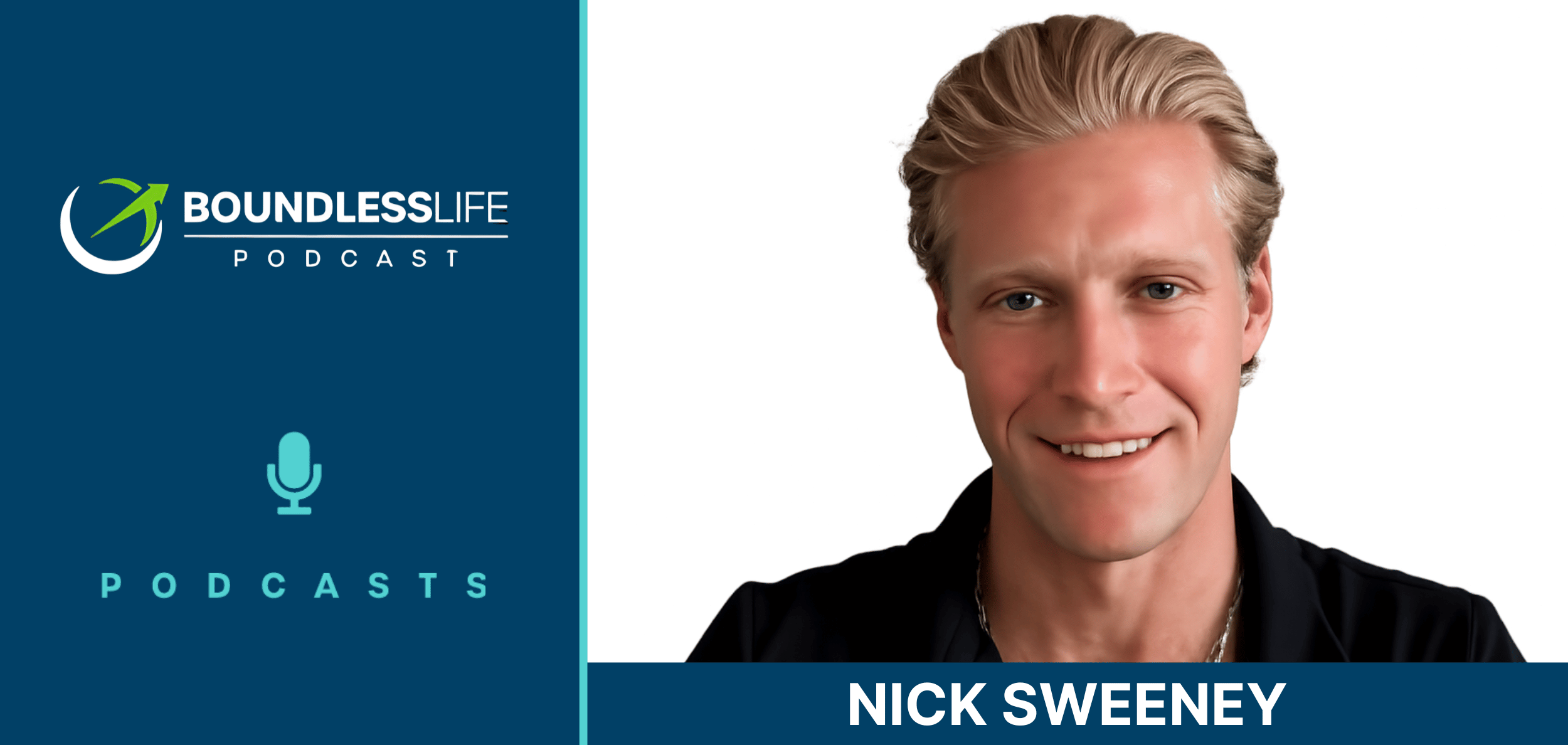
Nick Sweeney is the founder of Coherence, a mobile app that puts a breathwork coach in your pocket and trains your nervous system to improve deep and REM sleep, heart rate variability (HRV), and stress resilience. After a college bike accident left him unable to walk for nearly a year, he rebuilt his body through breathwork, cold exposure, and nervous system work, going from unable to walk to competing at U.S. Nationals within a year. He is the creator of the Vortex Breath and the Vortex Method, and he is leading a global breathwork movement, Billions Will Breathe, with the goal of a million, and eventually a billion, people breathing together at once.

Want to breathe in sync with people around the world?

You can grab Nick's Coherence app here and use code BEN30 for four weeks free.

Episode Sponsors:

Tecton Ketones: Tecton Ketones deliver bioidentical D-beta-hydroxybutyrate (BHB), the same ketone molecule your body naturally produces during ketosis, providing clean cognitive support, stable energy, and performance without the conversion step required by many ketone precursors. Visit tectonketones.com/ben and use code BEN for 16% off your first order.

Quantum Upgrade: Recent research has revealed that the Quantum Upgrade was able to increase ATP production by a jaw-dropping 20–25% in human cells. Unlock a 15-day free trial with the code BEN15 at quantumupgrade.io.

Our Place: Upgrade to Our Place today and say goodbye to forever chemicals in your kitchen. Go to fromourplace.com/ben and enter my code BEN at checkout to receive 10% off sitewide.

BON CHARGE: BON CHARGE is a holistic wellness brand with a wide range of products that naturally address the issues of modern life. Their products can help you sleep better, perform better, recover faster, balance hormones, reduce inflammation, and so much more. Go to boncharge.com/GREENFIELD and use coupon code GREENFIELD to save 15%.

Dr. Murray Natural Products – ThymoQuin®: ThymoQuin® is a clinically researched black seed oil formulated to support healthy cortisol levels, improve resilience to everyday stress, and promote overall well-being. It's the only black seed oil that meets U.S. Pharmacopeia guidelines and is backed by human clinical research. Visit doctormurray.com/ben and use code BEN25 for 25% off all Dr. Murray Natural Products.

Episode Resources:

People

Companies

Podcast Episodes

Studies & Research

Books


Upcoming Events:

Boundless Live Tour Presented by FormulaIQ & NADS | Summer 2026

Join the world premiere of Boundless: The Man Who Became Human, a new feature documentary that follows 20 years of body optimization colliding with life's immeasurable moments—marriage, family, and faith. Experience a live podcast recording and intimate Q&A with my family and me in Los Angeles, Austin, and Moscow, ID, one night in a room full of people chasing the same thing. Purchase tickets here. 

Health Optimisation Summit | September 11–13, 2026

I'm speaking at the Health Optimisation Summit in London (September 11–13, 2026) at the Business Design Centre. This isn't your average health conference. HOS unites the best minds in biohacking, longevity, nutrition, fitness, and medicine, with one goal: to actually make people healthier. With 35+ world-class speakers, 120+ cutting-edge brands, and 4,000 like-minded people all under one roof, it's two days that could genuinely change how you approach your health. Get your ticket here and use code BEN to save 10% off registration! 

Eudēmonia | November 5–8, 2026

I'm speaking at Eudēmonia (November 5–8, 2026, in West Palm Beach, FL), a prevention-focused, science-based health, well-being, and longevity summit designed to add years to your life and life to your years. Across 3 days and 15 venues, you'll experience 200+ talks from 120+ experts, 300 treatments, and 160+ brands covering everything from biohacking, longevity, and hormonal health to gut health, brain health, peptides, mobility, and more. I'll be leading a talk and a movement session alongside some of the brightest minds in health today. Use code BGREENFIELD-EUD-100 for $100 off when you register here!

The Boundless Couples Retreat | November 10–14, 2026

Ready to reconnect and recharge with your partner in paradise? Join the Greenfields at the stunning Prana Maya resort in Belize for the Boundless Couples Retreat, November 10–14, 2026. It's a five-day, all-inclusive escape designed to deepen your relationship, restore your vitality, and create memories that last a lifetime. From relaxation and adventure to intimate relationship coaching with Jessa and me, every detail is crafted to send you home with a stronger bond and a reinvigorated spirit. Spots are limited, so discover more and secure yours here today!

The Manzo x Ben Greenfield Table Private Dinner | Throughout 2026

If you want to taste one of the world's rarest cuts of beef and experience my North Idaho biohacking compound firsthand, my family and I are hosting The Manzo x Ben Greenfield Table, an intimate, chef-catered VIP dinner on a few limited 2026 dates. The evening includes biodynamic wine, a live cooking demo, a multi-course Piedmontese feast finer than Wagyu, and a night of deep sleep in an EMF-free, fully grounded, circadian-optimized guest room. Anyone who reserves a half or whole Piedmontese bull from Manzo qualifies for a spot, so reserve your allocation and dinner here.

Stay tuned for future updates—and you can always keep up with my LIVE appearances by checking out bengreenfieldlife.com/calendar!

Do you have questions, thoughts, or feedback for Nick or me? Leave your comments below, and one of us will reply!
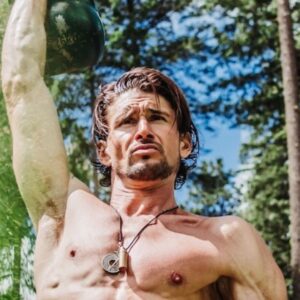
Ben Greenfield My name is Ben Greenfield, and on this episode of the Boundless Life podcast.

Nick Sweeney And the doctor told me, "You're not going to walk normally again. Your career's over." That was the beginning of my journey into breath. I am trying to get a billion people breathing in perfect sync. This is my mission. It's my best guess on how to make the world a better place. You'll have a lot of fun, and you'll find a lot of benefits.

Ben Greenfield Welcome to the Boundless Life with me, your host Ben Greenfield. I'm a personal trainer, exercise physiologist, and nutritionist, and I'm passionate about helping you discover unparalleled levels of health, fitness, longevity, and beyond. My guest on today's show is Nick Sweeney. He made an app called Coherence. It's kind of like a breathwork coach in your pocket. He has this super unique form of breathwork called Vortex, which I've done a few times, as you'll hear in this show, he's leading this global breathwork movement with the goal of a million people doing synchronized breathing together. And you can access all the show notes, grab his app, everything else at bengreenfieldlife.com/nickpodcast. That's bengreenfieldlife.com/nickpodcast. Let's go talk with Nick. All right, Nick. So I actually did my homework for today's show. I did not just one but two of your breath work sessions in my sauna over the past week, just like the ones you have on YouTube. First of all, they were great, and there was some new stuff in there, like this whole vortex thing, where I was like counting down from 13, you know, all the way down to one. I'll let you explain it in greater detail. But before we jump into your backstory and how you got into this in the first place, how do you describe this whole like vortex breathwork thing to people?

Nick Sweeney Yeah, well, first and foremost, thank you. I'm honored, and it's a pleasure to be here because when I lost my ability to walk in a biking accident in college, I read your boundless book from front to back, and was a walking textbook, and so good, good portion of that is why I'm here today. And so I wanted to extend some gratitude first and foremost. Secondly, the vortex is an inward spiral pattern that follows the Fibonacci sequence that you see in nature. That comes from you see it in galaxies, you see it in vortex mathematics, you see it in 369 mathematics and sacred geometry. And without getting too woo woo, the vortex breath is a throttle on your nervous system where it slows you down. You're forced to slow your breath down and make it extremely intentional, and so 13 in, 13 out, eight in, eight out, five in, five out, three and three out, two and two out, one and one out. Hold is you hitting the reset on your nervous system in terms of slowing that breath down and using your core to barely move your nose hairs and barely move your breath. So it is a centering breath. It's balancing the different branches of the nervous system, and it's something that came to me a few years ago, and I had never seen it done before. And I started applying it to my practice as a way to finish and enter into meditations, and I found it to be very effective. So, not a lot of scientific literature on that. In fact, it's like zero at the moment. I know your audience likes the evidence, but that is the tip of the spear, if you will.

Ben Greenfield Yeah, show me the PubMed. Okay, so 13 in, 13 out, 8 in, 8 out, 5 in, 5 out, 3 in, 3 out, 2 in, 2 out, 1 in, 1 out, etc. Why those numbers specifically?

Nick Sweeney So that is the specific 1.618 ratio, the mathematical sequence of the Fibonacci, and you see that in the seashells. You see that in different things, but that is also something, that mathematical sequence is in our bodies. It's in our bronchial tubes. It's in the way that our heart vortexes as well. And so there was just this pairing of this mathematical idea and this physiological mechanism of the breath, putting those two things together, and there is a specific unique effect that happens there. But those are just simple numbers, and you can actually go from 1-1, 2-2, 3-3, 5-5, 8-8, 13-13, 21-21, 34-34, 55-55, all the way up.

Ben Greenfield You could do 55 count in 55 count out like on one.

Nick Sweeney I'm struggling and I do not look composed when I'm doing it, but I have done

Ben Greenfield it. Yeah,

Nick Sweeney and it is really powerful. There are techniques where you're doing breathing for a minute in, a minute out, and this is a more fun way to train it, and also more sequential way to train it. So you can keep challenging how many numbers up the sequence you can go, or how far you can go from the top bottom. You can go 89 in, 89 out, but I haven't done that successfully. 89, 55, 55, 34, 34, 21, 21, 13, 13, 8, 8, 5, 5, 3, 3, 2, 2, 1, 1, hold.

Ben Greenfield Yeah, yeah. I know we jumped right into the nuts and bolts, and I'm going to get back to your story and even hear more about this bike accident. But back to the nuts and bolts. Like if somebody was going to do that, and just like counting aside, let's say you were going to take a one breath inhale and a one breath exhale. How do you describe to people how you're even like controlling everything to go that slow? Like a few minutes ago, you mentioned using the core, but what's that look like or feel like?

Nick Sweeney It feels like physical torment to a degree, because you are so acidic in your body, if you're trying to do slow breathing, that is training a specific mechanism, which is your cardiovascular fitness, frankly. And so, the more cardiovascularly fit you are, the less oxygen you are using on a second by second basis, which allows you to breathe longer and slower than other people. And so, when people are cardiovascularly out of shape, their breathing is faster, more rapid, more shallow. Their body is trying to breathe, and so slow breathing is an indicator of health in general, and training your ability to elongate your breath is training your cardiovascular fitness. It's like going for a run without breaking down your muscles, and this requires a ton of concentration, patience, and endurance. But when you do it consistently, day after day, your heart is learning to become more fit. Your brain's becoming more fit. Your entire body is using oxygen in a more efficient way. It's a powerful mechanism for longevity, a powerful mechanism for parasympathetic dominance, and allows you to become more attuned to your breath. But the longer you can breathe, the slower you can breathe, and the more in control you are, the more cardiovascularly fit you are. And so, this is seen in people with lower heart rates, resting heart rates, or higher HRVs. They are breathing less breaths per minute, and this is a great indicator of how long they're going to live.

Ben Greenfield Yeah, that reminds me of, I think it's Patrick McKeown's book or books about kind of the low, slow breathing. I get the cardiovascular piece and how you're going to get better at it as you get more cardiovascularly fit and you're able to control things from a respiratory standpoint a little bit better. But to me, even when I was doing the 13-13 on your breathwork program, I felt like I was having to like contract my abs a little bit more. Like, like, are you kind of using the core to slow things down?

Nick Sweeney Yes. So your lungs are not muscles, and the slow breathing is straining your diaphragm muscle, which is like an umbrella underneath your rib cage in that general region, and the intercostal muscles in between your ribs; those two muscles predominantly are what drives your breathing. And when you apply conscious control to those muscles, you are controlling your breath. You have a greater degree of control over your breath, and so that is the main focus, using your abdomen, using your diaphragm and your intercostal muscles to slow that breath down from a muscular standpoint, from a mechanical standpoint, and breathing is mechanical. It's the number one primary mechanic of movement in the body, and so when you get a greater degree of control over that mechanism, you can find that control in moments of stress. So it is a physical endeavor and breath work. I like to see it more as an active recovery workout rather than a meditation, and it's easier for me to get into it when I see it that way, but ultimately, yes, you're using your abdomen, you're using your diaphragm.

Ben Greenfield So the like one of the programs that I did of yours, I think it was like an activation routine. Part of it, I was pretty familiar with. It was kind of like a Wim Hof breath work in multiple rounds with the exhale hold and the big inhale, where you're pulling you know energy up to the top of your head, and then it finished with your vortex, right? The 13-13, 8-8, 5-5, 3-3, 2-2, 1-1 at the end. Is that because I haven't done that many of your breathwork sessions? But is that always how it goes? Like you do a regular breathwork session, then you finish with vortex, or do you have different ways of using that vortex breath?

Nick Sweeney Most of the breath work patterns that I deploy for clients and my audience end on the vortex for a very specific reason, and that is when you're doing breath work, especially cyclical hyperventilation, Wim Hof style breathing, you are activating your sympathetic nervous system, you're activating your body, and so many of us in modern day life, many of your listeners, we're battling this cortisol in our life. There's stressors all over, and what I found was if I just Wim Hof'd right after a workout, right before my workday, I'm just carrying this stress. My body's not actually getting the signal of like you're safe, and so the vortex. And again, not a ton of PubMeds on this, but the vortex feels like this on-off switch, switching off and then switching back on. Now I'm intentional with my energy once again. I'm not burning like a bonfire into my workday after my workout in the morning, I'm more of a flamethrower. I'm more concentrated, more coherent.

Ben Greenfield So, when do you tend to do your breath work? Like I, you know, I know people do it in the sauna. People do it, you know, before they do a cold plunge, before workout. I'm personally these days more like a mid-afternoon as a way to break up my day type of guy when it comes to breath work, you know, for 1015 minutes. But when do you do it, and why?

Nick Sweeney There are so many ways to breathe, and for so many different physiological outcomes. I am breathing intentionally as often as I can throughout the entire day, and I will be taking what I have on the docket for that day. Let's say I have a podcast with Ben Greenfield later this day. Well, I'm going to breathe in a certain way in the morning, get my energy right, and then I'm going to make sure that I'm in a parasympathetic, relaxed way before the podcast. I'm very tactical, very specific for specific people, specific nervous systems, specific outcomes. So, for example, I will wake up, and I will do some gentle coherence breathing, six seconds in, six seconds out, to wake up and get into my body.

Ben Greenfield Like, like when you're when you're still in bed.

Nick Sweeney Yeah, right when I'm still in bed, feeling the body getting woken up just gently, and then I will go and I usually do a workout. Oftentimes it's jump squats. So I will inhale as I squat down, exhale as I jump up explosively, and I'll do that 100 times. And then I will sit down and I will do cyclical hyperventilation like Wim Hof style, do a breath hold, inhale once, exhale hold, breath hold again. Really push my breath hold, and then I will come into coherence with coherence breathing and a vortex. What this does is I go and I get out of my mind into my body with a workout. Then I sit myself down, do some Wim Hof'ing to flush lactic acid to load up on energy to cultivate some energy, and then this breath hold resets my nervous system, resets my brain. I will get into coherence where I'm circulating that energy, and then the vortex is concentrating that energy. So in general, I wake up and I'm doing big breathing, lots of energy moving, flushing out the cobwebs, and then I'm getting into a circulation, moving that energy through my body, and then a concentration, and that is the vortex method. And we can get into that later, but that's how I start my mornings most days. Then I will be tactically breathing right before a workout. I'm gonna I'm gonna boost up. Let's say I want to do a long cardio or something like that. I'll boost up with some hyperventilation. After a workout, I'm going down. Before a meal, I'm doing downward breathing to get parasympathetic, so I can digest my meal. And then maybe I want to focus for work. I will do some breath work that balances the branches of my nervous system. So it's very tactical. It's very specific, and whether someone feeling or wanting to get over burnout or wanting to perform at the highest level, there's an answer. There's a pattern for them. The fun part is finding out which one is for you.

Ben Greenfield Yeah, for sure. The thing you mentioned, the vortex method, is that like different than just the vortex breathwork that we talked about,

Nick Sweeney Yes. So the vortex breath is something that my brother and I just stumbled upon. This Fibonacci sequence of breathing. The method is something that actually I lived, and that is my story. Where in college I was cross country ski racer at the highest level, won NCAA championships and was going for big things. But I got in a bike accident and I couldn't walk for 10 months. And the doctor told me, "You're not going to walk normally again. Your career's over. Good luck." That was the beginning of my journey into breath and my journey into Wim Hof, and so the first part of the vortex method is Wim Hof because that's what I lived first. I was Wim Hof'ing. I got myself to the point where I could walk again without pain using Wim Hof style, using cold thermogenesis, run again in six months, and then a year later I was at Olympic trials doing what I love to do again, and that was through the breath, but then I concussed myself doing Wim Hof and passed out, slumped over, hit my head. Oh man! And I learned a lot, and I learned that after that happened, I had a psychosomatic story in my body that said when you do Wim Hof breathing, we might get injured, and my body was scared, and I was suffering from autonomic dysregulation. Just nervous system was fried.

Ben Greenfield So what you're saying is like even if you could be like surrounded by super soft meditation, woo woo cushions, and everything, and you know wrapped in your little nest doing Wim Hof, your nervous system is so freaking out because it remembers that you got concussed doing it.

Nick Sweeney Yes, and I think it was it remembers it remembered that it got concussed doing a specific thing, doing a specific breathing pattern, and I had to unwind that story with breath holds, and coherence breathing, and Buteyko breathing. So it's more of that oxygen advantage stuff, and that is phase two of the vortex method. So phase one is cultivation, Wim Hof. Phase two is like breath holds, slowing it down, coming into coherence, and phase three is later in my life, I use this vortex method and started to really concentrate my energy. So cultivation, circulation, concentration over the course of three years, but that breath empowered me and allowed me to go from unable to walk to racing at Olympic trials to teaching people and seeing people heal in real time through similar injuries, at least at an accelerated rate, and that's why I live and breathe this. I'm so passionate.

Ben Greenfield Yeah. What was the mechanism of action of the concussion? Were you like doing the breath work, standing up? Were you just like sitting down, slumped backwards, slumped forwards? Like what happened exactly?

Nick Sweeney So I was doing specific breath work while I was on a run about a month before Olympic trials, and I was inhaling two seconds, exhaling two seconds, holding my breath. I did that, but then my foot started to like really hurt in an odd way, and so I went and I sat down on a bench and I decided to do 30 breaths of Wim Hof. So I did pretty powerful hyperventilation. I exhaled, held my breath until I was generally uncomfortable. Inhaled, held my breath, squeezed all my muscles, and slumped over. And that was the mechanism, the inhale, hold breath, squeeze muscles. And I've actually passed out multiple times doing that, so don't recommend it.

Ben Greenfield Yeah. Oh well, well, well, we're in confessional mode. Both me and my sons have all passed out, me multiple times. We're always in a pretty safe place, usually in the sauna. I mean, I've been doing father son breathwork with them since they were like literally like four or five years old. So I remember the first time it happened. River, who's the older brother, saw Taren just kind of go limp. I know this makes me sound like a horrible father, but I really am, you know, paying attention to these guys. He's like Taren's sleeping, Dad. All right. So yeah, but they're tough boys, and they're still alive. They're not dead yet. So, anyways, now that I'm gonna have all the social workers writing in the comments section scolding me, I want to move on. And I notice you have some videos about mobility and fascia, and that is a huge passion of mine. I just put out a big YouTube video about my own routine. But for you, tell me a little bit about the mobility and the fascial practice, and what that looks like, and how you might. Incorporate breath with that, and what your routine is.

Nick Sweeney Yeah, the fascia is something that I believe is misunderstood, and it's funny because it seems like if you just mention the word fascia online, it just goes viral. And I love that it's becoming more popular term, and people are wanting to understand it because I do believe it's really important, and to boil it down simplistically, I believe that fascia is you, and you are your fascia, and your fascia is you because your nervous system is innervating the fascia, and your nervous system is just you, just your brain spread throughout your entire body. Again, I'm not an expert here, but this is the conclusions I've come to. And fascia, if there's a certain story where you're pushing your fascia over and over and over, and it keeps recoiling, and you keep overriding that fascia, telling you stop, I don't want to do this anymore, then it's going to cause problems and create pain for you. And this is what's happened to me in my right diaphragm area, colon area, gallbladder area, upper ascending colon area. I've had pain there for like two years. I'm over the hump. I've learned so much, and part of why I had so much pain there was because I had this fascial spiderweb that was collapsed in that area. And fascia is interesting because if it really is you, then it knows you, and it knows when you're trying to do something and it doesn't fully feel safe enough to release. So everyone's obsessed with releasing their fascia, getting out of chronic pain. But if you come at it from an approach of force, it's just going to recoil back because that it doesn't feel like it can trust you. And I know this might sound a bit esoteric, but for me it was learning to find safety and use my breath gently to unwind this fascial spiral mechanism. And the last thing I'll say is that when I was we harvest elk and deer in the fall, and I was elk hunting this fall. I got a bull elk for the first time, and we're cutting this elk up in the middle of the night in the woods. And I'm just in awe of how it's held together by this fascia, this triple collagen helix structure, whatever you want to call it. It is the elk, and it is harnessing all of the muscles, the structures, and I believe that if you work with the fascia in a gentle way, with your breath, and a consistent way, that's how you can move through it. Whatever chronic pain may have arisen from it, and there can be a deep psychosomatic conversation around this. But I'll leave it at that.

Ben Greenfield Okay, I've seen some like combinations of breath work and fascial work where you're using whatever, like your fist, your fingers, a mobility ball, a foam roller, the handle of a kettlebell, you name it, and like pinning a certain area and kind of breathing into that until that area relaxes. Is that what you mean by combining breath and fascia, or are you doing something else?

Nick Sweeney I'm doing those types of practices, but more what I've been doing is finding the point where I'm meeting resistance in my fascia. So, for example, let's say you have a shoulder injury, and it's painful if you move your shoulder up, and it's painful if you move your shoulder down. But your shoulder, if you were to just do the movement that you can reliably do without pain. So let's say I'm doing this for my shoulder. I'm not going to hit that point of impingement. I'm not going to hit that point of pain. I'm just going to fluidly move it and hydrate it, and then as I'm doing this, I'm in a state where I'm breathing slowly. And so my theory, that again would love to have some science around this, is that the slower your brain waves are, the more relaxed your fascia is, the more adaptive it is, the more available it is to release, move, and change. And this is

Ben Greenfield because I believe this because the fascia is this interesting compound of liquid and solid and malleable material. That if you can relax your brain enough and let your body feel safe enough to change the way that it moves, the pattern that it moves in, then you are available for release, for a release of tension. And so the way that I use the breath is to get my brain into a theta brainwave state, and then I'm doing these gentle movements. Yeah, it kind of makes sense. It's a little bit related to how you were talking about how you like breathe yourself up, like in a fight or flight sympathetic sort of way pre-workout. So if the fascia releases and is relaxed when you're in, let's say, more of a theta brainwave relaxed state, then if you were going to go do something for which you'd want tight, springy, loaded fascia full of kinetic energy or stored energy, then you'd actually want to be in a more activated, maybe like beta brainwave state. So it kind of works both ways, right?

Nick Sweeney Absolutely. I used to be doing stretching with my breath in a Wim Hof pattern, and I did not get many places doing sympathetic breath work while stretching. But if I do parasympathetic, slow breathing, I go way farther and release much more tension.

Ben Greenfield Yeah, that actually relates to something I wanted to ask you. So, falling asleep, you hear about like four count in, eight count hold. You hear about four count in, seven count hold, eight count out. You hear about the coherent breathing that you just talked about, like you know five to six seconds in, five to six seconds out. You hear about box breathing, right? Four in, four hold, four out, four hold. You know, everybody's got their own version to help you fall asleep faster or fall back asleep when you wake up at night. What is your go-to?

Nick Sweeney So my go-to actually starts in the shower, where before bed I'm going to take a warm shower and I'm going to have no lights on in my bathroom. It's going to be pitch black dark, and I will do the physiological sigh, the number one science-backed breathing pattern for stress, and this physiological sigh is breathing 80 to 90% in, and then a short pump at the top, and then I will hum while I'm in the shower, gently relaxing all the way, and you guys can do it just one more time. Pump. I'm a huge fan of humming, physiological sigh, dark shower, sensory experience. My eyes are not getting the stimuli anymore. I'll go into bed and I will do the 4-7-8. I mean, it's just pretty powerful for me. I have not found a better technique. I wish I had, but four in, seven hold, eight out. And if you do that at first, it feels uncomfortable. It

Ben Greenfield does. Yeah, you're right. It feels like you're running out. And I've heard this from multiple people. It's like, I heard this was supposed to be relaxing. This stresses me out. I feel like I'm running out of air. And then I think once you get several days in, it starts to get easier. But if you just do it for a night and then give up because it feels weird, you're not giving yourself a chance to kind of get that respiratory training done. Yeah, and

Nick Sweeney I would say challenge your viewers. You know, try to do it for five to seven minutes, and it's going to feel uncomfortable for the first two, three, four, five minutes. But if you move through that, you'll just wake up in the morning, is what I found. If you move through that point of uncomfortability and do the 4-7-8, and I even like to do humming on the exhales of the 4-7-8, perhaps put my legs up on the wall to begin for those first two, three, four minutes. 4-7-8, legs up on the wall. Put the legs down. Do it another five minutes, and I wake up in the morning personally. And so that would be my number one recommendation, the 4-7-8. 4-4-8 is good as well. I did that for my 89-year-old grandpa, and he was sleeping a lot better at altitude. So, the final thing I would say is that some people to sleep through the night, it can be extremely beneficial to do some weighted breathing. So, do 4-7-8 breathing, but put a few books on your abdomen and your chest, and this activates that diaphragm and intercostal muscles before you go to bed. So now my breathing muscles are activated; they're ready, and then I can breathe much slower, smooth my brain waves out, and then I'm ZZZ.

Ben Greenfield Okay, cool. Yeah, I've heard about the like the tie the string around the belly button type of trick, but yeah, placing something on top of the chest probably doesn't even need to be like heavy as long as it's something that you can actually feel. Like it's more like the proprioceptive sensation of feeling as though you're lifting something than it is like the resistance, right?

Nick Sweeney My pro tip is lay on your stomach and do 10 breaths with your head to the left. 10 breaths with your head to the right. My diaphragm's activated. I'm ready to go to bed.

Ben Greenfield That's a great tip. I love that. So, when it comes to the idea of like thermal stress, I talked about breath work in the sauna. You know, you talked about combining things like Wim Hof breath work with cold thermogenesis during your recovery. How do you think people should combine if there is a should here, or what do you do when it comes to the combination of sauna, breath, and cold? Like, what's the tactic you like, if any?

Nick Sweeney I'll answer this firstly with my experience healing my foot. I became obsessed with sending energy to my right foot to the point where, after a couple weeks, I was able to feel that my right foot, after a breath work session, was much warmer than my left. So I'm feeling my right foot; it's warmer than my left. Okay, interesting. So I'm changing the vascularity of my right foot when I'm doing breath work. I then began to experiment with just an ice pack on that point of injury during breath work, and this acted as a conscious anchor for my brain and body to just send energy there. That was the command, just send energy, healing resources, flush free radicals, do your thing. And that cold is also, especially on a breath hold or slow breathing, the blood vessels are being opened. They're opening up as you're doing breath work, and the cold is acting as a resistance against that opening, and so you're strengthening that vascularity by adding a force that's trying to constrict it at the same time. And what I found was nothing made my foot heal quicker or feel better, and I have since used that on myself and many other anecdotal situations with clients, but just the ice pack on the point of injury is that anchor for your body to send energy there while you do breath work or meditation, and the broader conversation is nuanced. I believe that ice is really powerful. Sauna is really powerful. I am the biggest proponent of both, and I was able to take my mom from being unable to take a 30-second shower to jumping in the ice-cold river of Colorado this winter with me most every week, and she has overcome so many of these hot flashes and health issues through training that vascular system. I am a huge fan of thermogenesis, cold adaptation, but I also believe that you know on the internet right now there's this debate of women shouldn't ice bath at all. Yeah, everyone's dunking themselves in cortisol when they jump in there in the morning, and there is some truth to that. But there's also some truth to living a life of comfort and your nervous system being calibrated to modernity, and not used to something that actually could kill you, which is an ice bath, and giving yourself that exposure and those chemoreceptors are going to adapt to that exposure of something that's really dangerous, and allowing yourself to be calm and parasympathetic in ice bath is a much different scenario than jumping in the ice bath, hyperventilating, freaking out, not getting in control of your mind, and then going about your day. If you can be extremely in control, calm, and allow yourself to be in the ice bath, I believe it's extremely beneficial. And we overlook the fact that Wim Hof was in an ice bath for 80 minutes and kept his body temperature normal, and I think that we should continue talking about that because I think the medical establishment doesn't really want to highlight how that's possible. And for the sauna, I love doing it after workouts. I love doing the cold plunge before workouts, and unless I'm about to do a race or something like that, so it's very nuanced. I could keep talking, but I'll leave it at that.

Ben Greenfield Yeah, yeah, there's a lot there. I mean, even the Wim Hof thing, of course, because of issues, you know, related to what we were talking about before, you know, risk of concussion, passing out, etc. You know, the general idea bandied about on the internet is just like don't do breath work when you're in the cold. I think that's a little bit kind of black and white, all or nothing baby talk. It's like, well, you actually can do, for example, big controlled inhale through the nose, long and slow, longer exhale, and maintain a pretty relaxed state while you're submerged in cold water, without doing some form of rapid breath work that's going to risk passing out. You can also do Wim Hof style breath work in the cold plunge if you have someone standing there watching you. Like there's a lot of subtle nuances, and I think you know the solution isn't because you heard somebody had shallow water blackout to never do breath work when you're in the cold. It's either a do it under supervision or b like use your breath to vasodilate or relax your body, but you don't have to go to extremes, right?

Nick Sweeney Yeah, I'm in agreement with you, and I believe that Wim Hof style breathing, more fire type breathing, while you're in the ice is extremely powerful and beneficial. Given that you're supervised, and frankly, I feel bad. I mean, I was doing some silly things in the pool, but I love breath holding in an ice bath under supervision, I love moving the energy in my body under supervision, and it can be very, very powerful and incite a ton of healing mechanisms.

Ben Greenfield Yeah, yeah, I agree. It's kind of like we want to be safe, but we also don't necessarily want to embrace the mentality that has put soft mats, you know, on all the playgrounds, and you know, made kids wear helmets if they're ever going to touch the monkey bars. It's like, well, there's going to be some inherent danger, and yeah, you might pass out actually if you're doing Wim Hof breath work in a cold plunge, and so you need to know your limits. You need to do things under supervision, but I don't think the answer is like if you're in the cold water, don't do anything, you know, abnormal with your breath. I just think that's a little too extreme. So the thing that I don't think I've talked about before when speaking with a breathwork practitioner is the idea of the actual air you're breathing in, right? So I have a sauna, and it actually has Himalayan salt blocks in it, right? So the whole sauna is full of these negative ions and electrolytes that are filling the air as the hot water pours over these salt blocks. Shout out to the guys down in Boise, Idaho, Western Sol, Luke and Owen down there who built this sauna and put those into the sauna. So when I'm doing my breath work in the sauna, I'm getting a lot of these beneficial salt ions breathed in. But then, you know, if you were in your backyard, not to throw them under the bus, but say downtown LA, doing breath work, you might be breathing in brake dust, and you know something that might have been sprayed on your neighbor's grass, or any other number of different you know toxins or pollutants. So, what's your approach when it comes to breath work and air quality?

Nick Sweeney So, one of the first posts that went really fire viral for me online was about this topic, which was the difference between negative ions and positive ions, and which ones are ideal to be breathing in. And I always keep a window open, at least cracked open, because although there may be certain things out in the air outside, if you are in a room that's just airtight and the CO2 is going to be continually rising, if you're sleeping in that air overnight, this can be extremely harmful and make you wake up with a horrible headache, or your body does not function in stale air that is full of positive ions. The ideal is negative ions, and negative ions can be found at higher altitudes, near the ocean, near waterfalls, wherever there may be water circulating. That negative ion charge is going into the air, and for that reason, showers. I love showers, and I love doing breathing in the shower. I do Wim Hof breathing in the shower through my nose and mouth at the same time, gently. I'm not supervised, but I'm not doing any crazy holds. I'm just maybe breathing deep, slow, relaxed, not panting.

Ben Greenfield Yeah, you haven't lined your shower with like used mattresses.

Nick Sweeney I should, I really should. But then we got a mold problem, so that's not good for that. Yeah, yeah.

Ben Greenfield exactly.

Nick Sweeney But yeah, the air quality is huge, and if you can get a good air filter, if you are in a place where it's not horrible air outside. Keep that air cracked open. Hotels. When you're traveling, crack that window open if you can. I'm the guy that's taking one of the knives they give us to jimmy the window open in the hotel room that's shut, because I just cannot breathe. I feel like I can't breathe, and so it's very important. And it's interesting. I was just in Bali, and they have a waste management problem where they're burning microplastics in the air just all day long. They're burning trash, and they do it at certain hours of the day, and you can smell it, and it's really quite bad. The way I handled that was I tried to keep my windows generally closed during those hours. I try to live near the ocean, and I also take care of my lungs in the sense that I want them to be clearing whatever I'm breathing in because it's unavoidable. There's microplastics in the air. There's brake dust. There's whatever in the air. So optimizing my detoxification pathways as well is the thing that I focus on when it comes to air quality.

Ben Greenfield That's interesting. Zac Efron is filming right now down in that area, and as a part of this film about sustainable building, like building biology, environmental friendliness of our kind of like construction practices. They're doing a massive plastic and microplastic cleanup in Bali. I haven't been there, but I've heard it's just like a giant plastic dump. Okay, so this is maybe a little esoteric. I'm guessing, but we've dropped a few. We've dropped a few woo bombs already, so we might as well keep going. You told me you're trying to get like a million people to all do synchronized breath work at the same time. What's going on there?

Nick Sweeney Yeah, billions will breathe. I am trying to get a billion people breathing in perfect sync, in and out. Wait, did you say? Did you

Ben Greenfield say a billion or a million?

Nick Sweeney The milestone initially is a million, but long term, I want to get a billion because moonshots only. And the goal here and the general understanding is that we're all connected, and when we influence ourselves and regulate ourselves, we also regulate others. Just like if you walk into a room and you have a ton of energy. You might energize the whole room. If you walk in and you're kind of flat, you might flatten the room. We are connected, and when we control consciously our energy, we can control the field that connects us all. And so the mission is to, with every breath, spread unconditional love and peace together. This is my mission. It's my best guess on how to make the world a better place. It's a way for us to override the antiquated systems that are keeping us stuck and in poverty and unhealthy. And it's a way for us to reclaim our power. We are the tsunami tidal wave of power. We're billions and billions of people. And what happens when we go inwards, control our state, control our breath, and give energy to the field? What might happen? I don't know, but I'm hoping that I'm hoping to find out, and that's my mission. That's the essence of coherence is regulating the nervous system of Earth by regulating one person at a time. So, million person meditation, break the world record is the first milestone, and then we want to get as many people as we can. Billions will breathe.

Ben Greenfield Okay. What's the like? What's the logistics of that? Are people going to all be like online at the same time?

Nick Sweeney So, my brother actually created the Coherence app, which is the first of its kind in the sense that you can synchronize your breath with anyone at any time, anywhere in the world. You don't need to be on Zoom. You don't need to be in person. You can be remotely synchronized with everyone. And we're doing these daily syncs for five minutes a day, every day. We do syncs. We had one for the spring equinox, summer solstice. We have a fall equinox coming up.

Ben Greenfield Okay, so, like, if my wife had the app and I had the app, and we were to open it. We want to do breath work together at the same pace. Is there like a like a haptic cue, like a vibration? Are you watching like a slider bar?

Nick Sweeney So there's a sound, there's a haptic, and there's a visual. And you don't even need to be in the room with your wife if you guys are traveling, but you want to synchronize your breath together. You can. Right? That's what

Ben Greenfield I'm saying. Like, I'm in England and she's home, and we pull it up, and it's, you know, whatever, noon her time and 8 p.m. my time. We could breathe together.

Nick Sweeney Absolutely, and you could even be broadcasting your voice to her, guiding her, talking to her. We don't have two-way communication yet, but you can broadcast your voice, and this is a way for individuals, you know, long-distance relationships. You guys can sync up. Friends and family can all sync up. Companies can sync up and regulate the entire nervous system of their remote workforce across the world every morning. And a regulated, synchronized workforce is a productive workforce, and a couple that's synchronizing their breath together is a couple that's in coherence, and that's what our goal

Ben Greenfield is. I like it. I like it. Saving money in relationships around the world. So a lot of people will hear, like people listen to a podcast, they're like, "Well, you know, you told me I was supposed to take this supplement, and then I'm supposed to do some isometric training and some blood flow restriction training, and get this kettlebell and this special mask that you wear, blah blah blah. And then they have like a list of 100 things they're supposed to do. Then they get stressed out, and then they hear us talking about breath work, and it's like, okay, well, do I need to do like the thing at night and then the thing in the morning and the fascia work that Nick is talking about, and then do the thing in the shower. So for people listening, help them understand, like what's the bare minimum, right? So if I want to get the benefits of breath work, but I have a limited amount of time per week, kids' job, whatever. What's an ideal scenario for somebody where they could still be doing enough to feel good about what they're doing.

Nick Sweeney I would recommend again organically implementing breathwork into all your routines. So, do a couple minutes of Wim Hof style breathing before your workout. Do a couple minutes of physiological sighs after your workouts. Just do that. Like start to see breathwork as an active recovery workout, not this 30-minute-long meditation chore that you need to do in the mornings. Start to tactically explore and have fun with it. It's your journey, and breath is a mechanism that can take you from this automatic transmission of a car where you have drive, neutral, reverse. Most people live with drive, neutral, reverse. But when you begin to explore breath work, you become a manual where you can shift up to fifth gear. You can shift down to third gear before your meal. You can shift up when you need to get some work or you need to push through a workout, and start to have fun shifting up and down. If your breaths are faster, fuller, and longer on your inhales, then you're going up. Sorry, sympathetic and energy, heart rates going up. If your breaths are longer, slower, smoother out, you are going parasympathetic down in heart rate, down in body temperature, parasympathetic branch activates. So, faster inhales going up, longer exhales going down. Start to play, start to have fun. It's your journey. It's your breath. No one can tell you how to breathe, and no one is you. So, get in touch with your intuition and breath, and you'll have a lot of fun, and you'll find a lot of benefits.

Ben Greenfield Nick Sweeney, folks, bengreenfieldlife.com/nickpodcast, N-I-C-K, podcast is where you can find his stuff. He hooked me up this week with four weeks free on that Coherence app. The code for that is Ben 30. That's the one that lets you breathe in sync with people, and I'll put all that at bengreenfieldlife.com/nickpodcast. Nick, you reached out to me on socials. You told me about your story. I thought it was super inspiring how you know you kind of went beyond the traditional physical therapy and got into the thermal stress and the breath work and everything else to repair your body. I think you've got something unique going on. So thanks for coming on and sharing.

Nick Sweeney Thanks, Ben. It's been an absolute pleasure.

Ben Greenfield All right, cool, folks. Thanks for tuning in. Have an incredible week. To discover even more tips, tricks, hacks, and content to become the most complete, boundless version of you, visit bengreenfieldlife.com. In compliance with the FTC guidelines, please assume the following about links and posts on this site. Most of the links going to products are often affiliate links, of which I receive a small commission from sales of certain items, but the price is the same for you, and sometimes I even get to share a unique and somewhat significant discount with you. In some cases, I might also be an investor in a company I mention. I'm the founder, for example, of Kion LLC, the makers of Kion-branded supplements and products, which I talk about quite a bit. Regardless of the relationship, if I post or talk about an affiliate link to a product, it is indeed something I personally use, support, and with full authenticity and transparency, recommend in good conscience. I personally vet each and every product that I talk about. My first priority is providing valuable information and resources to you that help you positively optimize your mind, body, and spirit, and I'll only ever link to products or resources, affiliate or otherwise, that fit within this purpose. So there's your fancy legal disclaimer.

Ben Greenfield

Ben Greenfield is a health consultant, speaker, and New York Times bestselling author of a wide variety of books.

What's Blocking You From Living Boundless?

Thoughts on The Breathwork-Cold Plunge Debate, When You *Shouldn’t* Do Wim Hof Breath & What Happens When 1 Million People Breathe Together With Nick Sweeney

Leave a Reply

Your email address will not be published. Required fields are marked *

Related Podcasts

Solosode #503 podcast cover graphic from Boundless Life Podcast. Dark teal background with cyan text reading 'What Body Fat % Is The Most "Attractive" (& How Low is TOO Low), How To Shorten Your Gym Time, Is Creatine Bad For Your Kidneys & More!' Features the Boundless Life Podcast logo and a microphone icon.

What Body Fat % Is The Most “Attractive” (& How Low is TOO Low), How To Shorten Your Gym Time, Is Creatine Bad For Your Kidneys & More!

Listen on: Reading time: 5 minutes What I Discuss: Whether BPC-157 causes cancer, why its angiogenesis (new blood vessels forming...

Adam Wenguer WP

Hunting, Spearfishing & The Truth About Cannabis: A Father-Sons Florida Adventure with Adam Wenguer

Listen on: Reading time: 5 minutes What I Discuss with Adam Wenguer: How Sahil Bloom’s The 5 Types of Wealth...

Luke Chapman & Owen Buchanan WP (1)

Dynorphins, Heat Shock Proteins & The Healthiest, Hottest Sauna On The Planet, with Luke Chapman & Owen Buchanan

Listen on: Reading time: 5 minutes What I Discuss with Luke Chapman & Owen Buchanan: How mold exposure sent Luke...