
Home » Podcast » The Potent Brain & Body Ketone Fuel You’ve Probably Never Heard Of: The Science Of R3HBG With Tecton’s Dr. Mike Chesne

The Potent Brain & Body Ketone Fuel You’ve Probably Never Heard Of: The Science Of R3HBG With Tecton’s Dr. Mike Chesne

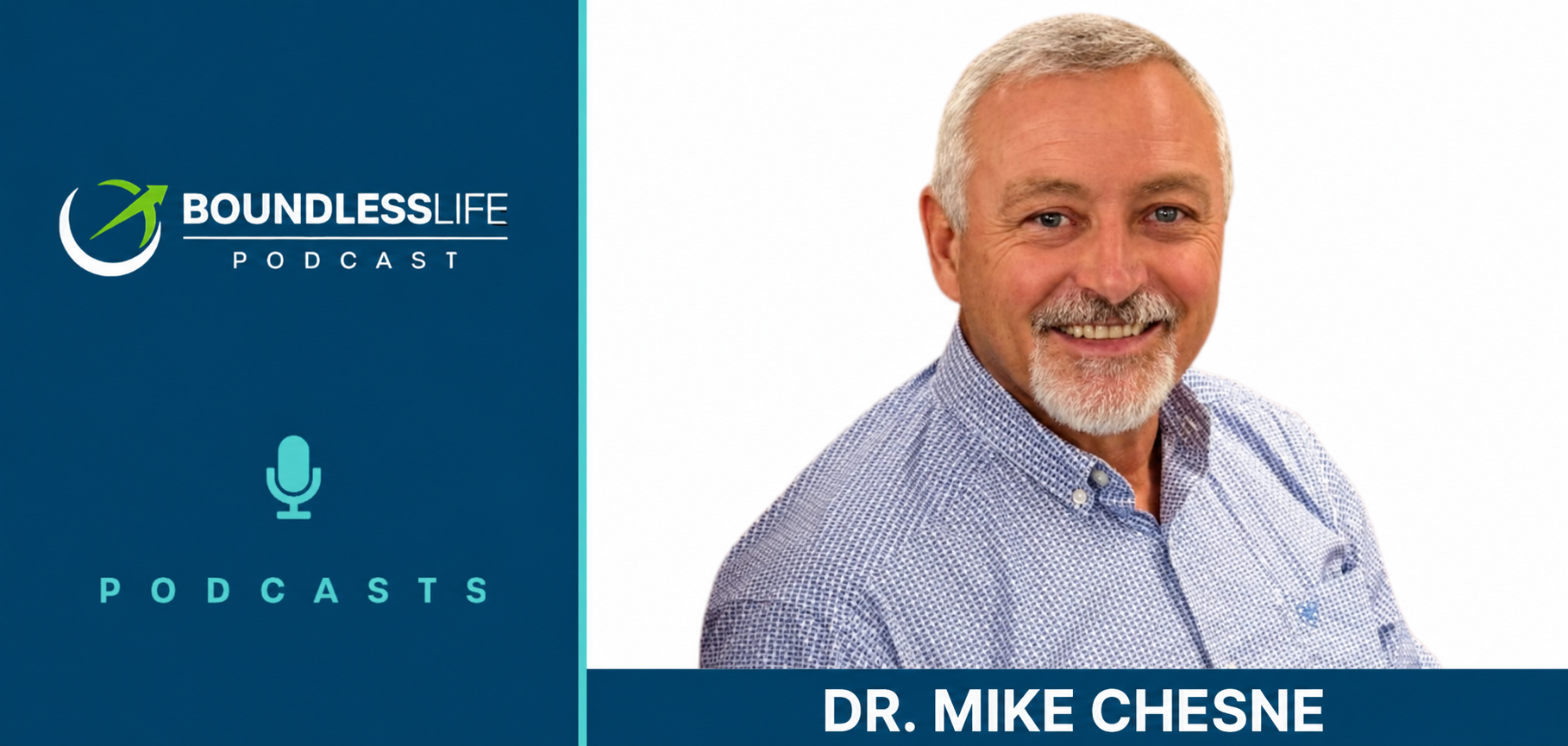
Boundless Life Podcast promotional graphic featuring a headshot of Dr. Mike Chesne, a smiling older man with a white beard wearing a blue patterned shirt, against a light background with the podcast logo and microphone icon.

Listen on:

Reading time: 4 minutes

What I Discuss with Dr. Mike Chesne:

  • How a traumatic brain injury from combat in Iraq led Mike from Special Forces medic to founder of Tecton Ketones™ (use code BEN for 16% off)…00:21
  • Why Mike and I both moved away from strict nutritional ketosis, and how exogenous ketones let you keep the benefits of ketosis without having to give up pasta or rice…06:38
  • Why not all exogenous ketones are the same, and what separates the cheap stuff from what your own liver naturally produces…12:32
  • How roughly half of what's in a typical ketone salt supplement is in a form your body can't use, and why you're getting far less BHB than the label suggests…12:57
  • What blood ketone numbers mean and why somewhere between 0.5 and 3 millimolar is the practical sweet spot for performance and cognition…14:39
  • How R3HBG works, why it gets broken down before it reaches your liver, and how one molecule delivers two separate substances to your body at once…22:50
  • Dr. Dom D'Agostino's recent paper on divergent hepatic outcomes across different ketone supplement types, and why R3HBG sidesteps the liver-related concerns raised in that research entirely…26:41
  • What liposomal and green nanotechnology encapsulation mean, what Tecton uses instead of metal-based ingredients in its delivery system, and why that matters for how well your body absorbs the ketones…28:29
  • A full breakdown of Tecton's four product lines, including the electrolyte shot for athletic performance, the cognition shot with lion's mane, the caffeine version, and the GLP-1 activator shot for hunger and appetite support…33:49
  • How ketones appear to work on both ends of your hunger and fullness signals at once, and what the formula adds to support mood and appetite control…39:17
  • Why dosage in the research really matters, and how the studies raising liver and sodium concerns often use amounts far beyond what anyone would realistically take in a day…44:09
  • Why ketones may help you recover faster after intense exercise, and the proposed reason your body breaks them down through a cleaner pathway than it uses for sugar…47:19

In this episode with Dr. Mike Chesne, founder of Tecton Ketones, you'll hear how a traumatic brain injury sustained in combat led him from Army Special Forces medic to ketone biochemist, and why he eventually built what he believes is a meaningfully better exogenous ketone molecule than anything else currently on the market. We get into the real biochemical differences between different types of ketone salts, why the liver matters so much in how these molecules get metabolized, and a full walkthrough of Tecton's plant-based liposomal delivery system. You'll also hear about all four Tecton product formulations, and the proposed mechanism behind why ketones may improve exercise recovery.

Dr. Mike Chesne founded Tecton after a 25-year career in the United States Army Special Operations, where he sustained a significant brain injury in Iraq that led to his medical retirement in 2010. At Tecton, as Chairman of the Board and Chief of Innovation, he developed the biochemical design behind R3HBG, the company's bioidentical ketone molecule. He previously founded Caromeds, a trauma and emergency medical kit company still used as standard issue across several military forces, and later worked in global healthcare consulting with the Ministries of Health of Afghanistan, Iraq, the UAE, and Algeria.

Want to try Tecton Ketones for yourself?

You can use code BEN for 16% off your entire order here.

Episode Sponsors:

Young Goose: To experience the transformative power of Young Goose's cutting-edge skincare products, visit younggoose.com and use code BGF10 at checkout to enjoy a 10% discount on your order.

TruDiagnostic: TruDiagnostic is an advanced at-home health test that uses epigenetic analysis to measure over a million biomarkers, giving you personalized, data-driven insights into your aging, energy, and overall health so you can stop guessing and start optimizing with a clear plan. Visit TruDiagnostic.com and use code BEN20 for 20% off.

Sunlighten: Sunlighten's patented infrared sauna technology delivers the highest quality near-, mid-, and far-infrared wavelengths to reduce inflammation, boost mitochondrial function, enhance detox pathways, and optimize recovery, backed by 25+ years of clinically proven, non-toxic innovation. Save up to $1,600 at get.sunlighten.com/ben with code BEN.

LYMA Laser: The LYMA Laser is an advanced at-home skin technology backed by peer-reviewed research showing it influenced 45 genes in human skin compared to just one for an equivalent LED device. Users report smoother skin texture, more even tone, and visible improvements in overall skin appearance. Visit lyma.life and use code BEN10 for 10% off for a limited time.

Dr. Murray Natural Products – ThymoQuin®: ThymoQuin® is a clinically researched black seed oil formulated to support healthy cortisol levels, improve resilience to everyday stress, and promote overall well-being. It's the only black seed oil that meets U.S. Pharmacopeia guidelines and is backed by human clinical research. Visit doctormurray.com/ben and use code BEN25 for 25% off all Dr. Murray Natural Products.

BON CHARGE: BON CHARGE is a holistic wellness brand with a wide range of products that naturally address the issues of modern life. Their products can help you sleep better, perform better, recover faster, balance hormones, reduce inflammation, and so much more. Go to boncharge.com/GREENFIELD and use coupon code GREENFIELD to save 15%.

Episode Resources:

People

Tecton Ketones (use code BEN for 16% off your entire order)

Podcast Episodes

Studies & Research


Upcoming Events:

Boundless Live Tour Presented by FormulaIQ | Summer 2026

Join the world premiere of Boundless: The Man Who Became Human, a new feature documentary that follows 20 years of body optimization colliding with life's immeasurable moments—marriage, family, and faith. Experience a live podcast recording and intimate Q&A with my family and me in Los Angeles, New York, Austin, and Moscow, ID, one night in a room full of people chasing the same thing. Purchase tickets here. 

Health Optimisation Summit | September 11–13, 2026

I'm speaking at the Health Optimisation Summit in London (September 11–13, 2026) at the Business Design Centre. This isn't your average health conference. HOS unites the best minds in biohacking, longevity, nutrition, fitness, and medicine, with one goal: to actually make people healthier. With 35+ world-class speakers, 120+ cutting-edge brands, and 4,000 like-minded people all under one roof, it's two days that could genuinely change how you approach your health. Get your ticket here and use code BEN to save 10% off registration! 

Eudēmonia | November 5–8, 2026

I'm speaking at Eudēmonia (November 5–8, 2026, in West Palm Beach, FL), a prevention-focused, science-based health, well-being, and longevity summit designed to add years to your life and life to your years. Across 3 days and 15 venues, you'll experience 200+ talks from 120+ experts, 300 treatments, and 160+ brands covering everything from biohacking, longevity, and hormonal health to gut health, brain health, peptides, mobility, and more. I'll be leading a talk and a movement session alongside some of the brightest minds in health today. Use code BGREENFIELD-EUD-100 for $100 off when you register here!

The Boundless Couples Retreat | November 10–14, 2026

Ready to reconnect and recharge with your partner in paradise? Join the Greenfields at the stunning Prana Maya resort in Belize for the Boundless Couples Retreat, November 10–14, 2026. It's a five-day, all-inclusive escape designed to deepen your relationship, restore your vitality, and create memories that last a lifetime. From relaxation and adventure to intimate relationship coaching with Jessa and me, every detail is crafted to send you home with a stronger bond and a reinvigorated spirit. Spots are limited, so discover more and secure yours here today!

The Manzo x Ben Greenfield Table Private Dinner | Throughout 2026

If you want to taste one of the world's rarest cuts of beef and experience my North Idaho biohacking compound firsthand, my family and I are hosting The Manzo x Ben Greenfield Table, an intimate, chef-catered VIP dinner on a few limited 2026 dates. The evening includes biodynamic wine, a live cooking demo, a multi-course Piedmontese feast finer than Wagyu, and a night of deep sleep in an EMF-free, fully grounded, circadian-optimized guest room. Anyone who reserves a half or whole Piedmontese bull from Manzo qualifies for a spot, so reserve your allocation and dinner here.

Stay tuned for future updates—and you can always keep up with my LIVE appearances by checking out bengreenfieldlife.com/calendar!

Do you have questions, thoughts, or feedback for Mike or me? Leave your comments below, and one of us will reply!

Ben Greenfield: My name is Ben Greenfield, and on this episode of The Boundless Life Podcast,

Mike Chesne: some of these products were used for things that you wouldn't want to eat if you knew what they were being used for. It's almost magic. It's almost magic. People sometimes think I talk about it like it's snake oil, but as you learn more about this molecule and what it does in the human body, it's hard not to. I mean, think about this. This is caveman fuel. This is what cavemen used to get to the next meal.

Ben Greenfield: Welcome to The Boundless Life with me, your host, Ben Greenfield. I'm a personal trainer, exercise physiologist, and nutritionist, and I'm passionate about helping you discover unparalleled levels of health, fitness, longevity, and beyond. I spent 20 years measuring and optimizing everything about my body, deep performance metrics, cold stress, heat stress, sleep scores, blood panels, peptide protocols, testosterone, telomeres, VO2 max, you name it. And somewhere in the middle of building what looked like a perfect life, I almost lost the life that I was building it for. Boundless, The Man Who Became Human, is a brand new feature documentary that follows what happened when the optimization framework that I spent two decades constructing ran headlong into the things that metrics could never measure, my marriage, my sons, my faith. The private archive footage in this documentary has never been seen publicly. Some of it I debated even including at all. It shows basically the worst of what happens when longevity becomes the ultimate goal, and how you and I can turn that around to become fulfilled by what's truly important in life. Now this is not just another biohacking film, it's an honest look at what it costs to chase the ceiling on human performance, told through real footage of one family, my family, finding that out, and I'm giving you the chance to join me for the brand new live premiere tour of this new film in a city near you. Here's what the night looks like. You watch the film, me and my family, in a theater, and then you experience a live episode of the Boundless Life podcast on stage with open Q&A, real questions, no filters. My wife, Jessa, and my sons, River and Taryn, will be there with us as well. VIP ticket holders get to join us for an exclusive after party with upgraded food and drinks. This Boundless Life Tour kicks off in LA on July 24, Austin on August 20, New York City on August 6, Miami coming down the pipeline, London coming down the pipeline, more cities to be announced. Tickets are on sale now. Grab them now before they're gone at BoundlessDoc.com, that's BoundlessDoc.com. And I hope to see you there.

Mike, a lot of people who are into ketones, you know, they have some medical issue, like a concussion or TBI, or some people will turn to it, as you know, for something like cancer management. Some people see the ads on the internet, some people have a friend hand them a bottle. What got you interested in this whole field?

Mike Chesne: Well, the story is a little longer than just a quick intro. I was in the military for 25 years, and I got a pretty significant brain injury while I was in Iraq. Ended up costing me my career, ended up having to be medically retired in 2010. So that is kind of the genesis of where this came from, is learning that ketones were neuroprotective, and the idea was if we could get that to soldiers before they got injured, there's a high probability that it wouldn't go down that secondary neurometabolic cascade and cause additional damage later on. So that's kind of the very beginning genesis of it. But then learning more about real exogenous ketone research got me started learning about it, studying about it, and in fact, what made me turn into a biochemist.

Ben Greenfield: Yeah, so originally, before the whole idea of exogenous ketone supplementation, which is kind of how you and I met, were you mostly trying out or utilizing, or familiar with, nutritional ketosis, just basically extreme carb restriction, fasting, etc.?

Mike Chesne: Yes, so where I first learned about it was I was in a four month long residential treatment facility in Houston for brain injury. They had a very good program at TIRR Memorial Hermann in Houston. It was a brain injury rehab center, the same one that Senator Giffords went to after she was shot. We were in the same cohort. That's where I learned that nutrition and what you put into your body has a lot to do with how well you heal, and also whether or not you even get hurt seriously in the first place, and that's kind of where I learned about a ketogenic diet. Tried it out a little bit back then, didn't really get serious into the keto diet until probably early 2020s. Did a lot of work on the ketone space, but I didn't personally use the diet until later on.

Ben Greenfield: Yeah, I kind of shifted to it pretty early on. I think it was around probably 2011, 2012, when I started experimenting with limiting carbohydrates for long term aerobic endurance sports like Ironman, but back then it's kind of like if you wanted to shift yourself even more into ketone production, you would use medium chain triglyceride oil, like MCT oil. A lot of people still put that in their coffee, but the gastric side effects of using that for 10 hours in a row during an Ironman triathlon caught up to me pretty quickly. And then, just because I wrote a book about low-carb dieting for athletes and started doing some podcasts and articles about ketosis, I eventually got my hands on some of the early versions of these exogenous ketones. They all just tasted horrific, you

Mike Chesne: were drinking diesel fuel mixed with real peaty scotch,

Ben Greenfield: that's basically what it was like. I mean, I remember one of the first bottles I got was after I met a guy named Dominic D'Agostino at this tiny health event. I forget where we were, it may have been the Ancestral Health Symposium, and he was doing a paper presentation on exogenous ketones. And every bottle I got, I think for a year, from different manufacturers, it was just unlabeled human research ketones. Fast forward to now, and there are multiple options available on the market, and I want to get into some of the differences between these drinkable ketones or ketone salts, but for you, when it came to the discovery that you could drink your way into ketosis, what happened that introduced you to that world?

Mike Chesne: I was working a different project. I was working with a gentleman, a former West Point graduate, who was in the oncology space, and he had created his own protein drink for oncology patients. People who are going through cancer don't eat well, their appetite is terrible. So he found, or made, a product that had high whey protein and a bunch of other ingredients in it, and he was looking for somebody to help him with his business plan. So I started working with him, and during the research to find the correct ingredients for him, I found an article on a DARPA project, which started in 2003, by Oxford University and the National Institutes of Health, Dr. Kieran Clarke and Dr. Richard Veech. So I called and introduced myself to both of them. Long story there, I ended up flying to Oxford, met with Dr. Clarke, and I worked with her over about a three year period to try to get her particular ketone ester into the US market. Along the way, though, I figured out some things that I thought I could build a better mousetrap with. I tried to talk her into doing it, it wasn't what she wanted to do at the time, so we parted ways on great terms, obviously, and I just went a different path. So that's kind of how I got introduced to it, by this DARPA project, and by meeting Dr. Clarke and Dr. Veech, who has passed away just recently. But yeah, that's how I got started with it.

Ben Greenfield: Yeah, Dr. Veech is kind of one of the godfathers of ketone research, and yeah, one of the guys whose original work I followed when I was getting into this in the first place. And you know, before we dive into the deep end of the pool biochemically speaking, because I would love to hear about what you've discovered as far as the different kinds of ketones out there, I think that's still confusing for a lot of people, right, they hear terms like butanediol and beta hydroxybutyrate, usually with some numbers before them, and it gets a little confusing. But before we do, just to start off with an easier question, do you actually, in your own diet, follow metabolic ketosis or carb restriction or anything like that? I'm just curious how you, being immersed in the ketone field, do it yourself.

Mike Chesne: So what I do is I follow an intermittent fasting schedule, and I usually fast three to four days a week, minimum of 16 hours during that fast, and I extend those fasts out by using our product, which is a ketone ester, and what it does is it doesn't take me out of my fast, and it extends that fast, usually about four to six hours, depending on when I use it and what I really want to use it for. But that's the one that I do. I followed a keto diet for about two years, it was really good, it was very helpful, but staying on that high fat, low carb, medium amount of protein, as much as I love butter and bacon, you can

Ben Greenfield: only eat so much of it, and it just got to be too much of a hassle, not just with me, but honestly with my wife, because my wife and I, we try to eat the same types of food, but she doesn't eat cauliflower, and cauliflower is a big part of the keto diet, and she likes at least a minimum amount of carbs, and I was trying to restrict them completely, and it just didn't work out. But what has worked out for me is using intermittent fasting to keep my weight down. Yeah, I tried that kind of traditional form of a keto diet that I think a lot of people picture, you know, take the buns off the burger at the fast food restaurant and eat lots of bacon and put butter in all your coffee and have the fattiest cuts of steak. I, you know, probably from just a gallbladder bile production standpoint, probably a little bit of just biochemical individuality, I do way, way better with just kind of a low-carb version of a Mediterranean diet. I still eat a lot of plants, a lot of vegetables, avocado, extra virgin olive oil, fish, meat, but a lot of times not the super fatty stuff. I'll get an avocado oil or extra virgin olive oil, and then I use the cheat code, right? I start off every day, pre-workout, with a shot of drinkable ketones. In many cases, I'm having those again in the afternoon, and so I kind of have this plant-forward version of a ketogenic diet. And then in the evenings, because I'm just so active, I do a carb refeed, right? So I'm intermittent fasting, like you, 12 to 16 hours, just about every day, and then in the evening I'll have, like, sweet potato, some honey, a little bit of dark chocolate, and yogurt. So that kind of allows me, I think technically the term for that is cyclic ketosis, where you're restricting carbohydrates through the day. When I've tested, I've been in ketosis sometimes above three millimolar, which is pretty high, and then you get the carb refeed at the end of the day, so you kind of have your cake and eat it too. That helps out with sleep later on, and over years of trial and error, that's kind of what I've discovered works best for me.

Mike Chesne: It's a good plan, a real good, solid plan. I use exogenous ketones usually twice a day, at least once. I use it every morning for sure, and then sometimes in the afternoon I'll use them again. But that's just my own personal thing. The same thing, carb limiting is more what you would call it. I still do the intermittent fasting, but I do try to limit the amount of carbs, I try not to eat very much bread. Pasta, of course, is my kryptonite, because my favorite food in the world is spaghetti, so I try not to eat it, but maybe every couple of weeks. It's still hard for me not to go without it, considering it's my absolute favorite food.

Ben Greenfield: Yeah, I think mine would probably be dark chocolate. Possibly the only thing that tempts me is gnocchi. If I'm at a place that's got good gnocchi, I'll go for that, but I'm not twirling the noodles around the fork. That's never been super tempting to me, so I'm fortunate in that regard, I guess.

Mike Chesne: I was born and raised in Louisiana.

Ben Greenfield: Yeah,

Mike Chesne: our staple is rice, and anything that makes gravy, you know, beef, pork, chicken, whatever it is that makes a gravy that you could put on rice, that's what we eat, that's kind of an everyday meal. So for me to stop eating rice was a very hard thing, because it was something I grew up with culturally, and that's kind of what your comfort food is when that's what you learn to eat, which is the biggest problem that we have, we have literally learned to eat the absolute wrong way, and I know you understand exactly what I'm talking about. The food pyramid was upside down for half a century, so now that we've started to change that a little bit, hopefully it'll take some impact, but the fact that the base of our pyramid was carbohydrates doesn't make a lot of sense to anybody who understands nutrition in any way, shape, or form.

Ben Greenfield: Yeah, yeah, exactly. And then, you know, what's worse is a lot of times when you're young you have a screaming high metabolism, you metabolize carbohydrates pretty efficiently, you're probably an athlete, or at least a more extreme athlete in your earlier years, and then once that kind of subsides, that's when insulin sensitivity issues, triglyceride issues, adipose tissue formation, all the things that can happen with excess starches and sugars, set in. And so, you know, like you and I have both alluded to, one hack we found is drinking our way into ketosis, not with alcohol, not drinking alcohol, even though there are some ketones that are kind of a form of alcohol, but with these ketones. So Mike, I know it's kind of a loaded question, but how do you differentiate between the different types of ketones on the market right now, as far as educating people on what their options are?

Mike Chesne: First, that's a fabulous question, and it is the question that confuses the most consumers out there. Most people are trying to get it. There are ketone salts, which are ketone bodies, usually beta hydroxybutyrate, and it is bound to a mineral salt, like sodium, potassium, calcium, magnesium, any one of those.

Ben Greenfield: And I may throw in questions here, not meant to derail you, but just for clarification. Some people think salt, and they think that would need to therefore be a powder. When you're talking about beta hydroxybutyrate bound to, I don't know, like a calcium salt or something like that, is it a powder, or can it be drinkable if it's a salt?

Mike Chesne: It can be either one. In fact, the powders usually get mixed to make a drinkable mix anyway. The one thing about the salts is that they are what's called a racemic mix, so it's both the S, or the L, side of the molecule and the D mixed together, the D or the R, the right or dextro, or the left or sinistro, the two different sides of the molecule, the enantiomer of the molecule. And the S side, or the L side, your body doesn't produce, and it does not metabolize. So usually about 50% of the actual ketones that are in that salt mix are not bioavailable, your body can't use them. So you're still, even if you're taking 10 grams of BHB, only five of those are bioavailable, because they're the only ones that are the non-racemic R side of that mix. There's nothing wrong with ketone salts, they will put you into ketosis. The issue is, how much do you have to take to get to a usable level? There are nutritional doses out there, but they're just numbers, because if you can get your BHB levels up above point five, and I would even caution you to try to keep them below three, or somewhere in there, I mean, it's not going to hurt you, because you are keto adapted and you use it all the time, but between point five and three is kind of the sweet spot for performance, for cognition, and for all the other multitude of things that BHB, that ketones, are good for.

Ben Greenfield: I want to pause there and double click on a couple of things with the L configuration. I mean, for those who took maybe a slightly more advanced high school or collegiate chemistry, you have the handedness of a molecule, like the right hand and the left hand, and based on that so-called enantiomeric configuration, I believe would be the pronunciation, they're going to have different effects in the body. What you're saying is that the D-BHB configuration is great, it's going to elevate ketones, but is there actually nothing at all from L, because I've seen chatter go back and forth in a lot of these ketone discussions about, well, maybe L to a certain extent could be used, and it's more fast acting, perhaps, or is metabolized to a certain extent, but not so much as D. Are you saying L just has no utilization whatsoever?

Mike Chesne: I have read thousands, and that is no exaggeration, thousands of research reports on ketones and their uses, and I have not read one credible one that said that the L side of the ketones is metabolized and used in the human body. Human beings do not produce L-BHB, they just don't. Your body produces the R side, or the D side, that's the side it produces, not the other one. They look the same, but they don't, they can't be superimposed, and that's the hand thing you were talking about, the enantiomer, they're identical in structure, but they don't work the same. And there are many, many products out there, especially APIs, pharmaceutical ingredients, that have that same, the same racemic or non-racemic issue with them. One side works well, acetaminophen, let's say the part that you use that lowers fever, reduces pain, that's one side of it, the other side is poison, so if you take it, it literally can kill you, which is also why, if you take too much acetaminophen, it overloads your hepatic system, and your liver shuts down. But no, as far as I know, and everything that I've read, the D side, or the R side, which is the one that your liver produces when you are fasting, is the one that your body can use. Now, is there some way, is there point one percent or one percent of the L that may be broken down somewhere by some metabolite that we don't fully understand? I'm open to it, I think that there's possibilities, but everything that I've read, in the thousands of research studies, I have not read anything credible that says the L side is bioavailable in a human being.

Ben Greenfield: Okay, and when we talk about measuring ketones, they're typically expressed in millimolar amounts, so those would be the units, like I believe it's millimoles per liter, if I'm not mistaken, of blood, when you're doing a blood finger prick test, or perhaps a breath test that's trying to correlate to what might be in the blood. There are different opinions out there about what might constitute metabolic ketosis. I threw the number three out there, you're right, that is kind of high, someone who's been eating low-carb or using ketones for a long time wouldn't have as much trouble reaching three. I know you start to see some significant acidosis once you get to like seven or above. You mentioned caution around three, is it because there's potential risk of metabolic acidosis, or some other reason?

Mike Chesne: No, you're correct, when you're talking about metabolic acidosis or ketoacidosis, you're talking about something seven to 10 and higher millimoles. You're perfectly safe, pretty much everything that I know and have read is between point five and five is completely safe, but there are only, I mean, you may be one, there are a handful of extreme athletes out there who live on a ketogenic diet whose BHB levels, the blood levels of beta hydroxybutyrate, will get up to that level even when you're supplementing with these exogenous ketones. The main reason for that is once your body saturates with the BHB, it just flushes it, so you can only take so much of it in, especially the one that we have, you can only take so much of it in before your body just kind of saturates with the BHB, and it flushes the rest of it out.

Ben Greenfield: I see what you're saying. So basically, what you're saying is if you were getting to three millimolar or higher purely through the use of exogenous ketones, then you're going to get to a point where you're creating, well, and I don't know what you think about this, they're bound to a salt, and that draws water via osmosis into the large intestine, and if you overdo it on exogenous ketones that are bound to a salt, you can get disaster pants.

Mike Chesne: Oh, absolutely, it can be very detrimental. You know as well as anybody, anything taken in moderation is fairly good for you. When you go crazy with it, that's where you have problems. Now, you asked about the different types of ketones, so there were ketone salts out there, those are kind of the first ones that were available. They've been used by lots of companies out there, and there's a couple of companies where that's their primary business, and you know what, they're good, if people can use them and get some benefit out of it, all the better for them. I'm not going to talk bad about it, because it's a good, usable product. Then you have the ketone esters that are bound to 1,3-butanediol, which you talked about earlier. That's not created in the human body, that is not a natural product. 1,3-butanediol is not something that's just found in nature normally, now can it be found, of course, but what we see in these products is created by a human being in a laboratory, in a chemistry lab. That's how it started, and some of these products were used for things that you wouldn't want to eat if you knew what they were being used for. Now, does 1,3-butanediol break down and turn into BHB and raise your blood ketone levels? Oh, absolutely it does, but it does it by going through the hepatic metabolic system. So your liver has to break down every part of that molecule, it has to break the 1,3-butanediol down, then it has to help process the BHB that's in there, which the liver doesn't use, because it doesn't have the right enzymes to use it, but it does, your liver has to work really hard, and while it's doing that, it's burning up ATP, and it's burning up NAD, and your NAD pool, as you get older, gets smaller and smaller, and we can't afford to let your body use up all of that. That's where what we've created comes in, is revolutionary, and I'm going to brag a little bit about it, but what we did was we took the beta hydroxybutyrate, which is the ketone body of the three ketone bodies that are out there, it's the one that your body utilizes the most, your body produces the most of it, and therefore it utilizes it better. So we took that beta hydroxybutyrate, and we bound it to a glycerol molecule. And why glycerol? Your body produces glycerol naturally, it is something that your body produces and breaks down, and it is perfectly normal, and that breaks down into glucose. So now you have two different forms of fuel in one molecule, and it is perfectly safe. First, it doesn't go through your hepatic metabolism, so your liver does not have to break this stuff down. As soon as you put it in your mouth, the enzymes in your mouth start to break it down, then when it gets into your stomach, your gastric lipases start to break it down there, and then when it gets into the intestines, the pancreatic lipases come out and break it down there. So the liver has nothing to do with the metabolism of our R-3-hydroxybutyrate glycerides, which is our product,

Ben Greenfield: can we abbreviate that R3HBG?

Mike Chesne: R3HBG, that's exactly it.

Ben Greenfield: R3HBG, okay?

Mike Chesne: That's our trademark name, and it is basically the molecule, and what's in it, and we just trademarked the name, but it's the same beta hydroxybutyrate, the same one, bio-identical to the one that your liver produces, bound to a glycerol molecule. Now, the beauty of what we've done is in the biochemistry, how we set that up. Now, this isn't exactly accurate, but I'm going to try to explain it in a way that people can understand. Think of the molecule as a triangle, it's not really, but the triangle has three points on it, and each one of those positions is called the sn-1, sn-2, or sn-3 position in this particular molecule, because it has three. As your body metabolizes it through the lipase system, it cleaves off preferentially, usually the one position or the three position, as it goes through the system. So the way that we designed this is to try to keep as much BHB on that two position as possible. That way, when it enters through the intestines, that beta hydroxybutyrate gets pulled in whole through the system into the portal system and right into the bloodstream, so you get a bigger boost of it right up front, and it lasts for a good long time, and then the glycerol breaks down and becomes glucose, so you get two different fuels out of one molecule. And it can be altered based on the chemistry, but we've built it to where the majority of that BHB sits on that sn-2 position.

Ben Greenfield: Yeah, you sent me some bottles. One of my initial tests, I should pull up my blood glucose right now, because I had a bottle this morning, was based on wondering if the glycerol would increase blood glucose. My glucose right now, I got as high as 95 after dinner last night, I'm at 71 right now. I was in the 70s most of last night. I had a bottle before dinner last night, and then another bottle this morning of the Tecton, which is the R3HBG you were just talking about. Is there any concern for anybody, or have you seen that the glycerol would increase glucose enough that glycemic variability or glucose spikes would be an issue?

Mike Chesne: The amount of glycerol that's in this molecule is minuscule, it's a very small amount, it's just enough to bind the BHB to, and the way that the molecule is designed, it's usually somewhere around 96% pure BHB, and then the rest is split between water and glycerol, so the glycerol amount that's in the molecule is very, very small.

Ben Greenfield: And this question might be a little bit more involved, but it's both kind of rewinding back to what you were saying about the utilization of 1,3-butanediol versus beta hydroxybutyrate in that liver pass. Dominic D'Agostino, who I mentioned earlier, published a paper, and I think it created a bit of a buzz in the whole ketone industry, called "Divergent Hepatic Outcomes of Chronic Ketone Supplementation," and he tests it out, I could probably pull it up here, I don't know if you saw this one. He tested a ketone ester, medium chain triglycerides, 1,3-butanediol, ketone salts, and then a ketone salt/MCT combination. It was a four week trial, and he did find that there seems to be some amount of hepatic, almost a concerning rise in liver enzymes and potential hepatic issues with especially higher doses of some of these ketones. Do you know, or can you compare or predict where R3HBG would fit into the equation when it comes to liver safety?

Mike Chesne: It's not even in the same ballpark, you're talking about apples and oranges. What I described to you earlier, R3HBG, is 100% metabolized by the lipases in your digestive system, so it starts with your oral lipases, gastric lipases, pancreatic lipases in the intestines. It never goes through the liver, it does not metabolize through the hepatic system.

Ben Greenfield: Wait, is that what it means when the bottle says liposomal?

Mike Chesne: No, liposomal just means that it's encapsulated in some way to make it more bioavailable. So there are two different ways that we use encapsulation. We have our own proprietary green nano encapsulation, which we use as a 100% plant-based nano encapsulation using green technology, and the other is just a micro encapsulation process that's used by the manufacturer too, and what it does is it allows the BHB to get further into the gut before it's broken down, it increases bioavailability and lengthens it. That's what liposomal in our products is for.

Ben Greenfield: Okay, got it. So at what location anatomically is lipase breaking down this R3HBG?

Mike Chesne: It starts as soon as you put it in your mouth. Your oral lipases, in a lot of cases, break down between one and 5% of the R3HBG. Your gastric lipases then break down somewhere around 50 to 60%, and then as it goes through the gut, through the jejunum and the duodenum, the pancreatic lipases join into that mix, and they break down the rest of it. The BHB, ours, should not get any further than the duodenum, 100% of it is taken up into your system.

Ben Greenfield: All right, and you're not bound to a salt.

Mike Chesne: We are not. There are no salts, but we do put sodium, magnesium, calcium, potassium, and phosphorus in our products, but we do that because everybody needs electrolytes, it has nothing to do with the ketone molecule.

Ben Greenfield: Yeah, especially if you're eating a low-carb diet, a lot of people don't realize your electrolyte needs go up when you're low-carb. So back to, I think you said nano encapsulation, we went over that pretty quickly, but describe that whole liposomal delivery mechanism to me in a little bit more detail.

Mike Chesne: So what we did is we worked with the University of Missouri, they are the founders of green nanotechnology, they invented the process.

Ben Greenfield: Are you saying green nanotechnology?

Mike Chesne: Green nanotechnology.

Ben Greenfield: Okay,

Mike Chesne: so they're the founders of this green nanotechnology, and this is just me, the way that I say it, this doesn't mean anything bad, but the issue that I saw with the typical process was they use metals to nano encapsulate with, they use silver, gold, iron, you name it, they use metals for this nano encapsulation, and they also use another product as a cross linker, which in higher doses is not good for you. So when I went to them with the thesis, or hypothesis, I said, can you take a plant protein and other plant cross linkers and make this same process work? Well, it took us years to do it, but we were able to, so now we can use pea protein, soy protein, whey protein, okra, mangoes, you name it, if there's a protein out there that we can bind it to, we can bind it into the protein pocket and then cross link it with flavonoids from other cross linkers like resveratrol, or epicatechins, and the different things that you can do, and then you get to benefit from that too. So there's a lot to it, it's not complex science, but there's a lot to it, and there are a lot of different ways that we can utilize it. That's the beauty of what we've done, you can do it with all these different other plants that are out there and get the benefits from them, grape seed, grape skin, so you get the resveratrol, mango peel, all of those things, all of those good free radicals, as people will call them, if you want to keep it simple, all those things you can add as part of the cross linkage system, and then your body gets the benefit from those as well.

Ben Greenfield: Okay, so this plant-based liposomal delivery mechanism is allowing you to deliver a certain load of antioxidants, but is it somehow increasing bioavailability, or something like that?

Mike Chesne: It does, just by the physical way that it encapsulates the, let's just call it a BHB molecule. Now, we have encapsulated many small molecules, caffeine, theacrine, NAD, NR, we've encapsulated all of those things. So as part of our process, it's not just for the ketone, we designed it so any small molecule can be bound into the system to make it more bioavailable. One of the things that does is, you know, BHB does cross the blood brain barrier, but when you nano encapsulate it, it makes it even smaller, so it makes it even easier to cross the blood brain barrier.

Ben Greenfield: So it's a delivery and bioavailability upgrade, basically.

Mike Chesne: Absolutely.

Ben Greenfield: Okay, got it, got it. Okay, so this is going to be fun, because when I first got my hands on a bottle of Tecton, I think it was just whatever your regular, plain Jane Tecton is, and then I realized you've got different versions. I would love to unpack what they are and what they do, for my own understanding, and for people who want to try these things out, in terms of what you've got and the different times that people would strategize when to use what.

Mike Chesne: Okay, well, I appreciate you asking the question. Currently, we have four products that are on the market. We had a beverage that was on the market before, which just had our BHB built into it, that product is still available, we just haven't been producing it for the last year because we've focused on these shots. We have four different ones. The one you're talking about, what people would call the regular one, is our electrolyte version. So what it is, is it's our ketone with electrolytes added to it, and it's mainly built for athletes, for increasing your performance, it can help, obviously the BHB is going to help you with your clarity of thought and focus as well. But the formulation that we designed for that electrolyte one, that's the berry flavor, if you remember, I think I got one of them right here, see,

Ben Greenfield: so that's basically like, it's R3HBG plus electrolytes in a shot,

Mike Chesne: correct, that's exactly what this is.

Ben Greenfield: Okay, then

Mike Chesne: we have our cognition shot, which is designed for increasing focus, increasing your attention, and also helping you finish tasks. What I usually tell somebody when they ask what to use it for, this is what you, as an executive, if you're having, you know, you have to finish a presentation, you need a little bit of extra energy, but you don't want to crash from drinking a cup of coffee or taking a caffeine supplement, which is great, it makes you feel good, it helps you think a little quicker for a little while, but then after 30 minutes or so, you just plummet. This does not have that effect. You take these, and you're going to get your BHB level, it will reach that point five level, which we talked about earlier, millimoles, between 15 and 30 minutes, and then you're going to maintain that above that point five level, depending on, you know, obviously we only put 10 grams of ketones in here, it's enough to get you into therapeutic ketosis and keep you there for anywhere from three to six hours, depending on your metabolism. If I'm outside running, it's not going to last six hours, it's going to last maybe three, but if I'm sitting here in my house working on my computer, I'm going to get those benefits for quite a long time.

Ben Greenfield: Yeah, so the brain one, the cognition base, is basically R3HBG plus lion's mane,

Mike Chesne: correct, and so you get the benefits of the lion's mane as well, increased memory, increased focus, the same things that lion's mane does for you, you get that as well,

Ben Greenfield: right? Brain-derived neurotrophic factor, neuronal sprouting, kind of like Miracle-Gro for the brain, in effect. Yeah, okay.

Mike Chesne: So that's our cognition product. Then we have, we had a lot of athletes ask us to add caffeine to our product. I'm not a fan of adding anything that's not natural, so the caffeine we add is a green tea or green coffee bean caffeine, natural caffeine. We have 90 milligrams, which is just a little above what a cup of coffee has in it, and then six grams of ketone. This is completely a business thing, it will give you enough ketones to get you into therapeutic ketosis for a short period of time, but it's the benefit of having both the caffeine and the ketones together that really increases that focus, and you don't crash from it like you would if you just took another caffeine supplement.

Ben Greenfield: Yeah, so that might be more like a quick hit pre-workout caffeine aid with a lower amount of ketones,

Mike Chesne: and to be straight with you, what I usually do, if I'm going to do a workout, or go on a long hike or a walk or something, I will take the electrolyte and the caffeine together. It gives me 16 grams of ketones, plus the little bit of caffeine that really helps out, but again, I'm also the person who gets this at a significant discount compared to different products, yeah,

Ben Greenfield: you know, guys, they say, well, not milligrams, I mean, technically, depending on your caffeine metabolizing genetics, and this is how I've been using it, if I have, in between lunch and dinner, typically I take a quick midday siesta, and then I do a sauna and a cold plunge, and I jump back into work, and right before I get in the sauna, I've been throwing down that 90 milligram caffeine version, so I get enough ketones to kind of tide me over until dinner and wake me up from the nap, but 90 milligrams for me, at like 3:30 in the afternoon, isn't an issue for me when my head hits the pillow at 10 pm.

Mike Chesne: That's kind of the beauty of not putting too much caffeine in it, you could use it at different times during the day, but everybody metabolizes caffeine differently, as you know. My wife is a prime example, she can't have any caffeine after about two o'clock in the afternoon, or she doesn't sleep. My son drinks coffee right before he goes to bed, he's 34 years old, he's an attorney, and he works all the time, so he's always up, he can drink it right before he goes to bed, lie down, and go right to sleep.

Ben Greenfield: Yeah, well, as I say about the slow metabolizers, more and more coffee for the rest of us. How about this one, that's the, I think it's called like the GLP one.

Mike Chesne: That's a fabulous product. It is a GLP-1 activator, is what we call it. The ketones themselves work as a GLP-1 agonist, it has some of the same effects that your GLP-1 shots would have. Now, I will tell you, I'm a huge fan of GLP-1.

Ben Greenfield: My understanding, by the way, Mike, from what I've looked into, is it's kind of a dual agonist. You have triple agonists, like retatrutide, that act on GLP, ghrelin, and GIP. Ketones, from what I've seen, act on GLP and ghrelin, so they kind of hit two different pathways,

Mike Chesne: and leptin.

Ben Greenfield: Yeah, that's a good point, leptin also. So there's multiple satiation, downstream effects,

Mike Chesne: right, and that's the beauty of it. It helps with the ghrelin, so you don't feel hungry, your stomach doesn't produce the ghrelin hormone, so you don't feel hungry, it decreases the leptin, so you feel full, the satiety hormone, they call it, so you get the GLP-1 effects from it, you get the ghrelin effects and the leptin effects, and then, on top of that GLP-1 product, we've added two things, we added 5-HTP and we added acacia fiber. The acacia fiber is a very strong prebiotic, really good for your gut metabolism, and the 5-HTP converts to serotonin, helps with sleep, helps regulate your cycle, helps with anxiety and depression. There's a lot of other small things that it helps with, so it helps with that serotonin boost, and also helps with the weight loss, the weight regain, portion of it.

Ben Greenfield: Yeah, either anecdotally or otherwise, have you seen any changes in sleep architecture when using that one pre-sleep?

Mike Chesne: For me it's fine. My wife doesn't sleep well after she takes it, and I'm not sure, I know I talk about my wife quite a bit, but the two of us are a great team to use this on, because her metabolism is completely different than mine. I can have caffeine later in the day and it doesn't really bother me, she can't, she can't take a ketone ester after about four o'clock in the afternoon, or she doesn't sleep. Me, it really just regulates my system, it gets me right into, just relaxes me and gets me right into that sleep mode.

Ben Greenfield: Some people find it pretty stimulating. I have a hypothesis, though, and I don't know if there's anything to be said for this, I think we need more studies on ketones and sleep architecture, but they do suppress the appetite, and for me, I tend to function on lower blood glucose with ketones present. For someone who might not have been in long-term sustained ketosis or limited carbs to a significant extent, I think using ketones in the evening naturally causes you to eat less, and I think some people might experience a bit of a hypoglycemic impact on sleep architecture when they first start doing something like that, because they're simply utilizing an alternative metabolic fuel, and I think that has the potential to impact sleep.

Mike Chesne: Yeah, I agree with that. Look, when it comes to research with ketones, one, I am thrilled that there are so many scientists out there looking at what the benefits of these ketones are and what they can do. My issue is everybody tries to compare ketones apples to apples, you cannot compare ketone salts to a ketone ester or to 1,3-butanediol, you just can't compare them, they're not the same thing, they don't even work the same ways. The only thing that's comparable is the amount of BHB that's in each one. So if the scientific community could get together and say this is how we're going to look at it, then that would be great, because there's conflicting data out there all the time, and I'm sure you've read some of this, especially when it comes to athletics and endurance. You know, there was a big study that came out years ago about these Tour de France bike riders using ketones, and it was working really well, and then they did a study on one and it failed miserably, and as soon as I read it, I said, I know exactly why, they studied it on a sprint. This is not for sprinters, the only thing this does for sprinters is increase their recovery time, it is not going to make Usain Bolt run any faster in the 100 yard dash. Now the guy who's running a marathon, it is 100% going to help you, it is going to lower your times, it's going to help you recover better, it's going to give you more endurance, but you have to compare them equally, and that hasn't been done. And you mentioned high doses, which is what Dom D'Agostino, who I want to go ahead and give a shout out to, he is probably one of the top authorities on ketones in the world, I love Dom, I've met him several times, we've spoken on many occasions, he is a very good scientist, I respect what he does, I respect why he does it, he's also a big fan of the military, his first studies were on Navy divers. Dom's background is more, he's an acetoacetate guy, I don't know how else to differentiate it, he studies a lot with acetoacetate, which

Ben Greenfield: is a ketone,

Mike Chesne: which is one of the other ketone bodies, of course, it's the second highest one. The other is acetone, it really doesn't do anything for your body, your body doesn't use it. But in his studies, he showed that in order to get the benefits they're asking for, you're taking a huge amount of the supplement itself, a lot of BHB, but like we talked about earlier, it's not bioavailable. So if you're taking, let's say, 50 grams of BHB, which is not really a super high dose, it's a good dose, but if you're taking 50 grams of it, you take 50 grams of ours, you've got 50 grams of BHB and a few grams of glycerol. You take 50 grams of a ketone salt, and you might be five times the RDI of sodium, or magnesium, or calcium, or whatever it's bound to, so you're taking so much of the

Ben Greenfield: back to the disaster pants discussion,

Mike Chesne: right, you're going right back to that. And the other side of it is, when you're talking about products that are bound to 1,3-butanediol, or products that say they're ketone esters when really they're just 1,3-butanediol, it's not an ester, it's a precursor to BHB, it is not an ester, and anybody who tells you that doesn't understand biochemistry. 1,3-butanediol breaks down into BHB, but it does it through the liver, so your liver has to break it apart and turn it into BHB, and you can get some really high ketone blood levels with 1,3-butanediol, but what's the trade off? And please don't think I'm talking bad about these, because I'm not, these products are on the market because people use them, they're effective for people. My caution is, don't use so much of it that you're going to hurt yourself. And I will tell you, come to us, and you won't have to worry about that.

Ben Greenfield: With 1,3-butanediol, I do agree we need to give some grace, because the amounts used in the studies, you know, there are some major brands out there, and I'm friends with some of these guys, you'd have to drink several bottles of the stuff on a daily basis. So just as with anything in nutrition science, if you're listening, when you hear that something is bad for you, whether it's red meat or ketones or caffeine or whatever, go check the dosage used in the studies, because that is important. And one other thing you mentioned, Mike, was recovery, I've seen some evidence that ketones may assist with recovery. Do you know anything about the mechanism of action, or have you seen anything regarding how they might actually help with something like that?

Mike Chesne: This is from everything that I have looked at and studied, the biggest thing that BHB does for you, and I'm talking about BHB because it's the ketone that actually does something for you, that molecule by itself, as it breaks down in your body, is preferential to other fuel sources, and it's very, very clean. As it breaks down, it takes three or four steps, depending on which model you look at, to break down, and in that process it uses no ATP, and it turns into acetyl-CoA, which goes into the citric acid cycle, same thing that happens with glucose, but at the end of the glucose chain it makes lactate and pyruvate, and then that gets broken down and goes into the citric acid cycle as acetyl-CoA as well. That lactate portion right there is the key to it, because as your body works, especially if you're in anaerobic metabolism, doing cardio workouts, your body produces a lot of lactate by breaking down the glucose, and it overloads your body with lactate, so lactic acid, which is why you get the burn afterward. If you're using ketones as a huge part of that fuel, it doesn't build up extra lactate. So again, this is my opinion, but it's pretty informed, that lactate portion has a lot to do with how well you recover. So if you don't have that extra lactic acid built up in those muscles that makes the muscle sore, and all the other things that come from it, you can feel good about going out and working out the next day, or working out every two days instead of every three, depending on, you know, somebody's

Ben Greenfield: that explanation makes sense, I wouldn't want to give people the wrong impression that lactic acid is what contributes to post-exercise muscle soreness, but I think what you're getting at, Mike, is there is buffering required for that acid, now some of it gets converted via the Cori cycle back into glucose to be utilized for energy, a lot of it does need to be buffered, and that requires ions, minerals, you get calcium influx into tissue, which can cause a bit of a stiff, rigor mortis-like reaction. So there are definitely benefits, hormetic benefits, to flooding the muscles with lactate during exercise, but less lactic acid because of an alternative fuel source would have recovery implications, so I think you could be onto something with that theory.

Mike Chesne: Yep,

Ben Greenfield: yeah, interesting. Well, so four different kinds of ketones. Now, Tecton has discount codes for us, these things taste really good, they're in glass, which is great, which I love, so you don't have the plastics issue, they're clean. And as hopefully you can tell from my chat here with Mike, Tecton is pretty dedicated to quality, because I've been vetting them behind the scenes for a couple of months, experimenting with Tecton in my own protocol, and I'm pretty happy with it. So BenGreenfieldLife.com/TectonPodcast, that's T-E-C-T-O-N, podcast, is where you can check these out. We've got a discount code, you can ask me or Mike your questions, your comments, leave your feedback. Mike, I'm super glad I found you guys,

Mike Chesne: I'm glad you found us too, man. And look, the key to all of this is the molecule itself, it's that R-3-hydroxybutyrate, the R3HBG, that's the hero ingredient, that's what this is all about. Each one of these other products, you're getting the benefits that come from BHB, from the beta hydroxybutyrate, and then also the benefits of the other supplements that we're putting into there, that's where we differentiate between the four, but each one of them has that R3HBG as its backbone, and that's what gives you the most benefit, is that BHB. It's almost magic, it's almost magic. People sometimes think I talk about it like it's snake oil, but as you learn more about this molecule and what it does for the human body, it's hard not to. I mean, think about it, this is caveman fuel, this is what cavemen used to get to the next meal, to get to the next animal that they harvested, the next

Ben Greenfield: they produced it internally, but yeah,

Mike Chesne: they produced it internally because they fasted, because they had no choice, they didn't have McDonald's, they didn't have Walmart, they couldn't eat three horrible meals every day, or seven, depending on how you eat, they had to force themselves to get up and move to the next place where they could get a meal. Well, that's why that super fuel that your body produces, that's why God gave it to us, he gave it to us so we can get to that next meal, and it increases your focus, increases your endurance.

Ben Greenfield: Thanks to a little better living through science, you can drink your way into that state without necessarily foregoing the pasta altogether.

Mike Chesne: And that's the cheat code, I mean, you said it, this is a cheat code for the keto diet, you get the benefits of ketosis without having to follow that strict diet,

Ben Greenfield: so BenGreenfieldLife.com/TectonPodcast, T-E-C-T-O-N podcast, I'll put the research studies and links up as well. All right, folks, I'm Ben Greenfield with Mike Chesne from Tecton Ketones, signing out. Have an incredible week, to discover even more tips, tricks, hacks, and content to become the most complete, boundless version of you, visit BenGreenfieldLife.com.

In compliance with FTC guidelines, please assume the following about links and posts on this site. Most of the links going to products are often affiliate links, of which I receive a small commission from sales of certain items, but the price is the same for you, and sometimes I even get to share a unique and somewhat significant discount with you. In some cases, I might also be an investor in a company I mention. I'm the founder, for example, of Kion LLC, the makers of Kion branded supplements and products, which I talk about quite a bit. Regardless of the relationship, if I post or talk about an affiliate link to a product, it is indeed something I personally use, support, and, with full authenticity and transparency, recommend in good conscience. I personally vet each and every product that I talk about. My first priority is providing valuable information and resources to you that help you positively optimize your mind, body, and spirit, and I'll only ever link to products or resources, affiliate or otherwise, that fit within this purpose. So there's your fancy legal disclaimer.

Ben Greenfield

Ben Greenfield is a health consultant, speaker, and New York Times bestselling author of a wide variety of books.

What's Blocking You From Living Boundless?

Thoughts on The Potent Brain & Body Ketone Fuel You’ve Probably Never Heard Of: The Science Of R3HBG With Tecton’s Dr. Mike Chesne

Leave a Reply

Your email address will not be published. Required fields are marked *

Related Podcasts

#502 WP

How To Maintain Muscle On A GLP-1, Why Protein Stops Working As You Get Older, The Truth About Eating “Before Bedtime” & More! Solosode #502

Listen on: Reading time: 4 minutes What I Discuss: Why tinnitus is not a single condition but a symptom with...

Mazen Karnaby WP

What Happens When A *Pharmacist* Decides To Start A *Supplements* Company (WARNING: Be Careful With Your Creatine Gummies!)

Listen on: Reading time: 4 minutes What I Discuss with Mazen Karnaby: How he went from filling prescriptions behind the...

Boundless Life Podcast promotional graphic featuring a headshot of Tom Benson, a smiling older man in a dark blazer, against a light background with the podcast logo and microphone icon.

Is Mitochondrial Transplantation The Longevity Intervention Of The Future (OLD Mice Climbing Up Walls Like YOUNG Mice!) With Tom Benson of Mitrix

Listen on: Reading time: 3 minutes What I Discuss with Tom Benson: Why Tom decided to address damaged mitochondrial DNA...