Home » Podcast » Is Mitochondrial Transplantation The Longevity Intervention Of The Future (OLD Mice Climbing Up Walls Like YOUNG Mice!) With Tom Benson of Mitrix

Is Mitochondrial Transplantation The Longevity Intervention Of The Future (OLD Mice Climbing Up Walls Like YOUNG Mice!) With Tom Benson of Mitrix

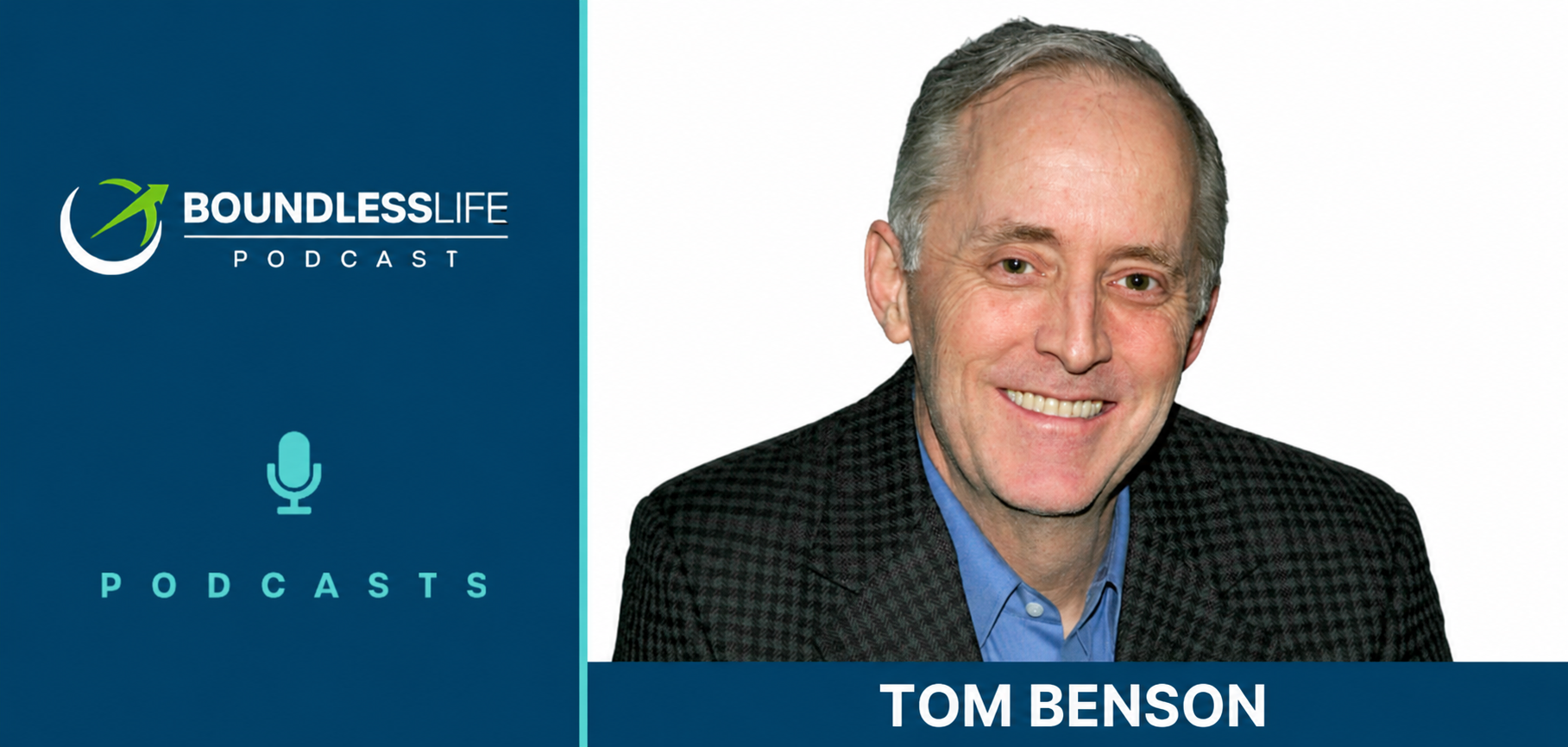
Boundless Life Podcast promotional graphic featuring a headshot of Tom Benson, a smiling older man in a dark blazer, against a light background with the podcast logo and microphone icon.

Listen on:

Reading time: 3 minutes

What I Discuss with Tom Benson:

  • Why Tom decided to address damaged mitochondrial DNA directly at Mitrix, instead of just managing symptoms…11:55
  • Why the body's existing quality control for mitochondria isn't perfect, and his first law of aging: if a fix were this simple, Mother Nature would have already found it 100 million years ago…04:54
  • What bioreactor-grown mitochondria means, and why Mitrix optimizes the process specifically to produce healthy mitochondria rather than for general stem cell therapy…06:56
  • How a bioreactor works, how stem cells are sourced from banked adipose or bone marrow tissue, and how that growth process is used to manufacture new mitochondria outside the body…08:17
  • Why running out of energy for quality control is the real reason mitochondria decline with age, and why people who already banked young stem cells haven't solved the actual problem…11:28
  • What mitochondrial transplantation actually is, how mitochondria move between cells and through the bloodstream constantly, and how stem cells use this mechanism to inject fresh mitochondria into damaged cells during natural healing…14:00
  • Real-world cases of mitochondrial transplantation in humans, and the full body mitochondrial transplant safety trials Mitrix ran on two elderly patients…17:43
  • How old mice given repeated mitochondrial injections, totaling roughly 12% of their total body mitochondria, were climbing the walls of their cages the very next day…21:25
  • The disease pipeline Mitrix is targeting first, including kidney failure, heart attack recovery research underway at Northwell Health in New York, and peripheral neuropathy…22:15
  • Tom's own theory of the mitochondrial cycle of the body: the idea that mitochondria are intelligently redistributed during infection, stress, and recovery, including a platelet study showing mitochondrial content nearly doubling during active infection…28:10
  • What mitlets are, the extracellular vesicles containing mitochondria discovered by Mitrix's chief scientist in Quebec, and how they differ from naked mitochondria extracted directly from tissue like muscle…33:47
  • The current state of mitochondrial health testing, including the mescreen™ test from Verséa Discovery and Mitome™, and why Tom feels none of the existing tests are fully accurate because mitochondrial quality varies dramatically…35:43
  • Why a bodybuilder's blood test could look great while their muscle tissue tells a completely different story…36:56
  • MitoClock, Mitrix's own internal test that counts deletions directly in mitochondrial DNA using a urine sample…38:23

In this episode with Tom Benson, founder and CEO of Mitrix, you'll hear why mitochondrial decline may be the actual root cause of aging rather than just a downstream symptom of it, and why most of the drugs developed so far to address it don't touch the real problem: damaged mitochondrial DNA. We discuss how Tom's company grows new, healthy mitochondria inside a bioreactor using banked stem cells, what mitochondrial transplantation actually looks like in real human cases already happening today, and the mouse study that gives this episode its name, in which severely aged mice receiving repeated mitochondrial injections were, according to the technicians running the experiment, climbing the walls of their cages by the very next day. Tom also touches on his original theory on the mitochondrial cycle of the body, how mitlets differ from naked mitochondria, and what his own MitoClock test reveals using nothing more than a urine sample.

Tom Benson is the CEO and founder of Mitrix. He is a serial entrepreneur and scientist who has founded four successful software, hardware, and science startups. He has published dozens of articles and video lectures on mitochondrial science and cellular energetics, and developed original theories on the systemic transfer and distribution of mitochondria within higher organisms and how that affects health and lifespan.


Episode Sponsors:

Troov: Troov is an all-natural energy powder that combines green tea caffeine, L-theanine, beetroot, amino acids, adaptogens, and electrolytes to support steady energy, focus, endurance, and performance without the harsh crash of traditional energy drinks. Visit DrinkTroov.com/BEN and use code BEN for 30% off your first order, plus free shipping and a 30-day money-back guarantee.

Our Place: Upgrade to Our Place today and say goodbye to forever chemicals in your kitchen. Go to fromourplace.com/ben and enter my code BEN at checkout to receive 10% off sitewide.

BON CHARGE: BON CHARGE is a holistic wellness brand with a wide range of products that naturally address the issues of modern life. Their products can help you sleep better, perform better, recover faster, balance hormones, reduce inflammation, and so much more. Go to boncharge.com/GREENFIELD and use coupon code GREENFIELD to save 15%.

Tecton Ketones: Tecton Ketones deliver bioidentical D-beta-hydroxybutyrate (BHB), the same ketone molecule your body naturally produces during ketosis, providing clean cognitive support, stable energy, and performance without the conversion step required by many ketone precursors. Visit tectonketones.com/ben and use code BEN for 16% off your first order.

LYMA Laser: The LYMA Laser is an advanced at-home skin technology backed by peer-reviewed research showing it influenced 45 genes in human skin compared to just one for an equivalent LED device. Users report smoother skin texture, more even tone, and visible improvements in overall skin appearance. Visit lyma.life and use code BEN10 for 10% off for a limited time.

Episode Resources:

People

Companies & Tests

Studies and Research


Upcoming Events:

Boundless Live Tour Presented by FormulaIQ | Summer 2026

Join the world premiere of Boundless: The Man Who Became Human, a new feature documentary that follows 20 years of body optimization colliding with life's immeasurable moments—marriage, family, and faith. Experience a live podcast recording and intimate Q&A with my family and me in Los Angeles, New York, Austin, and Moscow, ID, one night in a room full of people chasing the same thing. Purchase tickets here. 

Health Optimisation Summit | September 11–13, 2026

I'm speaking at the Health Optimisation Summit in London (September 11–13, 2026) at the Business Design Centre. This isn't your average health conference. HOS unites the best minds in biohacking, longevity, nutrition, fitness, and medicine, with one goal: to actually make people healthier. With 35+ world-class speakers, 120+ cutting-edge brands, and 4,000 like-minded people all under one roof, it's two days that could genuinely change how you approach your health. Get your ticket here and use code BEN to save 10% off registration! 

Eudēmonia | November 5–8, 2026

I'm speaking at Eudēmonia (November 5–8, 2026, in West Palm Beach, FL), a prevention-focused, science-based health, well-being, and longevity summit designed to add years to your life and life to your years. Across 3 days and 15 venues, you'll experience 200+ talks from 120+ experts, 300 treatments, and 160+ brands covering everything from biohacking, longevity, and hormonal health to gut health, brain health, peptides, mobility, and more. I'll be leading a talk and a movement session alongside some of the brightest minds in health today. Use code BGREENFIELD-EUD-100 for $100 off when you register here!

The Boundless Couples Retreat | November 10–14, 2026

Ready to reconnect and recharge with your partner in paradise? Join the Greenfields at the stunning Prana Maya resort in Belize for the Boundless Couples Retreat, November 10–14, 2026. It's a five-day, all-inclusive escape designed to deepen your relationship, restore your vitality, and create memories that last a lifetime. From relaxation and adventure to intimate relationship coaching with Jessa and me, every detail is crafted to send you home with a stronger bond and a reinvigorated spirit. Spots are limited, so discover more and secure yours here today!

The Manzo x Ben Greenfield Table Private Dinner | Throughout 2026

If you want to taste one of the world's rarest cuts of beef and experience my North Idaho biohacking compound firsthand, my family and I are hosting The Manzo x Ben Greenfield Table, an intimate, chef-catered VIP dinner on a few limited 2026 dates. The evening includes biodynamic wine, a live cooking demo, a multi-course Piedmontese feast finer than Wagyu, and a night of deep sleep in an EMF-free, fully grounded, circadian-optimized guest room. Anyone who reserves a half or whole Piedmontese bull from Manzo qualifies for a spot, so reserve your allocation and dinner here.

Stay tuned for future updates—and you can always keep up with my LIVE appearances by checking out bengreenfieldlife.com/calendar!

Do you have questions, thoughts, or feedback for Tom Benson or me? Leave your comments below, and one of us will reply!


Ben Greenfield: My name is Ben Greenfield, and on this episode of The Boundless Life Podcast, you've actually, from what I understand, created something that sounds like it's out of a science fiction novel: bioreactor-grown mitochondria. Tell me about this.

Tom Benson: Mitochondria are about 10% of our body by weight, which most people don't realize. If they were to shut down tomorrow, you literally would collapse.

Ben Greenfield: My guest on this show is the CEO and founder of Mitrix Bio, and they do mitochondrial transplantation. They literally grow new mitochondria in bioreactors, which is crazy, and we're going to talk about that, and the future of mitochondrial transplantation.

Tom Benson: So what we do is we grow your stem cells, and we also make the mitochondria younger during that growth process. I can't talk about how we do that. That's our...

Ben Greenfield: Show notes are at BenGreenfieldLife.com/Mitrex, M-I-T-R-I-X. We had a connectivity issue, which is why halfway through I changed my wardrobe, but that is a total aside. BenGreenfieldLife.com/Mitrex. Let's dive in and talk with Tom.

Welcome to The Boundless Life with me, your host, Ben Greenfield. I'm a personal trainer, exercise physiologist, and nutritionist, and I'm passionate about helping you discover unparalleled levels of health, fitness, longevity, and beyond.

Ben Greenfield: I spent 20 years measuring and optimizing everything about my body, deep performance metrics, cold stress, heat stress, sleep scores, blood panels, peptide protocols, testosterone, telomeres, VO two max, you name it, and somewhere in the middle of building what looked like perfect life. I almost lost the life that I was building it for. Boundless, the man who became human, is a brand new feature documentary that follows what happened when the optimization framework that I spent two decades constructing ran headlong into the things that metrics could never measure, my marriage, my sons, my faith. The private archive footage in this documentary has never been seen publicly. Some of it I debated, even including at all. It shows basically the worst of what happens when longevity becomes the ultimate goal, and how you and I can turn that around to become fulfilled by what's truly important in life. Now, this is not just another biohacking film, it's an honest look at what it costs to chase the ceiling on human performance, told through real footage of one family, my family finding that out, and I'm giving you the chance to join me for the brand new live premiere tour of this new film in a city near you. Here's what the night looks like: you watch the film with me and my family in a theater, and then you experience a live episode of the Boundless Life Podcast on stage with open Q and A, real questions, no filters. My wife, Jessa, and my sons, River and Taryn, will be there with us as well. VIP ticket holders get to join for an exclusive after party with upgraded food and drinks. This Boundless Life Tour kicks off in LA on july 24 Austin on august 20, New York City on august 6, Miami coming down the pipeline, London coming down the pipeline. More cities to be announced. Tickets are on sale now. Grab them now before they're gone at Boundless doc.com that's Boundless D O c.com and I hope to see you there.

All right, mitochondria. They're not really new in terms of being talked about all of a sudden in the health industry, but it does seem like there

Tom Benson: is, yeah, right, right, they're kind of in style now.

Ben Greenfield: Yeah, they're in style. It seems like they've been in style. I mean, it's such an odd word when we're talking about, you know, a key aspect of cellular biology, but you know, I took biology classes, anatomy and physiology and everything back in college, you know, 24 years ago, and of course we were talking about mitochondria. We still are, but as you and I will talk about later, Tom, there's a lot of new science about mitochondria. But before we even get into any of that, even though I'm sure a lot of people listening have heard of mitochondria and what they do, I want to hear in your words why mitochondria are so important.

Tom Benson: Well, yes, great question. So mitochondria are about 10% of our body by weight, which most people don't realize. They are these tiny little blobs of stuff that float around inside our cells. We have about, maybe, I don't know, 100 to 500 mitochondria per cell, depending on whether it's a muscle cell or a fat cell, right? Muscle cells are pretty much just all mitochondria. And what you want to think of is the mitochondria as the part of the cell where all of the energy generation is done, so fats and sugars go into the cell, they float around, the cell doesn't have any way to deal with them, and the mitochondria is where those sugars and oxygen are actually combusted. And they literally are covered with tiny little spinning molecular rotors that are going at 3,000 rpm, and they are literally jet turbines, they're molecular jet turbines. And then by the

Ben Greenfield: way, quick interruption: 3,000 rpm. Those of you who work out at the gym, when you're pedaling a bike really fast, it's hard to hit maybe 130. That'll help you contextualize what 3,000 rpm is.

Tom Benson: Well, that's what your car engine runs at. That's what you know, if you go to a gas generating plant that's making electricity for your city, that's what they have. They have jet turbines that are creating electricity. Well, mitochondria are the equivalent of the generating plant that's generating our electricity. And so literally, that's 96% of the energy in ourselves generated by those mitochondria. So if they were to shut down tomorrow, you literally would collapse into a little pile of goo on the sidewalk.

Ben Greenfield: Kind of begs the question: what's the other 4% coming from?

Tom Benson: It comes from a very, what actually is a fairly ancient style of chemical energy generation, which is what all cells a billion and a half years ago used. All the cells on the planet use this ancient style of very low efficiency energy generation, and that wasn't enough energy to do much, and so we just had this floating ocean of, really they were like bacteria, just floating around. They didn't have any male or female sex, we didn't have multicell animals, we didn't have any nucleus, it was just really primitive life. Those early cells, a billion and a half years ago, merged with this other thing called the mitochondria, which was a type of cell that had developed these little spinning turbines, and they came inside and they kind of formed this partnership. And so that's what we are. We are actually, and the mitochondria have their own tiny DNA, and they're just as important to the operation of the cell as the big nuclear DNA that has all of your assembly instructions in it. So what I was told to tell people is: we're actually a dual genome species. We're not just one DNA, we have two DNAs, and they're completely different.

Ben Greenfield: Yeah, that's super interesting. So if 96% comes through like cellular respiration via the mitochondria, 4% is coming from just strict glucose utilization?

Tom Benson: Yeah, exactly, exactly. And think of those 96% mitochondria as being like these little super hot, super stinky little power plants, where things have a very hard time not getting burned up all the time. They're rebuilt every two months. The mitochondrial DNA tends to get degenerated. It's a compromise. It's a very, you know, stinky and smoky situation. I'll say it's like being in the belly of the Titanic and being the guy who's shoveling coal in there, man. It's messy.

Ben Greenfield: Yeah, if I'm reading like a research article on longevity, I don't know, like two I saw in the past year. One was on a peptide called Epitalon, another one was on exosome infusion in mice, and both claimed that the increase in lifespan observed in response to the use of those compounds, I believe in rodent models, was due to an improvement in mitochondrial health, either energy efficiency or helping to slow down the drop in mitochondrial energy decline. So it seems like the mitochondria kind of fit into the center of much of our pursuit of longevity or healthy aging, but is that true? Like, do they actually get less efficient at making energy as we age?

Tom Benson: They absolutely do. However, the problem is that that's primarily because the main reason they get less efficient is because the mitochondrial DNA is actually beginning to get what I call sector errors. It's like a hard disk getting bad sectors over time. And so the mitochondrial DNA acquires deletions, and there is no way to fix it, because there's nothing better than that. The mitochondrial DNA is the source of truth, and so the body is struggling, trying to. It does have a little bit of quality control, but not much. It's just that they're so primitive, they're very hard for the body to deal with. As we age, the reason we age, we think, is because the mitochondrial DNA gets worse and worse and worse. By the time you're 65, it really starts to kind of go exponential. By the time you're, if you're lucky enough to make it to 90, by the time you're 90, your mitochondrial DNA just starts to fall apart, and that's really a very reliable number, 90 to 95 years old. They start to just collapse, and if you've ever seen an old person, both of my parents are 95 and it's amazing how quickly it goes at that age. Just suddenly they start losing muscle, they start losing vision, cognition, everything, and then they just kind of die. Their immune system goes bad and they die of pneumonia. That is a very common thing.

Ben Greenfield: So before you roll up your sleeves and start to tackle this problem, what existed, or what exists to attempt to halt that decline, or halt the DNA damage, or the accumulation of inefficiencies?

Tom Benson: The problem is that it's a really hard problem, and you know it's also really new. As I already said, this is so recent. And you know it's, I talk to doctors all the time who say, "We weren't even taught about mitochondria in medical school." That was just not something that was even covered, so all of a sudden there's all this focus, a huge amount of focus on it. The thing about all these various treatments that people have been proposing, many of them are designed to, for instance, strengthen the membrane of the mitochondria. There's been people working on doing mitophagy, which is improving the amount of turnover, the amount of cleaning out of the bad mitochondria. The problem with that is that's like putting a new coat of paint on a car when the engine is bad. Okay, if the mitochondrial DNA is fundamentally broken or mutated, which really is what it is, your mitochondrial DNA, as you get older, gets more and more and more mutated, and you have a certain quantity of that mitochondrial DNA in your body, and yes, the body can make more of it, but if it gets mutated, then it's taking the old DNA that's mutated and replicating it, and again, it's also mutated.

Ben Greenfield: Okay, so real quick, what you said makes sense in terms of why would we just focus on bolstering mitochondrial membranes if the DNA is impaired, because that would be working on the paint job of the car instead of the engine. But then with what you're saying about mitophagy, the natural cellular cleanup of mitochondria, what you're saying is that as old mitochondria die and new ones arise, those new ones still carry with them the same impaired DNA.

Tom Benson: Yeah, because mitochondrial creation, the creation of new mitochondria, it's just duplicating whatever mitochondrial DNA it has sitting around.

Ben Greenfield: Okay. So as you get older, you're making new mitochondria, but they're, for lack of a more precise scientific term, just as crappy.

Tom Benson: That's about as scientific as it needs to get. Yes, right there. So you are replicating. It's like saying, oh, I've got this bad hard disk that I got from an old computer, I make a complete copy of it. Well, that doesn't do you any good. You're just bringing over all the bad code that's on that hard disk. Okay. And so what you really need to do is rewrite the operating system from scratch from a superior copy of that information, but there is, in your body, no reference source of perfect mitochondria, because even those begin to get old and worn out after a while.

Ben Greenfield: So what you're describing, some people's ears may have perked up there, and they may be thinking, "Gosh, that sounds a little bit like gene therapy or DNA editing." Is that what you're alluding to?

Tom Benson: That's exactly right. Now, I want to say something. I'll just go back to mitophagy for a second. There is quality control that happens in our body. The problem is twofold. First of all, it's not perfect, and so there's a little leakage, and that's why, if it wasn't for mitophagy, we'd probably only live to be 25. So we're already using all these tricks. The human body is extremely heavily optimized for long life already, and everything we're doing, we're already doing pretty much, and evolution has been working on that problem for a billion years. Long life is a really big survival thing for the human race, because of how we are as a species. So you know, that gets into the whole question of evolution. We evolved to have elderly elders in our tribe because they pass on the information. So what that means is we're already really, really well optimized. And if mitophagy could be done better, sure, we could live to 100, live to 150, but our bodies would have already been doing that. Okay. And that's the terrible saying that we have around here at Mitrix Bio, which I call the first law of aging, and the first law is: if it's that simple, why didn't Mother Nature already do it 100 million years ago?

Ben Greenfield: I first became familiar with the term Mitrix Bio when I was at dinner with a mutual acquaintance of ours who runs a fund that invests in longevity companies called Dark Matter, and he said, "Well, have you seen Mitrix Bio?" And I'm like, "No, but you know, I've seen a lot of companies in the sector, so I didn't expect to see much new." And then I went through your website, and so this is where I'm a little bit excited, or at least I'm super excited to talk about this, because it's not just all doom and gloom and your mitochondria suck and they'll suck even more as you get old.

Tom Benson: Yeah, you're screwed. Sorry, go away.

Ben Greenfield: Yeah, okay. So let's get into the sexy stuff here. You've actually, from what I understand, created something that sounds like it's out of a science fiction novel: bioreactor-grown mitochondria. Tell me about this.

Tom Benson: It's bioreactor-grown stem cells that are optimized to produce healthy mitochondria, that's the actual better phrase. And look, there are lots of companies in the world who manufacture stem cells. They have whole manufacturing lines to create stem cells for cancer therapies and for all kinds of different reasons. And you can go to different parts of the world, there are lots of, it's called stem cell expansion, so it's not that science fiction-y. People are doing this all over the map. The difference is that we're focused on the mitochondria. Everybody else is focused on stem cells. Our focus is, hey, we're just growing the stem cells in order to be factories to produce the mitochondria, and so we've optimized it for that.

Ben Greenfield: Walk me through how this works. How does a, I don't even know what a bioreactor is. I guess if I was sitting next to someone on an airplane, there's no way I could describe it. But what is a bioreactor, and how does it make stem cells that produce mitochondria?

Tom Benson: It's a big vat. A bioreactor is a big vat, and you put growth media in it, and then you put in some seed stem cells. And you know, you can get your stem cells harvested at any number of locations. You can get MSCs, which are the stem cells that you usually get from your adipose fat. You can get HSCs, which are bone marrow stem cells. They have companies where you can go and just get this done, you get them frozen for future use.

Ben Greenfield: Gosh, 30-year-old me exists in both bone marrow form and fat cell form in the states of California and Florida.

Tom Benson: 30-year-old you is a good thing to have, because when you become 65, you can go back and, of course, for all these years the people who bank those stem cells have said, "Well, someday we'll have something really good we can do with them, right?" Well, that's what a mitochondrial bioreactor is. That's where we say, okay, now we can use your banked stem cells to create mitochondria, which we then pump back into you in order to boost your body back up. And by the way, the first thing people always say is, "Well, why don't you just re-inject stem cells?" What we've learned is that the math is the hard part with stem cells. If you get a typical stem cell treatment of, let's say, 150 million stem cells, that's very typical, right? And you can either get them from this bank or you can get them donated from somebody else, maybe from cord tissue or someplace like that, and of course you can go all over the world. 150 million is the equivalent of maybe one day of youth, maybe two days at best. So great, yes, stem cell therapy, 150 million,

Ben Greenfield: and you spent three to four days flying to get all this done and injected, and a whole protocol, to get back one day.

Tom Benson: It's not that there's anything wrong with stem cells, they're great. It's just not enough.

Ben Greenfield: To clarify, specifically for longevity, because certainly there are some people who have had stem cells, including myself, injected into a joint so we can play better tennis and pickleball.

Tom Benson: If you're going to concentrate it in one area, great. But if you're talking about, think about trying to do that same therapy on your knee multiplied by what's the ratio between the knee and the rest of your body? It's probably 500 or 1,000 times more tissue. So really, what I'm saying is, if you wanted to use your stem cells, or let's say you grow some of your stem cells from that sample that you had packed away, you grow them, you'd have to get maybe 1,000 to 5,000 stem cell transfusions over the course of a year to get 10 years of age reversal.

Ben Greenfield: Okay, so let's say that I'm listening and I'm, I don't know, 60 or 65 or 70. Am I just screwed because I don't have the young stem cells to make young mitochondria in your bioreactor?

Tom Benson: Think of it this way, there must be a way of making young mitochondria, because Mother Nature does it, because that's how we get babies from. I mean, if we couldn't make young mitochondria, we wouldn't exist as a species, right? So somewhere in the reproduction, in the female reproductive system, there is a way of making young mitochondria, which really just means you're sorting out the good ones and the bad ones, and you're just keeping the good ones. You put those into the egg cell, you start the whole cycle over again. That's the cycle of youth and age and death. Okay, so there is a way to do it. It's just that the reason our bodies aren't doing it when we're 80 or 90 years old is that our bodies have run out of energy, and it's a very energy-intensive process. And so our bodies are working, working, working, working to keep our mitochondria healthy, and they just eventually run out of steam, and that's when you get old and it really starts to decline fast. That's why, as I said, if you look at someone who's 90 years old, like my dad was skiing until he was 90. He was the most dedicated, he'd be on the treadmill while talking on the phone, he did that his whole life, he was in the best shape. But at 90 years old he just couldn't keep his leg muscles up enough to ski anymore, he just gave up, and that's because his mitochondria just finally started really declining hard.

Ben Greenfield: Now you make the mitochondria in the bioreactor, these are new young mitochondria, which is great.

Tom Benson: So what we do is we grow your stem cells, and we also make the mitochondria younger during that growth process. I can't talk about how we do that. That's our, that's our technology that we've been working on.

Ben Greenfield: The secret sauce.

Tom Benson: The secret sauce. And people say, "Well, why don't you just do that in the human body?" Well, because you don't have enough energy in your body to make this process work. We have to do it outside, where we can have a giant vat, lots of nutrients, lots of technicians fussing over it, and unlimited sources of external energy, so we're basically supplementing your body with external energy in order to rebuild your mitochondria.

Ben Greenfield: Now when you say supplementing my body with extra energy, you have actually figured out a way not only to produce the young mitochondria from stem cell precursors, but then to get them into the body.

Tom Benson: To get them into the body, we use a thing called mitochondrial transplantation, which was not invented by us. That's been around now for about 10 years. It's a very, very hot field. You'll start seeing it popping up all the time. If you go on Google and look it up, you're going to see a lot. Mitochondrial transplantation is based on this discovery that somebody made about 10 years ago that mitochondria don't just sit in cells, they move around constantly between the cells, they move through the bloodstream, they're being loaned. That's how stem cells bring other cells back to life. Stem cells actually come along and they find a cell that's kind of in trouble, that is low on energy, or maybe it got damaged because you got bitten, or whatever thing has happened to you that has caused some damage or injury. Stem cells come over, they see that that cell is in trouble, and they actually inject new mitochondria into that cell in order to improve its energy level, so it can rehabilitate itself faster. That's how you get regeneration. You need more energy. That's what mitochondrial transplantation

Ben Greenfield: is. Okay, so real quick, clarifying question here. In the case of something like stem cells, you know, there's a discussion of so-called paracrine signaling, right? Like, how do the cells communicate with one another to know where they're supposed to go? And so some people in regenerative medicine will propose the use of exosomes as signaling vesicles. Others will say, well, if there's inflammation or reactive oxygen species in a specific area, those are used as signaling to draw the cells to the location they're supposed to go. Other people are even using things like red light therapy or electrical modalities to try and draw cells into an area. In the case of mitochondria, how do they know where to go?

Tom Benson: First of all, when the stem cell is creating all of these exosomes, it's creating exosomes that contain mitochondria. Okay, your bloodstream is absolutely packed to the brim with exosomes containing mitochondria that are being transferred, and they're also transferred from your platelets, by the way. So you have a trillion platelets in your bloodstream. Every platelet generally has about five mitochondria, and when those platelets get to the end of their 10-day lifespan, the last thing they do before they get recycled is they spit out those five mitochondria in exosomes inside little membranes, and they have targeting molecules on them that cause them to be absorbed instantly by the rest of the immune system. Okay, since we've had this talk, you've had a billion mitochondria transplanted.

Ben Greenfield: My cells are just spitting out exosomes that contain mitochondria?

Tom Benson: Your stem cells in your bone are creating platelets that contain mitochondria. Platelets also have all these signaling molecules, they have proteins in them that are pre-manufactured. So what I always tell people is there's signaling molecules and there's raw materials, construction materials. Like the truck pulls up to your house, and it's got lumber, and it's got boards, and it's got instructions, and it's got workers. You know, all that stuff is needed to rehabilitate itself.

Ben Greenfield: Okay, so the truck pulls up to my house in terms of mitochondria, and you figured out how to fill the house with what's in that truck. Have you actually done this in people, or is this all worms, in vitro, rodents, et cetera?

Tom Benson: Mitochondrial transplantation has been going into people for 10 years on a limited scale. And so there are certain universities, certain surgeons who use mitochondrial transplantation, for example, for children who are born with heart defects. When they go in to operate on the neonatal heart to rewire the plumbing, you know, and save their life, which they do, the problem is a lot of those hearts end up with a bunch of damage to the heart muscle, which never comes back. And these surgeons learned that if you take mitochondria and inject them into that heart muscle really quick before you close up, it actually brings the heart muscle back to life, and then they end up with almost 100% heart function afterwards. And that's been done in dozens of people. They've done mitochondrial transplantation after strokes, they've done it for people to do wound healing, you know, like if you've got an ulcerous wound that won't heal, you can put mitochondria on

Ben Greenfield: it. Is this, by the way, all under like investigative research, like an IRB, or is this commonly done as, I guess what you would call, an FDA-approved clinical treatment?

Tom Benson: Yeah. And then the final thing is, we actually did a series of what you'd call whole-body, full-body mitochondrial transplants, about a month and a half ago. We just finished. We did four early safety trials on two elderly people, that was as much as our resources allowed. So we did two people, we did a full series of safety trials, and it was perfectly safe. We had no problems whatsoever.

Ben Greenfield: And what happened? Did they just full-on Benjamin Button, or

Tom Benson: no, no, because that was just safety. We weren't looking to make them younger. We were just making sure that they didn't have a negative reaction. It wasn't enough.

Ben Greenfield: Yeah, but I mean, did you test anything just to see, like, what happened when you put the mitochondria into them?

Tom Benson: Nope, nope. When you do safety trials, you specifically do not look at efficacy, because that would be mixing your variables. It wasn't enough. There was nowhere near enough.

Ben Greenfield: So get all hypothetical with me here. Like what would you expect, in non-disease states, diseases aside, like a cardiovascular issue such as you were just talking about, what would you expect to see in just a healthy person who wants more energy or wants to stave off mitochondrial decline if they got a mitochondrial transplantation?

Tom Benson: Well, first of all, if they're healthy, they probably won't get the transplantation, because right now it's still at the same place where you might have a heart transplant: you have to have a doctor do this. This is not a pill, it's not something you can pop at home. You have to go to the hospital, and the doctor is not going to do a mitochondrial transplant for you unless you need it for a specific reason.

Ben Greenfield: And by the way, not to derail you, but if they were to do it, is this like an IV infusion?

Tom Benson: Everything we've done, direct injections into the eye fluid, which is really useful for glaucoma and for macular degeneration. We've done direct muscular injections, we've done intravenous injections. People have tried inhaling mitochondria into their lungs. It all works. Mitochondria are slippery little bastards, they go everywhere, and they travel like crazy through the cells. Think of the mitochondria as having the master key to the whole body, they can go anywhere they want. And in none of the mitochondrial transplantation trials, and of course we've done lots of animals, I mean, everybody's done animal trials. We did a series of mouse injections where we were injecting the mice with up to 1% of their total mitochondria per injection, and we did 10 to 12 of those, so we upgraded them by 12% of their total bodily mitochondria, in theory, and they did, and they were very, very happy mice.

Ben Greenfield: Translate "happy" for me. What happened?

Tom Benson: Well, these are old, old, old mice that we did these injections on, and the day after we gave them these injections, they were climbing the walls. I mean, literally. The technicians were like, "Wow, they don't look old anymore." You know, they're running around, little mice, you know, they're climbing around and doing their mouse thing.

Ben Greenfield: By the way, did you say Mitrix or Matrix?

Tom Benson: Mitrix, Mitrix.

Ben Greenfield: So is it your goal at Mitrix Bio to get to the point where this would become something someone could do at their doctor as a standard clinical practice for just helping with energy?

Tom Benson: Yes. So step one is we cure people who are dying of diseases, right? So you know, if you have a bad kidney, for example, let's give you a bunch of mitochondria and see if we can bring back enough kidney function to get you off dialysis. That's an obvious thing to do. People die of kidney dysfunction all the time. What if you have a bad heart valve? What if you have a bad aorta? What if you have wounds on your legs that won't heal? What if you have peripheral neuropathy, which is horribly painful? There are a lot of diseases out there that we can't cure, and mitochondria seem to be really good treatments for that. What if you have a heart attack? Okay, this is being studied at Northwell Health in New York, which is the biggest hospital chain in New York. They have a whole program looking at what would happen if they could use mitochondria for people after a heart attack, and the results are great. So,

Ben Greenfield: let's say somebody's listening and they do have a heart issue or kidney issue or some other medical reason that would potentially justify a mitochondrial transplantation. Are we at the point right now where they could talk with their doctor and their doctor would know what they're talking about, or do they need to go to your website, or how does that work?

Tom Benson: We're kind of at that hard point in the medical system where the doctors don't know about it yet, because it's so new. And this is true of so many diseases and so many new treatments. The doctors don't know, because it's so new, and it hasn't spread yet. So we're slowly getting the word out there, and again, this is a transplant procedure, so yeah, you need a doctor to do it. And you know, you need, for instance, I talk about doing kidneys, but nobody's done kidneys yet, so there's somebody who's going to have to be the first. You know, it's like the first-ever heart transplant or the first-ever kidney transplant. Somebody had to go in there and get a doctor to do it first.

Ben Greenfield: Yeah, so basically pull open your feed reader or your X feed right now and start a search term for "mitochondrial transplantation" to stay up to date on the legality and the rollout.

Tom Benson: I mean, we know in the field that it's really, really safe, because we've seen it be perfectly safe for so many years. But you know, doctors are very conservative, so probably the people who are going to get this first are the ones who are really in trouble. Also, unfortunately, right now there's no funding for anything new. The whole system has kind of come to a screeching halt, so that's the other problem.

Ben Greenfield: Yeah, but you guys are able to raise money. I mean, back to something like that Dark Matter fund, you guys are able to raise money privately to help with things like the bioreactor research and some of these tests that you're doing, right?

Tom Benson: Right, but that's been very, very skimpy. Like people say, "Well, are you going to do a larger set of trials?" Well, not until we can find a way to raise more money, and that's challenging.

Ben Greenfield: Hopefully getting the word out with shows like this will help. Back to the idea of the mitochondria, I noticed when I was kind of looking through some articles you've written and some details on the Mitrix Bio website that you have this theory called the mitochondrial cycle of the body. Can you explain that in a little more detail?

Tom Benson: Absolutely. So the mitochondrial cycle of the body is a theory that says, by the way, I'm just going to back up for a second, remember everything I'm talking about during this podcast is a theory. And many, many other established scientists will say, "Oh, this guy's full of crap," so take it with a grain of salt. This is our theory. Other people may not agree.

Ben Greenfield: It's a theory, and yet you do have old mice climbing up the walls of their cages.

Tom Benson: That's the thing, it's a theory, but the sign of a good theory is that when you try it in real life, it works. The concept, or the mitochondrial cycle of the body, is that not only do mitochondria move around the body all the time, which we know they do, but that they're actually being directed intelligently by the body in order to bolster certain areas and lead to long life and supplement against infection. I'll tell you where this comes from. If you get an infection, let's say you get pneumonia or you get cancer, and your immune system is in there fighting to try to save you from that infection, they've done a study, and this is very well shown, that the number of mitochondria per platelet almost doubles. And so that means when the platelets go out there and they start releasing these mitochondria in these little vesicles, which are being absorbed by the white blood cells, what that means is that the body is intelligently responding to the infection by giving it more fuel. It's giving the white blood cells more fuel. Those white blood cells can actually absorb additional mitochondria, and it makes them stronger, and they can fight longer. So it's almost like having, you know, in World War II where they had big trucks full of diesel fuel to keep the tanks going, right? They had to keep supplying the front. The body is doing that intelligently, and it's doing it with design. And then the next question is, well, why doesn't it just supply all those mitochondria all the time? Because it doesn't want to do it all the time, because it wants to keep them in reserve for other uses. It's rationing as needed. And that's what we call the mitochondrial cycle of the body.

Another example that's just amazing is what happens inside your brain. The mitochondria in your neurons are actually not made by the neurons, they're made in other cells nearby called astrocytes, and there's another type I forgot. They're manufactured in support cells, and these young mitochondria, these new mitochondria, are put into little vesicles and they float over to the neurons. The neurons grab them, put them into use in the neuron, and of course neurons have a huge amount of mitochondria in them. And then if they get burned out, a neuron puts it back into a different vesicle and floats it back to the astrocyte to get refurbished. That's happening in your head all the time. That's how we're built.

Ben Greenfield: Interesting. And I'm assuming that the mitochondrial cycles would be upregulated in someone who might be battling inflammation, exercising excessively, or putting some other type of chronic or acute stress on their body.

Tom Benson: That's why stress, everybody knows stress kills you, right? Well, now we know why.

Ben Greenfield: Stress kills you, but arguably small amounts of stress would probably upregulate the mitochondrial cycle to allow for healthier, more efficient mitochondria.

Tom Benson: Yeah, well here's the deal. There was a guy in New York, a professor, just a few years ago, who did a study on this. He found that if you took any stress hormone and you put it in a test tube full of replicating cells, the quality of the mitochondria started going down really fast, because the stress hormone causes the mitochondria to be replicated really quickly, but it does a sloppy job. Okay, because the body's like, "Oh, you're under stress, I just have to give you more mitochondria." Well, it's giving up on its quality control at that point, because it figures you're running from a leopard and trying to escape being eaten. You don't care about quality at that point. So if you're under stress for 10 years, your mitochondrial quality goes down, which fundamentally means you are prematurely aging your mitochondria.

Ben Greenfield: Yeah, another feather in the cap for proper recovery cycles.

Tom Benson: Absolutely. And I'm not just talking about physical stress. It's continuous loads of cortisol in your bloodstream, that is not healthy, and we all know it. If you smoke, smoking just rips the hell out of mitochondria. It has been proven over and over again.

Ben Greenfield: Yeah, you heard it here first. Don't smoke.

Tom Benson: All this stuff is common sense. It's all common sense, right? Don't eat crappy, sugary food, terrible for your mitochondria. Don't be under a huge amount of stress. Get exercise. Red light therapy is nice because it helps bolster the mitochondria a little bit. It's not going to fix the DNA damage, but it helps them run a little better, so you get a little benefit out of that.

Ben Greenfield: Okay, I've got a clarifying question about these extracellular vesicles. Before I ask my question, are these the ones that are called Mitlets?

Tom Benson: We call them Mitlets. That's just the name we made up. So yeah.

Ben Greenfield: All right, so you know, back to the stem cell analogy, sometimes people won't get stem cells, they'll just get exosomes with the theory that, well, exosomes are going to allow the stem cells that are already in the body to communicate better, and for some amount of regeneration and even lowered inflammation to occur. In the case of mitochondria, could you potentially infuse or deliver Mitlets instead of just the mitochondria themselves, like to get some kind of a mitochondrial signaling amplification?

Tom Benson: Thank you, that's actually an excellent question. There are multiple flavors of mitochondria for transplant. Our group at Mitrix Bio is based on the work of a scientist in Quebec who's our chief scientist, who discovered the Mitlets. He discovered these extracellular vesicles containing mitochondria. So that's what we put most of our effort into learning how to use. There are other groups who are using what we call naked mitochondria, where they just take, like, they could take a little bit of your leg muscle and scrunch it up and extract the mitochondria just by themselves and inject those into the site. And so both of those things work. They work in different ways. The vesicle mitochondria work really well for immune system regeneration. The naked mitochondria work really well for direct injection into the muscles. So that's where your doctor eventually will have a whole toolkit of mitochondria, and they'll know how to get them to the right place to fix whatever your problem is.

Ben Greenfield: What about evaluating whether the mitochondria are healthy in the first place? I interviewed Sean Fetcho from Verséa a few months ago. He has a test called the mescreen. Dr. Chris Masterjohn has talked about another test that he has. I forget, I know about

Tom Benson: both of them. Yeah.

Ben Greenfield: So where do we stand right now in the field of mitochondrial testing, accuracy or utility?

Tom Benson: First of all, it's really complicated, and the problem is, once you understand the mitochondrial cycle of the body, what you realize is that depending on where you are, you may get really good mitochondria or you may get really crappy ones. Like if you go to the kidney or the skeletal muscle, skeletal muscle mitochondria are notoriously low quality because they're getting burned up, whereas the mitochondria in your bloodstream that you get from your platelets are high quality because they came from the bone marrow. So the quality of your mitochondria depends on the source, so you better know what you're doing. The second problem is let's say you're 80 years old, there could be a massive difference between your skeletal mitochondria and your blood mitochondria, a huge difference, and if you don't understand that, you may not make the right decision.

Ben Greenfield: Wait, so are you saying, for example, that in some, let's say, you've got a bodybuilder or someone who lifts weights quite a bit, and you were to do a muscle biopsy and get skeletal muscle mitochondria and test that, if they also get a blood mitochondrial test, the blood mitochondrial test might indicate good healthy mitochondria, whereas a skeletal muscle mitochondrial evaluation might indicate that there's a lot of beat-up and damaged mitochondria?

Tom Benson: Premature aging in the skeletal muscles. Right, that's again the mitochondrial cycle of the body. The bone marrow is supplying the best mitochondria it can to supplement all the other parts of the body that have low quality, kind of keeping them up to speed. It's rationing out the good ones. And so that's where, you know, the science is evolving. And if you look at Chris Masterjohn's test, if you look at mescreen, I mean, I love these tests, they're all good, but none of them are really 100% accurate, because it's just so complicated. You really have to know how to interpret the results.

Ben Greenfield: Yeah, you'd think with enough proxy data, like if someone were to do a fat biopsy, a muscle biopsy, perhaps get access to bone data, and so on, then compare that to blood data and get enough big data over time, you could get to the point where a blood spot test, for example, could give you a clear idea of what's going on at the mitochondrial level. But you need to do a lot of tests and gather additional data from other areas of the body first.

Tom Benson: We actually developed our own internal test, which we call the Mito Clock, okay, which is kind of a dumb name, but we look directly at the DNA itself, the mitochondrial DNA, and we count the number of deletions in the mitochondrial DNA for a sample of mitochondria, and we use urine. That's one of my little, I'll give this secret away, because it's kind of common knowledge now. If you get mitochondria that have come off of the bladder and gone into the urine, they're reliably bad, and so if you just stick with those, you know you're going to have a good baseline of data for elderly people, and you can look at how bad they are by looking directly at the genetic code itself, and that will give you the most accurate reading.

Ben Greenfield: Got it. You're just basically getting the most beat-up ones first.

Tom Benson: That's equivalent for us to a muscle biopsy. I don't want to do a muscle biopsy, because that means I have to go in and chop out muscle.

Ben Greenfield: Guillotine thing. Yeah.

Tom Benson: I can do a pee sample, and I can send somebody a box, they pee in the cup, they send it to the lab. So that's a really, really good system. And I personally advocate for testing everybody in the United States with that. I think there's so much mitochondrial damage that we don't know about, and I've been saying this. I think we should test everybody. Really.

Ben Greenfield: The Mito Clock test, is that something that you can get right now on your website, or is that also through a doctor?

Tom Benson: Not yet. No, we're working on it. We've done it with a few people, but the problem is that we have to do it all manually, and it's super expensive.

Ben Greenfield: Have you compared it to any of these other tests?

Tom Benson: Yeah, it's just much more accurate because it's looking at the right thing and it's looking at the DNA directly. All these other tests, what they do is they look at the enzymes that are feeding the DNA, and they can kind of interpret, like, well, how does the mitochondria look based on the quality of these enzymes, which

Ben Greenfield: would, however, be dictated by the DNA quality.

Tom Benson: It's dictated by the DNA quality, but it's still not direct one-on-one data, it's still extrapolation from these other factors. And if you, somebody said the other day, "Well, if you have a biological age test that can be changed just by a couple nights of bad sleep, it's probably not a very reliable test, you know." If you're going to test somebody's biological age, you have to look at the really core factors.

Ben Greenfield: Is there a good reason that you went after creating new mitochondria, or new stem cells that produce mitochondria in a bioreactor, versus what some people in the field are doing right now, which is gene therapy to address the DNA that's already in the body?

Tom Benson: Yes, very good reason. And it's kind of an existential question. If you're 85 years old and your cells are already energy-depleted, you're barely hanging on. Your cells are barely hanging on by the time you're 85. I put a gene therapy in there and say, "Hey, rebuild all your mitochondrial DNA," and the cell says, "I don't have that energy to do that." Your cell doesn't have enough energy to do the work. If it had that energy, it would be doing it already. That gets back to: if it was that simple, Mother Nature would have done it 100 million years ago. The reason we get old is because the body can't do it under any circumstances, because it doesn't have the spare energy.

Ben Greenfield: That would be kind of the equivalent of putting a new chassis on an old engine.

Tom Benson: Yeah, exactly. Or, you know, the other analogy is you're trying to rebuild the engine of your car while you're driving 70 miles an hour down the freeway. No, you've got to stop, you've got to go somewhere, you've got to take the engine out and put a brand new engine in that you've built somewhere else.

Ben Greenfield: Yeah, between the rotor and the paint and the engine and the wheels and the chassis, we are crushing the car analogies today.

Tom Benson: Exactly. Well, I'm 65 and I grew up when it was all about cars. The other analogy you could do is the laptop refurbishment analogy, which is more modern.

Ben Greenfield: Well, this is all just fascinating. This whole field is super exciting. Mitrix Bio, it's, you know what, if you go to BenGreenfieldLife.com/Mitrex, M-I-T-R-I-X, I'll just make show notes for everything that Tom and I talked about, and I'll link to some helpful articles on their website, and I think there's a photo of the bioreactor on there, and some other super interesting information. Tom, anything else you want to share before I let you go?

Tom Benson: No, I just think, you know, as I said, I know there are a lot of people out there, so many people who need this kind of stuff, and we feel bad because it's like we're so small and it's so new, and there are so many people who are desperate. So I have some of those people in our user group now, and my message to people is: we are working on it. The world is working on this, it's not just us, it's a lot of other people too, so I have a lot of hope for the future. It's just going to take time.

Ben Greenfield: Awesome. Well, hopefully this helps move things along in terms of interest, because I would love to be able to get a mitochondrial transplantation when I'm 50 and climb off the walls.

Tom Benson: Look how healthy you are. You don't need new mitochondria, your mitochondria are in great shape.

Ben Greenfield: I feel great. And then I find out about stuff like this, and I'm like, "Hey, I wonder if I could feel even better."

Tom Benson: It's about age 55 when you'll say, "Oh, now I need my mitochondria. Now."

Ben Greenfield: All right, folks, BenGreenfieldLife.com/Mitrex, M-I-T-R-I-X is where the show notes reside. And thank you so much for listening in. Tom, thanks for doing this, man.

Tom Benson: I had a great time. Nice talking with you.

Ben Greenfield: To discover even more tips, tricks, hacks, and content to become the most complete, boundless version of you, visit BenGreenfieldLife.com. In compliance with the FTC guidelines, please assume the following about links and posts on this site. Most of the links going to products are often affiliate links, of which I receive a small commission from sales of certain items, but the price is the same for you, and sometimes I even get to share a unique and somewhat significant discount with you. In some cases, I might also be an investor in a company I mention. I'm the founder, for example, of Kion LLC, the makers of Kion branded supplements and products, which I talk about quite a bit. Regardless of the relationship, if I post or talk about an affiliate link to a product, it is indeed something I personally use, support, and with full authenticity and transparency recommend in good conscience. I personally vet each and every product that I talk about. My first priority is providing valuable information and resources to you that help you positively optimize your mind, body, and spirit, and I'll only ever link to products or resources, affiliate or otherwise, that fit within this purpose. So there's your fancy legal disclaimer.

Ben Greenfield

Ben Greenfield is a health consultant, speaker, and New York Times bestselling author of a wide variety of books.

What's Blocking You From Living Boundless?

Thoughts on Is Mitochondrial Transplantation The Longevity Intervention Of The Future (OLD Mice Climbing Up Walls Like YOUNG Mice!) With Tom Benson of Mitrix

Leave a Reply

Your email address will not be published. Required fields are marked *

Related Podcasts

Tom Moss WP

Why Do We Still Use 150-Year-Old Technology To Measure the #1 Killer of Humans Worldwide? The New Approach To Blood Pressure Measurement With Tom Moss.

Listen on: Reading time: 4 Minutes What I Discuss with Tom Moss: How an undiagnosed hypertensive crisis during a family...

KJ Dhaliwal WP

The Exciting FUTURE of AI-Based Medicine: How Patients Save Money & Doctors Save Time! with KJ Dhaliwal

Listen on: Reading time: 5 minutes What I Discuss with KJ Dhaliwal: How growing up as an immigrant child translating...

Boundless Life Podcast promotional graphic featuring a headshot of Dr. Mike Chesne, a smiling older man with a white beard wearing a blue patterned shirt, against a light background with the podcast logo and microphone icon.

The Potent Brain & Body Ketone Fuel You’ve Probably Never Heard Of: The Science Of R3HBG With Tecton’s Dr. Mike Chesne

Listen on: Reading time: 4 minutes What I Discuss with Dr. Mike Chesne: How a traumatic brain injury from combat...