
Growing up, I was “the perfect kid.”
I rarely got in trouble. I got really good grades. I was successful at all my jobs. I did well in sports. Everybody said I was really going to amount to something. I even heard my sister describe me as having “Golden Child Syndrome.” I don't know what that is, but by the sounds of it, it seems about right.
As you can imagine, I got pretty obsessed with perfection pretty quickly. After all, it was my identity. My destiny.
I didn't like owning anything with a noticeable blemish, shortcoming, or deformity that could threaten to ruin my image. I could spot a tiny grammar or spelling error on any essay or book, a mile away. By fourteen years old, I got into bodybuilding to develop a flawless physique and would run straight up the side of the mountain behind our North Idaho house like clockwork—40 minutes straight up, then pounding right back down… all before dinner.
See: inconsistencies and imperfections around any rules, systems, or protocols drove me nuts, and anything that remotely sniffed of falling short, laziness, or unproductivity also drove me nuts.
Why is this not perfect yet?
Why is this not trying harder to be perfect?
Heck, though I've lightened up a bit, the imperfection still irks me if I don't catch myself.
Every open loop needs to become a closed loop in any area of life, including no emails in the inbox, no red badges on the phone screen, and no tasks that have not been completed or delegated, or else I will lie awake at night, anxious about anything flawed, broken, or incomplete that I or someone else needs to fix, and also anxious that I might be judged as anything less than “one put together guy” by the world.
As you can imagine, this obsession with perfection fueled my early personal and professional pursuit of extreme fitness, biohacks, supplements, diets, workouts, tools, technologies, and procedures to maintain health, aesthetics, and an image of perfection to the world.
No. I must be unstoppable.
Superhuman.
Limitless.
Boundless.
After all, the opposite of being boundless was being broken, and I certainly couldn't deal with that.
As I aged, the pursuit of perfection led to fewer and fewer efforts to become a well-rounded Renaissance man. After all, learning new things meant initially being bad at them, and risking public failure—an obvious sign of imperfection. As time progressed, I found myself avoiding anything I perceived myself as likely to fail at.
For example, once I realized that I wasn't good enough to be a top collegiate or pro tennis player, I quit the sport and moved on. Once I stopped getting on the podium in triathlons and feeling myself slow down a bit, I moved on. Once professional obstacle course running got saturated by guys who were way faster than me, I moved on. I couldn't stand the idea of anything but a top finish, and wouldn't enjoy a sport unless that was a possibility.
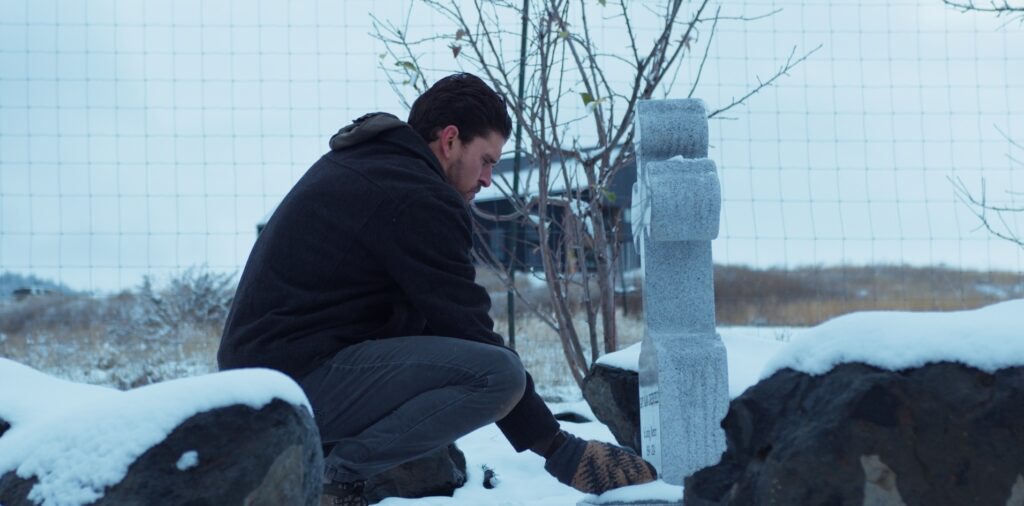
Even my relationship with my father bore the brunt of my demands for perfection. For example, when I was young, I thought he would be a rich and successful entrepreneur with a coffee-roasting empire. But he never went big, despite my persistent nudging. Then he and my mom got divorced, ruining my prospects of showcasing a perfect family to the world. He wandered the world, grew a long beard, got really skinny, started wearing hippie clothes, and became a version of a man that seemed far from perfect, by my standards. So we strayed apart and didn't talk much. After he got cancer and died, I felt like I officially failed in my final attempts to “perfect” him by saving his life. He became just another blemish, another shortcoming, another deformity on my record of making things “perfect.”
That's still something I'm dealing with.
But we are all broken. Every one of us. Our body, our brain, and our life break down. We are not boundless.
No matter how strict we are and fit we get, at the end of the day, we'll all be on our deathbed with stringy beef jerky for muscles, porous bones, clogged arteries, and plaqued brains.
My handbook for life, the Bible, says that outwardly we are wasting away (2 Corinthians 4:16), the earthly tent we live in is eventually destroyed (2 Corinthians 5:1), our lives are like grass, we flourish like the flower of the field, then the wind blows us over, and we are gone (Psalm 103:15–16). We are fleeting shadows, we do not endure (Job 14:1–2).
We must accept that, and be grateful for it, because it keeps us humble, grants us empathy toward others, and gives us a glimpse of the eternal, perfect heavenly afterlife we can one day have: an afterlife we step into not because we are our own savior, but because we have cast all of our brokenness—and the guilt, fear and shame that accompanies it—at the feet of a true Savior.
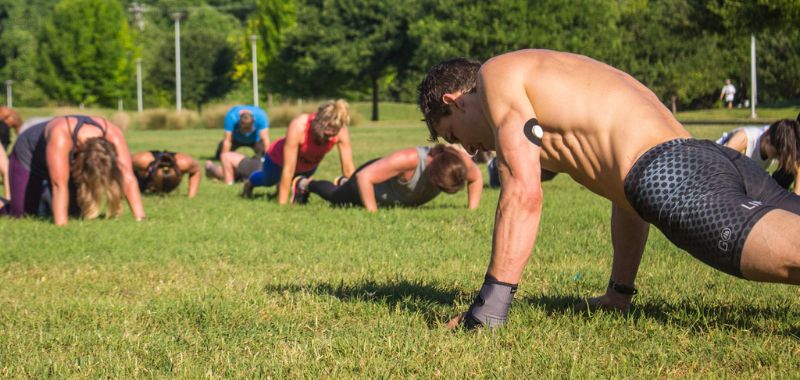
It's not until we admit and accept that we are broken, become grateful for that brokenness, and understand that true, lasting boundlessness will only come through focusing on what is truly eternal—our love for God and our love for our fellow human beings—that we can find contentedness in pumping the iron, running the hills, diving into icy water, taking the supplements, doing the biohacks, and caring for the body.
It's not until we stop trying to be perfect that we can savor the journey of becoming the best version of our broken selves.
…running the marathon not to win, but to savor the adventure and thrill of competition…
…playing the instrument not to step on stage in front of thousands of screaming fans, but to simply appreciate the chords, vibrations, and chaotic imperfections when we occasionally miss a note…
…caring for our body not to be a supermodel or forever young, but to equip ourselves to live a life of courage and adventure.
It's not until we accept that we are broken that we can find happiness in the pursuit of temporal boundlessness.
Let me know your thoughts in the comments section below. I read them all.
You can sign up here to receive each new article straight to your inbox the moment it goes live, or follow along weekly on Substack, Instagram, X, Facebook, LinkedIn, and my podcast each week.





6 Responses
I fully appreciate your desire for perfectionism as I too suffer from this affliction. I respect your spirituality but have yet to grasp this concept to ease my insecurities. Due to your position, you are able to indulge in therapies which the average person will never have access to. As a professional, I also have that advantage. But believing in G-D cannot ease the pain and suffering of most people. We can only educate and hope the pioneers in our society can institute changes that affect the average American.
I personally always strive for perfection as the majority of people will settle for mediocrity.
Thank you for “…the best version of our broken selves.”
There is another aspect to what you are saying – the flip side of the coin: seeking to create perfection on Earth is misguided or displacement yearning for perfection that is Heavenly, and exists only in the heart, which is to say, is the perfection of Love, that is, unconditional love. But unconditional respect is a stepping stone to unconditional love. More than that, I would say, unconditional respect is an essential attribute here on Earth that ensures the possibility of love being Love – the real thing.
3’40”
Ben, listen to your grammar at about 3’47”.
Accepting our own brokenness is important. But the harder question is whether we’re willing to confront the broken places we’ve left in others. Christ didn’t just acknowledge human frailty, He stepped toward people to restore them. Sometimes the real test of humility is whether we’re willing to do the same.
I must say, as I read your response, that it is just one way of looking at the phenomenon of Jesu’s life. The mere fact of his love, as in Love, was effective, and his blood sacrifice was “sufficient,” as people might say, in human terms. It’s helpful to avoid judgement (of oneself and others) if one realizes that truly, everyone, without exception, is on their own path. Whether someone accepts healing or walks toward it only to reject it, or runs away from it, or kills or revels in the killing of the messenger or perchance, the Messiah of the Jewish prophecy, or if they accept healing…theses are among the infinite possibilities of individual choice and path. Judgement is implied by the word “test of…” any particular quality, whether positive or negative, for example, test of psychosis, test of “evil,” test of “spirituality,” test of “goodness”…One can go on forever inventing tests by which to judge.
Yet in this context, it’s obvious that we all do profiling of other people as well as ourselves, consciously, and unconsciously, just as predatory animals profile their next meal as it runs by on the African veldt, or profile their possibly future mate. Living from one’s heart and in service of our heart avoids the consequence of seemingly unnecessary detours or stepping stones.