
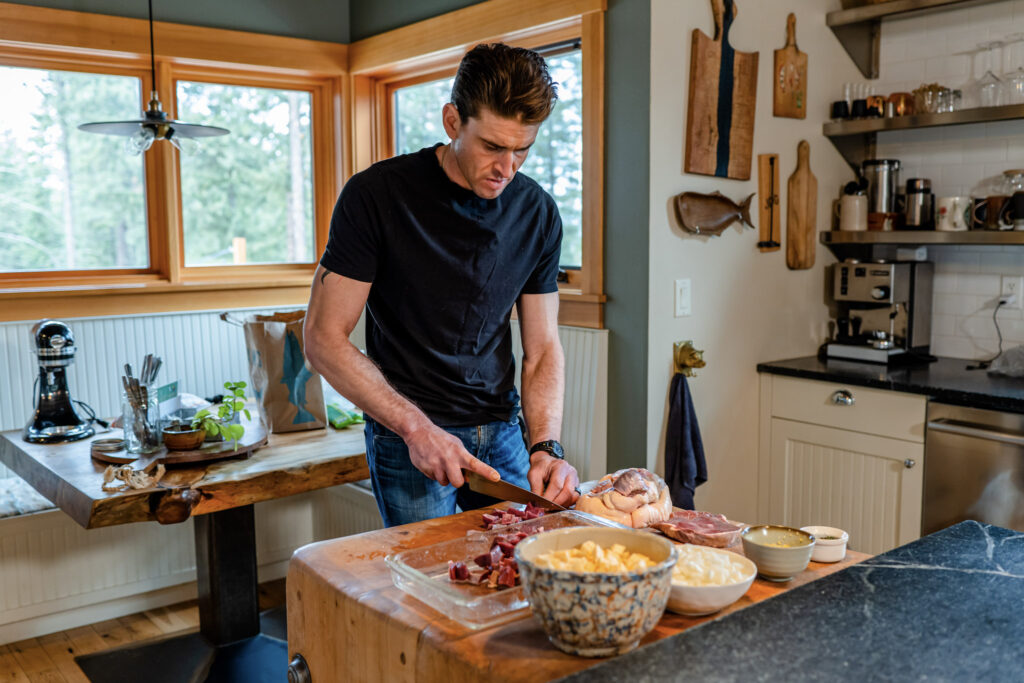
Here we are: at number three of this four-part series on the ancestral mismatch.
You can read, watch, or listen to parts one and two here:
- Are We Just *Modern Zoo Animals*? The Ancestral Mismatch (Part 1)
- Are We Just *Modern Zoo Animals*? The Ancestral Mismatch (Part 2)
In this part, within three quick tips, I’ll be giving you a few basic fueling strategies that don’t involve a long detour to your local overpriced hippie grocer to shop for wild-caught salmon baptized in unicorn tears, and fill you in on the most impactful dietary switches that you can make now, without necessarily breaking the bank.
First, avoid heavily fried foods. If you were to walk up to me at the county fair and offer me a stick of cotton candy or a corn dog, which do you think I’d choose? (Hint: the answer is not “both” or “neither.”)
I’d choose the cotton candy ten times out of ten because I can stroll around the fair, get my blood flowing, take a few exciting rides that cause my muscles to soak up some glucose, and burn off or at least more easily metabolize the sugar in the cotton candy, but the rancid, heated seed oils in a corn dog will go on to be leaky building blocks of my cells for much longer than the sugar is around.
This is because harmful compounds in high-temperature fried oils (called lipid oxidation products or “LOPs”) form metabolites in the body that can contribute to chronic disease risk over time, particularly when exposure is frequent.
Second, avoid ultraprocessed food in shiny, crinkly plastic packaging. These so-called “UPFs” are relatively void in nutrients, engineered to be highly palatable (AKA addictive), and usually low in fiber and nutrients but high in additives, preservatives, sodium, unhealthy chemicals, oxidized oils, and plastics.
Yuk (and yes, based on this, perhaps the answer to the cotton candy or corn dog question actually is “neither”).
Anyways, avoiding these UPFs is easier than you think: start by shopping around the perimeter of the grocery store, where you’ll find most of the real, whole foods your great grandparents would have recognized, like meat, eggs, dairy, fruit, vegetables, and bread.
Sure, duck down the aisles occasionally for items like your extra-virgin olive oil, vinegar, salt, or sardines, but generally avoid the heavily processed stuff.
Heck, I travel a ton for my job, and have a simple grocery shopping list I can use at just about any supermarket on the planet (even the non-hippie ones that don’t charge you $2.50 for a bag). Here’s a sample list:
-A whole chicken (one rotisserie chicken can feed me protein for days, for ten bucks!)
-Frozen or regular blueberries or other berries
-A couple of avocados and cucumbers
-Mixed greens and a small bottle of salad dressing
-A few tins of sardines or anchovies
-Macadamia nuts, almonds, or cashews
-Yogurt
-If I have money leftover, a bar or two of dark chocolate…
…and I’m good to go. This is not expensive. And to save money on glass-bottled water, I can just fill up my water bottle at any hotel gym, where there’s almost always a fancy filter (that’s also a sneaky way to get you into the gym).
Third, consider the source of your food. Modern industrial farming, chemical use, and monocropping can result in decreased soil quality and agricultural diversity, paired with low nutrient and mineral density in food.
Not to get too much into the weeds here, but as a Christian, I believe humans have a Bible-based mandate to support responsible land management, stewardship, and sustainable food growth practices. What I mean by this is that the Bible tells the story of the first human being (Adam) created to be a gardener of the land, and goes on to instruct humans to preserve land from harm and maintain its fruitfulness, to give farmed land periodic rest periods, and to avoid polluting or “defiling” the land.
But even if you’re not a Christian, you should care about how your eating habits affect animal welfare and the future of our planet.
Fortunately, you can do this without joining a “Save the Snails” parade or dumping paint pails on anyone you see wearing a fur coat or leather shoes.
For example, from May through October, farmer markets grant you ample access to local, sustainably grown food, and at these markets, you can also connect with farmers and ranchers to purchase high-quality meat to freeze for use in fall and winter.
It will also pay you dividends to learn basic life skills such as canning, fermenting, soaking, sprouting, preserving, throwing all your leftover scraps into a cheap crockpot for bone broth, and even a few windowsill or backyard gardening tactics.
Finally, when you’re grocery shopping, there’s no need to spend extra money on fluff labels like “natural,” “farm-fresh,” “humanely raised,” “green” packaging, or other emotionally-driven copy.
Instead, look for USDA Organic (especially helpful for dairy), pasture-raised (for eggs), MSC certified (for seafood), and certified humane (good animal welfare standards). There are many more details on food labelling standards and what to look for in this comprehensive article on my website.
Well, we’ve been through a lot in this ancestral mismatch: from hormesis to HVACs to hens.
In the next article, I’ll wrap things up with what a simple “sample day” would look like when you adhere to these basic principles, but in the meantime, leave your questions, comments, and feedback below. I read it all!
You can sign up here to receive each new article straight to your inbox the moment it goes live, or follow along weekly on Substack, Instagram, X, Facebook, LinkedIn, and my podcast each week.






One Response
How harmful are fried seed oils if someone only eats fast food or fried foods once in a while instead of regularly?