Reading time: 4 minutes
What I Discuss in this RAW episode:
- How chronic slight sleep deprivation can quickly add up—leaving you cranky, tired, and running on empty by dinner time…01:33
- NSDR is described as a restorative relaxation state without actual sleep, often leading to brief “dozing off” periods, and commonly associated with practices like yoga nidra…03:38
- Brainwave activity—moving from beta (alert) to alpha (relaxed) to theta (deep meditation)—and how NSDR helps shift the nervous system into a restorative state, improving everything from heart rate to neuroplasticity and hormonal balance…06:43
- Fundamental NSDR practices: yoga nidra body scans, guided meditation, progressive muscle relaxation, and breathwork, plus why focusing on the body and breath is so effective for quelling a busy mind…10:47
- As little as 10 minutes of NSDR can reboot focus, improve emotional regulation, boost sleep quality, and speed recovery from stress and fatigue, making it indispensable for high performers…16:29
- How devices like BrainTap, NeuroVIZR, Sensate, and the roXiva lamp amplify relaxation and train the brain for even greater benefits…21:25
In this episode, I pull back the curtain on one of the single most powerful tools in my daily performance and recovery toolkit: Non-Sleep Deep Rest (NSDR) and its close cousin, yoga nidra. If you’ve ever found yourself burning the candle at both ends—waking up at 4:30 a.m. to fit in work, workouts, and family life—yet still trying to show up at your best, this is for you.
I cover common myths around short sleep, explain why even “powered-through” fatigue adds up, and illustrate why you can’t cheat biology by running on six hours forever. You’ll get an honest play-by-play: what actually works for rebooting your system after a short night, the real science behind NSDR (think: brainwave states, nervous system regulation, and hormone balancing), and the exact guided meditations, apps, tech (like Sensate, or BrainTap), and routines to supercharge midday recovery.
Ready to explore all my RAW episodes?
 You can check them out for free on LIFE Network—just create your account here to start listening.

Want to Hear More RAW Episodes?
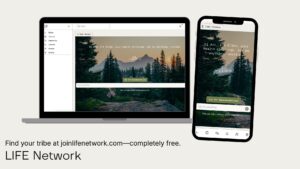
You can listen to more RAW episodes FREE inside LIFE Network—your home base for cutting-edge health, fitness, and longevity content.
When you join, you’ll receive:
More RAW Episodes: Dive deeper into the experiments, routines, and breakthroughs happening behind the scenes.
Ellen AI: Transform your health with Ellen AI, an AI-powered personal transformation coach and concierge service that guides you toward lasting physical, mental, and lifestyle changes.
Community Groups: Connect with others exploring biohacking, nutrition, performance, longevity, and more.
Places: Find healthy restaurants, wellness spots, gyms, and biohacker-friendly locations near you.
Massive Content Library: Access podcasts, videos, articles, recipes, and more to support your daily growth.
Ready to jump in, hit play, and explore?
You can sign up here for free now!
Please Scroll Down for the Sponsors, Resources, and Transcript
Episode Sponsors:
Organifi Shilajit Gummies: Harness the ancient power of pure Himalayan Shilajit anytime you want with these convenient and tasty gummies. Get them now for 20% off at organifi.com/Ben.
Troscriptions: Explore Troscriptions' revolutionary buccal troche delivery system that bypasses digestion to deliver pharmaceutical-grade, physician-formulated health optimization compounds directly through your cheek mucosa for faster onset and higher bioavailability than traditional supplements. Discover a completely new way to optimize your health at troscriptions.com/BEN or enter BEN at checkout for 10% off your first order.
BON CHARGE: BON CHARGE is a holistic wellness brand with a wide range of products that naturally address the issues of modern life. Their products can help you sleep better, perform better, recover faster, balance hormones, reduce inflammation, and so much more. Go to boncharge.com/GREENFIELD and use coupon code GREENFIELD to save 15%.
Truvaga: Balance your nervous system naturally with Truvaga's vagus nerve stimulator. Visit Truvaga.com/Greenfield and use code GREENFIELD30 to save $30 off any Truvaga device. Calm your mind, focus better, and recover faster in just two minutes.
BIOptimizers Magnesium Breakthrough: The 7 essential forms of magnesium included in this full spectrum serving help you relax, unwind, and turn off your active brain after a long and stressful day so you can rest peacefully and wake up feeling refreshed, vibrant, and alert. Go to bioptimizers.com/ben and use code ben15 for 15% off any order.
Resources from this episode:
- People
- Podcast Episodes
- How Two Hard-Charging Busy Entrepreneurs Turn Off Their Brains, Meditate, De-Stress, Relax & Raise Kids: Anxiety Hacks & More With Katie Krimitsos
- Experience An Altered State *Without* Drugs, Beat Insomnia Fast & RAPIDLY Shift The Brain Into Relaxation States With Cutting-Edge Light and Sound Technology: RoXiva’s Raffaele Gianfrancesco
- The Best Breathing App Anyone Can Use To Auto-Regulate Emotions & Nervous System Through Easy, Guided Breathwork: Othership With Robbie Bent.
- Apps/Software:
- Devices/Tech/Biohacks:
- Techniques/Modalities:
Ben Greenfield [00:00:00]: Welcome to a special RAW episode. What does RAW mean? Well, within the Life network at join lifenetwork.com I pop on every once in a while and just release solo. So conversations with me, myself and I. Today is one of those RAW episodes. This is going to be at join lifenetwork.com if you want to check it out. Welcome to the let's start that over. We're here to talk about awkward, edgy, controversial content. Nothing is off limits and you're going to learn a lot.
Ben Greenfield [00:00:41]: Welcome to the RAW podcast. Welcome to RAW. I'm your host Ben Greenfield. As usual and today I want to share with you something I have alluded to but not unpacked in much detail on podcasts. I have talked in the past before about how I like to get up very early in the morning because I have a family and work obligations and social obligations. I often go to bed later at night at a time that dictates that I'm not getting the full recommended 7 to 9 hours of sleep per night. Right? Many nights I'll sleep six and a half, seven hours feel pretty good. But of course, if you try to push day after day through sleep that is slightly short.
Ben Greenfield [00:01:33]: Unless you're one of those few people who are genetically hardwired. You know, at less than 1% of the population who are genetically hardwired to be short sleepers and to get adequate recovery from a short sleep, series of cycles, that's going to add up. You're going to be sleep deprived. You will arrive at dinner hangry, grumpy, tired and not that fun to be around. And the latter parts of the day get a little bit difficult. If you have a regular habit of six and a half to seven hours, enter the strategy that I've talked about in other RAW podcasts. The fact that I like to duck out at some point after lunch and do a quick 20 sometimes, depending on how short the sleep was the night before, up to 60 minute reboot, recharge, recovery. I will sometimes just straight up nap.
Ben Greenfield [00:02:33]: I will sometimes do a hyperbaric session. I will sometimes, you know, sit in the sauna quietly and breathe. Just something that shuts off the brain for a while. But 85, maybe 90% of the time, of course, we know that 78% of statistics are made up on the spot. I do non sleep deep rest, also known as NSDR. I'm going to walk you through what I do, how I do it, and the technology that I use to pull that off to allow me to get up at 4:35am get a lot done often before the rest of the world is awake and still arrive at the end of the day, refreshed, restored and having gotten adequate rest. So what is NSDR? NSDR is basically a state of relaxation that restores the body and mind without actual sleep. Although the caveat is that often during an NSDR session you do tend to occasionally doze off.
Ben Greenfield [00:03:38]: You may have heard stories about, oh, who are they? Benjamin Franklin I think, Leonardo da Vinci I believe was another. These folks who would have brief periods of time where they doze off. I think one of them would hold a set of keys and when the keys would fall out of their hand, drop on the floor and wake them up. But these are very, very brief, like 30 to 60 seconds, you know, knock out, come back to life. That is quite common during Yoga Nidra. You'll get 10 minutes into a session and then let's say you're using audio to play a half hour session. You might wake up at the 12 minute mark, doze off again at the 20 minute mark, wake up at the 23 minute mark and finish up to the 30 second mark. So it's not uncommon to occasionally sleep during Yoga Nidra or non sleep deep rest.
Ben Greenfield [00:04:26]: But it's not traditionally sleep per se. It's been most popularized of late by Dr. Andrew Huberman, who's a neuroscientist and professor. Now a prolific health influencer and podcaster at Stanford. He's kind of contributed to the fact that NSDR has gained a lot of attention for its ability to improve relaxation, reduce stress, enhance cognitive performance, support overall well being. And it encompasses a variety of techniques. Sometimes people will equate yoga NIDRA with NSDR. I've even been guilty of using the two terms as a substitution for one another, but NSDR usually includes elements of Yoga Nidra.
Ben Greenfield [00:05:13]: Laying on your back, scanning through your entire body, body part by body part, often contracting, relaxing, or focusing on a sensation in that particular body part, whether it's the right big toe or the left thumb. NSDR also includes, in addition to yoga, ninja practices, guided meditation, breathing and breath practice. And it really has a growing number of scientific studies behind it showing that based on concepts of neuroscience and psychology and physiology, it allows you to achieve a really deep, full, deep, full, deeply restful state that kind of simulates sleep without sleeping. So the science behind NSDR. So NSDR operates on the principle that the brain and body can enter this restorative state that mimics some aspects of sleep without full sleep unconsciousness. So there's several. What are called neurophysiological, big word and biochemical changes that contribute to the relaxation and the mental clarity and the recovery that NSDR can achieve. So the first is brainwave activity.
Ben Greenfield [00:06:33]: So when you're doing an NSDR session, and I'll explain again how I do those sessions later on, you get a shift in brainwave activity that leads the brain gently from a state of high alertness and stress to deep relaxation. So typically, most of us in our wakeful hours have a significant portion of beta brainwaves. These are like 13 to 30 hertz. And these are dominant when your brain is actively engaged in problem solving or focused tasks. Now then you have your alpha waves, that's about 8 to 12 hertz. And those are associated with calm, wakeful relaxation. And NSTR typically begins by inducing alpha wave activity. So your brain begins to transition from beta alertness to alpha relaxation states.
Ben Greenfield [00:07:22]: Next, there's theta. Theta is about 4 to 8 hertz. Now this is present during deep meditation, deep creative tasks, early stages of sleep. And NSDR techniques can further guide the brain from alpha into theta. So you get even deeper relaxation and mental rejuvenation. I just made up that word. Rejuvenation. Rejuvenation.
Ben Greenfield [00:07:48]: I like rejuvenation. Let's go with that. Delta waves are the final wave. That's about 0.5 to 4 hertz. And these waves occur during the deepest stages of sleep. NSDR doesn't fully replicate these waves. You can slip into these waves occasionally, like I mentioned during NSDR, but typically you have to be asleep for a longer period of time to get a significant portion of delta wave activity. So that's what's going on with the brain waves.
Ben Greenfield [00:08:15]: Next is the actual nervous system component. So NSDR causes an activation of the parasympathetic rest or digest or rest and digest branches of the autonomic nervous system, shifting you away from sympathetic fight or flight. And it specifically does this by lowering your heart rate and your blood pressure. It reduces levels of cortisol, right, the body's primary stress hormone. Along with adrenaline to a certain extent. It increases digestion and nutrient absorption, which is kind of why I like to do it after lunch, and enhances feelings of calm and anxiety. So it helps to counteract chronic stress specifically by targeting the parasympathetic nervous system, which is also why it probably results for many people in not just short term, but also long term increases in heart rate variability or HRV nervous system readiness. So next there is the neural component.
Ben Greenfield [00:09:12]: So NSDR supports what is called neuroplasticity which is your brain's ability to adapt to and recognize itself. So during deep rest, your brain would consolidate learning, repair neural connections and process experiences. And that can improve memory retention and cognitive function and problem solving abilities. NSDR kind of simulates what's going on there in a deep sleep cycle during those lighter phases of primarily alpha and theta brainwave activity. Now, there's also a hormonal effect, NSDR, again, it's not full substitute for sleep, but it can regulate hormones that are involved in your sleep wake cycle. NSDR can increase your melatonin production and the ability of melatonin to work better so you get better sleep later on at night. Some people even use NSDR to fall asleep or to fall back asleep after waking up, which is a very reasonable idea. It can also reduce cortisol levels and that can further prevent disruptions in sleep patterns that might be caused by stress.
Ben Greenfield [00:10:20]: So those are the different kind of scientific ways in which NSDR is actually working. So let's dig into some of the practical nitty gritties of this. There are a few different things that you do when you're doing a non sleep depress NSDR protocol. I've mentioned a few of them already. Yoga Nidra. This is often referred to as yogic sleep. So that's a guided meditation practice. Yoga Nidra is that systematically involves bringing awareness to different parts of the body.
Ben Greenfield [00:10:56]: So typically you're lying down, you're on your back, your eyes are closed, and you're usually if you're doing a yoga nidra session, you're following verbal instructions to focus on feelings around the crown of the head and then the jaw and the inside of the left cheek, the inside of the right cheek, the neck, the collarbone, the shoulder down the right side, right arm, right elbow, right forearm, thumb, first finger, second finger, third finger, pinky finger, and you're basically going through the entire body like that. Now, one of the reasons I think this technique works so well, especially for people who tend to have ruminating thoughts or distracting thoughts or ideas that keep them awake or keep them in a somewhat stressed or aware state, is because when you're focusing on a specific body part, it's difficult to focus on other things, right? It's difficult to focus on those three items on your checkoff list when you're also focusing on each of these bodily sensations. So it kind of distracts the mind, especially in a busy thinker, which is super useful for guys like me who just have difficulty turning the brain off. So yoga nidra is typically one Component of an NSDR session, the whole body scan. Then there's guided meditation. Most good yoga Nidra, even though there are some musical and technology based alternatives I'll tell you about shortly. It involves following some kind of a recorded voice or instructor who helps you direct your attention to your breath, your bodily sensation. Different visualization exercises.
Ben Greenfield [00:12:41]: And this helps to quiet the mind, reduce mental chatter, help you to achieve a state of relaxation. Like one of the practitioners who I follow, Allie Boothroyd on YouTube, I have a bunch of her sessions downloaded. So I have YouTube Premium, right. I just download them to my phone and I can play them offline. I have tracks that she's produced. That range, oh gosh, you know, from ten minutes up to eight hours in length. And for some of the sessions she'll give you cues like imagine a wise owl, a black swan, a blue beetle, a beautiful tree, a sunset, a blanket of stars, right? And so you're visualizing these different images in addition to going through and doing a body scan. So again, we're kind of like distracting the brain and quieting the mind by focusing on images.
Ben Greenfield [00:13:37]: So we've got the yoga nidra, or body scan component, you've got the guided meditation component. And next is what is called progressive neuromuscular relaxation, also known as PMR. Not all NSDR sessions do this, but many do. This involves tensing and relaxing different muscle groups. And that allows for deeper relaxation than you'd get if you hadn't tensed and then relaxed that muscle group. A classic example of this in a waking state would be the hamstring stretch where you're lying on your back, you grab your leg, you keep your leg somewhat straight, you pull it up towards your chest and then you contract the leg back down against your hand for say three to five seconds, then relax it. And you find you can pull yourself more deeply into a stretch because the muscle relaxes better after it's contracted. That's based on an inhibition of a part of the muscle called the Golgi tendon organ.
Ben Greenfield [00:14:39]: We don't have to get deep into the physiology of that. But when you're doing yoga Nidra, if you say, let's say you're going to do this from toe to head, contract every toe on the right foot as hard as possible by curling them and then relax them and move on. And do that with your calf and with your quads and with your hamstrings, then with your right abs and you kind of move up the body, contracting and relaxing. And by the time you've made it to the top of your head. The whole body is progressively, as the name implies, getting more and more relaxed. Finally, in addition to Yoga Nidra body scan, guided meditation and progressive muscle relaxation, the last technique in Yoga Nidra is breathing. Usually you're engaged in some kind of diaphragmatic breathing, some kind of box breathing, some kind of four, seven, eight breathing, right? Four count in, seven count hold, eight count out. That helps to really slow the heart rate and engage the parasympathetic nervous system and induce calm.
Ben Greenfield [00:15:41]: And again, often during yoga and intercession, you'll be breathing and then you'll like briefly fall asleep and then wake back up and get back into your breathing cycle. This is one reason I actually like to do these sessions in the hyperbaric chamber, because you're kind of wearing an oxygen mask and it feels fantastic to be doing breath work with that oxygen mask on. The hyperbaric chamber isn't necessary for Yoga Nidra, but it's a cool place to do it if you ever get a chance to do that. So the next thing that I want to tell you about Yoga Nidra is there's a part of your brain called the Default Mode network, the DMN that's active during mind wandering and self referential thoughts, reducing activity of the DMN. The Default Mode network helps to alleviate anxiety and stress and rumination. And that's exactly what you're doing when you're doing an NSDR session. You're turning off that default mode network using these tactics like the breath, the body scan, the guided meditation, the progressive muscle relaxation, et cetera. And so what research is now showing is you get stress reduction.
Ben Greenfield [00:16:49]: Even a session as short as 10 minutes serves as a sort of reset for the brain. So the subsequent improvement in concentration and attention and cognitive performance has now been fleshed out in literature. You get better sleep quality. Whether you're doing this before sleep, whether you're doing it earlier in the day, it seems to enhance the night of sleep that occurs later on. It's been shown to improve resilience to stress and improvement in emotional self regulation. So that can lead to better decision making, reduced impulsivity, enhanced overall mental health, you being more pleasant to be around at the dinner table after you've gotten up at 4.30am so the emotional regulation piece is pretty cool. And then recovery. They've even shown for athletes or people who have mental fatigue, physical or mental fatigue, that NSDR can support recovery and replenish energy levels in people who are fatigued.
Ben Greenfield [00:17:45]: So the cool thing is you get all these effects whether you like I do sometimes do it right when you wake up for 10 to 20 minutes in the wee hours when they're in that so called liminal state of just waking and having a lot of theta brainwave activity still on board. You can do it midday, which is probably most of the time when I do it right after lunch. You can do it as an evening wind down before bed, you can do it for post workout recovery and you can do it when you wake up in the wee hours. So it's kind of a cool tool to have in your back pocket no matter when you're actually going to do it. So how do I actually do Yoga Nidra or NSDR? Here are some of my biggest practical tips for you to get started. The first is that there are a few good apps and resources for non sleep deep rests. Now I'm going to tell you I don't use an app. Many people like the apps that I'm about to tell you, but I don't use an app.
Ben Greenfield [00:18:48]: I'll tell you what I use in a second, but Reveri is one R E V E R I that's a free research tested self hypnosis app that includes NSDR sessions. That one has very good reviews. Insight Timer, a great overall meditation app, but it has a guided NSDR practice within the Insight Timer app. And then there's also an app that fittingly enough is just called the Yoga Nidra app. Has like a 10 minute yoga nidra session, good introductory session on there. There are many other apps but those are three that have really good reviews in the store. What I do is not an app, but what I do is first of all I subscribe to Allie Boothroyd's YouTube channel. I know nothing about her.
Ben Greenfield [00:19:34]: I don't know her. I'm not financially otherwise affiliated with her. I actually don't want to know anything about her because I don't want to associate that voice in my head with her face or you know, her hobbies or anything. But I download her tracks from YouTube again. I have YouTube Premium. I have a playlist on my phone where I could do her eight hour track on an international flight. A lot of people have difficulty sleeping on a flight. Works great on an airplane, especially with noise blocking headphones and earplugs.
Ben Greenfield [00:20:04]: I can do her 30 minute session after lunch. I can do her 45 minute fall back asleep session if I wake up at 2am and want to get back to sleep. Variety of different ways you can use her tracks. But of all the you know, I'm very picky on voices. Her voice doesn't grind. I find it very relaxing. And I actually not to get too geeked out on you, I double up. What I do is I play her track and then I have an app called Sleep Stream on my phone that plays white noise and I turn up the sleep stream app with the white noise so I can just barely hear Ali's voice.
Ben Greenfield [00:20:40]: And that works perfectly for me because her voice isn't too loud. In my head, there's some white noise to further relax me. So number one way I do yoga Nidra is downloaded Ali Boothroid YouTube tracks combined with playing white noise through the Sleep Stream app. However, you do not necessarily have to have a guided voice meditation, which is what Allie Boothroyd's app is or Allie Boothroyd's downloaded YouTube sessions are. You can also have light and sound based guided nstr. There's three different things that I use for this and all of them are incredible tools. The first two are portable. One is called the Neurovisor and one is called the Braintap.
Ben Greenfield [00:21:25]: Imagine that you're wearing headphones with a little visor that flips down and so you're getting both light and sound stimulation. Both the NeuroVIZOR and The BrainTap have NSDR like sessions in them. Some guided with voices, some not that I find can really accelerate the body even more deeply into a relaxation session. I don't use them all the time. I'm typically kind of bouncing. I don't like my brain to get used to a certain form of relaxation. Right. So I use the Neurovisor, the brain tap primarily when I travel because they're highly portable tools.
Ben Greenfield [00:22:01]: And sometimes when I travel, I want that light and sound stimulation as a biohack to more rapidly shift me into a relaxed state. And so the NeuroVIZOR spelled with spelled a Z, I'll put links in the show notes or the Braintap are both incredible tools for that. There's also a very cool device that's almost like a purring cat on your chest. It's called the Sensate S E N S A T E. It's very small. It's about the size of a computer mouse. You wear it around your neck. By vibrating right over your collarbone, it triggers the vagus nerve to activate the parasympathetic nervous system.
Ben Greenfield [00:22:40]: It's tied to an app. So you put the Sense8 on your chest, you turn it on, then you select your audio track from the app and the audio tracks range from 10 up to 30 minutes in length and several are NSDR sessions. For example, there's one called Synchrony and another one called Nostalgia. Both Synchrony and Nostalgia are perfect examples of the use of vibration, sound and music to give you an NSDR like effect without the guided meditation or the voices. Very similar to what I do with the Ali Boothroid app. I will put on the Sensate track and and then play Sleep Stream in the background. Because sometimes if I'm playing a let's say I have lunch, I want to do a 45 minute relaxation session. So I lay down at 2pm and I turn on my alarm for 2:45.
Ben Greenfield [00:23:34]: I put on the Sleep Stream app. I play a sensate session which lasts for 30 minutes but the sleep stream of course keeps playing after the sensate session ends. So I get that extra 15 minutes and I often fall pretty deeply asleep during those final 15 minutes that are just white noise with nothing else, right? No vibration, no music, nothing else. So that's a real favorite of mine. And again, highly portable tool. Great for travel, great for airplanes. That one's called the Sensate. And then probably the biggest guns for using technology to get more quickly into a non sleep deep rest like state is the Roxiva lamp on my public Boundless Life podcast I have.
Ben Greenfield [00:24:21]: It will be released soon if it's not already out. A podcast interview with the guy who runs Roxiva. It's a lamp. You place it over your head about four feet over your head. It's not that portable even though it's kind of portable. But I don't take mine with me when I travel. It plays the most intense light paired with sound, nearly psychedelic and oh my goodness, it shifts you within like 20 seconds into a deep state. And you can choose Alpha Sessions Theta Gamma.
Ben Greenfield [00:24:50]: There's mixes of all three. Like there's one session called a brain bath that just takes you through all your brain waves. Probably the most powerful NSDR esque session on that if you get the lamp is called Rebirth. It's incredible, super relaxing and then with the final pick me up towards the end. And that one is probably my favorite to do if I wake up really early because it's like 45 minutes long and I'll play that at like 4:15am and by 5am I'm just feeling ready to crush the world. Because like I mentioned, NSDR does not just have to be done say after lunch, sometimes in the wee hours when you first wake up or when you wake up if you've been in bed for a while or right before you go to sleep. These can also work really well. So that lamp is called the Roxiva R O X I V A.
Ben Greenfield [00:25:41]: So that's NSDR, and that's basically what it does, how I personally incorporate it. And I'm not lying. I do an NSDR session almost every day of the week. It's one of the best body and brain reboots I've ever discovered. It's incredible. The more you do it, the better you get at it. This is based on the principle of entrainment, right? As your brain kind of learns how to get into that relaxed state following cues, you get better and better at that muscle of relaxation, if you want to call it that. So Yoga Nidra Non Sleep Deep Rest.
Ben Greenfield [00:26:18]: Highly recommend you check it out. Super useful tool to have in your pocket for stress, for anxiety, for sleep, for recovery, for meditation. So that's what it is. Those are some of the ways that I do it. I hope this has been helpful for you, and thanks for listening to another raw podcast and for being a valued Life Network family member. All right, I'll see you next time. Hit subscribe, leave a ranking, leave a review. If you got a little extra time, it means way more than you might think.
Ben Greenfield [00:26:52]: Thank you so much.
Do you have questions, thoughts, or feedback for me? Leave your comments below, and I will reply!