Home » Podcast » Gas, Bloating, Fatigue & Other Post-Meal Issues? Discover The NEW Autoimmune Protocol With Mickey Trescott

Gas, Bloating, Fatigue & Other Post-Meal Issues? Discover The NEW Autoimmune Protocol With Mickey Trescott

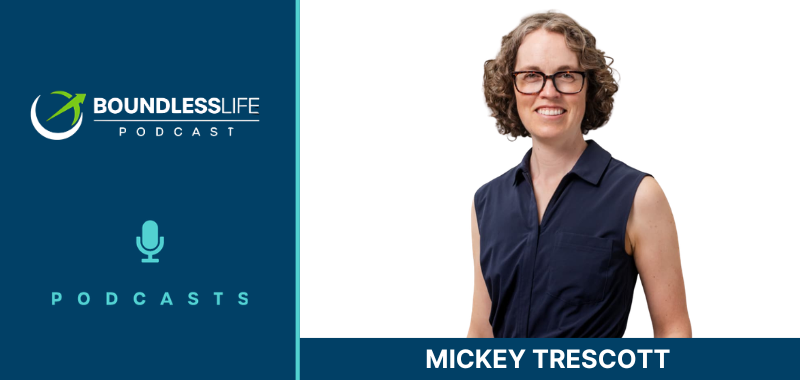
Boundless Life Podcast promotional graphic featuring a headshot of Mickey Trescott, a smiling woman with short curly hair wearing a navy sleeveless top, against a light background with the podcast logo and microphone icon.

Listen on:

Reading time: 5 minutes

What I Discuss with Mickey Trescott:

  • How Hashimoto's disease and celiac left Mickey bedridden at 26, why doctors said her diet had nothing to do with it, and how that drove her to develop the Autoimmune Protocol (AIP), a science-backed elimination diet for reducing inflammation and identifying food triggers….05:59
  • Why genetics are only a small piece of the autoimmune puzzle, and what actually triggers onset, from stress and pathogens to vitamin D and A deficiency and traumatic life events…11:38
  • Why iodine supplementation can worsen autoimmunity in Hashimoto's and Graves' disease, and how to get what you need from seafood without stoking the autoimmune process…16:48
  • What's new in The New Autoimmune Protocol: four pilot trials, a community of 1,000 trained practitioners, and a modified AIP route for people who found the original protocol too restrictive…21:16
  • Why AIP is as much about what you add (bone broth, fermented foods, high-fiber plants, and organ meats) as what you remove, and why the most important lever is different for every person…28:15
  • A full day of eating on AIP: breakfast patties with sweet potato and chard, a sardine and herb salad for lunch, slow-cooked meat for dinner, and what to do about snacks and smoothies…32:26
  • What actually belongs to the nightshade family, why black pepper gets eliminated on core AIP, and why she advises against layering AIP with other dietary protocols like low oxalate…33:22
  • Why food sensitivity panels cannot replace elimination and reintroduction, what the Fritscher-Ravens confocal laser studies revealed about reactions appearing up to six days after exposure, and why no IgG test could predict any of it…44:37
  • How the 30- to 90-day elimination window works, what measurable improvement actually looks like, how to track your progress for conditions like Hashimoto's where there is no obvious biomarker, and how the reintroduction phase works…53:28
  • How to use WHOOP heart rate and HRV data to track food reactions during reintroduction, and why heart rate spikes after an allergen are a well-documented stress response…56:31
  • The transition phase: why going from McDonald's to AIP overnight is a bad idea, what a one-month on-ramp looks like, and how to avoid accidentally going low-carb when you are trying to go AIP…58:55
  • What modified AIP says about coffee, and why Mickey went seven years without it before coming back to decaf…01:01:42

In this fascinating episode with repeat guest Mickey Trescott, you'll hear how she went from bedridden at 26 with Hashimoto's and celiac disease to overseeing four pilot trials, helping grow a community of 1,000 trained AIP practitioners, and writing the guide to the Autoimmune Protocol, including a new, modified version.

Mickey gets into what a full day of eating looks like, how to handle snacks, smoothies, and seasonings, why food sensitivity panels cannot replace an elimination diet, and how to use wearables like WHOOP to track reintroductions with more precision. We also cover the genetics of autoimmunity, the iodine problem in Hashimoto's, and why three out of four people who follow AIP properly get meaningful clinical improvement.

Mickey is a nutrition professional and one of the founding leaders of the Autoimmune Protocol movement. She wrote the original Autoimmune Protocol, which became the definitive guide to the protocol, and her new book, The New Autoimmune Protocol, is the first official update to it. Based on feedback from thousands of practitioners and millions of patients, plus new research showing many people see results before extensive dietary eliminations, Mickey has added a Modified AIP Elimination route that makes the protocol achievable for more people. Releasing May 26, 2026, the book includes detailed meal plans and 70+ recipes across both the core and modified protocols, covering the full transition, elimination, and reintroduction phases.

You can purchase a copy here.

Episode Sponsors: 

Formula IQ: Recuperate IQ by Formula IQ is a comprehensive copper supplement designed to support mitochondrial energy, iron balance, and metabolic health by pairing bioavailable copper with essential cofactors your body needs for proper utilization, which is especially crucial if you've been under chronic stress or supplementing with high-dose zinc. Try it at formulaiq.com and use code BEN for 10% off.

ULTRA: ULTRA is a clean, nicotine-free, and caffeine-free pouch designed to deliver smooth, sustained energy and focus using clinically backed nootropics and adaptogens without the jitters, crashes, or sleep disruption. With flavors like their new Blue Razz, it’s a simple, effective way to stay sharp throughout the day. Visit takeultra.com and use code BENGREENFIELD for 15% off.

ZBiotics Pre-Alcohol Probiotic: The world's first genetically engineered probiotic that helps break down the toxic byproduct of alcohol, Zbiotics Pre-Alcohol allows you to enjoy your night out and feel great the next day. Order with the confidence of a 100% money-back guarantee and 15% off your first order at zbiotics.com/BEN15.

Active Skin Repair: If you’re focused on recovery and optimizing your routine, Active Skin Repair uses hypochlorous acid, a molecule your body naturally produces, to support skin repair and defense without harsh chemicals, making it a simple, non-toxic option for everything from post-workout irritation to everyday skin support. Go to ActiveSkinRepair.com and use code BEN for 20% off, or find it on Amazon and at your local CVS.

Manukora: You haven’t tasted or seen honey like this before, so indulge and try some honey with superpowers from Manukora. If you head to manukora.com/ben or use code BEN, you’ll automatically get $25 off your Starter Kit.

BlockBlueLight: BlockBlueLight BioLights are the only lights extensively tested and recommended by building biologist Brian Hoyer as truly flicker-free, ultra-low EMF, and circadian-friendly, with three modes (day, evening, and night) that support natural rhythms and optimize sleep quality. Get 10% off your first order at blockbluelight.com/Ben (discount auto-applied at checkout).

Episode Resources: 

People

Products

Books

Podcast Episodes

Articles & Studies


Upcoming Events:

Ultimate Men Over 40 Health Summit | June 8–14, 2026

If you're a man over 40 looking to improve your strength, energy, health, hormones, recovery, longevity, and performance, I'm speaking at the Ultimate Men Over 40 Health Summit (June 8–14, 2026), a free 7-day virtual event featuring 100+ experts across 7 core pillars. I'll be presenting “Optimizing the Human Machine for 40 and Beyond” alongside some of the best minds in men's health today. You can register for free here now!

Health Optimisation Summit | September 11–13, 2026

I'm speaking at the Health Optimisation Summit in London (September 11–13, 2026) at the Business Design Centre. This isn't your average health conference. HOS unites the best minds in biohacking, longevity, nutrition, fitness, and medicine, with one goal: to actually make people healthier. With 35+ world-class speakers, 120+ cutting-edge brands, and 4,000 like-minded people all under one roof, it's two days that could genuinely change how you approach your health. Get your ticket here and use code BEN to save 10% off registration! 

Eudēmonia | November 5–8, 2026

I'm speaking at Eudēmonia (November 5–8, 2026, in West Palm Beach, FL), a prevention-focused, science-based health, well-being, and longevity summit designed to add years to your life and life to your years. Across 3 days and 15 venues, you'll experience 200+ talks from 120+ experts, 300 treatments, and 160+ brands covering everything from biohacking, longevity, and hormonal health to gut health, brain health, peptides, mobility, and more. I'll be leading a talk and a movement session alongside some of the brightest minds in health today. Use code BGREENFIELD-EUD-100 for $100 off when you register here!

The Boundless Couples Retreat | November 10–14, 2026

Ready to reconnect and recharge with your partner in paradise? Join the Greenfields at the stunning Prana Maya resort in Belize for the Boundless Couples Retreat, November 10–14, 2026. It's a five-day, all-inclusive escape designed to deepen your relationship, restore your vitality, and create memories that last a lifetime. From relaxation and adventure to intimate relationship coaching with Jessa and me, every detail is crafted to send you home with a stronger bond and a reinvigorated spirit. Spots are limited, so discover more and secure yours here today!

Stay tuned for future updates—and you can always keep up with my LIVE appearances by checking out bengreenfieldlife.com/calendar!

Do you have questions, thoughts or feedback for Mickey Trescott or me? Leave your comments below and one of us will reply!
Ben Greenfield

My name is Ben Greenfield, and on this episode of The Boundless life podcast,

Mickey Trescott

I was bedridden. I couldn't work, I couldn't function, and again, at 26 years old, starting to not tolerate my workouts. I was super active. So we don't know why you're so tired. We don't know why you're so cold. Basically, maybe it's depression. I was diagnosed with Hashimotos and celiac when I was 26 and I knew they were wrong.

Ben Greenfield

Welcome to the boundless life with me. Your host, Ben Greenfield, I'm a personal trainer, exercise physiologist and nutritionist, and I'm passionate about helping you discover unparalleled levels of health, fitness, longevity and beyond my podcast today you must hear if you have issues with food and digestion and anything remotely resembling an autoimmune issue, and if you don't know what an autoimmune

Mickey Trescott

issue, don't

Ben Greenfield

worry. You'll learn. Mickey Trescott just put the finishing touches on this autoimmune protocol. That's fantastic. The show notes are going to be at bengreenfieldlife.com/newaip. Mickey is a nutrition professional. She's a leading advocate of the protocol. She's an author. Obviously. She has a Master of Science in Human Nutrition and functional medicine. I've known her since before 2013 and she's great. So Ben Greenfield life, com slash new AIP, and let's go talk to Mickey. Mickey. It has been a while, I know, I don't even know. I mean, we used to hang out at like the Paleo FX events in Austin. I think that was where we first maybe connected. And then I want to say it was probably, like more than eight years ago that we did a podcast about your original autoimmune protocol. Yep, it's been, I've been doing this now for 15 years, and I think I met you maybe 13 years ago. So it's, it's been a while. Yeah, let's all feel old together. Here we go. So you, I mean, obviously I'll link to our original podcast if it still exists on the internet. I'm sure it does, but for people who maybe haven't been around for that many years, in that original episode, you talked about how you had, like a like a crazy thing happen, where you lost your job, and I don't think it was because you sucked at your job, it was because you had these issues that were really bad. Can you tell people your your journey of autoimmunity? Yeah,

Mickey Trescott

yeah. So that's actually how I got into nutrition and health, as a lot of us do. I was diagnosed with Hashimotos and celiac when I was 26 at the time, I had been searching for a couple years for answers to really unexplained, non specific health problems. So the things that you know, a lot of people start experiencing fatigue, kind of shedding my hair, starting to not tolerate my workouts. I was super active, cycling, running, and all of a sudden, you know, I actually couldn't make it up a hill that I normally was traversing to get to work in Seattle. If anybody knows Seattle, you know, there's lots of hills, and I didn't have a car. I was just riding my bike everywhere, carrying my groceries in a backpack. I was very fit and very strong, and I actually couldn't go up a hill that I had been going up every single day. And I actually was getting worse. I was getting closer to the top, and then I had to walk my bike. And I went to my husband, and I'm like, hey, there might be something wrong with the bearings, right? Like, I think if my bike is broken, he takes it apart, it's fine, you know, and then now I'm walking like five blocks instead of three, just at the very top. And I mean, ultimately I my body was wasting, so I had a lot of muscle wasting, because ultimately I had celiac disease, which is a disease of malnutrition because of the small intestine, you know, you're not digesting anything because gluten is just basically turning it into a wasteland. And but at the time, I didn't know, and it took a couple years of going from doctor to doctor. I also found out that I have Hashimotos, which is a thyroid autoimmune condition. But the result of all of that crisis, all of that inquiry, I was bedridden, I couldn't work. I couldn't function. And again, at 26 years old, I kind of didn't appear, you know, on the outside to be super unhealthy, but on the inside I just, like, almost couldn't get out and do anything. And when I got these diagnoses, I was told, you know, just go on a gluten free diet. Your thyroid, even though you have an autoimmune thyroid disease, your thyroid levels are normal, so we don't know why you're so tired. We don't know why you're so cold. Basically, maybe it's depression. You know, you need to just kind of snap out of it and stop pretending to be a sick person. And that was really my cue to start researching nutrition and autoimmune disease, because at all of these appointments. I'd been asking, What can I do? I'm a very motivated, health conscious person. I've exercised my whole life. I was not eating junk food, you know. I grew up on a very good, like, well rounded diet. I mean, I ate processed stuff that most people my age did, but, like, I wasn't out binge drinking. I wasn't, you know, eating, like, fast food, you know? So I was just, what can I do? And my providers were all like, oh, that has nothing to do with what's wrong with you. And I knew they were wrong, right? So that's how I found the Paleo community. And a lot of people in the Paleo community were talking about this autoimmune protocol, and the autoimmune protocol at the time was just a sentence in Robb Wolf's book, and he basically just postulated, like, if you have autoimmune disease, maybe these six things could be a problem, and it's grains, legumes, eggs, nuts, seed, nightshade and dairy. And at the time I read that and went, you know what, I'm going to try this. And that changed my life. I searched for other people who were doing it, and I found six other women with different autoimmune conditions who were writing about their experience. They all had, you know, MS, IBD, psoriasis, and we kind of all connected. We formed this little community. This is kind of right around when I met you Ben. I was mostly self experimenting, and then I decided to create my first cookbook, because I had actually been a personal chef. So this personal project of what am I going to eat now with this new way of eating that was just kind of a weird list of foods that I'm avoiding. Turns out other people wanted that too, and so I started publishing recipes, and that's just kind of how the cookbook started. But really it started with me changing my own life just by how I changed how I ate this elimination diet really helped me. But then at that time, there was no structure, there was no protocol. It was just kind of like this idea floating around, and a few of us did it. We experienced success. We told our friends about it, and then that's kind of where the AIP community came from.

Ben Greenfield

Yeah, the threads of this are so interesting because, like, I know Robb Wolf, you know now, now, an OG also was originally inspired by Lauren Cordain, who wrote something like the dietary guide to acne that my wife found at the library and took home to our house because She had eczema and acne, and I watched her skin transform like basically overnight. And that was shortly after I graduated from University of Idaho with a master's degree that included advanced courses in nutrition, and I was pretty much full on, like, food pyramid, right? Whole grains, dairy, beans, etc. And so I kind of just started eating what she was eating, which was basically the Paleo diet. And, you know, my own, you know, gas, bloating, digestive issues also disappeared super quick. And then shortly thereafter, you know, I met Robb Wolf, you know, went to paleo FX, kind of discovered the magic of eliminating certain modern food compounds. But along the way, of course, met you, and I think there's, there's one interesting thing that you mentioned that you you weren't like necessarily born unable to ride your bike up steep hills in Seattle. It seems like it just kind of manifested over time. And it seems like I hear that like maybe you have some kind of a genetic predisposition, but then certain foods pull the trigger. It and and it seems like sometimes people go through a life event, stress, death of a loved one, separation and a lot of these issues become worse. So is this something that somebody can be just fine, like, I mow through a large pizza, I'm good, bro, and then all of a sudden, or even gradually, it kicks in in like, the 20s or the 30s?

Mickey Trescott

Absolutely. So autoimmune disease is a category. There are over 100 autoimmune diseases. So it's a very big scope of what that disease category is. All it really is is the immune system attacking the body as though it's a foreign invader, like a virus or, you know, a parasite or something. So autoimmune diseases is it's hard to pin down, just because there are so many different types. Some types are much more prominent in women. Some in men, actually, which is kind of a misconception. We like to say that 75% of autoimmune disease affects women, but there are some autoimmune conditions like ulcerative colitis,

Ben Greenfield

only the gut thing with men, but whose joints have just all of a sudden, like in their 30s, they wake up and their joints are wrecked, and they basically have rheumatoid, arthritic, like autoimmune issues.

Mickey Trescott

So it absolutely can affect men and like I was gonna say, ulcerative colitis actually affects more men than women, but it can affect any organ or system in the body. So everything is linked by this dysfunctional immune system. The immune system kind of resides in the gut, mostly, about 70% of it, because that's where it is really determining what is allowed inside and what is meant to be kept out, right? So, you know, certain autoimmune conditions really, they used to only see in people that were middle age and higher, right? But now they're seeing autoimmune conditions develop even in children. So, you know, I've heard of especially celiacs. You know, children who have like failure to thrive. A lot of times they get tested, they find out they get an early diagnosis of celiac. So to your point about the genetics, the genetics are just a small piece. It is a piece. And I actually have an autoimmune condition for which there is a very strong genetic component, which is HLA B 27 you know, we won't go there, but that is one that is kind of linked to some connective tissue. But for most people, it's actually collection of genes that have to express in a certain way in order for you to develop it. Now, what causes that to express is the environment. So it is, you know, the viruses and the pathogens that we're exposed to. It is the stress. It is the nutrient density of the diet that we ate growing up. And if our immune system had the nutrients to balance and thrive, or if we were deficient in something that actually like, things like vitamin D, vitamin A, these set us up to be predisposed to develop an autoimmune disease. Some conditions, there are actually nutrients that if we have too high of an intake. So iodine is a specific one for autoimmune thyroid disease, which includes Hashimotos and Graves disease. High iodine intakes can actually predispose people more people in a population can develop them. So they actually discovered this with the onset of iodized salt, which is, you know, not been around for very long. So in these communities around the world where they would bring in iodized salt to basically fix the problem of low iodine, they find out that there's this explosion of autoimmune thyroid disease, and this is well documented in the literature. So there are so many things that can cause autoimmune disease, traumatic events. So many people have stories of, you know, the death of a partner, being in a car wreck, just something that is just very sudden and traumatic in their life that then they notice the beginning the onset of an autoimmune disease. You know, for me, it kind of came on slowly over many years, as I was a young person, and, you know, like I said, I didn't really have a ton of risk factors in terms of, like, being chronically ill. I didn't really eat kind of a crazy, horrible diet. I would say I was kind of like medium on the on the healthier side of the spectrum. I grew up with a sister who had cancer. So my mom was very health conscious. She cooked a lot of our food at home. She fed us a lot of vegetables. But, you know, there were a lot of things that we ate that were definitely not ideal. So, so yeah, autoimmune disease really has a multifactorial cause. And I would really encourage people to think like just because you are a certain time in your life. It doesn't, it doesn't mean that you can develop one right? Like you could have a kid that might be exhibiting some signs of autoimmune disease. You might be a young person who is fit and healthy, but then all of a sudden, like, exercise intolerance is a big thing. That's kind of one of my first symptoms. Middle Age is very, very common and kind of the common time, but it's definitely not the only time that people develop them.

Ben Greenfield

Yeah. So interesting about the thyroid. You hear a lot of people say, Well, I got thyroid issues. I need to be on iodine and selenium. And that's kind of like the shotgun approach. And then if someone were to wind up with issues, you know, like those you've been describing, that's one thing they should look into. It sounds like

Mickey Trescott

absolutely, yeah, and I will clarify with iodine. If you do not have autoimmune thyroid disease, iodine can be really good for the thyroid, but for people that have an autoimmune process, iodine is really known to basically pour gasoline on the autoimmunity side of that because of how it triggers the metabolism of thyroid hormone within the thyroid gland. So if you have Hashimotos, you have Graves disease. These are the two autoimmune thyroid diseases. Be very careful with iodine. You actually still need some iodine. So what I recommend is eating seafood will give you enough iodine. But be careful with kelp and high iodine, like seaweeds and then also, like oysters. I will eat like, two or three oysters and then, and then I cut myself off because they they're a higher iodine shellfish. But at any rate, that's what I do. Get

Ben Greenfield

another case for bringing your own salt to the restaurant, which I do again

Ben Greenfield

don't like table salt. Okay, so what got us talking in the first place today was, I forget you either texted me or emailed me and gave me a heads up that you rewrote the book I've been recommending for so many years. You know, I call it out in boundless I've talked about this, this autoimmune protocol and the autoimmune cookbook many times in the past. So this one that I'm holding up you're watching the video, is the new. To autoimmune protocol. So sometimes authors just write a new book because they want to refresh the photos and the cover, and sometimes there's, like, new research and new information. So fill me in on why you develop this new autoimmune protocol.

Mickey Trescott

Yeah, so the autoimmune protocol has been around now for 15 years, like I described that very beginnings, I love AIP because it's basically been a community project. Nobody's really owned it. A lot of people have researched and written and written different books about it, but nobody's really said this is mine, and I continue to maintain that I think AIP is kind of owned by the community of practitioners and people who use it. And I think of it as kind of a living, changing thing. And starting around 2015 there was a patient who had ulcerative colitis who was seeing a gastroenterologist at Scripps San Diego. They went into their doctor they needed a bowel resection, which is basically where they cut out that diseased part of the colon, which, you know, very invasive, not great, you know, if you need that surgery, go for it. But, like, you know, if you can avoid it, you probably don't want it. And he asked this doctor, you know, can I do this automated protocol? I heard about it, can I try it for a month and come back and see, you know, if I still need the surgery, I'll do it. So he did AIP. He had, like, a complete remission. He went back in. She did a colonoscopy. She was like, you're good to go. And she's head of the research department at Scripps. And was like, I would love to get in touch with the people that you found out about this from, because I really want to do a study, because that's what her her area of study is nutrition and dietary interventions for IBD. So she got in touch with me, and that was around 2015 and we worked together to put together what ultimately became four studies. One was a pilot study with 17 patients with Crohn's and Colitis, who did a approach to AIP that included the transition phase and the elimination phase. So they did a six week transition, eight week elimination. And then they did quality of life, they did Clinical Biomarkers. Those were two different studies. And then they did an intestinal RNA study to basically see what the genetic expression was in the tissue samples, just in four of the ulcerative colitis patients. So that's three of the studies. Then they also did a survey of the autoimmune protocol community, also with IBD, just to see what the self reported effects were, to compare that to the pilot. So that's kind of one collection of IBD research from there. I don't know if you know Dr Rob Abbott. He's a member of, kind of the Paleo ancestral Health Group, he contacted me to do a study in Hashimotos. And Hashimotos is interesting because unlike IBD, where there's like this clinical remission, you can do a colonoscopy and obviously see if somebody is experiencing that gut lining, that ulceration inside right Hashimotos patients. This is an autoimmune thyroid disease, and I have this condition myself. We're treated to target, whether that's conventional or functional, that's going to be a reference range for thyroid hormones. And then we're told, like you're good, like there's nothing else we can do for you, right? And up to 60% of people with Hashimotos, after they are treated successfully to target continue to have symptoms that interfere with daily life. So Hashimotos patients in the practitioner community very challenging to work with because there's not a lot of tools in the toolbox beyond that thyroid medication. Of course, we know you and I Ben about diet and lifestyle, but really it's a challenging population in a condition that doesn't have a lot of solutions. So Rob really wanted to study that, so we did an AIP study, not looking at what happened to the thyroid hormones, but what happened to the symptoms. And then from that, a Polish group also did a study on thyroid and nutrient density. They did a 12 week study using AIP with a lot of nutrient analysis. And then the last thing is a researcher in New Zealand, Julianne Taylor, which you also might know she is actually the person that I found out about AIP from in the way early days with her Paleo Zone Nutrition blog. She's a ra patient herself, power lifter. And I learned about AIP from Robb Wolf's book, actually from her blog back in the day, but she's actually gone on to get her PhD. She did a pilot trial in rheumatoid arthritis with nine patients, and has published that just like two weeks ago. So now we have all this research, you know, and we can talk about, like, the results and everything, which I know you'll want to get into. But the reason why I basically rewrote this book is, there is data, you know, there, there is like, you know, of course, these are pilot trials. This is what you have to do when you start investigating something nobody does, like 100 200 patient, multi center, you know, different diets, controlled studies when there's nothing known about it. So. So these are pilot trials where they're basically everybody knows what's happening. They have really high level of support. They're still on their conventional medical treatment. But then the diet and the lifestyle are added to basically see how that affects those endpoints based on the disease. And then there's also the practitioner community, yeah. So we have 1000 providers now that are trained to use AIP, and I get direct feedback from those providers about what's working, how they're modifying the protocol, what kind of patients they're seeing success with. So I took a survey basically of the whole community, whether that's, you know, the public, the providers, the researchers kind of interviewed everyone, and was like, we're going to make updates to this protocol. This is like a living community project, right? And what really came out of that is that the original version has value. It's been researched. It works really well. We can talk about those details, but there is a group of people that just feel like they can't do it. It's too hard, it's too expensive, it's too much cooking, and for those people, coaches have long been modifying, so I actually created a modified approach that basically encapsulates that idea that's official for everybody. So now there's basically two routes to the elimination phase, and that's why I rewrote the book to basically talk about the research, talk about this new, modified protocol, update all the details based on everything we know now. And for everybody who wants to do it at this point, they can take advantage of all of that information

Ben Greenfield

before we get into maybe like the brass tacks and what some sample eating protocols would look like. One thing that comes to mind for me, because you run into this all into this a lot in the diet world, the idea that, well, maybe it's not what you introduced, or the magic, you know, magical properties of a certain food, maybe it's what you removed that actually caused the most change. So when someone goes keto, it's like, well, maybe it wasn't that you lowered your carbohydrate intake, but all of a sudden you just started eating fast food less and getting less fried foods and drinking less Coca Cola, etc. So with AIP, the autoimmune protocol, how much of it do you think is related to removing offending foods, and how much of it is that the type of foods in the protocol have just just higher nutritional value, like better nutrient density? You know what I'm saying?

Mickey Trescott

I love this question. Ben, this is the best question, because most people assume it's just the eliminations. And I actually think that for each person, the levers are a little bit different, right? For some people, like actually myself, I'm somebody who needs a high degree of nutrient density. I need a high level of microbiome supporting foods to feel good. I'm actually at the point where I've reintroduced a lot of foods that are on the elimination list, but as if I don't have those nutrient dense foods, and like the bone broth, the fermented foods, the high fiber, I things fall apart. And so AIP is great because it incorporates all of it in a way that when somebody goes through it, because it's not a forever diet, it is a protocol. You do it for three to six months, you reintroduce things, and then during that reintroduction process, you start to see what mileage you get out of each intervention. So it could be removing gluten for some people, is like this major life changing thing for other people, you know, it might actually not produce a huge healing nightshades. I know this is a big topic in our community. For some people, nightshades are like immediately inflammatory. They get horrible symptoms, and then other people go on and live their best life eating their nightshades, and they're fine. So it really depends on the individual, and it does. I love that you just asked about the the additions and the that side of inclusions, because that is a part of it. So if I had to just give you like, a basic answer, I would say that if they have equal importance. And every study that I've been involved in, you know, so not the Polish study, that's the one, and the RA study. But I know Julianne is trained in our program, so she does know about the concept of nutrient density. The intervention included not just nutrient density, but it also included lifestyle so these patients, and you know, when we talk about results, they were all instructed to pay attention to their sleep, go to bed early, you know, do all the sleep hygiene things. They were trying out different things to manage their stress. They were getting on exercise routines that they weren't exercising. And a lot of people who read research are like, Oh my gosh, you're like, throwing the kitchen sink at them. But guess what? You know when you see results, like, three out of every four people get meaningful clinical improvements, which is kind of my summary of all of the evidence. That's what it takes, right? Autoimmune Disease is really challenging, and. Everybody wants solutions, but we don't have time to tease out like, how does exercise factor? My gut as a clinician is that it depends on the person. For some people, exercise is the most important part, whether that's not over exercising or not being sedentary. Who knows? It depends on that person. For some people, it's the food. For some people, you know, it's just the way that they integrate all of that together. You

Ben Greenfield

mentioned her like you rattled off a list. So you just mentioned nightshades, you know, whatever, eggplants, potatoes, for a lot of people, foods high in lectins, and then. So in a similar category, we've got beans, grains, dairy, eggs, you know, variety of other foods that you eliminate. And then, you know, somebody listening in might be wondering, well, what the f do I eat? So I would love for you to walk me through what a day looks like. And you know, if it's not too complex, happy for you to like, compare and contrast, you know, the basic original diet versus the modified version, just so people can wrap their heads around like, what, you know, what's for breakfast, what's for lunch, what's for dinner, what do I snack on?

Mickey Trescott

Absolutely. So really, the easy way to think of it is meat and vegetables. Of course, there's some, you know, tricky things in there with a night shades. But really, if you're thinking, your protein is going to be coming from fish. It's going to be coming from animal foods. So for breakfast, the big favorite in the AIP community are two things, it's going to be patties. So that's going to be like ground meat patties. You can make them with herbs. You can make them with certain spices, so you know, garlic and ginger and salt and different like oregano or thyme, or whatever you're feeling like that, and you just form it into patties. You can batch cook them, you can freeze them, and then a pile of vegetables. So whether that's sweet potato greens, you know, you can assemble a skillet so you can actually cook that ground meat instead of making a patty. And you can, you know, cook that up with some chard. And you could start it with some bacon, if you want to do that. The other thing that we do a lot of, oh, go ahead.

Ben Greenfield

Well, I might throw you off a few times here as you

Mickey Trescott

go

Ben Greenfield

So two things, you said, sweet potato and chard. And then right away, some people might be thinking, well, is sweet potato a Nightshade? And then similar with chard, people might be thinking, well, like, are oxalates an issue? Yeah,

Mickey Trescott

so I don't recommend layering other dietary things with AIP. It just makes it too small of a list. So there are people who need to avoid oxalates, but they're not most people you know. So if you don't think you react to them, or you don't have a health condition that specifically requires you to do that, then you have to worry about it. Sweet potatoes, great point. Nightshades include potatoes which are not sweet potatoes. They include eggplants. They include goji berries, actually ground cherries, tomatoes. Tomatoes are like huge peppers, including any spices that are going to be derived from any of those things. So nightshades as a category can really trip people up. Sweet potatoes are actually in a different plant family, and generally, with AIP, we don't worry about the peels. Of course, you want your, you know, your food to be like clean, you know. But if you're somebody like IBD folks, sometimes they struggle with the fiber and peels. So you can peel them if you think that that's something that is bothering you with AIP, we're really just trying to create this cozy space for our immune system to just rebalance. We want people to feel better in that month or two months that they're doing it. So anything you know, you don't want to go too crazy and be cutting out a bunch of vegetables, because then you're doing kind of like carnivore. And that's not exactly the approach. We want, a microbiome friendly approach, because this is what's really mediating the immune benefits, right? So the vegetables are really important.

Ben Greenfield

Yeah, I think that. I think that's even why you see some carnivore folks now doing the modified carnivore plus fermented vegetables approach, which I think is a superior approach, if that's the way you're gonna go. Okay, so sweet potatoes and so, purple potatoes and yams are those? Okay? Also,

Mickey Trescott

yes, yes, as long Well, purple, if they are purple sweet potatoes, yes, if they are purple potatoes, no.

Ben Greenfield

Okay, I threw you off right as you were saying something else after you describe,

Mickey Trescott

oh, so I was gonna talk about breakfast soup. So, you know, a lot of people are like, What do I do for breakfast? Breakfast is usually a meal. People don't want to cook. What I like to do is batch cook a really big soup for the week. Soup for breakfast is literally the best thing you can do, because it's got broth, it's got your meat, your protein, it's got well cooked soft veggies. It's got some greens in there. You can throw in, like, some lemongrass, some ginger. It can be really flavorful. It can be warm in the winter. So I'm a big proponent of that. I like to freeze it in glass jars and then just heat that up on the stove top in the morning. And that can be a really easy already ready to go. AIP, breakfast.

Ben Greenfield

Okay, cool. I'm not much of a soup guy. But I am a smoothie guy. Are there, like, any AIP friendly, either, like done for you, MRP or protein smoothie esque powders, or smoothie recipes?

Mickey Trescott

Yeah, yeah. So if you can get, you know, collagen isn't complete, so you can add collagen to things, but I don't recommend relying on that. There are bone broth and there's hydrolyzed beef protein that is totally compliant that you can use. I personally have had a hard time masking some of those flavors, so I don't love the smoothies, but with the modified approach, we do include rice, legumes and seeds, which includes some new protein ideas, right? So we've got PE you've got rice and you've got hemp, you know? So that's why the modified approach is just a squeak more accessible for things like, how do I make a really nutrient dense smoothie in the morning? Really easy to do with modified with core is what we call the kind of original protocol. It can be more challenging to get a good smoothie. So what I actually recommend for smoothie people is to, actually, if you're doing core, AIP, make a smoothie without protein and then have, like, a breakfast Patty or something like with it. You know what I mean, like, like, that's that protein doesn't have to be in the smoothie. You can eat it with the smoothie.

Ben Greenfield

As soon as my wife hears this episode, she'll be like, Ben's gonna be the guy who puts his ground up sausage into his smoothie as a topping, which I'd probably try one.

Mickey Trescott

Tell me, if you figure out how to make it taste good, I will give it a try. But

Ben Greenfield

so let's say I've got my sweet potato, some chards and some sausage for breakfast, that sounds great. What about for lunch?

Mickey Trescott

I love doing a lunch salad. You know, salads aren't everybody's favorite. And, you know, there are some people who find raw veggies are a little bit of a problem. I like to mix up my fibers, you know. So we know that some fibers are better when they're cooked. You know, some fibers are better and some nutrients are better when things are raw. So lunch is kind of my favorite opportunity to get some of that raw, fresh. Get some herbs. Get some dill. You know, this is a time when you can mix up some dressings. You can mix up your proteins. If you want to be lazy and you want to get a lot of nutrient density, you can do some tins of sardines or mackerel or anchovies. That is a big favorite for me. In olive oil. You could roast up some salmon or some other fish. You know, roasted chicken, just any like chicken thighs, chicken breast, steak. We do a lot of, you know, grilled steak and, you know, thinly sliced on top of salads, but that's kind of my my salad intake is usually lunch,

Ben Greenfield

okay? And you alluded to seasonings. I'm assuming you know, let's say, like cayenne pepper. Obviously, that's from the pepper family. What seasonings do people commonly use? If you could just remind folks that who might not know, like, what seasonings are derived from tomato or peppers would people normally put on like a lunchtime salad or in their sausages that they should know would be a good idea to avoid.

Mickey Trescott

So, herbs are great. Herbs are included. They are the leaves of the plants. They are not there are that I know of. There are no nightshade herbs, except for ashwagandha, which is not something you cook with. It's something you take as a supplement, as an adaptogen. So you know, your dill, your mint, your oregano, your basil, your thyme. Of course you could use them dried, but they're going to taste really good fresh. One trick that I love for salads and actually for nutrient density, herbs are some of the most nutrient dense foods in terms of like polyphenol and vitamin C content. It's just really good to get in the habit of putting a lot of fresh stuff in your salads with the lettuce. So I will chop up like a ton of lettuce or lettuce and mint and basil and dill, and just have a very herbaceous salad that's like, super nutrient dense in terms of spices. So root spices you can use are things like garlic and ginger and turmeric. Cinnamon is a bark, so it's not going to be a seed. The things that you're going to want to watch out for are actually black pepper. If you're doing core AIP, that is one thing that we eliminate, and surprisingly, a lot of people are sensitive to it. So it's not just one of those things that you know we do, because it follows the rules. Actually, it's surprising how many people react to pepper, which is not a Nightshade. So that's another thing where kind of having the food list and reading the details is important, because a lot of people naturally have these questions. When you do AIP, you start to figure out, like, what foods are in different families, because again, like sweet potatoes and potatoes, that's kind of weird, right?

Ben Greenfield

Yeah, it's confusing. Let's rabbit hole on that just a little bit before we get to what the rest of the day's eating would look like. A lot of people might be wondering, well, couldn't I just go out and do like, a food sensitivity panel, blood spot test, mediator, Release Test, something like that, and then, rather than just. Eliminating these foods find out. Oh, hey, I don't have an inflammatory response to black pepper, so maybe I don't need to get rid of that one. Like, couldn't you use self quantification to get more precise and have fewer limitations?

Mickey Trescott

Yeah, so food sensitivity tests are great. They do tell you something, but they do not rule out if you're going to have a reaction to a food. So what they can do is they can identify foods that you are having a reaction in a specific way. So if that's like IgG, you know you have that information. But if something comes up like you're in the clear with eggs, that doesn't mean that you know you're for sure not going to react to eggs. And I can't tell you how many people have done AIP with a history of running different types of food sensitivity tests and feeling like, oh yeah, eggs never came up for me, so I don't want to eliminate them. The gold standard is still elimination and reintroduction in medical research with immunology, and there's actually a really amazing research group, Fritscher-Ravens et al.. I'll send you the link, because if any of your listeners want to dig into these studies, they have done studies with confocal lasers. So this is basically a camera that they send down a tube. They with patients with IBD. They have, like, a series of studies where they actually apply that the food that these people are sensitive to, because they get horrible symptoms. So they know, reported, like I eat eggs and like I get, you know, all of these symptoms, for a matter of days, they go in, they take a picture of the mucosa. They see how the tight junctions are opening. They see the inflammatory response in real time. And then they find out that these people aren't having reactions, sometimes for three, four or five days after all of this happens so and that's after doing six of the highest, you know, most validated food sensitivity tests. And really what they found is that that actual trial and error of like applying the allergen and then seeing what happens, no food sensitivity test could actually accurately predict which foods these people were sensitive to. So all of that to say, the food sensitivity test can really help you, if you maybe you do one and it says you're sensitive to coconut. Coconut is included in AIP, so you can do AIP and avoid coconut, right, right? But it doesn't work the other way around. Just because you're clear with like eggs or dairy or something, that doesn't mean that you get to skip the work of eliminating. It unfortunately

Ben Greenfield

tracking. So to summarize, if you get a food sensitivity panel and a food that you would normally be, let's say, allowed to eat on the AIP diet, appears on that if you're following the AIP diet, preferably, if you're just wanting to do full elimination, don't have that food. But then, if you see a bunch of foods that your food sensitivity panel says you're okay with, but that don't appear on the AIP, don't throw those foods into the AIP.

Mickey Trescott

Exactly.

Ben Greenfield

Okay. Got it all right. Let's, let's go back to the day of eating. It's making me hungry, but let's say I want a snack at some point between lunch and dinner.

Mickey Trescott

Yeah, snacks are challenging. Actually, my favorite snack is, like a meatball, so it's really hard to get high protein snacks when you're doing AIP. There are some, you know, pemmican bars and things that you can play around with. The thing that I don't want people doing is, like, eating a ton of fruit in between meals, because this kind of can spike blood sugar. If that's what you're going to do, it's not the end of the world. It's technically compliant. But especially, we know that some fruits are pretty high in fructose, and those can give people some gut issues. So if

Mickey Trescott

going to have some fruit, I like to kind of pair it with something that has a little protein, you know, you can snack on, like root vegetables. You know, bananas are probably a better fruit option in that regard. But yeah, snacks can be tough. Back when I did AIP, I would actually snack on a mug of broth. Broth is really healing to the gut and to the gut lining. So for anybody who has like that deeper healing need, you know, adding a little bit of lemon a little pinch of salt can be a really nourishing thing to do in between meals.

Ben Greenfield

And that does kind of sort of answer a question that I was wondering about berries, right? Because it sounds to me like because they'd be lower fructose and fruit. So fructose is the problem?

Mickey Trescott

Well, to be clear, there is no restriction on fruit in AIP. I just you know, when we're talking about, like, optimal sometimes, like, I've seen patterns over the year of people who, you know, they're ditching processed food, they're ditching sugar, and then I find out that they're just like, they're having like, you know, dried mango between meals. And we just know that the glycemic impact of that is a lot. So you're not doing it wrong if you're having fruit, but if you can do I mean, berries are really full of fiber. They're really full of, like, all those phytonutrients. They're super colorful. They're really great food. So not going to discourage anyone.

Ben Greenfield

So when I walked on my son this morning, my 18 year old son in the kitchen mowing through basically a giant bowl of blueberries and crispy bacon. And he was doing the he's

Mickey Trescott

doing it right. He's doing it right. That is a great snack. Yeah, it

Ben Greenfield

smelled pretty good. I will say, okay, so how about dinner?

Mickey Trescott

Dinner I like to recommend, kind of, like a slow cooked meat. So this could be, you know, it doesn't have to be super slow cooked, but, you know, this is like, your kind of pot roast. This is going to be your, like, you know, stewed chicken thighs, something, you know, root vegetables nourishing, maybe some of those turmeric, you know, spices, ginger, garlic, warming spices, like I talked about, sometimes those softer cooked vegetables, like I said, in contrast to our salad that we had for lunch, you know, this is a good way to get some of those nutrients, and especially with people that have digestive challenges. So and a lot of people have more time to cook at dinner if they have kind of a traditional schedule. So I actually like to cook, you know, go all out, maybe one every two or every three days, and then I have leftovers for the next few days. So if we roast something up, then I have it, you know, for the next couple dinners as leftovers. Yeah,

Ben Greenfield

okay, cool. And if maybe a family member wasn't following this diet, that still works out, because if you have, like a braise or a crock pot or whatever, and they want to have, I don't know, like crispy fried potatoes or something like that, they could still have their side and use that main

Mickey Trescott

the perfect example is like so in the book, I have a core AIP chili. So this is going to include no nightshades. There's no tomatoes. There's no spices that are like, you know, spicy pepper spices. There's no legumes. So it's going to be basically, basically meat and broth and root vegetable based, you could cook that for your family, and then your partner, who is like, throwing some cheese on top. Or, you know, in my house, actually, at my partner. It's a gluten free bread that I don't eat because it has some other stuff in it that I don't eat, you know, he will have that with a side of his gluten free bread, you know, no no harm, no foul, you know. And there's actually I have a modified chili that actually includes some legumes, because on the modified protocol, that is an option. So, yeah, people could do a side of rice, you know, like, however they want to do that for their family.

Ben Greenfield

Got it so looking through desserts here, or you call them sweet treats, we got, like the cosmic fruit tar, the apricot and apple crumble, Morning Glory muffin, citrus and cherry celebration. Cake, Maple yogurt cream, which is more up my alley, because I'm just like, give me some really good yogurt and put some blueberry and a few other things in there, and that's good enough dessert for me. Avocado BlackBerry mousse also looks great, but I did notice on the maple yogurt, so I use Coco June. That's That's one that I really like, but you have in parentheses check ingredients under yogurt for the desserts. What's that for?

Mickey Trescott

Well, I have seen so coconut yogurt is compliant on the autoimmune protocol. I have seen coconut yogurts with ingredients that are not compliant. So thickeners, you know, we're looking for guar gum, we're looking for carrageenan, like we're looking for like rice starch or rice flour or something, if you're doing core. So I always put that note in ingredients where you can't just buy and then not even think about it, right? Because Coco June they it's just coconut and probiotics. You know, I love that brand, but I always like to highlight for people to check, because you never know,

Ben Greenfield

not for keep us yogurt, but, and by the way, that's coconut yogurt for those of you wondering if the name didn't give it away. Okay, so that sounds like a pretty good day of eating a few other kind of brass tacks. Here, you've mentioned elimination a few times, and then reintroduction. Walk me through how long we're talking of someone doing the restrictive thing, and then when they go into the next phase. And if there's like clues of how to do that, or if you just go for a certain number of weeks?

Mickey Trescott

Yeah. So the elimination phase, my recommendation is 30 to 90 days. This is because the immune system needs at least three weeks to kind of clear the slate. Pre AIP, when you're kind of eating everything, you have an autoimmune disease. It's like you're at a party and the volume is turned all the way up. You're being exposed to all these different triggers in your life and your body is inflamed. The ideal scenario is somebody does the elimination phase. They cut out all these foods that are potential triggers for them. They're focusing on their sleep. They're managing their stress. Maybe they're getting some movement where they weren't before. All of a sudden, that dial just gets turned down. Everything's really, really quiet. They just feel balanced and nice. What we're looking for is measurable improvement over baseline. What this isn't is perfect or full healing, right? When we have autoimmune disease, a lot of people have been suffering for many, many years. They can't even remember what it feels like to not have symptoms. You do not have to, you know, achieve this perfect state of health in like one month or two months, but what you do need is a measurable improvement, and you do this through tracking, which I talk about how to track in the book, certain conditions like Hashimotos. Like, how do you even track that? I will tell you, use a number scale for your primary symptoms. So for me, Hashimotos. A primary symptom is fatigue. So I'm going to say on a scale of one to 10 how fatigued I am for that day might be an eight. You average that over, you know, the course of a few days or a week to get your baseline. Then when you're in elimination and you're like, you know what, my fatigue is better I've been tracking now I'm down to a five or a four. That's measurable improvement. Your fatigue doesn't have to go away, but it's enough movement that then when you move on to reintroduction phase, which is then when you're doing that personal experiment, you're going to start to basically trigger yourself with all these little foods, because that volume was turned down, because everything is quiet. When you try a food that is actually triggering to you, you're going to get a loud and a bigger reaction you're going to be able to hear, you know, at that party, you're going to be like, Oh, tomatoes. I didn't know this. I've been eating these my whole life, but for some reason now I'm getting a rash, I'm getting a headache, I'm super tired. Like, now, you know, right?

Ben Greenfield

Oh, well, well, I should, I should throw in, by the way, dairy was, like, bad for me growing up, and now, like, really bad. You do not want to be around me if we go out for an ice cream cone, because

Mickey Trescott

you avoid it. I mean, I'm just, I'm making an assumption. But like, when you're a kid, it's really hard to avoid foods. You're probably getting a little here and there, and your body's kind of always exposed. And what people tend to do, what their bodies tend to do when that happens, is just kind of manage that inflammation. So you're inflamed, you're sick, but like, it's not obvious. When you cut everything out, it's like, obvious, you know,

Ben Greenfield

yeah, and that's, that's a very accurate observation. But then so I'm wearing this now, this whoop and I can actually see on body temp, resting heart rate and HRV, if I have dairy, like sleep architecture, it goes down sometimes just because I'm bloated, but then those other metrics actually show up on a wearable. So it seems to me like people could kind of pair some of these self quantification tools with that reintroduction phase as another source of guidance.

Mickey Trescott

Oh my gosh, absolutely. And actually, it's well known that heart rate spikes after people have things that they're sensitive to. It's like a very subtle induction of the stress response whenever you have an allergen or something that you're sensitive to. So I am super pro that, and actually, you could probably teach me a lot about how to use that. I mean, I track for myself like HRV and sleep whenever I'm trying a new food, but, um, but, yeah,

Ben Greenfield

yeah. The easiest way, let's see if it does, is my phone in airplane mode, so it basically what I have a setup on is at the end of the day, it's a journal, and the journal can be everything from like I did strength training, I did aerobics, I did a sauna, I did a cold plunge, I took an antihistamine, I ate these foods. And so you can customize the journal, so at the end of the day, it's asking you specific questions. And you could pretty easily, just like, load a list of foods in there and start to track, you know, like, common autoimmune triggers. I haven't done that per se, but that does, seems like the easiest way to go about doing it

Mickey Trescott

absolutely, yeah. And during reintroductions, like you have to track. You can't get through that without tracking because, like I mentioned before, that Fritscher-Ravens, group that did all these IBD or IBS studies, excuse me, what they found is that sometimes people get reaction six days after they eat something that they're sensitive to. So it can feel a little bit like, you know, when you eat eggs, and then three days later, you're like, Huh, what is that? What it was like? You do need the tracking to know, because these delayed reactions do show up. And a lot of people, you're kind of lucky if it happens right away, because then you know, but you're not crazy if it's if five days out and you're kind of like, my digestion is off, I haven't been sleeping,

Ben Greenfield

you cannot kind of remember, like, there have been times when I woke up in the morning I'm constipated. I'm like, What the hell did I have for dinner lunch? Maybe I know what I had for dinner, but what did I have for lunch again? And so, yeah, it can be useful to track. So speaking of toilet time, the thing that some people report when they've switched to a new diet is what they'll call like a Herxheimer reaction of detoxification, or in the case of a carnivore diet, often like this microbiome shift that leads to liquid poop for a few days. Does stuff like that happen with AIP?

Mickey Trescott

I will say that that's uncommon, and actually AIP calls for a transition phase. That's actually one of the things that I flesh out in this new book is really a thorough approach to transition that can last, you know, a month, or sometimes even more. If somebody's coming from a very processed diet, I don't want anyone going from, like, a diet of McDonald's and Boxed Wine to eating AIP over a weekend. They're going to feel terrible, right? They're probably not going to know how to feed themselves if it's something that they haven't done in the past. So I really am pro kind of a slow on ramp to trying new recipes, starting to eat vegetables, if you're somebody that like hasn't eaten vegetables, starting to cook meat. If you're somebody that doesn't really cook these are the skills that you kind of need some time to onboard. Learn how to do some batch cooking. Learn how you're going to be setting up your pantry and storing your food. This all takes time, so I would say that if somebody has taken the time and they kind of like, you know, use that transition phase about a month, is kind of my general recommendation as an on ramp. Then when they get to the elimination phase, it shouldn't feel that new. Their body has had time to already start adjusting to like, increasing their fat, probably increasing their protein, increasing fiber, eating less processed food, you know, and digestively, some people do have changes. So AIP is not a low carb diet, but it is going to be lower carb than most people were eating before, right? Or taking out all these processed foods. And some people, unless they really make a point to, you know, cook the sweet potato, the squash, the plantains, they're actually sometimes they go on a low carb keto diet without even trying, and then they start to have, like, headaches or get tired. So there's some different troubleshooting things that I talk about in the book, just kind of like, remember, you know, don't forget to try to eat sweet potatoes if you haven't had them before.

Ben Greenfield

Tell you what, if you forget to eat your carbs, and you slice up a bunch of plantains and fry them up in coconut oil and drench them with manuka honey, you are not going to forget to eat

Mickey Trescott

your

Ben Greenfield

carbs. Honey is okay, right?

Mickey Trescott

Oh yeah, yeah, honey. Honey is, you know, sweeteners are actually not usually things that people are sensitive to, although they commonly are in foods that are not ideal. So it's kind of a gray area with AIP, but honey and maple syrup are what I use for sweeteners and the treats in the book.

Ben Greenfield

I don't know, you might make enemies with this question. We'll see. But coffee, you're so you've got coffee like occasionally on stage one, and then on stage two, it shifts to daily coffee, coffee, I think you classified as like a bean.

Mickey Trescott

It's a seed.

Ben Greenfield

This confuses a lot of people. So see, did you say seed?

Mickey Trescott

Yeah, it's a seed.

Ben Greenfield

Okay, okay, so coffee, yeah, I guess that's true, because it's from the coffee fruit. So talk to me about coffee.

Mickey Trescott

Okay, coffee is not included in core AIP. So what you're referencing is the core AIP reintroduction chart, which that's correct. Modified AIP actually includes seeds and includes coffee. So this is actually one of the things that has actually been a little scandalous in the AIP community, because people have very strong opinions on coffee. Here is my opinion on it. So coffee can be a very healthy food we know so much about. You know, of course, there's like different brew methods. We want to make sure that we're having filtered coffee. We want to make sure there's no mold in the coffee. But given all of that, the quality of the coffee is good. It can actually be a health promoting polyphenol rich food, right? The caffeine can be a problem for people. So one of the caveats that I like to make, you know, we don't exclude caffeine from AIP. We don't actually want people. I have actually seen my clients implement AIP. They cut coffee cold turkey. They don't have any replacement for caffeine, and then they're in, like, a caffeine withdrawal, right? They're like, three cups of coffee drinker. And they do this new diet. They're a little edging towards low carb. They're eating tons of fiber. They're eating more fat. They're not drinking coffee. They feel terrible, right? Like, I don't want anybody doing this to themselves. So what I have people do when they're doing core AIP, I have them transition to the same amount of caffeine in tea. Tea is included. So you know, none of those effects are going to be from the caffeine withdrawal, but leaving out coffee is just to make sure that that coffee is not specifically the thing that they're sensitive to. In terms of the reintroduction, we're really trying to see if it's, you know, the actual coffee itself, that's the problem, separate from the caffeine, which is a little bit harder to tease out, but that's why there's, you know, trying a little bit on stage one and then trying it every day, because coffee is something that people tend to do every day. And what I would just say for the modified people, you know, if you think that caffeine could be a problem, that's kind of a separate self experiment. I like people to keep their caffeine intake stable, just because we all have these very varied amounts of intake, and you know how we're using it, maybe to for brain function. I mean, brain fog. I have Hashimotos. Like, you know, there were times in my life when caffeine was like essential. I actually experienced in my original AIP, I went off caffeine. Actually, one of the earliest signs of my autoimmune disease was I started throwing up after I had too much caffeine. I actually had a very, high intake. For a long time, I worked at a coffee shop, and then all of a sudden, I was just intolerant to it, and that was kind of the onset of a lot of my autoimmune stuff. So I actually went off coffee for seven years, and then I started bringing it back. Now I actually drink decaf for the health benefits, because the actual I'm interested. In the compounds that are good about coffee, but I actually can't really tolerate the caffeine. So, just so everybody knows, you know, you gotta have figured out kind of what works for you in there,

Ben Greenfield

or living in Seattle, not drinking.

Ben Greenfield

Oh, man, that's

Mickey Trescott

like drinking. Ben, I was like, 16 shots of espresso a day. Like, that's how much coffee I I was opening the coffee shop at 3am working my whole shift, going home, taking a nap, waking up, going back to the coffee shop, where I got free coffee for another quad shot, espresso. Like I was an addict. You know,

Ben Greenfield

very familiar. My dad ran a couple of coffee shops, and at 14 years old, I would be opening up at 4am starting off with a shot. And probably by noon I was I was double digit shots in. So I'm six foot three. I probably could have been six foot six. All that caffeine. Um, okay, so what I'm going to do is link to this and our original podcast. If you're listening in right now, go to bengreenfieldlife.com/newaip, for the new autoimmune protocol. New AIP. The cookbook is also really good, but you don't have to have it, because there's recipes in the basic protocol book as well. I'll link to the original podcast I did with Mickey. Also, this is awesome, Mickey, you made me a little bit hungry. Bit hungry. But besides that, I'm super glad you wrote this and glad you came back on the podcast. Yeah.

Mickey Trescott

Thank you, Ben. I really appreciate all your support over the years and your thoughtful questions.

Ben Greenfield

Cool. Thanks for listening in, folks to discover even more tips, tricks, hacks and content to become the most complete, boundless version of you, visit bengreenfieldlife.com in compliance with the FTC guidelines, Please assume the following about links and posts on this site. Most of the links going to products are often affiliate links, of which I received a small commission from sales of certain items. Certain items, but the price is the same for you, and sometimes I even get to share a unique and somewhat significant discount with you. In some cases, I might also be an investor in a company I mentioned. I'm the founder, for example, of Keon LLC, the makers of Keon branded supplements and products, which I talk about quite a bit, regardless of the relationship, if I post or talk about an affiliate link to a product, it is indeed something I personally use support and with full authenticity and transparency, recommend, in good conscience, I personally vet each and every product that I talk about. My first priority is providing valuable information and resources to you that help you positively optimize your mind, body and spirit, and I'll only ever link to products or resources, affiliate or otherwise that fit within this purpose. So there's your fancy legal disclaimer.

Ben Greenfield

Ben Greenfield is a health consultant, speaker, and New York Times bestselling author of a wide variety of books.

What's Blocking You From Living Boundless?

Thoughts on Gas, Bloating, Fatigue & Other Post-Meal Issues? Discover The NEW Autoimmune Protocol With Mickey Trescott

Leave a Reply

Your email address will not be published. Required fields are marked *

Related Podcasts

Boundless Life Podcast promotional graphic featuring a headshot of Dr. Anurag Singh, a smiling man in a dark shirt, against a light background with the podcast logo and microphone icon.

Could *This* Molecule Be the KEY To Reversing Immune Aging & “Supercharging” Your Mitochondria? With Dr. Anurag Singh

Listen on: Reading time: 5 minutes What I Discuss with Dr. Anurag Singh: The discovery and main benefits of urolithin...

Philipp & Ian WP

You Wouldn’t Believe That “Quantum Energy” Works Until You Hear This & See THESE Photos.

Listen on: Reading time: 8 minutes What I Discuss with Philipp Samor von Holtzendorff-Fehling & Ian Mitchell: How Philipp uses...

Boundless Life Podcast promotional graphic featuring a headshot of Lucy Goff, a smiling woman with blonde hair wearing a black blazer, against a light background with the podcast logo and microphone icon.

Light Engineering That Makes You Look YOUNGER (& Beauty Lasers Vs Face Masks!) With LYMA’s Lucy Goff

Listen on: Reading time: 4 minutes What I Discuss with Lucy Goff: How a near-fatal case of septicemia after childbirth...