Home » Podcast » “Oil Changes” For Your Blood, DIRTY Pharmaceutical Secrets, AI-Powered Medicine & More With Brigham Buhler.

“Oil Changes” For Your Blood, DIRTY Pharmaceutical Secrets, AI-Powered Medicine & More With Brigham Buhler.

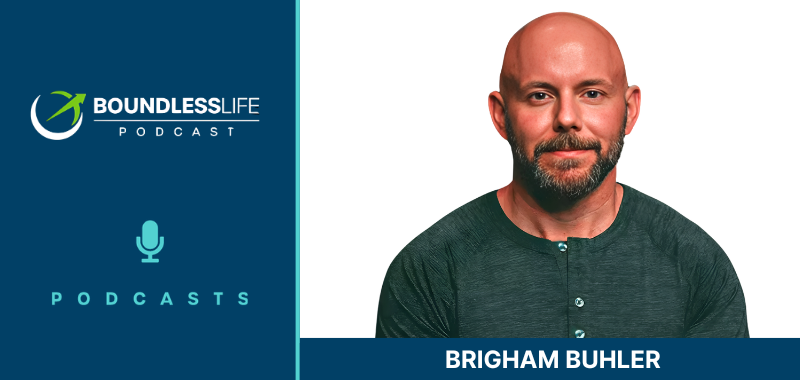
Boundless Life Podcast guest graphic featuring Brigham Buhler. The left side has a dark navy blue background displaying the circular Boundless Life Podcast logo with a stylized athlete figure, the text "Boundless Life Podcast" in white, and a teal microphone icon labeled "Podcasts" beneath it. The right side shows a professional headshot of Brigham Buhler, a bald man with a neatly trimmed dark beard, wearing a dark teal henley shirt with button placket detail, against a clean white background. He is looking directly at the camera with a composed expression

Listen on:

Reading time: 6 minutes

What I Discuss with Brigham Buhler:

  • Brigham’s background and disillusionment with big pharma, navigating the insurance landscape, and his personal experience with the opioid crisis…04:50
  • The “sick care” system: how pharmacy benefit managers (PBMs) and insurance companies drive up drug costs, control what doctors can prescribe, and profit from chronic disease instead of preventing it…06:22
  • Cost transparency in pharmaceuticals and insurance: gap pricing, copay manipulation, and a system Brigham says was ”born in captivity”…11:20
  • How the loss of Brigham’s brother led him to build Ways2Well, a clinic focused on prevention over profit (use code BOUNDLESS for 10% off an annual membership), and why your health insurance is car insurance, not a maintenance plan…15:00
  • The birth of ReviveRX, a compounding pharmacy built to provide affordable, transparent medication by working outside the insurance system…17:35
  • Which medications can and can't be compounded: patent law, FDA oversight, why generics like testosterone cost a fraction of their insurance-route price, and where cash-pay beats coverage…19:11
  • How Ways2Well evolved from virtual care to a comprehensive in-person center for cutting-edge, patient-centered medicine…25:06
  • How Ways2Well helped Jelly Roll lose weight without GLP-1s, plus the importance of hormone optimization, patient buy-in, and diet and lifestyle…28:10
  • What an experience at Ways2Well is like, from pre-treatment IVs and hyperbaric prep to plasmapheresis, stem cell therapy, and stacked modalities for full-body optimization…30:15
  • Muse cells: their discovery, multi-lineage differentiation capacity, immunomodulation, pre-pandemic donor sourcing, and why they represent a step beyond traditional MSC therapy…36:23
  • Muse cell engraftment rates, non-tumorigenic safety profile, and the current U.S. regulatory landscape…43:32
  • Extracorporeal blood oxygenation and ozonation (EBOO), HOCATT sauna, and red light therapy: how Ways2Well stacks additional modalities for detox and whole-body wellness…55:19
  • Gordon Ryan as a case study in gene sequencing: elite athletic genes, a hidden immune vulnerability, and what personalized medicine looks like when you sequence the whole picture…59:50
  • The Ways2Well app: automated prescription management, wearable integration, real-time health tracking, and the future role of physicians in AI-assisted care…01:03:21

In this episode, I sit down with Brigham Buhler at Ways2Well in Austin, Texas, exposing the “sick care” maze, including insurance company middlemen, skyrocketing drug prices, and the rebate system nobody talks about. This is what optimizing your health actually looks like: not managing disease, not waiting for a diagnosis, but getting inside the lab and taking control.

You'll explore modalities Ways2Well offers (that I got to try out while I was there) you've probably never heard of, such as plasmapheresis (plasma exchange), a medical procedure that filters blood with the goal of removing harmful antibodies, proteins, or toxins from plasma. You sit for several hours as a machine filters your plasma and returns albumin replacement fluid back into the body. Following the plasmapheresis, I received an IV of stem cells and exosomes to further lower inflammation and enhance their regenerative potential. The pre-post results are fascinating, including a big drop in liver enzymes indicating lowered liver inflammation, a large decrease in ferritin, a significant cleanup of lipids, a decrease in Hs-CRP inflammatory marker, and a much lower thyroid peroxidase (TPO) antibody count indicating reduced autoimmune activity against the thyroid gland. This is basically an “oil change” for the body, and when combined with stem cells, it's a fascinating regenerative protocol for longevity and vitality.

We also discuss Muse cell therapy, advanced bloodwork, and AI tech that tracks your biology in real time, all offerings available through Ways2Well. If you're done letting a broken system run your healthcare and want to actually optimize, this show is worth your attention.

Brigham Buhler is a healthcare entrepreneur, founder of Ways2Well, and owner of ReviveRX. He spent years inside the systems he now fights against, working across pharmaceutical sales and sports medicine before building a cash-pay alternative to the insurance model. His focus is on preventative care, transparent pricing, and giving people access to therapies the current system won't cover, not because they don't work, but because they cut into the profit model. He's dedicated to exposing the corporate capture of American healthcare and replacing a system that profits off sickness with one built on prevention, longevity, and patient empowerment.

Ways2Well is a clinician-led health company built around continuous, personalized care. They combine advanced diagnostics, expert interpretation, individualized treatment plans, and regenerative therapies to help patients understand what's actually happening in their bodies, rather than solely treating symptoms. From bloodwork and performance testing to hands-on treatment, the goal is a long-term health partnership, not a one-time appointment.

Ready to take control of your health with personalized care and treatments that the standard system won't offer?

You can use code BOUNDLESS for 10% off a Ways2Well Annual Membership.

Episode Sponsors:

TruDiagnostic: TruDiagnostic is an advanced at-home health test that uses epigenetic analysis to measure over a million biomarkers, giving you personalized, data-driven insights into your aging, energy, and overall health so you can stop guessing and start optimizing with a clear plan. Visit TruDiagnostic.com and use code BEN20 for 20% off.

BASED Bodyworks: BASED Bodyworks is a clean, plant-based men's grooming brand offering simple, high-performance essentials from shampoo and skincare to styling, formulated without harsh sulfates or hormone-disrupting chemicals, so you can look and feel your best without compromising your health. Visit basedbodyworks.com and use code BOUNDLESSLIFE for 20% off.

ULTRA: ULTRA is a clean, nicotine-free, and caffeine-free pouch designed to deliver smooth, sustained energy and focus using clinically backed nootropics and adaptogens without the jitters, crashes, or sleep disruption. With flavors like their new Blue Razz, it’s a simple, effective way to stay sharp throughout the day. Visit takeultra.com and use code BENGREENFIELD for 15% off.

Our Place: Upgrade your kitchen and say goodbye to forever chemicals for good. Right now, they’re having their biggest sale of the season, with up to 40% off site-wide through April 12th. Head to fromourplace.com/BEN to see why more than a million people have already made the switch to their clean, thoughtfully designed cookware.

Sunlighten: Sunlighten's patented infrared sauna technology delivers the highest quality near-, mid-, and far-infrared wavelengths to reduce inflammation, boost mitochondrial function, enhance detox pathways, and optimize recovery, backed by 25+ years of clinically proven, non-toxic innovation. Save up to $1,600 at get.sunlighten.com/ben with code BEN.


Episode Resources:

People

Ways2Well —Use Code BOUNDLESS for 10% off a Ways2Well Annual Membership

Books & Media

Studies

Tools, Supplements & Treatments


Do you have questions, thoughts, or feedback for Brigham Buhler or me? Leave your comments below, and one of us will reply!

Upcoming Events:

ECO26 | May 14–16, 2026

Healthcare practitioners looking to achieve exponential clinical outcomes through Foundational Medicine: I'm speaking at ECO26 (May 14–16, 2026, in Boise, ID), a three-day event featuring cutting-edge education, powerful networking, and actionable strategies to elevate your practice (with up to 20 CEUs available for some practitioner types). I'll be presenting “The Detox Frontier: Lessons from The Edges of Biohacking to Everyday Vitality” on May 15th alongside some of the top minds in functional and foundational medicine. You can use this link to register and claim a $400 discount!

Ultimate Men Over 40 Health Summit | June 8–14, 2026

If you're a man over 40 looking to improve your strength, energy, health, hormones, recovery, longevity, and performance, I'm speaking at the Ultimate Men Over 40 Health Summit (June 8–14, 2026), a free 7-day virtual event featuring 100+ experts across 7 core pillars. I'll be presenting “Optimizing the Human Machine for 40 and Beyond” alongside some of the best minds in men's health today. You can register for free here now!

Health Optimisation Summit | September 11–13, 2026

I'm speaking at the Health Optimisation Summit in London (September 11–13, 2026) at the Business Design Centre. This isn't your average health conference. HOS unites the best minds in biohacking, longevity, nutrition, fitness, and medicine, with one goal: to actually make people healthier. With 35+ world-class speakers, 120+ cutting-edge brands, and 4,000 like-minded people all under one roof, it's two days that could genuinely change how you approach your health. Get your ticket here and use code BEN to save 10% off registration! 

The Boundless Couples Retreat | November 10–14, 2026

Ready to reconnect and recharge with your partner in paradise? Join the Greenfields at the stunning Prana Maya resort in Belize for the Boundless Couples Retreat, November 10–14, 2026. It's a five-day, all-inclusive escape designed to deepen your relationship, restore your vitality, and create memories that last a lifetime. From relaxation and adventure to intimate relationship coaching with Jessa and me, every detail is crafted to send you home with a stronger bond and a reinvigorated spirit. Spots are limited, so discover more and secure yours here today!

Stay tuned for future updates—and you can always keep up with my LIVE appearances by checking out bengreenfieldlife.com/calendar!

Ben Greenfield [00:00:00]: My name is Ben Greenfield, and on this episode of the Boundless Life Podcast, what kind of things would you be using? What kind of modalities?

Brigham Buhler [00:00:08]: Oh, dude, I love this. Okay. And this plays right into it too. So, so many modalities like a plasmapheresis. Most Americans have no clue what that is. Yeah. Plasmapheresis has been around 50 years. You know what I'm saying?

Ben Greenfield [00:00:19]: Oh, that long? Really?

Brigham Buhler [00:00:20]: Yeah. It's over 30 years and it's been utilized.

Ben Greenfield [00:00:23]: The machines have changed, right?

Brigham Buhler [00:00:24]: They have changed, evolved.

Ben Greenfield [00:00:26]: You guys have a pretty spanking cool brand new machine.

Brigham Buhler [00:00:28]: Yeah. But historically, they have never used it for preventing cognitive care.

Ben Greenfield [00:00:33]: Welcome to The Boundless Life with me, your host, Ben Greenfield. I'm a personal trainer, exercise physiologist, and nutritionist, and I'm passionate about helping you discover unparalleled levels of health, fitness, longevity, and beyond. This episode recorded in one of the most unique gyms I've ever been in. Done at Ways to Well in Austin, Texas, is with Brigham Buhler. We talk about how pharmaceutical companies may or may not be screwing you, how compounding pharmacies work, a new form of stem cells, plasmapheresis, like an oil change for the body, and a lot more. All the show notes are at bengreenfieldlife.com/ways2well. That's bengreenfieldlife.com/ways, the number 2, well. Dude, we are in like the sickest dungeon ever.

Ben Greenfield [00:01:30]: Tell people what this place is.

Brigham Buhler [00:01:31]: I love it. This is, uh, the gym that we built here at Ways to Well. Um, it's funny, we had a bunch of different clients from all different walks of life that come in, and I've always wanted to build a gym that's state-of-the-art but was inspiring to like me. So I took all the '80s characters from my childhood— Arnold and Hulk Hogan and Jordan and all the icons— and then, uh, and the— in the Muay Thai area, we've got all of the UFC legends, just murals and state-of-the-art Sorinex. But the goal was to create a place that was communal beyond—

Ben Greenfield [00:02:03]: Sorinex is like a type of machine, right?

Brigham Buhler [00:02:05]: Yeah, Sorinex makes a lot of the collegiate-level athleticism programs. Like, they make all of those Olympic lift machines, a bunch of really cool, unique isolation machines.

Ben Greenfield [00:02:17]: Thick grip. I have big hands. Like, the machines, you know, a lot of times you like work out the Nautilus at the gym, it's the little tiny handles. The Sorinex, big, thick handles. I literally just— worked out in here. Uh, and then you got the blue light thing going to light everything up.

Brigham Buhler [00:02:31]: Yeah, I— with lighting too, man, I'm kind of OCD. I'm like, man, I want everything to be an experience. So I thought, make it feel like you're in a spaceship when you're working out. So we've got LED lights that can change colors and set a vibe, uh, depending on what you're trying to do. Or we can light it up like a Christmas tree and make it all bright white hospital vibes if you needed the lighting better.

Ben Greenfield [00:02:51]: Yeah, I, I saw you working out in here on Instagram A few days ago you had a post of you doing like preacher curls. I'm assuming you were in the gym. I didn't realize how tatted up you are. Do you like full sleeves?

Brigham Buhler [00:03:03]: Yeah, yeah, I have a lot of tattoos.

Ben Greenfield [00:03:05]: Yeah, what's your favorite one?

Brigham Buhler [00:03:07]: Uh, honestly, this new one on my hand, dude. And I did it— as crazy as it sounds, the first tattoo I ever got, my dad's like, good luck, you'll never have a job again.

Ben Greenfield [00:03:16]: Yeah, and so my dad showed up at my front door.

Brigham Buhler [00:03:19]: So it's so like ironic because Even I got this one thinking, maybe I'll never have to do anything political again. It hasn't made a difference so far.

Ben Greenfield [00:03:29]: And for people who can't see in the video, it's like a—

Brigham Buhler [00:03:31]: Yeah, I don't know if you can see it in the videos or not, but it's just a hand tattoo that's like a traditional eagle.

Ben Greenfield [00:03:37]: Well, by the way, those of you who are watching the video, I'll put all the juicy show notes at bengreenfieldlife.com/ways2well. It's the number 2, Ways 2 Well. Is that what it's always been named?

Brigham Buhler [00:03:48]: Yeah. Yeah.

Ben Greenfield [00:03:49]: What's the idea behind the name?

Brigham Buhler [00:03:51]: You know, we were literally— I remember sitting in a room. This was, man, I guess 8 or 9 years ago, and we were trying to come up with a name, and we were talking about wellness and preventative care, and I don't remember. We went through dozens of names, and at first, I did not like the name Ways to Well. It was one of the ones I eliminated immediately, and I don't even remember how we ended up deciding on it.

Ben Greenfield [00:04:15]: Honestly.

Brigham Buhler [00:04:16]: And now I love it. Now I've gotten used to it because it does— I do think it's encompassing of like what we're trying to achieve. The goal is to achieve wellness, not to treat chronic disease.

Ben Greenfield [00:04:25]: Yeah, yeah, yeah. Um, did it all originate in Texas? Like, is that where you're from? Yeah, yeah, yeah. Um, what was your background? Yeah, so leading up to building—

Brigham Buhler [00:04:36]: Yeah, no, thank you, because I didn't think about that. A lot of your listeners probably have no idea.

Ben Greenfield [00:04:39]: They have no clue. It's like, guy sitting under the blue light is sitting under the blue light without your blue light blockers on. There's gonna be a lot of upset circadian rhythm capacity-optimizing biohackers who are going to call you out.

Brigham Buhler [00:04:50]: So my background was— I started out as, right out of college, as a drug rep for a big pharmaceutical company. I did that for a couple of years and realized it's not at all— and this is again 25 years ago, so it's a different world— and I left from that to be a sports medicine rep where I was covering some of the surgeries of some of the best and brightest, uh, clinicians in the country, mainly sports-related orthopedic injuries— knees, shoulders, elbows, ACLs.

Ben Greenfield [00:05:15]: Is that like replacements?

Brigham Buhler [00:05:18]: More sports. So like ACL rebuilds, shoulder rotator cuff, not total joints. Total joints are more the elderly population. So more sports injury-related surgical procedures.

Ben Greenfield [00:05:30]: So you assisted bone carpentry with a laser pointer?

Brigham Buhler [00:05:33]: Yeah, yeah, that was it. And I got to learn the nuances of that. And then long story short, without getting too in the weeds, during all of that, I was looking to build and pivot, and I was building pharmacies and trying to work within the insurance framework. And during that, I lost my brother to the opioid crisis. And at the same time I lost my brother to the opioid crisis, I uncovered the why and the how that the opioid crisis was being perpetuated. And this was prior to, you know, Dopesick and all these documentaries and movies that have since exposed this. But I lived it. Like, I lived it.

Brigham Buhler [00:06:08]: I walked through it. I owned pharmacies that attempted to provide patients with non-abusive, non-addictive alternatives to opioids. And I watched the insurance companies go, no, put them back on an opioid and reject the coverage. Now, what I learned is that those insurance companies had a financial interest because the PBMs that negotiate these programs for you—

Ben Greenfield [00:06:30]: What's PBM?

Brigham Buhler [00:06:31]: Pharmacy Benefit Manager. Sorry. So every single person in America that has an insurance— United, Cigna, Aetna, Blue Cross— 92% of the prescription drugs filled in America come through the PBM.

Ben Greenfield [00:06:42]: Okay.

Brigham Buhler [00:06:42]: Through a pharmacy benefit manager, which is a middleman company that was created to drive down the cost of prescription drug care and make medications affordable for all of us.

Ben Greenfield [00:06:52]: To drive them down.

Brigham Buhler [00:06:53]: Yes.

Ben Greenfield [00:06:53]: Do we know, like, are the names of these PBMs like widely known or are these just like unknown companies?

Brigham Buhler [00:06:58]: Yeah, no, a lot of them are like CVS. Okay. Yeah, there's CVS Caremark, there's OptumHealth. Blue Cross Blue Shield has one. All of these, all of these, the 5 PBMs got gobbled up by the 5 big insurance companies and they pivoted from being a middleman to being a, or pivoted from being a freestanding entity that negotiated on behalf of the American people to being a middleman that negotiated on behalf of the big insurance companies. And when they did that, rather than negotiating down the cost of prescription drugs, they legitimately began to negotiate up the cost of prescription drugs. And you go, well, wait, why? It's because they negotiated rebates. So the plan was, instead of giving us insulin for $150, sell us the insulin for $300, then give us a rebate of $150.

Brigham Buhler [00:07:46]: Okay, so if you follow the money, you're like, why would they do that? Because at the end of the year, this is what most people don't understand. Show me the money and the incentives, and I'll show you the outcome. You got to pivot back to the '90s when the average American was not on prescription drugs. Today, I said this on Rogan last week or this week, the average American's on 4 or more prescription drugs.

Ben Greenfield [00:08:10]: Yeah. The challenge with bottles and white lids. Yes.

Brigham Buhler [00:08:13]: And the problem with the healthcare system is it's a sick care system that is monetizing chronic disease. And insurance companies are one of the key players in this. Insurance companies are not there to keep you healthy and prevent chronic disease. Insurance are there to manage medications and to monetize chronic disease. So roughly 30% of the revenue generated by the insurance companies— United, Cigna, Aetna, Blue Cross Blue Shield— who are multi-billion-dollar conglomerates, these companies, 30% of the revenue comes from rebates on prescription drugs.

Ben Greenfield [00:08:48]: Okay, so describe to me in a little bit more detail what a rebate actually is. How's a rebate work?

Brigham Buhler [00:08:52]: So like Insulim was a prime example. I'm not even telling you this. The Senate Finance Committee has done investigations into the big insurance companies to try and uncover why the cost of prescription drug care, like a product like insulin, even though it costs a fraction of the dollar amount to create it today, why has it gone up 10x? Yeah. And the answer is because the middleman insurance companies have negotiated kickbacks on every single prescription drug. So they go to the big pharmaceutical company like Lilly and they go, hey, instead of selling it for $150, sell it to us for $300. Give us a $150 rebate. The rebate stays at the middleman company.

Ben Greenfield [00:09:33]: Yep.

Brigham Buhler [00:09:34]: At the end of the year, the insurance company bills the employer. So every—

Ben Greenfield [00:09:38]: for the $300. You got it.

Brigham Buhler [00:09:41]: So most Americans—

Ben Greenfield [00:09:42]: and the PBM keeps the $150.

Brigham Buhler [00:09:44]: Bingo.

Ben Greenfield [00:09:44]: And the insurance company owns the PBM?

Brigham Buhler [00:09:46]: Yes.

Ben Greenfield [00:09:46]: You said they gobbled them up. They literally own them.

Brigham Buhler [00:09:48]: They literally own them.

Ben Greenfield [00:09:49]: So the insurance company is basically like paying itself, essentially.

Brigham Buhler [00:09:52]: Yeah. And if you want to go through it, a real-world example is CVS Pharmacy is owned by CVS Caremark, which is a PBM that negotiates insurance rates. They also are your insurer and they also own the pharmacy. But like CVS United owns Optum. Optum has now become one of the largest employers of primary care in America. It's all been gobbled up so that the illusion of freedom of a primary care in this country is now most primary cares are beholden to the insurance companies. If I'm a primary care in Texas and I lose Blue Cross Blue Shield, I'm out of business.

Ben Greenfield [00:10:31]: Yeah.

Brigham Buhler [00:10:31]: So I have to play by the rules of the insurance program that controls my patient population. And so if they tell me this week we're prescribing metformin, then this week you're prescribing metformin.

Ben Greenfield [00:10:43]: Yeah.

Brigham Buhler [00:10:44]: Right. These are your options in your tool belt to reach for. And you know that if I try to prescribe X 'cause if you go to the next drug, it's not gonna get covered. That has nothing to do with efficacy or what is best for the patient. That has to do with what is best for the insurance company. And the reason this is important for people to understand is that is the crux of the issue with the sick care system. There's so much money being made on monetizing chronic disease and monetizing prescription medication management that nobody's looking to prevent chronic disease and prevent prescription drug utilization.

Ben Greenfield [00:11:19]: Right, right. Is there any type of regulatory movement on, like, transparency, specifically, like, cost transparency, as far as what the actual purchase price of these pharmaceuticals is, what the rebate is? Like, can any of that change?

Brigham Buhler [00:11:34]: They're working, so there is actually— Wild enough, when I owned retail pharmacies in Texas, and this is when I tried to build within the insurance framework, If you were to come in and you— like, your grandma was to come in and had a Metformin prescription.

Ben Greenfield [00:11:48]: Yeah.

Brigham Buhler [00:11:48]: I could— this is real, real example. I could sell your grandma Metformin for roughly $3 for the month's supply.

Ben Greenfield [00:11:56]: Whoa.

Brigham Buhler [00:11:56]: My cost on it was $1.50. I make $1.50. Your grandma gets the meds for $3. As soon as I scan it and see that her prescription plan, even if it's Medicare, Medicaid, or TRICARE, governmental payers, are still managed by whom? The big 5 insurance companies. The government's outsourced all that. Your grandma will literally— I'll swipe the card and I have to charge her the copay that is mandated by the insurance company. So it's a $10 copay or deductible on that drug. But on some drugs, it may be a $30 copay.

Ben Greenfield [00:12:25]: Whereas before you would have just charged her like the $3.

Brigham Buhler [00:12:27]: She would have paid $3, saved $7. So I charge your grandma $10 for a drug she could have got for $3. I don't get to keep that $7. That money gets clawed back by the PBM as a holding cost management fee. And so it's called gap pricing. So on drugs that are generics, drugs that are cost-effective, drugs that we can provide for cheap cash pay alternatives, they're monetizing those through copay and deductibles. Then the drugs that are expensive and exorbitant, they're inflating the price like a GLP-1. That's part of the reason that Big Pharma's like, GLP-1s are— $1,300 in America because the insurance companies— the truth of the matter is everyone was getting— everyone was getting fat except the GLP-1 user.

Ben Greenfield [00:13:11]: Yeah, right.

Brigham Buhler [00:13:12]: The insurance companies were making beaucoup dollars. The pharmaceutical companies were making beaucoup dollars. Everyone was—

Ben Greenfield [00:13:17]: because that's nowhere near what they actually cost.

Brigham Buhler [00:13:19]: Correct.

Ben Greenfield [00:13:20]: Because— is that because they're just cheap to make?

Brigham Buhler [00:13:22]: An article just came out last week. They— they— the analytics are saying it costs about $10 to make a month's supply of GLP-1. Oh wow. Yeah. And it is— so you can see it's a race.

Ben Greenfield [00:13:32]: I got a prescription from my doctor today, and let's say my insurance was going to cover it and I had a copay. What's like the approximate copay on something like that?

Brigham Buhler [00:13:39]: Like, it varies. So yeah, that's where it gets tricky. So a lot of times the insurance only covers it for a set time point, and then after that the insurance says you're on your own, like, we're not going to keep covering it. Like, let's say it was prescribed because you're, you're diabetic, and now your diabetes is under control because you got the weight loss off, right? Sometimes the insurance is going to say, we aren't going to cover it. And now you've got to move to paying cash for the product you were getting for free.

Ben Greenfield [00:14:01]: Yeah, a lot of people are going to be drinking a lot of orange juice before they go in for their next labs. Keep that glucose up, baby.

Brigham Buhler [00:14:06]: Yeah. And so the whole system is— it is, and this has been since its infancy. I used to say the system is corporately captured, and then I realized the system was born in captivity. I mean, it's been this way. It's evolved and it's gotten more nuanced. But when you were talking about transparency, That's another important thing. When people say my insurance is confusing or I went to the hospital, I don't understand the bill, it is because the margins are made in the mystery. It is confusing by design.

Brigham Buhler [00:14:35]: What is in the shadows allows them to make the maximum profits. And this is the truth. Like, I'm literally helping at the state level on several whistleblower acts against some of these big pharmaceutical companies. I've been in litigation with a lot of the big 5 insurance companies, and I'm fully, fully vetted and aware of where they stand on these policies, procedures, and protocols. And it's sinister.

Ben Greenfield [00:14:59]: You discovered a lot of this after your brother's death from opioid use. Yes. That's when you started to dig in. And then did you start Ways to Well after that, or did you find all this out like after you started?

Brigham Buhler [00:15:13]: I did. So I was starting— so what's crazy is I started trying to educate clinicians on the importance of avoiding using opioids, and I built out several different protocols. So at the time, I was investing in labs Genetic labs, toxicology screenings, alternatives to opioids. And the message to an orthopedic surgeon would be, look, if you're going to write an opioid, you should at least screen this individual to make sure that they don't have some sort of genetic issue that's going to create a conflict, a potential addiction, or even worse, a catastrophic event. Okay, insurance covered that for about a year, and then insurance said, no, we're not going to cover that test. Okay, then even the federal guidelines said if you're writing an opioid for more than 30 days, you need to toxicology screen patients to make sure there's no diversions and this patient is actually taking the medication. Insurance quit covering that. So you literally get rid of the two biggest safety nets to protect patients.

Brigham Buhler [00:16:05]: The third and final safety net was to provide an alternative life raft so these people didn't have to go on an opioid. Insurance took that away, and insurance said, we're not going to cover that.

Ben Greenfield [00:16:17]: And so during this time when insurance is pulling out all the stops to keep these alternatives available, were you still doing the sports medicine rep stuff and that on the side?

Brigham Buhler [00:16:26]: I was doing— I was just— I was literally building all this out on the side while I was a sports med rep, and I got from, uh, from the beginning of the inception of the idea to the final product, I had 150 employees, and it became a juggernaut company. And overnight, the insurance companies squashed us like a bug.

Ben Greenfield [00:16:44]: And your guys' primary product was the test?

Brigham Buhler [00:16:48]: It was the testing and opioid alternatives and compounding non-addictive, non-abusive opioid alternatives. And this is at a time when insurance would cover compounds. And so every month running that pharmacy, pharmacies, I would get every quarter, like literally a phone book size of all the drugs that were getting removed from formulary, meaning that insurances were no longer going to cover it. And instead you put them on these drugs and grandmas and grandpas and family members would come in and go, what do you mean my medication's not covered anymore? I've been on this medicine for 10 years or 5 years. Now it's not covered.

Ben Greenfield [00:17:22]: Would it be covered if they were getting it from a pharmaceutical company?

Brigham Buhler [00:17:25]: No, this is including pharmaceutical drugs. Like so many things get changed. Based off rebates, not based off efficacy.

Ben Greenfield [00:17:32]: So it's back to—

Brigham Buhler [00:17:33]: And so I was watching all this happen.

Ben Greenfield [00:17:35]: Yeah.

Brigham Buhler [00:17:35]: And one day I said, I'm— we're gonna— we can't continue on this trajectory because every month we're losing more and more medications that insurance will cover. Why don't we just build a cash pay pharmacy and we offer all this with clear, concise, transparent pricing? And that's what started Revive. And that was a decade ago. And so I built a compounding pharmacy and I said, the only way we can make this affordable is to make it ourselves. And so every month when I would get that big binder of all the drugs they weren't going to cover, I'd bring it to my pharmacist and I'd go, which one of these drugs can we compound and make it affordable?

Ben Greenfield [00:18:09]: Yeah.

Brigham Buhler [00:18:09]: So things like metformin, testosterone is one that's huge. So many men can't get their testosterone covered. Most insurances tell you you have to have 2 fasting blood tests of below 250 to get your testosterone covered, which is chronically ill. And then you're going to be—

Ben Greenfield [00:18:26]: now, orange juice, go race an Ironman triathlon, then get your—

Brigham Buhler [00:18:29]: yeah, and you're getting And that literally means this guy is suffering for probably a year before they finally even get on T or any sort of therapy. And we could go through this on so many disease states. So the premise of Revive was we're going to build a facility to provide cost-effective care and accessibility and affordability of medications. And I'm just going to take all the things that traditional medicine is putting on the wayside because insurance quit covering it, and that's what we're going to do.

Ben Greenfield [00:18:56]: But can't the FDA, like, regulate pharmacies like that? I mean, it seems almost like a loophole for you to just be able to start a pharmacy and then sell stuff, like, almost like undercut what people would be paying for, able to get through their doctor.

Brigham Buhler [00:19:11]: Yeah, so there, there's two different— you can't make anything that's patented, right? And so most of the drugs that these big insurance companies do downregulate, and where the money's being made a lot of times is on generics or on gap pricing. Or like testosterone, right? That patent's been gone. It was— testosterone's been around since the 1930s. Yeah, that patent is long gone. Nobody has the patent rights to testosterone. Um, but in the insurance model, um, a testosterone prescription at CVS, because everyone's taking their cut, is going to be like $130, $140 a month.

Ben Greenfield [00:19:45]: Yeah.

Brigham Buhler [00:19:45]: Um, versus a compounded version of that is going to be a fraction of that price, and it's going to last you 6 days.

Ben Greenfield [00:19:51]: So even if you were— even if you did have like insurance and they were paying for part of it, you could still get a better deal arguably if you just went cash pay through a compounding pharmacy.

Brigham Buhler [00:19:59]: 100%. And that's what we're doing with most medications.

Ben Greenfield [00:20:02]: But most people listening, they're like, I'm not just gonna drive up to compounding pharmacy warehouse and walk in there and buy it. Like, how does that work? Do they need to like go to a clinic that's working with a compounding pharmacist? What's the flow?

Brigham Buhler [00:20:13]: No, that's a great question. So that space has evolved because so many people over the last 5 years have caught on. And I think that's why you're seeing so many functional medicine, longevity-based clinics that are focused on preventative care. Again, the sick care system's not built to do proactive, predictive, preventative. So if you come in and say, hey, I'm a healthy guy, I have— I'm pre-diabetic, I'd like to get on metformin, they're not going to cover it, right? Right. And again, metformin should be costing you like—

Ben Greenfield [00:20:41]: until you're diabetic.

Brigham Buhler [00:20:43]: And why would insurance allow somebody to transition from pre-diabetes to diabetes when we know there's an 8-fold cost in keeping that person alive for the rest of their life once they transition to diabetes? The answer goes back to they're monetizing the medication.

Ben Greenfield [00:20:58]: Yeah.

Brigham Buhler [00:20:58]: And if you go on insulin, there's money to be made for the foreseeable future. And then people go, well, hold on a second. What about when they have a heart attack or a stroke? These companies have to pay for that. You've got to understand that these executives are looking at quarterly earnings and quarterly profits. They're not looking at a 5-year plan. Why is that important to have that lens on? Because the average American, it gets their insurance through their employer. 92% of Americans get their insurance through their employer. The average American switches jobs every 18 months.

Brigham Buhler [00:21:30]: So all of these algorithms and large language models and all of this is doing the algorithm on Ben Greenfield and going, Ben's pre-diabetic. We can make a shitload of money off him being on insulin for the next few years. And then if something catastrophic happens, he's most likely moved on to Medicare, Medicaid, TRICARE, or different employer, somebody else's policy, not a problem.

Ben Greenfield [00:21:51]: Wow.

Brigham Buhler [00:21:51]: And so it's delay, deny, depose, like what the Ouija kid wrote on those bullets, which is like tragic. But that's how dire the situation has got. Like, it really, really is a really messed up system that is making a lot of money off of chronic illness and chronic disaster.

Ben Greenfield [00:22:10]: So, um, so Ways to Well—

Brigham Buhler [00:22:12]: you, you—

Ben Greenfield [00:22:13]: so Revive came first.

Brigham Buhler [00:22:14]: The company came first, and we built it as an effort to bring cost-effective medications and fill it. I called it medicine of the gaps. Anything that insurance either quit covering, didn't cover effectively, or was price gouging patients on that wasn't patented, we would make, and we would mail it to your doorstep for pennies on the dollar. And I went out and I educated—

Ben Greenfield [00:22:34]: and you'd mail it to my doorstep because I got a prescription for it from a concierge doctor or clinic or someone I was working with who was willing to go to a compounding pharmacy instead of through like a standard route.

Brigham Buhler [00:22:46]: You got it.

Ben Greenfield [00:22:47]: Okay.

Brigham Buhler [00:22:47]: And that was this again, this is 10 years ago.

Ben Greenfield [00:22:49]: Yeah.

Brigham Buhler [00:22:50]: So I was boots on the ground going out like I was a device rep again, educating functional medicine practices, you know, general practitioners that were private practice that hadn't been gobbled up by the insurance companies. You know, anybody who's free practicing medicine on the importance of being able to utilize these to fill in the gaps. And that's how we built that business. And while doing that, I realized how bad even that side of the equation had gotten, right? They're really— again, 10 years ago, there weren't this level of functional medicine practices, there weren't this level of telemedicine practices. It has really, really evolved for better and worse. In so many ways. You can throw a rock now and hit a functional medicine practice. You can throw a rock and hit a cash pay practice.

Brigham Buhler [00:23:36]: And so that—

Ben Greenfield [00:23:36]: and a functional medicine podcaster and a functional medicine Instagram page. Yeah, it's surged. Yeah, yeah.

Brigham Buhler [00:23:42]: And so that life raft has been built out now, and patients are aware. And so a lot of patients are saying, and rightfully so— I've said this for almost a decade— you have got to view your health insurance like you do car insurance. It is there if you crash the car. It does a great job of chronic crisis medicine. Something catastrophic, a heart attack or a stroke, our system's built to do that. Our insurance programs are built to cover that. That is where it is a win for the American—

Ben Greenfield [00:24:14]: So you're not telling people, go find a cash pay concierge doctor who's working with a compounding pharmacy and cancel your insurance. Yeah. Instead, keep your insurance in case you— whatever, get in a car accident, fall out of a plane, whatever.

Brigham Buhler [00:24:24]: But if you think that your insurance is going to rotate the tires, change the oil, maintain the vehicle, and give a shit if you're about to blow out a motor, that's where you're gonna— you're gonna be severely disappointed in what you get out of that system. Because again, they've even changed the name. It's not called health insurance anymore. I don't know if you know that. Yeah, yeah. All of these insurance programs, uh, are now, uh— God, what is the name of what they're calling them? All of these insurance programs have essentially become, um, like prescription management programs that are trying to manage and maintain prescription costs.

Ben Greenfield [00:24:58]: Yeah. Wow.

Brigham Buhler [00:24:59]: Yeah.

Ben Greenfield [00:24:59]: Wow. Okay, so when did you build this place that we're sitting in right now?

Brigham Buhler [00:25:06]: So Ways to Well, we started the idea probably 7 years ago, and then I think we probably treated the first patient 6 years ago, I want to say. Yeah. We've only been in this building for less than a year. This thing was a labor of love. Yeah. And so we've been growing this. And originally, even with Wastewell, we started out with the premise of trying to make it as affordable and accessible as possible through virtual care. And this was 7 years ago.

Brigham Buhler [00:25:33]: So everything was telemedicine. Everything was pushing people towards apps. Right. And candidly, I don't think the market was even ready for that then. And I still don't think we're fully ready for that now. I had this realization, you're going to have to have a brick-and-mortar facility. Because so many people— one, there's so many modalities, like all the cool things you and I have already talked about. Yeah, that you need to be in person, and you're gonna need to break it more.

Brigham Buhler [00:25:57]: Yes.

Ben Greenfield [00:25:57]: DMF, the gym, yada yada.

Brigham Buhler [00:25:59]: Yeah.

Ben Greenfield [00:26:00]: Uh, you, you, you're not a doctor though, so when you have a facility like this, or even if you have like a telemedicine practice, do you just like bring on physicians to manage that part?

Brigham Buhler [00:26:09]: Correct.

Ben Greenfield [00:26:10]: Yeah. Okay.

Brigham Buhler [00:26:11]: So what we did, the first thing I did was I went out and I recruited one of one of my, like, the best clinicians I had ever worked with, uh, Denise Rexroad, who had worked from being an orthopedic injection, uh, specialist in orthopedic practices to sports medicine to pain management to a functional medicine practice.

Ben Greenfield [00:26:31]: That's who was here yesterday, right? Yeah, yeah, she injected me yesterday.

Brigham Buhler [00:26:34]: Yeah. And so she's got an immense amount of knowledge in this space, um, and it evolves. So now we're doing the point where Under one roof, I have— this is crazy as this is even for me to say— we now have over 600 employees. I have pharmacists, chemists, PharmDs, PhDs, MDs, NPs, RNs, you name it. 600 employees, all different walks of life, all with one goal in mind. Can we drive human healthspan? Can we prevent chronic disease? Can we build a life raft to take people out of the sick care system put sovereignty and autonomy back into the average American's hands where they drive their health journey. One of the biggest qualms I had with medicine the whole time I was in it was a doctor— doctors oftentimes were fucking dicks. I'm sorry, but they were like very authoritarian.

Brigham Buhler [00:27:24]: You're fat, take this. You're this, take— you aren't going to get anybody to buy. They've got to take ownership and accountability of their health. And part of that is giving them the tools and the knowledge and the resources to realize this is real. Like, I look at my dad and he isn't gonna— it doesn't matter if the cardiologist tells him your heart's gonna break. Unless you can explain to him in a nuanced way that he can really digest, he's not gonna change his ways.

Ben Greenfield [00:27:51]: Yeah.

Brigham Buhler [00:27:51]: And my thing is, you've got to get buy-in on the patient, and you got the patient to drive their journey. And you do that through empowering and emboldening them and giving them the knowledge, not holding the knowledge back. I like to teach people because when you teach them, they, they do. They— a light bulb go— like Jelly Roll. Jelly Roll came in thinking there's no way he can lose weight. He's been told he's got it.

Ben Greenfield [00:28:14]: Jelly Roll the musician came to you?

Brigham Buhler [00:28:16]: Correct.

Ben Greenfield [00:28:16]: For, for a week?

Brigham Buhler [00:28:17]: Correct. Yeah. And he's, he's talked about this in depth on Rogan, and I, and I even talked to him right before I just went on and said, can we talk about this? He was running. This guy was 500 pounds.

Ben Greenfield [00:28:26]: Yeah.

Brigham Buhler [00:28:26]: The morning I call him, he's literally 3 miles into his 5-mile run. Able to do a phone call with me.

Ben Greenfield [00:28:32]: Wow.

Brigham Buhler [00:28:32]: While he's jogging.

Ben Greenfield [00:28:33]: Wow.

Brigham Buhler [00:28:34]: I mean, that's crazy, man. And it's like, that stuff is amazing and fun to me. But it is also just giving people knowledge and in a way that makes them feel like they are in control.

Ben Greenfield [00:28:44]: Yeah.

Brigham Buhler [00:28:45]: So for Jelly, it was like, hey, you don't have to take a GLP-1. He was really worried about a GLP-1 as a weight loss drug. Everyone's telling me I've got to take it. I'm like, you're 500 pounds. We just got to move.

Ben Greenfield [00:28:57]: Yeah.

Brigham Buhler [00:28:57]: If we move, If we optimize hormones, if we fix estrogen, if we lower your estrogen level, we optimize your testosterone level, we fix your insulin response, and these are all the things that we were able to assess through blood work, we can optimize your health and the weight will come off.

Ben Greenfield [00:29:13]: Yeah.

Brigham Buhler [00:29:14]: And of course, diet—

Ben Greenfield [00:29:15]: yeah, you still gave him like willpower, accountability, all the other factors that fit into the diet side. Yes. Absent of a GLP-1, he was not just moving and continuing his current diet like you guys— correct, correct.

Brigham Buhler [00:29:24]: He worked with a nutritionist and he dialed in his, his meal plans and he got strict. But even that, I see time time again, somebody obese— so off, like, you're a, you're a genetic freak, right? You're, you're an athlete. Joe and so many of my friends are crazy high-level athletes. But I come from a family of fat kids, right? I was a former fat kid. Yeah. And I look at it and go, they're in the pit of despair. You've got to help give people hope. And there is hope, and it's not at the bottom of a GLP-1 bottle.

Brigham Buhler [00:29:53]: And I'm not against GLP-1s. It's a tool in the tool belt. You can use it. It, but there is no substitute for diet, lifestyle, nutrition. And I've said this like a million times: prescribing a GLP-1 without talking about diet and lifestyle and your workout is literally like brushing your teeth while eating Oreos. Yeah, it's, it's not gonna— it, it may work a little bit, but it's not very fucking effective.

Ben Greenfield [00:30:14]: Yeah, I want to talk a little brass tacks and move from like, uh, some of the sick care and pharmaceutical corruption and, uh, you know, rebates and copays to what somebody might experience if they wanted, like, the optimization route, or they wanted to do some of the cool shit that even I was here doing yesterday. Like, we did plasmapheresis, and we did stem cell therapy. And the day before, I did, like, hyperbaric and red light and your Everything IV to get my body ready. Tell me about what the actual journey looks like as far as, like, if you get your hands on somebody and just make them feel incredible in 3 days. What kind of things would you be using? What kind of modalities?

Brigham Buhler [00:30:54]: Oh dude, I love this. Okay, and this plays right into it too. So, so many modalities, like a plasmapheresis— most Americans have no clue what that is. Yeah, plasmapheresis has been around 50 years, you know what I'm saying?

Ben Greenfield [00:31:05]: Oh, that long? Really?

Brigham Buhler [00:31:06]: Yeah, it's, it's over 30 years and it's been utilized.

Ben Greenfield [00:31:09]: Machines have changed, right?

Brigham Buhler [00:31:10]: They have changed, evolved.

Ben Greenfield [00:31:11]: You guys have a pretty spanking, like, cool brand new machine.

Brigham Buhler [00:31:14]: Yeah, but historically they have never used it for preventative care. They were using it for detox protocols, mold and allergen issues, and, uh, you know, uh, anyone dealing with chronic inflammation. There's an array of different indications. But we know through all the studies at Harvard and all these studies on heterochronic parabiosis, where they take an old mouse and a young mouse, they suture their, their, uh, circulatory systems together, the young mouse gets older and the old mouse gets younger, right? So take that premise and bring it to the longevity space. If we can filter out all of the— take all of the goodies that make Ben Greenfield Ben Greenfield, that are the good proteins, and isolate those out and take out the trash, the oil change of all these microtoxins and, you know, inflammatory markers and all this stuff that you don't need, which we can now do and have been able to do, in a proactive, predictive way, we can begin to hopefully drive your healthspan, right? And we replace the bad stuff with clean, healthy albumin from young mice. And then, yes, and then our protocol is to potent— and it varies by budget and goals, but we can stack in some of these other modalities like MSCs or peptides.

Ben Greenfield [00:32:33]: Like, that's what I'm kind of excited about. What I did yesterday, um, is a normal therapeutic plasma replacement where it's like an oil change for the body. You kind of described it, right? You're getting a lot of that acellular liquid gunk out of the body in the form of plasma. You're replacing it to a certain extent with synthetic albumin. Usually people get like an IV or something afterwards. And actually, you and I were talking about this a couple months ago, um, because the kind of like the alternative to that would be to get young human plasma replacement. And I've done that, I've done it a couple times and felt pretty good afterwards. Um, but some people don't like the idea of young human plasma, and, and there is potentially be some histocompatibility issues, like in terms of your immune system kind of having a WTF moment.

Ben Greenfield [00:33:19]: And then you kind of raised this idea of like, what if we use like really good stem cell therapy and exosomes and almost made like a, like a plasma-esque soup to kind of sort of do what like a young plasma replacement might do and see how that works?

Brigham Buhler [00:33:37]: And the reason— the re— part of what triggered that thought, and you, you'll probably I think you'll totally get where I'm coming from. I'm not here to say that the young blood is good or bad. You are getting some of the— how do I articulate that? You're getting some of the genetic information and some of the potential exposure that this individual had from their plasma.

Ben Greenfield [00:34:00]: Another human's biologics.

Brigham Buhler [00:34:01]: Correct. And so one example would be like COVID-19 or the vaccine, you know, so So where we source our cells, all of our cells are pre-2019 cells. I don't know if you even know this. So meaning we've sourced our cells from a source that is prior to COVID, prior to COVID vaccines. Stem cells. They bank these cells. They've got literally another 20 years worth of inventory banked already of pre-2019 cells. And that's important because so many of the various geneticists and folks from all different life that I have talked have said, forget whether it's long COVID or vaccine-related injury or whatever it is, those elements can be transported through these various delivery mechanisms.

Brigham Buhler [00:34:47]: And so my thought was, why not take that risk profile out? Then you've got the risk of people having the allergic reaction or an immune response to somebody else's blood that I think is at like around 20% of people have an issue. What if we use albumin, which is known, it's safe, it provides all of the essentials, but then we stack on healthy, young, vibrant stem cells that have never been vaccinated, that have never been, you know, that are prior to the whole COVID pandemic?

Ben Greenfield [00:35:17]: Yeah, I want to dig into the stem cell therapy piece a little bit more because, um, is this common to like have banks of stem cells that are pre- vaccination or pre-COVID, or is this like a secret source that you have?

Brigham Buhler [00:35:32]: No, no, I do think so. Yeah, no, historically, um, even for me, I was working with a company called Neobiosis. My buddy Ian White, 22 years Harvard stem cell research. We're all actually— you and I were talking right before, we're working with MCI. Um, they're the—

Ben Greenfield [00:35:48]: they use Muse Cell Innovations.

Brigham Buhler [00:35:50]: Yep, Muse Cell Innovations and MCI. Uh, has a long history with several gigantic tissue banks that they built their protocols out. And same with neobiosis, where all of these cells and donor cells are coming from pre-2019, uh, non-vaccinated donors.

Ben Greenfield [00:36:10]: What about healthy birth? Healthy— doesn't matter with exosomes.

Brigham Buhler [00:36:14]: Um, the exosomes we're sourcing from the same tissue banks, so they would be the same 2019 and pre— prior, uh, sources.

Ben Greenfield [00:36:21]: Okay.

Brigham Buhler [00:36:22]: Yeah.

Ben Greenfield [00:36:22]: What is, uh, mucosal Wow, uh, this is, this is awesome.

Brigham Buhler [00:36:25]: So I— it's a funny story. Before I tell you what Muse is, we— I literally heard about Muse, and I call Ian, who's my mentor, 22 years stem cell research at the bench, and we're talking about it. And we had the privilege of flying to Japan and meeting with Mari Daswana. And Mari is who discovered these cells at the bench in 2010. Okay, I'll be real, we went there.

Ben Greenfield [00:36:49]: What do you mean discover?

Brigham Buhler [00:36:50]: Like, she discovered these cells. So So people knew stem cells existed, right? And we knew of MSCs. In fact, Dr. Kaplan, who discovered these MSCs, in an open letter apology before he died, apologized to the scientific community saying, I probably should have never called these stem cells. And the reason I shouldn't is, after now another 20 years of research, what we've uncovered is they don't differentiate in the body. So when we put the— what we've been calling MSCs in your body Most of them never become anything. They don't have the ability to differentiate and become something. Their mechanism of action was to find a damaged cell and transfer their mitochondria and make your cell for a short period of time refueled and energized again, like a little battery pack, uh, with a powerful refilled mitochondria.

Brigham Buhler [00:37:39]: It also prepped the body through signals to say, hey, there's an injury over here. So the way I like to explain is traditional MSCs almost make a suggestion and then they attempt to provide an environment of healing.

Ben Greenfield [00:37:53]: Right.

Brigham Buhler [00:37:53]: And we've had phenomenal results with that. I do want to be clear where MU's take it to a whole nother level is MU's, is the MU stands for multi-lineage. So what does multi-lineage mean? That's fancy scientific talk for pluripotent. That's fancy scientific talk for these cells can become anything. So the same way that traditional MSCs can't differentiate and they can't become anything, these cells can. And so what the way, the easiest way to explain it in layman's terms that was explained to me was, think about when you're in kindergarten and you're a little kid. The world is your oyster. You can become a doctor, an astronaut, a physicist, a politician, a president, whatever you wanna be.

Brigham Buhler [00:38:36]: The world is your future. It's what do you want to get educated in and what do you want to become? But if you've gone to med school and you've gone and done your residency and you're out of your fellowship and you decided you wanted to be an orthopedic surgeon at 45 years old, you're probably an orthopedic surgeon. Yeah, it's the same thing with stem cells. Stem cells will develop an identity and they will become a certain type of cell, a bone marrow cell, a neuron cell, whatever that may be. Me. So traditional MSCs couldn't become that. They could just transfer energy to those cells. Mu cells, because they're multi-lineage, can become anything.

Brigham Buhler [00:39:13]: And through a process called, uh, phagocytosis, they'll literally gobble up like a Pac-Man your damaged, weary, tired cell and become that cell. So if you have a neuron— and, and this is scientifically proven in study after study— I sat through 7 hours of Mari dropping knowledge on me and Ian White. And if you don't take my— Ian has no reason—

Ben Greenfield [00:39:35]: Mori is the Japanese researcher.

Brigham Buhler [00:39:36]: Correct. Mori does want a Muse cell. And even that story is fascinating. But the second part of that is, so multilinear, they can become anything. The most— the second, probably even more important than that, is they're stress-induced. What does that mean? Stress-induced means that these cells are ultra, ultra resilient. But it also means they're ultra, ultra safe. We don't have to manipulate and mess with these cells to get them to take on this phenotype and behavior.

Brigham Buhler [00:40:05]: What they've been attempting to do for the last 25 years, candidly, is fuck with stem cells in Petri dishes to make them behave a certain way. What Mari uncovered accidentally is that within the human genome and within our own body and biology, these cells already existed. There's just a huge precipitous decline as we age, and we have a ton of them at birth. And so the way you isolate them from birth tissues— so yeah, they're taking healthy birth, healthy mother, pre-planned C-section, and they're extrapolating out MSCs, right? From there, they're further extrapolating down to 2% of MSCs these will meet this phenotype called a muse cell.

Ben Greenfield [00:40:52]: Okay.

Brigham Buhler [00:40:53]: And so you're taking a subset of a subset of a subset, but these subsets are super soldiers. They can do all the things that we've been wanting MSCs to do for the last 30 years. They can differentiate, they're immunomodulatory. That's the other huge one I want to make sure I make clear. What does that mean? So historically, uh, MSCs are even viewed as immunoprivileged. All that means is there's a very low risk of side effects. They're not traditionally going to cause a bunch of people to have issues because when a mother gets— when a mother's pregnant, these signals of these cells tell her body to not turn on the baby, right? Downregulate your immune system, accept the baby. The difference is, rather than turning down the immune system, Mu cells, uh, change the communication of the immune system.

Brigham Buhler [00:41:44]: So a real-world example, Mari took human livers and put them in mice and was able to get the mice to absorb a human liver. Really big life for a period of— yeah, element, like suture in a piece of human liver and get that mouse to absorb part of that human liver. Yeah, using new cells.

Ben Greenfield [00:42:01]: Wow.

Brigham Buhler [00:42:01]: Because the mu cells were able to immunomodulate that mouse's immune system to say, hey, accept this liver.

Ben Greenfield [00:42:08]: Right. So when you see a term like histocompatibility, that's what that would be referring to, your immune system is less likely to freak out and produce a flu-like reaction or a whole bunch of inflammation and swelling, which it might experience from other forms of just like normal MSC therapy.

Brigham Buhler [00:42:26]: Correct.

Ben Greenfield [00:42:27]: Okay.

Brigham Buhler [00:42:28]: So, and then, but there's other huge benefits. I don't know if you want me to keep going because it is crazy. So the other thing we've started, and I begin, I'm a huge proponent of traditional MSCs. I want to be clear, I still think there's a huge place for them. But Muse, in so many ways, it's like comparing apples and oranges because they differentiate. They're immunomodulating, not immune—

Ben Greenfield [00:42:48]: apples and very, very small apples.

Brigham Buhler [00:42:50]: Yeah, exactly. They— that's speaking of small, they are, they're literally less than half the size of a traditional MSC. So one of the challenges with MSCs, and one of the things we've seen, is you get great results inter— it's site-specific. If by injecting your shoulder and you have a shoulder injury orally, it appears to work really, really well. But if I hit you intravenously, it doesn't seem to work as well. The reason being, those traditional— with traditional MSCs, those cells oftentimes get caught up in the lungs. So those cells are so big, they end up in the lungs, and they, they're sticky in the way that they're processing inflammation. They don't pass the lung.

Brigham Buhler [00:43:27]: Now, it's not like a huge health risk or anything like that. It's just you're not getting the efficacy efficacy. So when administered site-specific, traditional MSCs have about a 3% engraftment rate. When administered intravenous, it's even less than that. And when administered—

Ben Greenfield [00:43:44]: when they're going to where they're supposed to go to heal or fix it, correct? Okay.

Brigham Buhler [00:43:48]: So one of the other huge benefits of these Muse cells is these cells are smaller, they're more nimble, and they also use a different mechanism of action to home in on the injury. Think of it like a heat-seeking missile. Muse cells are targeting the S1P signal, which is the signal that damaged cells send out like a warning. I'm damaged over here. These cells, like a heat-seeking missile, even in an intravenously administered, have a 15 to 30% engraftment rate.

Ben Greenfield [00:44:20]: So if you have— we're literally talking like a burnt toe or whatever— you could get an IV and those would still travel to that area.

Brigham Buhler [00:44:26]: Yep. Yep. So full disclaimer with anything we're talking about with like stem cells or peptides or any of these things, I always do like to give the disclaimer that, look, none of this stuff has gone through a full-blown FDA approval process. Um, everything that we discuss as far as science at the bench and the research and the data, I just want to share the data because the data is compelling. Uh, but I want to be clear, the science in practice, it's going to be fascinating to see where it goes. I feel confident And the things we've seen anecdotally are amazing.

Ben Greenfield [00:44:56]: One thing that you said was that they kind of like could be the fireman or the policeman or the president or the pastor or whatever. And some people might be wondering, well, doesn't that mean they could become a cancer cell? Like, what's the carcinogenicity of these things?

Brigham Buhler [00:45:12]: No, thank you. That's a huge one. So the other huge, huge benefit of Muse is they are non-tumorigenic. Literally in all of the studies, they do not ever become tumors. Not only do they not become tumors, I'm not saying that they're going to heal or stop or prevent cancer, but for the sake of safety, Mari tested injecting intravenous immune cells into cancer-ridden mice, and it shrunk tumors. It immunomodulated and began to try to fix and repair the damage of these, uh, tumorigenic cells. Now, it's not going to heal that. It's not.

Brigham Buhler [00:45:51]: But the point is, it's not going to cause a tumor, and it's not going to exacerbate tumor cells.

Ben Greenfield [00:45:56]: It seems like people should be looking into it.

Brigham Buhler [00:45:58]: They're non— they're not— where what we know today is they're non-tumorigenic.

Ben Greenfield [00:46:02]: Yeah.

Brigham Buhler [00:46:02]: So this is huge because the fear of a pluripotent— the number one fear of a pluripotent stem cell is is, are they tumorigenic? Yeah, because if they can become anything, will they? And I even said this on Rogan when I talked about MSCs 5 years ago. I said MSCs don't differentiate. Their mechanism of action is not what we thought. Here's what it is, and it's the pathway we just described. And the benefit is that means they're non-tumorigenic because they don't become anything, so they're not going to become a tumor.

Ben Greenfield [00:46:29]: Yeah.

Brigham Buhler [00:46:30]: Now we go to pluripotent cells that have been created in Petri dishes. The challenge with those cells is we do know that there is that potential risk. And that's why those haven't been utilized in mainstream medicine in a wide breadth like they could be if they were non-tumorigenic.

Ben Greenfield [00:46:48]: Yeah.

Brigham Buhler [00:46:49]: The wildest part of all this is Mari discovered this in 2010 and had found the gold— literally the Goldilocks zone of cells that, like, Dr. Dominik Deutscher is out of Germany. Stanford trained, uh, went to Harvard, same thing as Ian. This isn't me telling you this. This is me doing my best to distill down in my little Neanderthal brain what brilliant scientists have been trying to teach me. And so Dominic, back in 2014, began to say there appears to be this weird subset of stem cells that's acting differently than the other stem cells, than the other MSCs. And he was on the hunt to try and figure out what muse cells were. And he did a weird trial with diabetics where he realized these subset of cells that I'm finding in young, healthy people don't even exist in these people.

Brigham Buhler [00:47:46]: Is that why these people aren't healing? Is it not just circulatory blood flow, all the issues we know about diabetics? Diabetics also have a massive deficiency. It's like their body has killed off the muse. Yeah, and so that is part of the reason, and part of the hypothesis that he was developing, is, is this part of the reason diabetics and wound management is so difficult for elderly and diabetic people? Because they've lost this weird subset of a stem cell of a subset of a stem cell. And now jump forward to Mari's research coming out and being publicized. Dominic said, holy shit, this is literally what I've been trying to look at and uncover and you just gave me the answer to the test.

Ben Greenfield [00:48:28]: And then, so your theory is basically by pulling out a lot of the gunk, a lot of what people would traditionally do plasmapheresis for, um, and I'm assuming that would include a certain metal load. I don't know, does it do microplastics? Does it pull out any plastic?

Brigham Buhler [00:48:41]: You know what's crazy is I don't know. I don't want to speak out of turn and tell you. I don't know what the studies are saying, but I can tell you anecdotally, like, it's hard to tell because we're running some of these people through multiple things, but we'll— we do microplastics detox here and between all of the modalities. Like, I, I talked about this, my buddy Philip Franklin Lee, who's a really prominent chef, um, he literally came in with like one of the highest level of microplastics we've ever seen, and we've run him through these modalities and now it's all out of his system. So yeah, the, the culmination of it definitely does, uh, on the plasmapheresis side, I don't know what the research says.

Ben Greenfield [00:49:15]: How do you guys test for microplastics?

Brigham Buhler [00:49:17]: They, uh, Denise and the team have like a blood test that they were able to do on him.

Ben Greenfield [00:49:21]: Oh, interesting.

Brigham Buhler [00:49:22]: You've never done it?

Ben Greenfield [00:49:22]: Um, I've done a salivary and a urine test.

Brigham Buhler [00:49:24]: I don't think I've done a blood panel My plasma was super viscous though.

Ben Greenfield [00:49:30]: I mean, I actually was down like, dude, I think I almost broke your machine because it was just like, it was spinning like fricking like quicksand through my plasma. And I actually, on my last blood test, had a much higher particle count, lipid count. ApoB was up, Lp(a) was up. So I'm actually heading to the airport on Monday in 2 days is we decided it wasn't a good idea right after the Muse cells to pull a bunch of blood out, uh, and just pull the precious cells back out of the body. Um, but I'm very interested to see what a protocol like that, especially when the plasma is just like gunky, what it actually does to something as simple as lipids.

Brigham Buhler [00:50:11]: Yeah, yeah. Um, the Muse cells— the other crazy part is in the engraftment is traditional cells, we would tell people, look, those cells are out of your body in, you know, Typically within 48 hours, the traditional MSCs are dead and gone and have transferred their mitochondria, but it takes weeks and weeks to begin to really see the benefits. The crazy part about Muse is they're at these high engraftment rates 3 days in, and they've already transitioned through phagocytosis to become the cell.

Ben Greenfield [00:50:44]: And you now already have young, healthy, vibrant baby versions of whatever damaged cell was Yeah, and obviously they're legal in Texas, or else you're gonna be a whole bunch of trouble talking about them on this podcast. Um, what's, what's like the overall U.S. legality?

Ben Greenfield [00:50:59]: does it vary from state to state?

Brigham Buhler [00:51:00]: So I mean, all, all of these— the, the stem cell space is still an emerging space, and this is part of the challenge. Florida, Texas, Utah, and I testify on Monday in Arizona, we've already passed it through the House. Now we're moving to the The states are ahead of the federal government on this. The federal government traditionally has had everything falling under a 361 designation, which is just a designation that says we're going to allow exemptions on these biologics. They occur in nature and you've got to follow these subset of rules.

Ben Greenfield [00:51:33]: Yeah.

Brigham Buhler [00:51:33]: The state of Texas—

Ben Greenfield [00:51:34]: Like you can't, you can't like experiment—

Brigham Buhler [00:51:37]: Minimally manipulate it. No pharmaceutical products, etc.

Ben Greenfield [00:51:39]: Yeah.

Brigham Buhler [00:51:40]: Um, now the state of Texas and states like, um, Florida, Arizona, all of this is coming. So I tell people, even with Muse, Muse is all being done outside the United States right now, and it's rapidly coming to the United States. So at the state level, like Texas for instance, it has the Right to Try Act. The Right to Try Act basically says if you have a chronic disease or any sort of ailment and you want to sign a waiver, you're allowed to do these treatments. Treatments. Um, and it's that way in multiple states. Florida just passed some very, very, uh, friendly, future-forward, uh, stem cell legislation that allows, uh, patients accessibility to these treatments without having to go outside the United States.

Ben Greenfield [00:52:21]: Yeah.

Brigham Buhler [00:52:22]: And to me, it's a tragedy that people are having to go to Mexico and T— Antigua and all these places to get treatments that we know are safe. We do know they're safe.

Ben Greenfield [00:52:32]: Well, from what I understand, one reason that you would travel internationally is because there are a lot of clinics claiming that they can treat the stem cells in such a way, whether it be expansion or multi-generations or something like that, to make them more efficacious or to have a higher MSC count. But it sounds to me like if or when Muse cells attain legality in the U.S., that they would kind of skirt that whole issue anyway.

Brigham Buhler [00:52:55]: It does, it does. And even with traditional MSCs, you know, that's one of the challenges. Look, if you're expanding traditional MSCs, it's just like with testosterone in medicine. The rule of thumb is the minimal— the optimal dosage of medicine is the minimal dosage required to elicit the desired response, right? More isn't better. If we have your testosterone at 1,000, pushing it to 1,500 isn't necessarily better. And I'm not here to say it's going to lead to something dangerous or some sort of cataclysmic event, but you might have to buy a toupee. But yeah, but if you're getting good results results at a lower dosage, there's not necessarily a need to push the envelope. And what they've seen even in trials with traditional MSCs— and there was a trial done on, uh, cardiac patients where the higher dosages didn't lead to, uh, better outcomes or faster healing because the body can only physiologically heal at a certain speed and pace anyway.

Brigham Buhler [00:53:55]: Yeah, so if I hit with— if I did— the easier way I used to explain this is think if I'm going to build a building. I need the bricks, the mortar, uh, I need the blueprint and the instructions. Uh, if I deliver twice the amount of mortar, that doesn't build the building faster. The building can still only be built at a certain speed, even with the best crew and the best products and the best delivery mechanisms. And so we have to set realistic expectations. This is medicine, not magic. And medicine requires a nuanced approach. More isn't always better, um, but the goal of these biologics is to give your body the building blocks, the blueprint, the instructions, and the guidelines, and the worker bees to build the building.

Brigham Buhler [00:54:39]: Yeah, so the exosome— the exosomes, the cytokines, the extracellular vesicles, uh, the MSCs, whether that's Muse MSCs or traditional MSCs depending on where you live Um, the goal would be to optimize your body's ability to heal through providing you with the raw elements and essential building blocks that you are deficient in because of your age or genetics or environment, after potentially pulling out the bad stuff via process like plasmapheresis.

Ben Greenfield [00:55:04]: And that was one hell of a rabbit hole, the idea of plasmapheresis plus stem cell therapy. When I asked you about like a cool journey that somebody would go on to actually feel really good I'm assuming those two would fit into the equation. What other things are you throwing at people?

Brigham Buhler [00:55:20]: Yeah, um, the other— I think you've done this before— EBOO. It's a little more simplistic than plasmapheresis, but we've had really good results with, with, uh, people who have come in with various, uh, mold exposure. Uh, we also have the HOCATT.

Ben Greenfield [00:55:34]: Yeah, and then the EBOO is extracorporeal blood ozonation oxygenation.

Brigham Buhler [00:55:38]: You got it.

Ben Greenfield [00:55:38]: Yeah, the HOCATT, I have one in my garage. Love-hate relationship.

Brigham Buhler [00:55:41]: Dude, it's brutal, isn't it?

Ben Greenfield [00:55:42]: It can be, yeah.

Brigham Buhler [00:55:43]: But it's so good.

Ben Greenfield [00:55:43]: Yeah, people haven't seen this, you literally You can Google my name plus the word hot tub to see me in one, but it's like sauna with ozone and carbonic acid, heat, obviously, sometimes like essential oils and the woo-woo stuff. And then it was pretty powerful PEMF. And you sit in there with just like your head sticking out and sweat buckets inside. And you get out, it's like nasty sweat and whatever toxic—

Brigham Buhler [00:56:07]: Yeah, it fills up the basin with all the toxins.

Ben Greenfield [00:56:09]: Well, science says your body's absorbing all this. Transdermal ozone.

Brigham Buhler [00:56:14]: Yeah, yeah, yeah. And so people love that, um, but I think a lot of it is— this is another challenge that I've talked about. So even with the psychedelic trials, you and I have talked offline about psychedelics. One of the challenges is the Food and Drug Administration, right? That's what the FDA stands for. A lot of these pathways to bring something to market historically— and this isn't the FDA's fault, it's just built to assess multimodality approaches to medicine. So even in the psychedelic space, one of the things that happened is they wanted to combine therapies like ibogaine with, uh, with, uh, what's the word, on with psychiatrist therapy on the back end, integration therapy. So you come out the other end of an ibogaine experience and there's integration therapy with a therapist to help you process what you've seen, what you've done.

Ben Greenfield [00:57:04]: Very similar to almost like the psilocybin trials on, uh, on nicotine at Johns Hopkins. Like people hear that they use psilocybin successfully, um, for primarily nicotine, but then what they don't see are the multi-hundred-page documents that those patients or trial participants were going through as a part of the therapy. I mean, it's more than just taking a drug. Like, there's a lot more.

Brigham Buhler [00:57:26]: But the challenge is historically these regulatory pathways don't like that because now I'm trying to approve a stack, right, rather than a modality that's like clear—

Ben Greenfield [00:57:37]: worked— the CBT, the psychedelic, the whatever you did along dealing with that, the fact that you were in it, whatever, in the mountains for a week.

Brigham Buhler [00:57:45]: Yeah, yeah. And so a lot of what we do here gets complicated because it is nuanced. Like, we're stacking a bunch of different modes, from hyperbaric to red light. Uh, like, let's say you earlier, you're asking what's the day— if you go into a primary care and you are a 40-year-old woman who's 20 pounds overweight, you're stressed, you're anxious, you're tired, you feel like you don't have any energy, You're probably going to leave there with a GLP-1, an antidepressant, right? Your clinician's going to reach for the tool in their tool belt, right? The reason it's important to understand that whole diatribe we went on about the insurance model is your clinician is going to be limited in what blood work they can pull. Why? Because the insurance tells them what they're allowed to pull. So if they wanted to pull a full panel and a genetic test, and let's do an EEG and see if there's any sort of neuron misfiring in the brain what is going on, what you can't do, that you can't look under the hood to get the diagnosis. Instead, you treat the symptomology. If that same woman were to come into Ways to Well, the first thing we're going to do is say you need to do blood work, comprehensive blood work.

Brigham Buhler [00:58:50]: We need to look at you at the biological level and uncover if there's any hormonal imbalance, any inflammatory issue. You know, before I put somebody on an antidepressant, I would want to know their hormones, their brain health, health and their genetics, right? Do you have an MTFHR? Is there something that could be exacerbating inflammation? Is there something that could be disrupting your sleep? Is there something in your lifestyle behaviors, diet, or stress level that we can monitor and manage? Uh, we would do a DEXA to assess your overall body composition— lean muscle mass, visceral fat, subcutaneous fat. And in a dream world, we also layer that with a VO2 max where we now know your cardiovascular output and cardiovascular health. You stack all those things together with a full genetic test, and now we're talking about gene sequencing tests too. These are crucial, and we haven't even rolled that out yet here. We just started our first handful of patients.

Ben Greenfield [00:59:42]: What's a gene sequencing test?

Brigham Buhler [00:59:44]: So most patients, less than 1 in 1,000 people, have ever had their genes sequenced. Through a gene sequencing test— like, one real-world example is we've been trying to help Gordon Ryan with gut health for years.

Ben Greenfield [00:59:54]: Okay.

Brigham Buhler [00:59:54]: It's this conundrum, and we can't— we— even though we've had tremendous success with so many things, he chronically keeps having gut health issues. Uh, we've tested everything, but once we did a gene test, we uncovered that the things that make Gordon Ryan the greatest grappler in the world— for your listeners who don't know who that is, he's a world-class jiu-jitsu practitioner who's known as the greatest grappler in the world, genetic freak. Gordon possesses a gene that's like less than 1 in 10 million that makes his, his, uh, ligaments stronger. He also has a gene that can make his bone mineral density stronger. Stronger, okay, which are great for athletic performance. His Achilles heel is he has a gene marker that makes him susceptible to infections. Now he's in a sport where he's getting staph all the time, and so he has a gene that makes him somewhat susceptible to infections, a weakened immune system layered with— he has a multiple sclerosis gene marker, and that MS gene marker is affiliated with gut biome issues and gut health.

Ben Greenfield [01:00:53]: Yep.

Brigham Buhler [01:00:53]: You literally— God, nature, whatever you want to call it— gave this guy in so many ways superhuman abilities, but almost an Achilles heel in that he's in a sport where he's being exposed to dirty mats and chance of infections. And now they're putting him on antibiotics to kill a staph infection, and now that staph infection is already attacking his weakened gut and his weakened immune system. Yep. And so these are things that we now have better—

Ben Greenfield [01:01:19]: got to wonder, like, from an evolutionary biologist standpoint, like, what, like, is it some kind of a warrior gene that gives you strong long bones and thicker muscles, but then perhaps, you know, the ability to thrive in a variety of environments by your biome shifting rapidly. But then that messes you up if you're eating the same diet.

Brigham Buhler [01:01:34]: So the future to me is like, we didn't even know that. And we now have geneticists that we're working with, and, uh, and one of them I'm trying to bring on full-time, but he worked for DARPA, and which is the government program. And his thing was, you know, his job was to uncover genes and what they do and what genes we could turn off or on. To optimize performance for our, uh, assets, our military assets.

Ben Greenfield [01:01:59]: A lot of people have done gene tests, like there's a dime a dozen of them out there, and you can go to the website and order a salivary test to your home. Is this different than the gene?

Brigham Buhler [01:02:07]: So the challenge I have with most of them is they don't give good data and they don't really give anyone a call to action or knowledge.

Ben Greenfield [01:02:12]: Okay.

Brigham Buhler [01:02:13]: And so what we're trying to build out is using Allen and the AI and the, and the large language model to give people tangible information right? Nuanced information. And part of that is, if you don't know what software you're running on your hardware, you're like, how can you make the most educated decisions and choices? And in a way, like, if we would have known 2 years ago that Gordon had these genetic traits, how could we have guided or changed our guidance on how we treat and how we drive his healthspan? And my thing is, knowledge is power. And so the more knowledge we can culminate and the more data we can gather around you as an individual at the biological level, the more optimistic I am that brilliant people like Mari or Ian Whyte or Dominic Deutscher or, you know, Denise Rexroad or all the people that we are bringing into our sphere can help us drive healthspan.

Ben Greenfield [01:03:05]: Yeah, Alan's the alien. If you ever walk in here, you guys, it's crazy because there's all this memorabilia. Like, you got the Back to the Future car and the dinosaur room and the Alamo. So it's got a lot of character, the Wastewell does. But there's like this screen and it's got the alien brilliant on it. And I actually, I had this marked down as a question I wanted to ask you. Like, what are you doing with, with AI, and what's, what's Allen and, and the app, and, and the— where does like the technology fit in?

Brigham Buhler [01:03:31]: Yeah, uh, so I, I broke this down too. That I, in my mind, and this is just my opinion, but there's 3 different pathways that people are going down now for healthcare. There's the traditional system that we've covered, and it's broken, challenged for all those reasons. Then there's the cash pay model. And to me, the cash pay model is diverging into two different elements. There's the boutique concierge medicine of the world, like the Peter Attias that are, you know, charging $100, $150 grand to be their patient. And they do a great job clinically, but that's not affordable for the average American. And then there's the Hims and the internet pill mills that are not doing a great job of managing people's health and driving Healthspan.

Brigham Buhler [01:04:13]: They're literally just monetizing peptides, monetizing—

Ben Greenfield [01:04:16]: where you go to website, fill out a form, or do like a quick chat, and then you get your drugs.

Brigham Buhler [01:04:21]: And, and each of those have their pros and cons. To me, the answer is a hybrid. We need to bring world-class care at an affordable rate. And how you do that is you utilize technology, large language models, artificial intelligence to drive the ship and do the heavy lift shifting. But what I want to be clear on, and I've learned this through trying to build this, I think the most crucial element is to maintain and keep the physician relationship with a patient. Everything always begins and ends with humans. We're humans. Like, this is the human experience.

Brigham Buhler [01:04:55]: I think it's crucial for a human to be in the chain of command and for a human to be an integral part of that journey. Where I do see large language models and AI able to allow me to scale and develop and treat and help is, for an example, like a telemedicine company, um, that scales like a Hims to that level. A lot of times they're employing by the hour an OB-GYN that may have been pulling a baby on a Monday and is pretending to be a testosterone expert on a Tuesday. You know, everybody that works at Wastewell is an employee of Wastewell who has been trained by Wastewell, okay, who works within our organization, who follows our protocols, procedures, belief system, and our goal is to provide unparalleled care and to help educate, enlighten, and embolden people to drive their healthcare journey. And you do that through resources, knowledge, and making people feel like they're a part of that journey. We're not here to dictate from a pulpit, this is what you do. We're here to explore options with patients, give pros and cons, talk about the nuances of these various peptides. Peptides, right? As much as I love peptides, and even I'm not even against GLP-1s— I know I've disparaged them a little bit on this podcast, but like, they're a great tool, man, like when utilized right.

Ben Greenfield [01:06:11]: I have, I have used them and they quiet food hunger.

Brigham Buhler [01:06:14]: Yeah, a lot. Yeah. And but you know what you're doing, you're using them right.

Ben Greenfield [01:06:17]: 24 hours of travel and you're not thinking about eating. Yeah. Um, but you know, you've got, you know, the idea of an LLM being able to very precisely relapse or stack certain modalities. And then in the future, I think even Elon Musk recently said that like surgery or, you know, human surgeons would be a thing of the past because robots could be able to do that potentially with far greater precision. Potentially that could also happen with phlebotomy injections, IVs, whatever. So what do you think the role of the physician on staff is?

Brigham Buhler [01:06:53]: I think the direction we're headed is, look, even from a real-world example, part of this is vertically integrating and streamlining the patient experience. Because I own a pharmacy and I own the medical practice and we own biologics facilities, we are vertically integrating everything into one clear, concise pathway that is all interconnected. And my goal is, if a patient texts on the WasteWell app, it hits the pharmacy, it checks, do you have a prescription on file? Yes, you do. Do we have the credit card? Yes, we do. Do they have a refill? Any conflicts? No, they don't. Prescription out the door, right? Today—

Ben Greenfield [01:07:29]: Refill, any conflicts. But when you say any conflicts, that means that it would be cross-referencing that person's most recent bloods, for example. And if those weren't available, recommending that be done first.

Brigham Buhler [01:07:40]: Correct. Automate, build, keep humans in the chain of command, streamline, reduce the downtime. So historically, again, back to a primary care practice, practice. You're a patient at a primary care practice, you're out of your refills, you message the nurse at the clinic, it takes her a day to get back to you because she's busy seeing patients. Then they got to call the pharmacy and figure out, do you not have a refill on file? Then CVS says no, they don't. Why not? Oh, well, they don't have updated blood work, you haven't prescribed it. So then the clinician's like, oh, we need you to come in for blood work. That may take them a week to get you that answer.

Brigham Buhler [01:08:13]: In an automated process test, the AI is going to check that instantly and message back and say, you have 2 refills on file, however we can't fill them because we don't have updated blood work. Yeah, testosterone requires updated blood work. Oh, we checked the schedule, we can get you in tomorrow and send a mobile phleb. That's medicine, right? Instantaneous. And we're going to do that on every aspect of healthcare. But beyond that, the magic is in the data mining, because now we know what day Ben started testosterone, or what day Ben started a peptide. Yeah, if you're giving us access into your wearable We know your heart rate, your deep sleep, your REM sleep, your heart rate variability. We know your recovery rate.

Brigham Buhler [01:08:52]: We are tracking that data in real time. And now let's cross-reference that with genetics. And now let's cross-reference that with, uh, everybody who came in and had a cytochrome P450 marker XYZ. What we saw in our data was that they had this happen every time they did that, right? This— a more comprehensive real-time analysis of you in that moment so that we can course correct faster, better, and more efficiently to drive your healthspan and reaffirm if something's working. Rather than wait 6 months for you to come back in for new blood work, in real time, I want to track you and go push message, hey Ben, you started testosterone 2 months ago, just a quick report card. We have seen a marked improvement in REM sleep and deep sleep. We have seen a recovery improvement on your HRV. Be, right? And begin to give patients knowledge into that data.

Brigham Buhler [01:09:46]: Yeah, not just have you blindly guess or try to figure it all out yourself.

Ben Greenfield [01:09:49]: And with the big data, you can, if you're using digital records, keep track of if I've done— if you have like a local patient, for example, hyperbaric, plasmapheresis, red light, and you could probably even see how someone's labs are changing based on those type of things. Like even just me, like having a pre-test and coming in and doing plasmapheresis this and stem cell therapy and exosomes, and then doing another blood test on Monday. Like, that's going to be on file.

Brigham Buhler [01:10:17]: A real, real world example.

Ben Greenfield [01:10:18]: You'll start to see patterns in terms of what happens. You got like a, like a CBC or comprehensive metabolic after plasmapheresis.

Brigham Buhler [01:10:26]: Yeah. And we know too, in traditional medicine, less than 2% of adverse events are ever reported. So how much data is already flawed, and how much real-time feedback are we getting in traditional medicine? And I would argue animal.

Ben Greenfield [01:10:38]: Yeah, yeah.

Brigham Buhler [01:10:39]: Most patients— the other issue with an insurance model is if a pa— like my dad, again, he's the worst example, but he's the real-world example. He's on like 7 drugs, and I'm like, I'm researching his drugs because his clinicians aren't. His cardiologist is focused on his heart. His urologist is focused on his bladder issues. His neurologist is focused on his neurological issues. His oncologist is focused on that. You know what You know what I'm saying? And the tail's wagging the dog and they're all prescribing him things. And some of those things are even contraindicated against the other.

Brigham Buhler [01:11:10]: And he's having issues like liver toxicity because he's on all these medications. And you've got the oncologist pointing to this guy, the cardiologist pointing to the other guy, and they're all like, well, he shouldn't have put you on this. Why'd that guy put you on it? This guy's just a patient trying to sort through the chaos himself. So in this world, in real time, like I'm a real world example, I know now, from taking NAD quantifiably. For me, NAD's not great. I don't know why, but my HRV plummets, my sleep gets interrupted. So many people love it and swear by it, but for me—

Ben Greenfield [01:11:45]: What's your methylation genetics, do you know?

Brigham Buhler [01:11:48]: I have every one of the negative MTFHRs.

Ben Greenfield [01:11:51]: 'Cause NAD pulls on methyl donors more rapidly, and I don't know if you're on trimethylglycine or SAMe or one of these methyl donor B vitamin complexes, But sometimes people who struggle with NAD or who are unresponsive to it, like, they need more methylation.

Brigham Buhler [01:12:06]: That would make 100% sense. And so what's fascinating is we talked about ibu earlier. A real-world practice is I did the ibu and people are like, did it make a difference? I felt great. But then I also quantifiably saw my HRV went through the roof, my REM sleep, my deep sleep. For 2 weeks, I was getting like 90s and 100s on my sleep.

Ben Greenfield [01:12:29]: Yeah.

Brigham Buhler [01:12:30]: Which is just— never happens. I mean, running these companies, I'm always busy, I'm stressed. So that was really neat to see real, real-world, real-time feedback of a modality and the benefit.

Ben Greenfield [01:12:41]: Yeah. Wow. Um, so 3 days ago, I think, you did Joe Rogan's podcast. You talked a lot about peptides. Um, and I was able to get through an entire podcast with you with you only saying the word peptide peptides once because I know that's a whole can of worms. And I'm gonna link in the show notes if you go to bengreenfieldlife.com/ways2well, the number 2 well, to that podcast that you did because I really want people to hear your opinion on peptides. But it's such a deep conversation.

Brigham Buhler [01:13:11]: Yeah.

Ben Greenfield [01:13:12]: And I feel like you just crushed it on Rogan, so I'll link to that and you guys can just like pair that up with this show. Brigham, this place is incredible. You're actually out there making a difference. I know working your ass off with just everything from, you know, regulations to meetings to trying to progress beyond sick care. So thanks for doing what you're doing, dude.

Brigham Buhler [01:13:31]: Thank you, man. And you were one of the first guys that I— like, candidly, I remember watching and listening to your— I don't— you're the first biohacker podcast that I ever knew of. So I don't know if you were the first, but you were definitely one of the pioneers. So thank you for educating me because I literally listened to decade ago.

Ben Greenfield [01:13:50]: It's been on twice a week since 2008, so it's been a while.

Brigham Buhler [01:13:55]: So nuts. Yeah, dude, thank you, man. I appreciate you.

Ben Greenfield [01:13:58]: Yeah, thanks, you guys. To discover even more tips, tricks, hacks, and content to become the most complete, boundless version of you, visit bengreenfieldlife.com.

Ben Greenfield [01:14:16]: In compliance with the FTC guidelines, please assume the following about links and posts on this site. Most of the links going to products are often affiliate links of which I receive a small commission from sales of certain items, but the price is the same for you, and sometimes I even get to share a unique and somewhat significant discount with you. In some cases, I might also be an investor in a company I mention. I'm the founder, for example, of Kion LLC, the makers of Kion-branded supplements and products, which I talk about quite a bit. Regardless of the relationship, if I post or talk about an affiliate link to a product, it is indeed something I personally use, support, and with full authenticity and transparency recommend in good conscience. I personally vet each and every product that I talk about. My first priority is providing valuable information and resources to you that help you positively optimize your mind, body, and spirit, and I'll only ever link to products or resources, affiliate or otherwise, that fit within this purpose. So there's your fancy legal disclaimer.

Ben Greenfield

Ben Greenfield is a health consultant, speaker, and New York Times bestselling author of a wide variety of books.

What's Blocking You From Living Boundless?

Thoughts on “Oil Changes” For Your Blood, DIRTY Pharmaceutical Secrets, AI-Powered Medicine & More With Brigham Buhler.

2 Responses

Leave a Reply

Your email address will not be published. Required fields are marked *

Related Podcasts

Boundless Life Podcast guest graphic featuring Jason Klop. The left side has a dark navy blue background displaying the Boundless Life Podcast logo and a teal microphone icon labeled "Podcasts" beneath it. The right side shows a professional headshot of Jason Klop, a young man with short dark hair and a warm smile, wearing a light beige blazer and a dark bow tie against a plain light background. He is looking directly at the camera. His name, "Jason Klop," appears in bold white text on a dark teal banner spanning the full width of the bottom of the graphic.

Are “Poop Pills” The Ultimate Bowel Biohack Of The Future? The Science of Fecal Microbiota Transplants (FMT) with Jason Klop.

Listen on: Reading time: 6 minutes What I Discuss with Jason Klop: What fecal microbiota transplantation (FMT) actually is, why...

Dr. Guosong Liu WP

Can the RIGHT Form of Magnesium REALLY Boost Brain Performance, Reverse Cognitive Decline & Protect Against Alzheimer’s? with Dr. Guosong Liu

Listen on: Reading time: 6 minutes What I Discuss with Dr. Guosong Liu: How Dr. Liu‘s accidental discovery at MIT’s...

Boundless Life Podcast guest graphic featuring Annette Verpillot. The left side has a dark navy blue background displaying the circular Boundless Life Podcast logo with a stylized athlete figure, the text "Boundless Life Podcast" in white, and a teal microphone icon labeled "Podcasts" beneath it. The right side shows a professional headshot of Annette Verpillot, a woman with medium-length dark brown hair, wearing a black top, smiling warmly against a plain light background.

The Fascinating Science of Posture (& Its Full-Body Health Effects!) With LIFE Network Expert Annette Verpillot.

Listen on: Reading time: 6 minutes What I Discuss with Annette Verpillot: What a functional activator is (save 15% with...