Home » Podcast » How To Build A Better BRAIN (+ A Neuroscientist’s Take On Ketamine, Nicotine, Alcohol & More!) With Dr. Tommy Wood.

How To Build A Better BRAIN (+ A Neuroscientist’s Take On Ketamine, Nicotine, Alcohol & More!) With Dr. Tommy Wood.

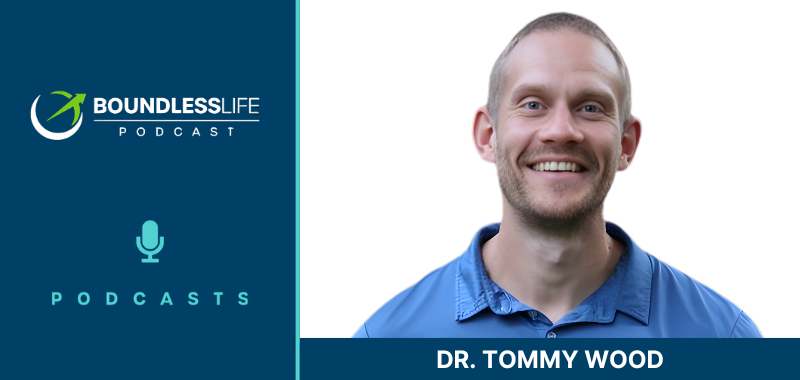
Dr. Tommy Wood smiling at the camera on the Boundless Life Podcast thumbnail with teal background and podcast microphone icon

Listen on:

Reading time: 6 minutes

What I Discuss with Dr. Tommy Wood:

  • Dr. Tommy Wood's background as a strongman competitor, off-road Ironman triathlete, and the science of concurrent training for endurance and strength…00:53
  • The origin of his new book, The Stimulated Mind, its central thesis that how you use your brain determines how it functions, and the modern paradox of being simultaneously overstimulated by technology yet understimulated from real skill development…05:30
  • Dr. Wood's research across newborn brain injury, concussion recovery, elite athletes, and dementia all point to the same conclusion: environment is the primary driver of brain function, and changing your environment is the most powerful tool for changing your brain…06:49
  • What his research on babies with brain injuries reveals about the home environment as a predictor of long-term cognitive outcomes, and the most beneficial inputs for a developing brain…08:57
  • Dr. Wood's definition of a healthy brain and why resilience under stress matters as much as peak performance…12:30
  • Broken radio theory and why reductionist biology falls short when applied to understanding how the brain actually works…13:40
  • The pianist study that shows whatever you want your brain to be good at, consistent daily practice is what builds and maintains function (regardless of age)…19:00
  • Why the adult brain can't grow new neurons but can continuously form new connections, the difference between neuroplasticity and neurogenesis, and how learning new skills physically reshapes brain structure…23:06
  • How much of age-related cognitive decline is inevitable versus self-inflicted and why giving your brain a real reason to focus is what drives change…27:09
  • Different exercise types and their impact on the brain…31:08
  • Why lactate is uniquely able to cross the blood-brain barrier to trigger brain-derived neurotrophic factor (BDNF) production, how intense exercise and blood flow restriction (BFR) training drive this effect, and why the brain's response is hormesis in action…33:39
  • The Norwegian 4×4 protocol and hippocampal structure: six months of high-intensity interval training produced structural brain changes that held for five years after training stopped…39:39
  • What AI could be doing to your brain, the cognitive orthotic versus prosthetic framework, the “Your Brain on ChatGPT” MIT essay study, and AI workflows that can actually benefit you…41:54
  • How Dr. Wood eats as a neuroscientist and hybrid athlete, plus his supplement recommendations for brain health…47:28
  • Dr. Wood's personal take on exogenous ketones for cognition and what Dr. Andrew Koutnik's research suggests about when they may support brain function…51:14
  • Alcohol and the brain, and what UK Biobank data actually shows about dose, brain volume, and dementia risk…55:45
  • Ketamine and nicotine as potential cognitive tools, the real evidence on perceived benefits, and why nicotine's addiction risk makes it a problematic daily habit…58:45

In this episode with Dr. Tommy Wood, you'll explore what actually determines how well your brain functions across your entire lifespan, from the inputs that drive cognitive development in infancy all the way through the habits, environments, and daily choices that either accelerate or protect against decline in adulthood and old age, all grounded in the research behind his new book, The Stimulated Mind: Future-Proof Your Brain from Dementia and Stay Sharp at Any Age.

You'll discover why the modern world leaves you simultaneously overstimulated by technology and understimulated in the ways that actually build cognitive capacity, why lactate from intense exercise may be one of the most underrated brain health tools you have, and which types of exercise target different parts of the brain. Dr. Wood also gets personal on his own diet and supplement stack, gives his honest take on alcohol, nicotine, ketamine, and exogenous ketones, and unpacks what AI could be doing to your cognitive capacity and why it depends entirely on how you use it.

Dr. Tommy Wood is a neuroscientist, physician, and performance consultant to world-class athletes across more than a dozen sports, including Formula 1 drivers and Olympic champions. He holds an undergraduate degree in biochemistry from the University of Cambridge, a medical degree from the University of Oxford, and a Ph.D. in physiology and neuroscience from the University of Oslo. He is an Associate Professor of Pediatrics and Neuroscience at the University of Washington School of Medicine, where his lab focuses on brain health across the lifespan, from preterm babies and adults recovering from brain trauma through to the factors that shape long-term cognitive function and dementia risk. He has published more than 100 scientific papers and co-founded the British Society for Lifestyle Medicine.

You can purchase his new book, The Stimulated Mind, here.

Episode Sponsors:

TruDiagnostic: TruDiagnostic is an advanced at-home health test that uses epigenetic analysis to measure over a million biomarkers, giving you personalized, data-driven insights into your aging, energy, and overall health so you can stop guessing and start optimizing with a clear plan. Visit TruDiagnostic.com and use code BEN20 for 20% off.

Quantum Upgrade: Recent research has revealed that the Quantum Upgrade was able to increase ATP production by a jaw-dropping 20–25% in human cells. Unlock a 15-day free trial with the code BEN15 at quantumupgrade.io.

Hiya: Give your kids the full-body nourishment they need to grow into healthy adults. I've secured a special deal with Hiya on their best-selling children's vitamin — get 50% off your first order today! To claim this deal, you must go to hiyahealth.com/BEN (it is not available on their regular website).

MTE: MTE is a caffeine-free daily drink mix with adaptogens, nootropics, and superfoods for clean energy, sharp focus, and balanced mood, without the crash. Boost your wellness at a systemic level with MTE's 13 healthy ingredients. Check them out at GetMTE.com/BENG and use code BENG for 20% off your first order.

Episode Resources: 

People

Books

Podcast Episodes:

Studies & References

Supplements


Do you have questions, thoughts or feedback for Dr. Tommy Wood or me? Leave your comments below and one of us will reply!


Upcoming Events:

Boundless Live with Ben Greenfield | Summer 2026

Join the world premiere of Boundless: The Man Who Became Human, a new feature documentary that follows 20 years of body optimization colliding with life's immeasurable moments—marriage, family, and faith. Experience a live podcast recording and intimate Q&A with my family and me in Los Angeles, New York, Austin, and Moscow, ID, one night in a room full of people chasing the same thing. Purchase tickets here. 

Health Optimisation Summit | September 11–13, 2026

I'm speaking at the Health Optimisation Summit in London (September 11–13, 2026) at the Business Design Centre. This isn't your average health conference. HOS unites the best minds in biohacking, longevity, nutrition, fitness, and medicine, with one goal: to actually make people healthier. With 35+ world-class speakers, 120+ cutting-edge brands, and 4,000 like-minded people all under one roof, it's two days that could genuinely change how you approach your health. Get your ticket here and use code BEN to save 10% off registration! 

Eudēmonia | November 5–8, 2026

I'm speaking at Eudēmonia (November 5–8, 2026, in West Palm Beach, FL), a prevention-focused, science-based health, well-being, and longevity summit designed to add years to your life and life to your years. Across 3 days and 15 venues, you'll experience 200+ talks from 120+ experts, 300 treatments, and 160+ brands covering everything from biohacking, longevity, and hormonal health to gut health, brain health, peptides, mobility, and more. I'll be leading a talk and a movement session alongside some of the brightest minds in health today. Use code BGREENFIELD-EUD-100 for $100 off when you register here!

The Boundless Couples Retreat | November 10–14, 2026

Ready to reconnect and recharge with your partner in paradise? Join the Greenfields at the stunning Prana Maya resort in Belize for the Boundless Couples Retreat, November 10–14, 2026. It's a five-day, all-inclusive escape designed to deepen your relationship, restore your vitality, and create memories that last a lifetime. From relaxation and adventure to intimate relationship coaching with Jessa and me, every detail is crafted to send you home with a stronger bond and a reinvigorated spirit. Spots are limited, so discover more and secure yours here today!

The Manzo x Ben Greenfield Table Private Dinner | Throughout 2026

If you want to taste one of the world's rarest cuts of beef and experience my North Idaho biohacking compound firsthand, my family and I are hosting The Manzo x Ben Greenfield Table, an intimate, chef-catered VIP dinner on a few limited 2026 dates. The evening includes biodynamic wine, a live cooking demo, a multi-course Piedmontese feast finer than Wagyu, and a night of deep sleep in an EMF-free, fully grounded, circadian-optimized guest room. Anyone who reserves a half or whole Piedmontese bull from Manzo qualifies for a spot, so reserve your allocation and dinner here.

Stay tuned for future updates—and you can always keep up with my LIVE appearances by checking out bengreenfieldlife.com/calendar!

Ben Greenfield [00:00:00]: My name is Ben Greenfield, and on this episode of the Boundless Life podcast,

Dr. Tommy Wood [00:00:05]: how we use our brains is the primary determinant of how they function. You might think that we are at the same time overstimulated and then we're also understimulated from like a skill development. We can change our environment and as a result, we know we can change our brains. Whatever you want your brain to be good at is what you should be doing on a daily basis because that's what helps build, build and maintain function.

Ben Greenfield [00:00:28]: Welcome to the Boundless Life with me, your host, Ben Greenfield. I'm a personal trainer, exercise physiologist and nutritionist. And I'm passionate about helping you discover unparalleled levels of health, fitness, longevity, and beyond. Tommy Wood, you're a neuroscientist who writes big books.

Dr. Tommy Wood [00:00:53]: Yeah, I am now.

Ben Greenfield [00:00:54]: Well, I should say you're a big neuroscientist who writes big, big books. This is something that people might not realize. You're kind of like, like, at least in my mind, you're a little bit of like a hybrid athlete.

Dr. Tommy Wood [00:01:06]: I will say that I've kind of got, I've gone back and forth. Like, I've done a ton of the long distance endurance stuff just like you have. I did off road, Ironmans, like ultra marathons, all that kind of stuff. But nowadays I compete in strongman. I'm actually three days into a cut for competition this weekend. So yeah, I try and do a bit. I try and, you know, work at multiple ends of that spectrum.

Ben Greenfield [00:01:32]: Yeah. Why do you need to cut for a strongman? Is it weight class based?

Dr. Tommy Wood [00:01:35]: Yeah. So I compete in the masters under 90 kilo category. So I have to get under 198, but I normally hang out at like sort of 2:15ish. So I'll do a water cut to make, to make weight for the weekend.

Ben Greenfield [00:01:48]: So three days. What kind of activities you can be up to in three days? This like dragging a semi truck with your teeth.

Dr. Tommy Wood [00:01:57]: Yeah. So events this time there's gonna be max weight, 16 inch, like wagon wheel deadlift. There's gonna be a log, a log for reps, sort of like a farmer's carry and max hold thing. There's weight odd object over bar. So it's gonna be like sandbags and atlas stones and kegs over, over a bar. And then there's gonna be a max bear hug carry with like a big beer keg. I think those are my five events this weekend.

Ben Greenfield [00:02:27]: Geez, did you ever. Or an ironman?

Dr. Tommy Wood [00:02:29]: Yes. So I'VE done multiple marathons. I've done multiple marathons in multiple days. I did that a couple of times. And then I did the world's first fully off road Iron man Triathlon in 2012 along the south coast of the UK.

Ben Greenfield [00:02:43]: Wait, the world's first fully. Did you say fully off road?

Dr. Tommy Wood [00:02:47]: Fully off road, yes. It was sea swim, mountain bike and trail run, but Ironman distance.

Ben Greenfield [00:02:53]: Oh, wow. What's your marathon time like? Your best marathon time?

Dr. Tommy Wood [00:02:57]: My best was three. 3:27, I think. So I'm not like super fast, but I can go for. I can go for a reasonable amount of time.

Ben Greenfield [00:03:05]: Yeah, but you're big.

Dr. Tommy Wood [00:03:06]: Yeah, I was. I probably ran that £210 or something.

Ben Greenfield [00:03:08]: Yeah, so. So do you actually call yourself a hybrid athlete?

Dr. Tommy Wood [00:03:12]: Yeah. Do you know what? Because I've never done both at the same time. I've either been doing strength sports or I've been doing endurance. So, yeah, I've never called myself a hybrid athlete, but I'd like to think that I, you know, have some capacity at both ends.

Ben Greenfield [00:03:25]: Yeah, I don't want to throw you a total curveball here, but I'm going to anyways. Have you ever, like, thought about the kind of like the paradox of the amp K&MTOR pathways kind of like being simultaneously targeted, you know, with, you know, endurance, you know, catabolism to a great extent and anabolism?

Dr. Tommy Wood [00:03:44]: Yes. So I think for, you know, I've definitely looked, you know, like the concurrent training and whether those different stimuli interfere with one another. I've definitely thought about this a little bit. I think that if you want to be truly elite in one sport or the other, it's. That's probably gonna. Gonna play a role, but I'm. I'm not true. I'm not truly elite.

Dr. Tommy Wood [00:04:09]: So I think they to a certain extent could help, could help one another. We know that strength training decreases injury risk. And endurance athletes, we know that having some conditioning may make you better at like, recovering and coming back between bouts for like, even more intense work. I definitely find that in when I compete in Strongman, my absolute max strength isn't as good as some of the other guys, like the static strength, the deadlifts, the log presses, that kind of stuff. But then when it comes to a medley or a truck pull or something like that, I've got way more gas than the other guys, even if they're stronger than me. So I can use. I. Those are the events that I usually do really well in.

Ben Greenfield [00:04:46]: Yeah. You ever fiddle around with obstacle course racing like spartan, tough, mudder, anything like that?

Dr. Tommy Wood [00:04:52]: I've done a couple. There was one that I did when I lived in Norway and one part of it was we had to run up like a ski jump slope, like, you know, one of those. And. And then, and then there was some like monkey bars and rock carries and stuff like that. So I, again, a little bit, just to kind of like try it out.

Ben Greenfield [00:05:12]: Yeah, that's what Spartan got into for a while, was they built like 80% of their damn races in at ski resorts. So you're basically running up and down these, these intensely steep pitches that people would normally take a chair, lift up and ski down and you're like hauling a sandbag up and sprinting down. So this book, it is big. I read it cover to cover, half of it in my bathtub. That's where I do a lot of my reading. I have a hydrogen bathtub. So I'm motivated now to bathe. Why'd you call it the Stimulated Mind?

Dr. Tommy Wood [00:05:47]: I will say it was. It was. My editor came up with the title, which is. Which is pretty common. But I quite like it because it's slightly thought provoking. Mainly because the core thesis of the book is that how we use our brains is the primary determinant of how they function very much. Like, if you want to be bigger, stronger, fitter, your training is how you change physical function. And so how you use your brain is how you change brain function.

Dr. Tommy Wood [00:06:15]: It's the same. But nowadays you might think that we are at the same time overstimulated. Right? Multitasking, task switching, social media technology, all that kind of stuff. And then we're also understimulated from like a skill development complex, learning, focus, attention kind of stuff. So I like that it kind of will force people to think about that because there is a balance between this potential for overstimulus in the modern environment versus not getting enough of this kind of like truly deep stimulus that our brains really need to.

Ben Greenfield [00:06:47]: Yeah, yeah. I mean, it seems like one of the central thesis early on in the book is that the brain's kind of a product of the environment. I think you mentioned that a couple of times. What do you mean when you say the brain's a product of the environment?

Dr. Tommy Wood [00:07:00]: So what you see in all these different spheres that I work in, so I work in the developing brain, newborn babies with brain injury. I work in concussion and recovery, concussion recovery. I work with elite athletes. I work trying to figure out the confluence of factors that affect cognitive function across the lifespan and then risk of dementia. Late on. And what you see is that in each of those areas, the same core things are required for brain function and brain health. And one of those is that the environment that a brain is placed in essentially determines how it functions. So that's true in the developing brain.

Dr. Tommy Wood [00:07:44]: It's true when we're trying to recover from injury. It's true when we're thinking about the biggest risk factors for long term cognitive decline and dementia. And so that's everything from nutrition, cognitive stimulus, social activity, all of these things that we have some control over. And the reason why I say the brain is product of the environment is because the human brain is more attuned to adapt to its environment than any other species. Brain. It's kind of at birth, we're born with a brain that's essentially the most complex. Parts of the brain are completely undeveloped. And then they are shaped by the environment more than any other species.

Dr. Tommy Wood [00:08:26]: That's what's allowed us to thrive in so many different environments. But then how that relates to us is that we can change our environment. And as a result, we know we can change our brains.

Ben Greenfield [00:08:36]: What's an example of that? Like boots on the streets of, I don't know, like a career or a person you've worked with, or someone who had a brain that was operating in one way, change the environment and then witness some kind of, I don't know how you define it, anatomical, neurophysiological, or some other change in the way the brain worked.

Dr. Tommy Wood [00:08:57]: I think that the most striking example that I have from, like my own research is, is actually in babies. And then, and then there are several other studies that we could talk about in adults as well. But when I am doing work in the lab trying to develop therapies for babies with brain injury, we do a whole, a huge amount of stuff looking at like the drugs these babies get, the experience they get in hospital, right? They have some. Something happens to them. They might have to spend several, several weeks in the intensive care unit. They get exposed to painful procedures. They get exposed to opioids and benzodiazepines that can negatively impact brain function. They have some kind of brain injury.

Dr. Tommy Wood [00:09:34]: Often they might bleed into their brain, a whole bunch of stuff going on. But then when we do these big studies looking at what determines or what predicts how well their brains function later on in childhood, the biggest predictor or the most important factor is the home environment. And there are different ways to measure this, but it's basically then related to socioeconomic status, reading, education, nutrition, all that kind of stuff that happens in home, at home is more important than what happens in the hospital. So, like, even if you had an imperfect start to life, the. The environment you go back to is the most important thing.

Ben Greenfield [00:10:14]: The fun thought experiment here, but like, if you did have a baby and you brought it from possibly a relatively disruptive hospital or clinical environment with the bright lights and the, you know, antibiotics, a lot of the other things you were talking about into the home, and you could like, wave a magic wand and either eliminate some of the things that might be more harmful to a baby's brain or introduce the things that might be most beneficial from a brain health standpoint. What are some of the things that you would do?

Dr. Tommy Wood [00:10:46]: The most important thing, again, is going to be giving that brain opportunities to learn because that those stimuli are really what drive brain development. So depending on the age, we're talking about reading to them and then learning to read. We're talking about playing sports, we're talking about in childhood, something that we'd call risky play. So that's types of play where there's maybe a small risk of injury, maybe there's a risk of getting lost, but it requires learning of complex motor skills, emotional regulation, so sports, languages, music, and at the same time, you know, making sure they're getting a nutritious diet. So lots of B vitamins, omega 3s, you know, enough protein, iron, all these things that we know are critical for brain development. And then also late in life and then, you know, a good social environment. So lots of other kids their own age and other people of a variety of ages, plus as much as you can, an environment that supports sleep. So bright light during the day, darkness at night, avoiding stimulants at night.

Dr. Tommy Wood [00:11:52]: Kids in particular are more susceptible to the effects of bright light at night on suppressing melatonin, more so than adults are. So, you know, creating a sort of like, calm, sort of dark environment and calm environment that supports sleep, you tick those boxes like you've got. Right. There's a lot of physical activity in there as well. I haven't mentioned that. But like, as a stimulus, but also for physical health, you've covered pretty much everything. Yeah, yeah.

Ben Greenfield [00:12:18]: And I may have put the card ahead of the horse there when I said healthy brain, because I think you actually define that in the book. But how do you describe people, what. What a healthy brain would actually be?

Dr. Tommy Wood [00:12:30]: My definition of. Of a healthy brain is, is a brain that does what you wanted to do when you wanted to do it. And it's kind of. That's like, slightly adapted from there's like a WHO brain health definition or something. But I put it in. Put it that way, because each of us wants our brains to do different things, right? You want to be. You want to be good at different things than I want to be good at or would expect to be good at different things than I'm good at. And you'll have different skills and different, different experiences.

Dr. Tommy Wood [00:12:59]: So it's all about just making sure that your brain has the capacity to do what you need it to do, when you need it to do that. And that includes when things are optimal. Right. We've slept well, we've exercised, we've eaten well. But it also includes being able to perform when we're sick or we're stressed or we're traveling. And it's having some kind of resilience in the system is going to be important too.

Ben Greenfield [00:13:23]: Okay, so resilience induced by, in the case of a baby, risk unpredictability, a somewhat natural environment, like elimination of harsh lights, et cetera. That makes sense. But you seem to be super interested in this idea of a reductionist approach to biology not really being a good way to approach the brain. And you use the example of a broken radio in the book.

Dr. Tommy Wood [00:13:55]: Yes. So this is one of my favorite, favorite sort of academic essays. It's called Cannabiologist Fix a Broken Radio by a guy called Uriel. What he describes is this idea of how we traditionally approach. He's talking about cancer biology, but it's the same when we're thinking about neuroscience. We're thinking about any of the sort of, like the basic biomedical sciences. We tend to apply this reductionist approach which says, if I can break this complex thing apart into all its different individual components, I will then be able to understand the whole. And in reality, we've dug deeper and deeper and deeper into the brain.

Dr. Tommy Wood [00:14:36]: We've gotten fancier and fancier techniques with microscopes and transcriptomics and metabolomics, and we can measure all the proteins and look at all the organelles, but we still don't understand fully how the brain works. Right. So the brain has multiple different properties that seem where the. The. The whole is greater than the sum of its parts. And this is where reductionism kind of falls flat a little bit. So. So in this essay, he's talking about, you know, if you gave a biologist a radio, what they would do is they would.

Dr. Tommy Wood [00:15:09]: They would take it apart. They would look at all the individual components. They would count them, they would look at their colors. They would, like, change the color of the transistors to see if that affects their function and all this kind of stuff. But in reality, what they would have is just like a bunch of bits and they wouldn't necessarily know how they fit together. And especially because in biology, it's not just like things are they're there or they're not, or they're off or they're on. Everything is kind of finely tuned and feeds back and. Right.

Dr. Tommy Wood [00:15:36]: There's all these aspects of function that aren't fully described by structure. So the kind of, the whole, the whole idea being that if you treat a brain the way you would treat a broken radio, you can't really understand it by just like breaking it apart and looking at all the individual pieces. And so this is where we've gotten a little stuck in neuroscience, is just assuming that if we can describe all the different parts of the brain and the different parts of all those cells will figure out how our brain works. And in reality, we still haven't been able to do that. And it's unlikely that with that approach alone we'll ever be able to do that.

Ben Greenfield [00:16:12]: Right. It's kind of like the anterior cingulate cortex does this and the hippocampus does this, and the amygdala does this. And if we somehow decode each of those individual parameters, we can with laser specificity, target certain areas of the brain. And you're saying it's not that simple.

Dr. Tommy Wood [00:16:29]: No, exactly. One of the, one of the easiest ways to think about this is when we think about. So I talk a lot about pathology in the brain that accumulates with things like Alzheimer's disease. Right. You heard about amyloid and tau, and these proteins accumulate and that's associated with cognitive decline and dementia. But just imagine, at some point in the future, you die and they look at your brain under a microscope and they can count the cells, and they can count the amyloid and they can count the Taurus. But how much of what they're looking at under the microscope, how much does that tell you about who you were as a person, how your brain functioned, the skills you learned? Right. The people you met with and interacted with, and all these different things you did on a day to day basis, it actually tells you very, very little.

Dr. Tommy Wood [00:17:16]: And so the reductionist approach would say, I can look at this brain and I can count all these proteins, and that will tell me about how that brain functioned in real life. But we are so far from being able to do that because, like, where does your personality sit in the brain? Where do your Skills sit. They don't. They don't have that kind of like just sitting in one region and one function that you can, like, count under a microscope. So we need to have this bigger idea of what it means to have a functioning brain and then the inputs that go into that.

Ben Greenfield [00:17:45]: Yeah. Unless this podcast becomes just a doom scroll of shrugging and walking away and saying, we don't know. You actually do have a lot of really good practical stuff in the book. Whenever I get an excuse to talk about pianists on the podcast, I do, just because it's such a fun word. So you talk about pianists in the book and specifically related to training the functions that we want to keep. So can you explain a little bit about the study on the. I'll just say it. Piano players.

Dr. Tommy Wood [00:18:19]: Yes. So, like, this is kind of the whole point that gets into the middle part of the book, which is that even though, I don't know, we as a scientific community don't know exactly how all the different parts of the brain works, and we can't isolate all its individual functions. If we step back, we do a. We do know a ton about how we can improve brain function, even if we don't know, like, the exact mechanisms of what's going on. Right. So we can. If we can just sort of suspend our need to know exactly which neurotransmitter is doing what and which part of the brain. There's still a ton that we have control over that actually significantly impacts cognitive function.

Dr. Tommy Wood [00:18:57]: So this study, they took older and younger expert and amateur pianists. So you have four groups, right, Old and young, expert and amateur. And what they found was that when they were looking at complex skills related to piano playing, the older and younger. Well, the experts outperformed the amateurs, as you might expect. But the older and younger experts. And so the younger experts were in their 20s and 30s. The older experts were in their 50s and 60s. They performed just as well as each other.

Dr. Tommy Wood [00:19:35]: So that kind of goes against this idea that we start. That we have to or are destined to lose function as we get older. And the most important predictor of how well the older pianists performed on these. On these. On skills tests was how much they'd practiced. So that essentially tells us that whatever we want our brain to be good

Ben Greenfield [00:19:54]: at, how much they practice the piano, not how much they practice the skill test.

Dr. Tommy Wood [00:19:58]: Yes. Yeah, yeah. So this luck. Yeah. There's an important thing when we're testing brain function, which is that ideally, we want the test to be different from the thing that we Use to train it or otherwise you're just like training for the test, you know what I mean? But yeah, so you're absolutely right. So it's how much they played the piano in the preceding 10 years was essentially the best predictor. So whatever you want your brain to be good at is what you should be doing on a daily basis because that's what helps build and maintain function.

Ben Greenfield [00:20:24]: Okay. Have you ever come across any evidence that there's kind of a niche question, but that there are certain instruments that might lend themselves better to delaying brain aging? Or is it just kind of like anything that involves whatever like hand, eye coordination, memory recall, you know, learning chords and scales, etc.

Dr. Tommy Wood [00:20:48]: I haven't seen a comparison of different instruments and I think that they would all have these sort of same core components. Because you can also see benefits just by teaching adults music theory. Like not even the instrument. You can see changes in brain structure and changes in executive function. So I think there's some part of the process of, yes, the complex motor skills are playing an instrument, but then it's also just the structure and attention and focus to music. And its structure has its own. Has its own benefits. Yeah.

Ben Greenfield [00:21:17]: Would you, based on that, rank music pretty high in the kind of like the delaying brain aging strategy sector?

Dr. Tommy Wood [00:21:24]: There are lots of studies that show that having a music related hobby and maintaining that late into life is associated with a slower rate of cognitive decline and a lower risk of dementia. So yeah, that's. Music is definitely very high on the list.

Ben Greenfield [00:21:39]: Okay. Assuming a heavy wagon wheel doesn't count as an instrument for you, do you mess around with music or instruments at all?

Dr. Tommy Wood [00:21:47]: Not nearly as much as I did when I was a kid. I. My main instrument was my voice. I sang in a bunch of different bands and choirs. And then. Right. Nowadays I've recently rekindled like electronic music stuff that I did as a kid. So like producing and like making drum bass tracks.

Dr. Tommy Wood [00:22:05]: I do that for. I do that for fun.

Ben Greenfield [00:22:06]: Oh, is this like garageband type of stuff?

Dr. Tommy Wood [00:22:08]: Yeah, exactly. Just. And then you ended, you know, just like recording little bits and, you know, loops and sort of fitting them together. That's. That's, that's my. That's my little foray into music.

Ben Greenfield [00:22:17]: Yeah. I recently did a podcast about magnesium L Threonate as something that seems to have some decent research behind it for assisting with. With. With like formation of new synapses, particularly when someone was engaged in a learning activity and they'd consumed.

Dr. Tommy Wood [00:22:36]: I think the.

Ben Greenfield [00:22:36]: The guy I interviewed was citing 140 150mg of magnesium L threonate. And it was really focused on this idea that the brain can change, in this case, when you combine a supplement with a complex learning task. But in terms of the amount of change, you even say in the book that the brain can change itself. What's that mean exactly? When you say the brain can change,

Dr. Tommy Wood [00:23:06]: there's a few different ways you can think about this. I generally think about it in terms of structure and function. So it's kind of like if we think about our muscles, structure is muscle mass and function is like strength and power. Right. And in general they're related. A bigger muscle tends to be, tends to be stronger, but equally you can also sort of specialize them a little bit and you can get a better function for a given amount of structure. Right. But in general, you're usually changing both to some degree.

Dr. Tommy Wood [00:23:38]: So when traditionally we thought about the adult brain, people often thought that it couldn't change or it didn't change, except just to get worse over time. And I think one of the reasons for that is because we have conflated or confused neurogenesis versus neuroplasticity. So neurogenesis is the making of new neurons. And the adult brain doesn't really make new neurons, except for in a couple of places, the dentate gyrus of the hippocampus and the olfactory bulbs, which is like the. Where we smell everything else. Like your number of neurons is relatively

Ben Greenfield [00:24:20]: fixed from, from what age? Approximately?

Dr. Tommy Wood [00:24:23]: Yeah. So the brain actually finishes growing sometime early in child, like childhood, like 2 to 3 years old. After that, it's just refining. After that, it's just refining connections. Essentially the. Even though we can't make new neurons in most parts of the brain, those neurons can, can continuously and do continuously make new connections. New synapses and the strength of different synapses changed either increased, decreased synapses are added and removed. This is the process of neuroplasticity.

Dr. Tommy Wood [00:24:56]: And that is what drives learning and skill development and function in adulthood. Plus, alongside that, we also tend to ignore the fact that neurons only make up about half of the cells in the brain. There are a whole bunch of other cells relate related to myelin related to fluid flow and function, like astrocytes. Astrocytes also actually use electrical activity to communicate with neurons, just like neurons do. And then microglia, which are the main immune cells of the brain, plus all of those cells then contribute to like the other structural components. Like all the cells are surrounded by like, proteins and all these different things which can also. Which can also change. So there's a whole number of things, even if we're not making new neurons, that contribute to changes in structure in the adult brain.

Dr. Tommy Wood [00:25:42]: So there are studies, like a classic study, now more than 20 years old, they took adults, they taught them how to juggle, and they saw structural changes on an MRI scan in the visual cortex of the brain. So, like, you're constantly trying to figure out where these balls are moving. That's a visual stimulus. And the structure of the brain changes as a result. But then we see that it's with resistance training, with aerobic exercise, with skill learning, like music, like languages, taxi drivers memorizing maps in London. That's another classic example of brain structure changing as we stimulate the brain. So you see that if you learn a new skill or you apply a new stimulus to the brain, the structure in the areas of the brain that are activated, learning that skill physically changes. And with that comes improvements in function.

Ben Greenfield [00:26:32]: So how much of the, I guess the popular perception that you do get, for lack of a more scientific phrase, more dumb with age or less prone to be able to learn new things, or memory loss, et cetera, is something you'd attribute to the fact that we just stopped going to school and many people stop proactively learning and how much of it actually is like some kind of degradation? Because it sounds to me like what you're saying is as long as the stimuli continues, our brain synaptic, I guess, connectivity can continue into old age.

Dr. Tommy Wood [00:27:09]: I will say that right now, we can't completely prevent the aging process, Right? We know that we can definitely speed it up. So part of all of this is not doing the things that speed up aging, which can be related to poor quality diet and no sleep and no physical activity and no cognitive stimulus and all that kind of stuff, Right? But in general. And it's the same with physical function, right? The building and maintenance of function just depends on ongoing inputs. So as we get older, in general, after we finish our period of education, which is when we sort of like, build our initial capacity, if we go to work and we do the same thing every day, and we stop learning new things and we stop engaging in new hobbies, our brain will adapt. As a result, it will decrease function. Just like if we stop training, we tend to lose function. Some of it is just like what happens in typical adult life. The other part is what we expect.

Dr. Tommy Wood [00:28:07]: So if we expect to lose function as we get older, we stop doing the things that can help us build function, right? So, oh, I'm too old to learn that. I'm too old to lift that. I'm too old to do that. Right. As a result, function start, function starts to decline. The final part of that is, is that when we think about not being able to learn things as well as we could, we were kids to an extent. That's right. So kids do tend to learn things a little bit more quickly.

Dr. Tommy Wood [00:28:37]: But that's, that's a feature, not a bug. Right? When you're an adult, your brain has already adapted to the environment that you've put it in, right? It's already tried to optimize its function based on its inputs. So you want it to be fixed to an extent. That doesn't mean it can't change. It means it just needs a good reason to change. So you need focused attention. You need to show that it's important to actually drive this change.

Ben Greenfield [00:29:02]: And I think probably you could engage, you could have your cake and eat it too. You could engage in safe and comfortable activities during a workday that allow you to continue in the expert status that you've built through adult life and enhance income so you can fulfill Maslow's hierarchy. But then whatever, 5, 6, 7pm you can be doing crossword puzzles, learning guitar, learning piano, playing pickleball, juggling, if that's your thing. And so you can kind of alternate between low level stimuli, safe environment that allows you to succeed and survive, and then unpredictable stimuli stacked at some point in the day.

Dr. Tommy Wood [00:29:42]: The nature of your work is obviously an important stimulus you're going to get from, from day to day. For some people, if they have a very cognitively stimulating job, they spend a lot of time interacting with people, solving problems, learning new skills. We know that's associated with a slower risk of cognitive decline and a lower risk of dementia. But equally, not everybody's job is like that. And that's not a big deal because you can get those same benefits from other skills and hobbies that you do outside of work. The only thing to remember is that when you, when you compare your adult self to your younger self, one of the main reasons why it feels like you don't learn as well is just because you're not investing the same kind of time and focus and attention to learning as you did when you were a kid, right? You're busy, you're stressed. So the brain still does adapt and learn. It's just that the environment of learning is sometimes a little bit trickier when we're adults.

Dr. Tommy Wood [00:30:36]: But if we're able to set aside time to do those Things like you mentioned, learn guitar, play pickleball. The brain can still change when we're older. It just comes down to investing the time to do that.

Ben Greenfield [00:30:46]: Yeah. You mentioned strength training, anaerobics earlier as examples of something that might enhance plasticity, I think. Is there a type of exercise? A lot of the people listen to my podcast, they love exercise. But is there a type that's best for the brain?

Dr. Tommy Wood [00:31:04]: The answer is yes and no, depending on what you're looking at. So in general, the more movement the better. And, and of any type. So there's basically this linear of effect of total physical activity on cognitive function, you know, in, in health, in healthy adults, up to a point where you, you know, if you're a very high volume endurance athlete, training 20, 30 hours a week. Right. There are diminishing returns. Absolutely. But like for most people, any kind of movement seems to be beneficial when you then drill down into it the spectrum of more aerobic or cardio type exercises, like starting at sort of walking through to zone to work and then up to like high intensity interval training.

Dr. Tommy Wood [00:31:47]: That type of work seems to be particularly beneficial for the gray matter of the brain, the hippocampus, which is really important for memory and then memory function. So you see that aerobic training or interval training seems to benefit the hippocampus and memory function. Resistance training seems to particularly benefit the white matter of the brain, which is kind of in the middle of the brain. That's where all the myelin is, that's responsible for fast connections and some of our more complex cognitive functions. Resistance training improves the structure and function of the white matter and with that improvements in things like executive function, and then the final piece is sort of like open skill coordinative exercise. So you mentioned pickleball, tennis ball sports, board sports, martial arts, things where on top of the physical component, you have this complex motor skill aspect that seems to have an even greater benefit for the brain and seems to benefit sort of like global cognition. So like multiple different cognitive functions because you're layering the physical challenge plus like a cognitive stimulus.

Ben Greenfield [00:32:45]: Yeah. Unpredictability even and risk with stepping outside of the stale, safe gym environment. You know, I think some of that can be replicated in the gym with whatever Bosu balls, balance training devices or say like with aerobics, running outdoors on unpredictable undulating terrain versus a treadmill obstacle course.

Dr. Tommy Wood [00:33:09]: They've tested obstacle courses versus track running. Yeah. So something similar.

Ben Greenfield [00:33:13]: Yeah, yeah, yeah. So obviously the unpredictability is important and that's something you could program in without necessarily having to step onto a field of sport. You don't have the time to do that. But dipping, dipping our toes in kind of like the waters of physiology. You know, a lot of people talk about glucose as a potential fuel for the brain or as a fuel for the brain ketones as another lactate though isn't discussed as much. And you know, we know that lactic acid is produced through, you know, higher rep strength training and high intensity interval training. How or have you come across, I guess anything that shows that the, the higher levels of lactate that you're producing, the more benefits there might be to the brain to like, I don't know, BDNF or, or vascular endothelial growth factor or something like that.

Dr. Tommy Wood [00:34:02]: I think most of this comes from the sort of the aerobic training, like an interval training kind of world. But you see that acute sprint or interval training that acutely improves cognitive function. So like a cognitive flexibility task, a stroop test, and the degree of improvement seems to correlate with the amount of lactate production. That's up to a point. Because if you do like truly exhaustive exercise, obviously cognitive function will decrease for a period of time. Like anybody who's really crushed themselves doing intervals will know that their brain doesn't work as well afterwards. But while you're still sort of just below that threshold, more lactate seems to be acutely associated with some improvements in cognitive function. But equally when you look at the effective intensity of aerobic or cardio type training on cognitive function, there's absolutely an intensity dependent effect with over long periods of time, high intensity interval training, say beating something like zone two training.

Dr. Tommy Wood [00:35:03]: And that's been, that's been, they've done that in studies and I think the lactate is going to be this key regulator of that response. Because though we release lots of exokines, myokines during exercise, many of those don't actually get into the brain. So BDNF goes up during exercise. Right. We can measure it in the blood brain derived neurotrophic factor which supports the function of recently activated neurons and neuronal networks, supports the processes of neuroplasticity. But there's actually no transport mechanism for BDNF in the body to get into the brain. However, lactate gets straight into the brain through monocarboxylate transporters, the same transporters that take ketones into the brain and switches on the production of bdnf. So lactate seems to be this key like messenger from like more intense exercise through to the production of stuff like BDNF in the brain.

Ben Greenfield [00:35:54]: Yeah, it is interesting the mental fatigue that you talk about post whatever like you know, soul crushing, CrossFit water, something like that. I question how much of that is just like the central governor shutting down the body for survival. As body temperature rises and fuel substrate like, you know, glycogen stores decrease versus, you know, an actual, you know, a lower amount of brain stimulation. It seems to me like it's one of those things where kind of like you see a transient hyperglycemic occurrence in a sauna. And yet long term sauna use might actually help to stabilize blood glucose or improve insulin sensitivity. That is kind of like this really quick acute response from a very hard workout that makes you feel a little dumb right after. But the long term payoff is, is, is potentially increased mental growth compared to an easy, you know, walk.

Dr. Tommy Wood [00:36:50]: Yeah, a hundred percent. It's just if we, if we're thinking about acute versus long term changes in brain function, a small amount of intense exercise acutely improves brain function a lot may acutely decrease brain function, but yes, long term you're still going to say greater benefits. Just like, you know, any acute stressors, like is a pure hormetic effect. Right. So this is hormesis in action. So yes, you're absolutely right.

Ben Greenfield [00:37:16]: Okay, so completely subjective, like n equals 1. But blood flow restriction training, you know, where you kind of like occlude the extremities, they build up massive amounts of lactic acid, you remove them, that kind of floods back into the body. I feel as though I experience a significant increase in acuity, perception, verbal fluency, et cetera after a workout like that. Am I just hallucinating or do you think that that might, there might be something to that when it comes to like blood flow restriction training?

Dr. Tommy Wood [00:37:47]: Yeah, So I, I think there's absolutely something to that. I think you're generating many similar responses as you would to like an interval or sprint type training. Right. Lactate being, being one of them, which like we said, as long as you're not reaching true exhaustion, which is hard with, it's hard to reach like central exhaustion with, with, with BFR training, then you're going to, can get this acute cognitive benefit afterwards. You're going to generate a lot of lactate. You can, you can also generate, get a similar lactate response from like a heavy leg day. There was a, there's a study where you know, in trained individuals they're doing max reps on a leg press, like 60, 70 and 80% of their one rep max, you, they can get their lactate into like the low teens, which is very similar to interval training. So I think that you can get some of these same benefits from things like bfr, from, you know, a heavy, like lower body or compound type movement.

Dr. Tommy Wood [00:38:40]: And I think lactate is going to be one of those key regulators.

Ben Greenfield [00:38:43]: Yeah. To contextualize that, for those of you listening, high teens or even low teens is a lot of lactic acid. If you were to do a blood test during a graded exercise test, the point at which things really start to burn and you're beginning to accumulate lactic acid more quickly than it can be buffered, is around 4. So when we're talking about teens, that's a lot of lactic acid. It also makes me think about the emerging field of lactate sensors. I was actually speaking with a scientist the other day who's working on a wearable, you know, much like a CGM that will do continuous lactose or lactase or lactic acid lactate monitoring. And I would, I would think that there might be kind of like a new field of study emerging that might allow you to correlate that to, I don't know, like, like your own internal testing of how you do on brainscape or lumosity at certain levels of blood lactate.

Dr. Tommy Wood [00:39:38]: I've got a lot of questions about this recently, like how do we compare different types of exercise? How do we know we're getting enough lactate production to improve brain function? And the answer, like right now, the answer is we don't know. So like, the best study we have on this long term is a study that did six months, three times a week of the Norwegian 4x4 protocol. Right. So four minutes, 85 to 95% of maximum heart rate, three minute break, four times over, did that three times a week saw significant improvements in the structure and function of the hippocampus compared to control groups. And they were maintained for five years after the, after training stopped. But, but that doesn't mean that you have to do the Norwegian 4x4. I think that you can make the argument that any type of training that increased, that is similarly intense and produces a similar amount of lactate will probably have a similar benefit. But until we can do this kind of monitoring.

Dr. Tommy Wood [00:40:30]: Right, continuous lactate monitoring, comparing lots of different exercise protocols, it's kind of, we don't know what the perfect answer is. But I would argue that any type of exercise that gives a similar physiological response is probably going to improve brain function in a similar way.

Ben Greenfield [00:40:44]: Right, Yeah. I think you could make a case for approximation on a, on a weekly basis of some type of maximum sustainable pace, mildly anaerobic training with something close to a one to one work to rest ratio. For most people that's like a four to six minute effort, four to six minute recovery that I guarantee you're going to develop a love hate relationship with if you try. Yeah. Big dividends. I mean even, even just for VO2 max alone. I didn't know about the effects on the brain, but that's, that's all the more motivation. A little bit of a shift here.

Ben Greenfield [00:41:17]: This is obviously a huge area of concern for a lot of people. The emergence of AI, external brains lowered, need to memorize certain things or even, you know, write with complexity because of how much we can delegate and outsource. Now a lot of the heavy lifting. I don't know what you've come across, what you've studied, what your thoughts are on this. Are we shrinking our brains? Are we simply freeing up areas of the brain to focus on other creative tasks or what, what's your, your general theory or thought pattern around AI?

Dr. Tommy Wood [00:41:53]: Yes. So I think that it's really going to depend on how we engage with it and it could go in either, in either direction. Right. So the kind of, the framework that I use for this, I've taken it from a friend of mine, Ken Ford, who's been working in the field of AI for 30 years.

Ben Greenfield [00:42:12]: He's down in Florida. Right?

Dr. Tommy Wood [00:42:14]: In Florida. IHMC. Yeah. And so he talks about the idea of cognitive prosthetics versus cognitive orthotics. A prosthetic is something that you use if you are missing a function. Right. So if you have a prosthetic leg because you're missing part or all of your legs.

Ben Greenfield [00:42:30]: Right? Right.

Dr. Tommy Wood [00:42:31]: An orthotic is something you use to boost your function. So like if you have a structural issue or something with like your foot, you can have an orthotic shoe that allows you to walk, but it's, it's like enhancing your capacity. And so we can use AI as orthotics. Right. We can do the work ourselves. And then, you know, say to whatever tool it is, you're like, what am I missing? What could I do better? What should I add? Like, how can I improve this? Then it gives you feedback and you incorporate that feedback yourself. All of this requires you to be engaged in the work, to actually think yourself and you're building your skills or so that's using it as an orthotic.

Ben Greenfield [00:43:08]: You've just described the exact opposite of how every high school student in America is using AI.

Dr. Tommy Wood [00:43:12]: Exactly. But there is one study, and I think everybody's heard of this study, the MIT essay study. Social media exploded after it came out. But basically what they did is they. They took students writing essays and they had them in three groups. They had, like, you just had to write the essay using whatever you had in your brain and that. Or then there was a group that could use a search engine, and then there was a group that could use a large language model to help them. As you go up those different levels of support, they saw decreased activity of the networks in the brain associated with doing the task.

Dr. Tommy Wood [00:43:49]: Then people remembered less of their work, and they felt less ownership of their work. Which makes sense, because if you ask ChatGPT to write an essay for you, it's not your essay. So this kind of says that if you're just having this tool do the work for you, you're not going to develop that skill. And if you had that skill in the first place, you're probably going to lose that skill because you're no longer practicing it, like we talked about earlier. But there was one subset of students who wrote the essay themselves first and then afterwards were allowed to use AI. And their. Their final product was actually better because they did the work themselves and then they got feedback on it. Right.

Dr. Tommy Wood [00:44:25]: And so it actually built. That built their capacity.

Ben Greenfield [00:44:28]: They were interacting with the work.

Dr. Tommy Wood [00:44:30]: Exactly, exactly.

Ben Greenfield [00:44:31]: I get that. You know, I've attempted a few times to create almost like a. A podcast dossier file that allows me to research, generate intelligent questions and refine the podcast interviewing process. I have used it three times in the past year, and those three podcasts were probably some of the worst podcasts I've ever recorded. I didn't know the guests. I didn't know the material. The questions weren't really questions I cared about as much as what the Internet's cared about. And they were a train wreck.

Ben Greenfield [00:45:02]: Right. I'm sure I could have maybe studied the questions a little bit more and queried a. And I. And gone back and forth and, you know. But ultimately, that's a very simple example pertaining to my career and what I do. But I think everybody. I agree, like, grasp of the material seems to plummet.

Dr. Tommy Wood [00:45:22]: Yeah. And I think that's what we expect. Right. So if you're using it as an orthotic, you can augment your function. Right. You're building on what you've already got. Or you can use it as a prosthetic. Right.

Dr. Tommy Wood [00:45:33]: Instead of your brain as if you didn't have one. And then your skills will atrophy because you're not actually engaging them. And if you're not practicing those things or you're never learning them in the first place, then that's going to be associated with decreased function over time.

Ben Greenfield [00:45:46]: Yeah, I think the sweet spot is AI plus deep interaction with the output that the AI produces.

Dr. Tommy Wood [00:45:52]: Exactly. Or I mean, ideally you create some input, deep input first, then interact with the AI and that builds it from there. The one final part which kind of relates a little bit to your initial question is that if we can have the AI do menial tasks that don't require a lot of skill on our part or don't aren't important skills that we want to maintain, and then that frees up time so we can go and learn to play the guitar or play pickleball or something. That's great too. So that could be a net benefit as well. So there are a number of ways it could be beneficial, but it's really going to depend on how we interact with it.

Ben Greenfield [00:46:28]: Yeah. I even find that when I'm helping people out with health or blood work questions, I can vastly accelerate my ability to be able to go in, compare, contrast, get really good contextualized data on, say like 14 lab reports that span genetics and stool and urine and blood. And upon studying those materials, that actually frees up time for me to take an even deeper dive with the client where, you know, if somebody's hiring me to work with them for an hour and I'm spending like 40 minutes on the, on, you know, just reviewing the labs and have 20 minutes left to talk with them, I think, I think it's less beneficial for both of us.

Dr. Tommy Wood [00:47:04]: Exactly.

Ben Greenfield [00:47:05]: Speaking of blood and urine and stool, we haven't talked about food much. You know, we briefly brought up ketones. But I'm just curious. I want to get personal, actually. What do you eat? I know you're, you're an odd duck because you're the hybrid athlete. You're, you know, you're doing power, you're doing endurance, but I'm just curious how you comprise your diet. As a neuroscientist who's pretty aware of what the brain likes.

Dr. Tommy Wood [00:47:28]: 1890 of my diet is whole, minimally processed, nutrient dense foods. So I eat a lot of fruit and berries, meat, eggs, fish, vegetables. Depending on my training volume, I'll then add more or less carbs from a variety of sources. Could be rice, could be potatoes, could be pasta. And I sort of. That's Where I, that's where I sort of like dial my, my total calorie intake. One final, you know, one thing that I do rely on relatively frequently is some kind of sort of processed protein type foods, be that bars or powders or something, just to make sure that I get, I get enough. So maybe I'll have something like that, you know, every day or two, just sort of like fill in the gaps, depending on what I've been eating.

Dr. Tommy Wood [00:48:18]: And then I'll take a few supplements mainly again, just sort of like make sure I'm hitting targets on nutrients that I know are critical for the brain. So vitamin D. In the winter, I'll often take a high quality multivitamin, especially to get enough B vitamins we know are critical for brain function. And then take, I take creatine and recently started taking lithium orotate. There's some very interesting data out there on, on lithium, on both mood and potentially on, on cognitive function and cognitive decline, but just kind of like making sure I'm hitting those nutrient based. Oh, and then if for whatever reason I'm not regulating seafood, I might take a high quality omega 3 supplement. But I usually eat seafood pretty regularly, so, so that's, I don't need that as much.

Ben Greenfield [00:49:06]: Yeah. Lithium is an interesting one. When I interviewed Dr. Sandra Kaufman, she made a pretty decent case for like 75 mgs per day of lithium, which is much higher than a lot of standard OTC supplements have. Do you know if there's kind of like a dose effect relationship or if what's generally in a lithium supplement reflects what has been demonstrated in clinical studies to have efficacy in humans?

Dr. Tommy Wood [00:49:32]: The, when you look at the epidemiology of like lithium in water and like mental health outcomes, you're talking sort of like 1-3mg of lithium a day, which is pretty typical. So an over the counter lithium supplement might be like 1 to 5 milligrams. So that's usually where I, where I hang out. When you're talking about say bipolar disorder, you know, it's like several hundred milligrams. I don't know about good interventional data in humans in that sort of like 75 milligram range. I know there are some clinical trials ongoing right now, but I, I'm not entirely sure what dose they're using. Like some of the other stuff you have to kind of interpolate between like animal studies and human studies, but that can be sometimes difficult to, to translate across.

Ben Greenfield [00:50:15]: Yeah. After interviewing her, I got a, got a source for 300 milligram tablets and used a pill splitter, cut them into 75 milligrams portions used for a month. I didn't notice a thing. But maybe I need to whatever, you know, become bipolar and go back and repeat because a lot of the effects seem a little bit more clinically indicated.

Dr. Tommy Wood [00:50:34]: There was, there was a recent pilot study using lithium in mild cognitive impairment. So like that early sort of pre, pre Alzheimer's kind of state, it didn't see a significant benefit of lithium, but it was, it was kind of like there was an. Because the groups were quite small, but there was kind of this signal that maybe it was slowing decline compared to a control group. And I think they were using like 150 to 300 milligrams. So that was, that was a big dose. So. So maybe that's going to be indicated in that more, more sort of clinical scenario. But yeah, I think for most people, if we're just thinking about some of the other evidence we have, then, then lower doses, you know, maybe just like a milligram or two might be enough.

Ben Greenfield [00:51:13]: Yeah. Continuing the rapid fire. Exogenous ketones, do you use them? Do you have a varietal in terms of a specific type?

Dr. Tommy Wood [00:51:21]: So do you know what? I don't routinely use them. I'm still waiting for a high quality study in humans which I think relates to me in terms of boosting cognitive function. And I mean, there was one study that just came out published by a friend of mine, Andrew Kutnik. He's done several studies in this using the, the Veatch monoester. Either the one that like Delta G does it ketone aid. Does it? Yeah.

Ben Greenfield [00:51:50]: And starting to the, the 13 butane dial.

Dr. Tommy Wood [00:51:53]: Yeah, yeah, yeah. C2 acetate monoester. Yeah, yeah. And there's starting to be some evidence that in certain states, like chronic supplementation of ketones may improve certain aspects of cognitive function. Maybe under like stressful conditions like hypoxia. Sometimes it seems to benefit people if they have like metabolic disease. But I, I haven't seen like a study that makes me think, oh yeah, this is really relevant to me. So in certain states, potentially I've tinkered with it, particularly when I've been like sleep deprived or stressed.

Dr. Tommy Wood [00:52:31]: Maybe I feel like subjectively I see some benefits in cognitive function. But right now I think the data is still super mixed and we don't know like which supplement does. Is best for which type of, which type of outcome. So I've been really excited about exogenous ketones for cognition for a long time. We know, there's some evidence and people who are already experiencing some decline that with, like, MCT oil or something, you see some improvements in cognitive function. But I'm still kind of waiting to figure out exactly which type is going to be most beneficial in which setting.

Ben Greenfield [00:53:04]: Yeah, going all the way back to, like, Mary Newport, who is using coconut oil for her husband with dementia, all the way up to, you know, Chris Palmer championing metabolic stabilization as being something that's very good for the brain and even certain mental conditions. I think you could make a case that perhaps some of the efficacy of ketones for cognition or mental stability or, you know, what you might call a healthier brain is in people who struggle with glycemic variability, episodes of hypoglycemia, who are perhaps transitioning from a standard American diet into a healthier diet, and yet still are pretty reliant on glucose as a substrate, ketones in that scenario, I think, especially in people who are getting, let's say, for example, brain fog from hypoglycemia and they need something else in the brain, but they're not yet producing significant ketones through burning fat. I think that's a population that, at least subjectively, for me, I've seen benefit quite a bit from something like drinking ketones.

Dr. Tommy Wood [00:54:10]: Yeah. We know that metabolic disease, prediabetes and type 2 diabetes are significant risk factors for cognitive decline and dementia. We know that if you're somewhere on that stage of decline, you see decreased glucose uptake into the brain. I don't think. Well, I think at least part of that is because those areas of the brain are less active, so they're asking for less glucose in the first place. Right. This is why stimulus and how we use our brains is really important. But, you know, if you look at, like, Stephen Kinane's work where they're giving MCT oil to individuals who are already experiencing some decline, you see increased uptake of ketones into the brain rather than aceto acetate PET scan.

Dr. Tommy Wood [00:54:51]: And with that you see improvements in cognitive function. So if, yes, if there's an energy access issue, which you might see in certain mental health conditions, you might see in certain, like, cognitively degraded states, then I do think ketones have a huge amount of promise. It's just which formulation, what dose? And I think that depending on the situation, a different ratio of aceto acetate, B twelverate. Is it the L form, is the D form, is it an ester, like all that kind of stuff? Luckily, and, you know, we know lots of people who are doing that Good work to sort of figure all that stuff out.

Ben Greenfield [00:55:25]: Yeah, yeah. I recently had Andrew on the podcast. I'll link to that. By the way. The show notes are at BenGreenfieldLife.com stimulatedmind BenGreenfieldLife.com stimulated mind. Let's talk about some vices in the bit of time that we have left here. Turn this into a Drugs with Tommy episode. Alcohol, like, do you completely abstain? Do you think there's some benefit? You know, you see some studies suggesting, you know, a possible beneficial effect of something like wine on, on Alzheimer's and dementia.

Ben Greenfield [00:55:58]: You know, others suggest shrinking of gray matter. Where do you stand on alcohol?

Dr. Tommy Wood [00:56:02]: Yeah, so I don't completely abstain, but I also don't think there's any benefit, if that makes sense. But at the same time, at low levels of intake, I don't think we have. I don't think there's a strong case for like, a negative effect. So when you look at most of the studies that relate alcohol intake to dementia risk, for example, you do these big meta analyses, in reality, it seems that lower levels of intake, there's no, there's no net effect. Right. So a glass, like a glass of wine an evening on average, when you look at, like brain volumes, again, you see something similar. So lots of studies now done in the UK Biobank, where if you're averaging up to one UK unit of alcohol a day, which is 8 grams of ethanol, which is about half of a US standard drink, which is 14 grams of ethanol, if you're averaging that amount, no real effect on brain volume or dementia risk. If you're drinking more than that, brain volumes start to decrease and dementia risk starts to increase.

Dr. Tommy Wood [00:57:06]: There have been some recent studies that suggests that like, and like, people will have seen this. Any, any amount of alcohol is like, bad for the brain, increases mortality risk, all that kind of stuff. But they use this really weird technique where they take people, they ask them how much they drink. Using that information, they develop a polygenic risk score for drinking. So, like, you use your drink, your genes to predict the amount that you might drink and then they use that polygenic risk score to predict dementia risk. But, like, you're already like two steps away from the information that's important. And I don't think that that's a valid way to determine alcohol's effect on the brain. So I think that the best evidence we have is that small amounts, occasionally, no net effect one way or the other.

Dr. Tommy Wood [00:57:54]: So that's, that's essentially, you know, I go for date night with my wife, once a week, have a cocktail, something like that. I think it's fine. We do know it affects sleep quality. We do know a high doses can be neurotoxic as well as addictive. Right. So it's not good for you. But I think a sort of low levels of intake, probably no negative effect.

Ben Greenfield [00:58:12]: Yeah. Even the sleep score studies, when I dig into those, most of them are within two hours of bedtime. In many cases, three plus servings. I don't think a glass of wine at 6pm bedtime at 10pm is going to be that big of an issue from a sleep architecture standpoint for a lot of people. Okay. And then a couple others. We're going to skip weed because I think it's pretty demonstrably proven that that one is bad news bears for the brain. What about.

Ben Greenfield [00:58:38]: And I don't know if you have any opinion on this. If you don't, just feel free to tell me to quit bugging you about it. I was at a party last week in Austin. No surprises. And it seemed like ketamine trochees were going out like candy. Any thoughts on ketamine in the brain?

Dr. Tommy Wood [00:58:56]: This is interesting. So like in its kind of, in the setting where people are maybe like using it from like a beneficial standpoint. I've never seen any kind of evidence for that. I certainly think that ketamine is interesting in the like mental health space. You know, ketamine assisted therapy, that, that kind of stuff as with, with your many sort of psychedelic type therapies. But I've, I've never seen any good data on like ketamine being a good thing for the brain sort of outside of that kind of very directed setting in the, in the context of some kind of like bigger psychiatric thing.

Ben Greenfield [00:59:35]: Yeah, I would tend to agree. I think it's an MDA antagonist, I believe.

Dr. Tommy Wood [00:59:41]: Yeah. Antagonist, yeah.

Ben Greenfield [00:59:43]: There's some risk for like glutamate, you know, excitotoxicity, et cetera. I think that if you have brain issues that are due to excess stress and anxiety because you haven't processed a past life event and need some kind of a treatment with a disinhibiting agent to allow you to process that, there are like kind of like more acute, more clinical use cases. But I don't hang around with a lot of people who do ketamine regularly who I think are, are brilliant and I'll stop there and.

Dr. Tommy Wood [01:00:13]: Well, a big, A big part of that, like that context you give. Right. The therapy is a really important part of that as well, right. It's not, it's, it's, it's not just taking the mind altering substance.

Ben Greenfield [01:00:25]: Right, exactly. Therapy is not, is not sniffing it at a music festival. Okay, last one, because I know it's vasoconstrictive nicotine. So some people get concerned about brain health, others swear by it as a focus inducing agent. What are your thoughts on nicotine?

Dr. Tommy Wood [01:00:42]: This, this is a, a really interesting one because the, the answer is, is slightly complicated. So if you give people an acute dose of nicotine, say in a gum or a patch or a tablet, which they've done some studies, those who both like historically take nicotine. Right. They're smokers or something, or people who are nicotine naive, you do see some acute improvements in cognitive function. So focus and attention in particular because acetylcholine is really important for that. So nicotine can acutely boost cognitive function. There are some studies that kind of suggest that chronic nicotine users have a lower risk of Parkinson's disease in particular long term.

Ben Greenfield [01:01:24]: Yeah, yeah, I've seen that.

Dr. Tommy Wood [01:01:25]: I don't think that's a reason to like, like take up vaping because I will say that we know nicotine is addictive. We know that produces tolerance and withdrawal. So you need higher doses to have the same effect. And then you get significant withdrawal if you stop taking it. So I'm so like, if people are using it intermittently because it find it help, they find it helps them like focus when they really need to, I think that's okay. If you're relying on it every day, then I think it becomes problematic. I don't, I don't tend to use it, I don't tend to recommend it, but there are data out there that show that it can acutely improve some aspects of cognitive function. What I will say is that there are lots of studies that show that when we use stimulants to improve cognitive function, we think we're performing better, but often we're actually performing worse.

Dr. Tommy Wood [01:02:16]: So we've, they've seen this with caffeine, they've seen this with methylphenidate and many of the others of like amphetamine type

Ben Greenfield [01:02:22]: drugs that they use, like subjective perceived brilliance. Yeah.

Dr. Tommy Wood [01:02:26]: So like, and it's the same with creativity and cannabis. Like you think that your brain is working much better, but then if you like objectively score cognition, it's actually worse. So I think there's a little bit of this with nicotine as well. They're like, they're taking like, this is a nootropic. I'M going to get a cognitive boost. I feel amazing. But actually I'm not entirely sure that you're always going to be boosting cognitive function.

Ben Greenfield [01:02:47]: Yeah. And those of you who are calling me out because you may have seen me just pop a pouch out of a can, this is not nicotine. This is Alpha gpc, theanine and paraxanthine. Some, some can somebody gave me, it's called Ultra. So yeah, I'm kind of in a similar boat as you with nicotine. I use it occasionally, but yeah, I especially because of the vasoconstrictive properties and even just the rise in resting heart rate alone, don't think it's the ideal staple. I know I just ruined a lot of people's day by saying that, but Tommy Book's great stimulated mind future proof your brain from dementia, stay sharp at any age and, and look like Tommy Wood. Hopefully Dr.

Ben Greenfield [01:03:29]: Tommy Wood. Thanks so much for doing this, man.

Dr. Tommy Wood [01:03:31]: Thanks so much for having me. Super, super excited to be able to talk with you about it. Thank you so much for reading it. You know, often when you sort of speak to somebody like they haven't actually read the book. So I appreciate, I appreciate you doing that.

Ben Greenfield [01:03:42]: See all the folded over pages? I read all the books again. Excuse to take a long bath a few times a week. All right, folks, thanks for watching again. Show Notes are at BenGreenfieldLife.com StimulatedMind Thanks, Tommy.

Dr. Tommy Wood [01:03:54]: Thank you.

Ben Greenfield [01:03:56]: Do you want free access the comprehensive show notes, my weekly roundup newsletter, cutting edge research and articles, top recommendations from me for everything that you need to hack your life and whole a whole lot more. Check out BenGreenfieldLife.com it's all there. BenGreenfieldLife.com See you over there. Most of you who listen don't subscribe like or rate this show. If you're one of those people who do, then huge thank you. But here's why it's important to subscribe like and or rate this show. If you do that, that means we get more eyeballs, we get higher rankings. And the bigger the Ben Greenfield Life show gets, the bigger and better the guests get and the better the content I'm able to deliver to you.

Ben Greenfield [01:04:41]: So hit subscribe, leave a ranking, leave a review. If you got a little extra time, it means way more than you might think. Thank you so much.

Ben Greenfield

Ben Greenfield is a health consultant, speaker, and New York Times bestselling author of a wide variety of books.

What's Blocking You From Living Boundless?

Thoughts on How To Build A Better BRAIN (+ A Neuroscientist’s Take On Ketamine, Nicotine, Alcohol & More!) With Dr. Tommy Wood.

Leave a Reply

Your email address will not be published. Required fields are marked *

Related Podcasts

Mazen Karnaby WP

What Happens When A *Pharmacist* Decides To Start A *Supplements* Company (WARNING: Be Careful With Your Creatine Gummies!)

Listen on: Reading time: 4 minutes What I Discuss with Mazen Karnaby: How he went from filling prescriptions behind the...

Boundless Life Podcast promotional graphic featuring a headshot of Tom Benson, a smiling older man in a dark blazer, against a light background with the podcast logo and microphone icon.

Is Mitochondrial Transplantation The Longevity Intervention Of The Future (OLD Mice Climbing Up Walls Like YOUNG Mice!) With Tom Benson of Mitrix

Listen on: Reading time: 3 minutes What I Discuss with Tom Benson: Why Tom decided to address damaged mitochondrial DNA...

Boundless Life Podcast promotional graphic featuring a headshot of Jimmy St. Louis, a smiling man in a dark blazer, against a light background with the podcast logo and microphone icon.

Could ONE Score Reveal How Fast You’re Aging? The Longevity Quotient & How a Former NFL Player Is Redefining The Standards of Longevity Medicine, With Jimmy St. Louis

Listen on: Reading time: 7 minutes What I Discuss with Jimmy St. Louis: Trying NAD and Niagen IVs separately at...