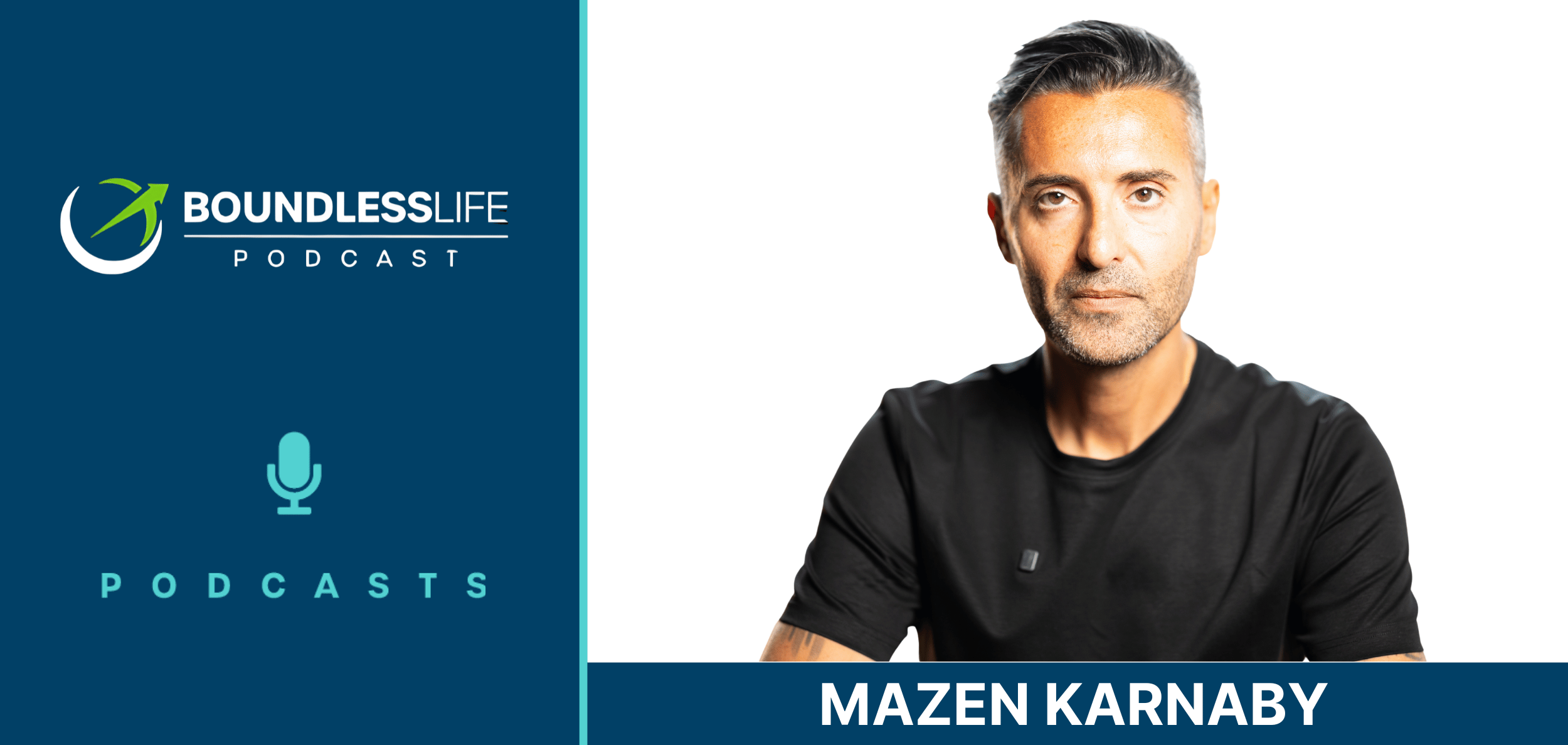
Home » Podcast » What Happens When A *Pharmacist* Decides To Start A *Supplements* Company (WARNING: Be Careful With Your Creatine Gummies!)

What Happens When A *Pharmacist* Decides To Start A *Supplements* Company (WARNING: Be Careful With Your Creatine Gummies!)

Listen on:

Reading time: 4 minutes

What I Discuss with Mazen Karnaby:

  • How he went from filling prescriptions behind the counter to co-owning Cedra Pharmacy and building Zenos Health (use code BENGRF for 10% off)…03:46
  • The melanoma diagnosis in 2023 that changed everything, and how watching a colleague experience losing her son in his 30s to the same disease convinced Mazen he needed to take his own health seriously…09:45
  • Why he chose supplements over other biohacking modalities, and how his pharmacology training shapes the way he looks at formulation…11:27
  • What the name Zenos means, and why Mazen built every formula around real outcomes rather than margins or label appeal…13:02
  • Why Zenos formulas hit four to five different biological pathways at once instead of relying on a single ingredient, using CellZen as an example…14:32
  • What licensed ingredients are, why they cost more, and a few well-known examples you have probably already seen on labels without realizing it…18:45
  • Why creatine gummies got a bad reputation, the conversion to creatinine problem when creatine reacts with water, and how Zenos uses CreaPure® and allulose sweetener to solve it…20:12
  • The recurring UTI problem Mazen heard about for 17 years working the pharmacy bench, and how UriZen‘s natural ingredients work together to support kidney and urinary tract health…25:44
  • How VZen works for the vaginal microbiome, and the gut-vagina axis most people have never heard of…32:02
  • The benefits of BeautyZen for skin, hair, and nails, and why he believes taking it orally can outperform topical treatments…35:58
  • How Mazen builds his own supplement stack from biomarkers and wearable data rather than trends, and what he asks himself before adding anything…40:02
  • The first Zenos Health Summit in Riyadh, why Zenos chose Saudi Arabia over an already saturated US market, and the new Zenos Alive festival, transforming an area of the city into a wellness oasis and Coachella-style music festival, built to prove that living healthy doesn't mean missing out on life…45:26

In this episode with Mazen Karnaby, founder of Zenos Health, you'll hear how a pharmacist who spent 17 years filling prescriptions behind the counter ended up building one of the most rigorously formulated supplement lines on the market. Mazen shares his full story, including a melanoma diagnosis that reframed his entire approach to health, and gets into the formulation details behind his most talked-about products, from the creatine gummies people really love to UriZen for kidney and urinary tract support, VZen for the vaginal microbiome, and BeautyZen for skin and hair. You will also hear about the Zenos Health Summit and Zenos Alive, a new wellness festival happening in Riyadh, Saudi Arabia in 2027.

Mazen Karnaby is a U.S.-trained pharmacist and the founder of Zenos Health. After a melanoma diagnosis several years ago, his focus shifted from reactive care toward prevention and long-term resilience. He co-owns Cedra Pharmacy locations across California, Texas, and New York, and built Zenos Health around science-backed formulations designed to take the guesswork out of supplementation.

You can use code BENGRF for 10% off at bengreenfieldlife.com/zenos.

Join Ben at Zenos Alive (April 8 to 10, 2027) and the Zenos Health Summit (April 12 to 14, 2027) in Riyadh, Saudi Arabia. Follow Zenos for event updates.

Episode Sponsors

Quantum Upgrade: Recent research has revealed that the Quantum Upgrade was able to increase ATP production by a jaw-dropping 20–25% in human cells. Unlock a 15-day free trial with the code BEN15 at quantumupgrade.io.

Fatty15: Fatty15 is on a mission to optimize your C15:0 levels and help you live healthier, longer. You can get an additional 15% off their 90-day subscription Starter Kit by going to fatty15.com/BEN and using code BEN at checkout.

Hiya: Give your kids the full-body nourishment they need to grow into healthy adults. I've secured a special deal with Hiya on their best-selling children's vitamin—get 50% off your first order today! To claim this deal, you must go to hiyahealth.com/BEN (it is not available on their regular website).

Anthros: You can train hard and still undo a lot of that progress by sitting for the next eight hours, which is why Anthros takes a different approach, starting with a Precision Posture System at the pelvis so your spine naturally aligns, plus a built-in Clinical Posture Consult that helps identify issues you may not even realize you have. Go to anthros.com and use code BEN for an exclusive $200 discount and try it risk-free for 60 days.

BON CHARGE: BON CHARGE is a holistic wellness brand with a wide range of products that naturally address the issues of modern life. Their products can help you sleep better, perform better, recover faster, balance hormones, reduce inflammation, and so much more. Go to boncharge.com/GREENFIELD and use coupon code GREENFIELD to save 15%.

Episode Resources

People

Products & Companies

Events

  • Zenos Alive: April 8 to 10, 2027
  • Zenos Health Summit: April 12 to 14, 2027

Upcoming Events:

Boundless Live with Ben Greenfield | Summer 2026

Join the world premiere of Boundless: The Man Who Became Human, a new feature documentary that follows 20 years of body optimization colliding with life's immeasurable moments—marriage, family, and faith. Experience a live podcast recording and intimate Q&A with my family and me in Los Angeles, New York, Austin, and Moscow, ID, one night in a room full of people chasing the same thing. Purchase tickets here. 

Health Optimisation Summit | September 11–13, 2026

I'm speaking at the Health Optimisation Summit in London (September 11–13, 2026) at the Business Design Centre. This isn't your average health conference. HOS unites the best minds in biohacking, longevity, nutrition, fitness, and medicine, with one goal: to actually make people healthier. With 35+ world-class speakers, 120+ cutting-edge brands, and 4,000 like-minded people all under one roof, it's two days that could genuinely change how you approach your health. Get your ticket here and use code BEN to save 10% off registration! 

Eudēmonia | November 5–8, 2026

I'm speaking at Eudēmonia (November 5–8, 2026, in West Palm Beach, FL), a prevention-focused, science-based health, well-being, and longevity summit designed to add years to your life and life to your years. Across 3 days and 15 venues, you'll experience 200+ talks from 120+ experts, 300 treatments, and 160+ brands covering everything from biohacking, longevity, and hormonal health to gut health, brain health, peptides, mobility, and more. I'll be leading a talk and a movement session alongside some of the brightest minds in health today. Use code BGREENFIELD-EUD-100 for $100 off when you register here!

The Boundless Couples Retreat | November 10–14, 2026

Ready to reconnect and recharge with your partner in paradise? Join the Greenfields at the stunning Prana Maya resort in Belize for the Boundless Couples Retreat, November 10–14, 2026. It's a five-day, all-inclusive escape designed to deepen your relationship, restore your vitality, and create memories that last a lifetime. From relaxation and adventure to intimate relationship coaching with Jessa and me, every detail is crafted to send you home with a stronger bond and a reinvigorated spirit. Spots are limited, so discover more and secure yours here today!

The Manzo x Ben Greenfield Table Private Dinner | Throughout 2026

If you want to taste one of the world's rarest cuts of beef and experience my North Idaho biohacking compound firsthand, my family and I are hosting The Manzo x Ben Greenfield Table, an intimate, chef-catered VIP dinner on a few limited 2026 dates. The evening includes biodynamic wine, a live cooking demo, a multi-course Piedmontese feast finer than Wagyu, and a night of deep sleep in an EMF-free, fully grounded, circadian-optimized guest room. Anyone who reserves a half or whole Piedmontese bull from Manzo qualifies for a spot, so reserve your allocation and dinner here.

Stay tuned for future updates—and you can always keep up with my LIVE appearances by checking out bengreenfieldlife.com/calendar!

Do you have questions, thoughts, or feedback for Mazen or me? Leave your comments below, and one of us will reply!

Ben Greenfield: My name is Ben Greenfield, and on this episode of The Boundless Life Podcast.

Mazen Karnaby: In 2023, I got diagnosed with melanoma. It kind of hit me hard, because I thought I was invincible. I was young, I was successful, and I thought that --

Ben Greenfield: My guest on today's show, I met in Las Vegas at a longevity conference for doctors, and I've learned a lot about him. He used to be a pharmacist, and then he had a health scare and shifted from reactive care towards prevention and long-term resilience, and made some pretty interesting products along the way. His name is Mazen Karnaby.

Mazen Karnaby: So I was like, you know what, I should make something that is really up to standard that makes my body work better. I didn't look at margins, I didn't look at how the label looked. I wanted real results, and that's how I started putting Zenos together. I like to do things that can make me fully understand my body, and that's what I do.

Ben Greenfield: BenGreenfieldLife.com/ZenosPodcast. That's the name of Mazen's company. Ben Greenfield Life dot com slash Z-E-N-O-S Podcast. Let's go talk to Mazen.

Welcome to The Boundless Life with me, your host, Ben Greenfield. I'm a personal trainer, exercise physiologist, and nutritionist, and I'm passionate about helping you discover unparalleled levels of health, fitness, longevity, and beyond.

Ben Greenfield:I spent 20 years measuring and optimizing everything about my body -- deep performance metrics, cold stress, heat stress, sleep scores, blood panels, peptide protocols, testosterone, telomeres, VO2 max, you name it. And somewhere in the middle of building what looked like a perfect life, I almost lost the life that I was building it for.

Boundless: The Man Who Became Human is a brand new feature documentary that follows what happened when the optimization framework that I spent two decades constructing ran headlong into the things that metrics could never measure -- my marriage, my sons, my faith. The private archive footage in this documentary has never been seen publicly. Some of it I debated even including at all. It shows basically the worst of what happens when longevity becomes the ultimate goal, and how you and I can turn that around to become fulfilled by what's truly important in life.

Now, this is not just another biohacking film. It's an honest look at what it costs to chase the ceiling on human performance, told through real footage of one family -- my family -- finding that out. And I'm giving you the chance to join me for the brand new live premiere tour of this new film in a city near you. Here's what the night looks like: you watch the film with me and my family in a theater, and then you experience a live episode of the Boundless Life Podcast on stage with open Q&A -- real questions, no filters. My wife, Jessa, and my sons, River and Terran, will be there with us as well. VIP ticket holders get to join for an exclusive after party with upgraded food and drinks.

This Boundless Life Tour kicks off in LA on July 24th, Austin on August 20th, New York City on August 6th, Miami coming down the pipeline, London coming down the pipeline, more cities to be announced. Tickets are on sale now. Grab them before they're gone at BoundlessDoc.com. That's BoundlessDoc.com. And I hope to see you there.

Dude, I don't remember if you recall when we met, Mazen, but we were in Vegas --

Mazen Karnaby: At the forum. Yes.

Ben Greenfield: Yeah, at the forum, the American Academy of Anti-Aging Medicine -- that's a mouthful. And I went -- you had this sponsored after party or gathering or dinner or something like that, and you and I hadn't talked before. But you told me you came out of the pharmacy industry. Is that right?

Mazen Karnaby: Yes. So I'm a pharmacist by trade, and I own and operate pharmacies throughout the country, so I was one of those guys that you come in with your prescriptions, and I'm able to fill your drugs all over. So I was on that pharmaceutical side of things.

Ben Greenfield: Did you get to wear the white coat and everything, or --

Mazen Karnaby: It's actually funny, because I was always a rebel. I never really liked to wear those things. I always thought it was -- like, it wasn't something that I would want to wear. And I actually have a funny story. I had an old lady customer that came to me when I first graduated. I finished school very young, so I was 21 years old, and this old lady comes in asking for the pharmacist to help her. So the tech came up and called me, and I got out from behind the counter and went up there and said, "How can I help you?" She looks at me, gives me that look, she's like, "I asked for the pharmacist." I'm like, "How can I help you?" She's like, "I want the pharmacist." So this woman, literally, for five minutes, is freaking out on me, doesn't believe that I'm a pharmacist. I had to go up to the wall, bring my pharmacy license with my driver's license for her to see it and believe that I was a pharmacist. I wasn't dressed like one.

Ben Greenfield: Were you like full Zuckerberg mode, like sandals and a hoodie, or --

Mazen Karnaby: No, no. I was all Gucci from top to bottom, with Saint Laurent shoes, bro. I was never the Zuckerberg type.

Ben Greenfield: Yeah, of course. Tell me more about the pharmacy, like how'd that get started.

Mazen Karnaby: Okay, so I went to pharmacy school because my dad doesn't come from money, so he had to build himself up. He could not get educated, but in the back of his mind he always wanted us -- me and my brother -- to get educated. He wanted us to be doctors, so I don't know if I wanted to be a doctor, but to appease him, I kind of enrolled in pharmacy school so that could be my pre-med instead of going into biology or some other major that I couldn't use. So I went into pharmacy school in order to become a doctor later on, but then once I saw blood and started dissecting pigs, and the formaldehyde -- I could not eat for days after. I said, this is not for me. So I stopped at pharmacy.

Ben Greenfield: By the way, just so you know, I TA'd anatomy and physiology for three years at University of Idaho, so I lived in formaldehyde and sheep hearts and human cadavers. You have to have a taste for that.

Mazen Karnaby: I could not eat. Literally my appetite would be shut down for days. I was like, I'm not built for this at all. Plus, I cut myself in the lab once and I saw my blood -- I actually fainted. I'm like, I can't be fainting in front of patients. So I was like, no, medicine is not for me. I wish, though. Right now I'm looking at it and I wish I had finished.

Ben Greenfield: Well, I mean, you're obviously doing other things now, which we'll eventually talk about. So, the pharmacy -- was this in the US?

Mazen Karnaby: Yes, in the US. I went to St. John's University in New York.

Ben Greenfield: And were you working for a pharmacy, or did you start your own?

Mazen Karnaby: So I interned at Duane Reade when I was in school. I had to do my internship, then did the hospital rotation, and then when I graduated, Duane Reade offered me a job as a pharmacist. So I worked for them for a year, and then I shifted to CVS. I did the graveyard shift -- 8pm to 8 in the morning, seven days on, seven days off, and they would pay you for two weeks. So I thought it was cool in the beginning because I had that whole week off, but none of my friends were off; they were all working. I got sick doing it, so my body could not recover from that lack of sleep.

But that opened the door for me to go and do some part-time work at independent stores. Working at chains, you never see the actual business side of the pharmacy. You're a robot -- you go in, you fill scripts, and you leave. But working at an independent, it gives you the numbers, it gives you the profits, you know how to order medication, you get to see the business side of pharmacy, and that's what made me fall in love with it. Then we took a gamble on a store on the Lower East Side, and we invested in it, and I left the chains.

Ben Greenfield: Who's "we"?

Mazen Karnaby: Me and my cousin. And my brother. It was me, my cousin, and my brother -- we ventured on one store, and from there that was the beginning, and we never looked back.

Ben Greenfield: So you started on the Lower East Side -- was that Manhattan?

Mazen Karnaby: Yeah, on the Lower East Side on Grand Street in Clinton.

Ben Greenfield: Did that series of locations have a name?

Mazen Karnaby: The pharmacies? Well, it started as Karnaby Drugs, but now my baby is Cedra Pharmacy. Cedra is located in California, in Texas, in New York. Those are my babies.

Ben Greenfield: Okay, so somebody drives by Cedra Pharmacy -- that's you and your brother?

Mazen Karnaby: Yes.

Ben Greenfield: But obviously -- I know this because we had a conversation in Vegas, and I kind of saw what you've been rolling out over the past couple years. You took a shift at some point.

Mazen Karnaby: In 2023, I got diagnosed with melanoma. So it kind of hit me hard, because I thought I was invincible. I was young, I was successful, I had a young family, and I thought that life is great. But then with this diagnosis -- that unexpected diagnosis -- plus I'm Middle Eastern, so it's very rare to get melanoma. It's like, not my type of skin, right?

Ben Greenfield: And just because you naturally present more melanin on the skin surface.

Mazen Karnaby: Yes. So it's easier for me to get tan. I never was afraid of the sun. I was raised in the sun, so it was never in the back of my mind that I would ever get melanoma. And so when I got diagnosed, and at the same time a woman that works with us had a son who is in his 30s that also got diagnosed with melanoma -- but his outcome was catastrophic. She ended up losing her son, and I kind of lived through that with her, the emotions and how she dealt with it. So in my mind I'm like, "Shit, this can kill me." So I needed to do something better -- for me, for myself, for my family. Like I said, I had a very young family, I have four children, and I don't want to die young. So it got me looking into how I can live a healthier life, how I can do better for myself, how I can find other ways of making my body work better, and that's what got me looking into this whole longevity and wellness field, and I fell in love with it.

Ben Greenfield: Now, you obviously have a lot at your disposal when you're looking into the longevity and wellness field. I mean, there's biohacking, red light, hyperbaric, peptides, all the things. What attracted you to the idea of supplements?

Mazen Karnaby: Because I felt like it's a more natural way to optimize your body. And looking around on the market -- like I said, in 2023 when I started looking to see what's available and how I could make myself live a healthier lifestyle -- all I saw were labels and formulations that don't have the right dosages. So I was like, you know what, I should make something that is really up to standard that makes my body work better and takes away the guessing game for me. That's how I started. I never started it to be a business; I started it just for me to improve myself.

Ben Greenfield: Do you think, though, that as a pharmacist you look through the lens of supplementation differently, as far as formulations and things like that?

Mazen Karnaby: I have a better understanding of pharmacology and how the body reacts to things. Yes. Because I went through six years of schooling for that, so it kind of prepared me to fully understand -- better than the average consumer -- how the body reacts to it.

Ben Greenfield: So with Zenos -- am I pronouncing that right, Zenos?

Mazen Karnaby: Zenos, actually. It makes me zen, so the whole thing is: what makes me zen.

Ben Greenfield: Yeah, okay, got it. What led you to actually starting it? Did you just go out, start sourcing stuff, and slap a label on it? Did you have certain formulations in mind, or how did you actually put it together?

Mazen Karnaby: I did a lot of research. I was looking into different formulations and different products and how they can make the body feel better and work better, and what I saw out there was that people looked at margins, they looked at how the label looks, before they looked at outcomes. So I wanted to do something completely different. Because if I'm making a supplement, I'm making it because I want to personally take it. I want my family members to take it. So I didn't look at margins, I didn't look at how the label looked -- I wanted real results. And that's how I started putting Zenos together: from the ingredients we picked, from the dosages we put in them, I wanted everything to be at an optimal dosage in the most efficacious way possible. That's how I formulated Zenos.

Ben Greenfield: When you're putting together a multi-ingredient formula, do you select a whole host of ingredients that you know go after a specific function? You guys have BrainZen and MuscleZen and MoodZen -- all these different zen-based products. Are you reverse-engineering it somehow, or how do you actually think about formulation?

Mazen Karnaby: What we saw was that you need about 1,000 milligrams a day of a certain compound, so we made sure that when we designed that product we have that 1,000-milligram daily dose, and that approach follows with every single aspect of our formulation. For example, what would make the body support mitochondrial function or cellular rejuvenation? We looked at all the different ingredients on the market and identified whatever can hit that mechanism across four to five different pathways, and that's how we chose our ingredients and formulated everything together. So it's not just one pathway that we're activating -- we're trying to attack it from four to five different pathways, when it comes to the brain, cell health, gut health, all that stuff.

Ben Greenfield: Okay, that makes sense. Yeah, I was talking with a NAD product formulator recently, and they were saying, well, you know, we target enzyme degradation, we target the precursors, we target some of the cofactors like sirtuins. And I think a lot of people don't realize that in the supplement industry there are multiple pathways when you're trying to achieve something like cellular health, mitochondrial health, gut health, or brain stimulation. So when you look at the label of a supplement, a lot of times that's why you might see five, eight, or ten different ingredients -- they're not just random ingredients thrown together. In the case of the brain, for example, you might be targeting memory, cognition, executive function, word recall, BDNF -- and each ingredient is hitting as many of those aspects as possible, right.

Mazen Karnaby: There's one issue I'm seeing in the market with our formulations, and that's that not everyone is fully educated about supplements. The first thing they look at is price, and they'll be like, "Why is your product so expensive?" They're expensive because the way we formulated them, you're getting the right dosage, and you're getting a stack of eight to eleven different licensed ingredients in each one of those stacks, formulated in a way that they'll synergistically work together to give you the best possible outcome for your body. And if you wanted to break down the cost individually -- if you wanted to break the stack and buy each ingredient separately -- you'd end up realizing that with us you're saving money. That's the message we're trying to put across: we took the guessing game out of your personal stack. You don't need to guess what you need to take. And we also took price point into consideration, because we want to make it accessible to people who really want the best outcomes from supplementation without spending a fortune buying everything individually.

Ben Greenfield: You used the term "licensed ingredient" earlier. For people not familiar with that, what does it mean?

Mazen Karnaby: For example, you can have the same ingredient in two different bottles that actually do different things in the body, because they use different salts or different forms of the actual ingredient. What we did with licensed ingredients is we went with companies that are making and sourcing these ingredients and have undergone long studies on their product -- on the purity, on the actual pharmacological results you get from taking them. These are all studied and backed by published research. That's why these ingredients are a little bit more expensive to use, but at least you're getting the purest form of those ingredients, and that's what we chose to put in Zenos Health supplements.

Ben Greenfield: So what you mean is: when someone looks at the label of a supplement and they see, like, KSM-66 as a form of ashwagandha, or Cognizin as a form of -- I think -- choline, if I recall correctly, or Creapure as a form of creatine -- those are examples of licensed ingredients.

Mazen Karnaby: Licensed ingredients, correct. Yes, 100%.

Ben Greenfield: So, speaking of Creapure, let's talk about that, because I think I told you I'm basically addicted to your creatine gummies --

Mazen Karnaby: Which flavor? Blueberry?

Ben Greenfield: Is amazing. Four in my smoothie every morning. I should have looked at this before the podcast -- the gram dosage per gummy is how much?

Mazen Karnaby: It's 1.25 grams.

Ben Greenfield: Yeah, so I'm getting around five grams of creatine in my smoothie, and then I may or may not munch on a handful throughout the day. But creatine gummies -- I don't know if you saw some of the reports over the past couple of years -- they've kind of gotten a bad rap lately due to multiple reports on them not having adequate amounts of creatine, or at least not what they say on the label. The creatine can be unstable and get converted into creatinine over the course of exposure to water and the gelatinizing process. Purity is an issue, and not using pure forms of creatine. So unpack the creatine gummies for me -- what's different about them, or what do you look at when doing a gummy product like that.

Mazen Karnaby: Okay, well, I'm glad you brought that up, because that's a major, major issue now in the market. Most creatine gummies on the market now are kind of like candy -- dyed and glossed up to make them look like they're saving your body, but meanwhile there's a lot wrong with them. Because most creatine powder on the market now comes from China, so it's not pure. And when it reacts with water, like I said, the issue becomes creatinine, and that's very bad for you because it can affect your kidneys and other things.

Ben Greenfield: Also -- I'll just throw a fun fact in there, not to derail you -- but if you make a creatine smoothie, or mix creatine with water, you should not wait to drink it. The longer you wait, the more the water converts the creatine into creatinine, which isn't necessarily harmful per se. If people get a kidney test and it shows high creatinine when they're taking creatine, that's why it's high -- it's not harmful in that context. If creatinine is elevated and it's not because you're taking creatine, that could indicate kidney issues. But the issue isn't that creatinine is harmful per se; it's that it's basically a waste of money, because you're not getting your creatine --

Mazen Karnaby: Into your muscles. Yeah, exactly. So to eliminate that issue, we use Creapure, which is the purest form of creatine monohydrate on the market in terms of purity and actual ingredient quality. It's the most studied form of creatine available, so we decided to go with that because, like I said, when we pick ingredients at Zenos, we want everything to be in its purest form at the right dosages. And when it comes to the formulation of the gummies, we went with a very solid manufacturer here in Miami -- NV Labs -- where they follow strict guidelines and protocols to eliminate water retention inside the gummies and control the level of creatinine in them. So I'm very proud of the formulation that came out. And we don't use any sugars -- all four gummies give you 20 calories, so you're really getting the full dose at a very minimal caloric and sugar intake.

Ben Greenfield: Yeah, but they do have a little bit of sweetness. What are you using for the sweetening?

Mazen Karnaby: Allulose.

Ben Greenfield: Okay, yeah. Allulose -- I consider that to be kind of like a negative-glycemic-index sweetener. It's a little bit more expensive as a raw ingredient, but it seems to stabilize insulin sensitivity, and still provide sweetness, which is kind of paradoxical. You see stevia, you see monk fruit, you see allulose. The other thing I like about it is it doesn't produce a lot of the bloating and gas that you get from the sugar alcohols -- the "ols," like erythritol, mannitol, et cetera.

Mazen Karnaby: Yeah. I like allulose because it's the healthiest form of sweetener you can put in your body right now without getting any of the bad side effects from the other stuff.

Ben Greenfield: Yeah, and the Creapure issue -- I mean, I know this because, full disclosure, I have a supplements company and we have a creatine powder, and there was a shortage for a long time of the Creapure powder from Germany. A ton of companies in the supplement space shifted to lower-quality versions of creatine, and that led to a lot of the reports in the news about tainted creatine products on the market. So with creatine gummies, you look at stability, you look at conversion to creatinine, you look at manufacturing processes, and you look at the form of creatine being used -- Creapure. So yeah, you guys nailed it. I mean, the blueberry and the mango are both pretty good, but the blueberry holds a special place in my heart now.

Mazen Karnaby: I like the blueberry. I love it. Some people say they like the mango, but for me, blueberry is my personal favorite.

Ben Greenfield: Yeah. And you know, you look at supplement companies and it's pretty easy to find stuff that supports the brain, supports the muscle, supports longevity. I like your guys' formulas in many of these areas, but then there's some stuff that people don't talk about as much. Kidney health -- I briefly brought that up when we were talking about creatine, but you have this product called UriZen.

Mazen Karnaby: UriZen, yes.

Ben Greenfield: Yeah, kidney support and also urinary tract health kind of fly under the radar. So unpack that one for me in a little more detail.

Mazen Karnaby: I'll go back a little bit. Working as a pharmacist, I always saw women who used to come in complaining that they always catch UTIs -- especially if they're sexually active -- and every time they have sex, they have to take 50 milligrams of Macrobid or Macrodantin, which is an antibiotic, and it causes a lot of side effects. And I worked the bench for 17 years, man -- I've seen it all, I've heard it all.

Ben Greenfield: You call working at the pharmacy "working the bench."

Mazen Karnaby: Yeah, I worked the actual bench for 17 years, and I worked six days a week in the middle of the city on the Upper East Side, and you have the wealthiest of women coming in with attitudes -- forget it, it was a different world. So I always used to hear about this, and I wanted to create something that would actually be a replacement for taking the Macrobid or Macrodantin. Because a lot of women suffer from that, and I feel that kidney health is one of the most important things in your body, especially if we want to get rid of all the toxins, right? We have the liver and we have the kidneys, so we definitely need to make sure that both of these organs are properly working to flush everything out. That's why the idea of UriZen came out. And usually people ignore kidney issues until it's too late -- no one really takes care of the kidneys unless it's already really late. So I wanted to create something to help with that. UriZen is more for urinary tract support and kidney support, and we built it in a way where it's not an irritant and it's not something you need to take only short-term. This is something so natural that you can take every single day to help support your urinary tract functions -- from eliminating the adhesion of bacteria to the urinary walls, to flushing it out, to making sure that the kidneys are getting all the nutrients they need to function well. For us, the idea of a healthy kidney correlates directly with a healthy body, because if you can't flush out the toxins, you can never make your body work in an optimal way.

Ben Greenfield: Okay, so basically the kidneys -- and we're talking about filtering like 200 quarts of blood daily, waste, excess fluids. It's why a lot of people will avoid eating liver, because they think it's the filter of the body. You should actually be more careful with the kidneys. The liver is just detoxifying. And then -- I do like liver --

Mazen Karnaby: You like liver? I can't.

Ben Greenfield: Come to my house sometime. I will make you incredible liver steak. I'll do an eight-hour sous vide. It's super tender, melts in your mouth. Soak it in kefir for a day before. Oh my gosh, you're making me hungry. I can make good liver. Anyway, though -- so the kidneys are important. You've got alpha-lipoic acid and astragalus in there. Is that just to protect kidney tissue from oxidative damage, or --

Mazen Karnaby: No, it's to get the microcirculation levels really up, and then also nutrient uptake as well. That's why you put those in there -- so you get more blood supply to the kidneys, you get that microcirculation really going, and you always keep a fresh supply of blood, oxygen, and nutrients coming into the kidneys.

Ben Greenfield: Okay. What about the Achyranthes aspera? What does that one do?

Mazen Karnaby: I think that's the natural stone breaker, kind of.

Ben Greenfield: So like the mineral deposits that would lead to kidney stones. That was my understanding too -- it kind of helps the body manage mineral depositions specifically.

Mazen Karnaby: So we prevent stones from forming in a natural way.

Ben Greenfield: Now, dandelion root -- it's kind of funny. I used to take that pre-show as a bodybuilder as a pretty potent diuretic to get a lot of fluids out of the body so that you vascularity against your skin, and so that you can make weight. I think some wrestlers use dandelion root sometimes for that as well. Why do you have it in this product?

Mazen Karnaby: It also kind of helps the kidneys work in a much better way to eliminate all the toxins. So the whole thing is kind of supercharging the kidneys to work at a very optimal pace.

Ben Greenfield: Okay, and then cranberry -- my wife, I actually gave her UriZen because she gets UTIs. I mean, she probably loves me sharing this publicly, but maybe like once every three months she'll get a UTI, and I hate it, because I don't like to see her suffering, and I also like to have sex with her, and she doesn't like to do that when she has a UTI. But she used to take just cranberry extract. Do you guys have that in this one?

Mazen Karnaby: Yes, yes, it has a cranberry extract in it. It's one of those licensed ingredients we have in it as well.

Ben Greenfield: Okay. And that acts like an antibacterial agent in the urinary tract?

Mazen Karnaby: Yes, yeah. It kind of flushes out all the toxins and bacteria. It kills the bacteria because it creates such an acidic level in the urine, so it kind of flushes and kills the bacteria.

Ben Greenfield: Okay, and you're saying you don't have to wait until you have a UTI to use something like this -- you could use it for daily kidney support.

Mazen Karnaby: Yes, exactly. And also with VZen, which works on the vaginal microbiome as well. So we kind of formulated those two together. I was lucky enough to have met Dr. LaBier -- he's a world-class gynecologist that deals a lot with women's health -- and with his help we were able to formulate these two together: VZen and UriZen. The whole idea is to create this environment where -- like you said, you like to have sex with your wife -- there are so many women who suffer from this. So we kind of create a situation where you take it every single day, and you can live your life, have a healthy sex life, without having any issues, without having to resort to taking antibiotics.

Ben Greenfield: From a vaginal health standpoint, I've seen the vaginal inserts -- like probiotics that are specifically for the vagina -- but yours is an oral product.

Mazen Karnaby: It is an oral product. Yes.

Ben Greenfield: How does it work exactly?

Mazen Karnaby: It's built around targeted Lactobacillus strains that matter for vaginal flora balance -- that's basically the whole idea behind it. Plus, it gives gut and immune support, and it also has a cranberry component. So it also protects against urinary issues and gives you the support where you need it. And you've heard about the gut-brain axis, right? But people forget --

Ben Greenfield: Absolutely, yeah.

Mazen Karnaby: People forget the gut-vagina axis as well -- it's very connected. So our approach is that we want to create an environment where natural and good bacteria grow and overcome the growth of bad bacteria in the vaginal area.

Ben Greenfield: Okay, so you can actually influence the vaginal microbiome via supplementation with oral probiotic strategies.

Mazen Karnaby: Yes, you can. And that's the whole idea behind VZen.

Ben Greenfield: I don't know if you know the answer to this question, but do you know what a woman would notice if she started using a product like that?

Mazen Karnaby: Well -- I don't want to say the lack of UTIs, but maybe fewer UTIs. Say someone gets five UTIs a month from sex. When they start realizing that they haven't changed anything except taking VZen and UriZen, and their UTI frequency drops to maybe two a month, or one a month -- that's one thing. They don't get the discharge anymore, they don't have the smell anymore. Some women discharge a lot, some have an odor. This helps with all of that. And they'll also sense that they don't have the itchiness, they don't have the dryness. That's what they'll start noticing.

Ben Greenfield: So it'll affect not just the potential for urinary tract infections by balancing the microbiome, but you're saying it could improve things like lubrication, fluid production, and also just the overall odor, for lack of a better word.

Mazen Karnaby: That's right.

Ben Greenfield: Okay, cool. I gave that one to my wife when it arrived because I didn't feel a strong urge to take VZen myself. And you know what, I haven't followed up with her on VZen yet. I need to go check our pantry and see if she started using it.

Mazen Karnaby: Ask her what she feels about it. Would love to know the feedback.

Ben Greenfield: And then I noticed you have this system you call the Inner Balance System, and it's UriZen and VZen --

Mazen Karnaby: And then you have BeautyZen.

Ben Greenfield: Yeah, BeautyZen -- again, kind of similar to the idea of oral supplementation affecting the vagina -- that might be a new concept for a lot of people, oral supplementation for things like hair and skin. I don't know what else you're focusing on with BeautyZen, but walk me through it and how it works.

Mazen Karnaby: Okay, so BeautyZen is basically the skin side of the Inner Balance. It's what ties together what's happening on the inside with what shows on the outside, right? Because a lot of people might feel good inside, but when they look in the mirror and they don't like what they see, it kind of messes everything up. So we wanted to focus on the outside as well to tie everything together. BeautyZen is not a generic hair-and-skin biotin bomb. It's built to support skin elasticity, collagen integrity, and hair density from the inside out, using bioavailable keratin, biotin, Sebatin, saw palmetto, and a stack of clinically backed actives that hit the inflammatory DHT hormone. So the idea is less breakage, stronger hair, fuller and more elastic skin. That's the whole idea behind BeautyZen.

Ben Greenfield: Okay. Keratin -- some people might recognize that from high school biology. It's kind of the structural protein that makes up hair, skin, and nails. You said "bioavailable keratin." As you can imagine, if you were to munch on a strand of hair, you're not going to digest that well. Do you know how you actually make keratin bioavailable?

Mazen Karnaby: It's one of those licensed ingredients we sourced. There's a company -- I think it's called Keratin Glow. They developed the science behind it and have the data to back it up. We thought it was a great ingredient to include based on the data they showed us.

Ben Greenfield: Okay, got it. And then -- believe it or not, I know a little bit about this. If you were to go to a cosmetic or beauty clinic --

Mazen Karnaby: You're a good-looking guy, you take care of yourself.

Ben Greenfield: I've seen the slimy masks that have hyaluronic acid in them that you apply transdermally, but you're actually taking it orally.

Mazen Karnaby: Yeah, we feel that if you take it orally with the right ingredients, it can actually work better than just applying it to the skin. You're supplying your body from the inside out with the right ingredients -- not just waiting for them to get absorbed through the skin.

Ben Greenfield: I mean, you have a whole host of other products. We haven't even scratched the surface on your full suite. But you're also doing some other interesting things in the IRL -- the in-real-life -- space. And I know that you yourself, as we were talking about down in Vegas, are very interested in self-quantification. How do you know what you're supposed to take and when? Where does self-quantification fit into the "what supplements do I take" question?

Mazen Karnaby: Okay, well, I don't build my supplement stack based on whatever is trending. I always look at what my body needs -- I look at my biomarkers, my blood work, my wearables -- and that's how I build my own stack. Right now I'm on CellZen, then I take BrainZen, then I take BurnZen to help me regulate my blood sugar, which is one of my favorite products in our suite. And everything I do is built on data I get off my body. I don't just guess. I took away the whole guessing game. Before I add anything to my stack, I ask myself: do I have a baseline that says I need this? If I do, I take it. If not, I don't. And I really encourage people to do the same. You should not be falling into trends. You should really fully understand your body, look at what it needs, and supplement accordingly.

Ben Greenfield: Get into a little more detail for me. What kind of data do you like to look at?

Mazen Karnaby: First, I look at my cortisol levels, my vitamin D levels, my testosterone, my cholesterol, my lipid panels, my complete blood work, everything. I look at -- what's that one for the heart thing? I swear I'm getting too old.

Ben Greenfield: Oh, do you mean like an imaging test, like a CT angiography?

Mazen Karnaby: Yeah, I did that. I also did a calcium score -- a coronary calcium scan. And every six months I try to do a full MRI as well. I want to understand my body, especially now since I was diagnosed with melanoma and there's a 20% chance of getting it back. So I like to be ahead of the curve. I like to do things that can make me fully understand my body, and that's what I do.

Ben Greenfield: Yeah, it's kind of funny. I talk with some people on the phone about their health, just personal optimization, and many ask me, "What blood tests should I get?" And especially for clients I'm working with, I'm like, "Well, blood kind of scratches the surface." I mean, for me to get an ideal picture, Mazen, let's say I'm helping somebody design a diet or optimize a supplement protocol. I'm looking at the basic blood panel, right -- some of the stuff you mentioned, like the complete blood count, the lipids, comprehensive metabolic profile, vitamin D, minerals, et cetera. And then now you can get a micronutrient test that looks at fatty acids, amino acids, fungal markers, metals. Usually that test is called something like NutrEval or a metabolomics test. And then you branch out beyond blood. What I like to see is a urinary hormones test, which shows upstream and downstream metabolites of hormones -- called a DUTCH test. A gut panel; there's one called the GI Effects, it's like a three-day stool panel, so you can look at parasites and yeast and fungus and bacteria. A salivary panel for genetics. And then if somebody has food sensitivity issues, I'll usually recommend they get some kind of food sensitivity or food allergy test. And that's baseline -- and it's a lot. But what's interesting is you can order a lot of these tests directly to your home, like --

Mazen Karnaby: At home, yeah. You can do all that at home.

Ben Greenfield: Or, I mean, some of them you've got to drive to a LabCorp or a Quest, but the genetic test, the stool test, the micronutrient test, the food allergy test, and the urine test for hormones -- you can do all of that at home.

Mazen Karnaby: Yeah. I just recently did my stool at home, my urine at home, my blood work at home. And by the way, at Zenos we also partner with Generation Lab, so we have our own biomarker testing -- going across 470 biomarkers across 21 organs. Now they've added two more organs as well, I think skin and some other things.

Ben Greenfield: Is that a blood panel?

Mazen Karnaby: Blood, yeah. So it's a Tasso device -- it's the thing that you put on at home and just take your blood from your arm, ship it in the mail, and within about two weeks you get full results.

Ben Greenfield: That's actually an impressive amount of markers for a Tasso device. For people not familiar with that term, you literally just slap it on your arm and it draws blood into a tube -- no finger pricking or squeezing your finger until you feel like it's going to fall off. Then you just take it off and mail it in. It's pretty cool technology.

The other thing I know that you're working on, and I haven't been to it but I've heard good things about it, is an actual summit or festival -- some kind of boots-on-the-ground experience.

Mazen Karnaby: Yes. When I started Zenos -- like I said, I started from a personal thing, I wanted to feel better and live a healthier lifestyle. And when I started accumulating all this knowledge, I wanted to share it with the world, and for me the right way to do that is through education. We're going to put up our education piece, but I wanted the message to reach across, so we decided to do our first summit, and we landed in Riyadh, in Saudi Arabia, last October 2025. So at first everyone thought I was nuts. Why do you want to do a summit? I was like, listen, I want my message to reach everywhere so that everyone can get access to this. I feel like it's a God-given right for every human being to get the information they need to live a healthier lifestyle. So we chose Riyadh as the nucleus because we felt the US is very saturated, and since I'm Lebanese, I wanted to be in that part of the world. And so we landed in Riyadh -- it was a major success. We were supposed to do our second one this coming October, but we all know the situation that is going on in the Middle East, so we pushed it until next April. And this year we wanted to do something way bigger, and that's where the idea of Zenos Alive Festival came out. Basically, what I'm doing is taking a large area in the middle of Riyadh and building our own fitness and wellness city -- seven districts, from a mind district to a wellness oasis to a sports oasis. We're building a complete world, and at night it turns into a Coachella-type music festival. That's the whole idea behind Zenos Alive: we want to showcase to the world that living this lifestyle can be cool, that you don't need to be a hermit who goes to sleep at 5pm and misses out on life. There are other ways to live a very good, happy, and healthy life, and that's what we wanted to do with the festival.

Ben Greenfield: Sounds like a blast. I've actually never been to Riyadh. Is that where people fly into? They fly into Riyadh?

Mazen Karnaby: Yeah, they fly into Riyadh. Yes. There are direct flights -- there are direct flights from New York, and I think Atlanta, but most flights will probably have one stopover somewhere in Europe or in the Middle East.

Ben Greenfield: Right, a stop through Dubai, or Qatar, somewhere like that. Well, it sounds super cool. How many days?

Mazen Karnaby: So it's three days for the festival, and then we have three days for the summit. So the summit is exactly what we did last year -- full academic programming during the day, and at night we have really nice social dinner experiences. That's three days, and then the festival is three days as well. During the day it's a fitness and wellness city that at night turns into a concert city.

Ben Greenfield: And which happens first, the summit or the festival?

Mazen Karnaby: The festival first, and then the summit.

Ben Greenfield: Cool. So you can show up, you can party, listen to great music, dance -- and then another three days of learning and talks, more of a conference-type format after that.

Mazen Karnaby: Yes. And we're very happy and honored to have you there, Ben. So looking forward to hosting you and showing you around.

Ben Greenfield: Yeah, I know we talked about it a little bit in Vegas a few months ago. I'm excited I'm going to be there, which is great. So if you're listening to the podcast, I'll include links to the Zenos Health Summit and Zenos Alive. April 8th to the 14th --

Mazen Karnaby: Yes, April 8th to the 14th. That's right, Ben.

Ben Greenfield: BenGreenfieldLife.com/ZenosPodcast -- Zed, for you folks across the pond -- Z-E-N-O-S Podcast is where the show notes are. I'll link to everything we talked about, including the delicious creatine gummies. And mark your calendar: April 8th through 14th. I would love to see some of my podcast listeners there and hang out in what, for me, is a new part of the world. Amazing. This is all fascinating. It's interesting to see things through the lens of a pharmacist turned formulator, and I'm really looking forward to seeing more of what you're doing -- and also seeing you in Saudi.

Mazen Karnaby: Thank you very much, Ben. Honestly, for this opportunity -- and like you said, I didn't really get to meet you before, but I'm happy that we met in Vegas, and I'm happy that we are developing a good friendship. I can't wait to have you in Saudi to hang out more and do great things together. So thank you very much for the opportunity.

Ben Greenfield: Have an incredible week, everybody. Thanks for listening.

Mazen Karnaby: Thank you.

Ben Greenfield: To discover even more tips, tricks, hacks, and content to become the most complete, boundless version of you, visit BenGreenfieldLife.com. In compliance with FTC guidelines, please assume the following about links and posts on this site: most of the links going to products are often affiliate links, of which I receive a small commission from sales of certain items, but the price is the same for you, and sometimes I even get to share a unique and somewhat significant discount with you. In some cases, I might also be an investor in a company I mention. I'm the founder, for example, of Kion LLC, the makers of Kion branded supplements and products, which I talk about quite a bit. Regardless of the relationship, if I post or talk about an affiliate link to a product, it is indeed something I personally use, support, and with full authenticity and transparency recommend in good conscience. I personally vet each and every product that I talk about. My first priority is providing valuable information and resources to you that help you positively optimize your mind, body, and spirit. And I'll only ever link to products or resources, affiliate or otherwise, that fit within this purpose. So, there's your fancy legal disclaimer.

Ben Greenfield

Ben Greenfield is a health consultant, speaker, and New York Times bestselling author of a wide variety of books.

What's Blocking You From Living Boundless?

Thoughts on What Happens When A *Pharmacist* Decides To Start A *Supplements* Company (WARNING: Be Careful With Your Creatine Gummies!)

Leave a Reply

Your email address will not be published. Required fields are marked *

Related Podcasts

Boundless Life Podcast promotional graphic featuring a headshot of Tom Benson, a smiling older man in a dark blazer, against a light background with the podcast logo and microphone icon.

Is Mitochondrial Transplantation The Longevity Intervention Of The Future (OLD Mice Climbing Up Walls Like YOUNG Mice!) With Tom Benson of Mitrix

Listen on: Reading time: 3 minutes What I Discuss with Tom Benson: Why Tom decided to address damaged mitochondrial DNA...

Boundless Life Podcast promotional graphic featuring a headshot of Jimmy St. Louis, a smiling man in a dark blazer, against a light background with the podcast logo and microphone icon.

Could ONE Score Reveal How Fast You’re Aging? The Longevity Quotient & How a Former NFL Player Is Redefining The Standards of Longevity Medicine, With Jimmy St. Louis

Listen on: Reading time: 7 minutes What I Discuss with Jimmy St. Louis: Trying NAD and Niagen IVs separately at...

Brett Hurt WP

What Will The Coming “Age Of Abundance” Look Like? (AI, Solar Power, Computer-Brain Interfaces, Robots & More!) With Brett Hurt.

Listen on: Reading time: 5 minutes What I Discuss with Brett Hurt: How Brett met Ben at a wedding gym...