Home » Podcast » What Will The Coming “Age Of Abundance” Look Like? (AI, Solar Power, Computer-Brain Interfaces, Robots & More!) With Brett Hurt.

What Will The Coming “Age Of Abundance” Look Like? (AI, Solar Power, Computer-Brain Interfaces, Robots & More!) With Brett Hurt.

Listen on:

Reading time: 5 minutes

What I Discuss with Brett Hurt:

  • How Brett met Ben at a wedding gym session, why the X3 Bar is his travel-everywhere fitness tool, and how a 24-minute daily plank eliminated his lower back problems…09:58
  • How he went from 225 pounds of bodybuilder bulk to a leaner 186 at 54, what his biomarkers look like now compared to age 40, and why a daily morning hike with his wife has become his primary cardio…15:11
  • Brett's first steps into programming, and how Renegade Outpost became one of the most popular multiplayer games on the internet before he made a dollar from it…18:39
  • The ultimatums that launched Brett into college and entrepreneurship, and why Wharton is where it all clicked…23:00
  • Coremetrics, the dot-com bust, and how the company rebuilt to a $300 million acquisition by IBM…25:29
  • How Bazaarvoice became a billion-dollar-plus IPO named by the Wall Street Journal as one of the top five of 2012, and why Brett tried to retire at 40 and failed…28:12
  • Why AI made Brett more creative, and what recording Love Conquers Fear in a studio taught him about the difference between performing and speaking from the heart…33:36
  • Brett's spiritual life from childhood, spontaneous prayer in nature, the questioning culture of Judaism, and why he never needed to be told to talk to God…39:00
  • A psychedelic journey at 50 that let him relive his mother's unconditional love, see his wife as his soulmate, and feel a best friend's prayer reaching out to him…40:33
  • Why the Love Conquers Fear framework isn't new, and how Brett traced it across the Tao Te Ching, the Bhagavad Gita, the Bible, the Quran, and beyond…44:47
  • A 4:30 AM Uber ride with a driver from Chad, and why that conversation crystallized the whole Age of Abundance vision…56:45
  • Why solar costs are following the same exponential curve Brett has watched reshape tech, and how solar-powered robots could build the infrastructure a country like Chad needs…1:00:37
  • Brain-computer interfaces, Neuralink for blindness and quadriplegia, why Brett does not believe in Ray Kurzweil's brain upload thesis, and what he thinks consciousness actually is and is not…1:04:05
  • His science fiction novella covering 2030 to 2085, where brain-computer interfaces prove that spirituality and science are two sides of the same coin, and what ancient mystics already knew that we are only now beginning to prove…1:04:51
  • What Brett tells young people booing AI at graduation speeches, and why following your passion without prejudice is the only real preparation for an AI-driven world…1:07:22
  • Why technology is neither good nor evil, and what Brett means by “team humanity”…1:07:57
  • Abraham Lincoln on parenting, the Unknown: Cosmic Time Machine documentary, and why what you put into your mind is more sacred than anything you do for your body…1:11:02

In this episode with Brett Hurt, serial tech entrepreneur and author of the new book Love Conquers Fear, you'll hear how he went from coding obsessively at seven to building one of the early internet's most popular games, surviving the dot-com bust, orchestrating two major exits (data.world to ServiceNow and Bazaarvoice's billion-dollar IPO), and experiencing a psychedelic awakening at 50 that redirected his entire life.

You will also hear his vision for what an Age of Abundance looks like in practice, from solar energy and robotics to brain-computer interfaces and the role AI might play in solving problems like clean water, food security, and healthcare access in places like Chad, and why Brett believes the single most important variable in whether AI helps or hurts humanity is whether the people building it are operating from love or from fear.

Brett Hurt is a tech entrepreneur and investor. He co-founded and led data.world, acquired by ServiceNow in July 2025, and previously co-founded Bazaarvoice and Coremetrics, acquired by IBM. Through his Love Conquers Fear holding company and podcast, he explores how AI and emerging technologies can either amplify fear or help create broad-based human flourishing.

You can pick up a copy of Love Conquers Fear to discover how Brett crosses the streams of ancient wisdom and cutting-edge technology, rewiring humanity's relationship with AI, quantum computing, and emerging tech to move us from scarcity to abundance.

Episode Sponsors: 

ZBiotics Pre-Alcohol Probiotic: The world's first genetically engineered probiotic that helps break down the toxic byproduct of alcohol, Zbiotics Pre-Alcohol allows you to enjoy your night out and feel great the next day. Order with the confidence of a 100% money-back guarantee and 15% off your first order at zbiotics.com/BEN15.

JOYMODE: Want to spice things up in the bedroom, boost your sexual performance, and do it naturally without nasty prescription drugs? Visit tryjoymode.com/BEN or enter BEN at checkout for 20% off your first order of JOYMODE.

Quantum Upgrade: Recent research has revealed that the Quantum Upgrade was able to increase ATP production by a jaw-dropping 20–25% in human cells. Unlock a 15-day free trial with the code BEN15 at quantumupgrade.io.

Timeline: Give your cells new life with high-performance products powered by Mitopure, Timeline's powerful ingredient that unlocks a precise dose of the rare Urolithin A molecule and promotes healthy aging. Mitopure now starts at $79 when you go to timeline.com/BEN.

Episode Resources: 

People

Products & Companies

Books & Shows

Podcast Episodes


Upcoming Events:

Boundless Live Tour Presented by FormulaIQ | Summer 2026

Join the world premiere of Boundless: The Man Who Became Human, a new feature documentary that follows 20 years of body optimization colliding with life's immeasurable moments—marriage, family, and faith. Experience a live podcast recording and intimate Q&A with my family and me in Los Angeles, New York, Austin, and Moscow, ID, one night in a room full of people chasing the same thing. Purchase tickets here. 

Health Optimisation Summit | September 11–13, 2026

I'm speaking at the Health Optimisation Summit in London (September 11–13, 2026) at the Business Design Centre. This isn't your average health conference. HOS unites the best minds in biohacking, longevity, nutrition, fitness, and medicine, with one goal: to actually make people healthier. With 35+ world-class speakers, 120+ cutting-edge brands, and 4,000 like-minded people all under one roof, it's two days that could genuinely change how you approach your health. Get your ticket here and use code BEN to save 10% off registration! 

Eudēmonia | November 5–8, 2026

I'm speaking at Eudēmonia (November 5–8, 2026, in West Palm Beach, FL), a prevention-focused, science-based health, well-being, and longevity summit designed to add years to your life and life to your years. Across 3 days and 15 venues, you'll experience 200+ talks from 120+ experts, 300 treatments, and 160+ brands covering everything from biohacking, longevity, and hormonal health to gut health, brain health, peptides, mobility, and more. I'll be leading a talk and a movement session alongside some of the brightest minds in health today. Use code BGREENFIELD-EUD-100 for $100 off when you register here!

The Boundless Couples Retreat | November 10–14, 2026

Ready to reconnect and recharge with your partner in paradise? Join the Greenfields at the stunning Prana Maya resort in Belize for the Boundless Couples Retreat, November 10–14, 2026. It's a five-day, all-inclusive escape designed to deepen your relationship, restore your vitality, and create memories that last a lifetime. From relaxation and adventure to intimate relationship coaching with Jessa and me, every detail is crafted to send you home with a stronger bond and a reinvigorated spirit. Spots are limited, so discover more and secure yours here today!

The Manzo x Ben Greenfield Table Private Dinner | Throughout 2026

If you want to taste one of the world's rarest cuts of beef and experience my North Idaho biohacking compound firsthand, my family and I are hosting The Manzo x Ben Greenfield Table, an intimate, chef-catered VIP dinner on a few limited 2026 dates. The evening includes biodynamic wine, a live cooking demo, a multi-course Piedmontese feast finer than Wagyu, and a night of deep sleep in an EMF-free, fully grounded, circadian-optimized guest room. Anyone who reserves a half or whole Piedmontese bull from Manzo qualifies for a spot, so reserve your allocation and dinner here.

Stay tuned for future updates—and you can always keep up with my LIVE appearances by checking out bengreenfieldlife.com/calendar!

Do you have questions, thoughts, or feedback for Brett Hurt or me? Leave your comments below, and one of us will reply!
Ben Greenfield: My name is Ben Greenfield, and on this episode of The Boundless Life Podcast,

Brett Hurt: I really think that people should not be afraid of technology. People should be afraid of how people use technology. Technology itself is not good or evil. The way you use technology, like algorithms, are not

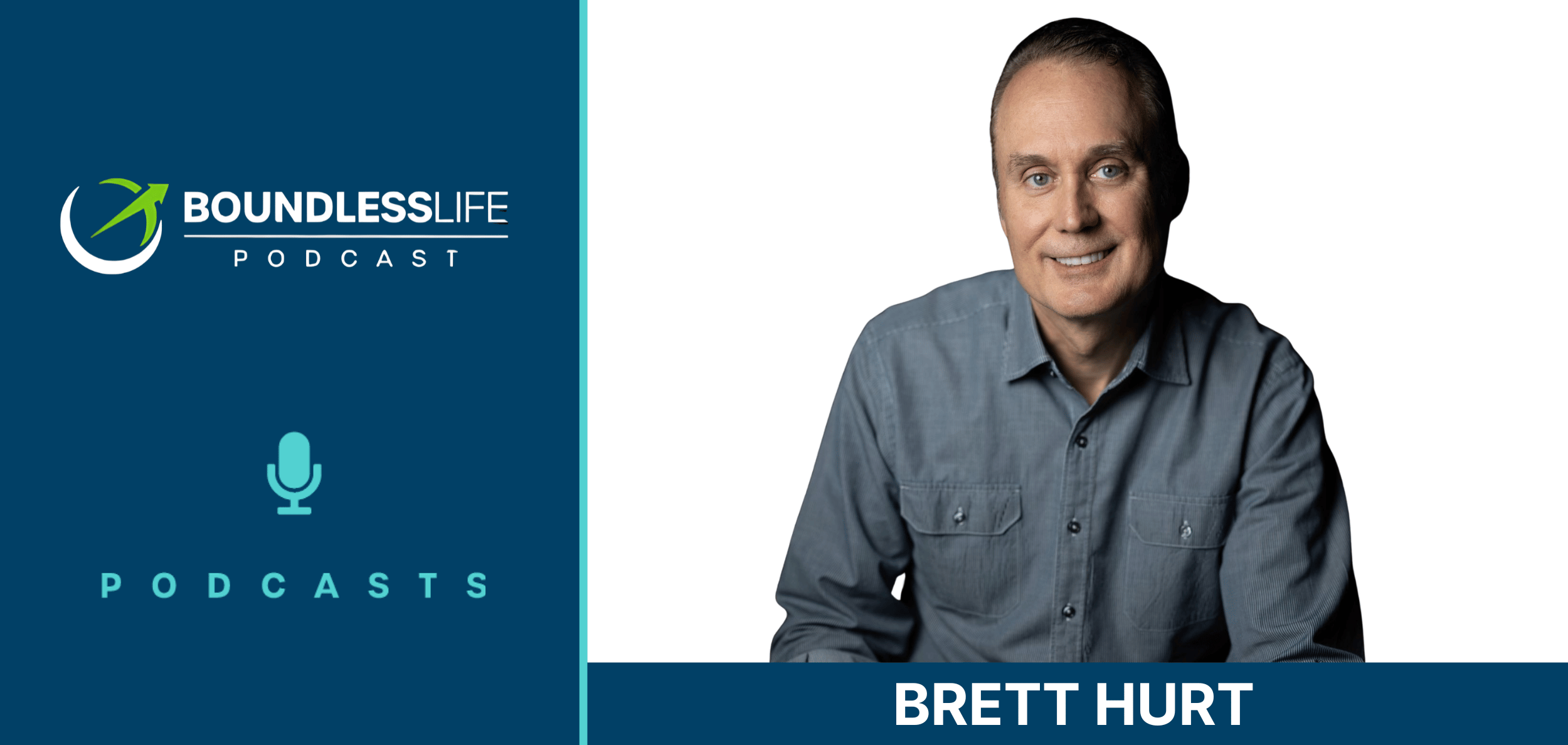
Ben Greenfield: my guest on this show is Brett Hurt. He's a serial tech entrepreneur, he's an investor, he's the author of a brand new book called Love Conquers Fear: Humanity, AI, and the Age of Abundance for All. You'll hear Brett's incredible backstory. He is a guy who delves into a lot of different categories, as you will find out, and he's just one fun dude who's also a very smart cookie.

Brett Hurt: Do we want to be a species that destroys ourselves with technology, or do we want to be a species that doesn't be afraid of technology, that is part of the light, using technology to create the world that, frankly, we should all want, which is a world led from the heart, not from the ego.

Ben Greenfield: So all the show notes are going to be at BenGreenfieldLife.com/BrettHurt, B-R-E-T-T-H-U-R-T, BenGreenfieldLife.com/BrettHurt. Let's go talk with Brett. Welcome to The Boundless Life with me, your host Ben Greenfield. I'm a personal trainer, exercise physiologist, and nutritionist, and I'm passionate about helping you discover unparalleled levels of health, fitness, longevity, and beyond.

Ben Greenfield: I spent 20 years measuring and optimizing everything about my body, deep performance metrics, cold stress, heat stress, sleep scores, blood panels, peptide protocols, testosterone, telomeres, VO two max, you name it, and somewhere in the middle of building what looked like perfect life. I almost lost the life that I was building it for. Boundless, the man who became human, is a brand new feature documentary that follows what happened when the optimization framework that I spent two decades constructing ran headlong into the things that metrics could never measure, my marriage, my sons, my faith. The private archive footage in this documentary has never been seen publicly. Some of it I debated, even including at all. It shows basically the worst of what happens when longevity becomes the ultimate goal, and how you and I can turn that around to become fulfilled by what's truly important in life. Now, this is not just another biohacking film, it's an honest look at what it costs to chase the ceiling on human performance, told through real footage of one family, my family finding that out, and I'm giving you the chance to join me for the brand new live premiere tour of this new film in a city near you. Here's what the night looks like: you watch the film with me and my family in a theater, and then you experience a live episode of the Boundless Life Podcast on stage with open Q and A, real questions, no filters. My wife, Jessa, and my sons, River and Taryn, will be there with us as well. VIP ticket holders get to join for an exclusive after party with upgraded food and drinks. This Boundless Life Tour kicks off in LA on july 24 Austin on august 20, New York City on august 6, Miami coming down the pipeline, London coming down the pipeline. More cities to be announced. Tickets are on sale now. Grab them now before they're gone at Boundless doc.com that's Boundless D O c.com and I hope to see you there.

Ben Greenfield:When I met you, Brett, you were, I don't know if you remember this. We were down south at our friend's wedding. Was it Lexington?

Brett Hurt: It was Lexington. It was Lincoln and Julie. Yeah.

Ben Greenfield: Yeah. So we were at Lincoln and Julie's wedding, and this was like the day before the wedding, and I showed up at the gym at the hotel with my wife, and you were at the gym with your wife. We might have been the only four people in the gym, actually a testament to our dedication. But I hadn't really hung out with you or met you, and I saw this guy in the corner doing like mobility exercises, and then like this whole routine with the X3 Bar. I've had the founder of that bar on my podcast. Is that like your routine everywhere you go?

Brett Hurt: It is. Yeah, I have a routine where I always have a bag with all the equipment in it. No matter where I'm at, anywhere in the world, it doesn't matter if they have a gym or not. I can work out either at their gym or in the room, but I bring that bag with me. It's the X3 Bar, it's a yoga mat, it's some pads for my elbows, because I do a very long plank. I built up to a 24-minute-a-day plank.

Ben Greenfield: Yeah, I saw that you were in the plank position for a long time.

Brett Hurt: And that's like the best exercise, I think, because it's a whole body exercise, especially great for a 54-year-old man, because you don't have any kind of lower back issues ever again if you do that. I was noticing in my early 40s I'd bend over sometimes and be like, ah, you know, and none of that ever happens now. It's great for everything, skiing, everything. It's good to have a strong core, and I do a lot of stretches too, but my strength training is the X3 Bar. It works incredibly well.

Ben Greenfield: And do you, when you're doing the X3 Bar, and by the way, for people who haven't seen this thing, it's like a series of elastic bands, a little bar, and the bands are surprisingly difficult to move against. And when I got one, it came with like a little placard with a full body workout, and you do like one single set to failure. Is that kind of what you do?

Brett Hurt: That's right. Yeah, and it's wonderful because you have a pull day and a push day, and you work out six days a week. Think about that. You're maxing out your pec, you're maxing out your tricep, you're maxing out your thighs for squats, you're maxing out your calves, etc., every other day, as opposed to like a huge workout where you're in the gym for an hour and a half or two hours and you're really stressing your tendons. So you're getting to hit your muscles more frequently and stay conditioned, and it just makes me feel great.

Ben Greenfield: Variable resistance, like the harder you press against the bands, obviously they're pressing back against you. And then when I interviewed John, who designed that thing, Dr. John Jaquish, he described how at the end of each set you kind of bounce a little bit to exhaust the slow-twitch muscles.

Brett Hurt: Yeah, you do. Like, let's say you're doing a bench press. Your tendons, when they're fully stretched out, are about half the width of your finger. This finger is like the width of a pec tendon at rest; fully stretched out, it's half that size, and you've got the heaviness of all the weight right there. With bands, it's more slack at the bottom and increasing tension as you extend, so you do full range to complete exhaustion, then half range to complete exhaustion without breaking, then just the tiny bounces until complete exhaustion. You do not want to do a bench press again until two days from there.

Ben Greenfield: Yeah. Do you do cardio at all?

Brett Hurt: I do, but I do it like you're doing it right now, you know. Deborah and I in our neighborhood do a nice long hike every morning for about an hour and hit the hills. I know that you do more short-burst things, because I saw you run in our neighborhood when you were over here.

Ben Greenfield: Yeah, you live in a very hilly neighborhood. We were doing hill sprints at one point, I think.

Brett Hurt: Yeah, so I could learn a thing or two from you, for sure. But you know, I'm also at a place where I feel good about my body. I feel very good about my cardio. My biomarkers are better at 54 by far than they were at 40, and I'm just building for longevity, not trying to become super muscular. I used to be, I'm 186 to 187 pounds right now. I used to be 225 and I was much more built. I looked like a bodybuilder type, and that's hard to sustain for my frame. I was having to eat like a horse, and all

Ben Greenfield: that stuff. Yeah, I was going to say it's hard to sustain on the gut too.

Brett Hurt: Yeah, and I just didn't feel as good as I feel now. My heart was pumping harder, etc. So it looked good, it was good for dating, it helped lead to me meeting my wife, but it wasn't a sustainable practice.

Ben Greenfield: Yeah, you've moved on from suns out, guns out mode. People who might be familiar with your name as a pretty well-known tech entrepreneur might wonder at what point you actually got into fitness, because there's, of course, that stereotype of the nerdy tech entrepreneur who gets sand kicked in their face at the beach, or whatever. So was fitness always an interest of yours, or did it kind of develop at some point along the way?

Brett Hurt: So it hit for me almost with the launch of puberty, because I had been programming since I was seven years old, obsessively, over 40 hours a week since age seven. Thanks to an amazing mom who learned how to program with me and just gave me unconditional love and support. And when I turned about 14, I was 140 pounds and really tall. I'm like six-three, but that looks really scrawny, and I wanted to start dating as I hit puberty, so I realized, hey, I need to transform my body, and I started to work out wholly obsessively, started eating like a horse. I went from 140 to 225 from age 14 to around age 20, where I hit 225. Everybody at UT Austin thought I played football, of course. I always told the truth that I was just a nerd, and I was inventing an internet game. It became one of the most popular games on the internet. It was called Renegade Outpost, and Renegade Outpost was amazing. There was a whole conference that people built around it. I didn't have any money, but they would get me to come

Ben Greenfield: speak. You were the original designer of Renegade Outpost?

Brett Hurt: Yeah, I built it. I had a team, people all over the world. There were programmers in Russia and Germany and stuff, but we all did it for free. It was all for fun, and we were all nerds, and it was amazing. People in real life got married that met on the game. Yeah, it was so cool. It actually became the foundation for World of Warcraft, believe it or not, which was a big breakout. I never made any money on it.

Ben Greenfield: I was going to say, you did it for fun, but with the popularity of the game, like it never really resulted in anything monetizable.

Brett Hurt: Yeah, I mean, I've made plenty of money, but I didn't make my money that way, and it was all just a labor of love, right? And it was never about capitalistic motives. I only decided that I needed to start making money with technology when my mom said to me, "Hey, if you want to sit around here and program, I'll completely support you like I always have, but if you're not going to get a job, then you can do it out there," and she pointed out the door. It was only when she gave me that ultimatum. I was like, all right. So then I became an entrepreneur capitalist, and I've started six companies over the past 30 years, and took a company public for over a billion-dollar outcome, and had all types of capitalistic success.

Ben Greenfield: Yeah, so from the time your mom threatened to kick you out of the house, and obviously you'd been programming since seven, did you go straight into entrepreneurship or did you go to college?

Brett Hurt: I did go to college. I did not want to go to college; that was another ultimatum. My mom said if you don't go to college, again, you're going to have to figure it out. So they did pay for my college, but it was UT Austin. There was no notion of a college tour. I grew up in Austin. When I was born in Austin in 1972 it was 260,000 people. It's 2.6 million now.

Ben Greenfield: You weren't one of the trendy imports.

Brett Hurt: My grandfather was one of the top mathematics professors at UT. He spent his whole career there, so I ended up going there. I did not want to go, but my mom gave me the ultimatum, and I'm glad I went. I got into the competitive nature of it, and eventually went to the Wharton School, which at the time was the number one business school and is still in the top three, and got my MBA there. It was at Wharton where I became an entrepreneur, so I became an entrepreneur at age 24. I'm 54 now, so I've done that for 30 years. And as you may know, Deborah and I are also investors in 151 startups, 12 of them are unicorns now, and we're also investors in 50 VC funds, including a crypto fund. We were one of the first investors in Realty Coin, which has been a really good investment.

Ben Greenfield: In terms of starting at around 24 years old in entrepreneurship, what was the first actual big successful company that you built and exited?

Brett Hurt: Well, the first one that had a nice exit was Coremetrics. I started it when I was 26. It was one of the first what are now called software-as-a-service companies. When I was raising money for it, I was describing to venture capitalists that it's like a mainframe and a dumb terminal, or a client and a server. My internet game was like that, right? People would telnet into my game and we could constantly upgrade the software. Coremetrics, literally translated, were the metrics you needed to run your online business, and it became the standard for e-commerce sites all over the world to run their businesses. It came out a bit too late, because the dot-com bust was almost about to happen. Of course, I didn't know that in starting it. We got to 100 customers, and then the dot-com bust happened, and we went from 100 to three, because 97 of our customers went out of business. I had to let go of two-thirds of the staff, which was horrible, the most horrible thing. Throwing up in the trash can, the whole thing. It just felt like complete crap. And then we built back from there, we won Walmart and The Home Depot, and built a company that exited for around $300 million to IBM.

Then that led to Bazaarvoice, which popularized customer reviews all over the world, and today has over 14,000 customers, is available in 60 international languages, and became the standard for people reading product reviews while shopping on e-commerce sites. So you go to Walmart, the customer reviews are powered by Bazaarvoice. It's the software inside. That company went from zero to $100 million in ARR in six years. Seems like small potatoes now in the days of Anthropic, but back then that was a really big deal. We had a over-a-billion-dollar IPO, and it was named by The Wall Street Journal in 2012 as one of the top five IPOs of the year. It was a dream come true entrepreneurially.

I then had made enough money where I never needed to work again, so I tried retiring. I lost both my parents when I was pretty young. By the way, I had manifested this. This is pretty crazy. I know that you're very spiritual. I set a goal when I was 25 that I would found a company and take it public by the time I turned 40. I turned 40 on the IPO roadshow for Bazaarvoice. Literally.

Ben Greenfield: Wow.

Brett Hurt: On the roadshow I turned 40, and Bazaarvoice was the number one place to work in Austin, first as a small company, then medium, then large.

Ben Greenfield: Yeah, I don't know, Brett, that sounds like procrastination to me. You hit it at the very last moment.

Brett Hurt: Well, I'll tell you what, I actually missed the goal because Bazaarvoice went public on February 24 and I turned 40 on February 14, but the IPO roadshow had started at least. We were on the road. I kind of joked with friends that I missed the goal by 10 days. And then I started investing in startups during retirement. I thought I was going to stay retired, and ultimately then I started data.world, and last year on July 7, ServiceNow bought data.world. One thing you'll know in reading my book, or in this conversation, is my divine number is seven, so ServiceNow announced it on May 7 and they closed it on July 7, and it's been my divine number ever since I was seven years old.

My mom very selflessly and lovingly helped me find my passion, and then let me pursue it without prejudice, even though people in Texas were telling her that she was quote-unquote ruining me because I didn't know how to play football, I didn't know how to do anything but work on that computer. I heard her defend me. She'd say, "My son's found his passion, just let him be." I didn't realize how magnificent that was until I had children of my own, and all the mania, you know. You have kids, you know all the mania of like everybody has to learn Mandarin now because the world's going to be Chinese, or everybody has to do this or that, or don't code anymore because AI will take all those jobs, or all this lunacy that we constantly deal with. We're like maniacs when we have kids because we want them to turn out well, but really what I learned from my mom is, expose your kids to lots of things; when they find their thing, as long as they're not like creating bombs and turning into a terrorist or something, let them do it without prejudice and let them grow up to be incredible people.

Ben Greenfield: Yeah, you're right about comparisonitis, and also the pressure, maybe even a little bit of the tiger parenting flavor that has saturated so much of the way that we raise our kids, and that also combined with the individualistic narrative of carving out your own path, but then sometimes we as parents try to play a pretty major role in that. I think it pushes a lot of kids into either doing what everybody else is doing, or feeling like they need to be somebody that the world expects them to be. And I've certainly experienced a little bit of that myself as a parent. Watching one of my sons, Taryn, he's in his room for like two or three hours a day designing cards for a card game. Part of me inside wants to scream, "Dude, like what you're doing right now, Claude Design could do like ten times faster," but he's literally just handcrafting these cards on a design pad, and he's so proud of each illustration, and he's turning these into games that I would hope at some point would be valued, because they're designed by him.

Brett Hurt: Absolutely, they could be. And there's a return to the things that make us most human. You can spot AI art a mile away, whereas something that's deeply human, deeply created with our souls and with our heart, created with love, you can feel

Ben Greenfield: it, right. And there's the personal satisfaction from having created something that, monetization aside, is like a work of art that you've made. From a religious standpoint, if we are symbols of a great Creator and we're called to create, then why deny that?

Brett Hurt: That's right. Yeah. I mean, at TED this year there was a woman giving a beautiful TED talk about AI art that she created that we all agreed was art the world had never seen before. It was art that could only be created with AI, and she's now being signed by a record label. She's in either her late 50s or early 60s. She's getting signed by a record label for AI-generated music that is so beautiful, a soul song for her, and she's like, "I never thought in my lifetime that this would happen." And so both things can be true at the same time. AI can help us become more human, but it can also help us become less human. The world is constantly balancing and trading off against things, and AI has made me way more creative. But for my book, the Love Conquers Fear book, by the way, this is the first time I've had it in my hands, literally, which is pretty awesome. Check this out. This is pretty awesome. That's how you have

Ben Greenfield: the print. Oh, that's pretty. That's

Brett Hurt: the Cosmic Phoenix on it. You can see the color. That's

Ben Greenfield: awesome.

Brett Hurt: And that is 100% human. I just finished today my 20th hour in the studio recording the Audible. I don't know if you've done Audible for your books. I know you're prolific.

Ben Greenfield: I have done Audible for a very large book before, dozens of hours. Very, very tempting to have AI do it.

Brett Hurt: It is very hard. It is much easier to talk to you on this podcast. It's much easier for me to present in front of 1,000 people at a conference. It is completely unforgiving to do it in a studio, because you've got to pronounce everything perfectly, you've got to do retakes, you have to hit the emotional chords. You're not feeling that energy from people in an audience. It's intense.

Ben Greenfield: And you can't tune out, because the emotion of tuning out comes through in the audiobook. That's what I've found. Similar to reading a book aloud to your child, right? As soon as you tune out, they can sense that you're just saying the words versus actually being into what you're reading.

Brett Hurt: That's right. Yeah. And I put my heart and soul into that book, and I can't wait till it comes out on June 23, in honor of the solstice, where the light overcomes the dark. It's what humanity needs.

Yeah, I want to talk a little bit about the journey that led to the book, because when you and I were talking in Lexington, I think it was at a breakfast after the wedding, I thought you were just kind of the tech guy, and then you started to talk about your spiritual journey, and later, when I was at your house in Austin, you shared with me that you've read like every spiritual text, I think, or close to every one that exists, and you kind of went on this big journey. What sparked that?

Well, I've always felt a closeness to God since I was young. I've had experiences with God since I was very young, many moments where I was witnessing profound natural beauty, usually in nature, where I felt just absolutely surrounded by love, unconditionally. Prayer has been a big part of my entrepreneurial success. Just never asking God to make me wealthy or any of that kind of stuff, just more like, "Give me strength," especially during the hardest moments. My childhood was a little bit hard. My mom was amazing. My dad thought I was wasting my life; he couldn't understand what I was creating, because you can't touch and feel it. He was a physical entrepreneur, he invented the world's first halogen fishing light, a bunch of physical products, and everything I was inventing was virtual. I was picked on a ton at school, the revenge of the nerds type of thing. Right now we're in this weird period with AI of the responsibility of the nerds, which is a whole different thing. But I grew up with prayer as part of my natural practice. Nobody had to tell me to do it. I didn't grow up going to synagogue, etc.

Ben Greenfield: Brett, do you mean formally, like some people would imagine a morning prayer session, or are you talking about talking to God throughout the day?

Brett Hurt: Spontaneous, like it starts suddenly in nature almost always. And I always had curiosity. I'm Jewish; I always had this curiosity. Judaism is all about questioning why, why, why. At Passover, there's the child that we read about at the seder who just asks why over and over again. Part of what makes Judaism work is this constant questioning. Well, why is it that way? Is that really how the universe starts? And just on and on and on, and it leads to a very curious mind.

So I had a psychedelic journey when I had just turned 50, and that shifted my understanding of the reality that we're in profoundly. The first soul I encountered in that journey was my mom, and all the unconditional love she had given me. I literally relived it since being a baby. She took me in that journey to my wife's soul, showed me that I had married my soulmate, and that I was healing through my wife something I had always wanted for my mom, which was a life where she did some things for herself. She was so selfless to me and my sister; all she did was for us. And so, you know, Deborah has traveled the world since she was 36, since we made a lot of money. I'm like, "Look, we've made a lot of money, we're never going to spend it all unless we're just idiots buying a bunch of stupid material things we don't need. Go and enjoy, you're free." And that was always what I had wanted for my mom; she showed me that in the journey, that's why I took that action.

And then I had my best friend growing up reaching out to me in the journey, urgently begging me to reach out to him, and I did. The next day, he and I got reconnected, and it was really beautiful. Three years later he said, "Brother, I've got to tell you something. That day you reached out, it was really shocking to me, because God had answered my prayers." I said, "What do you mean?" And he said, "Well, I was in a deep prayer the day before you reached out. I had tears streaming down my face. I was just really wanting you desperately to reach out to me. And you reached out the next day." I said, "Brother, you're not going to believe what I was doing the day you were in that prayer. I could feel your prayer."

Ben Greenfield: It's hard not to believe in a spiritual dimension after experiencing something like that.

Brett Hurt: And literally my whole body lit up when he told me that, and I was moved to tears. So that started me on what I call the Soul Quest, and I've read over 85 books in the last 18 months, trying to really grapple with the nature of the reality that we're in. What is consciousness? Reading tons of books on quantum physics, lots of books on spirituality, lots of books on AI as well, and putting them all together and realizing that many things can be true at the same time.

Ben Greenfield: Yeah, I want to hear a little bit more about the thesis you developed from all that reading, which I know is partially this new book that's just coming out around the time this podcast releases. But before that, back to the psychedelic journey. Some people hear that and they're like, well, that sounds kind of random. Did you eat mushrooms on the beach, or were you at a rave where someone gave you a little too much E, or was this something that was presented to you that was planned out? I know for reasons of legality there might be things you can and cannot say, but tell me what you want to share about what led up to the psychedelic journey.

Brett Hurt: Sure, so I write about it in chapter 13 of the Love Conquers Fear book. I won't mention the person's name because that's not fair to them, as they haven't gone public with it, but one of my best friends kept telling me that they were having conversations with my soul. I thought, well, that's just weird, but they were sending me transcripts of what my soul was saying, and I was like, "How are you getting that, because I want to meet that guy, that sounds like some higher version of me." And they said, "Well, I've been going to this place, I'm doing these journeys, and they record you and you transcribe it." So I became curious, and Deborah and I discussed it, and after two years of resisting, I decided, I'm 50, I did mushrooms once when I was young and I didn't know what the hell I was doing, that was just weird. I did LSD once when I was young, same thing, just kind of weird. I took ecstasy probably ten times when I was young. I'd go out dancing the night away at clubs, and that actually had some utility, you know, opened up my heart, but it does deplete you if you do it too often. I started to notice it was really depleting.

Ben Greenfield: Yeah, yeah, the moody Mondays or Tuesdays start to stack up.

Brett Hurt: And that kind of freaked me out, and I was like, okay, I'm not going to do that anymore, because I've never been addicted to anything, never been an alcoholic, etc. So I was just resisting because that was my old version of me, and it just sounds weird, and I didn't want to mess up my life or whatever. And I ended up having that transformational experience, and I've done six journeys to date. The third one is where I met God, like really met God. And when that happens, it changes your life forever. And by the way, that can happen through meditation. I have lots of friends for whom that's happened through meditation. It can happen through near-death experiences. You never wish a near-death experience on someone. Or it can happen just spontaneously. I had a woman on episode 31 of Love Conquers Fear, and you've been on Love Conquers Fear as well. Thank you, you were amazing on there. And Pariah Beam, she was in a shower, and she tells the story of how she had never done psychedelics. She went to Burning Man, never done it. She was surrounded by this beautiful light and just unconditional love, and that was God showing up for her, and she knew it. Her soul knew it. And ever since, she's been on a soul quest as well, not triggered by psychedelics.

What I'm doing with this movement, with Love Conquers Fear, is actually a very old message. It's in the Tao Te Ching, it's in the Bhagavad Gita, it's in the Torah, it's in the Bible, it's in the Quran, it's in Buddhism, it's in all the texts, it's in Stoicism too. There are non-God, non-religious paths to get to the same place. What I'm doing is bringing those together and saying, look, our actual reality is one where we come from light and love, and two things can be true. Yes, hallelujah for science. In the past 250 years, if you go back 250 years ago, and Homo sapiens has been around for 400,000 years, 90% of the global population 250 years ago was illiterate, and 80% was in abject poverty. So we've got more abundance than we've ever had. That's not true in every country. I personify an Uber driver I met from Chad, who picked me up in Austin. In Chad, only one in eight people today have electricity.

Ben Greenfield: Wow.

Brett Hurt: In a country of 21 million people. So we're in this exponential of exponential curves where we can create abundance, and it was the Love Conquers Fear journey which led to the embodiment, I would say, of my soul in this physical vessel that is before you right now. That was the ultimate calling for me in this lifetime, and then everything clicked, where it's like all the entrepreneurial success, the programming since I was seven, the voices talking to me since I was young, prayer, etc., everything was to prepare me for this moment where humanity would need different people to help us shift to create abundance for everyone on the planet, versus play the zero-sum power games, profit over people, pharmaceutical complex, opioid complex, all this stuff that leads to a lot of suffering.

Again, two things can be true. We've done great things, capitalism can be great in many ways, and I'm a proud, conscious capitalist, and it can also go too far. Is it right to create algorithms that purposely get teenage girls so addicted and so comparison-based that they become completely emotionally dysregulated? No, it's not right. That is a choice. Don't ever let a technologist tell you that's not a choice. I know programming back and forth.

Ben Greenfield: Right. You mean that's intentionally present in that software.

Brett Hurt: It is intentionally present because it is goal-seeking addictive behaviors, just like chemically engineering food is seeking addictive behaviors. It wants you to constantly just keep eating that food, and then we have to deal with the societal cost of diabetes, obesity, and all of those bad health outcomes. Humanity has to transcend this moment, and technology is the forcing function for us to do so. What I've seen in my journeys is that the divine is working through us. God is working through us. We're the hands of God, and we have to decide what we want to be when we grow up. Do we want to be a species that destroys ourselves with technology, or do we want to be a species that decides to create abundance for all of us with technology? And if we do that, then what I've been shown is we get access to the rest of the universe.

Right now we're very landlocked, on a single planet. It took us more than 50 years to get back to the moon. We didn't even land on it. Artemis II is great, I'm not criticizing it, but it took more than 50 years. We only know what 4% of the universe is made of. We call that matter. We don't know what the other 96% is. We call it dark energy, dark matter. We've never reconciled quantum physics and classical science. We don't know what consciousness is. There are so many things for us to discover, and the stakes are so high. I was just on with a famous neuroscientist right before this, and he's got an amazing invention that is based only on a theory of consciousness, and it's a company I'm now thinking about investing in.

As we've decoded space more and more, we could create GPS, and so as we navigate consciousness more and figure out what it is, I don't think we'll ever figure out the true nature of God. That's impossible. We're like fish in an ocean; we can't step out of the ocean and observe consciousness. But we can see more and more that it's rooted in love and light. I think it exists in the quantum field. We know that there's a field through the Higgs boson and what happened at CERN, and that's super exciting. And when we get access to the rest of the universe, we'll find out if we can achieve faster-than-light speed travel. I think we'll be able to figure that out, if we can travel interdimensionally, if we're living in a multiverse reality. We just don't know. Through the James Webb Telescope we now know we're in a universe of hundreds of billions of galaxies, and my personal opinion is it's probably infinite. There are probably trillions of galaxies, and just a single galaxy alone is insane, hard to comprehend.

Ben Greenfield: Yeah, yeah, it's a staggering thought. The flavor of the psychedelic journey that you experienced, and I think I'm familiar with the organization you worked with, is very intentional, meaning you have someone there with you. It's a very controlled set and setting. You are typically being recorded, and you're often pouring through the transcripts for one, two, or three months. The reason I'm naming that is because I want people to realize you don't necessarily get great insights by, you know, taking a heroic dose of psilocybin on the beach, even though that might happen. What you did was very intentional, very controlled, and very safe.

Brett Hurt: Very safe. Yeah. I've met more and more people who have done really big journeys, either a really big heroic dose of psilocybin or a big ibogaine journey. I'm very pro-ibogaine. I've been supporting Americans for Ibogaine. We hosted at our house Governor Perry and Brian Hubbard for the Americans for Ibogaine fundraiser last September 11. It was a very incredible day for us to host. But integration really matters, and something like ibogaine is for a certain type of situation, like vets that are literally about to kill themselves. We've lost four times as many vets to suicide, etc. I haven't had that type of PTSD, so I think you've really got to be careful about where you're going.

I was hearing stories, just two nights ago, from people who had done ibogaine journeys at a place that doesn't have integration coaches for you afterwards, which is crazy. The place I went had a phenomenal integration coach. I spent lots and lots of time really laboring through transcripts.

And I don't do it at parties, which might make me a little bit socially awkward. It probably makes me doubly socially awkward that I also stopped drinking about a year and a half ago, because of the journey where I literally saw my body and the words that came out of my mouth were, "You're just poisoning yourself. You have a big mission in this lifetime. You need to just move on. It's time, it's time for you to move on." It was ten seconds, boom, I just never wanted to drink again. I'll have a sip during Passover or something ceremonial, but it just completely killed the desire. I've got this nice wine room, and it's just sitting there, useless. It certainly demonstrated the efficacy of compounds like that for addiction. Although I should mention, you don't just take the drug and then you're not addicted. I mean, I got my hands on the Johns Hopkins post-treatment integration protocol, and it's a multi-hundred-page document, and every day you're doing the work.

I just feel like it's very important to tell people that if they think about doing a psychedelic journey, definitely check references, definitely be prepared to do work pre and post, and very much go in somewhere where you know you can trust the people, where you can completely surrender. It's like the end of yoga, where you're lying there and you just melt into the floor. You want to be able, in that place, to surrender. And don't do things like what I heard from one friend who said, "Man, I've never touched psychedelics since because I had a really bad trip." I said, "Tell me more about it." He said, "Well, I got drunk the night before." I was like, wait, hold on. I said, "Time out, you got drunk the night before?" He's like, "Yeah, yeah, you know, shouldn't have been that big a deal." I'm like, "Dude, that's a big deal. You had a toxic molecule in your system. They told you not to drink a week before."

Ben Greenfield: Yeah, that establishes you're either ignoring the advice of the organization you're working with, because there is a strict diet leading into these types of experiences, or it was a bad organization because they never gave you a diet to follow.

Brett Hurt: And I think you know Brian Restak, who wrote The Immortality Key, oh yeah, he's been

Ben Greenfield: on the show, yeah.

Brett Hurt: Yeah, he was on episode 48 of Love Conquers Fear, and he makes this point on that episode that we need to establish a kind of new age wisdom school, to do these things with really good protocols and really good integration and really good preparation. I agree.

Ben Greenfield: Yeah, interesting guy. You're going to tell him about psychedelics, never done them.

Brett Hurt: He hasn't, but he told the story on that episode about his near-death experience that led to his calling. So he has seen beyond the veil. He has.

Ben Greenfield: Yeah, yeah. You don't just need compounds to go to those places.

Brett Hurt: I mean, I think a near-death experience is like the most profound, but again, you wouldn't wish it on anyone.

Ben Greenfield: You mentioned a couple of times, as you were talking about some of the elements of Love Conquers Fear, this idea of abundance and getting down into brass tacks beyond just the esoteric. What do you think life's going to look like in, I don't know, three years, five years, when we have robots, or a lot of the work we would normally do is being done for us? What's it actually going to look like, do you think?

Brett Hurt: Well, again, it's a choice of how we want to construct the world, and it's always a choice. At one point in the start of this country, we made the choice for capitalism but also chose to have slaves, right? That was a real contentious choice. The Constitution codified some of our people counting as partial people, etc. We've obviously transcended that, and part of what helped us transcend it was the industrial revolution. Machines we could use for plowing the fields made it completely obsolete to think we needed forced human labor to do these things. There are lots of things we need to transcend, lots of constructs we need to break through, and technology is the forcing function, because we literally have no choice but to transcend them. AI is not itself an evil technology. People need to get over the fear of using AI and technology with intentionality and a good heart, leading with love. When we discovered fire, you could use that technology to set people on fire, or you could use it to cook food, create warmer environments. We have much higher IQs as a result of being able to consume cooked food. Electricity changed the world. We've only had electricity for 0.1% of our evolutionary time on Earth.

So for me it crystallized on this drive with this Uber driver. He picks me up, it's at 4:30 in the morning in Austin. His name is Calibu. We're just having this amazing connection, you know when you meet someone and you're just like, I was meant to know that person. We're just jamming.

Ben Greenfield: Wait, this is the same guy. It's the guy from Chad.

Brett Hurt: This is the guy from Chad. Yeah, and so me and Calibu, he's driving me to the airport. It's 4:30 in the morning. We're having this amazing conversation, and I'm quickly using ChatGPT. I use all the models, but this time I was using ChatGPT to learn about Chad. I mean, I know it's in Africa, but I know nothing about Chad. So I'm learning about it, asking him questions, learning that only one in eight have electricity, that healthcare abundance is not a thing there, food is not a thing there, clean water is not a thing there, roads are barely a thing there, etc. Country of 21 million people. I'm like, this is pretty crazy in 2025. We know intuitively there are countries like that, but when you meet someone like that, and he's just like, "Oh my gosh, Brett, I'm in the land of abundance. I've never been in a more beautiful country than America." So many people tell us in America, put yourself in Calibu's shoes. And he's just like, "Oh my gosh, this is such an amazing place. I cannot wait. I'm saving up for the next six years to move my wife and children here." I'm like, "Oh, how many children do you have?" He's got like four kids. He's supporting financially his parents through his Uber wages, supporting the whole family. I look up how much it would cost him to buy a plane ticket. It's like $2,400 for not a very nice plane ticket to get them over here. I'm like, okay, it's going to take a long time. And it really hit me emotionally. I'm like, how will we create abundance in a place like Chad? How will humanity do that? You realize that the youngest population in the world, and the fastest-growing youngest population in the world, is on the continent of Africa, by far. It's insane growth compared to any other continent. The future of humanity is where the youth are.

So in a globally connected world, the fact that we're 99.9% the same genetically across this world, no matter all the various forms we come in, I have this great connection with him, and it hits me. The way we're going to get there for Calibu is through AI, quantum computing, robotics, and brain-computer interfaces. We need to decode the energy of the sun. Eighteen seconds of the sun's rays that fall on Earth would power America's energy needs for over a year.

Ben Greenfield: And that wouldn't result in some type of global catastrophic event by using up those 18 seconds that maybe should have been used elsewhere. There's no risk.

Brett Hurt: There's no risk, because over 99-point-many percent of the sun's rays that fall on Earth go unused. Like God put the bright fusion bulb in the sky. That's kind of

Ben Greenfield: crazy. As far as I know, there's not a great deal of work being done to harness that.

Brett Hurt: Actually, it's really exciting. Solar starts, you remember how our power grid almost failed here?

Ben Greenfield: Yeah.

Brett Hurt: Because of the ice storms, as I call it. We were like an hour away from literally the entire Texas power grid failing.

Ben Greenfield: And all of us up here in Idaho are making fun of you.

Brett Hurt: Well, kind of rightfully so, because we decided to have our own power grid and we don't want to share with other states. Texas, I mean, that's in me too, I'm very independent. But basically we have an insane number of solar installations now since that near power grid failure, and the price of solar is going down exponentially now across the world. We are already on that curve. Anybody that's ever been in technology knows that when a curve starts going like that, it's just going to keep going like that. When the cost curve starts going like that, I mean, I remember when Keith Benjamin told me, when Amazon was being heckled by Barron's and Jeff Bezos was on the cover with "Amazon dot-bomb" with a bomb next to his head, and it was losing so much money, and yada yada yada, he said, "I've put all of my mom's money in Amazon stock. Everything, 100% of her cash is now in Amazon stock." And I'm like, that's crazy. He's like, "Trust me, I helped take Amazon public, this is going to turn out really well." But he told me at that point in time, "Look, you have to imagine a world where bandwidth is going to go to zero cost. It's just going to be ubiquitous, everybody's going to have high-speed internet. Shipping is going to be everywhere that matters." This was before AWS and all that stuff. So we decode the sun, then we have energy everywhere, we can desalinate all over the planet, we can power robots with solar. And you've got to get solar batteries to a point where they can store enough to run at night so you can have 24/7 power. And you need the robots to go build the roads that Chad needs, to build the healthcare abundance they need, to build the farming they need. Quantum computing is going to dramatically speed everything up, and brain-computer interfaces are going to help us decode the nature of consciousness and this actual reality that we're in, and help us self-regulate, because right now our brains are constantly being hijacked by social media algorithmic programming of the things that should make us terrified.

Ben Greenfield: Well, our brains are already being hijacked, but when you say brain-computer interface, that's a scary phrase for a lot of people who imagine some kind of tech implant. Are you thinking along those lines?

Brett Hurt: I'm not thinking along those lines except for some use cases. I do believe when Elon Musk says we're going to cure blindness through Neuralink, I think that's correct. These are just input mechanisms. You can see quadriplegics, the initial patients of things like Neuralink, getting a new lease on life. If you haven't seen those videos of the people that have gotten the implants, it's really beautiful.

I do not believe in the Ray Kurzweil claim that we're just going to merge with machines or be able to upload our brains. I think there's something extremely divine about consciousness. I think we're never going to fully understand the nature of consciousness, but we're going to be able to understand how to navigate consciousness better and how to get emotionally regulated much better as a result. Consciousness is for sure fundamental. We're fish swimming in the ocean, we cannot step outside of consciousness. That's why we can never completely understand what consciousness is. I do not think the hard problem will ever be solved. There's not a biological solve for the hard problem of consciousness, but I do think we can grasp at it more and more.

You know what I came out with before the Love Conquers Fear book is The Lattice, which I think you've read, which is my science fiction novella, which I came out with last September to give humanity a positive vision of the way things could play out. It covers the years 2030 through 2085, and in The Lattice it's brain-computer interfaces that prove that spirituality and science are two sides of the same coin, and that unites humanity. That actually came through a psychedelic journey, the first part of it. What I call God's Final Exam: will we make it or not? Are we going to be one of those keystone species in the universe? Are we going to go extinct? We pass the exam, we unite, then we start to collaborate globally and solve things like faster-than-light speed travel. We have a very Star Trek-like future.

It's funny because at the end of The Lattice, Dr. Alexander Bliss, the protagonist, is passing away. He realizes that the ancient mystics already knew what we had to prove scientifically. That's why in The Lattice, by quoting from different ancient scripture sources, whether it's Kabbalah, the Zohar, whether it's the Tao Te Ching, whether it's the Bible, etc., it's all the same thing. It's just us, in the dark, grasping different parts of God, like blind men with an elephant, and trying to say, "Well, I have my hand on the tail. This is what God is," and another person's got their hand on the trunk. But it's all the same thing.

And by the way, that doesn't nullify anything. Jesus is the Son of God, just like you and I are sons of God. Jesus is just at a much higher level of consciousness and had a much more direct connection to source. And there are many people that have been like that. The Dalai Lama is like that. Moses, Abraham, etc. That's super exciting. And we're seeing that through the Telepathy Tapes and other work, that there are children who people would say are disabled, but actually have much more special gifts.

Ben Greenfield: But enabled.

Brett Hurt: Exactly, they're much more enabled, but they're treated in a certain way, just like in a crude comparison, the way I was treated when I was a little nerd growing up, just being different.

Ben Greenfield: My sons are 18, and I know you have children and they're kind of in the teenage-ish years, maybe a little older. What advice would you give them? And the reason I ask is also because I don't know if you saw the recent graduation speeches, where a lot of young people are booing and seem very scared of and threatened by AI. What advice do you give to a young up-and-comer in terms of how to prepare for what might be that age of abundance you're proposing in the book?

Brett Hurt: Well, I really think that people should not be afraid of technology. People should be afraid of how people use technology. Technology itself is not good or evil. The way you use technology, like algorithms, are not actually evil unless you create an algorithm to goal-seek to make people depressed, so they keep clicking like a mouse in a maze looking for the cheese, because you want to push ads at them and put profits over people. That's a different thing. That's the application of technology for a profit-over-people motive, and it has societal impacts. Have you ever seen that movie Thank You for Smoking, with Aaron Eckhart? There's a great line of like, "Everybody's got to pay their mortgage." So the more that humanity rediscovers the heart, the more the heart conquers the head, the more we get back to what ancient scripture was talking about, whether it's the Bible or what Jesus said directly. Quoting him, it was all about selfless service. It was all about manifesting love in each other. Love God,

Ben Greenfield: love others.

Brett Hurt: Yes, and so if we do that, with any technology we will be fine, 100%. It's up to us. A nuclear weapon itself is a horrible technology designed to create mass destruction. We have 50 times the amount of nuclear weapons today that we would need to destroy almost all of humanity and put the world into a nuclear winter for a decade. That's like the matrix where the skies are dark and you can't even see the sun. That's what it would do. Just 2% of today's nuclear weapons. Why do we do that? Because we're trying to hijack each other's amygdala, the fear center. It's like, "Ben, if you punch me, I'm going to punch you so hard I destroy everything." It's crazy. It's called MAD, mutually assured destruction. Humanity literally has a disease of the fear center and the way we play these power games over each other, and we have to wake up collectively. I think the divine is trying to wake us up right now. I think that's why you see more and more things happening as people awaken. I think you'll see a lot more things like the Telepathy Tapes happen as people wake up. Consciousness and God, to me, are synonymous, and both rooted deeply in love and unconditional love for us all.

I would tell young people, follow your passions. Hopefully you have a mom like I did, who understands when you're really passionate about something. Your son working on the cards, and you're smart enough to let him do it. Steven Spielberg's parents were smart enough to say, "Hey, you're watching a lot of movies, and you're really dissecting them." They didn't say, "You're wasting your time." Steven became the world's greatest director. So don't be afraid of technology. Be part of the light to use technology to create the world that, frankly, we should all want, which is a world led from the heart, not from the ego.

And actually do what Jesus said, like you could do what Jesus said now at scale across the planet. It may not take that many human beings to wake up. It took one in India. It took one Gandhi to change an entire country and say, "Through our sheer numbers we can tell the British to stop, and we can do it through nonviolence." So it may be just a handful of bodhisattvas that really get going and say we're going to use technology at scale to create the social network that should have been created, to create the food products that should have been created, to create the pharmaceutical products that should have been created, not the ones that just barely work and keep us addicted, or the depression drugs where if you mix two of them together it makes you more suicidal. It's up to us, it's up to team humanity. The technology is a forcing function. With great power comes great responsibility. Our ability to destroy ourselves has never been more present, but it also gives us superpowers to create abundance.

Ben Greenfield: And I would even say, by the way, abundance without the potential stress or extreme urgent necessity for monetization, because automation and AI might fulfill Maslow's hierarchy in such a way that we're actually freed up to kind of create that flywheel of abundance.

Brett Hurt: And I would also say, if I'm talking to parents versus the teenager, I would say, parents, regulate yourselves. Abraham Lincoln had a beautiful quote: "If you want your child to walk in a certain direction, you yourself must walk in that direction." So get off the junk food, and I'm talking about the mental junk food too. Stop watching TV about the worst aspects of humanity amplified through some fiction story. Show the kids things like Unknown: Cosmic Time Machine, which is a documentary on Netflix about the making of the James Webb Telescope. You watch that as a family, and you end that documentary with this feeling that humanity can do anything. It's beautiful. What we put into our minds is much, much more sacred than anything else, any other part of our body.

And you know, I stopped watching pornography years ago. That also came through a journey. It wasn't even in the journey that gave me that insight; it was just that as I walked a more spiritual path, it just didn't even have a hold on me anymore.

Ben Greenfield: Yeah, and anything, like sex, for example, which is sacred, I think the more spiritually aware you become, the more you realize that sacred things like that need to be kept sacred.

Brett Hurt: That's right. And when you stop watching porn, guess what? Sex gets better because you're making love. You don't have that crap in your mind that isn't love, just people performing for money, very objectifying. There's a chapter in my book, chapter eight, on the objectification of women, and it's about the millennia of suffering that has resulted from it, that's where the othering comes from, that's where the punching down comes from, because of testosterone dominance, which led to really crazy decisions, like women not having the right to vote in this country until about 100 years ago, and women of color, that took another 50 years. Or women not being able to have a checking account in America until the late 1970s. So let's say they were in a bad marriage. They had to go to their dad and say, "Hey, can you help me get a checking account because I need to get out of this marriage?" And the dad might say, "Just suck it up and be nice to your husband." Then they had to suffer for the rest of their life until the law changed.

Ben Greenfield: Yeah, we've only scratched the surface of what's actually in Love Conquers Fear. I feel like I could just talk with you all day, Brett. I'll link in the show notes not just to that but also to the trilogy you wrote. It's not super long, guys, don't worry. That's going to be at BenGreenfieldLife.com/BrettHurt. And the book Love Conquers Fear, I'm assuming it's available, the release date is

Brett Hurt: June 23. And June

Ben Greenfield: 23. Okay.

Brett Hurt: It's me reading the Audible, for better or worse, although it's the best version of my voice because I had to say it over and over and over again. It's not an AI version of me. The book is available on hardcover for pre-order right now, and of course the Kindle version, all the things. The publisher is waiting probably six months before it goes to paperback. Yeah, it's super fun. It's my soul song. This is my love letter to humanity, my deep prayer for us to make it to the other side.

And let me just say, just to wrap up, in terms of the book, it covers everything from geopolitics to healthcare to education to the objectification of women, as I mentioned, to nuclear weapons and warfare to climate change and energy to religion. So if you like books that aren't dogmatically separating things, that mix it all together and ask how are you going to create abundance in all of these areas, how are we going to overcome the biggest problems in these areas, this is a book for you. It's a book about consciousness, AI, and spirituality all in one. Usually those things are kept separate because of our dogmatic programming. People are afraid to kind of cross the streams. Ghostbusters always said don't cross the streams, and I've crossed all the streams with this book, because I think that's the way we need to be operating.

Ben Greenfield: Yeah, and you did a good job, and people should read it. So BenGreenfieldLife.com/BrettHurt, check it out. And the book again is Love Conquers Fear. Brett, thanks so much, man. We'll have to celebrate the next time I'm in Austin. We'll grab sushi or something.

Brett Hurt: You bet. Yeah. Thank you.

Ben Greenfield: To discover even more tips, tricks, hacks, and content to become the most complete, boundless version of you, visit BenGreenfieldLife.com. In compliance with the FTC guidelines, please assume the following about links and posts on this site. Most of the links going to products are often affiliate links, of which I receive a small commission from sales of certain items, but the price is the same for you, and sometimes I even get to share a unique and somewhat significant discount with you. In some cases, I might also be an investor in a company I mention. I'm the founder, for example, of Kion LLC, the makers of Kion-branded supplements and products, which I talk about quite a bit. Regardless of the relationship, if I post or talk about an affiliate link to a product, it is indeed something I personally use, support, and with full authenticity and transparency recommend in good conscience. I personally vet each and every product that I talk about. My first priority is providing valuable information and resources to you that help you positively optimize your mind, body, and spirit, and I'll only ever link to products or resources, affiliate or otherwise, that fit within this purpose. There's your fancy legal disclaimer.

Ben Greenfield

Ben Greenfield is a health consultant, speaker, and New York Times bestselling author of a wide variety of books.

What's Blocking You From Living Boundless?

Thoughts on What Will The Coming “Age Of Abundance” Look Like? (AI, Solar Power, Computer-Brain Interfaces, Robots & More!) With Brett Hurt.

Leave a Reply

Your email address will not be published. Required fields are marked *

Related Podcasts

KJ Dhaliwal WP

The Exciting FUTURE of AI-Based Medicine: How Patients Save Money & Doctors Save Time! with KJ Dhaliwal

Listen on: Reading time: 5 minutes What I Discuss with KJ Dhaliwal: How growing up as an immigrant child translating...

Boundless Life Podcast promotional graphic featuring a headshot of Dr. Mike Chesne, a smiling older man with a white beard wearing a blue patterned shirt, against a light background with the podcast logo and microphone icon.

The Potent Brain & Body Ketone Fuel You’ve Probably Never Heard Of: The Science Of R3HBG With Tecton’s Dr. Mike Chesne

Listen on: Reading time: 4 minutes What I Discuss with Dr. Mike Chesne: How a traumatic brain injury from combat...

#502 WP

How To Maintain Muscle On A GLP-1, Why Protein Stops Working As You Get Older, The Truth About Eating “Before Bedtime” & More! Solosode #502

Listen on: Reading time: 4 minutes What I Discuss: Why tinnitus is not a single condition but a symptom with...