Home » Podcast » What Body Fat % Is The Most “Attractive” (& How Low is TOO Low), How To Shorten Your Gym Time, Is Creatine Bad For Your Kidneys & More!

What Body Fat % Is The Most “Attractive” (& How Low is TOO Low), How To Shorten Your Gym Time, Is Creatine Bad For Your Kidneys & More!

Solosode #503 podcast cover graphic from Boundless Life Podcast. Dark teal background with cyan text reading 'What Body Fat % Is The Most "Attractive" (& How Low is TOO Low), How To Shorten Your Gym Time, Is Creatine Bad For Your Kidneys & More!' Features the Boundless Life Podcast logo and a microphone icon.

Listen on:

Reading time: 5 minutes

What I Discuss:

  • Whether BPC-157 causes cancer, why its angiogenesis (new blood vessels forming from existing ones) is nothing like the way tumors build a blood supply, and the one scenario where I would still avoid it…01:34
  • Why pro-angiogenic foods like dark chocolate and pomegranates prove that “angiogenic” does not mean “cancer-causing” (Dr. William Li's Eat to Beat Disease)…07:45
  • The body fat percentages men and women find the most attractive, and why they surprise most people…09:24
  • Why the exact same body fat percentage looks completely different on a man than on a woman…11:40
  • How carrying excess fat lowers testosterone through aromatization, the process where fat converts testosterone into estrogen…14:55
  • The leptin, insulin, and sex hormone binding globulin (SHBG, the blood protein that controls how much testosterone stays available) feedback loops that tie getting overfat to falling testosterone…17:38
  • Why getting too lean also tanks testosterone, plus the body fat sweet spot for men and the healthy range for women…22:24
  • Why the “most attractive” body fat may really be your brain reading a signal of health and fertility…27:07
  • How a “dad bod” before conception can raise your kids' risk of obesity and disease…28:05
  • Why “more is caught than taught,” and how I made exercise something my kids always saw (Boundless Parenting)…29:50
  • How “myo-reps” (one high-rep set to near failure, then several short low-rep sets with 20 to 30 seconds of rest) cut gym time by 62% while matching strength and size gains, plus other time-savers like supersets and blood flow restriction…32:29
  • Why creatine is not bad for healthy kidneys, why a creatinine bump on a lab test fools doctors, and the tests worth running (Cystatin C and the BUN/Creatinine ratio)…36:46
  • Debunking the big creatine myths (cramping, hair loss, and “only for bodybuilders”), plus its brain, mood, and bone benefits, especially for women and vegetarians…42:53

In this solosode, you'll hear about the latest in peptide safety, body composition, and testosterone. First, you'll explore BPC-157 and cancer risk, including why its angiogenesis mechanism, the process of new blood vessels forming from existing ones, is nothing like the way tumors build their own blood supply, and the one scenario where caution still makes sense. Then the conversation turns to body fat and attractiveness: the exact percentages rated most appealing, why the same number looks different on a man than a woman, and how excess fat lowers testosterone through aromatization. 
From there, the focus shifts to practical strategies for training and family. You'll gain insights on myo-reps (one high-rep set taken to near failure, followed by several short low-rep sets with only 20 to 30 seconds of rest) and other methods that cut gym time by more than half without sacrificing strength or size, why a “dad bod” before conception can affect your kids' long-term health, and how modeling exercise for your children matters more than lecturing them about it. Creatine gets a full breakdown too, including whether it's safe for healthy kidneys, why creatinine tests can mislead doctors, and the real research on cramping, hair loss, and its benefits for brain, mood, and bone health.

Episode Sponsors: 

ULTRA: ULTRA is a clean, nicotine-free, and caffeine-free pouch designed to deliver smooth, sustained energy and focus using clinically backed nootropics and adaptogens without the jitters, crashes, or sleep disruption. With flavors like their new Blue Razz, it’s a simple, effective way to stay sharp throughout the day. Visit takeultra.com and use code BENGREENFIELD for 15% off.

ButcherBox: Stock your freezer with premium, responsibly sourced protein delivered right to your door. Choose from 100% grass-fed beef, pasture-raised chicken, wild-caught seafood, and more, all customizable to fit your routine. New customers can choose ground beef for life, chicken thighs for a year, or top sirloins for a year, plus $20 off your first box and free shipping when you visit ButcherBox.com/BEN.

Tiny Health: Take the guesswork out of gut health with an at-home microbiome test from Tiny Health. Using advanced metagenomic sequencing, Tiny Health analyzes your full gut ecosystem and provides personalized, evidence-based recommendations for diet, lifestyle, and supplements based on your unique results. Get $50 off your first at-home test kit at TinyHealth.com/BEN.

Qualia Stem Cell: Qualia Stem Cell is a science-backed supplement designed to support your body’s natural repair system by enhancing stem cell function, helping you recover, renew, and maintain healthy tissues as you age. Taken just four days per month and formulated with premium, clinically supported ingredients, it’s an easy way to support long-term healing and vitality. Visit qualialife.com/boundless and use code BOUNDLESS for 15% off.

Young Goose: To experience the transformative power of Young Goose's cutting-edge skincare products, visit younggoose.com and use code BGF10 at checkout to enjoy a 10% discount on your order.

Episode Resources: 

People

Studies & Research

Books Referenced


Upcoming Events:

Boundless Live Tour Presented by FormulaIQ | Summer 2026

Join the world premiere of Boundless: The Man Who Became Human, a new feature documentary that follows 20 years of body optimization colliding with life's immeasurable moments—marriage, family, and faith. Experience a live podcast recording and intimate Q&A with my family and me in Los Angeles, Austin, and Moscow, ID, one night in a room full of people chasing the same thing. Purchase tickets here. 

Health Optimisation Summit | September 11–13, 2026

I'm speaking at the Health Optimisation Summit in London (September 11–13, 2026) at the Business Design Centre. This isn't your average health conference. HOS unites the best minds in biohacking, longevity, nutrition, fitness, and medicine, with one goal: to actually make people healthier. With 35+ world-class speakers, 120+ cutting-edge brands, and 4,000 like-minded people all under one roof, it's two days that could genuinely change how you approach your health. Get your ticket here and use code BEN to save 10% off registration! 

Eudēmonia | November 5–8, 2026

I'm speaking at Eudēmonia (November 5–8, 2026, in West Palm Beach, FL), a prevention-focused, science-based health, well-being, and longevity summit designed to add years to your life and life to your years. Across 3 days and 15 venues, you'll experience 200+ talks from 120+ experts, 300 treatments, and 160+ brands covering everything from biohacking, longevity, and hormonal health to gut health, brain health, peptides, mobility, and more. I'll be leading a talk and a movement session alongside some of the brightest minds in health today. Use code BGREENFIELD-EUD-100 for $100 off when you register here!

The Boundless Couples Retreat | November 10–14, 2026

Ready to reconnect and recharge with your partner in paradise? Join the Greenfields at the stunning Prana Maya resort in Belize for the Boundless Couples Retreat, November 10–14, 2026. It's a five-day, all-inclusive escape designed to deepen your relationship, restore your vitality, and create memories that last a lifetime. From relaxation and adventure to intimate relationship coaching with Jessa and me, every detail is crafted to send you home with a stronger bond and a reinvigorated spirit. Spots are limited, so discover more and secure yours here today!

The Manzo x Ben Greenfield Table Private Dinner | Throughout 2026

If you want to taste one of the world's rarest cuts of beef and experience my North Idaho biohacking compound firsthand, my family and I are hosting The Manzo x Ben Greenfield Table, an intimate, chef-catered VIP dinner on a few limited 2026 dates. The evening includes biodynamic wine, a live cooking demo, a multi-course Piedmontese feast finer than Wagyu, and a night of deep sleep in an EMF-free, fully grounded, circadian-optimized guest room. Anyone who reserves a half or whole Piedmontese bull from Manzo qualifies for a spot, so reserve your allocation and dinner here.

Stay tuned for future updates—and you can always keep up with my LIVE appearances by checking out bengreenfieldlife.com/calendar!

Do you have questions, thoughts, or feedback for me? Leave your comments below, and I will reply!
Ben Greenfield

My name is Ben Greenfield, and on this episode of the Boundless Life podcast. In this episode of the Boundless Life podcast, what body fat percentage is the most attractive, and how low is too low? Does BPC 157 cause cancer? How to shorten your gym time? Is creatine bad for your kidneys, and more? Welcome to the Boundless Life with me, your host Ben Greenfield. I'm a personal trainer, exercise physiologist, and nutritionist, and I'm passionate about helping you discover unparalleled levels of health, fitness, longevity, and beyond. Welcome. Welcome to the show. I am capped. I'm wearing a hat. I don't wear hats too often, but this hair growth project has just gotten out of control. I need to go into the stylist today and figure out how to make a man bun out of all of that messiness right there. Apparently, all of these hair growth, dermal rolling, GHK copper peptide, red light helmet things work, at least for me as an n-equals-one genetic anomaly. So, anyways, there you have it. That's why I look like I'm, I don't know, like I'm military personnel with my black hat and my yellow glasses, my tank top. Welcome to the show. This is a solosode, just little old moi talking to you about news flashes, research studies, and the latest happenings in the whole health, fitness, biohacking, longevity, and beyond world.

I want to start with this. I was in the gym this morning. I'm doing a push pull legs routine. Basically, it's very simple. Six days, push pull legs, push pull legs, recovery day. That's it. And this morning I was doing triple supersets, right? Back to back to back sets with minimal rest: chest press, shoulder press, triceps press down, things like that. And I'm listening to a podcast, and this nutritionist, scientist, researcher — I don't know exactly what she is — she was talking about this peptide BPC 157. You're probably familiar with that one. Many people are, and that is one of the ones a lot of people will use for inflammation. They'll use it for gut issues. They will use it for helping to heal up tissues more quickly. And one of the things that it does do is it's angiogenic. It grows new vasculature to tissues. And this was the concern of the person on this podcast I was listening to. Basically, that BPC 157 promotes angiogenesis. Remember, that's new blood vessel formation, and the way that it does that is it upregulates something called VEGF, vascular endothelial growth factor. Exercise does that. Sauna does that. Probably just thinking hard does that as well. But anyways, cancer tumors do indeed depend on this VEGF-driven angiogenesis to grow beyond just a few millimeters, and so the surface-level concern is basically: if you're consuming or injecting a pro-angiogenic peptide, are you feeding a tumor? Are you growing a cancer?

Well, here's what you need to know. The way that BPC 157 vascularizes works through this axis. I realize this sounds like alphabet letter soup, but the axis is basically the VEGF-A, VEGFR2 axis. So, in the context of a tissue that has experienced injury or ischemia — you've been working out, you strain something, you sprain something — the VEGF-A, VEGFR2 axis goes into work. So it is responding to local hypoxia, right? Let's say oxygen deprivation from a hard workout, or maybe just like a breathwork session, or a damaged tissue environment, right? Where you've actually, let's say, rolled an ankle. So nitric oxide signaling gets disrupted, and then this VEGF pathway goes to work to feed blood vessels to that area.

Now, the way that tumor blood vessel formation, or tumor angiogenesis, works is totally different. So the way that works is cancer actually hijacks angiogenesis through sustained, abnormal VEGF overexpression driven by cancer genes, oncogenes. These would be genes like HIF-1 alpha, RAS mutations, etc. Again, long names. There won't be a quiz after this, don't worry. And that is combined with a loss of normal anti-angiogenic counterbalancing signals. There are things in your body that help to balance or modulate the growth of new blood vessels that don't occur in a cancer environment. So this tumor microenvironment basically creates this chaotic, disorganized vascular architecture that's leaky and poorly perfused, and that's because the pro-angiogenic signal never gets turned off in a cancer environment, whereas with injury or hypoxia, that angiogenic response is normal.

So BPC 157's angiogenic effect is in response to an injury or in response to hypoxia, and it's self-limiting in healthy tissue. There's zero evidence that BPC 157 produces the sustained oncogene-driven VEGF overexpression that characterizes what's called tumor vasculogenesis. Okay, so it's all blue sky thinking that BPC 157 is going to cause cancer or is going to grow cancer. It is completely different mechanistically in terms of how the vascularity occurs. So you really have to pay attention to the science and the details here.

Now, that all being said, BPC 157 research — all of it, basically, that I know of — is rodent-based as far as robust randomized controlled trials. There's no human RCTs on BPC 157. Now, in the animal literature, it's never been shown to cause or accelerate tumor growth. And believe it or not, there are a handful of studies that show it has anti-tumor effects. There is lab-published work suggesting BPC 157 may counteract chemotherapy-induced damage without promoting tumor growth, and I will admit, to be fair, that work is from the group that originated most of the original BPC 157 research, and they may be, shall we say, financially obligated or stimulated to say good things about BPC 157. But the absence of pro-tumor findings in animal models is notable.

Now, if a cancer is present already — let's say someone has an existing, detected or undetected, cancer — and that tumor that's present already has its own VEGF machinery running, adding extra exogenous pro-angiogenic signaling on top of that by injecting BPC 157 may be something that you want to be cautious about. I don't think if you don't have cancer, if you don't have a tumor, it's really something that you need to worry about. Now, if I had cancer, there's all sorts of things I would do differently. I wouldn't take NAD because there is mild evidence that that may contribute to tumor growth. I would not consume as many carbohydrates as I consume now. I don't even eat that many carbs, but I would go full ketogenic. I'd be fasting. I would even limit protein if I had cancer, based on the idea of an anabolic scenario potentially causing a tumor to grow. Right, so I would go low protein, I would go close to zero carb, I would avoid certain supplements, and I wouldn't take BPC 157. But in the context of healthy tissue, really not an issue.

And then think about it this way: there's this guy interviewed back in the day, Dr. William Li. He has this book called Eat to Beat Disease. That entire book, which is excellent by the way, is based on consuming foods that increase angiogenesis — so-called pro-angiogenic foods. These would be some you're probably familiar with, like dark chocolate, arugula, red wine, tomatoes, pomegranates. And then there's foods that are anti-angiogenic — right, soy would be one, certain cruciferous vegetables — and so Li basically outlines how consuming angiogenic foods, and including some anti-angiogenic foods, helps to modulate this balance in the body. Now nobody is telling people, right, the same people that are saying "don't inject BPC 157" are not saying "don't eat chocolate, don't have tomatoes, don't consume green tea." Some of them are probably saying don't drink red wine, but you don't hear many people saying that's going to give you cancer or feed a tumor. And so, just because something is angiogenic does not mean it causes cancer or causes a cancer to grow, right? Context is king here, and in healthy tissue, you do not need to be concerned about BPC 157 having this angiogenic signaling that is going to cause cancer. Feel free to share this with anybody who has actually told you that, and if anybody knows or has found anything different than what I've just said, feel free to fill me in because I would love to hear about it.

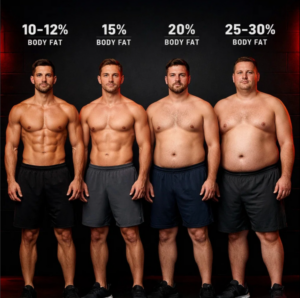
All right, so let's jump into this. Now we've got that behind us, because I know that's been keeping you awake at night, right? This has been making the rounds lately: the perfect male and female body fat percentage for attractiveness. So basically, this was research conducted by an adult entertainment platform. Never been there — decided not to click on the link because I just wanted to be careful about the not-safe-for-work, or maybe just not-safe-for-my-morality-in-general, content. But basically, what they did was they asked more than 2,000 adults to evaluate side-by-side body fat comparison images and pick the physiques they found most attractive, and the results were pretty decisive. For men, a lean athletic build with around 15% body fat won by a wide margin, and that's interesting because that's not a look that many men would associate with peak attractiveness. A lot of men think that being more ripped than that — like Brad Pitt, Fight Club level, to use a really old-school analogy that ages me — is a better goal for attractiveness. If you Google it — and as a matter of fact, if you go to the show notes at BenGreenfieldLife.com/503, I will put some photo images of what 5%, 8%, 10%, 15%, 20%, etc. look like — but you would be surprised at the mild amount of, let's say, softness — not a bad thing — that you see in 15% body fat males.

Now, for women, the attractiveness of women seemed to favor a slightly softer, curvier physique at around 30% body fat. So second place for men was 20% body fat, not 10%. Second place for women was 25% body fat. And so it was interesting because for men, 15% was the most attractive, 20% was the second most attractive; for women, 30% body fat was the most attractive, and then 25% body fat percentage was the second most attractive. And don't worry, I will get shortly into the whole health, fertility, overall longevity piece of this, beyond just the narcissistic attractiveness component.

Now, there is a caveat that's worth mentioning here. The same body fat percentage is going to look very different depending on the person. So 15% body fat percentage on a man, for example, is going to look still pretty athletic. On a woman, 15% body fat can look malnourished. 30% body fat on a woman can look healthy and curvy and attractive and sexy. And on a man, 30% body fat might be, no offense, like man boobs, dad bod territory. I'll get into dad bod later on — interesting new research on that. But it is interesting that the percent body fat that we would consider to be attractive might be lower, or for some of you, the way that you've perhaps been looking at this, higher than what you may have thought.

Now, there's some important caveats here that I want to get into, based on some other studies, and remember also that genetics does play a role here. I am at 7% body fat. My wife is at about 11% body fat. We both eat like horses, don't diet. Yes, I mean, we're aware of the number of calories we consume, and we don't eat fast food, and we don't eat a lot of ultra-processed food, and we eat pretty healthy diets. But we walk all day, work all day, you know, we're lifting, we're exercising, we're playing tennis. We move our bodies a ton, and both of us have very lean parents and relatively lean siblings. We genetically just are lean. My wife is like, you know, eight-pack and not a CrossFitter — she's at the gym a couple of times a week, she does lift — but we're genetic anomalies. We're both healthy. We have good bloods. We have stabilized hormones, but we're just genetically lean. She's just hard, old-school Montana rancher lean. I'm whatever my parents were — lean. So that's just what it is, right? I used to have a metabolic lab, and my resting metabolic rate is at about 3,000 calories. So basically, I burn, you know, multiple ribeye steaks per day just by breathing and engaging in natural activities of sustaining life, right? So we are anomalies. Some people do fit into that category. Remember, anytime we're talking about studies, we're talking about what might fit into the average category. So I want to get into some nuances though.

Okay, so this was a study that was in the Journal of Clinical Endocrinology and Metabolism. This is going to come full circle back to what's a healthy body fat percentage, and the title of this study was a perspective on middle-age and older men with functional hypogonadism. So they're looking at testosterone, and they were looking at body fat, body composition, and the reason for that is because if you are eating too much food and carrying excess adiposity — let's say you heard everything that I just said about body fat percentage and attractiveness, and you decide you want to put on a little bit extra body fat — well, there is, of course, a law of diminishing returns. But it's interesting to see how that fleshes out, I guess, pun intended, because excess adiposity can decrease testosterone. This is something I tweeted, I'll read you the tweet: "Excess adiposity decreases testosterone, because the extra fat causes aromatization into estrogens." You may have recognized roughly 50% of the words that just came out of my mouth, and then I said, "So to increase testosterone, get lean but not too lean. Get lean but not too lean."

So why is that? What are we looking at here? So aromatization is a word that you may be familiar with, that you may have heard before. That's the idea that fat can convert testosterone directly into estrogen. So there is this enzyme — it's called aromatase, CYP19A1. It's a cytochrome P450 enzyme. It synthesizes estrogens by aromatizing androgens. So specifically, what that means is this enzyme can convert testosterone into estradiol, and it can convert other androgens, like let's say androstenedione, or andro, which you may have heard of, into estrone. And the aromatase that converts testosterone into estrogen occurs mainly in adipose tissue, specifically in men. So the more fat you carry, the more aromatase machinery you basically have running. Now, the increase in adipose tissue that is associated with the increase in aromatase — that converts testosterone into estrogen, that leads to diminished testosterone levels — that conversion then favors more preferential deposition of visceral fat. So this is like a self-perpetuating loop, right? More fat creates more estrogen, and then more estrogen slash lower testosterone drives more fat deposition. And they've looked at adipose tissue in overweight and obese people and shown that there's an upregulation of aromatase activity that's directly proportional to body fat mass.

When you get that increase in estrogens, then it's a double whammy, because that reduces the pulses of something called luteinizing hormone, right, which is a signal to your testes to produce testosterone. And they can also directly upregulate — the high levels of circulating estrogens can also directly upregulate what is called adipogenesis, which is basically an increase in visceral fat and subcutaneous fat — just an increase in fat in general. So it's this perpetual increase in fat accumulation combined with a decrease in testosterone production. And the more overweight and the more obese that you become, the more this becomes an issue.

Now there is a second thing that you need to know about too. There is something called leptin. Leptin is secreted by fat cells, and it kind of acts as this signal for your brain to tell the brain that you have enough energy stored now, right? Like your body fat percentage levels are high enough, or your calorie intake is high enough, so you have enough energy stored, so now you can reproduce, you can bring babies into the world, or have high fertility, or have higher testosterone, because we're not at war or in a state of famine, so it's safe to reproduce. The babies aren't going to die, right? That's basically, from an evolutionary biological standpoint, the signal that leptin is sending. So in obese people, that system inverts, because obesity causes an increase in leptin. It causes an increase in insulin. It causes an increase in pro-inflammatory cytokines, and it causes, as we've already established, an increase in estrogen, and then that can cause what's called functional hypogonadism. Okay, elevated leptin decreases the expression of a gene that helps out with the production of something called kisspeptin.

I realize I'm getting into the weeds here, but what kisspeptin does is kisspeptin is the signal for luteinizing hormone secretion, and if that signal gets shut off because there is this obesity-induced increase in leptin, then your testes don't get the signal to produce testosterone. And furthermore, leptin resistance can cause the testes to become less responsive to the luteinizing hormone that actually gets through. So interestingly, we're seeing kind of two pathways here, right? Testosterone gets converted into estrogen, which results in this feedback loop that makes you fatter, and then also the leptin that's produced when you get overfat or overfed, eventually, if chronically elevated, also causes a drop in testosterone production.

Now, tiny sidebar here: kisspeptin is an injectable peptide. You may have heard of people who don't want to get on testosterone replacement therapy using things like HCG or enclomiphene as ways to stimulate the testes to produce testosterone. Kisspeptin fits into that same category — less research, less commonly used — but injecting kisspeptin as a peptide a couple of times a week is something that some people do as an alternative to straight-up testosterone replacement therapy, or they'll do this at the same time as testosterone replacement therapy, to do things like maintain fertility, maintain testicle size, keep the testosterone that you're naturally producing from getting totally shut down, etc. So kind of a sidebar, but that's when you see kisspeptin being sold as a peptide — that's what people are using it for.

So there's a third component here: excess calorie intake drives insulin resistance, right? You're producing insulin over and over again from chronic overfeeding. That hyperinsulinemia can actually suppress what's called sex hormone binding globulin. It lowers sex hormone binding globulin production in the liver. Now, what sex hormone binding globulin does is it carries testosterone in your blood, and it keeps testosterone from being cleared from your blood. And when it drops too low, then what happens is testosterone gets metabolized faster, and bioavailability drops.

Now, if you have gotten sex hormone binding globulin tested, or talked with a doctor, or looked at a result, or heard somebody talking on a podcast about SHBG, they always say avoid it getting too high, because that will bind up total testosterone and keep your free testosterone from being elevated. But there's a sweet spot. There's a reason there's a reference range on your labs, because if it drops too low, then you don't have enough circulating total testosterone, and there's less bioavailable to get converted into free testosterone, right? So that's the reason that there are reference ranges. You don't want sex hormone binding globulin to get too low, but you don't want it to get too high. And when you have excess body fat percentage, it gets too high, and that's why, you know, large data sets like the NHANES data set have shown, on a population scale, that in males, testosterone levels show a significant negative correlation with total percentage body fat. The higher the body fat, generally the lower the testosterone, and then the low testosterone causes more fat gain, and the more fat gain drops testosterone further.

And so the question becomes: well, if I'm not supposed to be too lean, whether for attractiveness or for other reasons, like not having any energy and totally suppressing testosterone from that perspective, and I'm not supposed to be too fat, what is the sweet spot? Well, there have been some studies that have looked into this. For example, when body fat percentage drops in bodybuilders into the single digits — bodybuilders will get down to like three or four percent — testosterone goes into clinically hypogonadal territory, like super-duper low. I competed in bodybuilding in college. I was at 215 pounds, 3% body fat. My testosterone was basically non-existent. Also happened to me after racing an Ironman triathlon — I was also very lean then, I was 169 pounds racing weight. Right now, if you're looking at me, I am 195 pounds — much heavier than I was when I was racing Ironman. So they've also shown, in athletes, that in males who are competing, like I was, total and free testosterone both decrease significantly, and then sex hormone binding globulin and cortisol go up.

So now we're getting into the other category of sex hormone binding globulin, where if you get too lean — exercising too much, not eating enough — SHBG goes up. So we tend to see, generally among men, looking at most studies, that when men diet or via other methods get to very low body fat levels, typically under 10%, that's when the body starts to shut down non-essential functions like reproduction and testosterone production. And this is when men can experience low sex drive, increased muscle weakness, fatigue, etc. Now again, there are genetic anomalies — I've had super low body fat percentage my whole life, I still function just fine, you know, I've had children. My wife, very similar. But the sweet spot in most men, if we actually look at the literature — and this is great news for people who just listened to what I was talking about with the attractiveness thing, because it comes full circle — somewhere between 11 and 16% body fat for men who want optimized testosterone without excess aromatization is the sweet spot. So actually, whether you care about attractiveness or not, 15%, or in that general range, is a pretty good goal to shoot for, for having the ideal combination of fertility and health and longevity. And now we know: attractiveness too.

Now, what about women? How lean is too lean for women? Well, we know this: women need a certain amount of essential body fat for normal hormone function and reproductive health, and even vitamin absorption. Typically, that is somewhere in the 10 to 13% range. That's what's called essential fat — that's not... if you're listening, don't stop and walk away right now and be like, "All right, Ben said if I'm a woman, 10 to 13% body fat is good." That's essential fat, right? That's the fat that's necessary for just bare minimum, like keeping you alive. For men, by the way, just so you can contextualize that, it's about two to 5% — that's the actual essential fat.

Now, if we actually look at what you need for everything else, right, to sustain activities of daily living and exercise and fertility, the starting body fat percentage in most women to be healthy and fertile and have good hormone balance is 16 to 22%. And when there has been research done on female fitness competitors who get far below that, you see leptin decrease, thyroid hormone like T3 decrease, testosterone and estrogens drop through the floor. So basically, everything goes down. Interestingly, in those same studies, it all rebounds after about three to four months. It's not healthy to bounce back and forth like that, but just so you know, this isn't just all a doom scroll — once you gain weight again, you can get back.

So for women, we know that somewhere around 16 to 22% is the range, but remember, that is for athletes. Now, there was another study — I cited it a couple years ago on a podcast — when we're looking at overall reduced all-cause risk of mortality for women, you actually see 22 to 33% as being the range, right? So if you're an athlete, you'd be somewhere in that 16 to 22% range. If you're a non-athlete, and you're like, "Dude, all I care about is having kids, staying fertile, looking good, living a long time," for women, 22 to 33%. Well, let's go back to that attractiveness study, right — if physical attractiveness peaks for a woman at around 30%, well, if you're somewhere in that 22 to 33% body fat range for a woman, then you're actually in really, really good territory. And most of the studies suggest that once you drop below 16%, you're kind of screwed across all variables: performance, longevity, health, fertility, everything.

Basically, what got us down this rabbit hole — the attractiveness study — well, it turns out that maybe there is some kind of, again, biological evolutionary response. When I say "evolution," what I mean is like a survival response. I am actually a Christian, I am a creationist, but when I use the word "evolution," what I am talking about is something that allows naturally for survival of the species, based on a response to something. When you look at someone and your brain's dopamine circuits light up because you're looking at a man and they're at 15% body fat and that's attractive to you, or a woman at their average of 30% body fat and that's attractive to you, that might not just be attractive to you because that person has the right curves and the right body composition and the right symmetry. It might also be because nature is signaling to you that that person is healthy, fertile, and is going to live a long time, and could be a great lifelong partner for you because of that. So the attractiveness data matches up with what we know about the health and fertility data, and isn't that interesting?

All right, I told you I'd talk about it, so here we go: the dad bod thing. So this was a recent study, and it found that a dad bod could actually raise your kids' risk for obesity and disease even before they are conceived. This was published in the Current Obesity Reports journal, and it looked at how a man's overall health before and during parenthood played a critical role in childhood development. And what they found was that obesity — which technically is measured with a body mass index of 30 or higher, they don't use body fat percentages for obesity, they use a body mass index of 30 or higher — what they found was that dads with a BMI of 30 or higher could adversely affect the metabolic health of children in three different ways.

First, being obese — again, I'm not talking about you not having an eight-pack, I'm literally talking about being an obese dad, or being an obese pre-dad — that alters the epigenetic signature of sperm. So these are the biological signals that help to regulate gene function in early development, and that can affect your kid's appetite regulation, and metabolism, and long-term disease risk. And a person who's obese, their actual sperm is altered in such a way that a kid has a higher predisposition for appetite dysregulation, altered metabolism, and higher long-term disease risk.

So, in terms of behavior modeling, they also found that a father's diet, and parenting practices, and level of physical activity, directly influence the eating and exercise habits of their own children. That makes sense. In my book, Boundless Parenting, one of the most oft-repeated phrases was "more is caught than taught," right? Your children watch you more than they listen to the words that are coming out of your mouth, and if you're not exercising and eating healthy, it's very unlikely that your child will do so. And that's significant, because often fatherhood is combined with periods of more stress, less time, weight gain, decreased physical activity. You really have to double down as a dad and figure out a way in your schedule to stay fit.

I personally made the choice to figure out as many ways as possible to exercise with my kids. I got a double jogging stroller — remember, I had twins — a double bike trailer. I'd bring my kids to the pool, I would kick them around on kickboards. We joined a health club, the YMCA, that had great kids' care and a place for the kids to play while mom and I worked out. But we didn't hide it from the kids that we were exercising. We went on fitness walks. We carried logs, we carried rocks, we carried kids, we crawled, we jumped, we played. And that's important — that you not be the ghost worker-outer with your kids, and that they see you exercise. I realize that some of you have schedules that dictate that you just got to be up at 4 a.m. or whatever to get your workout in, but your children need to at least know that you're engaging in physical activity and making it a point to do so.

And so I think if I could name the biggest takeaway from this dad bod thing — and again, I'm not in any part of this podcast trying to fat-shame or make you feel bad, I'm trying to encourage and motivate you and spark an interest in you working out if you're not doing so already. It's likely that just the fact that you're listening to this podcast could dictate or predict that you're working out already. If you can get closer to that 15%-ish body fat range that I was talking about, that would be a great range for males to be in, and at least below 20%. If you're trying to conceive, you would actually give your future children a step up in life, metabolically. So if you're not yet married, this could be part of the wedding prep, right — get lean, get fit. If you're planning on conceiving, then have exercise, physical activity, diet control, etc. be a part of that conceiving process. Again, bearing in mind everything else I've already told you — like getting too lean is going to affect your fertility, decrease fertility, decrease overall health, decrease your vitality, decrease your energy levels, everything you want for becoming a future father or mother. But again, now, based on what I've already told you, you know the approximate healthy body fat percentages that you want to shoot for, and you also know that there's a good reason to do so if you want to be a dad. So not only before you conceive, but well after, and as your kids are growing, stay fit.

All right, speaking of staying fit, this is a great one: you want to shorten your time in the gym but get the same size and strength results. A new study shows that something called myo reps is a great way to do this. This was in the Journal of Strength and Conditioning Research, and this is great — any time that we can learn how to time-hack in the gym, that is super helpful knowledge.

So what this study did was it used what are called myo reps. Let's first define what these are. So, myo reps involve performing what is called an activation set, where you lift a relatively low load to near failure, right — an activation set might be 12, 15, 20, 25, or 30 reps of an exercise — and then you do a series of lower-rep back-off sets with short rest intervals. So let's use bodyweight as an approach, right — let's just use the almighty push-up. You crank out 30 push-ups, you rest 20 seconds, and then you're doing five push-ups, 20-second rest, five push-ups, 20-second rest, and you're going through multiple reps of that afterwards, to failure or too close to failure. So it's kind of like pre-fatiguing and then doing a series of lower-rep sets with minimal rest periods. It allows you to get a lot of volume in at the gym.

So this latest study — again, in the Journal of Strength and Conditioning Research, last month — they took a bunch of resistance-trained men, men who were already trained, and they had some do just traditional strength training, right — do a set, back off, rest a few minutes, read Men's Health magazine, watch TV, dick around on your phone, do another set — and then they had another group do the myo reps. Now, both groups: what they were testing on them was the bench press. Now the myo reps group, based on doing the pre-fatiguing set, then set, set, set, set, set, performed roughly 30% less total volume than the traditional group. So the myo reps group had the same response in strength, they had the same response in muscle growth, but they moved 216,900 pounds total over the course of the training protocol, whereas the traditional group moved 305,600 pounds. So the myo reps group had significantly shorter session duration, shorter session volume, but they got just as good results. As a matter of fact, the myo rep sessions took 127 seconds, and the traditional training routine took 332 seconds — so 62% less time with the use of these myo reps.

So again, you could Google myo reps, I'll put a few links in the show notes if you want to see them. But basically, let's use one more example: let's say you're going to do barbell squats. You get under the bar — I don't know, let's go with a reasonable weight for a lot of people, I don't know, like you're doing 185, right, underneath the bar — and you are going to do one high-rep set. Let's say you can crank out 20 reps with 185, and you step away off the bar for 20 to 30 seconds. You get back under the bar and you do five more sets of three to five reps, with 20 to 30 seconds rest in between, right — that's the myo rep. Obviously, not super fun, because there is always the trade-off, right — there will be more blood, sweat, and tears with the one that gets you in and out of the gym more quickly. But man, oh man, when we talk about exercise hacks, right, blood flow restriction is pretty high up there. I just got back from a hunting and spearfishing trip, didn't have a gym, had my BFR bands with me — cranked out push-ups, squats, and lunges every single day before hunting or fishing. Another example would be supersets, like I did today, back-to-back-to-back sets, so I get a ton of volume in in a short period of time. And then these myo reps: very, very similar — crank out that main set, high rep, get under, 20 to 30 seconds, do it again, again, again, again, again, with lower reps. Going to be in and out of the gym much more quickly, and research shows that even if you're trained, you can get similar size and strength adaptations. So there you go — chalk one up to myo reps.

All right, I've got one more for you, because I get asked this a lot and I figure we should dig into it: is creatine bad for your kidneys? Well, there was a recent systematic review and meta-analysis in the Journal of Renal Nutrition that looked into this. They pulled together 19 randomized controlled trials, and as a bonus, one double-blind crossover study, to get a look at what creatine actually does to kidney function in humans. And they tracked some of the things that your doctor might test to look at your kidney health. They tested serum creatinine — creatinine is a waste product that's filtered by your kidneys, it's commonly used as a damage marker, right, it'd be through the roof if you got something like, I don't know, rhabdomyolysis, right, excess damage from training or something like that. They looked at blood urea levels, another waste byproduct, and they looked at eGFR — you see that on your labs, it stands for estimated glomerular filtration rate, it's the key measure of how well your kidneys are actually filtering.

So what did they find? Well, they found creatine supplementation is indeed associated with an increase in serum creatinine — not a huge one, but enough to notice on a lab test, enough to make your doctor scratch their head if you didn't tell your doctor that you were taking creatine. No meaningful difference in urea concentrations. No meaningful difference in glomerular filtration rate values between creatine users and non-creatine users. And duration didn't matter — if you'd been using creatine for a short period of time or a long period of time. Dosages ranged anywhere from a couple grams up to over 10 grams. And the takeaway is that creatine is not bad for your kidneys. The reason that people think that it is, is because creatinine — not creatine, creatinine, that's a metabolic byproduct of creatine — when you flood your system with more creatine, which would happen if you're consuming creatine, you produce more creatinine as a natural byproduct of that. That's not kidney damage, it's just your body breaking it down, your body's biochemistry. So the markers that actually reflect kidney function — eGFR and urea, and shortly I'll tell you a couple more that would be a good idea to measure — those didn't move at all, right? So doctors who see a slightly elevated creatinine on blood work and immediately suspect kidney damage in someone who is supplementing with creatine — they're totally misreading the data.

Now, the bottom line, the takeaway from this, is that if your kidneys are healthy, this research, and other research, is pretty reassuring that creatine is not going to be an issue for you. The caveat is if you had pre-existing kidney disease — if you have pre-existing kidney disease, then you may want to consider limiting your creatine consumption and definitely not over-consuming.

Multiple prior RCTs, beyond just this one that was done, going back over a decade now on creatine, have found no adverse kidney effects in healthy people at standard doses of creatine. Standard doses are three to five grams per day. Now people are taking 10, 15, 20 grams, again, without ill side effects. The concerns about creatine and kidneys originated from case reports. They almost always involved people with pre-existing kidney issues, or people taking other so-called nephrotoxic substances — people who are damaging their kidneys in other ways, including the use of steroids. And the ISSN, the International Society of Sports Nutrition, one of the most globally respected bodies of nutrition evidence and certification — and I am a CISSN, I'm a certified International Society of Sports Nutrition nutritionist — they have repeatedly stated in all of their position papers that creatine is just fine for healthy individuals. And this recent 2026 meta-analysis basically pools the highest-quality evidence backing this up.

So, there are some other things that you could test if you really wanted to look at kidney health. Probably the gold standard — not a lot of people know about this, most doctors won't order it — but if you want complete peace of mind that your kidneys are probably doing okay, get a Cystatin C test: C-Y-S-T-A-T-I-N. Cystatin C — like the letter C — that's produced at a constant rate, and it's freely filtered by the kidneys. Unlike creatinine, which, as we've established, is heavily influenced by muscle mass, by muscle damage, by creatine intake. So Cystatin C is one of the cleanest single blood markers for kidney filtration rates, and it is a wonderful test to do to check in on your kidney health.

A few others that you should look into: blood urea nitrogen, and your blood urea nitrogen-to-creatinine ratio. That ratio helps differentiate whether an abnormality in the kidney markers reflects dehydration versus actual kidney damage. If your BUN ratio is close to 20 to 1, right — blood urea nitrogen divided by creatinine — is a ratio closer to 20 to 1, that could be an issue. Closer to 10 to 1 suggests actual intrinsic kidney disease. So a higher ratio is better, right — a higher ratio would mean that the BUN over the creatinine is higher than 20, at least. So that's a ratio you can look at.

Now, just because I do a lot of lab tests with people — I'm not a doctor, don't take this as medical advice, please — but a lot of the athletes who I work with are people who exercise in the days leading up to the test, especially hard exercise. I tend to see elevated blood urea nitrogen and elevated creatinine in those individuals, even higher if they're already taking creatine. One of the reasons for that is muscle damage and dehydration are both going to elevate blood urea nitrogen and elevate creatinine. And my advice to those people is not "stop taking creatine, you have kidney disease," it is, "Dude, you need to hydrate more." And the next time that you do a test, maybe just do sauna and some yoga and go for a nice walk the day before the test, rather than lifting weights or pounding the pavement, because you're going to get a little bit better accuracy on your kidney eval. And get a Cystatin C test if you can. So those are a couple things to think about when it comes to kidneys.

And then the other things to think about are these other myths about creatine. Let's just address a few of them. Creatine causes cramping and dehydration — well, that's a plausible-sounding theory, because creatine draws water into muscle cells, so it must be dehydrating you somewhere else, right, pulling water from somewhere else. Well, that theory has been refuted by multiple published studies, and more recent data actually suggests creatine can improve thermoregulation and positively influence plasma volume, which basically means less risk for dehydration. There was a study that looked at 39 Division One baseball players over 18 weeks, and they found no heat or dehydration events in either group, and that creatine users had fewer total injuries and fewer instances of cramping.

The whole cramp narrative mostly applies to people who are doing intense loading protocols of creatine. If you're just taking like five to 10 grams of creatine on a daily basis as a normal part of your health and supplementation protocol, no issues. If you're loading with tons of creatine and taking like 20 to 25 grams a day for one to two weeks, like some loading protocols recommend, yeah, you might get some cramping. But if you just take creatine chronically, there's no need for a loading period, right — you're going to get adequate creatine levels elevated pretty quickly without loading. Loading is kind of an old-school thing of the past, good old boys bodybuilding, you know, 1980s thing of the past.

So there's another theory that creatine causes hair loss. That one traces back to a 2009 study of 16 male rugby players who did a creatine loading phase, and they saw an over 50% rise in their DHT. DHT is dihydrotestosterone, and that is a hormone that's linked to male pattern baldness — it's the hormone that is the reason why a lot of people who are on testosterone replacement therapy develop male pattern baldness, usually because they're overusing testosterone or doing huge amounts at a time. But nonetheless, DHT is associated with baldness. Now, that one paper literally spawned years of fear amongst people, when in fact, other randomized controlled trials that were done much better looked at people who were taking creatine for long periods of time, standard five-gram-a-day dose, directly measured DHT levels, measured hair follicle health. They found no significant differences in DHT, DHT-to-testosterone ratios, or any other hair growth parameters compared to placebo. That was the first study that ever directly assessed hair follicle health relative to creatine supplementation — no evidence supporting the hair loss claim. If you're genetically predisposed to male pattern baldness, keep an eye on your DHT levels if you're supplementing with creatine, but there's no direct link between creatine and hair loss at this time. So throw that one out the window.

And then the last thing is that creatine is only for strength training, or power athletes, or bodybuilders. Well, multiple studies — and now it's all over the public health educator podcast/YouTube sphere — creatine is good for you beyond just strength and power, right? Studies have shown improved memory and processing speeds in people over 65 who supplement with creatine, because creatine plays a huge role in supporting brain energy metabolism. Women who have lower levels of creatine in the brain — which they all do, compared to men — particularly in the frontal lobe, which controls mood, cognition, memory, and emotion, could also benefit from creatine intake. That's probably why creatine actually does show already strong evidence for improving mood and depression symptoms, specifically in — you guessed it — women. When combined with resistance training in postmenopausal women, creatine helps out with body composition and bone mineral density. Vegetarians, vegans, plant-based dieters who get essentially zero dietary creatine from food — they're probably the most underserved population here — and would highly benefit from creatine supplementation.

I personally use five grams of creatine in my morning smoothie, and then I have four creatine gummies, a lot of times, like right after lunch, in a little bit of yogurt. So most days I'm getting right around 15 grams of creatine, sometimes I'll push that to 20 if I'm sleep-deprived, based on suggestive evidence that creatine supplementation might help modulate the symptoms of sleep deprivation. So I'm not concerned about my kidneys. Again, I'm not a doctor, don't misconstrue this as medical advice — if you have kidney issues, be cautious with creatine, test, address, etc. But that's the skinny on creatine, and that's this podcast.

So all the show notes are at BenGreenfieldLife.com/503. Leave your questions, leave your comments, leave your feedback — I love to hear what you say. And you can also, at that same web page, write in your questions if you want one of your questions answered during the show. So thanks for tuning in. Not gonna take off the stupid hat. To discover even more tips, tricks, hacks, and content to become the most complete, boundless version of you, visit BenGreenfieldLife.com.

In compliance with the FTC guidelines, please assume the following about links and posts on this site. Most of the links going to products are often affiliate links, of which I receive a small commission from sales of certain items, but the price is the same for you, and sometimes I even get to share a unique and somewhat significant discount with you. In some cases, I might also be an investor in a company I mention. I'm the founder, for example, of Kion LLC, the makers of Kion-branded supplements and products, which I talk about quite a bit. Regardless of the relationship, if I post or talk about an affiliate link to a product, it is indeed something I personally use, support, and with full authenticity and transparency recommend in good conscience. I personally vet each and every product that I talk about. My first priority is providing valuable information and resources to you that help you positively optimize your mind, body, and spirit, and I'll only ever link to products or resources, affiliate or otherwise, that fit within this purpose. So there's your fancy legal disclaimer.

Ben Greenfield

Ben Greenfield is a health consultant, speaker, and New York Times bestselling author of a wide variety of books.

What's Blocking You From Living Boundless?

Thoughts on What Body Fat % Is The Most “Attractive” (& How Low is TOO Low), How To Shorten Your Gym Time, Is Creatine Bad For Your Kidneys & More!

Leave a Reply

Your email address will not be published. Required fields are marked *

Related Podcasts

Adam Wenguer WP

Hunting, Spearfishing & The Truth About Cannabis: A Father-Sons Florida Adventure with Adam Wenguer

Listen on: Reading time: 5 minutes What I Discuss with Adam Wenguer: How Sahil Bloom’s The 5 Types of Wealth...

Luke Chapman & Owen Buchanan WP (1)

Dynorphins, Heat Shock Proteins & The Healthiest, Hottest Sauna On The Planet, with Luke Chapman & Owen Buchanan

Listen on: Reading time: 5 minutes What I Discuss with Luke Chapman & Owen Buchanan: How mold exposure sent Luke...

Tom Moss WP

Why Do We Still Use 150-Year-Old Technology To Measure the #1 Killer of Humans Worldwide? The New Approach To Blood Pressure Measurement With Tom Moss.

Listen on: Reading time: 4 Minutes What I Discuss with Tom Moss: How an undiagnosed hypertensive crisis during a family...