Home » Podcast » Why Do We Still Use 150-Year-Old Technology To Measure the #1 Killer of Humans Worldwide? The New Approach To Blood Pressure Measurement With Tom Moss.

Why Do We Still Use 150-Year-Old Technology To Measure the #1 Killer of Humans Worldwide? The New Approach To Blood Pressure Measurement With Tom Moss.

Listen on:

Reading time: 4 Minutes

What I Discuss with Tom Moss:

  • How an undiagnosed hypertensive crisis during a family vacation forced Tom to confront how little he understood about his own blood pressure, and why that experience led to the creation of Vital Signals…06:59
  • Why blood pressure monitoring technology hasn't changed in 150 years, and why Tom believes most people genuinely don't know their real blood pressure…09:37
  • Arterial health as the ultimate determinant of healthspan and longevity, the relationship between blood pressure and arterial stiffness, and how damage accumulates decades before a heart attack or stroke…15:03
  • Why sugar may be a bigger driver of hypertension than sodium, and how insulin and glucose interact with arterial function…21:05
  • Why blood pressure readings without context aren't useful, and how the Signal Ring app builds context automatically by asking what you did before each reading and annotating your history…25:42
  • How the Signal Ring measures blood pressure, and why the finger outperforms the wrist for blood pressure measurement…32:48
  • The scientific breakthrough that Vital Signals achieved where other companies failed: accurate, calibration-free blood pressure measurement from a ring, with no cuff required…34:41
  • What the Signal Ring will eventually be able to measure beyond blood pressure, including arterial stiffness, laminar flow patterns, and a full picture of cardiovascular health…37:43
  • The concurrent training study that found combining strength and cardio in a single session is the most effective exercise modality for blood pressure, and why isometric exercises like wall sits work even for people who are not particularly fit…48:11
  • Tom's own daily protocol for managing his hypertension and coronary artery disease…52:14
  • Why estrogen protects women from hypertension for most of their lives, why menopause creates a cardiovascular cliff that most women are not warned about, and why female hypertension data has historically been measured against male baselines…59:57
  • When the Signal Ring launches, how to get one, and why Ben is wearing one right now…1:02:45

In this episode with Tom Moss, founder and CEO of Vital Signals, you'll hear how a near-fatal hypertensive crisis during a family vacation became the founding moment for a device that may finally solve the problem of getting accurate blood pressure readings in real life without a cuff. Tom explains why blood pressure is the single most important indicator of long-term cardiovascular health and yet one of the least accurately measured, what the cuff gets wrong, and how Vital Signals achieved the scientific breakthrough that other companies failed to crack: accurate, calibration-free blood pressure monitoring from a ring. You'll also hear about the interplay between sleep, stress, hormones, sauna, cold, and blood pressure, what the Signal Ring‘s data is already revealing about human arterial health, and where this technology could go over the next decade.

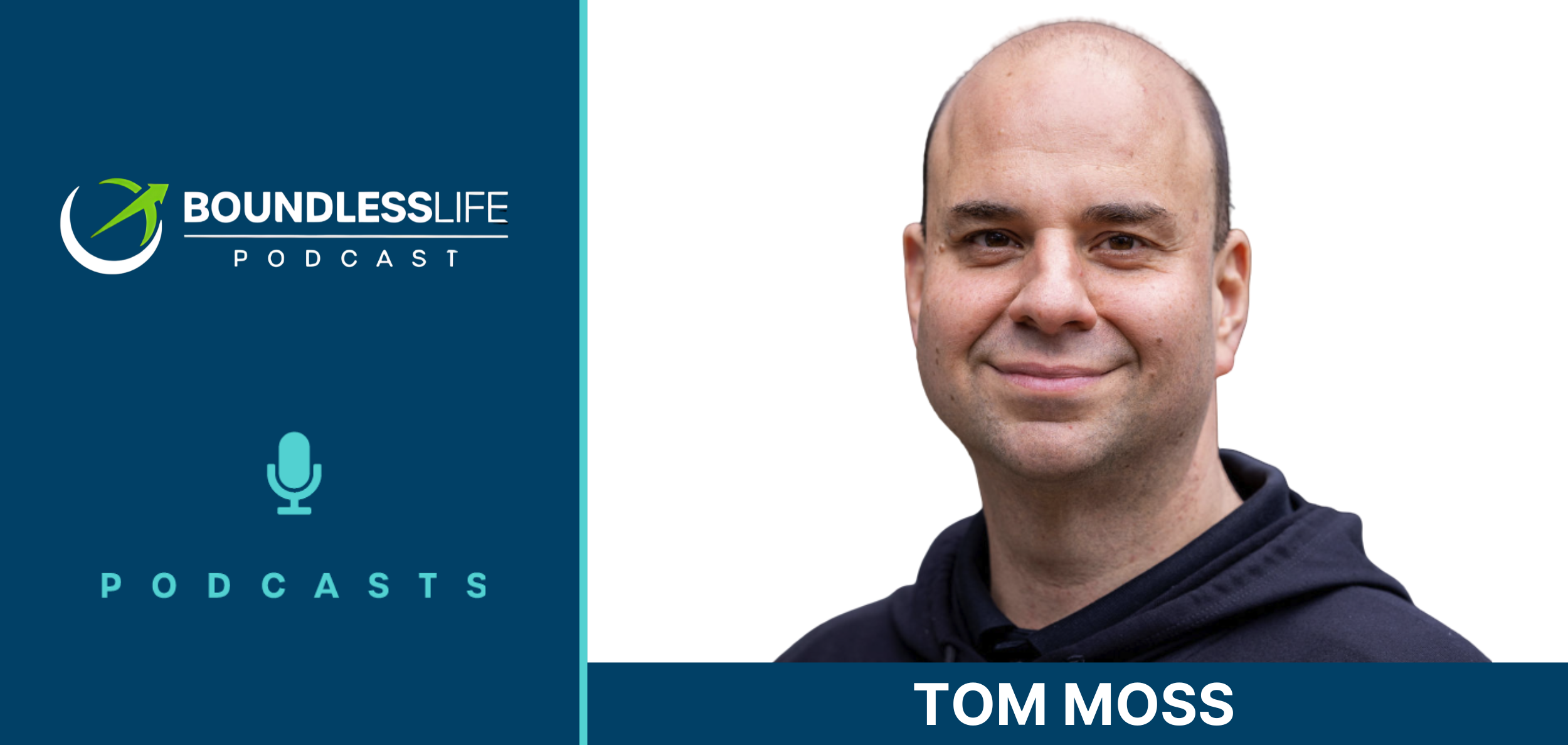
Tom Moss is the founder and CEO of Vital Signals, building at the intersection of heart health, technology, and everyday behavior. After his experience with undiagnosed hypertension, he became focused on why some of the most critical health signals remain so difficult and often stressful to understand.

Pre-order your Signal Ring from LIFE Market and measure your blood pressure without the cuff. Ships October 2026.

Episode Sponsors:

Tecton Ketones: Tecton Ketones deliver bioidentical D-beta-hydroxybutyrate (BHB), the same ketone molecule your body naturally produces during ketosis, providing clean cognitive support, stable energy, and performance without the conversion step required by many ketone precursors. Visit tectonketones.com/ben and use code BEN for 16% off your first order.

Dr. Murray Natural Products – ThymoQuin®: ThymoQuin® is a clinically researched black seed oil formulated to support healthy cortisol levels, improve resilience to everyday stress, and promote overall well-being. It's the only black seed oil that meets U.S. Pharmacopeia guidelines and is backed by human clinical research. Visit doctormurray.com/ben and use code BEN25 for 25% off all Dr. Murray Natural Products.

LYMA Laser: The LYMA Laser is an advanced at-home skin technology backed by peer-reviewed research showing it influenced 45 genes in human skin compared to just one for an equivalent LED device. Users report smoother skin texture, more even tone, and visible improvements in overall skin appearance. Visit lyma.life and use code BEN10 for 10% off for a limited time.

Qualia Stem Cell: Qualia Stem Cell is a science-backed supplement designed to support your body's natural repair system by enhancing stem cell function, helping you recover, renew, and maintain healthy tissues as you age. Taken just four days per month and formulated with premium, clinically supported ingredients, it's an easy way to support long-term healing and vitality. Visit qualialife.com/boundless and use code BOUNDLESS for 15% off.

Ultimate Longevity: Ready to hack your sleep and stay grounded while recovering? Head to ultimatelongevity.com/ben to get your hands on grounding mats for your mattress, pillow, blankets, and other valuable tools to help you bring down your inflammation and jump-start your healing.

Episode Resources:

People

Companies & Products

Books

Podcast Episodes

Studies


Upcoming Events:

Boundless Live Tour Presented by FormulaIQ | Summer 2026

Join the world premiere of Boundless: The Man Who Became Human, a new feature documentary that follows 20 years of body optimization colliding with life's immeasurable moments—marriage, family, and faith. Experience a live podcast recording and intimate Q&A with my family and me in Los Angeles, New York, Austin, and Moscow, ID, one night in a room full of people chasing the same thing. Purchase tickets here. 

Health Optimisation Summit | September 11–13, 2026

I'm speaking at the Health Optimisation Summit in London (September 11–13, 2026) at the Business Design Centre. This isn't your average health conference. HOS unites the best minds in biohacking, longevity, nutrition, fitness, and medicine, with one goal: to actually make people healthier. With 35+ world-class speakers, 120+ cutting-edge brands, and 4,000 like-minded people all under one roof, it's two days that could genuinely change how you approach your health. Get your ticket here and use code BEN to save 10% off registration! 

Eudēmonia | November 5–8, 2026

I'm speaking at Eudēmonia (November 5–8, 2026, in West Palm Beach, FL), a prevention-focused, science-based health, well-being, and longevity summit designed to add years to your life and life to your years. Across 3 days and 15 venues, you'll experience 200+ talks from 120+ experts, 300 treatments, and 160+ brands covering everything from biohacking, longevity, and hormonal health to gut health, brain health, peptides, mobility, and more. I'll be leading a talk and a movement session alongside some of the brightest minds in health today. Use code BGREENFIELD-EUD-100 for $100 off when you register here!

The Boundless Couples Retreat | November 10–14, 2026

Ready to reconnect and recharge with your partner in paradise? Join the Greenfields at the stunning Prana Maya resort in Belize for the Boundless Couples Retreat, November 10–14, 2026. It's a five-day, all-inclusive escape designed to deepen your relationship, restore your vitality, and create memories that last a lifetime. From relaxation and adventure to intimate relationship coaching with Jessa and me, every detail is crafted to send you home with a stronger bond and a reinvigorated spirit. Spots are limited, so discover more and secure yours here today!

The Manzo x Ben Greenfield Table Private Dinner | Throughout 2026

If you want to taste one of the world's rarest cuts of beef and experience my North Idaho biohacking compound firsthand, my family and I are hosting The Manzo x Ben Greenfield Table, an intimate, chef-catered VIP dinner on a few limited 2026 dates. The evening includes biodynamic wine, a live cooking demo, a multi-course Piedmontese feast finer than Wagyu, and a night of deep sleep in an EMF-free, fully grounded, circadian-optimized guest room. Anyone who reserves a half or whole Piedmontese bull from Manzo qualifies for a spot, so reserve your allocation and dinner here.

Stay tuned for future updates—and you can always keep up with my LIVE appearances by checking out bengreenfieldlife.com/calendar!

Do you have questions, thoughts, or feedback for Tom Moss or me? Leave your comments below, and one of us will reply!


Ben Greenfield

My name is Ben Greenfield, and on this episode of the Boundless Life podcast,

Tom Moss

people don't actually really know their blood pressure at all. You probably don't really understand your blood pressure, and it's because the cuff... Number one and number two causes of death are basically related to arterial health and blood pressure. There's no device on the market today that can do that. This is the first device in the world that's available to consumers that can accurately measure blood pressure without calibration from a cuff.

Ben Greenfield

Welcome to the Boundless Life with me, your host Ben Greenfield. I'm a personal trainer, exercise physiologist, and nutritionist, and I'm passionate about helping you discover unparalleled levels of health, fitness, longevity, and beyond. I spent 20 years measuring and optimizing everything about my body, deep performance metrics, cold stress, heat stress, sleep scores, blood panels, peptide protocols, testosterone, telomeres, VO2 max, you name it, and somewhere in the middle of building what looked like a perfect life, I almost lost the life that I was building it for. Boundless, The Man Who Became Human is a brand new feature documentary that follows what happened when the optimization framework that I spent two decades constructing ran headlong into the things that metrics could never measure: my marriage, my sons, my faith. The private archive footage in this documentary has never been seen publicly. Some of it I debated even including at all. It shows basically the worst of what happens when longevity becomes the ultimate goal, and how you and I can turn that around to become fulfilled by what's truly important in life. Now, this is not just another biohacking film. It's an honest look at what it costs to chase the ceiling on human performance, told through real footage of one family, my family, finding that out. And I'm giving you the chance to join me for the brand new live premiere tour of this new film in a city near you. Here's what the night looks like. You watch the film with me and my family in a theater, and then you experience a live episode of the Boundless Life podcast on stage with an open Q and A, real questions, no filters. My wife Jessa and my sons River and Terran will be there with us as well. VIP ticket holders get to join for an exclusive after party with upgraded food and drinks. This Boundless Life tour kicks off in LA on July 24, Austin on August 20, New York City on August 6, Miami coming down the pipeline, and London coming down the pipeline. More cities to be announced. Tickets are on sale now. Grab them now before they're gone at boundlessdoc.com. That's boundlessdoc.com, and I hope to see you there.

Blood pressure is one of the most important signals of overall health. It's a major contributor, as you will learn much more detail about in this podcast, to leading causes of death worldwide, including heart attacks and strokes. And more than 1.7 billion people worldwide, and nearly 120 million Americans, have hypertension, and it's kind of ironic because blood pressure monitoring has barely changed in 150 years in terms of the technology, you know, the old school uncomfortable cuff that is used to measure it. So my guest today is Tom Moss, and Tom is part of the team that has developed a new way to measure and track blood pressure from your finger. The ring that they've built is called the Signal Ring. Tom is the CEO of the company Vital Signals. You'll learn his story in today's show, but he has assembled a team of experts who specialize in technology and blood pressure management and measurement, and he's been able to pull something off at Signal that nobody has ever done before. So bengreenfieldlife.com forward slash signalspodcast is where the show notes reside, or you'll be able to get a ring when these things are released. I'm wearing one right now. So bengreenfieldlife.com/signalspodcast, and let's go talk to Tom.

Tom Moss

Thank you for having me. Really appreciate it.

Ben Greenfield

Yeah, before we started recording, you were holding up the rings on your finger, your self-quantification rings to rule them all. How many are you sporting right now?

Tom Moss

Three total, but only one that matters.

Ben Greenfield

Okay, only one that matters. Obviously, one I would assume is the wedding ring, right?

Tom Moss

Right.

Ben Greenfield

That's important. I wound up just tattooing mine on, and the one that's important is the one I want to talk about.

Tom Moss

I should probably say that the wedding ring is important too. Sorry to interrupt. Well, your wife might be listening.

Ben Greenfield

Hello, Tom's wife. We should always clarify that. Blood pressure, man. We're talking about using self-quantification devices like a ring wearable to measure blood pressure, but I'm just curious, what got you into the whole blood pressure scene in the first place?

Tom Moss

Almost dying from undiagnosed hypertension. I mean, just to put it bluntly, it's called the silent killer for a good reason. I was on vacation with my family, swimming with my daughter. She was at that age where as soon as we got to the hotel, she wants to jump in the pool. I went in, I started having chest pains. Thought it was just too much bad airplane food, so I took a break. Felt a little bit better, but she was at that age where she really wanted me to, and so she kind of pulled me back in. I got back in, and I started having much more severe chest pains. Thought it was the big one, having a heart attack. I took an ambulance to the ER. They thought I was having a heart attack. Everybody did. They ran an enzyme test. They weren't. Luckily, the enzymes showed I didn't have a heart attack. But as you know, you're in the ER and they're hooking you up. I actually pointed out that my blood pressure seemed to be extremely high, and it was actually at about 250 systolic.

Ben Greenfield

Oh, and you pointed out, you saw it on the screen?

Tom Moss

Yeah, because at the time, really everybody thought I was just having a heart attack. It was more about figuring that out, and I was just noticing, oh, these blood pressure numbers seem really high, and I pointed it out, and then it got everybody's attention, and we realized luckily that I wasn't having a heart attack, but I was having what's known as a hypertensive emergency. Anything above 180 is a kind of hypertensive crisis. Anything significantly above that is a hypertensive emergency, which is really life threatening, and I was literally feeling like the pressure in my chest from my heart just pounding out that blood pressure, and it was really high risk of something happening, and I hadn't realized how severe hypertension was. Like a lot of people, I'd go to the doctor, do my checkups, it'd always be a little bit high, and I'd always be like, "Well, I'm just rushing to be here, I'm nervous, I'm doing work on my phone right until the last minute when they put the cuff on."

Ben Greenfield

And by the way, not to rabbit hole too much or throw doctors under the bus, but the blood pressure measurement, at least in my experience, in many physicals at the doctor, you know, whatever, it seems like a little bit of an afterthought.

Tom Moss

It's terrible, and half the time the cuff is placed in different places on the arm. Sometimes they're engaging you in conversation. Sometimes they're telling you to remain silent. It's all over the map. It's kind of like, yeah, we're just jumping through this hoop. So I rarely place a whole lot of faith in the actual measurement that I get in those scenarios.

You're not wrong, but this is the fundamental problem that I eventually realized. One, the nurse, like you said, is doing it wrong. Half the time they don't put your arm on anything, which we know adds about 10 points. It might not be sized correctly. You might not be rotated correctly. They're doing your SpO2. They're asking you questions. You just had coffee, maybe you just ran in, so that number is not really very useful, to be honest. And then they say do it at home, but most people don't own a cuff, or if they do, then again, same issues. Maybe the cuff size is wrong. Maybe they're not rotating it right. Maybe they're not doing the posture right. Maybe they're not resting. And of course, cuffs themselves can have inherent bias. Even to be an FDA-approved cuff, you can have measurements that are pretty significantly off and still be approved. And so, just in the grand scheme of things, I've realized people don't actually really know their blood pressure at all, for the most part. That's my native assumption about everybody going in, is that you probably don't really understand your blood pressure, and it's because the cuff is this 150-year-old technology, right, and there's just nothing better that's come around. That's kind of what got me to do this, right, because after my own problems, really trying to understand what it was I could do in my lifestyle, diet, exercise, medications, which is working, which we're not, when I take my medications, how much, all these things, and I just really wanted to understand what was happening to my blood pressure all the time, and the cuff is just not a tool for that at all.

Ben Greenfield

You mean what was happening to your blood pressure all the time in terms of continuous measurement, or in terms of wanting to be able to do a daily check-in?

Tom Moss

Both. So it started with the daily check-in, and that was literally like, okay, is the medication the doctor is giving me, is it working? Because, you know, they take you through kind of different ones, and some may work better, some may work worse, some have side effects. I personally can't really do beta blockers; they really kind of make me exhausted, and so I was having weird side effects. So we kind of switched around the medication. So I was doing the kind of like, okay, check first thing in the morning, just kind of see if it's under control. But then I got more curious, so I talked to my doctor, for example, about coffee. So I love coffee. It's a big part of my life to just wake up and have that kind of ritual of drinking a nice cup of coffee. And I'm like, hey, what's happening with this coffee? Is it okay? And my doctor's like, no, you should probably stop drinking coffee, because of your hypertension. And I got really bummed out. And so I went on this quest where I basically measured with a cuff every hour on days where I had coffee and didn't, and discovered that actually for me, there is definitely a spike in the kind of 20 minutes to about two hours after I drink coffee. But for the rest of the day, my blood pressure is actually lower on days where I have coffee than when I don't. And my doctor didn't know, right? And I talked to him about it, and he's like, "Oh, maybe that makes sense, it's a mood enhancer, so you're less anxious. It does warm your core temperature, so that's a vasodilator." It's like, that's an interesting theory, we haven't really measured this. And it was like all these things, right, where I'd take 13-hour flights to Asia, for example, for work, and I'd be like, hey, should I take extra medications? What's happening on that flight? And they're like, oh, we don't really know what's happening with blood pressure because nobody's really measuring with a cuff. Then I found out about nocturnal hypertension, right? Your blood pressure at night is seven times more diagnostic for having a really bad thing happen to you than it is during the day. But when the heck are you getting your nighttime blood pressure, right? There's no way to do that.

Ben Greenfield

Right? You don't have a bedside cuff, or at least most people don't.

Tom Moss

No, and because the best technology we have is a cuff that'll auto-inflate every 15 or 20 minutes. But a lot of people can't sleep with it; it wakes you up, right, and then it disrupts your sleep, and so what's the point? Because then you're getting terrible blood pressure readings anyway, because you're getting woken up in the middle of the night.

Ben Greenfield

By the way, what'd you find out about the airplane? Did you measure on an airplane?

Tom Moss

I haven't done that yet. I intend to actually. I haven't had the opportunity yet with the ring.

Ben Greenfield

Yeah, I suspect that it goes up not only due to dehydration, but pressure, stress, anxiety, etc. I can usually tell if my blood pressure is elevated, even without measuring. Let's say, if I put in a nicotine pouch, I can tell almost right away. Vasoconstriction 101.

Tom Moss

Yep. Obviously.

Ben Greenfield

Exercise.

Tom Moss

Yep.

Ben Greenfield

Right when I jump into a cold plunge, everything vasoconstricts. I can tell there, but I get the same feeling as soon as I'm standing up to get off a plane. I'm like, whoa, something's wrong with blood pressure regulation here.

Tom Moss

Yeah, you should definitely, well, okay, I'm glad you have the ring, you should definitely measure. And yeah, we don't know. It's because it's really hard to do studies with a cuff. The kind of gold standard for studies is actually not the cuff, it's an arterial catheter, right? It's when they put a pressure gauge literally into your arm and measure, but that's really hard to do anything with, especially flying an airplane or having some coffee or exercising. So we really don't know what it is that we should expect to see, and we definitely don't know the interplay between your SpO2, your heart rate, sleep, all these things, with blood pressure in real time, because we've never been able to see it before.

Ben Greenfield

Now you and I just rattled off a random hodgepodge of things that might influence blood pressure, based on what you know right now, having been in the industry and developed this technology, which I want to also talk about. What are some of the things that you think are the biggest culprits for causing hypertension or increasing blood pressure?

Tom Moss

The number one cause, by far, I hate to say it, is just aging. So we've seen this in our data, right? Way more than weight. Weight actually has a lot less predictiveness for hypertension than people think. We've done a lot of studies. We've had thousands of people, literally, as we're developing our product, both in terms of data collection and then validation studies, as we test out the technology to make sure it's working, and we look at everything. We have all the demographic data, and weight, and a lot of things that people think relate to it, don't really matter. Age absolutely does, right? So there's lots of reasons for that. But primarily, it's because what blood pressure is, is a reflection of the state of your arteries. That's primarily what it is. It's other things as well, it's a really complicated thing, it's a mosaic of lots of factors, genetic, lifestyle, everything. But primarily, one of the main reasons we care about blood pressure is it's a bidirectional relationship with your arteries, meaning it'll tell you the state of your arteries and their health, but it also impacts your arteries, right? So if you have hypertension, you're actually also damaging your arteries, which then over time makes your blood pressure even worse. So it gets worse. Even if you're very healthy, just as part of aging, the material around your artery walls will change, right? So everybody is familiar, I think, with atherosclerosis, plaque buildup inside the arteries, where people are getting calcium scores and things like that to try and keep track, and if you have cholesterol, you take statins. There's also the actual arterial walls themselves. When you're young and you're growing and developing, they're very elastic, right? The compliance is high, meaning they're really stretchy and bendy, and they have this elastin fiber in them that's really good at that. As you age, just naturally, even if you were super healthy and perfect in every way, elastin kind of goes away, and you don't keep making it after a certain age. Your body stops producing it, and you produce more collagen instead, which is stiffer, and losing elasticity is two issues. One, it's easier to then damage, because you just don't have that nice flex and bend. But two, it's what's known as the Windkessel effect, where the bend and stretch of your arteries actually push your blood along, it kind of fills up and goes, and then bends back down, pushes the blood along. So it actually helps your blood flow. So it lowers your blood pressure just naturally by being flexible.

And so when that goes away, your body has to push harder, so your blood pressure goes up, your arteries get stiffer, they're easier to damage, so then it's easier to get inflammation, plaque buildup, all these kinds of things that happen, and so it just deteriorates from there. So unfortunately, it's literally the number one thing that's causal for blood pressure, is age. Obviously, there are things you can do to make that better or worse, but that's by far the number one thing.

Ben Greenfield

Right, just don't get old. Don't get old. Well, there's better than the alternative.

Tom Moss

But get old as healthy as you can.

Ben Greenfield

Yeah, I want to hear about some other things, but it is interesting, the explanation about elasticity and arterial damage, because, especially based on your story starting off about you winding up in the hospital and having the chest pain, I think a lot of people think that high blood pressure is just basically causing your heart to work harder, and if your ticker is a little bit weak, then you might have a heart attack if you have high blood pressure. But there's the arterial damage piece, the potential for plaque rupture. I don't know if there's other things, but just hypothesizing here, you probably know and could explain, is there anything in terms of blood flow to the brain and Alzheimer's risk, or decreased glucose or insulin management, or other things that correlate?

Tom Moss

All of the above. The last one is more bidirectional as well. So, quick aside on that: people think it's just sodium, but sugar in your diet, because of the insulin and glucose, is probably causing more hypertension than sodium is, for the most part. Everybody knows sodium and sodium, but actually, sugar is quite bad as well for your blood pressure.

Ben Greenfield

And by the way, I should say, even before I got this ring, I do have a cuff, and I wanted to see if electrolyte drinks, I was actually testing whether LMNT was increasing my blood pressure because of the sodium, because, as you've just named, there is a correlation between sodium intake and blood pressure. It did not; if anything, it normalized blood pressure a little bit. I was having about a couple of cans of that sparkling electrolyte drink per day. It's my understanding that isolated sodium chloride, such as you'd find in ultra-processed foods, is the culprit, and that having things like minerals and electrolyte drinks, or salting your food with good sea salt or something like that, is not as much of an issue.

Tom Moss

I think that's right, and also there's a balance there between how much magnesium you have in your system too. So it's not just sodium in itself. You can actually look at the balance between sodium and magnesium. But then again, this goes back to, there's a lot of stuff with sodium, and again, it's cause and effect. So much with blood pressure is bidirectional, right? So one of the things that blood pressure does is help your kidneys filter out sodium, right? So as you have hypertension, then your kidney function... So a lot of the long-term potential issues have to do with the kidneys. As you said, there's a lot of stuff we're learning about neurodegenerative disorders, things happening in the brain which are related to circulation, blood flow, plaque stuff in the arteries, and of course the stroke, which is in your brain, because you're losing that cushioning of the flexible arteries sometimes, and so your blood's hitting the capillaries a lot harder, and that causes the burst. Your blood pressure is also how you give nutrients to all of your internal organs, so there's damage there. There's stuff to do with macular degeneration. There's so much that has to do with blood pressure.

Ben Greenfield

Oh yeah, I forgot about the macular degeneration piece. Yeah, that's one of the reasons that diabetics get eye issues, right?

Tom Moss

It's so crazy to me. This impacts everything. And by the way, let's just set that aside. So let's say forget the organ damage, forget the neurodegenerative issues, forget the kidneys, even if you don't worry about any of that, this is the thing at the end of the day that's going to determine your health span and longevity. Because if you're lucky enough not to have a disease or accident, it's the arterial health, right? A heart attack or a stroke, like you were saying, isn't a sudden thing that happens. It's a consequence of your arterial health, usually a consequence of decades of degeneration of your arterial health, and so this is so critically important to understand and manage. And we are so poorly served today by the cuff as the gold standard for home usage, right? It's just terrible. So, sorry, not to get back on my soapbox, but this is literally why the company exists. Because I got so frustrated as a consumer myself, just not being able to understand what's happening to my blood pressure, not being able to conveniently and accurately measure it, all these things, and having been in hardware for 20 years, consumer electronics of various sorts, I just believe there must be something better we can do.

Ben Greenfield

Yeah, and I've had to clear this up with several male friends, and it sounds stupid that I need to clear this up, but erectile function, like good erections, those do not depend upon you having really good tight vasculature. It depends on loose vasculature and more blood flow to the penis. I mentioned, and I still want to dig into maybe a few other things that increase blood pressure, and this might be a good segue. I mentioned nicotine earlier. There is a correlation between nicotine use and erectile dysfunction because of the vasoconstrictive properties of nicotine. And I'm not against some of the cognitive benefits of nicotine, provided the delivery mechanism is clean, aka not a cigarette. But when it comes to blood pressure, how big of an issue is it, do you think? So many guys now, I guess I'm sexually appropriating this, it seems like more guys have a nicotine can in their back pocket.

Tom Moss

I will say, it definitely is a vasoconstrictor. I will say we haven't tested it out enough, so we definitely know part of the benefit of having a modern device like a wearable that actually cares about blood pressure correctly, is that we can try and get context from you about what's happening to your blood pressure. Meaning, if I told you my blood pressure was 150 over 90 right now, just that in itself, you might say, if you're a doctor, definitely you'd say, well, that's freaking hypertension, let's get you on some meds. And this happens to people when they go in and see a doctor. You know what they don't ask you? What were you just doing in the last two hours? Maybe you had a smoke, maybe you had three cups of coffee, you had a quad shot espresso, maybe you just ran, maybe you did all these things, which materially affect your blood pressure for at least a couple of hours, depending on what you ate, a really salty meal or a really big meal, all these things really impact it. And so, point-in-time blood pressure reading by itself is not very useful without the context. And so one of the things we do in our app is, whenever you take an active reading, where you sit down and do a proper cuff-equivalent reading, we walk you through and ask you, hey, did you do any of these things? And we give you time spent. Did you have coffee in the last 90 minutes? Did you exercise in the last hour? Did you smoke? Did you do a cold plunge? All these things that kind of affect the state of your arteries, so that we give you the context. And then we actually put icons around that in the results page. We also allow you to annotate if you want to add notes. But then when you see the list of readings, if you see a high reading, you'll immediately see what the annotation was, you'll see the icons, oh, I just had coffee, I just exercised. And you can also search by them and see, show me all my readings when I had coffee. And you're like, oh, okay, obviously, if I had coffee in the last 90 minutes, that impacts it. And so definitely what you eat, how much you eat, smoking, coffee, exercise, stress, stress is a big one that we all know about, but we don't really know what that means, right? It just means your cortisol is spiking, your adrenaline is spiking, your sympathetic nervous system is kicking off. So all these things, part of the sympathetic nervous system kicking off is actually vasoconstriction, because it's trying to get blood ready to go, so you can fight or flight or whatever it is. All these things will really severely, or significantly, excuse me, change your blood pressure moment to moment. And so wanting to understand your pattern overall, and then going back to sleep, making sure you have that dip during the night where your body recovers, because that goes to arterial health. The reason it's so damaging to have high blood pressure when you sleep is because that's when your body's actually supposed to be recovering and repairing the arteries. And when they don't, when you don't have that, and some people actually have higher blood pressure when they're sleeping, that's a real issue, and that's really, really damaging, and that's a killer. Sorry, I know it's kind of all over the place. I will say, blood pressure is so multifaceted and so complicated. We think of it as this simple thing, I go in and get a reading. It's impacted by so many things, and it shows and tells you so many things, and it interacts with so many things in the body, that there's just so much to it.

There's just so much here for people to really learn about, and that's kind of one of the things that we're most excited about, is letting people have this much better understanding, because we do the proper cuff-equivalent spot readings, we do these background readings that happen without user action, that give you a pattern over time every day, and you see what's happening to your blood pressure. And then we also have a real-time mode where you could actually test out a specific activity or stimulus and see, you basically get a reading every 10 seconds, nonstop, from start to stop, like a stopwatch. You say go, and then you say stop. And you can actually be like, you know, my favorite thing was doing it in the sauna and realizing, I had assumed, and actually I looked it up in chatbots, and I talked to my doctor, and said, what happens in the sauna? Oh, your blood pressure goes down, it's great, it's a vasodilator because of the heat and everything. I'm like, okay, great. And then I measured it, and you know what? It totally depends on the temperature. When I do my sauna at 92 to 93 degrees Celsius or above, it absolutely spikes my blood pressure and it spikes my heart rate. And it's obvious when you think about it, you're like, oh yeah, I'm dying in the sauna, my body's trying to cool, so it's moving the blood between the extremities and the core, trying to deal with this heat, and I'm sweating, and all these things. Of course, it's actually making me work, just like exercise, it's actually increasing my sympathetic nervous system stimulation.

Ben Greenfield

It's just like the cold. Now, the message here is not avoid the sauna, avoid cold, don't drink coffee, because a lot of these things, yeah, because I wear a CGM, continuous glucose monitor, also, sauna spikes blood glucose, spikes blood pressure, spikes heart rate, spikes stress. So does cold. Long-term adaptations to that tend to allow for better modulation of blood pressure, blood sugar, stress, thermal management, etc. So even if it goes up during a specific activity, that doesn't mean that long-term that activity isn't actually doing good things for something like blood pressure. And I've only had the ring for like four days now. I'm planning on testing it with all my protocols, but I anticipate once I run this test, there should be a difference between infrared and dry sauna, not only because the infrared is a little cooler, but also because of light. I just finished the book "In Defense of Sunlight" by Rowan Jacobsen. Fantastic. I may have him on the podcast, but of course, there's two whole chapters devoted to the effects of sunlight, nitric oxide, cardiovascular health, and blood pressure. And so, I mean, you named coffee, exercise, cold plunge, nicotine, food, the postprandial state, stress, poor sleep, lack of sunlight, or lack of exposure to red light. Probably up there also.

Tom Moss

It is, and I think for lots of reasons, some that we know, some that we don't. But the ones we know, obviously, there's a lot of relation to circadian rhythm. Your body, that dip during the night, that's not random, that is actually part of your normal circadian rhythm cycle. You should have a slight elevation early morning. And by the way, this is the reason nighttime hypertension is really bad, is that there is a spike, and that's a natural spike, a couple hours before you wake up, your body starts producing cortisol and adrenaline to wake you up. That is normal. But if you haven't dipped before that, or if your spike is high, this is why the majority of heart attacks and strokes happen in those early morning hours. This is why we have this kind of, oh, they died peacefully in their sleep during the night. What that really means is, yeah, their blood pressure went up, they had some plaque rupture, either that or a stroke where a capillary burst from the pressure, and they had a stroke or heart attack. And it's usually during that early morning window.

Ben Greenfield

It doesn't sound peaceful when you describe it like that.

Tom Moss

Yeah, it's not. This is just a euphemism we use to make it all sound nice, because we haven't had the ability to measure it continuously before. We haven't had the ability to have it on somebody all the time and see what's going on. And so we come up with these euphemisms and try to explain things. Medical science, or rather society, if it doesn't have a product to sell, you don't know that a problem exists, right? Because nobody's making money off of it, and that's such a disservice, because it doesn't then drive the solutions that we need. It just drives the "I have this, how do I sell it" versus "how do I actually help people out, what is it that I really need to build." And we see that a lot in wearables, where it's a technology looking for a solution, and they try to come up with things that you should care about, and they try to make you care about it maybe more than you should, versus actually trying to solve the hard things, letting you know about the things that matter the most.

Ben Greenfield

Yeah, talk to me a little about the interface here in terms of it being a ring. Number one thing I'm wondering is, how accurate is it compared to a cuff?

Tom Moss

So, great question. First, I want to make it really clear that we didn't start the company to make a smart ring. We didn't know what the form factor was going to be. We started the company with a very simple, well, very hard to do, but very clear goal, of we need a better way to measure blood pressure accurately as a wearable. It can't be this big bulky thing that has all that pressure on your arm and has the Velcro and all this stuff. It has to be something that you can sleep with. It has to be something that gives you high accuracy. And then we built the technology to do that. And once we had the technology, which is really these sensors that shine a light and read your pulse wave through that light, then we got to the point of, all right, what kind of form factors can this fit in, and which would be the best? So the reason it's the ring is because it's the best overall for solving this problem, and there's a few reasons for that. One, it's the best in terms of contact with the skin. If you have the ring sized correctly, you'll have good contact between the sensor and the skin, and that's super important. And it doesn't move around as much, and it doesn't have as much hair, let's say, on your fingers as you might have on your arm. People don't like to wear smart devices very tightly on their wrists. They also don't like to sleep with them. And so, for all these reasons, you get more accuracy. Also, you have a lot of blood vessels right in your fingers, it's actually great for readings, and that's why a lot of even pulse rate stuff works better on the ring, except for movement. But in terms of just, if you're still, it's actually much more accurate to get it on your finger than your wrist. And then being able to sleep with it is really important, the battery life, not having to have a display, all these things, just being able to have it be nondescript. Some people are very embarrassed about having hypertension, or they don't want to be obvious about it. So there's all these reasons that made us decide that the ring was the right form factor. But it came through the process of making sure that we got to the best solution, and that's how we ended up with a ring.

In terms of accuracy, the most important breakthrough that we have is being accurate without ever needing a cuff for calibration. So what this means is, for home use, you can use this in lieu of a cuff. There's no device on the market today that can do that. This is the first device in the world that's available to consumers that can accurately measure blood pressure without calibration from a cuff. So what does that mean? So calibration from a cuff means I can't actually read your blood pressure with my wearable, but if you give me your blood pressure from a cuff, I can look for changes, what we call a delta. I can look for delta.

Ben Greenfield

What you're describing is what my Whoop does, right? There's a section in there where I can go in, take a cuff measurement, and then manually upload that to Whoop.

Tom Moss

Yep, and it's quite terrible, and the accuracy is really bad. And the reason for that is twofold. There's two things. It's basically a dead end technology, there's no way a calibration-based solution will ever work, and there's two reasons that are really important. One is drift. Drift means the changes in your arterial compliance that happen day to day because of all the things, stress, smoking, coffee, but also, by the way, medication. If you're on hypertensive medications of any kind, all these things will change your arterial compliance, all these things will be changing your arterial state in real time. And these wearables that are using calibration-based technologies can't differentiate, they're confounding variables, they can't differentiate between changes in the pulse wave that are caused by arterial compliance changes, versus actual blood pressure. So the only way to keep them accurate is if you're calibrating in very, very rapid amounts of time, for example, once a day. And so the only device recently that's gotten approval, for example, to do a calibration-based solution, requires daily calibration in order to stay accurate. So then you have to use a cuff once a day. The other really huge problem of requiring a calibration-based reading is you have no idea if that cuff reading was right. Was the cuff sized correctly? Was it oriented correctly? There's a lot of potential for user error.

Ben Greenfield

Even I have a cuff, and it's hard for me to remember, wait, was it right here? Where was I sitting? Was I in a chair with a back? A chair without a back? Was I on the floor? Was I laying down? It's a lot to keep track of.

Tom Moss

It's a lot. And so it's fruit of the poisonous tree, right? If your cuff reading was wrong to begin with, every subsequent reading, which looks for a delta and tries to guess what that change is going to be, is inaccurate, and that's why these devices are so inaccurate, that's why there really isn't a solution today that works. So we went back to the drawing board. We had to build something that measures blood pressure, not something that looks at a calibration reading, tries to guess a difference, and then needs to be recalibrated on a daily basis to stay accurate. That's the breakthrough that we achieved that nobody else has yet, which is actually accurate blood pressure readings without ever needing a cuff at all. Period. You don't have to own a cuff in any way whatsoever. So this can be in lieu of having a cuff at home, and give you that kind of understanding. In addition to that, and that's for just the kind of active, episodic readings, in addition to that, you get the passive readings all the time, the background readings. So you get that kind of graphing in real time of what's happening.

Ben Greenfield

That's what I like. That's what I'm most interested in experimenting with, just my entire life, how is it influencing my blood pressure. Some people already have wearables, right? I mentioned Whoop, people using Oura, Ultrahuman, Apple. Is there a future where something like this could measure step count, sleep, the type of things these other wearables measure?

Tom Moss

Absolutely, those are all fairly straightforward, and they're all being done right now, the work is being done right now. We'll have that, you know, in time for people when they're getting the rings. We should have almost all of that, if not all of it, and if not, then very shortly after.

Ben Greenfield

Honestly, to me, that's good news, because I didn't want, oh, here's just another thing you gotta slap on. I like to keep things to a minimum.

Tom Moss

It's all the above, right? So sleep, HRV, SpO2, pulse rate, all those things. And the important thing is the interplay between those things, especially around sleep. So you'll be able to see, let's say, blood pressure plus pulse rate plus sleep stages, and that'll help, because it actually relates to that circadian rhythm, it relates to those sleep stages as well, kind of, you see the dip sometime after you're in your deep sleep. And so we see that already in our internal testing. What we will initially come out with is just a normal sleep-tracking, sleep-stages equivalent to what's out there. Once we build up that kind of interplay between blood pressure and sleep, we should actually have improved accuracy over anything else because of that additional layer, that additional signal. If you think about all wearables today, we started with step counters that were based on motion. So you have the accelerometer, and you have the gyro, now you have a MEMS, it basically tracks motion. It's like, okay, you're walking, I can count steps, I know you're running, maybe. Then we added pulse rate, and then we're like, okay, interplay between heart rate and motion, now we can do sleep and things like that. Blood pressure is a third kind of signal source, if you will, it's a whole generation ahead. It's like, okay, we have motion, we have pulse rate, which gives you sleep, HRV, all that stuff. Great, now overlay actual movement of blood, the very exact movement and the pressure that it's putting out, and where it is in your arteries, and where it's having issues, and that lets us unlock a lot of things. So not just blood pressure, but this is actually going to help us in terms of your overall arterial state. Arterial plaque buildup, stiffness of arteries, we'll actually be able to see those kinds of things as well with this device. So blood pressure is kind of immediate.

Ben Greenfield

Like a predictive algorithm similar to what you might get from a carotid ultrasound. Instead of going out and subjecting yourself to frequent radiation or hassle or expense with a CT angiography, you can get a carotid ultrasound to approximate plaque in the heart. I know that's controversial amongst some physicians, some think it's accurate, some not. But what you're saying is, this could potentially be predictive of plaque?

Tom Moss

Exactly, absolutely, and it's actually pretty straightforward as to why. So if you think about what we're looking at, we're looking at what's known as a pulsatile waveform. It's literally the digital representation of an analog wave that's going through your vessels. There's things that we know in terms of physics, of how liquid in a tube, which is your arteries, behaves, and the flow, and what a normal flow looks like when there's no plaque, it's laminar flow, a very clean laminar flow. If we see turbulence, that turbulence is representative of plaque. Some of it is just the natural branching, but some of that turbulence, and it looks different, is because of plaque, and so we can see that. And obviously, by the way, for actual stiffness of your arteries, the best technology for it is actually similar, it's using the same sensor, in your neck and on your foot, and looking at the time that it takes for the blood to flow back and forth, and then figuring out stiffness from that. So those kinds of things as well, we can look at plaque, we can look at stiffness, and we can actually understand the overall health of your arteries in a brand new way. And so that's really exciting. That's stuff that we've already been working on for the past year, and it will come out hopefully in another year or two. It just depends how long all these validation studies are going to take. But there's a lot there. We will be your overall companion for your entire cardiovascular health.

Ben Greenfield

So that waveform that you're talking about, I've got it open on my phone. That's like the up and down red signal there, that's my pulse waveform, which is translating into blood pressure, which is reading literally while we're doing this. I just literally started it, so I don't have a reading yet, but while we're talking, it takes a minute, I'm getting a real-time reading. How long does it take once I press start to give me a reading? One minute.

Tom Moss

One minute.

Ben Greenfield

Okay, so it's 40 seconds, and then I'll get every 10 seconds after that.

Tom Moss

Yeah.

Ben Greenfield

And then, obviously, it can know, because there's an opportunity to put in that I'm walking on a treadmill, podcasting, whatever, I can train it based on what I'm doing. There we go, 116 over 53. Not bad.

Tom Moss

Not bad, that's too low. I'm calling motion interference on that. That's too low.

Ben Greenfield

Yeah, it could be. Okay, so there's another reading, 126 over 68. So it's giving me a reading every 10 seconds right now.

Tom Moss

Yeah, so give it a second to catch up. I think right now it's dealing with the motion, the algorithms are kicking in to take over, to deal with all the extra motion that you're generating from being on the cool...

Ben Greenfield

Cool. It's so cool to be able to do this in real time though. So, obviously, I guess maybe this is the entrepreneur side of me wondering, from a business standpoint, why is Oura and Apple and Whoop and all these companies, why are they not doing what you're doing?

Tom Moss

Absolutely want to, don't get me wrong. This is not a new idea, using a PPG-type sensor to accurately measure blood pressure has been a goal that Apple has been working on for probably a decade. Google was working on it, Samsung, Huawei, obviously Oura, tried. It's really, really freaking hard, I guess is the bottom line, and they haven't been able to do it. I was really fortunate to start this company with two people who were senior engineers and scientists at a company called Masimo. Masimo is the market leader in SpO2, the pulse oximeter. They're the reason Apple wasn't allowed to do SpO2 in the United States, because they have all the IP there. They understand using PPGs to interrogate the blood vessels better than pretty much anyone on Earth. Literally, I'm not just saying that, I'm not being facetious, these two guys are basically the best of the best in understanding what the sensor is. And so even for us, with the sole focus on that, and having the best people, it's been three years on this journey. It's the hardware we had to do, so our best kind of PPG works above and beyond what's available from these other companies today. It's the algorithms, and then actually, primarily, it's also the physiological model that explains what it is you're going to look for, again, because it's not calibration based, so you actually need to have a model that tells you what it is that you expect to see in the pulsatile waveform, and then testing that out. And now we've tested on thousands and thousands of subjects, across skin tones, across weights, across different levels of hypertension. All these things you have to do, and it takes a lot of time and effort.

Ben Greenfield

I hadn't even thought about that, that melanin and pigmentation in the skin affect readings.

Tom Moss

So melanin absorbs light, literally. And what we're doing is shining a light into your arteries to get some measurements. So melanin is huge, and that's why a lot of PPGs don't work for people with darker skin. There's been a lot of issues with wearables over the years for the African American community and others, that just weren't getting them good results because of this issue. It's a huge issue. But again, luckily, my co-founders have literally been working on that for 20 years, and they've done dozens of devices, and they know exactly what it is that you need to do to get past these problems. But we have the world's best team, 20 years of experience on this, and it still took three years to find a solution and come to market. And it's just a really, really hard problem, and it requires being willing to make the form factor fit whatever it is. A lot of the problems that existing wearable companies have is, okay, I have a form factor, hey, I want to add blood pressure, okay, team, go add blood pressure, here's the roadmap, here's the hardware, here's how much compute you have, try to make it fit, and it just never worked. I really do respect Apple and Oura, well, Apple started it, and now Oura is kind of following them, in that they know they can't do blood pressure readings, but they want to do something, so they're giving you these hypertension alerts saying you may have an issue, go take an actual measurement. It's tremendously helpful because half the people who have hypertension don't know it. It's not super accurate today, I think it's like 60%, which is better than half, but not so much better. But it's definitely the right direction, if you don't have the technology to make actual measurements work, at least let people know they might have an issue, and then they can go get it checked.

Ben Greenfield

And increasing awareness, because, again, I hadn't asked my family, because I was going to interview you today, I'm like, what do you guys think is one of the number one killers worldwide? They're like, oh, diabetes, obesity, and obviously, as you mentioned earlier, these all correlate, either positively or in a related way, with high blood pressure. But yeah, you're right, it is a big deal, and it's shocking that we're still using such old-school technology to measure it.

Tom Moss

Number one and number two causes of death are basically related to arterial health and blood pressure. Again, the consequences of this.

Ben Greenfield

We'd be remiss not to talk a little bit more about solutions. I'm sure in collecting your data, or potentially looking over other people's data, you've seen some of the things that have a good impact. I named sunlight, and I will stand by that, I think it's underrated for blood pressure management.

Tom Moss

I'd say there's a couple of things. There's sunlight in general exposure, getting enough sunlight, period, vitamin D, all that, and then there's also getting sunlight at the right moments in time.

Ben Greenfield

When you say the right moments in time, what do you mean?

Tom Moss

Again, for your circadian rhythm. So, first thing in the morning, getting some sunlight, and then there are literally periods throughout the day where it's better for you to get it, and periods where you shouldn't be getting it because it'll mess you up. Things like that.

Ben Greenfield

Right, yeah. Red light's interaction, not to get too nerdy, but cytochrome c oxidase in the mitochondria kind of kicks off nitric oxide synthase. You are getting a lot more of that when there's a decent amount of near, mid, far, and red light. So, somewhere, depending on where you are, between five and 10 a.m., and 5 p.m. and sunset, those are two pretty good times.

Tom Moss

Exactly right. So that's definitely one, again, kind of magnesium, potassium, different types. So exercise is obviously the number one thing you can do for everything related to health in your life. Sleep and exercise, I guess, top two.

Ben Greenfield

Yeah, oh, by the way, did you see, I don't know if you saw this, but I just found it this morning, and I think it's new as of this month. They compared a bunch of different types of exercise, tai chi, yoga.

Tom Moss

Wait, wait, don't tell me, is it wall sits that win? Is that where you're going, or is it something else? I'm curious because wall sits was the winner before.

Ben Greenfield

Wall sits could work. It's more modalities than the actual exercise, like burpees or push-ups or whatever. They all had impact, no surprises there. The winner was concurrent training, which is like combined strength and aerobic training. This would be like...

Tom Moss

Yep.

Ben Greenfield

This would be very similar to what someone who's training for HYROX or a Spartan, or in some cases a triathlon, might be doing, where they're lifting weights, then doing a burst on a bike, then lifting some more weights and hitting the rowing machine, kind of up and down and back and forth. No surprises there, because there's a great deal of pressure regulation required to be switching back and forth between those two modalities during a workout. So yeah, it was basically concurrent strength and aerobic training.

Tom Moss

I believe the wall sits thing is real, based on studies that came out, I think about three to six months ago. They looked at a very, this is a very specific study about specific exercises. Now it's hard to be comprehensive again, because it's so hard to test for this stuff, you need to get people in cuffs and measurements and all these things. But they did find that wall sits are very much recommended, the number one, from what we know, out of the things that have been tested.

Ben Greenfield

Wonder if it's the isometric nature of it, do you think?

Tom Moss

I think partly it's isometric, I think partly it's also just the fact that those are really big muscles and they take a lot of glucose, they kind of suck it all in, so I think that's part of it. And it's not, you don't have to be extremely fit to do a long enough wall sit, let's say a minute or two, whatever, it's scalable.

Ben Greenfield

In terms of how much of your weight you put against the wall, because you're getting on your legs.

Tom Moss

Yeah, you could put a couple of plates on if you want, depending on your fitness level. And so, wall sits are the ones, at least from the studies that we've seen so far, that are number one. People have had luck with hibiscus tea as just a natural thing. But I will say, I'm on a lot of these forums with hypertensives, and everybody's always looking for non-pharmaceutical solutions, and I think we should encourage that as much as possible, you should be on as few pharmaceuticals as you can your whole life, period, that's across the board. But if you do have hypertension, please do get on pharmaceuticals, at least in the beginning, until you can get it under control, because the stuff really is damaging, and so it's really important. But there's definitely a lot you can do. Again, the top three are going to be the same for everything in the world, right? Even cancer, it's all the same, always the same top three, sleep, exercise, diet. It's always going to be that for everything. But there's definitely things you can do within those to improve. And then, of course, mindfulness, working on your stress as well, that kind of stuff. So there's a lot of parasympathetic-stimulation products and practices that are coming out.

Ben Greenfield

And anything that purportedly increases HRV, from chanting to singing to humming to gargling to vagal nerve stimulators, whatever, there's a side effect of all of those, both activating more parasympathetic activity, which in and of itself can slow the heart rate and vasodilate, but then also many of those cause an increase in nitric oxide, so you're also getting more vasodilation.

Tom Moss

Speaking of arterial health, I mean, nitric oxide, that is essentially what we've discovered in the last 10 years, is that arterial health really primarily is the health of your endothelium, that single cell layer that uses nitric oxide to mediate everything from inflammation to transferring nutrients and keeping things healthy and regenerating damage, all these things. And so, yeah, that's huge. Anything you can do to increase that production is really important.

Ben Greenfield

Yeah, I'm curious, coming full circle from the impetus to develop this or get interested in blood pressure in the first place, to what you've experienced as far as your own health, how is that coming along, and is there anything specifically that you're doing, on a daily basis or a rhythm you follow, to keep your blood pressure low or managed?

Tom Moss

Blood pressure, one of the prevailing theories, or how to think about it, is that it's a mosaic, there are so many factors that impact blood pressure that it's going to be so different from person to person. This is why a device like this is so important, because you really have to figure out what works for you. For me personally, I do a couple of things that work for me, whether or not they'll work for anybody else, I can't say. But sauna every day, or at least five times a week, at about 93 degrees Celsius.

Ben Greenfield

So that's above 150 for sure, yeah, 170s I think.

Tom Moss

199.4. So, just under 200.

Ben Greenfield

So yeah, okay, close, basically 200.

Tom Moss

I've trained myself up, I have a good heat reaction, I'm good with that. Obviously, please do what you can do. I find that anything below 90, especially right below 90 C, just doesn't have the same benefits, or I'd have to do it maybe a lot longer, which I don't do. So I do a sauna every day in the evening. I also do a cold plunge in the morning. Actually, one of the things that I think a lot of people believe recently, which I also believe, is cold plunge right after your sauna feels freaking phenomenal, but it might kind of undo some of the benefits that you would otherwise get by not doing a cold plunge right after. I love contrast training, just physically, I really enjoy it, and so I love doing sauna to cold plunge, sauna, cold plunge, when I can. But I now have separated them out. So I do a cold plunge in the morning, which I feel helps with my cortisol spike, that spiking trend in the morning, for whatever reason it is for me, and I haven't looked into it, because it works and I like it, so that's good enough for me. But cold plunging in the morning kind of blunts my cortisol spiking and gets me in the right frame of mind for the day. And then the sauna later in the day, really important.

Ben Greenfield

And by the way, it's not super clean, some of the literature on cold plunging shows initially, around four weeks, a hypercortisolic response to cold exposure, and then it modulates and lowers after that. So once your body becomes accustomed to cold exposure, you see a long-term increase in stress tolerance. But short term, for like the first four weeks, if you were to do a cortisol measurement, it's like, oh, my body's going to war. And then once you realize it's safe...

Tom Moss

System, definitely, yeah.

Ben Greenfield

Exactly. And similarly with the sauna thing, you are right. If you're going for specifically two things, all the HSPs, heat shock proteins that you can get for cellular resilience and kind of the anti-aging type of effect and everything else that comes with the HSPs, and then as much EPO as possible, the precursor erythropoietin to red blood cells, you would not cool yourself off immediately after a sauna. You would let your body deal with the heat for a while. Personally, I have a pond outside my sauna, and I told my wife last night, I think my two favorite things I have access to at home in the afternoon are a pickleball court and a sauna with a pond, because I love to get in the cold after the sauna.

Tom Moss

You're right, phenomenal, for maximum benefit.

Ben Greenfield

Yeah, you let your body deal with the heat for a while.

Tom Moss

Yeah, I had this really annoying thing happen to me called frozen shoulder, which I don't know if you've even heard about, it's a really annoying joint issue in your shoulder where your range of motion gets quite limited and gets quite painful. So it's definitely taken me out of lifting this past year, but I'm getting back into it now. That's definitely helped tremendously, just exercise, but specifically I do circuit training, so it's similar to what you were talking about, there's actually no breaks, so it's a combination for me almost of cardio as well.

Ben Greenfield

You're not watching TV and thumbing through your phone in between sets.

Tom Moss

No, no, no, it's all supersets, so it's the kind of modern version of circuit training, it's not just going from station to station, it's actually superset-ing the whole time at one station, so you're superset-ing between altering opposite muscles, and then you're moving to the next station, altering between opposite muscles.

Ben Greenfield

Very similar to how I train, yeah, very, very time efficient.

Tom Moss

Yeah, well, that's actually the primary motivation for me, it's always been time. I love listening to podcasts while I'm doing it. But just time of day between that and the sauna and the cold plunge, you're already putting a lot of time into it, but for me, after my hypertensive emergency, I had to also mentally shift to making health the priority. I'd been so career focused for so long that I'd always kind of said, I'll deal with this health stuff later, I know I'm not healthy today, I know I'm not eating right, I know I'm traveling way too much, I know I'm stressed, I'll deal with it when I'm older, I'll deal with it when I'm older, and then I almost died, literally. And that was a...

Ben Greenfield

Wake up call.

Tom Moss

Yeah, I couldn't wait, you have to prioritize it, and I need to intentionally say to myself, no, number one is health, you have to choose health, you have to choose it consciously, and that's the only way it's worked for me. But everything's luckily under control for me now. I'm still keeping an eye on everything, because I found out it's not just hypertension for me, I definitely have coronary heart disease. Family history, I should have known, family history of heart disease, that's pretty prevalent. Hypertension, both parents have hypertension, my mom has nocturnal hypertension, all the reasons that I should have known were there, and I still didn't. But I have coronary artery disease and stuff, so my cholesterol now is, I'm sorry, my LDL, not my total cholesterol, is under 30. I'm very aggressive about my LDL, and things like that. I'm going pretty extreme because I was in pretty bad shape. There was a very high chance that I wouldn't be here today had that not unfolded the way it did, and so that's about as big a wake-up call as you can get.

Ben Greenfield

Well, I will give a head nod also, just because my mom has high blood pressure, here we go, outing our family members' health issues on a podcast. My wife has a genetic predisposition to very high blood pressure. Multiple family members have blood pressure dysregulation. Everything you're doing, I'm doing, and then I'll throw a few more in, dietary staples, extra virgin olive oil, arugula, and beets, those three, especially for the nitric oxide piece. And I learned this when I interviewed, what's his name, he's got a nitric oxide company, he said basically maintain good oral bacteria, because that's what converts nitrates into NO, or bacteria in the nitrates, one of the two. But basically, don't use mouthwash, don't use anything that's antibacterial in the mouth, and you'll be able to get more nitric oxide conversion. And then I actually started taking, three years ago, and obviously there's some sexual benefits to this also, five milligrams daily of tadalafil, which is more widely known as, or sildenafil, the active components of Viagra or Cialis, but great for blood pressure management also.

Tom Moss

Yeah, great vasodilator, absolutely great. I'm already on hypertensive meds, so I'm not doing that. Otherwise, I would definitely do that. I will say, by the way, you raise a point that I didn't mention, and I think is really important. So we're both male, and I think there's the conception that high blood pressure and then heart attacks and strokes is that it's mostly more male than female. What we've seen, when I talked about aging, there is a real big gotcha for women. Estrogen is great for your arterial flexibility, it's absolutely great, estrogen is wonderful for it, and so women, when they're pre-menopausal, have great blood pressure for the most part. Obviously, there's exceptions, there's preeclampsia, when you're pregnant in the third trimester, there's people who just have genetic issues, whatever, there's lots of exceptions, but let's say, a majority of women, they go their whole life, and because all of our hypertension numbers are based on men, really, their numbers, we see about 10 points lower systolic for women than men, when they're under 50 or under 40. And so all their life when they're growing up, they're told, oh, if anything, your blood pressure might be too low, because, again, it's really being compared to male numbers, which is really unfair. But there's all these issues, and at least it's not an issue for you. We see in our studies, like I said, we've done thousands and thousands of subjects and trials, past a certain age, and depending on the woman, hormones, and all these kinds of things, but there's definitely a change, and actually, we see more hypertension among women than men over a certain age, and that's why there are slightly higher strokes for women than men over a certain age. We absolutely see that in the data. So this is absolutely not just for males, this is for everybody, there's no question about it at all.

Ben Greenfield

I'm glad you brought that up. Strokes, cardiovascular disease, to a certain extent frailty related to osteoarthritis, those are three big issues for postmenopausal women, I think. Again, neither of us are doctors, so I wouldn't misconstrue this as health advice, but staying ahead of that as a woman, and I think even taking into consideration something like hormone replacement therapy, pre-perimenopause, is a good idea. And one of the reasons for that is the estrogen dysregulation that leads to the blood pressure issues that a lot of women have, especially after menopause.

Tom Moss

Exactly right, it's huge. I will say, that's not us, we're not working on this at all, though I think we're only about three to five years away from some better way, some wearable way of tracking hormones, which will be really helpful to unlock a lot of these insights. We're not working on that at all, it's not something that you can do optically, I don't think, at least not anything that we've taken a look at. But there are definitely things coming to market, I think, in the next, let's say, three to five years, which will help elucidate a lot of that. But as far as we know today, absolutely, hormones are so important, for both men and women, testosterone and estrogen and everything in between, and cortisol, everything else. But we definitely know that it impacts blood pressure in every possible way. All of those hormones do, and so it's absolutely for everybody.

Ben Greenfield

Trying one of these out, for anybody who's used an Oura or an Ultrahuman or whatever, pretty much what you'd expect, you get a ring sizing kit. I guesstimated my size before you sent me one, just based on what I knew about my Oura and Ultrahuman sizing, I think I'm wearing a 13, so it looks like that. I know you're working on some different form factors and stuff, Tom, because you emailed me some photos earlier, but yeah, you can get the ring measurement. I can link to all this, by the way, for those of you listening. Go to bengreenfieldlife.com/signalspodcast. Is it going to be called Signals or Vital?

Tom Moss

Signal Ring, Signal Ring, and that's actually going to be our URL as of today, www.signalring.com.

Ben Greenfield

I'm on TestFlight on my phone right now because I'm beta testing it. It pops up as the Gelato app, but I'm assuming that's just the sandbox.

Tom Moss

We have a great gelato store, actually, my, so our office is super fit, I'm like by far the least healthy person in our office, everybody's a freaking nut about this stuff, but there is this amazing gelato place. So that's why we codenamed the app that. But yeah, it'll just be Signal Ring, S-I-G-N-A-L, Signal Ring.

Ben Greenfield

Cool, yeah, if I start eating more ice cream after using your app, that's why, I'm getting these subliminal messages. Have you seen, there's a lot of studies around dairy and ice cream that's actually pretty surprising?

Tom Moss

That's actually quite positive. I don't know if it's for blood pressure, no, not for blood pressure, for diabetics and for blood.

Ben Greenfield

Yeah, I think that's the book, freaking, I think Ari Emanuel's brother Zeke, or whatever his name is, I think he literally wrote a book called "Eat Your Ice Cream" or something like that. Oh, interesting.

Tom Moss

Yeah, there's weird data around it. Honestly, it's one of those things where I know it at a headline, surface level, and I don't dig too deep because I just want it to be true.

Ben Greenfield

So I'm like, yeah, exactly, true, don't shatter, I don't need to shatter my expectations here. Yeah, all right, well, you heard it here first, folks, eat ice cream for better health. All right, so bengreenfieldlife.com/signalspodcast. We are talking right now, Tom, towards the end of June 2026. What's the timeline for people being able to get their hands on this thing?

Tom Moss

The website is up, www.signalring.com. Obviously, you can also go through Ben's site, and I highly recommend that you do so. And then, yeah, people get it, they'll get their sizing kits, and then once they come back with a size, our rings will ship out in September. So there's a little bit of a lag, just in terms of getting the sizing kit out there, getting the numbers back.

Ben Greenfield

In time for the holiday season, to figure out how much cookies and family members increase your blood pressure.

Tom Moss

Exactly, or back-to-stress, back-to-work, and back-to-school stress, I guess, for parents and stuff.

Ben Greenfield

Yeah, I'll link to all that, as well as other podcasts I've done on blood pressure management and heart issues. You can leave your questions, your comments, and your feedback if you're listening in, also at the show notes, which are at bengreenfieldlife.com/signalspodcast. Tom, thanks for doing this, man.

Tom Moss

Ben, I appreciate it, really so much. It's awesome, thank you so much, thank you, appreciate it.

Ben Greenfield

All right, cool, thanks for watching, folks. Here's to better blood pressure. To discover even more tips, tricks, hacks, and content to become the most complete, boundless version of you, visit bengreenfieldlife.com. In compliance with the FTC guidelines, please assume the following about links and posts on this site. Most of the links going to products are often affiliate links, of which I receive a small commission from sales of certain items, but the price is the same for you, and sometimes I even get to share a unique and somewhat significant discount with you. In some cases, I might also be an investor in a company I mention. I'm the founder, for example, of Kion LLC, the makers of Kion-branded supplements and products, which I talk about quite a bit. Regardless of the relationship, if I post or talk about an affiliate link to a product, it is indeed something I personally use, support, and, with full authenticity and transparency, recommend in good conscience. I personally vet each and every product that I talk about. My first priority is providing valuable information and resources to you that help you positively optimize your mind, body, and spirit. And I'll only ever link to products or resources, affiliate or otherwise, that fit within this purpose. So there's your fancy legal disclaimer.

Ben Greenfield

Ben Greenfield is a health consultant, speaker, and New York Times bestselling author of a wide variety of books.

What's Blocking You From Living Boundless?

Thoughts on Why Do We Still Use 150-Year-Old Technology To Measure the #1 Killer of Humans Worldwide? The New Approach To Blood Pressure Measurement With Tom Moss.

Leave a Reply

Your email address will not be published. Required fields are marked *

Related Podcasts

KJ Dhaliwal WP

The Exciting FUTURE of AI-Based Medicine: How Patients Save Money & Doctors Save Time! with KJ Dhaliwal

Listen on: Reading time: 5 minutes What I Discuss with KJ Dhaliwal: How growing up as an immigrant child translating...

Boundless Life Podcast promotional graphic featuring a headshot of Dr. Mike Chesne, a smiling older man with a white beard wearing a blue patterned shirt, against a light background with the podcast logo and microphone icon.

The Potent Brain & Body Ketone Fuel You’ve Probably Never Heard Of: The Science Of R3HBG With Tecton’s Dr. Mike Chesne

Listen on: Reading time: 4 minutes What I Discuss with Dr. Mike Chesne: How a traumatic brain injury from combat...

#502 WP

How To Maintain Muscle On A GLP-1, Why Protein Stops Working As You Get Older, The Truth About Eating “Before Bedtime” & More! Solosode #502

Listen on: Reading time: 4 minutes What I Discuss: Why tinnitus is not a single condition but a symptom with...