
Welcome to Ben Greenfield's Weekly Roundup!
In this weekly post, I share with you my most interesting discoveries of the week, including the latest news on the fronts of fitness, nutrition, health, wellness, biohacking, and anti-aging research. I also recap my upcoming events and special announcements so you can keep up with opportunities to learn, giveaways, discounts, and more!
New Discoveries
Seed Oils “Demonized”? Here's What the Latest Research *Actually* Reveals & Why It's More Nuanced Than You Might Think 🤔
Seed oils have become one of the most polarizing nutrition topics online, but the science is more nuanced than most internet debates suggest.
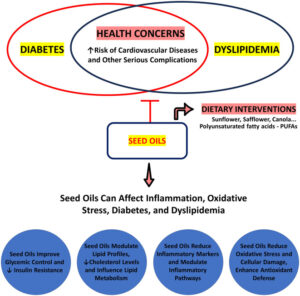
A recent systematic review covering 11 studies found that seed oils derived from canola, flaxseed, and sesame may improve lipid markers, support blood sugar control, and favorably influence oxidative stress in people with diabetes or dyslipidemia. In other words, context matters.
Now, before anyone starts preparing their lunch in fryer oil, remember this: what these oils are consumed with, and how they’re prepared, likely changes the equation dramatically.
Seed oils used in a whole-food meal are very different from oils repeatedly heated in deep fryers alongside soda, fries, and ultra-processed foods. Oxidation, repeated heating, and the surrounding diet all come into play.
As I discussed in my podcast with Dr. Nick Norwitz, the real issue may be less about the oil itself and more about the metabolic terrain it enters. Factors like omega-3 intake, visceral fat levels, and overall body fat percentage, inflammation, insulin resistance, and high sugar intake can all increase vulnerability to oxidative byproducts such as 4-HNE, a compound associated with overheated processed oils.
Here's something else many people miss: heating and industrial processing can change fatty acids substantially, while unheated or minimally processed forms may behave differently in the body. Even environmental stressors like cold exposure can potentially alter how fats are utilized.
My take: seed oils aren’t a universal superfood or a universal toxin.
The truth lives in the gray area, and dose, source, processing method, and your own metabolic health likely determine whether they help, harm, or do very little at all.
If you want to go deeper on seed oils, their impact on cholesterol and metabolic health, and what the latest science actually says, you can check out the resources below:
- Are Seed Oils *Really* That Bad For You? Ben Asks Skeptical Questions (& Unveils DIRTY Secrets Of The Food Industry) With Dr. Anthony Gustin & Steven Rofrano.
- Check for *These* Ingredients To Avoid Damaged & Damaging SEED OILS in Potato Chips, French Fries, Fried Foods & More.
- Everything You Need To Know About SEED OILS (Including One Cool “Trick” To Make Them Less Damaging), With Dr. Nick Norwitz.
- DARK Calories! How Vegetable Oils Destroy Your Health (& How You Can Get It Back) With Dr. Cate Shanahan.
- How An Olympic Champion Overcame Near Death, Healed His Gut & Shoulder & Changed The Nutritional World Forever With “Seed Oils”: An Interview With Andreas Wecker.
This Week in Health & Performance: What the Latest Research Says
💪🍚 Carbs for Muscle Growth, Less Than You Think: New analysis suggests maximizing muscle growth might not require sky-high carb intake. Your ideal amount depends on factors like whether you train fasted, your workout volume, and if you train multiple times daily. For many people, strategic carb timing may matter more than sheer quantity (read more here).
🏋️♂️📉 Do You Need a Deload Week?: Research found that taking an easier training week every fourth week did NOT reduce gains in muscle size or strength compared with continuous training. Important note: this study was in untrained individuals, so advanced lifters might respond differently (full study here).
🥩⏰ Protein Timing Still Matters, Especially in a Deficit: If you're dieting while trying to maintain or build muscle, evenly spreading protein intake across the day appears highly effective for supporting muscle protein synthesis. Around 0.5–0.55 g/kg per meal seems to be a smart target (read the study).
🛌🧬 Can You Preserve Muscle Without Training?: Some studies show muscle size and strength can be maintained for 2 to 3 weeks without exercise. Even more interesting, emerging discussions suggest 20 grams of essential amino acids daily may help preserve muscle mass during periods of bed rest or inactivity (to go deeper on this topic, you can check out Angelo Keely's recent podcast with Jen Cohen).
Key Takeaway: This week’s research reinforces that smarter strategies often beat harder ones. You may need fewer carbs than expected, planned easier weeks don’t necessarily derail progress, and precise protein intake can help protect muscle even during dieting or downtime. Small adjustments can create big results.
 Want to dive deeper? Click the links above to explore the research, and click here to follow me on X for all the latest health and performance news hot off the press!
Product Of The Week
::: Master Your Environment With Physics Over Chemistry (Save $100 on Hapbee & Receive a Free 30-Day Membership) :::
We all know the feeling of being knocked off our baseline.
For me, it’s the “travel warrior” lifestyle, constant flights, hotel rooms, and shifting time zones.
But it’s also those days at home where you know you need to hit the gym, but you’re just not in the mood. You feel a little out of sync, maybe from the travel or a bad night of sleep, and the motivation isn’t there.
Most people try to fix these hurdles with chemistry, melatonin for sleep, or a heavy pre-workout for energy. But there’s often a metabolic tax. Your body has to process those compounds, your gut can get disrupted, and the stimulant hangover may hit later.
Lately, I’ve been choosing physics over chemistry with Hapbee to signal my cells directly.
Hapbee uses ultra-low frequency electromagnetic signals designed to mimic compounds many people already use, like caffeine, melatonin, or nicotine. It’s not a substance; it’s a signal, which means no metabolic tax and no stimulant hangover.
Here’s the quantified proof (study-verified):
- 48% More REM Sleep: Essential for neural repair
- 28% Faster Sleep Onset: Shutting down instantly, regardless of the environment
- 21% Increase in HRV: Proven autonomic resilience
My go-to Hapbee protocol:
- On a plane: I use Long Flight, inspired by melatonin and CBD, to take the edge off travel stress and constant vibration.
- In a hotel room: I use Bed Time, designed to mimic adenosine, to help realign my sleep schedule. If I need deeper recovery, I switch to Deep Sleep, inspired by melatonin, without the grogginess of pills.
- Before a workout: I use Workout Zone, inspired by caffeine and nicotine, for energy and laser focus. My mood shifts, I’m ready to train, and there’s no crash afterward.
For a limited time, you'll receive $100 off every Hapbee device plus a 30-day free membership here.
Podcasts I Recorded This Week:

ONE Tiny Blood Spot = HUNDREDS (!) Of Biomarkers, Age & Disease Prediction With Dr. Matt Dawson
The Latest Content I Was Featured On This Week:
My Article Feed:
My full article feed and all archives of my articles are here.
This Week's Most Popular Instagram Post:

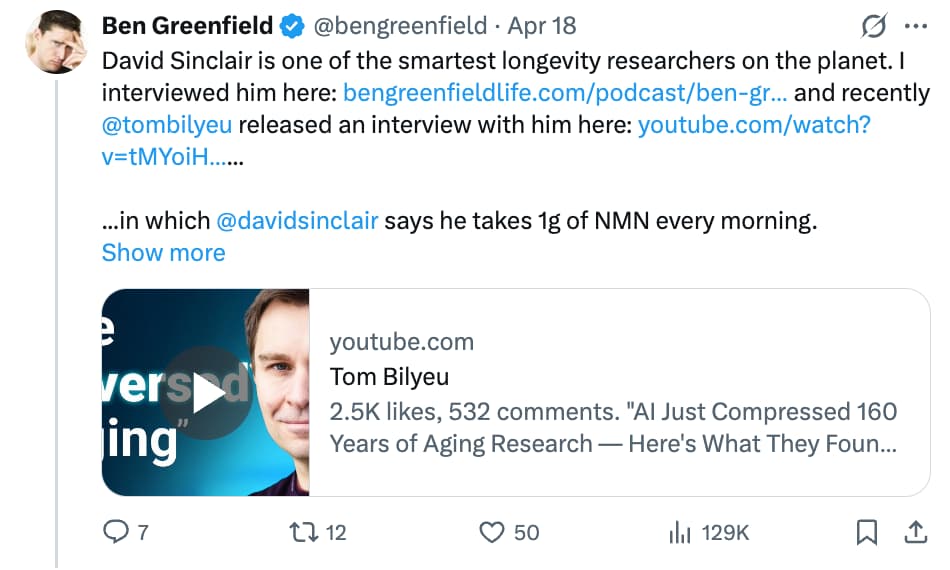
This Week's Most Popular Tweet:
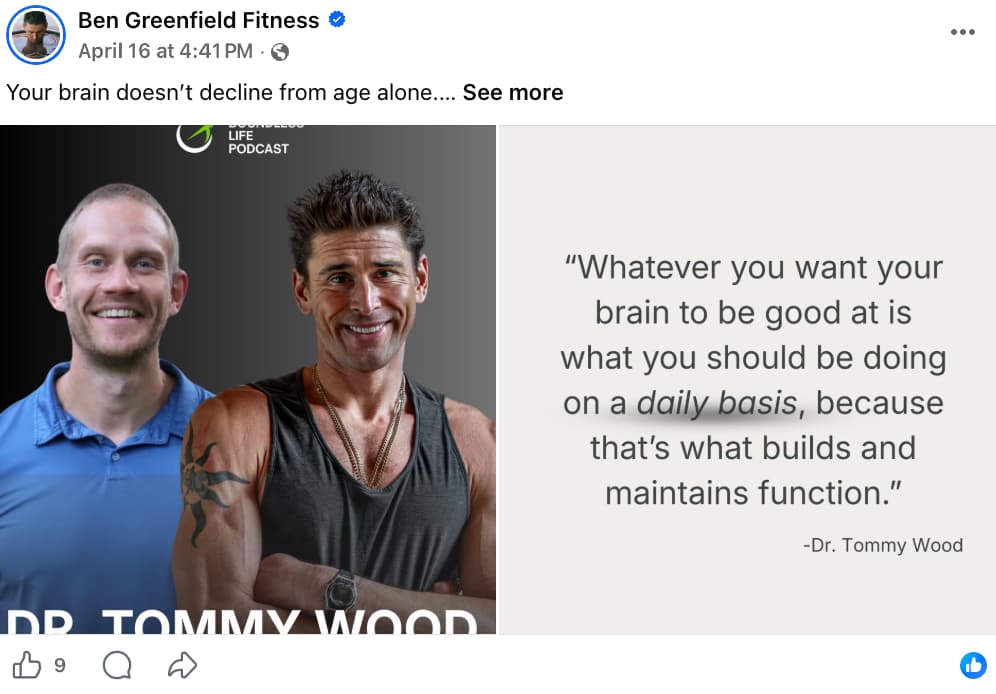
This Week's Most Popular Facebook Post:
Cheers,
Ben