Home » Podcast » 3 Easy But Little-Known Steps To *Glowing* Skin (Do THIS to Get Rid Of Baggy Eyes, Cellulite & Scars!) With Amitay Eshel

3 Easy But Little-Known Steps To *Glowing* Skin (Do THIS to Get Rid Of Baggy Eyes, Cellulite & Scars!) With Amitay Eshel

Listen on:

Reading time: 6 minutes

What I Discuss with Amitay Eshel:

  • Skin biohacking for confidence, self-image, and health, and how skin reflects deeper internal vitality (as opposed to conventional beauty care)…01:21
  • How high performers often neglect skin, which can show signs of stress, resource depletion, and poor cellular function…02:49
  • Studies and startups leveraging AI to estimate biological age and health by analyzing photos—going far beyond basic diagnoses like eczema…03:35
  • The science behind skin luminescence: mitochondrial energy emits infrared light, which is visible to the human eye as “glow.” Pale or dull skin points to deeper dysfunction…04:22
  • How warm, glowing skin signals robust mitochondria and health. The traditional advice to “get sunshine” is only part of the story—cellular energy is key…06:51
  • Antioxidants, NAD, methylene blue, and similar compounds can support skin mitochondria transdermally, protecting cells and boosting energy…07:36
  • External stressors (sun, travel, and aesthetic procedures) cause most skin aging, while gravity and metabolism account for only 20%…09:47
  • How Young Goose engineered methylene blue formulas to avoid staining, and how to boost NAD directly into your skin…11:09
  • Stacking and combining methylene blue with red light therapy, sun exposure, scrubs, microneedling, and more…16:25
  • Why deep repair (microneedling, vitamin A, and bio-retinol peptides) is needed to build skin resilience and tackle wrinkles, beyond standard surface scrubs…22L13
  • The three foundational steps to skin rejuvenation: fueling mitochondria, providing stimulation (red light, scrubs), and instructions (exosomes)…23:11
  • Why human platelet-derived exosomes repair more effectively, how microRNAs work, and how these biologics are measured and sourced…25:26
  • The ideal routine: cleanse/stimulate (scrub/microneedling), apply exosomes on clean skin, wait 2–10 minutes, and then layer in other products for compounding effect…32:02
  • Applying exosomes at night leverages your skin’s repair window (10 p.m.–2 a.m.), giving far more dramatic rebuilding and anti-aging results…35:21
  • Strategies for baggy eyes (lymphatic drainage, red light, and exosomes), cellulite (fascia work and red light), and scar reduction (KPV peptide spray, microneedling, and exosomes)…39:03
  • Sourcing, testing, and validating exosome products so customers always get what’s promised—an innovation in the skincare world…52:43

In this fascinating episode, I’m joined by repeat guest Amitay Eshel, the “engineer of beauty,” as we unlock the science behind glowing, healthy skin. We cover breakthrough topics like how your skin produces infrared light, how mitochondrial health impacts skin radiance, and the secrets to reversing aging using topical methylene blue (without staining!), NAD boosters, and platelet-derived exosomes.

You'll discover my three-step protocol to support skin vitality: boosting mitochondrial function, using powerful stimuli like red light therapy and enzymatic scrubs, and guiding repair with advanced biologics. Plus, you'll also explore real solutions for bags under the eyes, cellulite, wrinkles, and scars.

Amitay Eshel is the co-founder of Young Goose (save 10% with code BEN10) and the host of the Biohacking Beauty podcast. He helped pioneer at-home red light therapy and brought topical NAD+ precursors, spermidine, methylene blue, quantified exosomes, and DNA repair enzymes into consumer skin science. His work centers on those who train, build, lead, and want their biology to keep up.

He's also a black belt in Jiu-Jitsu, a student of history, and is always asking better questions.

To save 10% off Young Goose, you can use code BEN10 here.

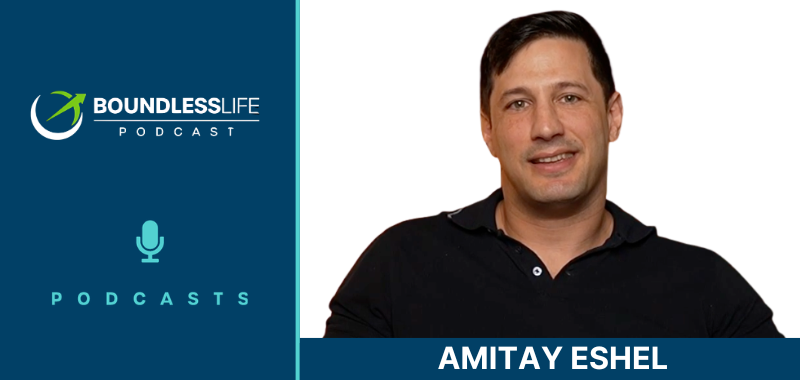
You can also check out my previous episodes with Amitay below:

Please Scroll Down for the Sponsors, Resources, and Transcript

Episode Sponsors: 
Quantum Upgrade: Recent research has revealed that the Quantum Upgrade was able to increase ATP production by a jaw-dropping 20–25% in human cells. Unlock a 15-day free trial with the code BEN15 at quantumupgrade.io.

Timeline: Give your cells new life with high-performance products powered by Mitopure, Timeline's powerful ingredient that unlocks a precise dose of the rare Urolithin A molecule and promotes healthy aging. Go to timeline.com/BEN for up to 39% off your Mitopure Gummies.

Our Place: Upgrade to Our Place today and say goodbye to forever chemicals in your kitchen. Go to fromourplace.com/ben and enter my code BEN at checkout to receive 10% off sitewide.

Sunlighten: Sunlighten's patented infrared sauna technology delivers the highest quality near, mid, and far infrared wavelengths to reduce inflammation, boost mitochondrial function, enhance detox pathways, and optimize recovery—backed by 25+ years of clinically proven, non-toxic innovation. Save up to $1,400 at get.sunlighten.com/ben with code BEN.

Resources from this episode: 


Do you have questions, thoughts, or feedback for Amitay Eshel or me? Leave your comments below, and one of us will reply!

Upcoming Events:

ECO26 | May 14–16, 2026

Healthcare practitioners looking to achieve exponential clinical outcomes through Foundational Medicine: I'm speaking at ECO26 (May 14–16, 2026, in Boise, ID), a three-day event featuring cutting-edge education, powerful networking, and actionable strategies to elevate your practice (with up to 20 CEUs available for some practitioner types). I'll be presenting “The Detox Frontier: Lessons from The Edges of Biohacking to Everyday Vitality” on May 15th alongside some of the top minds in functional and foundational medicine. You can use this link to register and claim a $400 discount!

Ultimate Men Over 40 Health Summit | June 8–14, 2026

If you're a man over 40 looking to improve your strength, energy, health, hormones, recovery, longevity, and performance, I'm speaking at the Ultimate Men Over 40 Health Summit (June 8–14, 2026), a free 7-day virtual event featuring 100+ experts across 7 core pillars. I'll be presenting “Optimizing the Human Machine for 40 and Beyond” alongside some of the best minds in men's health today. You can register for free here now!

Health Optimisation Summit | September 11–13, 2026

I'm speaking at the Health Optimisation Summit in London (September 11–13, 2026) at the Business Design Centre. This isn't your average health conference. HOS unites the best minds in biohacking, longevity, nutrition, fitness, and medicine, with one goal: to actually make people healthier. With 35+ world-class speakers, 120+ cutting-edge brands, and 4,000 like-minded people all under one roof, it's two days that could genuinely change how you approach your health. Get your ticket here and use code BEN to save 10% off registration! 

The Boundless Couples Retreat | November 10–14, 2026

Ready to reconnect and recharge with your partner in paradise? Join the Greenfields at the stunning Prana Maya resort in Belize for the Boundless Couples Retreat, November 10–14, 2026. It's a five-day, all-inclusive escape designed to deepen your relationship, restore your vitality, and create memories that last a lifetime. From relaxation and adventure to intimate relationship coaching with Jessa and me, every detail is crafted to send you home with a stronger bond and a reinvigorated spirit. Spots are limited, so discover more and secure yours here today!

Stay tuned for future updates—and you can always keep up with my LIVE appearances by checking out bengreenfieldlife.com/calendar!

Ben Greenfield [00:00:00]: My name is Ben Greenfield. And on this episode of the Boundless Life Podcast.

Amitay Eshel [00:00:05]: Methylene blue is a crazy impressive compound when applied topically. Normally, it's a problem because you become blue when you apply it on your skin.

Ben Greenfield [00:00:14]: Yeah. Everybody right now is thinking, that's ridiculous. I've seen what it does to the mouth. There's no way I'm putting that on my skin.

Amitay Eshel [00:00:20]: It took us a very, very, very long time to find a way bypass the skin and not to stain the skin.

Ben Greenfield [00:00:26]: Okay. So, explain.

Ben Greenfield [00:00:29]: Welcome to The Boundless Life with me, your host, Ben Greenfield.

Ben Greenfield [00:00:34]: I'm a personal trainer, exercise physiologist, and.

Ben Greenfield [00:00:36]: Nutritionist, and I'm passionate about helping you.

Ben Greenfield [00:00:39]: Discover unparalleled levels of health, fitness, longevity, and beyond. In this episode, I'm giving you 3 easy but little-known steps for beautiful glowing skin. Did you know skin actually produces light? We'll find out about that in the episode along with how to get rid of scars, cellulite, baggy eyes, the best of biohacking beauty with Amitay Eshel. Let's do this. Amitay Eshel is the guy I rely on to look 8 years old because he is the engineer of beauty, right, Amitay?

Amitay Eshel [00:01:24]: Something like that, yeah.

Ben Greenfield [00:01:26]: Yeah, so you've been on the podcast before, obviously. If any of you have heard of Young Goose, which is the— man, I don't like to use the word beauty care product because it sounds so— not to gender appropriate— effeminate. Yeah. What word do men use?

Amitay Eshel [00:01:45]: I don't know. Skin biohacking, for that matter, is probably the most male dominant way to describe it.

Ben Greenfield [00:01:54]: What'd you say? Skin biohacking?

Amitay Eshel [00:01:56]: I think, yes. I think skin biohacking is probably the most like—.

Ben Greenfield [00:02:02]: Doesn't really roll off the tongue like beauty does. I don't know. How about confidence? Because I mean, that's why I take care of my skin because I like to have confidence that I just don't look like the grandma from Something About Mary or some other washed-up cigarette-smoking, wrinkled, sun-damaged, poser when I'm on a video or on stage. I actually like for my skin to look healthy because I— you probably agree with this— it kind of reflects what's going on underneath, right?

Amitay Eshel [00:02:35]: Yeah. And I think the more of a high performer you are, the more you're asking from your body to perform day in, day out. At some point, it actually detracts from how your skin looks. You're kind of subverting resources somewhere else. So if you are a person that needs to show up, not only perform well, but also communicate that level of performance to, you know, to lead others, etc., you end up needing to do something skin-specific to make sure that your cells function optimally as well.

Ben Greenfield [00:03:17]: Yeah. Could you just look at somebody And I guess you could go as deep as you want on this and see their skin and kind of tell what might be going on, like biologically or physiologically, like deeper down.

Amitay Eshel [00:03:34]: So, you know, follow the money. There are actually startups that are— so first of all, there is data, there are studies showing that you could kind of guesstimate someone's biological age, not chronological, but biological age. To a very high degree of accuracy by the way that they look. And there are actually startups that are looking, you know, AI pattern recognition, photo recognition startups looking at inferring, you know, different conditions or again, overall kind of wellness biological age score off of how someone looks like. Right.

Ben Greenfield [00:04:11]: I'm assuming like, like we're getting more complex than just like, you have eczema or you have leprosy. Like, it's actually going a little bit more deeper than that.

Amitay Eshel [00:04:22]: Yeah, yeah, definitely. It's not like, are you a leper? Yes or no? It definitely goes much, much deeper than that. One of the craziest things that you can infer is mitochondrial function for many different reasons. But mitochondria, part of that redox— yeah, part of that mitochondrial energy production is emitting far-infrared or generally infrared light. And since we can see the lower end spectrum of infrared light, we can see until about 810 nanometers, depends on individual abilities. We can actually associate skin glow or what we call like skin luminescence associated with mitochondrial function and vice versa. If someone's mitochondria is dysfunctional, we will interpret it as someone who looks pale, looks dim, et cetera.

Ben Greenfield [00:05:24]: Wait, so you're saying when people use a word like glow or luminescence, that's not just like a figure of speech? We actually are emitting White.

Amitay Eshel [00:05:36]: Yeah, we do. So, you know, my first career was dealing with, you know, very complicated thermal imaging devices. That was the first thing I did in life that I got paid for. And these all rely on the fact that we emit infrared now. And it's not like in the movies where you can see, you know, past walls, but you could see you can use infrared for night vision. You can see people very well. So we do emit infrared, and we can, with our eyes, we can interpret some of that infrared. We can see some of that infrared.

Amitay Eshel [00:06:14]: That is a big part of what we consider healthy skin when we look at someone. And by the way, just for those new to, I guess, like, skin and how it behaves, this is different than being oily or looking like shiny or glossy. That's a different category of glow.

Ben Greenfield [00:06:34]: Okay. Okay. So, sometimes you see somebody who's pale and you think they need to get in nature more and maybe get a little sunshine, or maybe they have anemia or some kind of an iron dysregulation issue. But, what you're saying is that if you see somebody and they do have that kind of off-color look that we do kind of associate with unhealthiness, at least in Western culture, that there might be some kind of mitochondrial dysfunction going on?

Amitay Eshel [00:07:04]: Yeah. And to associate it a little bit, that also one of the words that come to mind when people look at someone that has very healthy mitochondria is warmth. So a skin that looks warm, that looks glowing, begets better mitochondria and vice versa.

Ben Greenfield [00:07:24]: Okay, so how does that affect somebody like you who's designing skincare products when it comes to the mitochondria? Because, you know, the way I see it is I know that there are certain compounds I could eat or supplement with that would support mitochondrial health, like, you know, antioxidants, polyphenols. You know, people talk about like urolithin A and NAD+ and popular supplements for mitochondrial support. But can you do things transdermally or topically?

Amitay Eshel [00:07:56]: Yes. So this is a large category. First and foremost, a lot of these compounds that you mentioned, like antioxidants, they're going to do things to protect our skin. So there is less mitochondrial damage or there is less demand on the mitochondria. And that's kind of what I alluded to to begin with, where someone who's a high performer— let's— I'll give you 3 examples. One is like someone who's an athlete. Like yourself. Another one, it could be someone who really cares about how they look like and they subject their skin to a lot of aesthetic procedures, microneedling, which we spoke about before, you and I, or different type of scrubs or red light therapy or anything like that.

Amitay Eshel [00:08:36]: And the third one would be like someone that travels a lot, that's a lot on the plane or a lot on the road with a lot of sun damage. So these three examples are examples that that require a lot of ATP production or a lot of mitochondrial compliance. They demand a lot of energy to be produced. Alongside that energy is oxidative stress. Oxidative stress is one of the major things that drives skin aging. And to give you an example, 80% of the reason why our skin ages has nothing to do with chronological normal aging. It's all of those external factors.

Ben Greenfield [00:09:17]: Well, now, when you say chronological external aging, you would mean, like, I guess probably the most popular one that people name would just be gravity, right? Like sagging or dropping of the face due to gravity.

Amitay Eshel [00:09:28]: Gravity or normal. So, you know, you have your metabolism at rest, basically, right? That would be associated with a normal decline. That creates some oxidative stress as well. And you could think of standard aging, aging due to the passage of time, you kind of bundle that there as well. Just consuming calories. Some of those calories end up being oxidative and contribute to oxidative stress. That's only about 20% of why your skin is going to age. And the other 80% are things that have nothing to do with you sitting on the couch eating salad for that.

Ben Greenfield [00:10:13]: Okay. So, I mean, that almost sounds to me like that would translate into 80% of it is largely controllable.

Amitay Eshel [00:10:21]: 100%. And now we get to two types of control. The first control is protection. So we talked before about molecules like ectoin or SPF or antioxidants.

Ben Greenfield [00:10:35]: And by the way, not to throw you off track, by the way, I've been wearing sunscreen on airplanes since our last podcast.

Amitay Eshel [00:10:43]: Yeah.

Ben Greenfield [00:10:43]: In case there was a doubt about that one.

Amitay Eshel [00:10:46]: Yeah. So these are things that are very good at shielding our skin from that increase in oxidative stress that at the end of the day comes back to the mitochondria and disrupts the mitochondria, et cetera. There are things that you could do that are more active in their nature. So one of the things, you mentioned supplements, and I know you've had pretty recently, you've had Dr. Scott share talking about methylene blue on your podcast.

Ben Greenfield [00:11:19]: Yeah.

Amitay Eshel [00:11:20]: And methylene blue is a crazy impressive compound when applied topically. Normally it's a problem because you become blue when you apply it on your skin.

Ben Greenfield [00:11:31]: Everyone, you know, you know, everybody right now is thinking that's ridiculous. I've seen what it does to the mouth. There's no way I'm putting that on my skin.

Amitay Eshel [00:11:39]: Yeah, that's true. It took us a very, very, very long time to find a way for it not to stain the skin, to bypass the skin and not to stain the skin.

Ben Greenfield [00:11:50]: Okay, so, so explain.

Amitay Eshel [00:11:54]: So some of it is proprietary. Okay, but We can have the methylene blue that bypasses the skin and does not stain the skin blue get absorbed very quickly. And the other one, and the remnants actually become leukomethylene blue that doesn't have a color. Okay. And leukomethylene blue has its own merits. Quite frankly, the information is is ongoing there. We're more interested in methylene blue, but you get a product that looks blue. Like, we right now have only one product called Blue Peptide Spray.

Amitay Eshel [00:12:37]: It looks blue. You're kind of scared to apply it to spray it on your skin.

Ben Greenfield [00:12:42]: Blue. And by the way, I don't know if this is intentional. I think it smells like blueberries. My wife does too, right?

Amitay Eshel [00:12:47]: Yeah, I know that's not intentional. We sprayed it. We sprayed the first version and we were smelling it like, how about we try and keep this smell? So you apply, you spray it on your skin. If you have a white shirt, don't like spray it directly on it. Other than that, you're good.

Ben Greenfield [00:13:09]: Okay, so let's say somebody wanted to use methylene blue to, I guess the way you're describing it, enhance the mitochondrial quality of the skin so that you get that glow, literally increased infrared light emission, which I'm still just fascinated by. And they have some other skin products, right? They've got a serum, maybe a moisturizer, something like that. Does the methylene blue need to go on first or last, or does it matter? Does the methylene blue need to go on first or last, or does it matter?

Amitay Eshel [00:13:53]: It doesn't really matter. We normally recommend applying it first because it's a very light and absorbable product. As long as you apply things, you know, close in time to one another, it doesn't really matter. But that, you know, that product also has a lot of— has a new complex that we are implementing in our product that's called NAD Apex that has 3 different types of— 3 different ways to boost NAD in your skin. So that is a product that we really want to make sure is there to fuel mitochondrial function, fuel your skin's ability to follow instructions. We basically, if you can think of things that you want your skin to do, most people, when they feel great, they perform well, one day they're going to look in the mirror and they're going to say, hey, what I see in the mirror does not correspond with how I feel inside. There is some kind of dissonance there.

Ben Greenfield [00:14:59]: Yeah.

Amitay Eshel [00:15:00]: The major thing that people go ahead and do there, they're going super aggressive and they're trying to go and get aesthetic procedures, which I'm not against. But that is normally the first thing that comes to people's mind when they look in the mirror and they don't like what they see or they feel that there is a dissonance, right?

Ben Greenfield [00:15:19]: Yeah. Okay.

Amitay Eshel [00:15:22]: Yeah. But this is a very small part of what we need to do. Like the playbook of how we turn around the appearance of the skin. Because if you provide that stimulus, that very harsh stimulus, and your skin has no ability to follow up on that because it's older, it has, again, mitochondrial dysfunction, it doesn't have the fuel or the know-how on how to follow that stimulus. You're in trouble. It's like going to the gym and getting a very hard workout and having lack of sleep and not eating correctly. You're not going to derive what you're trying to derive of that stimulus. So the reason I'm saying all of that is methylene blue or methylene blue plus NAD boosting is one of the three stations you're trying to hit when you want to reverse the appearance of aging, basically.

Ben Greenfield [00:16:25]: Okay. Now, I'm curious about what the other two stations are, but before I ask, when you usually use methylene blue orally, like one of the secret insider biohacker ways to get more energy or produce ATP and almost photosynthesize like a plant is you consume methylene blue, you wait 60 to 90 minutes and then you do red light therapy or you go for a walk in the sunshine with some skin exposed. With topical methylene blue, do you get extra benefits if you do something like a red light bed or a red light face mask or even, I don't know, like mild to moderate sun exposure afterwards?

Amitay Eshel [00:17:10]: Yes. And, the funny thing is that even UV, your skin even responds better to UV. Positively. But I would say you've just uncovered one of the other two stations. Like we said, one of them is fueling the mitochondria. And yes, the stimulus is one of the other tenets. And stimulus is everything that you've mentioned now. It could be red light therapy, it could be going out in the sun, it could be things that are more mechanical, right? Like we've mentioned, whether it's microneedling or a laser or things like that.

Amitay Eshel [00:17:46]: So these are things that we have to have an input exactly like working out. We have to have an input for repair.

Ben Greenfield [00:17:54]: Okay. And by the way, with the mechanical aggravation, I think we talked about this in our last podcast, a scrub would count as that. But one thing I wonder is, you know, people send me stuff all the time, like different beauty products and scrubs and all sorts of stuff. And I've been to even like the the little classes where you make your own scrub out of salt and oils, the texture, like the size or the grittiness of the scrub seems to widely vary. And I always wonder, like, should it be like the really like thick crystals that really kind of like rub into your face? Should it be thin like sandpaper you can barely feel? I mean, I know you guys have a scrub, so you for sure have some thoughts on this. What are you looking for in a scrub?

Amitay Eshel [00:18:41]: So it's a good question. So first of all, it depends on what you want it for, right? If you have— mainly men— if you have coarser skin, then things that are basically sharper in air quotes are going to serve you more. If you are someone that has sensitive skin, if you have any type of rosacea sensitivity, you're prone to redness, all of those things, you want to actually minimize the amount of stimulation you provide the outer layer of the skin. And scrubs are normally not what you're going to want to do a lot of. The trick with our scrub, which is called NIA Polish, because it also has like NAD precursors or other scrubs that combine like we do the mechanical aspect of exfoliation and a chemical or enzymatic type of exfoliation, is that most people feel like they should scrub right away. When they apply the product. But really what you want to do, if you want maximum results with minimum irritation, is apply it very, very, very gently. Let it sit for a minute, 2 minutes, 3 minutes, even up to 10 minutes.

Amitay Eshel [00:19:57]: Depends on— that's how you kind of— how you can kind of dial in the intensity that you're looking for. And then before you wash it off, you are scrubbing your skin still pretty gently, but you're scrubbing your skin. And what happens is that all of the extra skin that we wanted to scrub off has now been detached enzymatically off of the living skin underneath, and it's much easier to remove it.

Ben Greenfield [00:20:25]: Okay, so it'd be kind of like almost when you leave soap for a little while on a really dirty dish, it scrubs off more easily. What you're saying is apply the scrub, wait 1 to 10 minutes, and then you basically, during that period of time, are allowing for it to enzymatically— what's it doing enzymatically? Is it like dragging out oils or something else?

Amitay Eshel [00:20:50]: No. So depends on the enzymes. The enzymes that we use are actually breaking the bonds between dead skin that lays on top of the skin. And living skin underneath. Do you know, have you ever recommended that people eat, like, papaya to break down meat that they eat faster?

Ben Greenfield [00:21:11]: Yeah, papaya, pineapple for the bromelain and the papain.

Amitay Eshel [00:21:15]: Bromelain and papain. Yeah, exactly. So that's what we use. So that allows us to— Yeah.

Ben Greenfield [00:21:23]: Okay, so that's better than smearing, like, a pineapple wedge on my face, but that would work in a pinch, right?

Amitay Eshel [00:21:28]: Yeah, you could do that too. Just don't go and and then go into a beehive afterwards.

Ben Greenfield [00:21:33]: Yeah.

Amitay Eshel [00:21:35]: But one thing that I would say is that this is going to do a lot to increase resilience long-term in the skin, to really target wrinkles or laxity or things like that. It's a scrub is not optimal as far as that is concerned. We need molecules that really travel further, do molecules, or again, if we talk about mechanical things like microneedling, things that create the least amount of damage to the surface and create the most amount of stimulation further deep into the skin.

Ben Greenfield [00:22:11]: Okay. And that would be like microneedling.

Amitay Eshel [00:22:13]: Microneedling, vitamin A derivatives. Could be retinol. It could be different types of vitamin A derivatives. There are peptides that are are designed to mimic vitamin A's. They are not out yet. We have a beta product that we're developing right now, which is probably going to be ready towards the end of the year. And you'll get to try it before it's out, don't worry. But this is going to be peptides that are mimicking what vitamin A's do.

Amitay Eshel [00:22:49]: But these are things that could work deeper without aggravating the surface as much.

Ben Greenfield [00:22:54]: Okay, cool. So you've got your three, what do you call them, like phases or steps. We talked about methylene blue and NAD. We talked about mechanical aggravation or chemical or enzymatic aggravation. What's the third piece?

Amitay Eshel [00:23:11]: The third piece are the instructions. So you, for example, go— I remember you a few months ago went to get stem cells injected, right? And I'm sure exosomes. The reason that people do it holistically for the whole body is because there are many different instructions in the body. There are many stimuli in the body for repair. And as we get older, it's getting harder and harder for the body to kind of act on that repair in the most effective way. That's where biologics come in. And that is the best way to do it topically is with platelet-derived exosomes. So we created stimulation, we fueled the skin's ability to act upon that stimulation.

Amitay Eshel [00:24:04]: But as we grow older, the instructions on, again, how to create collagen, for example, or when we're creating more and more and more skin cells, or collagen or whatever that is, how do we not also create senescent cells? That's another issue, for example. So the third one is the correct instructions for your body to respond to stimulus and use the fuel effectively.

Ben Greenfield [00:24:34]: Okay, so platelet-derived exosomes. You sent me a bottle that said exosomes, like, It was maybe 7 months ago, and I've tried a couple more since. I really like the product, but when I first got it, I guess my only experience with exosomes has been they're in a little vial and you inject them, or they're in an IV bag and you're getting an infusion. I didn't even realize topical exosomes were a thing. So, tell me more about— I understand that exosomes are cell signaling molecules and they would therefore help with communication. But tell me more about what that means, like platelet-derived, where they're coming from, like what actually happens when you put them on your skin, because I don't think a lot of people are familiar with this idea of like exosomes you could just apply transdermally.

Amitay Eshel [00:25:26]: Yeah, the reason that that's slower to come to market in an effective way is because for the last 7 years. The way that people tried to get exosomes to stay stable in a skincare formulation is freeze dry it, freeze dry the exosomes. And we know that this destroys the exosomes. And I'll get to what gets destroyed, what does it mean in a second. But it really renders exosomes pretty much not effective. And so the products were not very good. Now, what are exosomes? Exosomes, basically, as you said, they're the messages for repair. What happens inside is that an exosome contains a lot of growth factors.

Amitay Eshel [00:26:17]: Fine, that we can do another way in skincare. But the real goal, the real opportunity here is with something called microRNAs. They are not mRNAs, there are microRNAs. What microRNAs means is it's basically a short command, exactly like in a computer, a short command that directs a cell to perform a function in a specific way. And why am I being so vague? It's because it can be both good and bad. All right. If we can think of exosomes as these messengers, It could be spam. I can give you 5 billion exosomes and you get 5 billion spam emails.

Amitay Eshel [00:27:02]: Nothing's going to happen. And maybe even something negative is going to happen. Maybe more inflammation is going to be created. So it's important that these exosomes have microRNAs that are viable and that communicate the right things that we want them to communicate. So the first differentiation, I would say, is between exosomes that are not human-derived, from plants, bacteria, other animals, and human-derived exosomes. Because if someone after this podcast goes and Googles exosome serum, they're going to get a lot of products. But if they look at the makeup of the exosomes, the first thing they're going to see is that a lot of them have exosomes that are from You know, from, I don't know, from apples or something like that. So these, although they do contain microRNAs, they do contain those little codes that tell cells how to function.

Amitay Eshel [00:28:01]: Most of them are in a different language. They're in the language of plants. They're not in the language of human cells. Now, when we zoom in and we look at human cells, as you know, we have many, many, many, many different types of cells in our body. And even the same command in difference in your brain cells and your heart cells and in your skin cells can be interpreted differently or can be acted upon differently. So within the context of skin cells or human cells, we want to look for exosomes that are used to communicate regeneration in skin. That is why a lot of research, by the way, coming out of the Mayo Clinic, but in general, most research points to the fact that platelet-derived exosomes on average has the most viable, the most concentrated communication for skin cellular repair rather than something more random. And even within that, now it depends what do you pair with it? How do you make sure it's viable? How do you make sure it survives? How do you make sure that these exosomes, which you could think of as the exosomes, really are the carrier? Exosomes really, it's like saying liposomal.

Amitay Eshel [00:29:29]: The question, what's inside, right? So how do we keep those packets of information intact? By the time they get to you as an individual. So, these are the players here. Correct signals. Yeah.

Ben Greenfield [00:29:46]: I am assuming that if the exosomes, this little like bottle, I don't have one to hold up, but you guys can look at it in the show notes. Platelet-derived exosomes. If I have a bottle of these, I'm assuming they're not going to do much unless there's something else that's going in along with them for them to provide the information for.

Amitay Eshel [00:30:07]: So then let me tell you something really cool.

Ben Greenfield [00:30:15]: I'm assuming they're not going to do much unless there's something else that's going in along with them for them to provide the information for.

Amitay Eshel [00:30:23]: So then let me tell you something really cool. The really cool thing is that as opposed to 99.9% of other things, that we're going to have in skincare. Exosomes can make a difference on their own because your skin is dealing with issues all the time on its own. They are very small. They're about a tenth of the size of your pore. They're microscopic. They're nanoscopic. Right.

Amitay Eshel [00:30:49]: So they're— to give you an idea, anything below 500 Daltons in molecular weight can get into your skin.

Ben Greenfield [00:31:00]: Okay.

Amitay Eshel [00:31:01]: Large exosomes are like 150 Daltons, so they're very comfortable absorbing into the skin. But you're correct to say that alone, the fact that you're going to get very good communication for collagen production, reduction of inflammation, reduction of senescent cells, which is one of the, one of the results from the Mayo Clinic studies. All of those things are dependent on stimulation and fuel and the ability of your cells to perform the commands. So you're incorrect to the extent that you're going to get something, but you really want to match it together with everything that we said until now if you really want to stack them well and compound the signal.

Ben Greenfield [00:31:47]: Okay, so let's say I've got my hands on a bottle of exosomes and I want to get the most out of them. What would be the main things to combine them with? And kind of like methylene blue, does the sequence matter in terms of the exosomes going on first or later?

Amitay Eshel [00:32:02]: Okay, so by now, just to give you an idea, we're the only ones that— the product's called Vampire Exosomes. This is the only product in the world that there is third-party data on what's inside. So we're the only company that tells you we know what you're getting inside the exosome. We know the count. So, you know, for that matter, you have 3 trillion per bottle.

Ben Greenfield [00:32:28]: That sounds like— is that a lot? Like, if I get like an apple-derived exosome product, is it comparable in terms of the number? Like, or—.

Amitay Eshel [00:32:38]: So we're, we're about 3 times more than the, the next leading competitor.

Ben Greenfield [00:32:44]: Okay.

Amitay Eshel [00:32:45]: Uh, 3, 3 trillion. So you're getting about just to give you an idea, you said about the vial of exosomes that you're going to inject, right? On average, on the market, 100 billion exosomes, you're going to be paying around $3,500. And we have 3 trillion.

Ben Greenfield [00:33:03]: Oh, wow.

Amitay Eshel [00:33:03]: So, yeah. So you're getting about 50 billion per application.

Ben Greenfield [00:33:09]: Okay, so 3 trillion in the entire bottle, 50 billion per application, and then Back to my question, what am I combining with those ideally?

Amitay Eshel [00:33:18]: Okay, so you really— since it's so much, you really want to make sure that you're treating it very— you're giving it the respect that it deserves. Here's the best stack to do, is to do any type of stimulation, any type of stimulation you want to do that's non chemical, not a product. Red light therapy, microneedling, scrub, whatever that is. Nothing that, that's basically left on the skin. You want to do before because exosomes are sensitive to everything. Okay, so you want to do it before. You want to apply exosomes on clean skin and you want to wait at least 2 minutes and even up to 10 minutes before you do anything else. Before you apply the blue peptide spray, the methylene blue product, retinol, spermidine, and NAD, which we have in other products, all of those things we want to wait at least 2 minutes before we do.

Ben Greenfield [00:34:21]: Why?

Amitay Eshel [00:34:23]: Because exosomes are extremely, extremely sensitive, and they're also extremely sensitive to pH fluctuations, to acidity fluctuations. So anything that you're going to apply on the skin that's going to change the pH just a little bit is going to destroy some of those exosomes. I'm not saying that you're not going to get any results, but you're not going to optimize the results, if that makes sense.

Ben Greenfield [00:34:48]: Okay, got it. So I could wake up, scrub or cleanse my face, dry it off, rinse it, put exosomes on, and then maybe while I am whatever, taking a pee, going around the bathroom, getting dressed, et cetera. And then I could come back and put on everything else.

Amitay Eshel [00:35:07]: Yeah. And I recommend, by the way, you could use exosomes twice a day. That's what I do. But applying them at night is significantly more impactful than applying them during the day.

Ben Greenfield [00:35:19]: Oh, really?

Amitay Eshel [00:35:21]: Why? That's because how your body is designed to recover. It's, again, like any recovery. Your body's major window, hormonally, circadian rhythm-wise, the major window for cellular repair, for skin cellular repair, is between 10:00 p.m. and midnight. 10:00 p.m. and 2:00 in the morning, let's say.

Ben Greenfield [00:35:45]: Okay, this is good to know. All right, good. Okay, so then, like, the same scenario before bed, I can wash my face. Put on the exosomes, tool around, get a few things ready for bed, and then eventually come back in, put on my other care products, and hit the sack.

Amitay Eshel [00:36:03]: Yeah, my favorite stack is using a product called Ladder, which I think you've tried, which is light-activated DNA repair, which has our NAD complex, spermidine, some really cool peptides, like like GHK-Cu, but it also has light-activated DNA repair enzymes, which red light therapy, although it's amazing, and that's what I did, that was my first career, it stops short of DNA repair. And what we've done is we've leveraged red light therapy to activate those special enzymes which are called photozymes. Which target UV-induced DNA damage. So but you got to activate them with really high levels of light and activating them with other types of light that, that intensely would create some skin damage. So you could apply them during the day and have the sun activate them, but you're doing kind of two steps forward, one step back. So the best is to do it with red light therapy. So I apply this, the ladder serum. I use red light therapy.

Amitay Eshel [00:37:18]: Then I, since it's already absorbed, you know, 10 minutes have passed, I use red light therapy, 10 minutes have passed, my skin is somewhat clean. Then I apply the Vampire Exosomes, brush my teeth, do a bunch of stuff, and then go back and apply the other skincare products. For example, blue peptide spray or bioretinol. Yeah.

Ben Greenfield [00:37:43]: Okay. Got it. Yeah. I mean, it's doable if you kind of stack and find other things to do. I'm assuming while you're tooling around with red light, I guess I'm assuming you're using like a red light face mask.

Amitay Eshel [00:37:56]: I have like a really cool face mask like that someone sent me that— that's what I'm using now. But normally I'll go in front of a panel and what I've done My favorite things— I'm trying other things now, but my favorite out of everything was to have a panel over me and lay on an occupying, like a Shakti mat. And then you're stacking also, like a nervous regulation and everything.

Ben Greenfield [00:38:26]: Yeah, obviously that'd be similar to a red light bed, but without the expense, just going with the panel. Then greenfieldlife.com/younggoose. 2026 is where you can access the shownotes and my other podcast with Amitay. Okay. There's a few things that I'm wondering about that I get asked about that I'd love to hear your take on, Amitay. The baggy or— I don't know if you'd call it baggy skin, but bags under the eyes, right? People deal with this when they travel, when they're short on sleep. Some people just seem to have it chronically. What are some of your top tips for bags underneath the eyes?

Amitay Eshel [00:39:05]: Lymphatic drainage and especially around the neck. So something very interesting. Do you know how I think when we met first, you were extremely interested in vagus nerve stimulation? And the really cool thing about it is that around that area of your neck, that is where your lymphatic flow kind of passes by. And a lot of us, especially if we work out a lot, especially if we have larger necks, as you know, I do jiu-jitsu like your family does. You build up a lot of constraints on lymphatic drainage, and fluid has a harder time kind of flowing down from your face. We can talk about many things. We can talk about sleep. We can talk about glymphatic drainage.

Amitay Eshel [00:39:57]: A lot of things. May also play a part here. However, if you have a hard time with lymphatic drainage, you are going to have not only more baggier eyes, but the color is going to be an issue as well. And the reason is, is the color is actually what you see as dark is blood. Exactly. If you look at your vein, you see blue even though your, your, your blood is red. Okay. The color behind the eyes is blood pooling accumulation.

Amitay Eshel [00:40:30]: That's number 1. Number 2, it's thicker skin. So the thinner the skin, the more it caves to the pressure that I talked about before. So thickening the skin around the eyes is imperative. Well, guess what I'm going to say? Two things that you could do is red light therapy and exosomes, platelet-derived exosomes, vampire exosomes to thicken the skin around the eyes.

Ben Greenfield [00:40:55]: Okay, quick question on the red light therapy. Just a few little rabbit holes here.

Amitay Eshel [00:41:00]: Yeah.

Ben Greenfield [00:41:00]: For the red light therapy for thickening the skin, if somebody doesn't have a mask, do you know— and they do have a panel— like how far they should be standing from the panel? And secondarily, sorry, if they should be wearing like goggles if they're doing this?

Amitay Eshel [00:41:16]: So you don't need to wear goggles. That's— I'm going to put it here. The second thing is this, and I'm going to go very, very traditional panels. So the panel that looks like the LEDs are separated between them. And the reason is, and that's, you know, 99% of people's panels are going to be like that. And the reason is because there is a focus lens behind the LED bulb. And the reason that— dialed. And the reason that's important is that you get points of convergence of different diodes shining together.

Amitay Eshel [00:41:49]: And what I mean by that is that if anyone has a panel here, they should put their light in front of their hand in front of the panel and kind of pull it away. And they'll see that around 6 inches, 12 inches, and 18 inches, they can feel slightly warmer than either closer or further. And that's because there is light convergence there. So to answer your question, you don't have to be extremely close. There is kind of bro science of, hey, if you want it to affect your skin, kind of go further a little bit. That doesn't really work like that to the extent that you're losing way more energy by doing that than you are gaining energy that gets your skin at the exact point.

Ben Greenfield [00:42:33]: Okay, that makes sense. Okay.

Amitay Eshel [00:42:35]: Yeah.

Ben Greenfield [00:42:36]: All right, so we're engaging in drainage, like lymphatic drainage. Making sure we've got good circulation to the neck. I'm assuming that could include things like lymphatic self-massage, maybe a dry skin brush around the neck. Obviously, proper sleep helps with lymphatic drainage as well as does movement, exercise, rebounding. We've got thickening the skin.

Amitay Eshel [00:42:58]: Nodding your head a lot like I do like this.

Ben Greenfield [00:43:00]: Yeah, yeah. We've got thickening the skin with red light. And then, I interrupted you as you were saying something else that you use to thicken the skin.

Amitay Eshel [00:43:12]: Something people should be careful with is vitamin A, retinols around the eyes.

Ben Greenfield [00:43:16]: Okay.

Amitay Eshel [00:43:17]: I'm saying it to the positive. That is going to thicken the skin. However, your skin around the eyes and around your lips is more sensitive than the rest of your facial skin. So either you use a product that you know doesn't irritate you That's number one. Number two, you use it less. Or number three, if you do feel your skin's becoming more irritated, then you actually apply a moisturizer first and then apply the retinol around the eyes because it, it limits the amount of the amount that you're actually going to get.

Ben Greenfield [00:43:56]: Do you guys make something that, that someone could use instead of vitamin A like a Young Goose? Do you have something for bags?

Amitay Eshel [00:44:03]: Yeah, we use something called— so we have liposomal vitamin A, which is called Bio-Retinol.

Ben Greenfield [00:44:08]: Okay.

Amitay Eshel [00:44:09]: And two things that I like about Bio-Retinol. First is that it has almost zero irritation because it's liposomal. The second is because it's very silky and kind of oily. I like to call it massage-in retinol. There are studies showing massaging in retinol works better because you're providing some stimulation to the skin. And the other thing is, as we said, about lymphatic drainage.

Ben Greenfield [00:44:36]: Okay. Okay.

Amitay Eshel [00:44:37]: Got it.

Ben Greenfield [00:44:39]: Anything else for the eyes?

Amitay Eshel [00:44:40]: Yeah. Last thing I'm going to say is glycation. In general, glycation is something that renders the skin more rigid, more rigid, so it moves less like a supple skin. And the other thing is, over time, it thins out the skin. And since it Speaking in heuristics here, since it kind of disperses evenly throughout the skin, it's going to affect skin that's thinner in a much more apparent way than it's going to affect skin in your, in your elbows and knees where it's very thick. So skin around the eyes, skin around the lips is going to show the effects of glycation significantly more.

Ben Greenfield [00:45:23]: And so when you're talking about glycation, are you literally referring to like avoiding sugar or other things in the diet that might cause that to occur? Or are there other ways to limit glycation?

Amitay Eshel [00:45:35]: Yes. So first, yes, you want to avoid things like sugar, you want sugar, fried foods, everything that I'm sure you talk about a lot as far as like, you know, rancid oils, ascorbic acid. L-ascorbic acid since it has very high propensity to go to become oxidative, pro-oxidative, and use products. So for example, when we designed Eye Care, which is our eye product, the first thing that we— around, it's a cream for around the eyes. The first thing that we've, that we targeted was reduction in glycation or reduction of the attachment of advanced glycation end products, AGEs, to the skin or to collagen.

Ben Greenfield [00:46:28]: Okay, okay, got it. Okay, so we've got lymphatic drainage, we've got thickening of the skin, we got limit glycation. And then another question that I get is about cellulite. Can you do things like transdermally or topically for cellulite, or are there other tactics similar to what you do for bags under the eyes?

Amitay Eshel [00:46:52]: Well, yes and no. But cellulite would be— yes, there are products that can improve cellulite to a certain extent, but I would put my money on fascial work. So fascia is a big determinant. So again, rigid fascia or uneven fascia is going to be something that is going to be the most impactful change in your body that is going to show itself as cellulite that you didn't have before. And the reason I'm saying that is because some people have cellulite since they were very little. However, still fascial work is going to be the main thing that's going to turn that around. And something that I didn't say about glycation, but it is also true. Going back to red light therapy.

Amitay Eshel [00:47:48]: This is very, very niche. What I'm saying right now needs much more science to be, you know, very substantiated. But it's an interesting exploration point. As we grow older, a coating around our our fascia, and by the way, around elastin as well, flips and becomes hydrophobic instead of hydrophilic. And it doesn't allow different sheaths to glide over each other. It becomes sticky. And that's part of why fascia becomes sticky, especially around areas that there were trauma and things like that. Exactly like there is more mitochondrial dysfunction, by the way, around where there was trauma, etc.

Amitay Eshel [00:48:37]: There is very interesting preliminary research showing that red light therapy can re-reverse that polarity. I'm forgetting exactly the research study, but I think it's the Triangle of ROS, of reactive oxygen species, is the name of the study. Really cool area of exploration.

Ben Greenfield [00:49:01]: Okay. I'll hunt it down and put it in the show notes. So, it sounds like fascia work, which I'm assuming could include self-inflicted scraping, rolling, or working with a rolfer or other deep tissue massage therapist or someone who can mobilize fascia using one of those methods or even one of these textured balls that you can kind of roll over a surface. Any of those would count. Okay. So, one more for you. Scar tissue or scars, whether it's a surgical scar like C-section or knee surgery or the fight I got in at the bar last week, anything like that as far as cuts, scrapes, scarring, tips for elimination of old scars or reducing the formation of new scars after acute damage?

Amitay Eshel [00:49:50]: Yeah. So, I have a personal story. With a scar that I'm assuming people can't see, but from your vantage points, my left above my eye, it opened completely from jiu-jitsu. And it was also glued, like, really bad because it was ER late at night. Glued really bad. And I— you know, anesthesia. My wife was freaking out. She's like, hey, we own a skincare company.

Amitay Eshel [00:50:20]: You can't look like a pirate. So we did a lot of things, but the two main things are KPV, topical KPV.

Ben Greenfield [00:50:30]: You mean KPV, the peptide that's often used for leaky gut?

Amitay Eshel [00:50:35]: Correct. Correct. So you could use the same peptide already constituted, the same thing that's in your fridge that's waiting for you to use it for for to inject if you're looking for overall inflammation. Again, like, if you have pills for leaky gut, it's going to be a little different, but you could spray it on, buy like a spray for a couple of dollars in like CVS and spray it on. This is incredible.

Ben Greenfield [00:51:07]: Wait, wait, wait. What you're saying is reconstitute the peptide that comes as a powder. And then get like some kind of a spray-on, put it into that bottle and use that as a spray-on onto the scar.

Amitay Eshel [00:51:20]: Correct. And some companies already know that that's what you're going to do. So the amount of that peptide in the vial that you're getting, you can get 10x that amount. Like instead of 10mg per vial, you can get like 100mg because they know it's not for injection. They know that you want to spray it on and you want to higher concentration there. So that's number one. Like most things that we're going to talk about, biologics are king. So exosomes are going to be another.

Amitay Eshel [00:51:53]: And so that's as far— and GHK-Cu and copper peptide, that's as far as a scar that we don't want it to form badly.

Ben Greenfield [00:52:01]: Okay.

Amitay Eshel [00:52:02]: That would apply, by the way, also for active acne that you don't want to become a scar. So everything that I just mentioned, you.

Ben Greenfield [00:52:12]: Can apply to that as well. Yeah. Okay.

Amitay Eshel [00:52:15]: If we're talking about an older scar, first of all, let me just explain that an older scar is actually a very dense deposit of collagen. And that's why, you know, one of our conversations, I said, hey, you know, you have the— excuse me— devices like radiofrequency or high-frequency ultrasounds or soft waves, those devices are going to go and professionally create like lifting effects in your skin in a derm office. These things are actually creating scarring under your skin. They're saying, hey, it's collagen. But really what's going on under your skin is you're scarring the layer under your skin. So collagen in scarring is synonymous to some extent, especially in older older skin. Now, if you're already— if the scar is already there, it could be faced. It doesn't have to be faced.

Amitay Eshel [00:53:09]: The first thing we need to do is we need to treat it, unfortunately, like a bone that didn't heal well. First, we need to rebreak that bone, basically. So first, we need to reinjure that collagen. And the best way to do it are, again, like lasers and microneedling. The microneedling you're going to do for scars is more— is deeper than microneedling you're going to do for aesthetics.

Ben Greenfield [00:53:36]: Okay.

Amitay Eshel [00:53:37]: The issue is, is that your body, because it's a higher stimulant, your body is going to want to respond to it again with some amount of scarring. So you really need to prepare your skin. Prior with fuel, as we said, with more NAD, methylene blue, all of those things that create a higher level, a higher ability to respond to stimuli. But at the end of the day, when you go home, we've seen crazy, crazy results with using vampire exosomes as the post-procedure to that. Because your body is now under shock, it wants to resolve the damage as fast as possible. And scar formation is a faster shortcut to repair than extensive, healthy, youthful repair.

Ben Greenfield [00:54:28]: Okay. So, for a scar, we're looking at things like ablation, irritation of the tissue, maybe also like scraping, realigning collagen, and then you follow that up with something that will allow for rapid healing like exosomes.

Amitay Eshel [00:54:44]: Yeah. And for the face, the face, since, you know, when you're talking about scraping in the face, you really are giving and taking, right? It's not like the best way to communicate with the face. I really recommend professional microneedling, but it's not the fun micro— the aftercare for that type of microneedling is a week of being red. It's not fun. It's not like, you know, you can't go to the sun for like 4 or 5 days.

Ben Greenfield [00:55:10]: No, my wife's done it before. Yeah, I've only ever done the baby version, but yeah. She's done it before and been pretty red.

Amitay Eshel [00:55:17]: Yeah. Yeah. From my own personal experience, I've done this twice, which is deeper. I kind of wanted to see what, what we can do with the vampire exosomes. The, the, the redness is almost gone, like after a day and a half, which is insane.

Ben Greenfield [00:55:32]: Wow. Okay, cool. Yay for exosomes. I don't think you even had that product out the last time I interviewed you. I don't, I don't think you had the methylene blue either.

Amitay Eshel [00:55:43]: The idea, the thing that took us a long time was not the exosomes, was the way to measure them and publish the results at scale. Last time we talked, we thought we're going to have to invest over $1 million a year testing them, and we've reduced it to about less than 10% of that. And that's why we didn't want to come out to the market with a product that we can't say that we know what's there exactly, because exosomes are most of what you're getting, most of what you're getting out there. Even when we source basically like platelets that are from blood donors. Yeah, they're screened for like from mycotoxins, things like that. But once we source it, a lot of the sources that we got, the exosomes were destroyed. They weren't good. So we really needed to work hard on finding a good source, but also something that we can vet every time.

Ben Greenfield [00:56:45]: Yeah. Yeah. Cool. Well, I mean, if you guys visit the Young Goose website, it's like a candy store for, like, the most cutting-edge weird skin products. But it's what I use now. Amita, I think this is your— is this your second or your third time on the show?

Amitay Eshel [00:57:04]: Third.

Ben Greenfield [00:57:04]: Third, yeah. So, I'll link to the other podcast because we took a deep dive into microneedling and how to decide when you do the serum versus the moisturizer versus the lotion versus the mask, all that in other episodes. So, go to BenGreenfieldLife.com/YoungGoose2026, Young Goose 2026, and everything we talked about, I'll make the show notes nice and juicy. So, you'll walk away with no baggy eyes, no cellulite, "No Scar Tissue" and your 3 steps for beautiful glowing skin. Amitay, thanks for doing this, man.

Amitay Eshel [00:57:39]: It's my pleasure. It's always a pleasure talking to you on air and off air.

Ben Greenfield [00:57:43]: Yeah, you and your 3 trillion exosomes. Alright, folks, thanks for listening in. I'm Ben Greenfield along with Amitay Eshel from Young Goose. Have an incredible week.

Ben Greenfield [00:57:54]: To discover even more tips, tricks, hacks.

Ben Greenfield [00:57:57]: And content to become the most complete boundless version of you, visit BenGreenfieldLife.com.

Ben Greenfield [00:58:10]: In compliance with the FTC guidelines, please assume the following about links and posts on this site. Most of the links going to products are often affiliate links of which I receive a small commission from sales of certain items, but the price is the same for you and sometimes I even I even get to share a unique and somewhat significant discount with you. In some cases, I might also be an investor in a company I mention. I'm the founder, for example, of Kion LLC, the makers of Kion-branded supplements and products, which I talk about quite a bit. Regardless of the relationship, if I post or talk about an affiliate link to a product, it is indeed something I personally use, support, and with full authenticity and transparency recommend in good conscience. I personally vet each and every product that I talk about. My first priority is providing valuable information and resources to you that help you positively optimize your mind, body, and spirit, and I'll only ever link to products or resources, affiliate or otherwise, that fit within this purpose. So, there's your fancy legal disclaimer.

Ben Greenfield

Ben Greenfield is a health consultant, speaker, and New York Times bestselling author of a wide variety of books.

What's Blocking You From Living Boundless?

Thoughts on 3 Easy But Little-Known Steps To *Glowing* Skin (Do THIS to Get Rid Of Baggy Eyes, Cellulite & Scars!) With Amitay Eshel

Leave a Reply

Your email address will not be published. Required fields are marked *

Related Podcasts

Boundless Life Podcast guest graphic featuring Jason Klop. The left side has a dark navy blue background displaying the Boundless Life Podcast logo and a teal microphone icon labeled "Podcasts" beneath it. The right side shows a professional headshot of Jason Klop, a young man with short dark hair and a warm smile, wearing a light beige blazer and a dark bow tie against a plain light background. He is looking directly at the camera. His name, "Jason Klop," appears in bold white text on a dark teal banner spanning the full width of the bottom of the graphic.

Are “Poop Pills” The Ultimate Bowel Biohack Of The Future? The Science of Fecal Microbiota Transplants (FMT) with Jason Klop.

Listen on: Reading time: 6 minutes What I Discuss with Jason Klop: What fecal microbiota transplantation (FMT) actually is, why...

Dr. Guosong Liu WP

Can the RIGHT Form of Magnesium REALLY Boost Brain Performance, Reverse Cognitive Decline & Protect Against Alzheimer’s? with Dr. Guosong Liu

Listen on: Reading time: 6 minutes What I Discuss with Dr. Guosong Liu: How Dr. Liu‘s accidental discovery at MIT’s...

Boundless Life Podcast guest graphic featuring Brigham Buhler. The left side has a dark navy blue background displaying the circular Boundless Life Podcast logo with a stylized athlete figure, the text "Boundless Life Podcast" in white, and a teal microphone icon labeled "Podcasts" beneath it. The right side shows a professional headshot of Brigham Buhler, a bald man with a neatly trimmed dark beard, wearing a dark teal henley shirt with button placket detail, against a clean white background. He is looking directly at the camera with a composed expression

“Oil Changes” For Your Blood, DIRTY Pharmaceutical Secrets, AI-Powered Medicine & More With Brigham Buhler.

Listen on: Reading time: 6 minutes What I Discuss with Brigham Buhler: Brigham’s background and disillusionment with big pharma, navigating...