Home » Podcast » Are Your Supplements OVERHYPED, *Toxic* & Downright DANGEROUS Or Are Pills Just Better Living Through Science? A Debate With Robyn Openshaw & Dr. Jeffrey Bland

Are Your Supplements OVERHYPED, *Toxic* & Downright DANGEROUS Or Are Pills Just Better Living Through Science? A Debate With Robyn Openshaw & Dr. Jeffrey Bland

Listen on:

Reading time: 7 minutes

What I Discuss with Robyn Openshaw & Dr. Jeffrey Bland:

  • Robyn's growing skepticism, the clinical experiences that solidified her concerns, and her comparative analysis of supplement industry processes…02:54
  • The historical evolution of supplementation, “insurance policy” multivitamins, and the dangers both of too little and too much…07:26
  • Food-source versus synthetic supplements, the chemical composition, and how this translates to actual health outcomes, including the implications for consumer choice…14:16
  • Differences between industrial (often lanolin-derived) and biologically produced supplements, as well as about problems with blood testing (25D vs 1,25D), what those test results really mean, and whether supplementing with cholecalciferol reproduces the benefits of sun-derived vitamin D…21:02
  • Solvents and heavy metals used to extract/manufacture vitamins (notably B, K, D), and whether the danger is more theoretical than measurable…29:05
  • Whether the widely-touted health benefits of dietary supplements such as vitamins, fish oil, protein powders etc, stand up to scrutiny, and how manufacturing differences impact efficacy and safety…32:41
  • Concerns about high-quantity consumption of protein powders and bars, industrial sourcing, and the difference between natural protein and ultra-processed product…39:10
  • Hormone replacement therapies—the risks, the sourcing of active ingredients, and the potential for contamination in compounded creams or gels—and the fine balance between medical benefit and danger, the need for responsible sourcing, and concern for regulation and batch consistency…46:17

Are supplements truly enhancing your health, or are they just hijacking it?

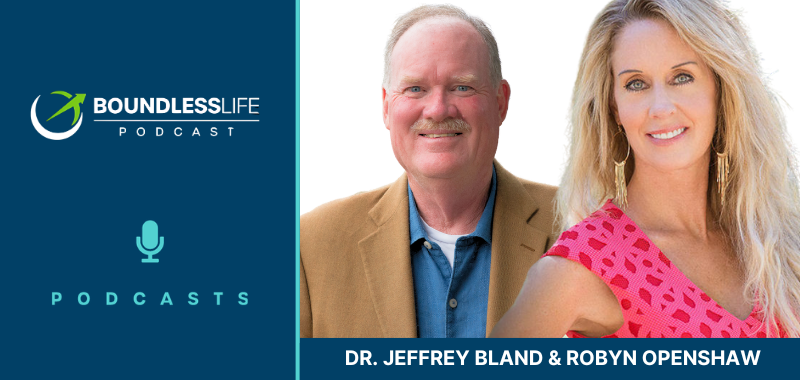
In this episode, I bring together two leaders in the health space, Dr. Jeffrey Bland, known as the founder of functional medicine, and Robyn Openshaw, nutrition researcher and author of Take Daily: How Supplements Hijack Your Health—for an honest and eye-opening debate.

We dive deep into controversial topics like the real story behind vitamin C and D supplements, why fish oil and protein powders might contain more than you bargained for, and how industrial processing could affect the purity of your favorite health boosters.

Dr. Jeffrey Bland is a thought leader who has spent more than four decades focused on the improvement of human health. He is known worldwide as the founder of the functional medicine movement, which reflects his vision for a care model grounded in systems biology and informed by research that he uniquely synthesizes. His pioneering work has created the Personalized Lifestyle Medicine Institute (PLMI), as well as the Institute for Functional Medicine (IFM).

Dr. Jeffrey Bland is the author of best-selling books and over 120 peer-reviewed research publications. His latest project is Big Bold Health, launched in 2018. He’s on a mission to transform the way people think about one of nature’s greatest innovations: the immune system.

Robyn Openshaw, MSW, former psychotherapist, Brigham Young University faculty, and single mother of four, is the original “Green Smoothie Girl” and the driving force behind GreenSmoothieGirl.com.

She is an author of 15 books on health and wellness, including 2017’s #1 Amazon and USA Today bestseller, Vibe, and her all-time bestseller, The Green Smoothies Diet (2009). She is the author of the popular course “12 Steps to Whole Foods” as well as the “26-Day Detox” that she has guided over 16,000 people through since its launch in 2014. 

Robyn is a sought-after speaker and did a 6-year, 450-city international speaking tour. She has been a featured expert in more than 20 online summits and a keynote speaker in health and personal growth events. She has also been featured in Forbes, Women’s First Health, Good Things Utah, Utah Valley Magazine, and many other national and local media outlets.

In Robyn's Take Daily: How Supplements Hijack Your Health, she argues that much of the $60-billion supplement industry is driven by pharmaceutical influence, synthetic ingredients, and misleading marketing, urging readers to rethink whether their daily vitamins truly support health or quietly undermine it.

If you’ve ever wondered whether your supplement stack is really serving you or possibly doing more harm than good, this episode is a must-listen.

Please Scroll Down for the Sponsors, Resources, and Transcript

Episode Sponsors: 

Truvaga: Balance your nervous system naturally with Truvaga's vagus nerve stimulator. Visit Truvaga.com/Greenfield and use code GREENFIELD30 to save $30 off any Truvaga device. Calm your mind, focus better, and recover faster in just two minutes.

LMNT: Everyone needs electrolytes, especially those on low-carb diets, who practice intermittent or extended fasting, are physically active, or sweat a lot. Go to DrinkLMNT.com/BenGreenfield to get a free sample pack with your purchase!

Fatty15: Fatty15 is on a mission to optimize your C15:0 levels and help you live healthier, longer. You can get an additional 15% off their 90-day subscription Starter Kit by going to fatty15.com/BEN and using code BEN at checkout.

Troscriptions: Explore Troscriptions' revolutionary buccal troche delivery system that bypasses digestion to deliver pharmaceutical-grade, physician-formulated health optimization compounds directly through your cheek mucosa for faster onset and higher bioavailability than traditional supplements. Discover a completely new way to optimize your health at troscriptions.com/BEN or enter BEN at checkout for 10% off your first order.

Young Goose: To experience the transformative power of Young Goose's cutting-edge products, visit younggoose.com and use code BEN10 at checkout to enjoy a 10% discount on your first order.

Previous Episodes:

Resources from this episode: 


Do you have questions, thoughts, or feedback for Robyn Openshaw & Dr. Jeffrey Bland or me? Leave your comments below, and one of us will reply!

Upcoming Events:

ECO26 | May 14–16, 2026

Healthcare practitioners looking to achieve exponential clinical outcomes through Foundational Medicine: I'm speaking at ECO26 (May 14–16, 2026, in Boise, ID), a three-day event featuring cutting-edge education, powerful networking, and actionable strategies to elevate your practice (with up to 20 CEUs available for some practitioner types). I'll be presenting “The Detox Frontier: Lessons from The Edges of Biohacking to Everyday Vitality” on May 15th alongside some of the top minds in functional and foundational medicine. You can use this link to register and claim a $400 discount!

Ultimate Men Over 40 Health Summit | June 8–14, 2026

If you're a man over 40 looking to improve your strength, energy, health, hormones, recovery, longevity, and performance, I'm speaking at the Ultimate Men Over 40 Health Summit (June 8–14, 2026), a free 7-day virtual event featuring 100+ experts across 7 core pillars. I'll be presenting “Optimizing the Human Machine for 40 and Beyond” alongside some of the best minds in men's health today. You can register for free here now!

Health Optimisation Summit | September 11–13, 2026

I'm speaking at the Health Optimisation Summit in London (September 11–13, 2026) at the Business Design Centre. This isn't your average health conference. HOS unites the best minds in biohacking, longevity, nutrition, fitness, and medicine, with one goal: to actually make people healthier. With 35+ world-class speakers, 120+ cutting-edge brands, and 4,000 like-minded people all under one roof, it's two days that could genuinely change how you approach your health. Get your ticket here and use code BEN to save 10% off registration! 

The Boundless Couples Retreat | November 10–14, 2026

Ready to reconnect and recharge with your partner in paradise? Join the Greenfields at the stunning Prana Maya resort in Belize for the Boundless Couples Retreat, November 10–14, 2026. It's a five-day, all-inclusive escape designed to deepen your relationship, restore your vitality, and create memories that last a lifetime. From relaxation and adventure to intimate relationship coaching with Jessa and me, every detail is crafted to send you home with a stronger bond and a reinvigorated spirit. Spots are limited, so discover more and secure yours here today!

Stay tuned for future updates—and you can always keep up with my LIVE appearances by checking out bengreenfieldlife.com/calendar!

Ben Greenfield [00:00:00]: My name is Ben Greenfield, and on this episode of The Boundless Life Podcast,

Robyn [00:00:05]: you don't want to go eat M&M's. A lot of you people would never touch an M&M, but you don't know how processed your protein is, and it's the bars and the powders. It's billion dollar industry protein.

Jeffrey Bland [00:00:15]: You may be consuming 100 or more grams a day, so that gives a greater delivery potential for trace contaminants like, uh, cadmium that comes out of certain agriculture in Asia.

Ben Greenfield [00:00:27]: Welcome to The Boundless Life with me, your host, Ben Greenfield. I'm a I'm a personal trainer, exercise physiologist, and nutritionist, and I'm passionate about helping you discover unparalleled levels of health, fitness, longevity, and beyond. Well, I've been looking forward to this show for a couple of months. Uh, it's always interesting trying to get, uh, two people on a podcast instead of one, especially when it is a kind of a debate podcast. I'm always careful with that word because I don't want this to turn into, I don't know, some kind of like a, like a Piers Morgan people shouting at each other type of show. But basically, I read this book. It was written by my friend and former podcast guest, Robyn Openshaw. It's called "Take Daily." And the subtitle is "How Supplements Hijack Your Health." Um, now Robin has been kind of an icon in the nutrition industry for quite some time.

Ben Greenfield [00:01:37]: I even led a retreat with her in the Swiss Alps at the Swiss Mountain Retreat. And, um, and so I, I kind of perked up when I saw this book, and it's all about a bunch of warning signs when it comes to supplements. Uh, and I thought, gosh, it would be interesting to hear, um, Robyn discussed the ideas in this book with somebody who's also in the supplements industry but perhaps a little bit more on the, on the pro side of supplements. So I reached out to another former podcast guest of mine, Dr. Jeffrey Bland. And Dr. Jeffrey Bland is known as, as basically the founder of the functional medicine movement. Um, and beyond that, as he and I have talked about in previous podcasts that we've done, He also has been involved in the supplements industry, including, for example, a fish oil, a few immune-regulating compounds based on Himalayan tartare buckwheat.

Ben Greenfield [00:02:37]: And so, I would, I would categorize him as a little bit more pro-supplement and Robyn as a little bit more anti-supplement. And we're going to have a fun chat about that today. So, Robyn and Jeff, welcome to the show.

Robyn [00:02:50]: Thanks. Good to see you guys.

Jeffrey Bland [00:02:51]: Thank you. I'm looking forward to it as well.

Ben Greenfield [00:02:54]: Yeah, absolutely. And by the way, if you're listening and you want to check out this book or you want to check out the show notes, go to bengreenfieldlife.com/supplementsdebate. That's bengreenfieldlife.com/supplementsdebate. Okay. So, Robyn, I want to start with you because I, I think last time we were hanging out years ago, you weren't necessarily like against supplements. Um, but you're definitely, after reading this book, not a fan of them. Um, what changed along the way?

Robyn [00:03:27]: Yeah, so first of all, let me just qualify that and say it's not that I think that all supplements are bad. I don't know, I don't— 97, 98% of them, largely due to the supply chains. And since I saw you last, this is actually funny that you bring up our retreat at Swiss Mountain Clinic, Ben, because where I decided I've got to do the deep dive and I've got to, like, write a book about this because I'd been researching it for years. In fact, one of my earliest sort of exposés on supplements was the fish oil industry where I'd gone to Expo West and I came across this whole entire aisle, like 30 companies, and they were all Chinese. And I like stopped and talked to somebody who spoke English. I was like, what is this? What is this? And she said, it's— this whole aisle is the chemicals that deodorize and purify the fish oil to— so that you don't have that, that rancid oil burp. And she said it just super matter-of-factly, and I was like, what? So this was literally 15 years ago plus, and many other experiences like that. I definitely been questioning, poking around, doing research.

Robyn [00:04:30]: But what happened at Swiss Mountain Clinic, Ben, that you don't— I don't think you know this, but 2 years ago I went and they now have a blood purification You know, it's called anispheresis. They have another one called hemoadsorption therapy that literally is quite mainstream that they use in, you know, emergency rooms or whatever. So they're doing these two different blood filtration technologies. I just did the anispheresis one. I didn't want the one that, you know, is really hardcore and, uh, for mostly like cancer patients, poisoning patients. But I, I did the anispheresis and the bag of petrochemical-looking garbage that came out of my blood that you could literally look at it in the light and you could see sort of this like rainbow, like shimmer to it. I was just like, I feel like it's like those mud puddles that you saw as a kid that you're like, there's petrochemicals in here, right? Like somebody spilled some gas somewhere and ended up in this puddle. It was like that.

Robyn [00:05:23]: And I was looking at everybody else's cuz, you know, I take 30 people at a time to the clinic and that's what made me go, okay, I have been the biggest supplement eater of all times. Uh, Ben, you are too. Okay, I've sat next to you with your duffel bag of all your cool gadgets and pills at conferences, and I'm always like, what's he got in there? But like, I could beat you probably— and probably not you, but like almost anyone else for how many supplements I've taken.

Ben Greenfield [00:05:51]: Yeah, the, the, the Mary Poppins of pill popping, right?

Robyn [00:05:55]: And I, and I'm totally like bought into the narrative. And, and to be very fair to the functional medicine doctors who sell them, including Swiss Mountain Clinic, who I love those folks, I love Jeff, Jeff's been on my podcast. I, I think we're, we're all there except that I've deviated from the pack due to a lot of research is, you know, they'll probably tell you if you ask them, the functional medicine doctors, people don't want to change their diet and their lifestyle. They don't want to do the work of being well. They want to— they want a pill, they want something that covers it. And I had just had all these questions in my mind, including how do I take this white pressed pill and get from it what my body makes when sunshine is in contact with my skin. That's really quite a complex ecosteroid hormone. How— just lots of questions like that.

Robyn [00:06:41]: And so that was kind of the final straw for me where I saw that the amount of garbage that came outta my blood was including heavy metals, a little bit of heavy metals, and they sent it into the lab and it was largely pesticide, herbicide, like lots of heavy metals. And so that made me start really getting serious about the research.

Ben Greenfield [00:07:00]: Got it. And we'll get in, in a little bit and into some of the supplement ingredients that you, uh, that you consider to be contributing to that problem. But before we do, uh, just to get this out of the way, do you take any supplements now at all, Robyn?

Robyn [00:07:14]: I'll take like fulvic and humic acid. I think that one of the deficiency stories that's true is minerals. I think that our soils are legitimately deficient in minerals. I just don't want ground up rocks and chalk and shells.

Ben Greenfield [00:07:26]: Okay, got it. And then Jeff, um, you know, especially as a physician, what's your general approach to supplement utilization for you, uh, and/or for your patients?

Jeffrey Bland [00:07:37]: Yeah, I think this whole topic that Robin has opened up is really worth exploration. So I, I think that she's serving a really useful purpose to, to bring this industry, which is, uh, as we know, $35 billion industry, kind of in in a little bit more focus. But I have kind of a little bit maybe more of a sanguine perspective on this and as it relates to stuff that you get out of plasmapheresis out of your body, I think those, uh, all that crap that she was discussing comes from all sorts of things. And the air we breathe, the water we drink, the foods that we eat, uh, we're, we're bathed with this ecosphere of chemicals that we've grown up with in our planet, 50,000 new chemicals being introduced into our environment. That we don't really even know the chronic toxicology of them over the— this is just the last decade or so. So I, I don't wanna put this all on the shoulders of vitamin supplements. I think there's many different ways that our body is exposed to toxicological substances. But let's go back specifically to your question, Ben, about, you know, how I see dietary supplements.

Jeffrey Bland [00:08:40]: So the concept dietary supplement begs the question, what do you wanna supplement? And, you know, why do you need a supplement? And what is it all about? So there's really two reasons I think that one can consider a dietary supplement, that it's part of my decision-making about what I put in my body. One is, are you deficient or insufficient of a specific nutrient or nutrients that are necessary for your own specific metabolism to optimize or to support proper biochemical or physiological function? So that's the kind of personalized nutrition question about our individual need. Secondly, the second reason, are there levels of, of intake of specific nutrients that have been demonstrated by solid science in humans, not just cell biological work or animals that demonstrate the ability to improve performance, resilience, resistance beyond that of just normal homeostatic function. So, would there be things that you might wanna take to optimize or promote improved resilience? So, let's, let's talk about number 1 first, which are to fill gaps. And as you probably recognize that the way dietary supplements came about was through post-World War II experience with K— K-rations that military men and women were fed that were producing nutrient insufficiency. So that really started the, the, the fortification era of putting specific vitamins into products, food products. And then that kind of came— became the, the nature of the game when people started talking about what happens when you take all the vitamins and minerals out of grains with processing to make, make white flour and you bleach it. Gee whiz, maybe we ought to put that back in.

Jeffrey Bland [00:10:19]: Even the extent to which people are talking about maybe we need to fortify alcohol beverages because they have removed nutrients and they're high calorie and people are consuming a lot of them and that's producing nutrient imbalance and insufficiency. So that concept of making sure that we're getting the right amount of nutrients to meet, meet our needs is a, is a very important question. And of course we're not just talking about the prevention of scurvy, beriberi, pellagra, xerophthalmia, and rickets. That traditional nutritional deficiency, we're talking about promoting, you know, the biochemistry of the body such that we are not gonna be suffering from marginal nutritional deficiency disorders. So with that regard, we started off with Centrum and, you know, one a days and things like this is your health protection program. It's an insurance program. If you take these, you're gonna ensure you're not having these gaps. And there was some reasonable justification for that 'cause when the dietary surveys were done of the United States public, they— it did identify certain families of nutrients that were commonly insufficient: vitamin B12, folic acid, calcium, probably magnesium.

Jeffrey Bland [00:11:25]: And so there were certain things that people said, uh, if I have an insurance policy by taking a nutritional multivitamin and multimineral every day, that's gonna be a good idea. So that, that started down the road. Then we got to what is really the revolution in dietary supplementation, I think, was Linus Pauling's work, Vitamin C, the Common Cold, and flu. Because in, in that case, we, we generalize the concept of taking a, a vitamin, in that case ascorbic acid, well beyond that which one would take even in, in a pretty good diet. And we're talking about 1,000 milligrams a day. And to get 1,000 milligrams from food, uh, even if you're juicing citrus, you're gonna be consuming quite a bit of food. So the, uh, the concept that you could get added benefit by taking a, a supplemental level, in this case of ascorbic acid to prevent and/or treat a condition like a viral infection was a new concept that really gained a tremendous amount of popularity because here's a two-time Nobel Prize winner. He's got a lot of— he's the, you know, the kind of iconic guy that has these wise opinions about things to do.

Jeffrey Bland [00:12:34]: And so that kind of gave birth to the generalization of the dietary supplement era going beyond that of just an insurance policy. And, and then that birthed, as you know, the chemicalization of, of the diet, because now people are saying, well, let's pull out all the various stuff that's in the diet and we'll make a chemical derivative of it, and then we'll give it back to a person so they can get large amounts of it, assuming that large amounts are better than small amounts, uh, this concept of a little is good, a whole lot more will be better. Well, that's never been proven correct, quite honestly. And in fact, what we are now seeing, that excessive intake of nutrients, has an anti-nutrient effect. It blocks absorption. It has interrupted feedback controls on body's physiology. And so what we actually start to see is when you get beyond that, that dose response curve where you're out of the zone of goodness into the zone of badness, that you're actually producing, uh, dysfunction. And so I think that this construct now coming back to me personally, what's a wise approach? Well, a wise approach is to start to understand yourself.

Jeffrey Bland [00:13:36]: What are your specific biochemical or nutritional needs. And, you can do that by looking at your own history. Are you susceptible to problems that would be associated with certain kinds of nutrient insufficiency, skin problems, digestive problems, cognitive problems, sleep problems, sore muscles after modest exercise, things that may be indicative of the fact that your body's not working at optimal efficiency, optimal resilience. And then, you start saying, okay, Where do I plug the gaps? What would I take? Would I, would I take certain nutrients? And in my case, yes, there are certain nutrients that I, I take, but it's not the laundry list. It's not, uh, everything. Little is good, a whole lot more is better.

Ben Greenfield [00:14:16]: Okay. Okay. Yeah, I got, I got your approach and, you know, this idea of replenishing. Let's just say that it made sense and there were certain deficiencies that we couldn't get from food that we need to get from supplements. I think one of the main things that you outline in your book as a concern, Robyn, is how these supplements are made, what's in them, and how they might interact with the body in a different way than say their natural form. And, we could be here for hours talking about every supplement that you talk about in the book, but let's grab a few examples that I think a lot of people are familiar with and a lot of people might already take or are thinking about taking?

Robyn [00:14:57]: How about vitamin C, since Jeff brought that one up?

Ben Greenfield [00:15:01]: Okay, I, I was going to start with vitamin D, but, but you know what, vitamin C sounds good. Let's, let's hear your thoughts on vitamin

Robyn [00:15:07]: C. I love talking about vitamin D. I've written 5 extensive blog posts about it before I even got to the book, some— one of which had 4 meta studies on it, like taking on the bone density narrative, taking on the immune function narrative. Like, how did we get this many studies that people think support taking this pill and that somehow compensating for what we think is what is created by the body with exposure to the sun? So let's talk about vitamin C though, cuz it's simpler and it's really easy for me to give a metaphor for it. So from my research, I would say that calling ascorbic acid vitamin C is like calling chaff wheat. And anybody should not take my word for this and just go research it yourself. Now you have research tools at your fingertips, which if anything, they gatekeep for mega billion dollar industries like supplement industry is, which is largely those, those, uh, raw materials, massive rivers of supply chains are actually being created by big chem and big manufacturing and big pharma, like there's a nutraceutical side of the house in most, most of the big pharmaceutical companies. So, and people don't realize that.

Robyn [00:16:20]: So they see like a word like pyridoxine and then they see like what B vitamin that is. And so they think they're one and the same. I do not agree that ascorbic acid is vitamin C and everybody should just go to, you know, what do you like to use? I'm not saying that ChatGPT or Gemini or whatever large language model you use is the end-all be-all. Ask it a lot of different things and, and put this together for yourself. But ask it what, uh, range of nutrients and cofactors comprise vitamin C or the vitamin C complex. And you'll find that ascorbic acid, which is actually made from a— the byproducts of the corn industry, and the vast majority of it comes from like genetically modified, like cornstarch or corn syrup. And then they use solvents with it and nobody wants to eat some solvents and some you know, byproduct of the cornstarch industry. But most of these raw materials, they're not like— they're not taking like 20 pounds of tomatoes and somehow putting it into a 20-cent pill.

Robyn [00:17:20]: Ascorbic acid is kind of like the shell of the complex that I don't think science necessarily even fully understands it. But you can see like 10 different things.

Ben Greenfield [00:17:29]: To clarify, your book says vitamin C in addition to ascorbic acid has bioflavonoids like rutin, hesperidin, and quercetin. Tyrosinase, a copper-containing enzyme, ascorbinogen, which helps with tissue regeneration, uh, K-factor polyphenols, and some other enzyme cofactors. And so what you're saying is ascorbic acid doesn't have that stuff?

Robyn [00:17:51]: Well, yeah, ascorbic acid is just one. And this is actually a great metaphor for what we see, um, really across supplements, is that, you know, because I started to ask the, the, um, AIs. So how— if they can actually just serve up something that has a couple molecules in common with what's in the body or found in food, how do they get away with selling it, calling it vitamin D or calling it vitamin C? And it'll give you a whole bunch of word salad. And I would challenge everyone to take a look at the word salad you are served up and see if it doesn't say basically, because they've done it for a really long time and because nobody stops them. And then it became a billion-dollar industry. And once something becomes a billion-dollar industry, it would take like an act of God or an act of Congress to walk it back.

Ben Greenfield [00:18:40]: Jeff, I know I've seen some people say, well, you know, based on what Robyn brought up, you know, if you're using vitamin C, look for the label that says something like, you know, whole foods vitamin C. And then I've heard other people say there's, there's no difference, it doesn't matter. What's your take on vitamin C?

Jeffrey Bland [00:18:56]: Well, I, I agree to disagree on this particular approach that Robyn was talking about. Vitamin C, ascorbic acid is vitamin C and it will prevent scurvy all by itself. That chemical substance, the, that was discovered from paprika will do the trick. So it's ascorbic acid. It prevents scurvy, ascorbic acid. Now her point, which I think is very well taken, is in nature, when you find a food that is high in ascorbic acid, vitamin C, it is also high in other nutrients that work and compound with it that synergize or amplify its effectiveness, of which bioflavonoids is, uh, one. And that's actually what was discovered originally. It was called substance P or vitamin P for, uh, these permeability factors that came along with ascorbic acid with whole foods.

Jeffrey Bland [00:19:52]: So I, I think we have to be very cautious not to exaggerate the situation. Vitamin C is vitamin C. As it relates to its chemical structure and what it does in the body. Eh, it is a specific cofactor that fits into over 1,400 different chemical reactions in the body to cause them to be more effective. Now, are there things that come along in foods with vitamin C that promote its activity and enhance its, its function? Of course there are. And that's why we would always start with the diet. We don't eat a bunch of vitamin supplements as our major source of nutrients. But it does the job as an anti-scorbutic important nutrient as vitamin C.

Jeffrey Bland [00:20:29]: Now, coming from corn syrup, a derivative of fructose, it depends on your philosophical question. There, you know, it's, it's not— you can say sago palm, there are many other sources of ascorbic acid, but I think that again gets a little bit moot because corn syrup derived or fructose derived vitamin C is still 99.99% ascorbic acid. So, I think it depends on how— where you want to draw the line in your specificity. Okay.

Ben Greenfield [00:21:02]: Alright, interesting. And, I'm— by the way, towards the end here, I'll certainly give a chance for you guys to give some final closing statements, but I want to kind of sample a few different vitamins here. So, now that you've both had your say on vitamin C, I do want to talk about vitamin D because this one actually— I haven't just seen you write this, Robyn. I think Morley Robbins, when I interviewed him, brought up this idea of cholecalciferol versus what you actually find in our body. So let's talk about vitamin D, uh, what, what research you were referencing regarding that and your concerns about vitamin D, Robyn.

Robyn [00:21:39]: All right, so vitamin D, it's not a vitamin, it's a seco— seco-steroid hormone. Um, yes, Morley Robbins has talked about this. For years. Actually, a lot of people do, but it's such a massive industry. I mean, the biggest buyer of cholecalciferol— I won't call it vitamin D unless I use air quotes, um, because, you know, you arrive at what is this supposedly vitamin D by taking a 25D lab test, and practitioners don't know how to take and send in— there's been blood freezing and sending and thawing at the right time and measuring a 1,25D lab test. So you're looking at— one of them is a storage form of this ecosteroid hormone, one of them is the active form. It's really not an accurate test to just take 25D. There is a correlation between higher 25D lab tests and better states of health, and I was always in the optimal, and they'd say, you're even high optimal, and congratulate me.

Robyn [00:22:41]: Well, one day on my way out from my annual hormone, you know, meeting with my nurse practitioner who's the only, the only practitioner I've been to since my 25-year-old son was born. And she's— she said, well, why don't you buy some of my vitamin D and my fish oil on the way out the door? And, you know, I guess I must have just been feeling rich that day cuz I said, but you just told me that my vitamin D levels were optimal and so are my omegas. And she said, yeah, but it couldn't hurt. And I bought 'em and I didn't take it regularly, but like the next year from taking it kind of in a spotty way, it was the first and only time in my life I'm turning 59 tomorrow, uh, that I was low, like I was below the optimal. So there is a correlation that when people have a low 25D lab test, they tend to correlate to worse health outcomes and people who've got some stuff piling up. But the stuff that's in the pill has a couple of molecules in common with what the body makes, which again, I don't think is necessarily all that well pinned down by science, but it may be as many as 80 molecules And taking the cholecalciferol, which I will call it— I won't call it vitamin D without using air quotes because that's how people understand it.

Ben Greenfield [00:23:49]: And then, by the way, when you say cholecalciferol, you're referring to vitamin D3, which is usually what, what somebody would buy in a supplement.

Robyn [00:23:57]: Yeah. And it's, it's, um, you know, you can make it from like lab-grown algae for the vegans, but most of it comes from the sheep shearing industry. And you'll find this in common if you go and start doing this research. And I highly recommend people go into a large language model and say, what are the chemical processes used to manufacture fill in the blank, whatever vitamin is, go find out. Like they'll show you the 6, 7, 8 different chemical acid baths, bleaching, deodorizing. I'm the most concerned about the base materials that are used. And in the case of vitamin D, which is cholecalciferol, that, that, um, synthetic product that comes out of that manufacturing process, it's actually comes from sheep's sheep's wool and they wring the— I call it the grease out of it, but it's called lanolin if you wanna put a nicer name on it. And then they derive from that, which they're, they're— the argument is that, you know, the sheep are in the sun, they lick their wool, you get the saliva out of the grease from the sheep's wool, and that's what most of the cholecalciferol is made from.

Robyn [00:24:57]: But anyways, it's a big industry and I highly question it. And the only time I ever got a lower 25D lab test, which I just get it every year just for the sake of being able to discuss this and track it and be a student of life. Um, the only time I was ever low is after the year of taking koli calciferol. And that's what the studies don't show is if you take that stuff, do you actually have at the end like an optimal level of what is really vitamin D, which would involve another lab test that's a lot harder and more expensive to do.

Ben Greenfield [00:25:31]: Okay, got it. And I know there's, there's other factors at play here, like, you know, do you have vitamin K, do you have magnesium, or you're absorbing it properly. But, but Jeff, what's your take on vitamin D?

Jeffrey Bland [00:25:41]: Well, again, I, I don't know if I want to really say I disagree with Robyn. What I want to do is take a different spin on her story. Um, it is absolutely correct that vitamin D comes from lanolin from sheep. That's a natural product. I want to, you know, make sure people understand, uh, the sheep is not a chemical factory. It is an organism that is producing this sebum that really has this material called vitamin D or cholecalciferol in it. It's similar— no, excuse me, it is the same, not similar. It's the same in chemical structure as what happens when dehydrocholesterol, which is what's made in the skin upon irradiation with the right wavelengths of near-ultraviolet light.

Jeffrey Bland [00:26:22]: If you're out for some period of time and expose your skin, you're gonna be making some of this. The dehydrocholesterol gets converted then through a process that goes through your kidney and liver ultimately into the cholecalciferol, the vitamin D, which then becomes hydroxylated to the 25-hydroxy and then later further hydroxylated to form the bioactive hormonal form, which is 1,25-dihydroxy. And, that's a very complex process. It's controlled by many factors, uh, including stress and toxins and, uh, other nutrients. So, you know, it's, it's not a single, uh, kind of straight line, but I want to take a kind of a, a different opinion about the source of vitamin D or cholecalciferol in a dietary supplement. Yes, it has been formed from that lanolin through many different processes that purify it and, and, and make it a, a consistent ingredient. So you know what you've got in the product is consistent with what you're paying for, but it, it does do exactly what it does— is supposed to do, what is made in the body. Koli calciferol is made in the body.

Jeffrey Bland [00:27:26]: It's the same molecule, same form, has the same effect. So, uh, if you have a big philosophical problem about sheep's lanolin being converted in— in by industrial processing into the same molecule, then you probably are against vitamin D supplements. If that doesn't bother you, that you've got a product that ultimately is the same as that of your body that came from sheep's lanolin through those process, then you're going to be fine. As it relates to taking vitamin D supplements, I think Robin is right on, on, on point that our bodies respond to vitamin D in very different ways depending on our physiology. And it's this relationship between the 25-hydroxy and the 1,25-di-hydroxy that's really the biological indicator of how this is working as a hormonal substance in the body. And there are people who can take 25-hy— excuse me, take vitamin D supplements and it increases then only one part of that, that concert, that symphony, and doesn't lead to the balance level of the hormones that are required that downstream that regulate our function. It actually causes a disruption. And I've seen this in a number of patients.

Jeffrey Bland [00:28:31]: We've measured hundreds of patients, their 1:25 and their 1:20— 25 ratios. And you'll find some people that taking vitamin D supplements produces a disturbance in their ratio that is adverse to their health, but that's not the rule of, of, of most people. That's the exception.

Ben Greenfield [00:28:48]: Okay, so, well, back to like what Robin was saying about plasmapheresis and seeing things in her blood that, you know, were kind of like indicative of sludge chemicals, etc. You know, we, we talk about the chemicals used for the extraction of vitamin D from the lanolin and sheep's wool. On page 51 of the book, she goes into you know, vitamin B having coal tar, ammonia, acetone used in its production for choline, ethylene, ammonia, and hydrochloric acid. Um, you know, for vitamin K, coal tar and hydrogenated soybean oil, nickel, etc. Now, I don't know the answer to this question. I don't know if either of you do, but if I were to just go to Walgreens and buy a supplement and test it, is the fact that the chemicals are used to extract or used at some point in the production of those vitamins indicative that those chemicals are still in the vitamin itself when you consume it? Or are these just used as extractions and kind of like, you know, kind of like hexane in the production of seed oil, it, it, it doesn't actually wind up in the final product?

Jeffrey Bland [00:29:55]: I would say for— as a— from a chemist perspective, it depends on where you want to put your threshold. Are you going to put it at part per trillion, part per billion, part per million, part per thousand, uh, you can find— if you have very, very sensitive, uh, detection equipment using some of the state-of-the-art kind of mass spectrometry and so forth, you can find trace chemicals, no question, in, uh, chemically produced nutritional supplements. But it's at a level that one questions, are you really chasing a false concern? Because it's at the part per billion or less level. So I think this becomes a little bit of a philosophical question as to the dose-response effect of the body because we live in a complex world. If we were to set a standard that we're not going to have eat or be exposed to anything that has no residue of, uh, unknown chemicals, I think we would be a very difficult time to live in this world that we live today because of the exposures that we would get across all sorts of things at low level.

Robyn [00:30:51]: It's really funny that you bring this up because this may seem like a tangent, I think it's really important, but I'm being sued for $60 million by a company who puts a— yeah, so like I was in a matter related— regarded to this litigation all day yesterday. And so they have to submit or they did submit. They don't even really have to. Lots of companies don't to the FDA. How many parts per million of 5 different heavy metals used in the manufacturing of this coating on the food? Okay, so there's a film or a coating or a— or edible packaging, as they call it in their FDA filing. And what they're mad about is that I said that palladium, cadmium, lead, arsenic, mercury are toxic. Now, that would be their argument. Okay.

Robyn [00:31:37]: What Jeff just said there is, well, it's just a little bit— well, I'm sitting here in this all-day thing with 5 lawyers yesterday and I'm drinking my green juice. And I said, this little pint of green juice that is My husband and I make celery, cucumbers, a whole lime, and ginger. This literally has— just from me juicing or making green smoothies or being a person who eats big salads, I'm eating like 20 times more of those toxins that only remain in residuals. I agree with that, but I don't think it's right to gaslight people who care about the toxicity and are looking for the high nutrition, super low toxicity foods, even if I have to grow it in my yard, which I'm doing right now. And so, it's the cumulative effect. Your body doesn't eliminate these petrochemicals and metals easily.

Ben Greenfield [00:32:24]: Yeah, yeah. And I certainly think anytime you're consuming anything that required process or derivation from an original source using industrialization, that is a risk. And I think it's a, it's a fair statement that we are getting exposed to things. And the question is how much and in what amounts. And I think Sometimes it's a little bit difficult to know, but I, I do agree that it is a concern from, from a variety of sources. And I think this, this is something I'm particularly interested in. You brought up the harsh chemical solvents, and I believe like de-aromatizers or something like that used for fish oil, Robin. And you have a pretty hefty chapter about fish oil, including, uh, you know, that it's often sitting on the shelf over 2 years, that there's a 2018 Cochrane review that debunks it, uh, that antioxidants are necessary to mask the rancidity of it, that it can carry ocean-sourced toxins like PCBs, um, and that there's a lot of exaggerated claims around fish oil.

Ben Greenfield [00:33:30]: And of course, I think, uh, last time I checked, one of Jeff's, uh, products is a fish oil. So Robin, you first. What— can, can you detail a little bit more about the dark side of fish oil?

Robyn [00:33:42]: I mean, there's several big meta studies, like 5 that I know of. And you know, if they— there's 1 or 2 of them that reach and say, well, it brings triglycerides down, it may not do anything for stroke, and you may have to take a ton of it to move the needle on some heart disease. So some of those meta studies, including the Cochrane review that you mentioned, and for your listeners who don't know what a meta study is, it looks at many other studies and comes up with what the big picture is for people like us who are like, I can't read all these studies on fish oil. So, um, yeah, there's deodorizers and purifiers, but also just like a basic common sense question. Okay, I'm not going to snow you guys with a lot of chemical words and make you feel like I'm smarter than you. I'm just going to say, would you take a salmon fillet out of your freezer to barbecue tonight, leave it on the counter, and then like just leave it there and come back in 2 years and throw it on the grill? Would anybody do that? Would you do that, Ben?

Ben Greenfield [00:34:37]: My answer is going to be nuanced. I would say if there was a safe stabilizing agent involved, yes, but otherwise no.

Robyn [00:34:43]: Just on the counter.

Ben Greenfield [00:34:44]: Okay, on the counter without anything to protect it. No, I, I wouldn't do that.

Robyn [00:34:48]: So most people wouldn't do that. In fact, 100% of the people that I've said this to— because I was on 450-city speaking tour for 6 years— but, uh, most people are just like, no, that's gross. In fact, I don't think you'd be able to stand the smell in your kitchen. But so that's what we need, the deodorizer and purifier chemicals. And we all know that when oils are rancid, they become carcinogenic. And one of those big studies showed higher prostate cancer risk. I want to say very clearly, I believe in everybody's medical freedom and health freedom. If you guys want to take rancid fish oil pills, you absolutely should.

Robyn [00:35:20]: I personally have decided they're not for me, and I want to educate people about them. But please, by all means, do your own research and go learn this for yourself. What is two— two-year-old fish oil? What happens to it? Why do they have to cover it up?

Ben Greenfield [00:35:35]: Yeah, I, uh, I do believe it was actually on one of my podcasts with Jeff, uh, when I said taking a bad fish oil is definitely worse for you than not taking fish oil at all. Um, but Jeff, you know, I, I know that you, you produce fish oil up there in Alaska, so what's your take on this?

Jeffrey Bland [00:35:54]: Well, I actually agree entirely with what Robin just said. I think the way that fish oil has been historically produced in mass was, you know, take sardines and anchovies generally from South America. It, you know, you get thrown into a large system that then ultimately ends up with these things being processed to remove the— what's the valuable thing, which is the fish protein concentrate, leaving behind the byproduct, which is the oil. The oil is rancid as heck. I've seen this, I've been to these factories around the world. And then ultimately going through multi, multi-step processing to deodorize, de-winterize, desaponify, re-esterify, all sorts of chemical garbage gobbledygook. So, that's what actually led me with my, my partner who owns a fishing company up in Alaska to actually build a pharmaceutical-grade plant in Dutch Harbor where we do minimum processing and we don't go through all that stuff and our fish are frozen within 15 minutes of a live fish onboard the, the boat. And, we have our own boats actually and they come to our plant and they're never get above 100 degrees and they're not exposed to oxygen.

Jeffrey Bland [00:37:00]: So, when they when that oil comes out of the st— of the, the tap, it is colorless, odorless, and tasteless. The, the, the thing that we associate with the fishy taste and fishy odor is actually the byproducts, the rancidity products. And so I think that, um, it depends on the processing. It depends on the, uh, the TLC, the tender loving care that the producer has in the way that they manage the resource, uh, going from the fish ultimately to the oil. And, it depends upon the species of fish itself.

Ben Greenfield [00:37:30]: And, and I, and I would even say what someone does even if you've done the good job once it's handed off from you, right? Like, how long is it on a shelf? How's it shipped? Is it sitting on somebody's back porch at 90 degrees during the summer for 3 days while they're off on the weekend?

Jeffrey Bland [00:37:44]: Exactly right. The reason it's so unique is it's highly unsaturated, these omega-3 oils. That's the good news. The bad news is highly unsaturated means they're easily oxidate— natively injured. And so, they have to be protected as very important parts of our building of all of our membranes including the brain, but they're also very labile to injury.

Ben Greenfield [00:38:06]: Yeah, yeah. But, what you didn't address was Robyn's thoughts on the fact that the health claims are over-exaggerated. Do you agree?

Jeffrey Bland [00:38:14]: Yeah, I, I would say it really depends upon what kind of claims you want to make. If we're talking about to prevention of cardiovascular disease, there, there are large meta-analysis studies, as Robin was saying, that illustrate that certain risk factor cohorts are advantaged by taking fish oil at the level of 1 to 2 grams of EPA/DHA a day. So that, that— and then you say, wouldn't it be better to eat fish? And yeah, 2 servings of fish a week will produce the same statistical benefits. So if you're a fish eater, yeah, that is going to give you the benefit. If you look at neurological function, there's where things start to be much more, I think, interesting, because It turns out that these omega-3 oils have a pretty interesting effect upon the immune system of the brain, the so-called microglia, and therefore may really play an important role in some of the neurological functions with aging. So, I think that it depends on what claim you're looking at and what application you're interested in.

Ben Greenfield [00:39:10]: I know we're sailing through a few of these supplements. And again, if you guys really want to— want food for thought or supplements for thought, I suppose, this is a book we're talking about, Take daily. And of course, I've interviewed both Robyn and Jeff in the past, and I'll link to all of my other episodes with them at BenGreenfieldLife.com/supplementsdebate. Uh, but there's another big one I've gotten a lot of emails and questions about this, and that's protein powder. Uh, apparently— and Robyn, you can clarify exactly what happened, but there was some kind of, uh, research or multiple studies that looked into the cleanliness of protein powder. And the results at first glance at least look pretty shocking. Um, what's the deal with protein powder?

Robyn [00:39:54]: Yeah, so I've had no dog in the fight on all of these things. I'm not talking my book, but I do want to point out that well over 15 years ago I started making my own protein. And I say this all the time, I say that is my product that I make that I do not use. Okay, it's not that it's dangerous, I— it's It's that I saw what garbage most processed protein powder is. And this is just not talked about. Everybody knows about processed sugar. Everybody knows a Slim Jim isn't the same thing as Ben's grass-fed venison that he went out and shot and killed or whatever.

Ben Greenfield [00:40:29]: It's— but nobody— it depends on the farm that it was feeding on.

Robyn [00:40:32]: But yeah, but nobody talks about processed protein and how much processing it goes through. So I went and made my own, not because I think that you need to just pound as many grams of protein. I think that's a deflection from stuff that matters. I think that the things that matter in nutrition are the really unsexy things we don't talk about, um, because it's not what you're taught getting a master's degree in dietetics or nutrition. But the processed protein has a lot of problems with it, including really high glutamate. Okay, it's not monosodium glutamate, the additive that makes you not be able to just eat one Dorito, but it's, it's similar, has similar effects on the body. There's lots of contaminants through the manufacturing of it. You're right.

Robyn [00:41:12]: Uh, I think Mike Adams got so bullied after he tested a whole bunch of people's protein powder that I know some of the players who begged him to take down his negative review of their protein powder. I made protein because I was like, I can do better than this. I can make way less processed, get some superfoods in there, make it a much more of a whole food. Don't use isolates. So I make protein not because I think people need to supplement with protein, but some people want to, or they wanna eat a plant-based diet, but they want— they're worried about not getting a protein. I, I worry about how much protein I'm getting zero times ever in my life. And I just think it's a, I think it's a red herring. But the, the protein powder industry has a lot of the, a lot of similar, like chemical-oriented, tons of me— manufacturing.

Robyn [00:41:59]: I just want to point out to people, you don't want to go eat M&M's. A lot of you people don't— would never touch an M&M, but you don't know how processed your protein is. And it's the bars and the powders. It's billion-dollar industry.

Ben Greenfield [00:42:12]: You write on— in page 179 of the book that the Clean Label Project tested 134 top-selling protein powders in the U.S. for heavy metals like lead, cadmium, arsenic, and mercury. And the long story short is that a lot of them exceeded the limits. Um, but I think I even, I even emailed you about this. Uh, it was the Prop 65 limit. And the reason I have an eyebrow raised at that, even though I do agree that there is contamination in protein powder, is, you know, this recently happened with Celtic Salt, and it turns out that they had arsenic, but it was like 10 times less arsenic than a bunch of kale. And yet because of California Prop 65's potentially, you know, ridiculous limits, it was flagged as high in arsenic and they got some bad press from that. So are— do these levels really matter, like the amount that's in them, or does it vary from chemical to chemical?

Robyn [00:43:12]: I mean, this is where it gets really fuzzy. And this is like industry will say that to deflect. This is totally in the lawsuit that I'm in right now where they're like, Well, there's toxins in the fruits themselves, as in to deflect from the fact that the industrial heavy metals are used and remain in the film that I can't get off of my fruits and vegetables that I put into my juicer and consume 20 times more of than they say, than that company says is a safe limit. So yeah, there's, there's a lot of that and it, it just snows people over the— I mean, you know, my dad always ate the whole apple including the seeds and there are trace amounts of a natural cyanide in the seeds. And maybe if you ate like 30 pounds of them, maybe they would make you sick. Um, but it's, it's true that there are tiny amounts of natural pesticides or natural anti-nutrients or toxins in plants, but they've— we've seen the studies. There's only thousands and thousands of them that, you know, eating plants has led to better outcomes for human beings' health. So I'm concerned about the industrial stuff that's in the huge manufacturing plant, and that's why I want to I'm gonna slip this in again, that everyone should go in with whatever chemical-sounding vitamin or nutrient and put it into your ChatGPT and ask it what chemical processes are used in the manufacturing of blank.

Robyn [00:44:32]: Because what you've just done is you've told it that you're aware that there's manufacturing involved and that you're aware there are chemicals involved. And that way, like, if you just ask it something dumb, like, what's my vitamin C made out of? You're gonna get a baby problem marketing narrative back.

Ben Greenfield [00:44:48]: I see. What's your take on the protein powder thing, Jeff?

Jeffrey Bland [00:44:51]: Well, I, I think that Robyn is onto something very important. Uh, you know, when you get into bulk nutrients, this is different than vitamin minerals, which are very small in magnitude, but a protein, you may be consuming 100 or more grams a day. So that gives a greater delivery potential for trace contaminants like, uh, cadmium that comes out of certain agriculture in, uh, in, in Asia. This is one of the reasons that there's been a lot of concerns now about soy protein and pea proteins that come from, from Asian soils that, uh, were actually very heavily dosed by industrial chemicals from the air pollution. So I, I think that her point is a very good point. When you get into bulk things that you're eating, uh, of which you're saying, okay, I'm going to get 100 grams of protein a day or more, then the trace amounts add up over the course of time. And so you, you look at the dairy industry producing lactobumin or casein Lacoglobulins, you look at the vegetable protein industry with the various legume proteins, there are different sources by which those things have come through agriculture or husbandry of animals and their different processes by which they ultimately end up in a bulk form that then people buy on price basically to keep the price as low as possible, uh, which then do not look at the contaminants as a major concern as long as they fall underneath the, the level that are allowed. So I, I think this is a, a true issue of, of a real concern when you industrialize your food.

Ben Greenfield [00:46:17]: Yeah, I've seen more websites popping up now, like, uh, Supco is I think the most recent one I saw that is doing some third-party testing of popular brands and putting some good information out there. Uh, but yeah, I, I am certainly on the bandwagon that protein powder is, is an issue. Uh, beyond just the artificial sweeteners or whether you— how much protein you need, et cetera. So, this last one is near and dear to my heart, my wife's heart because both of us have started on hormone replacement therapy. Robyn, you present some concerns about hormone replacement therapy. Kind of a two-parter. What are your concerns and do any of those concerns involve like if somebody's using a cream or a gel or something like that, stuff that could get absorbed that goes beyond the hormone, like, you know, potentially harmful chemicals that could be absorbed transdermally in the cream or the gel?

Robyn [00:47:15]: Yeah. So my answer about bioidentical hormones is that I want to just say that while I did a chapter on this because so many people are concerned about it— Ben, his wife, I know her too, me, I've used thyroid for 25 years, it was life-changing for me. It was— it turned a bunch of things around for me. I mean, I think like right about that same time I also turned my diet around. So kind of hard to tease those things apart. We never do one thing, right? Like if we get unwell like I did 30 years ago, we do a bunch of things and then we don't know which thing did it, right? Um, but I, um, don't necessarily have the end-all be-all answer about hormones. But what I became concerned about after researching one after another after another supplement is that almost all of them, I'm gonna say almost because it may not be true, I don't know, maybe Jeff is pulling their— his process is pulling whole fish out. If so, that is one gonna be one expensive fish oil because vast majority of fish oil is using the parts that the public isn't gonna buy as a filet of fish.

Robyn [00:48:18]: And so lots of gross fish parts that nobody actually wants to eat become the mash or whatever you wanna call it, the feedstock that becomes the oil. And then there's all the residuals of the chemicals involved to deodorize, purify the, the— this is what my concern was going into trying to learn about, um, bioidentical hormone because that's one I do take. Okay. Not official user, learned all that like literally 10 and 15 years ago. Been writing about it that long. Don't take the pressed white pill referred to as vitamin D, but The hormones were like totally game-changing for me when I was like, my hands and feet were cold. I was having all these weird, clearly hormonal issues. Got on bioidentical hormone, all the problems resolved within a few months.

Ben Greenfield [00:49:04]: And just, just to clarify, are you talking just about thyroid or were you doing like estrogen, progesterone, et cetera?

Robyn [00:49:10]: It got to be more and more things. And then the, the, the natural hormone practitioners, they're all over the map. I've been to, I think, 12 of them in total in the last 25, 30 years. And they are kind of just doing their own thing and figuring out the best they can. You know, I mean, Jeff would know this as a pioneer of functional medicine. When a thing doesn't exist and you're bringing it to market, I think they're doing the best they can. But what I was concerned about is that these supply chains and these products are so unregulated. And, you know, people are freaking out.

Robyn [00:49:40]: A year ago when the FDA was saying, we're not going to let you have your bioidenticals anymore, and people were losing their minds. And then Marty Makary from the FDA came out and said, no, we're going to— we're going to put them through clinical trials and we're going to get them for you. Don't— everybody, don't panic. Bottom line is I was concerned that they were going to move from it being literally a porcine thyroid extract to being, you know, then it goes to like all the solvents and all the things that preserve it and keep it in the supply chains to be mostly shipped from China. Most of this stuff's made in China and India to just finding a synthetic way to make it because it's a lot cheaper. Okay, just be aware that there's a ton of this. And so like all your B vitamins, there was no food involved in 99 point something percent of your B vitamins. They were all made, they're all lab made, made from chemicals, heavy metals involved.

Robyn [00:50:31]: Like the B vitamin thing is a whole other story. But bottom line is I have, have a very hard time getting to the information about each of the companies that make bioidentical hormone. I have my concerns, but I do think that the ones who say that we are thyroid extract or porcine thyroid extract, you can at least just hope that the, the vast majority of it is just literally pig thyroid. You know, the— like, that's the Nature Throid. They've had supply line problems since I've been on it for quarter of a century. And so probably that's why, is because they're reliant on the pig industry giving their thyroids to the people processing it from there.

Ben Greenfield [00:51:11]: Okay. All right. Now, now, Jeff, let's say hormone replacement therapy was properly managed, and we're not talking about risk of excess use or, or, you know, conversion into something else. But instead, just like the sourcing, the cleanliness, you know, any potential issues like I mentioned with some cream or gel transdermally. Any thoughts on that? Like the sourcing of the hormones used for HRT?

Jeffrey Bland [00:51:36]: Well, I see that both of you are queuing this up wrong. Quite honestly, I don't like the way you position this. Hormones, uh, in terms of their potential deleterious effects on humans are far greater than anything you'd have from a trace contaminant in a vitamin supplement. And so you're talking about something really serious that has huge biological influence at picogram levels. Now, I'm not against at all. In fact, I'm supportive, uh, in the functional medicine model of appropriate, well-designed, uh, bioidentical hormone replacement. But if you wanna start talking about risk to reward, The risk of bioidentical hormone mistreatment is huge and there are many women and men that have been damaged by it. So if you wanna use the same, uh, kind of, uh, deciding point as to what's most concerning, is it vitamins that are contaminated? By the way, I don't think this thing about synthetic vitamins, I think it's a red herring in its own right because I think the vitamin is a vitamin and I don't think that, that, that trace contaminants of a riboflavin, niacin, or pyridoxine is a real issue.

Jeffrey Bland [00:52:37]: I think a real issue is misappropriate use of bioidentical hormones. So I don't like the way you've teed this whole discussion up.

Ben Greenfield [00:52:45]: So when you say misappropriate use, uh, what would you define as misappropriate use?

Jeffrey Bland [00:52:53]: Inappropriate doses or inappropriate compounding? Because we— there are a lot of compounding pharmacists that are, uh, not fully qualified to really produce a product that has unique quality assurance that's consistent with what Robyn was talking about for vitamin supplements. So, you've got a lot of junk that can be in those by trying to make them more bioavailable.

Ben Greenfield [00:53:13]: I got you. So, when, when terms like 503(a) are thrown out in terms of a compounding pharmacy that apparently meets, uh, stricter FDA regulations, is that what you'd look for? Like, you would ask your doctor if they were sourcing from a pharmacy like that?

Jeffrey Bland [00:53:28]: Yeah. And then, I'd want to know what that, that pharmacy was really doing to comply with 503(a). Absolutely.

Ben Greenfield [00:53:34]: Okay. Okay. Do you use hormones in your practice?

Jeffrey Bland [00:53:37]: Uh, well, it— absolutely, yes. In, in a prescribed kind of, uh, traditional, well-designed, confidence-related, uh, application. Not, uh, I use the same kind of logic that Robin is using for vitamin supplements. Be safe.

Ben Greenfield [00:53:53]: Yeah. Okay. Robin, uh, if you could leave people who have listened this far and made it this far, congratulations, with a final takeaway message, uh, let's, let's say in, in 2 minutes or less, uh, what would you tell people?

Robyn [00:54:09]: I would say read the book, take daily— I take chapter by chapter the things that I think most people are most misinformed about. And don't miss if you take vitamin A or beta-carotene. I think that's the one where the evidence against it was sort of accidental because it was supposed to be this big study to show that taking vitamin A and beta-carotene, you know, and these— again, these are synthetic analogs to what is in food. I know that Jeff doesn't agree, but please do your own additional research. You now have research tools that will scan the whole internet. Put good inputs in, say, say, take a look at all PubMed and like try to debunk me, because one of the reasons I brought this book out is because I think that, that, um, the large language models will gatekeep for this, just like Ben, you— I'm sure you experienced it 2017 and 2018. Everybody in natural health got locked out of the Google search results with the Google updates in 2017 and 2018. It's going to happen.

Ben Greenfield [00:55:08]: Yeah, so I somehow escaped it. I don't, I don't know, but, but yeah, that it happened to a lot of people.

Robyn [00:55:13]: Yeah, yeah. So anyway, I, I think that anybody who's a big supplement taker should learn about how the supplements are made, virtually always by— they're made from throwaway byproducts of other industry, or things like chalk, rocks, and shells, or most of our isolated minerals. This is just isn't how they occur in nature. And when you learn about what they're made of, I, I'm not even talking about excipients and binders and all that stuff. I think everybody kind of knows that. Um, and dyes and bleaches, and I'm talking about what the supplement is actually made of and the whole The whole way this game came to be in the first place. Read the book and do your own research and go ask hard questions. Like, let me say it one more time.

Robyn [00:55:55]: Please tell me the chemical processes used in manufacturing whatever it is that you wanna research. Cuz people just keep coming to me and they want me to research it. Start there. Start there. Ask where in the world, what, what manufacturing facilities, what in what country, stuff like that.

Ben Greenfield [00:56:13]: Jeff, what are your final thoughts?

Jeffrey Bland [00:56:15]: Well, my final thought is that anything we do in life, uh, I don't care what that activity is, has a risk and has a benefit. And so we're always asking the question, does the benefit exceed the risk? Uh, this conversation that we're having has a benefit, but it also has a risk, a risk that someone may be misunderstood or we may have this information used inappropriately. So I think that as it relates to this topic of what we put on our body, It starts with food, but then we ask the same questions with food that we're asking about vitamin supplements. Uh, what's the source that, that food where it was growing? What's the stewardship of the land? How did it ultimately end up in the product that we're gonna consume? And that, that kind of intelligence is to me what drove me to start Big Bold Health, to really go back to the first principles. How do we actually, uh, end up with something that we can be secure in recognizing that the benefit is far gonna exceed the risk? And how do we get away from the industrialization of our chemist— chemistry that ends up in our food supply as well as in our vitamin supplements so that we end up with something that we can feel is safe and effective for our long-term health. I'm just celebrating my 80th birthday next month and I'm thinking, okay, what have I learned in those 80 years? I've learned don't buy into simple concepts, don't get overexcited, stay with the stuff that has tried and proven work over generations of, of history and start with food and land and, and soil preservation and, and stewardship of the integrity of our environment. And you'll be much better off in the way you think about your life.

Ben Greenfield [00:57:45]: Jeff, what did the pirate say on his 80th birthday?

Jeffrey Bland [00:57:47]: Hey man.

Ben Greenfield [00:57:48]: Aye matey. Join the crew, matey.

Jeffrey Bland [00:57:53]: Yeah.

Ben Greenfield [00:57:54]: I, I, I am 80. I am 80. Um, all right. Well, on, on that note, I'm a dad. I got dad jokes. Um, you guys, this, this was fantastic. Certainly fodder for thought and I really appreciate your, your grace and wisdom and the ability to have this, uh, this discussion in a, in a really, uh, really nice way. So, uh, bengreenfieldlife.com/supplementsdebate is where you can find the show notes and also links to Jeff, to Robyn, other podcasts I've done with them, Robyn's book.

Ben Greenfield [00:58:27]: Um, so thank you guys once more for doing this.

Jeffrey Bland [00:58:30]: Thanks, Robin. Great to, great to connect, Robin and Ben, as always. Really enjoying.

Ben Greenfield [00:58:35]: All right, everybody, have an incredible week. To discover even more tips, tricks, hacks, and content to become the most complete, boundless version of you, visit

Robyn [00:58:54]: bengreenfieldlife.com.

Ben Greenfield [00:58:55]: In compliance with the FTC guidelines, please assume the following about links and posts on this site. Most of the links going to products are often affiliate links, of which I receive a small commission from sales of certain items, but the price is the same for you, and sometimes I even get to share a unique and somewhat significant discount with you. In some cases, I might also be an investor in a company I mention. I'm the founder, for example, of Kion LLC, the makers of Kion-branded supplements and products, which I talk about quite a bit. Regardless of the relationship. If I post or talk about an affiliate link to a product, it is indeed something I personally use, support, and with full authenticity and transparency recommend in good conscience. I personally vet each and every product that I talk about. My first priority is providing valuable information and resources to you that help you positively optimize your mind, body, and spirit, and I'll only ever link to products or resources, affiliate or otherwise, that fit within this purpose.

Ben Greenfield [00:59:55]: So there's your fancy legal disclaimer.

Ben Greenfield

Ben Greenfield is a health consultant, speaker, and New York Times bestselling author of a wide variety of books.

What's Blocking You From Living Boundless?

Thoughts on Are Your Supplements OVERHYPED, *Toxic* & Downright DANGEROUS Or Are Pills Just Better Living Through Science? A Debate With Robyn Openshaw & Dr. Jeffrey Bland

One Response

Leave a Reply

Your email address will not be published. Required fields are marked *

Related Podcasts

Boundless Life Podcast guest graphic featuring Jason Klop. The left side has a dark navy blue background displaying the Boundless Life Podcast logo and a teal microphone icon labeled "Podcasts" beneath it. The right side shows a professional headshot of Jason Klop, a young man with short dark hair and a warm smile, wearing a light beige blazer and a dark bow tie against a plain light background. He is looking directly at the camera. His name, "Jason Klop," appears in bold white text on a dark teal banner spanning the full width of the bottom of the graphic.

Are “Poop Pills” The Ultimate Bowel Biohack Of The Future? The Science of Fecal Microbiota Transplants (FMT) with Jason Klop.

Listen on: Reading time: 6 minutes What I Discuss with Jason Klop: What fecal microbiota transplantation (FMT) actually is, why...

Dr. Guosong Liu WP

Can the RIGHT Form of Magnesium REALLY Boost Brain Performance, Reverse Cognitive Decline & Protect Against Alzheimer’s? with Dr. Guosong Liu

Listen on: Reading time: 6 minutes What I Discuss with Dr. Guosong Liu: How Dr. Liu‘s accidental discovery at MIT’s...

Boundless Life Podcast guest graphic featuring Brigham Buhler. The left side has a dark navy blue background displaying the circular Boundless Life Podcast logo with a stylized athlete figure, the text "Boundless Life Podcast" in white, and a teal microphone icon labeled "Podcasts" beneath it. The right side shows a professional headshot of Brigham Buhler, a bald man with a neatly trimmed dark beard, wearing a dark teal henley shirt with button placket detail, against a clean white background. He is looking directly at the camera with a composed expression

“Oil Changes” For Your Blood, DIRTY Pharmaceutical Secrets, AI-Powered Medicine & More With Brigham Buhler.

Listen on: Reading time: 6 minutes What I Discuss with Brigham Buhler: Brigham’s background and disillusionment with big pharma, navigating...