
Welcome to Ben Greenfield's Weekly Roundup!
In this weekly post, I share with you my most interesting discoveries of the week, including the latest news on the fronts of fitness, nutrition, health, wellness, biohacking, and anti-aging research. I also recap my upcoming events and special announcements so you can keep up with opportunities to learn, giveaways, discounts, and more!
New Discoveries
Want to Run Stronger and Gain Strength + Endurance? Stop Moving (Briefly) & Try Holding Still 🏃♂️💪
It's common for endurance athletes to spend countless hours chasing marginal gains through mileage, intervals, and gear tweaks, yet many overlook one of the most efficient strength-building tools available: isometric strength training.
This type of training involves holding a position against resistance rather than moving through a range of motion, which may be far more impactful than most runners realize.
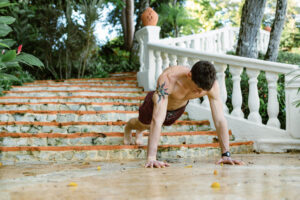
A recent paper in the Strength and Conditioning Journal proposes that isometric strength training can improve running performance by enhancing running economy and increasing tendon stiffness.
Unlike traditional dynamic strength training, isometric work appears to drive meaningful neuromuscular and tendon adaptations while causing less fatigue.
In practical terms, this means you can simultaneously improve force production, efficiency, and resilience without the same recovery demands associated with heavier lifting or high-volume gym sessions.
By improving tendon stiffness, your body can store and return energy more efficiently with each stride. At the same time, isometric training can enhance neural drive, helping you produce more force without necessarily adding unwanted bulk, a combination that’s particularly valuable for endurance athletes.
Most of the research so far points to surprisingly simple protocols—things like brief 3-second holds repeated 10 to 20 times per session. While studies specifically on runners are still limited, the underlying physiology is hard to ignore.
The key takeaway here is that strength gains do not always require movement. Sometimes, holding tension is enough.
If you’re a runner or endurance athlete looking for low-fatigue ways to improve performance, isometric training may be worth experimenting with. Strategically adding short, high-tension holds could complement your existing training rather than compete with it.
I’ve written extensively about strength training for endurance athletes, running economy, tendon health, and ways to build resilience without sabotaging recovery. You can check those resources out here:
- Inside Isometrics: The Performance-Enhancing, Muscle-Boosting, Long-Forgotten Exercise Modality That You Can Do Anywhere.
- Primal Endurance: How To Escape Chronic Cardio & Carbohydrate Dependency & Become A Fat Burning Beast.
- The World’s Fastest Workout: The 10 Minute Exercise Biohack Scientifically Proven To Produce 50%-300% More Strength & Muscle In Just 5% Of The Time.
- Q&A 454: Is A Mediterranean Diet Bad For Your Gut, The Surprising Benefits Of Isometric Training, 9 Ways You Could Be Sabotaging Your Social Life & More!
- The Two Best Ways To Build Endurance As Fast As Possible (Without Destroying Your Body)- Part 1.
- The Two Best Ways To Build Endurance As Fast As Possible (Without Destroying Your Body) – Part 2.
- Ben Greenfield’s Ultimate Peptide “Power Plays” — Transformational Stacks for Rapid Recovery, Supercharged Fat Burning, Explosive Muscle Gains & More.
Is Young Plasma the Future of Aging (& Can It Really “Turn Back the Clock”)? 🩸
I’ve received a surprising number of questions about the young plasma replacement procedure I recently did in Austin, Texas (at Austin Regenerative Therapy), particularly how it differs from the far more common Therapeutic Plasma Exchange (TPE).
While TPE removes plasma and replaces it with a substitute fluid, young plasma replacement involves infusing actual plasma from young human donors, often referred to as young Fresh Frozen Plasma (yFFP).
Young donor plasma contains the same core components as standard plasma, including proteins, hormones, and signaling molecules, but may also provide higher concentrations of regenerative factors associated with younger physiology. In simple terms, this means you’re not just “filtering” plasma, you’re introducing a biologically active replacement fluid rather than a neutral substitute.
If you’d like to see this protocol in action, I break down the science, context, and my full experience in this new video.
And if you'd like to discover more about how these regenerative therapies work, along with the safety considerations and broader applications, you can listen to my conversations with Dr. Khanh Nguyen, founder of Austin Regenerative Therapy, in these two podcasts:
- The Surprising Science Of Injecting Young Blood, Salmon Sperm & Stem Cells Into Your Face (And Other Places) With Dr. Khanh Nguyen.
- Young Blood Transfusions, Penile Botox, Salmon Sperm Facials & More – A 3-Day Regenerative Biohack With Dr. Khanh Nguyen
In these discussions, we explore everything from therapeutic plasma exchange and young plasma replacement to exosomes, VSEL stem cells, salmon sperm DNA therapy, laser-based regenerative techniques, and other cutting-edge interventions in modern regenerative medicine.
For me, this now ranks among the most noticeably impactful and fascinating biohacking protocols I’ve experimented with, particularly in areas such as recovery, skin quality, and overall vitality. While this certainly falls into the category of extreme biohacking, it remains an interesting example of how manipulating blood components may influence systemic physiology.
Work with My Elite Coaching Team for Just $1?! *Here’s* How We Help You Reach Your Fitness Goals Faster 🔥
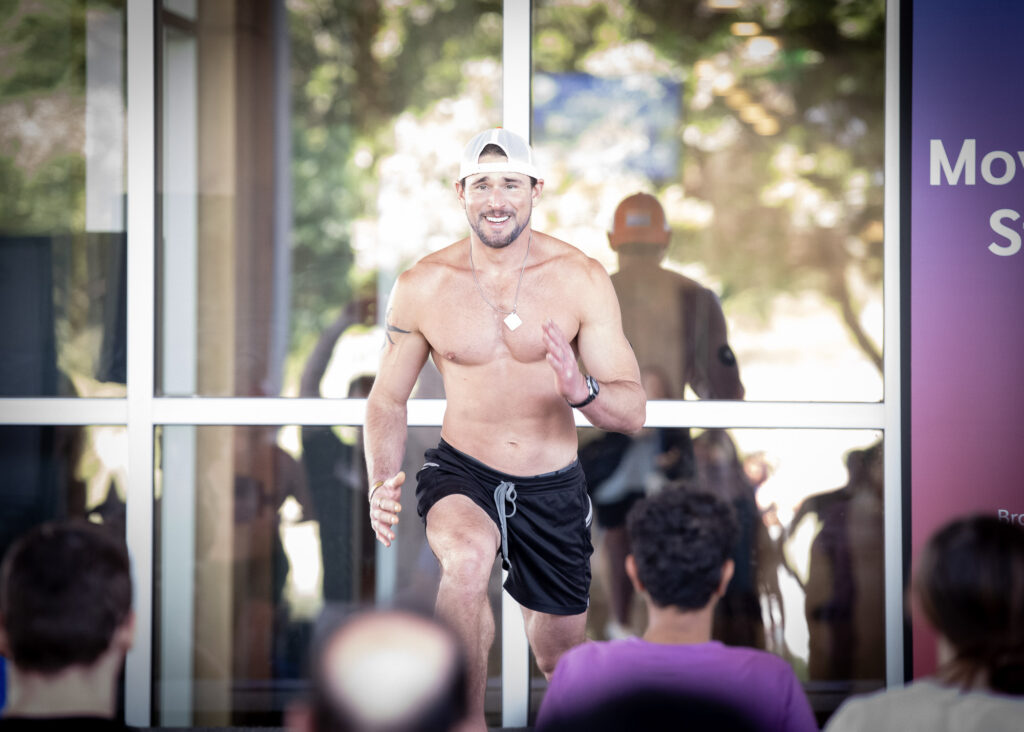
If you’re tired of piecing together workouts, nutrition advice, and recovery strategies that never quite align, LIFE Premium was built for you.
Inside LIFE Premium, you get direct access to the elite coaches I’ve personally trained, along with daily programming designed to help you build strength, optimize energy, and improve long-term performance. Fitness, nutrition, recovery, and longevity all work together instead of competing for your attention.
For just $1 for your first 30 days (normally $12.99/month), you’ll receive group coaching with my team, structured daily workouts that fit real life, and monthly small-group coaching calls in cohorts of fewer than 15 people.
Plus, at no additional cost, you’ll unlock full access to:
📚 Ad-Free Content Library: Workouts, recipes, podcasts (including Boundless Life), articles, and expert-led videos.
🤖 Ellen: Your always-on AI health guide for smarter decisions, better questions, and personalized plans.
💬 Groups: Focused communities built for accountability, learning, and connection.
📍 Places: A curated map of gyms, studios, restaurants, and wellness spots near you.
🫶 Community + Events: Live sessions, challenges, and experiences that make health social and sustainable.
If you want a simpler, smarter way to train and stay consistent, you can try LIFE Premium for just $1 here.
This Week in Health & Performance: What the Latest Research Says
🩸 Ketone Monitoring Goes Mainstream: It's surprising how many folks want to get into the blood ketone monitoring game, but the global ketone meter market is projected to grow rapidly, driven largely by diabetes management and rising interest in metabolic tracking technologies (read more here).
🧠 Beyond Plaques—Alzheimer’s & Brain Fuel: Emerging research challenges the amyloid-only model of Alzheimer’s disease, pointing instead to vascular hypometabolism and mitochondrial dysfunction. Compounds like methylene blue and ketones may help support cellular energy production and cerebral metabolism (deep dive here).
🥛 Chocolate Milk & Ketosis?: Surprisingly, a recent study suggests that drinking chocolate milk before exercise may not “kick you out of ketosis” during fasting. Practical takeaway: Fueling seems to matter more than rigid fasting dogma. If you’re an athlete or exercise enthusiast who is fasting for the purposes of ketosis, and you want a well-fueled workout, a snack beforehand isn’t a big deal (study here).
🦵 Tissue Flossing for Pain & Mobility: This simple compression technique, popularized by Kelly Starrett (guest on this podcast episode), continues to gain traction for improving range of motion and supporting recovery. Many athletes, including myself, report noticeable benefits for joint discomfort (see how it works here).
Key Takeaway: From metabolic tracking and brain energetics to exercise fueling and mobility hacks, the research keeps reminding us that performance and longevity are deeply tied to how we manage energy, movement, and recovery.
Want to dive deeper? Click the links above to explore the research, and click here to follow me on X for all the latest health and performance news hot off the press!
Product Of The Week
::: Protect Your Morning, Sharpen Your Focus—Save 15% Off on ZBiotics :::
A great night out shouldn’t sabotage your next morning—or your performance.
If you’re a founder, operator, or anyone who treats energy and clarity like a competitive advantage, you already know that small biological optimizations compound fast.
That’s why I’ve been paying attention to ZBiotics Pre-Alcohol.
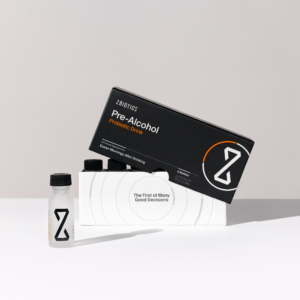
It’s the world’s first genetically engineered probiotic designed to break down acetaldehyde, a toxic byproduct your body produces when you drink alcohol. That compound is a major driver of those foggy, rough mornings that steal focus, motivation, and m
omentum.
The idea is simple: drink ZBiotics before alcohol, drink responsibly, and give your gut the tools it needs to do damage control while you sleep.
The result for many people?
Waking up clearer, sharper, and ready to train, think, or lead.
If you choose to drink, you can do it intelligently, plus receive 15% off your first order here with the code BENG.
We’re Hiring a Part-Time Backend Engineer for LIFE Enterprises!
Are you a backend engineer who loves building systems that actually run in production and scale under real-world load?
If you’re excited about designing reliable, high-performance infrastructure and want your work to support health, wellness, and human optimization, this role might be for you.
As a Backend Engineer for LIFE Network, you’ll help design, build, and operate the backend services that power a fast-growing, data-heavy wellness platform. You’ll work closely with frontend engineers and product teams to ship production-ready features, improve system performance, and ensure reliability across cloud-native infrastructure.
If you enjoy owning backend systems end-to-end and want to help build technology that elevates human performance, apply here!
Podcasts I Recorded This Week:

The Latest Content I Was Featured On This Week:
Biohacking the Vagus Nerve f. Ben Greenfield — The Health Upgrade Podcast
Ben Greenfield on Raising Healthy Kids, Pregnancy Fitness, and Dad Preparation
My Article Feed:
My full article feed and all archives of my articles are here.
This Week's Most Popular Instagram Post:

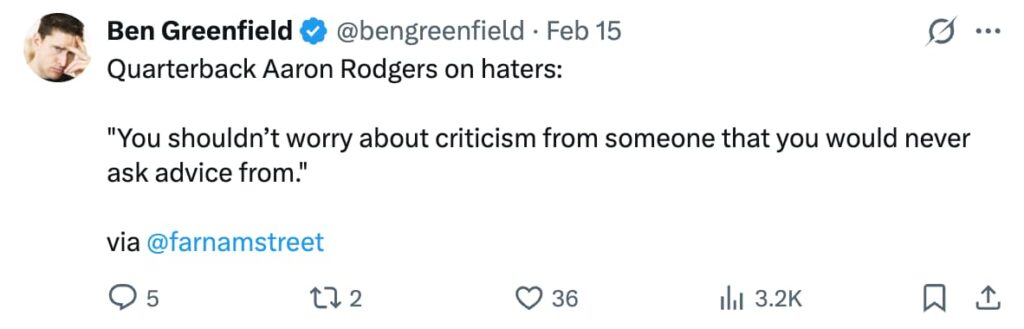
This Week's Most Popular Tweet:
This Week's Most Popular Facebook Post:

Cheers,
Ben