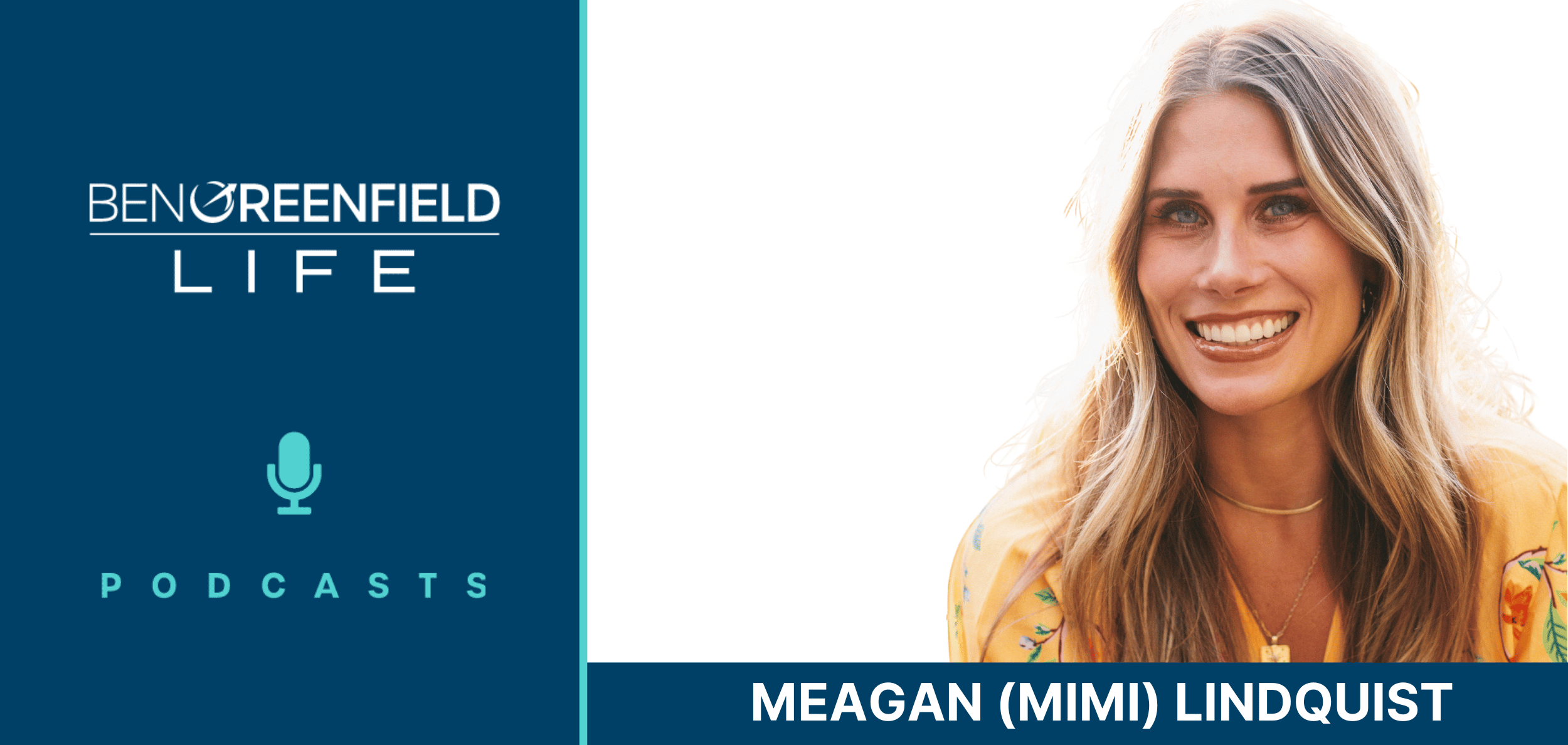
Home » Podcast » Can a Cultured Mushroom Extract *REALLY* Shrink Tumors, Clear HPV & Supercharge Immunity?, with Meagan Lindquist

Can a Cultured Mushroom Extract *REALLY* Shrink Tumors, Clear HPV & Supercharge Immunity?, with Meagan Lindquist

Listen on:

Reading Time: 6 minutes

What I Discuss with Meagan (Mimi) Lindquist:

In this fascinating episode with guest Meagan Lindquist, you’ll get to discover the world of AHCC, a cultured mycelial mushroom extract with a remarkable range of health benefits. We explore its origins, patented extraction and culturing process in Japan, and what makes AHCC uniquely bioavailable compared to other mushroom supplements. Meagan shares her personal health journey, her experiences supporting patients, and her passion for spreading awareness about AHCC’s research-backed potential—from cancer and HPV to Lyme disease and overall immune function.

AHCC is often mistakenly referred to as “active hexose correlated compound,” but Mimi explains this is a common misnomer that she and her manufacturers are working to clear up. The active hexose correlated compound phrase describes only one fraction of AHCC, which is not the same as the entire complex. It’s like saying Ashwagandha is identical to an entire greens blend that features this ingredient. Instead, AHCC is a patented, powerful compound studied extensively for its effects on immunity and health.

The conversation highlights AHCC’s role as an immunomodulator, antioxidant, and anti-inflammatory compound, reviewing clinical studies that demonstrate its benefits for both general immune support and as a complementary therapy for serious conditions, such as cancer and chronic viral infections. Practical topics include supplement quality, recommended dosing, and how to find credible sources for further research. By the end of the show, you’ll have expert insights and actionable information to help you evaluate AHCC as part of a thoughtful, science-driven approach to immune system optimization and integrative health.

Meagan (Mimi) Lindquist (@mimi_themedicin) is the co-founder of The Medicin, alongside her husband Chase. Together, they provide high-potency, high-quality mushroom products to the world. With her background as a clinical dental hygienist, culinary nutrition guide, and AHCC educator, she has been helping others prevent disease for over 12 years. Now, Mimi has dedicated herself entirely to sharing the benefits of Immune Intel AHCC, a mushroom product unlike any other, to as many people as possible.

She hosts monthly live calls with Dr. Nathan Riley (you can check out our podcast together here) for women who are trying to clear HPV naturally by using AHCC. In her words, it is her “life's passion to spread the word about how powerful it is.”

If you’re ready to discover a powerful, science-backed mushroom extract that could upgrade your immune health—and possibly much more—you won't want to miss this episode.

Exclusive Listener Discount:

👉 Visit this link: bengreenfieldlife.com/immuneintelahcc
🛒 Use code BEN at checkout for 10% off your order at The Medicin.

Please Scroll Down for the Sponsors, Resources, and Transcript

Episode Sponsors: 

Organifi Shilajit Gummies: Harness the ancient power of pure Himalayan shilajit anytime you want with these convenient and tasty gummies. Get them now for 20% off at organifi.com/Ben.

Fatty15: Fatty15 is on a mission to optimize your C15:0 levels and help you live healthier, longer. You can get an additional 15% off their 90-day subscription Starter Kit by going to fatty15.com/BEN and using code BEN at checkout.

LVLUP Health: I trust and recommend LVLUP Health for your peptide needs as they third-party test every single batch of their peptides to ensure you’re getting exactly what you pay for and the results you’re after! Head over to lvluphealth.com/BGL and use code BEN15 for a special discount on their game-changing range of products.

BIOptimizers MassZymes: MassZymes is a powerful, best-in-class enzyme supplement that improves digestion, reduces gas and bloating, and provides relief from constipation. Go to masszymes.com/benfree and use code ben10 for 10% off your order.

Resources from this episode: 


Upcoming Events: 

Do you have questions, thoughts, or feedback for Megan Lindquist or me? Leave your comments below, and one of us will reply!
Ben Greenfield [00:00:00]: My name is Ben Greenfield, and on this episode of the Boundless Life podcast...

Meagan Lindquist [00:00:05]: So they gave these 195 participants about 6 grams of AHCC per day for six months. And they were measuring the tumor size, the tumor mass, and also NK cell activation and some other anti cancer cytokines, these chemical messengers that start to tell the body to break this tumor down. They were measuring all of this. The results were absolutely astounding.

Ben Greenfield [00:00:30]: Welcome to the Boundless Life with me, your host, Ben Greenfield. I'm a personal trainer, exercise physiologist, and nutritionist. And I'm passionate about helping you discover unparalleled levels of health, fitness, longevity, and beyond. Hey. So for today's podcast, I interviewed this woman who's an expert in something never heard of before. It's called AHCC. It's this weird mushroom extract stuff that just blows up your immune system in a good way and has all these other effects. Some of the stuff she talks about with cancer and HPV and autoimmune stuff is pretty mind blowing and it's pretty rare I come across something I haven't heard of before until now.

Ben Greenfield [00:01:17]: So check the audio and the video out. Shownotes are at BenGreenfieldLife.com/AHCCpodcast let's, let's tune in with Meagan Lindquist. I'm always on the lookout for cool new compounds that I haven't heard of before. And one of my buddies, he's known as like the world's greatest formulator, Sean Wells. He and I were talking about immunity and he's like, you gotta check out this stuff called AHCC. And he's been on the podcast a few times and I usually generally trust what he says or at least trust enough to look into it. And apparently it's like this immunity powerhouse mushroom extract stuff. I'd never heard of it before.

Ben Greenfield [00:01:56]: And, and so I started digging into it and Meagan Lindquist, it appears that you are like the world's leading authority on this stuff, but you were like a dental hygienist before that. So I'm sure you have an interesting story about this. It's one of those situations in which I just come across this fringe thing I've never heard of before. And then you sent me this stuff, which tastes incredible. It's like cinnamon swirl latte. And it's always good when stuff doesn't taste like, pardon the expression, ass, and then you got the capsules here. And I'm super interested in this stuff because I get a lot of questions from people about, you know, this time of season, going into cold and flu season and travel and immunity. And a lot of people know that mushrooms are good for immunity and they've heard about Chaga and stuff like that.

Ben Greenfield [00:02:45]: But this is kind of a new kid on the block. So if you are listening or watching all the shownotes gonna be bengreenfieldlife.com /AHCCpodcast I said that right? Ahcc. Ahcc podcast. I don't even remember what it stands for, but you can get into that. So what is it?

Meagan Lindquist [00:03:09]: Yeah, it's a good place to start. First, I just wanna say thank you for allowing me into your beautiful home and allowing me to share this with your audience. It's helping me like fulfill one of my dreams and one of my purposes, I believe on this earth is to, is to help share this.

Ben Greenfield [00:03:26]: Yeah, well, it was kind of random by the way, because I was going to interview you today and then I found out like last week that you guys were in town.

Meagan Lindquist [00:03:32]: Yeah, it worked out perfect. But yeah. So AHCC is a cultured mycelial product that comes from the mycelia of several different species of mushrooms, including shiitake. So it's classified as a functional health food, but that really doesn't reflect the vast nature of use that we see for so many different diseases and conditions.

Ben Greenfield [00:04:07]: What's that mean by that? It's classified as a food. Does that mean by the FDA is something different than.

Meagan Lindquist [00:04:13]: Well, it's not regulated by the FDA, but it is. Mushrooms in general are considered health foods, functional foods. So because it's derived from mushrooms, it's not a mushroom in and of itself. You wouldn't go out to the forest and find an AHCC mushroom, but it's derived from the mycelia of several super potent hybridized mushroom strains, including shiitake.

Ben Greenfield [00:04:39]: That's great. So the people who are taking like 70 different supplements are embarrassed about that. Don't have to make this 71 because this just counts as food.

Meagan Lindquist [00:04:46]: Yeah, yeah, it's a functional food. So we know with health supplements in general, they're generally very safe. So it has an extremely high, robust safety profile. But it also has really impressive clinical and medical indication of use for things ranging from HPV to cancerous tumors, to lyme to all sorts of different chronic issues, skin issues like hydrogenitis, supportiva, herpes, warts.

Ben Greenfield [00:05:21]: No clue what that is but it sounds horrible.

Meagan Lindquist [00:05:22]: It is, yes.

Ben Greenfield [00:05:23]: Any disease that's hard to pronouce.

Meagan Lindquist [00:05:24]: Right. It is not a fun condition to live with. They think it has an autoimmune link. So AHCC is, you know, classified as this, which I'm sure we'll get deeper into. But it's actually an immunomodulator, so it's able to modulate the immune system, not just boost it, not just, you know, suppress it. Like, you know, someone would take a medication for autoimmune that's suppressing their immune system. It really can do both and both at the same time, which is very unique.

Ben Greenfield [00:05:52]: So like some of the stuff you listed off, you know, skin issues, Lyme to a certain extent, a lot of these are not considered. I got sick issues, but more, you know, because there was something going around, but more like actual autoimmune body attacking itself issues. So you're saying it can also help with that kind of stuff?

Meagan Lindquist [00:06:07]: Absolutely.

Ben Greenfield [00:06:07]: How'd you find out about this?

Meagan Lindquist [00:06:10]: So I. My love affair slash obsession with AHCC began where all many, many good stories start, which is at my rock bottom of my health hell hole. I was recently divorced in 2018. I was really sick, kind of like self induced orthorexic exercising too much.

Ben Greenfield [00:06:32]: Was that when you were a dental hygienist?

Meagan Lindquist [00:06:34]: Yeah, I was a dental hygienist and I loved it. Loved being a dental hygienist. I'm still a dental nerd at heart. And actually it was in the dental office that I learned about AHCC. In our office, one of the, one of the women, one of the patients that we worked with, she got diagnosed with HPV in her 50s. And her naturopath recommended this quote unquote mushroom supplement to help clear her HPV. And it worked. And I was astounded.

Meagan Lindquist [00:06:59]: I was like, what is this stuff? I need to learn more about it. I got on the Internet, looked up Dr. Google and found out that it had its own research organization. And I was blown away. I dove down the rabbit hole and.

Ben Greenfield [00:07:14]: I AHCC had not HPV, but AHCC.

Meagan Lindquist [00:07:16]: Has its own AHCC has its own research organization. And I dove down this rabbit hole and I've never come out. As I learned more and more about it, I just kept telling myself, you know, there was this nudge from inside, like I need to tell more people about this. I need to keep talking to people about this. And then I used it on myself. I started taking it and along with other mushrooms, listening to podcasts like yours and others, like really diving into like, what is holistic health really? It's not over exercising, it's not under eating, it's not just being skinny. It's more than that. It's really like coming from the inside out.

Meagan Lindquist [00:07:52]: And it really Helped me break through some of the issues that I was having. And then I started sharing it with my patients. I started sharing about it on Instagram. My account kept growing and growing. Then in 2019, I went to the ICNIM, which is the International Congress on Nutrition and Integrative Medicine in Japan, where all AHCC comes from.

Ben Greenfield [00:08:15]: All the crazy stuff comes out of.

Meagan Lindquist [00:08:16]: Japan and that's where AHCC originates.

Ben Greenfield [00:08:18]: Are one of those three.

Meagan Lindquist [00:08:20]: So I went to Japan with a group of people and I attended this congress which was really kind of researchers and doctors, physicians from all over the world studying AHCC and presenting their research. It was like a three day red carpet event for me, you know, learning more about AHCC.

Ben Greenfield [00:08:36]: Very small leech area of the world.

Meagan Lindquist [00:08:39]: I mean, there was five, over 500 people there. Yeah, it was. It was incredible. I mean, it is.

Ben Greenfield [00:08:44]: Were they mostly Japanese people?

Meagan Lindquist [00:08:45]: No, they were from Italy, from Brazil, Definitely from America as well. I mean, all over the place. This is studied all over the world. It's the most clinically researched specialty immune supplement in the world.

Ben Greenfield [00:08:57]: I mean, I talk to a lot of people and kind of sort of fancy myself as somebody who likes to stay on the bleeding edge, but I'd never heard of it until like three months ago. Is this new or something that's been used for a long time?

Meagan Lindquist [00:09:11]: It's. It. It was created in 1986. So it started in Japan and...

Ben Greenfield [00:09:17]: It was created? You mean that the mushroom was created by way to get it out of the mushroom.

Meagan Lindquist [00:09:23]: So I'll pull on that thread a little bit. So in 1986, a group of doctors led by Dr. Toshihiko Okamoto in Japan at the. At Tokyo University, they were studying a bunch of different species of mushroom mycelia and how they affected NK cells. And they really wanted to find the most robust activation of NK cells.

Ben Greenfield [00:09:44]: NK is like the killer cells

Meagan Lindquist [00:09:46]: Natural killer cells.

Ben Greenfield [00:09:47]: Natural killer.

Meagan Lindquist [00:09:47]: These are like these silent assassins that they don't need permission from anybody in the immune system to take out a cancer cell, to take out, you know, viral replication. So these are. If your NK cells are down to zero, you're dead. We saw it during COVID NK cells were very, very important. People with low NK cell counts usually struggled really horribly with.

Ben Greenfield [00:10:08]: Does that happen with AIDS too?

Meagan Lindquist [00:10:10]: AIDS, I think is a cluster. Yeah, it's a cluster of things happening there. But so these doctors were studying this mycelia. They found a group, you know, that they felt comfortable with. They saw really robust activation of NK cells. They created a mass sample of this AHCC put it in an ISO certified deep freezer. And so every sample, every, every batch of AHCC, every capsule is absolutely identical because it comes from this one super sample in the same place.

Ben Greenfield [00:10:43]: Like still the same place?

Meagan Lindquist [00:10:44]: Yes.

Ben Greenfield [00:10:45]: Since 1986.

Meagan Lindquist [00:10:46]: Yes.

Ben Greenfield [00:10:47]: My gosh.

Meagan Lindquist [00:10:47]: Yeah.

Ben Greenfield [00:10:48]: How's that like sustain? Is it a really big freezer?

Meagan Lindquist [00:10:51]: So you only need a tiny size.

Ben Greenfield [00:10:53]: I mean like a million people buy this stuff?

Meagan Lindquist [00:10:54]: Yeah, you only need a tiny sample for it then to grow and to culture. So it's cultured over 45 days.

Ben Greenfield [00:11:00]: Like from a business standpoint, would a supplement company like use this as their contract manufacturer, get a small batch, then they could grow it themselves.

Meagan Lindquist [00:11:10]: No, the process, the manufacturing process is completely patented. All AHCC comes out of one source in Japan, in Sapporo, Japan, which is where I visited, saw the whole manufacturing process.

Ben Greenfield [00:11:21]: Hope that place doesn't burn down.

Meagan Lindquist [00:11:23]: Fingers crossed. And so that's one of the many reasons why AHCC is so unique, why it's so different than any other mushroom supplement, but also any other supplement at large. Because of the culturing process and the way that it cultures for about 45 to 60 days. And there's a very specific enzyme reaction that breaks down the molecules so that they are better absorbed by the human body. So they're more bioavailable, it's more potent than your run of the mill mushroom supplement.

Ben Greenfield [00:11:58]: Do you know, if you like. So the culturing thing, do you like take certain mushrooms and then mix them with something like. Hopefully. This is a stupid question.

Meagan Lindquist [00:12:07]: No, it's not a stupid question. Yeah. So it's a liquid tank. So they take this sample of mycelia. They. And I don't know every single detail of the proprietary process because it's proprietary. They don't really like let out every single step of the process to just anyone, but they're basically taking a small sample and that they, the, basically the mycelial mass grows and then they're putting it in a liquid tank for up to 60 days. Then it goes through a concentration and freezing process and then it's encapsulated.

Meagan Lindquist [00:12:38]: So it's a very long, very specific process that's different than any real, any other product out there.

Ben Greenfield [00:12:47]: Totally random question because you brought capsules a few times. So like this stuff, this powder, do you just take the capsules and break them open?

Meagan Lindquist [00:12:54]: It's, it's. Yeah, yeah. So we use a manufacturer where they're using Chaga and Tremella and this is the fruiting body. So if you go back to seventh grade, you know, biology class, you're Looking. If you're looking at the fungal organism, the fruiting body is what sprouts out above the ground. That's what many different mushroom products are made of. That's what Mushy Love is included.

Ben Greenfield [00:13:13]: Oh, so this is not AHCC.

Meagan Lindquist [00:13:14]: Nope.

Ben Greenfield [00:13:16]: Gotcha. That's what I was confused. So these are different ones?

Meagan Lindquist [00:13:19]: Yes.

Ben Greenfield [00:13:19]: What does the AHCC taste like?

Meagan Lindquist [00:13:21]: It's just earthy. It's just earthy. It's not too bad, honestly. We have people that just put it in water and drink it down, but it's really not too bad. But, yeah, Mushy Love is a completely different product. AHCC is in a class of its own.

Ben Greenfield [00:13:33]: So if Mushy Love is Chaga and Tremella, I'm assuming, like, you're like, you got. What's your website? The medicine. So you guys make and sell the Mushy Love, but then you also have your own version of AHCC.

Meagan Lindquist [00:13:44]: Yes.

Ben Greenfield [00:13:45]: Yeah. So the Chaga and Tremella in that, how would you compare that to whatever they're using as the mushrooms in this one?

Meagan Lindquist [00:13:54]: Yeah. So basically we're using the fruiting body mushrooms of Chaga and Tremella and it's just a different molecular structure. So although I love our product, it's amazing. I love using fruiting body products. It's just not the same because of. When you look at the molecular structure of what's in here is mostly beta glucans, which you've probably heard of before. What's in what's most powerful in the AHCC is called alpha glucans. And they go through this enzyme process that basically changes the alpha glucans even more.

Meagan Lindquist [00:14:26]: So they're much smaller on a molecular level, going from 200,000 Daltons, which is what beta glucans are, to about 5,000 Daltons, which is what...

Ben Greenfield [00:14:35]: Yeah, dalton is like the measurement, the unit of measure for a molecule.

Meagan Lindquist [00:14:38]: And so the smaller the molecule, the easier. Easier it is for you to absorb. That's why just eating a bunch of shiitake mushrooms is absolutely not the same.

Ben Greenfield [00:14:46]: That's what I was going to ask. Okay, so they are using shiitake for this one.

Meagan Lindquist [00:14:49]: Yeah, it's shiitake and a couple other.

Ben Greenfield [00:14:51]: I was going to ask you, like, why couldn't I just go get it because they taste delicious.

Meagan Lindquist [00:14:54]: And I get that question all the time. And you should, you should throw them in your stir fry or whatever, but it's not going to. It's not going to yield the same result as having AHCC in your body because of that. Molecular structure, the bioavailability. Bioavailability and the potency of AHCC that's unlike any other mushroom supplement.

Ben Greenfield [00:15:11]: I'm going to try to spit this out because you corrected me. I think it was Sean who got me interested in this. He said, you got to check out this AHCC stuff. It's like active hexose correlated compound. I get that. Active hexose correlated.

Meagan Lindquist [00:15:25]: Yeah. That's what people.

Ben Greenfield [00:15:26]: And you're like, no, it doesn't really stand for that.

Meagan Lindquist [00:15:27]: Yeah, yeah. So this is a big misunderstanding that the manufacturers and we are trying to kind of correct as we go along, because way back many years ago, during the many different research studies that have come out, one of the researchers basically coined this term, this active hexose correlated compound. He started calling AHCC this, and you see it a lot in different studies. So if someone looks it up on Google, they're going to see active hexose correlated compound. How I explain it is like, Organifi green juice has ashwagandha in it, but it's not Ashwagandha. Ashwagandha is one of the components of Organifi green juice. And you're drinking Organifi green juice with the many constituents. AHCC has active hexose correlated compound as one of the fractions, but it's not the entire thing.

Meagan Lindquist [00:16:19]: There's other parts to it. So he pulled out this acronym, put it in a study, and then it kind of snowballed from there.

Ben Greenfield [00:16:26]: So what's AHCC stand for?

Meagan Lindquist [00:16:28]: The manufacturers never intended it to be an acronym. I know it's kind of confusing because it sounds like it's confusing because there's.

Ben Greenfield [00:16:35]: Something in it that is an acronym for active hexose correlate compound. But then AHCC itself is not an acronym.

Meagan Lindquist [00:16:40]: It's just like, very confusing.

Ben Greenfield [00:16:41]: Yeah, this is like the fault of the Japanese lab.

Meagan Lindquist [00:16:45]: You'll even hear me on very early podcasts, you know, talking about, oh, it stands for active hexose because it's in the research. You think if it's in research, this has got to be right? Yeah, but, you know, I just had a call with the manufacturers last week and, you know, we. We continued to talk about, okay, how do we explain this in a way that's. That's graspable for people?

Ben Greenfield [00:17:03]: Yeah, yeah.

Meagan Lindquist [00:17:04]: So it's very confusing, but it's just AHCC.

Ben Greenfield [00:17:06]: Okay, so you said the research, and then this is always the kicker. You know, whenever we're talking about a supplement, there's all these little like, okay, was it done? In rodents? Was it done in humans? Is this the amount that they actually use in the study or do I have to take 10 times more? So what, what is the actual research and relevance of the research for? I realize this is kind of like a potentially rabbit-holey question, but like for different conditions.

Meagan Lindquist [00:17:29]: Yeah, I would love to dive into the research. There's over 100 different studies that have been published, probably even more at this point. And then over 30 human clinical trials for all different things from cancer to liver disease to autoimmune to HPV to medication resistant epilepsy. Like a whole slew of things. So when we talk about research I usually try to pull out the most relevant and the studies that are, you know, that are going to resonate most for people like pretty much all of us have either been directly or indirectly affected by cancer. And that's one of, that's really where AHCC shined initially. Again, NK cell activation...

Ben Greenfield [00:18:27]: Prevention? or if somebody has cancer?

Meagan Lindquist [00:18:27]: Somebody has cancer using this alongside whatever treatment they're using, whether that's chemo or. There also have been studies where people are using this alone to shrink their tumor. So one of the. Absolutely. Jaw dropping studies that's in this book.

Ben Greenfield [00:18:31]: Did you write this?

Meagan Lindquist [00:18:32]: No, I didn't. This is Fred Pescatore.

Ben Greenfield [00:18:35]: That's not your pen name, Fred.

Meagan Lindquist [00:18:36]: Possibly an AHCC book coming for me in the future we'll see how that goes.

Ben Greenfield [00:18:39]: A unique compound from Japanese medicinal mushrooms being used for prevention and complementary treatment of infections, liver disease, cancer and other conditions. Kind of looks like it was written in the 80s.

Meagan Lindquist [00:18:48]: Yeah, it's small but potent. So one of the studies in there was an in hospital study published in this book and it was a group of Doctors led by Dr. Katsuaki Uno at Comfort Hospital in Japan.

Ben Greenfield [00:19:02]: I don't know how you remember that. Roll off your tongue.

Meagan Lindquist [00:19:05]: Yeah, this was about 1998 to 2000 and this is incredible. So they had 195 stage 4 cancer patients that had very poor prognosis. So their cancer tumors ranged from ovarian to breast to prostate to liver, all over the place. This was a widespread of cancerous tumors and these people have like I said, no good options as it comes to conventional treatment. They gave these 195 participants about 6 grams of AHCC per day for six months. And they were measuring cancer, the tumor size, the tumor mass and also NK cell activation and some other anti-cancer cytokines, these chemical messengers that start to tell the body to break this tumor down. They were measuring all of this. And so okay, six grams of AHCC for six months to 195 stage four cancer patients.

Meagan Lindquist [00:20:07]: The results were absolutely astounding. So out of 195, 114 people had a 50% or more reduction in the size of their tumor in four weeks or less.

Ben Greenfield [00:20:22]: And the only thing they changed was introducing AHCC.

Meagan Lindquist [00:20:26]: They said AHCC and other immune system immune stimulants, so other health foods.

Ben Greenfield [00:20:30]: Okay.

Meagan Lindquist [00:20:31]: And this is after they've already been given the prognosis of like, surgery's not an option or chemo didn't work for you. So this is like their last effort. So 50%, more than 50%. So 114 out of 195 people, that's like 60% or something, they had a 50% or more reduction in their cancer, in their tumor mass in four weeks or less. Seventeen of those patients, their tumor disappeared in four weeks or less.

Ben Greenfield [00:21:00]: Wow.

Meagan Lindquist [00:21:00]: And again, it comes back to this NK cell activation. Right. Because these are the signs people will.

Ben Greenfield [00:21:06]: Go to Mexico and get NK cell infusions. And what you're saying is like this what you call the alpha glucan that's triggering your body's own production or something?

Meagan Lindquist [00:21:18]: Yeah, it's kind of a slew of mechanism of action. It's not just one, one thing, but this is just one study that's showing like there's like real potential and sometimes even more potential, the sicker the person is. Because the sicker the person is, the more activation and the more response AHCC gives to that person. It's not just going in. Like for you, if you started taking AHCC, you probably don't have any systemic issues. I don't have any systemic issues. It's just going to keep us maintained. It's just gonna keep us, you know, maintained.

Meagan Lindquist [00:21:51]: For someone who's battling a cancerous tumor, they need a lot of activation. And AHCC in all of its intelligence is able to somehow, which we don't even fully understand how exactly we can measure, like, okay, this cell is signaling this, and these two cells are communicating, and this is activated over here. But like, the how is kind of still a mystery.

Ben Greenfield [00:22:12]: Have they ever looked at just like, like how often you get sick versus you don't get sick if you're taking it just like a healthy person who doesn't want to get sick. That's what I'm super interested in.

Meagan Lindquist [00:22:23]: This is the number one piece of feedback that we get from our customers and users. And I take it every day, have for six years, and I haven't been sick in Two and a half.

Ben Greenfield [00:22:31]: How much do you take?

Meagan Lindquist [00:22:32]: I haven't been sick in two and a half years. I take two capsules a day.

Ben Greenfield [00:22:34]: Okay.

Meagan Lindquist [00:22:35]: If I. So this is about, excuse me, 1.5 grams, which would be two of our capsules per day.

Ben Greenfield [00:22:42]: Empty stomach with food, does that work?

Meagan Lindquist [00:22:43]: Empty stomach is fine. With food. Is fine. Because it's a health food. There's not really strict recommendations on exactly when you need to take it. I usually tell people like right before a meal, right before breakfast, right before dinner. But really, anytime is fine. They've studied that too in different studies and they really find that it doesn't matter a whole lot as long as it's getting in your body.

Ben Greenfield [00:23:06]: So.

Meagan Lindquist [00:23:07]: So that is the number one piece of feedback that we hear from people. Teachers love it. They're exposed to little snotty kids all day, every day. And they really love it for protecting their immune system, optimizing these very specific important cells within both branches of the immune system. That's another way that this is very unique is that it's not just supporting one thing. It's not just supporting one branch of the immune system. It's supporting.

Ben Greenfield [00:23:31]: You mean like the waste it called the innate and adaptive.

Meagan Lindquist [00:23:35]: Yes, exactly. Innate and adaptive. And they have these different cells within each branch. And NK cells are part of the innate immune system, the branch. But things like T cells and B cells that are really important for long term immunity your body, you know, being able to formulate an antibody to an antigen to a pathogen. Right. It's the T cell and B cell, active innovation. But on the innate side, we have the NK cells that are.

Meagan Lindquist [00:24:02]: We've already talked about. We also have dendritic cells that are.

Ben Greenfield [00:24:06]: Really the immediate response, the adaptive. It's kind of like how you build a memory and fight something off in the future.

Meagan Lindquist [00:24:11]: So AHCC really supports both branches and they see an activation and amplification of the intelligence of both branches of the immune system. That's why I think it's so powerful for people who are healthy that just want to stay healthy.

Ben Greenfield [00:24:25]: So you said HPV like three times already. That's human papilloma virus. I don't know that much about it, but. But is it a really big issue for people?

Meagan Lindquist [00:24:37]: Yeah. Oh, it's a huge issue. Mostly for women because we are the ones that get Pap smears. There's no equivalent of men getting.

Ben Greenfield [00:24:43]: Oh, is that what the part of Pap smear stands for? Papilloma?

Meagan Lindquist [00:24:47]: No, it's a. It's a person's Last name, it's Papillomao or something like that, but you would think it was that.

Ben Greenfield [00:24:53]: Some Greek, some Greek dude. Papalophus.

Meagan Lindquist [00:24:55]: Yeah, it's something like that, but. But no. HPV stands for human papillomavirus. It is the virus that is said to, you know, there's different strains, but can lead to cervical cancer for women. If you have a high risk strain of HPV, there's low risk strains that cause genital warts. They're not very fun or cute, but like, you're not gonna die from it, right? And so there are these other high risk strains that can be dangerous. And I know right now there's someone listening, there's a woman listening that just got diagnosed recently, or maybe she's been dealing with it for years and feels pretty desperate. So I hope she hears this part of the podcast because AHCC has been shown to be a very non invasive, low hanging fruit to support the body in dealing with HPV the way that it should.

Meagan Lindquist [00:25:47]: So one study that is, I think was published in 2022 in Frontiers in Oncology, was a phase 2 clinical trial, double blind, placebo controlled. They had 50 participants with high risk persistent HPV. This means high risk meaning it can lead to cancer. Persistent, meaning they haven't been able to clear it for over two years. Their body's having a hard time. For whatever reason, they split these two into treatment and placebo. And the treatment group received three grams a day of AHCC for six months. And again, the results were astounding.

Ben Greenfield [00:26:25]: Three grams? Oh, one. So two. So it'd be like four capsules?

Meagan Lindquist [00:26:30]: Yeah, four capsules. You can split it up morning and evening. So what they saw was a clearance of 63.6% of the women were testing negative at 6 months or less after that, 6. Since all the women in the treatment group handled it very well, there were no adverse reactions. They unblinded the study and then they offered it to the placebo group. And 50%, another 50% of those women were able to clear in six months of AHCC use. So, like, this is a huge, huge thing for women. It affects men too.

Meagan Lindquist [00:27:06]: But like, again, most guys have no idea that they are spreading HPV. And it's kind of a burden that sits on the woman's shoulders, unfortunately. And we're really not given a lot of good options, meaning zero good, non invasive options. It's usually like, all right, get the vaccine or we're going to cut away part of your cervix or we're going to do more biopsies. Doctors, I have so much respect for many of them, but they're not taught how to counsel a woman on like how to support your immune system. Them, they usually say something like, just be healthy and don't smoke, don't drink.

Ben Greenfield [00:27:44]: Yeah.

Meagan Lindquist [00:27:44]: And that's not really that helpful.

Ben Greenfield [00:27:46]: Take some vitamin C.

Meagan Lindquist [00:27:48]: Right, and so they're not really giving that great of advice, you know. But this is very, this is very close to my heart because I work with a lot of women who are navigating HPV. I actually work with Dr. Nathan Riley, who I think you've had on his, on your podcast.

Ben Greenfield [00:28:04]: He's like the holistic OBGYN. Who has been on the show before. I think he's been on the show.

Meagan Lindquist [00:28:09]: Yeah, I listen to it. Yeah.

Ben Greenfield [00:28:11]: Okay.

Meagan Lindquist [00:28:12]: And so we teamed up and we created this, this program for women who are trying to clear HPV. AHCC is a big cornerstone piece of that because it's so powerful. Like overnight you're supporting your immune system. But then we also look at the lifestyle factors like what are you eating, how much are you working out, like what are your relationships look like? So we go through, you go very deep. And it's a big help to women who are kind of on an island trying to figure this out.

Ben Greenfield [00:28:37]: Speaking of women, I'm assuming healthy for pregnancy. You're pregnant?

Meagan Lindquist [00:28:40]: Yes. Yeah. So I take it every day. I would never tell a woman like what she puts in her body is up to her. It's really what you're comfortable with. I've been studying AHCC for many years. I'm very familiar with the safety profile there literally is. They've never been able to find a toxic dose, surprisingly so.

Meagan Lindquist [00:29:01]: In the safety studies, they gave these poor little rats an equivalent of a 600 gram megadose. What would be equivalent to 600 gram of AHC? 600 gram. I take 1.5 every day.

Ben Greenfield [00:29:13]: Oh, 1.5 grams. Okay, that's awesome.

Meagan Lindquist [00:29:15]: I take a gram and a half a day just for general health. They gave these little rats the equivalent of 600 grams. None of them died, none of them had any sort of horrible reaction. So they had to basically estimate the toxic dose. So all that to say it has an extremely high safety profile.

Ben Greenfield [00:29:33]: You talked about the liver and you said liver disease. Is that like non alcoholic fatty liver disease or something else?

Meagan Lindquist [00:29:41]: Yeah, I think it could be. It's both. I mean, it's people that have, you know, what you just mentioned, but also, you know, people have been drinking for a while and their liver is not in tip top shape.

Ben Greenfield [00:29:51]: So, like, if I had elevated liver enzymes, is that something that you could try?

Meagan Lindquist [00:29:56]: Yes, absolutely. We've received quite a few testimonials from people who have had different stages of liver disease. Or like, hey, my doctor says my liver enzymes are way off. AHCC is very supportive of the liver. Like I mentioned the Fred Pescatore book, the author, he was one of the first physicians in the United States to use AHCC. And he started with his hardest liver disease patients that he couldn't really get under control. He started giving AHCC. I've interviewed him on our podcast.

Ben Greenfield [00:30:28]: What's your podcast?

Meagan Lindquist [00:30:29]: TheMedicin podcast.

Ben Greenfield [00:30:30]: Like medicine without an E?

Meagan Lindquist [00:30:31]: Yes, like our brand. So all that to say, yes, it is very, very supportive of liver health. There was actually a study in 2002 in the journal of Hepatitis that looked at how basically how AHCC could support people with liver disease who had had surgery and basically preventing reoccurrence and death after surgery.

Ben Greenfield [00:30:55]: A decrease in the detoxification metabolic enzyme glutathione S transferase in the liver. So it would like, improve your ability to detox, basically.

Meagan Lindquist [00:31:04]: Yes, absolutely.

Ben Greenfield [00:31:05]: He says infections on her. Are there other infections? Because, I mean, you said Lyme.

Meagan Lindquist [00:31:09]: Yes. Yeah. So we see it with things like just simple cold and flu. You know, the infections that everyone gets. HPV obviously is considered an sti. It's a sexually transmitted infection. You know, oh, Lyme. Like I mentioned, really, really cool data coming out around Lyme.

Meagan Lindquist [00:31:28]: People who struggle with Lyme basically have like, you know, the flu year round is what it feels like. You're just like, you know, it's miserable. And so there was a pilot study, so it was small, but they had 12 participants ranging from 20 years old to 80 years old with stage one to stage three Lyme disease. They gave three grams of AHCC for eight weeks to all of the participants. Three grams, that's like four capsules. Four capsules for eight weeks. And they were measuring things like joint pain, eye health card, cardiovascular health, fatigue, just quality of life in general. And they had a hundred percent of the participants.

Meagan Lindquist [00:32:08]: So every participant was helped in some way, whether partially, yeah, I feel a lot better or completely like, I feel normal.

Ben Greenfield [00:32:15]: Yeah.

Meagan Lindquist [00:32:16]: So we see just incredible results ranging again from so many different diseases and conditions. And it's, I think it comes down to, you know, I'm still learning about this all the time. I would never complain myself an expert, because I'm constantly learning and understanding deeper about how this works in the body.

Ben Greenfield [00:32:33]: Yet you're the only person I know of who went to the Japanese event, congress thing.

Meagan Lindquist [00:32:39]: But it has various mechanisms of action. We mentioned that a few minutes ago. There's really like four that I like to talk about. That really puts it into perspective of like, oh, I see how these puzzle pieces are coming together. Because when I talk about it, there's someone listening right now. That's doubtful. That's like, this sounds like a freaking miracle. Like one size fits all miracle, whatever.

Meagan Lindquist [00:32:59]: I totally get that. But when you look at the mechanism of action that they're able to prove within the research, one is the immune modulation, which is helping both branches of the immune system have more, you know, amplifying your innate intelligence, basically. And it's, it's both boosting and able to suppress and at the same time. So like if a person, if a woman has an autoimmune condition condition, but then gets diagnosed with hpv, does she need her immune system to calm down or does she need it to be boosted? And AHCC has the ability to do both at the same time via these different cells that do different things within the body. So it doesn't just activate haphazardly. It's not just arbitrarily raising your NK cells. If you don't need it, it's able to like.

Ben Greenfield [00:33:41]: It's like an adaptogen.

Meagan Lindquist [00:33:42]: Exactly.

Ben Greenfield [00:33:42]: Yeah. Which a lot of mushrooms are.

Meagan Lindquist [00:33:44]: Yes. But this is amplified again because of the bioavailability and the potency of those small alpha glucans. That's unique to AHCC because of the culturing process. So we have the immune modulation. It's also a very powerful antioxidant. So both direct and indirect.

Ben Greenfield [00:34:01]: Probably because of that liver glutathione thing.

Meagan Lindquist [00:34:03]: Yes. So direct meaning, like this is why it's so helpful for people going through chemotherapy. Because chemotherapy is a very powerful oxidant. It's kind of taking out everything in its path. AHCC is able to offset that because it's acting as an antioxidant. So it's decreasing the negative side effects of chemotherapy while...

Ben Greenfield [00:34:23]: It's not like blocking The cytotoxicity of it.

Meagan Lindquist [00:34:26]: No, it's increasing the anti cancer effects and decreasing the negative side effects like liver damage, hair loss, digestive issues, things like that.

Ben Greenfield [00:34:36]: Good luck convincing your doctor. Like I know some, so many people whose doctors have them on chemo and they're just like, no, don't take anything because they just, they play it super safe.

Meagan Lindquist [00:34:44]: Yeah.

Ben Greenfield [00:34:44]: But especially antioxidants like don't take any antioxidants because we're actually trying to oxidize.

Meagan Lindquist [00:34:49]: Yeah, I get that. I would. If there's someone listening right now who's, you know, moving through this, navigating, you know, treatment for cancer or your dad or your mom or whoever, like, talk to your doctor, print out some of the studies, the many studies that have been done on cancer and chemotherapy, and physically hand them to your doctor. Because, like, there's one study here, it talks about the improved quality of life with chemo and AHCC. So this was the International Journal of clinical medicine in 2011, and they had 25 patients with advanced stages of head and neck cancer. And the aim of the study was to see how AHCC paired with chemo. Was it safe? Did it amplify things? What's the reaction here? So 25 patients received 3 grams a day of AHCC before, during and after treatment of chemotherapy. And what they saw was all of the patients tolerated AHCC well, with no new side effects.

Meagan Lindquist [00:35:46]: 20 of the 25 patients reported better, significantly improved quality of life, six hours a day average, on average, less in bed. So they're able to be about, you know, enjoy life more, which is huge. Almost every single patient reported higher levels of appetite, which is really important.

Ben Greenfield [00:36:08]: Staving off like cancer, cachexia, muscle loss.

Meagan Lindquist [00:36:10]: Yeah, you just lose everything. And so 16 of the 25 patients actually needed a blood transfusion before using AHCC and only three of them needed a blood transfusion after using AHCC. 22 of the 25 patients reported definite reduction in the chemotherapy side effects like digestive issues, hair loss and nausea, vomiting, all these things. And so they actually shortened their stay in the hospital because they just felt better.

Ben Greenfield [00:36:41]: Yeah.

Meagan Lindquist [00:36:42]: So from that, these researchers concluded that like AHCC seems to be totally stuck. Safe to take. Obviously. I still have to say, talk to your doctor, I'm not a medical professional, but like, it's in your best interest to at least look into this and see if it could be a possibility.

Ben Greenfield [00:36:58]: Yeah. Okay, so you've got the double whammy and the immune system, you've got the detox. What are the other two?

Meagan Lindquist [00:37:03]: Yeah, thank you for bringing me back to that. Yeah. So the. It has a really powerful anti inflammatory effect in the body as well. So when you look at CRP, C reactive protein in the body, which is. I know you know this, but the blood marker that your doctor might look at if he wants to see, like how inflamed is this person, we see it, we see high levels of CRP with active infections and things like cardiovascular disease. So if, you know, if we see CRP going down, generally that means your systemic inflammation is going down. And what they see is that AHCC is able to lower CRP in the body, therefore reducing systemic inflammation.

Meagan Lindquist [00:37:41]: So it's really, really helpful for.

Ben Greenfield [00:37:42]: Related to the antioxidant effect.

Meagan Lindquist [00:37:44]: Yeah, yeah, I think it's all synergistic together so it's really helpful for people with arthritis. My sister has rheumatoid arthritis and it's the only non pharmaceutical that has ever worked for her.

Ben Greenfield [00:37:54]: I wonder if it'd work for like a non autoimmune form of arthritis, just like osteoarthritis, beat up joints.

Meagan Lindquist [00:38:00]: I mean, I don't make claims that, oh, every single person you're going to have this exact outcome with AHCC because everyone's so different as far as your own individuality. But we've received many, many, oh my gosh, my joints feel so much better, you know, less inflamed, you know, all over the board. Not just arthritis, but just in general the inflammation that can, that can happen with so many different diseases and conditions. And so the last MOA, the last mechanism of action is the healthier response, response to stress. So when we get stressed, our immune system tanks, our NK cells tank, which is a real problem. Yeah, you can get through a really stressful time and then usually like you.

Ben Greenfield [00:38:43]: Get sick because it's weird. It's like acute stress could technically like if you're doing like a quick cold bath every day or like a sauna, like makes the immune system stronger. But then if you're just like fighting the lion in your email inbox for eight hours a day. Yeah, you're going through, you know, something diverts resources.

Meagan Lindquist [00:38:58]: Yeah, exactly. So it's not functioning properly. And we see this really intimately with HPV and stress. Usually women get diagnosed. From my experience working with women after having a really stressful year, like, oh, I got divorced or we moved or my husband lost his job or I'm starting a new business or I'm planning a wedding. All of these things are very high stress and can be chronic. And so basically what AHCC is able to do is regulate your response to stress. So they actually see, you know, when you get stressed, your blood sugar can rise, you have a rise in adrenaline, which can be good sometimes but not chronically.

Meagan Lindquist [00:39:39]: And then also the immune function, immune dysfunction is what we see. So AHCC is able to, if you could like take it, alter that, track.

Ben Greenfield [00:39:46]: Your HRV and just kind of. Because HRV is kind of like without Getting a blood test or a salivary test. Just a little bit of a proxy.

Meagan Lindquist [00:39:53]: I'd be curious. You know, I know you have all the gadgets.

Ben Greenfield [00:39:56]: You sent me a bottle and I took it for a little but I didn't really know much about it. I was just kind of messing around with it and didn't measure that much. Now that I'm learning more. So how long does it take to kick in? Like it like I'm flying to London. Was it Monday on Wednesday. Right. If I took AHCC for the next couple of of days, would I already get some shields activated?

Meagan Lindquist [00:40:16]: Yes, absolutely. It's basically overnight your immune system starts to activate in a more intelligent way. So take this bottle. Take four capsules a day. So what I recommend for people generally, and this isn't my recommendation, this is based off the research. So for general health, two capsules a day is great. That's what I take from day to day basis. Haven't been sick in two and a half years.

Meagan Lindquist [00:40:40]: But when I travel, especially internationally.

Ben Greenfield [00:40:42]: Like morning sickness from being pregnant? Or is that different?

Meagan Lindquist [00:40:46]: It hasn't blocked that unfortunately. But when I travel or if I'm around someone who's sick, even just in the same room or like whatever, or if I start to feel, you know that feeling when you're like, I think my body's kind of starting to fight something a little bit, I will amp it up big time.

Ben Greenfield [00:41:03]: Okay.

Meagan Lindquist [00:41:03]: So for you could even take up to, you know, eight capsules. When my husband and I had Covid in 2021 or whatever it was, we were taking eight to 10 capsules a day and our body handled it like a cold. It was not a big deal for us, but we were also taking it before that too.

Ben Greenfield [00:41:21]: You think if you combine it with this that you get better effects. I mean I'm assuming you haven't done research to see what happens.

Meagan Lindquist [00:41:28]: No, I haven't done a combined know mushroom product study here, but I do use Mushy Love every day. It does have 500 milligrams of chaga in every scoop which is a hefty dose.

Ben Greenfield [00:41:41]: Yeah. So hold this up to the camera. Cinnamon swirl latte.

Meagan Lindquist [00:41:45]: Yeah, it's a super delicious.

Ben Greenfield [00:41:46]: You sent me a bag of this too. It was good. I like put it made my coffee taste like a cinnamon roll.

Meagan Lindquist [00:41:50]: Yeah, it's very, very good. It's very versatile. You can have it on its own.

Ben Greenfield [00:41:54]: Bread or anything out of it.

Meagan Lindquist [00:41:55]: Oh yeah. You can add it to muffins, you can add it to pancakes. So AHCC was our flagship product. This was our hero product. And then we made mushy love because we were kind of disappointed with other mushroom supplements out there. Mushroom drinks, mushroom elixirs. Because they're either not organic, they're not using high quality mushrooms, or they're using, they're using.

Ben Greenfield [00:42:16]: Everything on here says organic.

Meagan Lindquist [00:42:18]: Yeah, they're using mostly the myceliated grain. There's a lot of grain.

Ben Greenfield [00:42:24]: Yeah, I've heard that. Like what you grow the mushroom on. Yeah, yeah.

Meagan Lindquist [00:42:27]: So different than AHCC, which is a mycelial product, but it's not grown on a grain mass. It's cultured in a liquid tank and they're able to extract it. So it's pure. It's not my ciliated grain. It's completely different.

Ben Greenfield [00:42:40]: I'm reading your story on the back here. This is a total rabbit hole. But so Chase, she's actually here. He's in the other room. He's your husband, right?

Meagan Lindquist [00:42:47]: Yes. Yeah, yeah.

Ben Greenfield [00:42:47]: Childhood sweethearts. You married very young, but then you divorced and never thought you would see each other again and then you just like hooked up again.

Meagan Lindquist [00:42:54]: Yeah, yeah. Mushrooms literally like connected us together. Yes. Oh, absolutely. I would not be here without Chase. He's, I'm, you know, sort of the talking head on podcasts and we, we have a podcast together, but he is all things finance business. You know, he. He's my rock and I, I would definitely not be here talking to you if it wasn't for him.

Ben Greenfield [00:43:17]: Yeah. Incredible. Besides this, do you know of anything? Because a lot of my listeners like to stack stuff, you know, hack stuff that you can take this with to either like increase the absorption or that you could take to increase the efficacy.

Meagan Lindquist [00:43:32]: Or anything like that kind of some synergistic effects.

Ben Greenfield [00:43:35]: Yeah, synergistic.

Meagan Lindquist [00:43:36]: The absorption is already top notch. Like we talked about with the alpha glucans. You don't really have to worry about the absorption. I suppose you. You could take it on an empty stomach to increase that just a little bit more. But yeah, so with, we see really good effects with vitamin C. Obviously, the antioxidant and immune boosting effects of vitamin C are really great. Other mushrooms, which we've talked about, high quality mushrooms, not just any mushroom supplement that you get on Amazon for nine bucks.

Meagan Lindquist [00:44:05]: Like I'm talking about like organic, high quality tested, third party tested, you know, high quality mushrooms. Yeah, you can't really take too many.

Ben Greenfield [00:44:13]: Medicinal mushrooms because I Google or I didn't google, I think Amazon, the AHCC, and there's, there is some, I Don't want you like have to throw people under the bus. But like does. Do they all. If they all come from the same place, does it matter?

Meagan Lindquist [00:44:26]: Yes. So this is very, very important. Do you want me to answer the first question first and then come back to this?

Ben Greenfield [00:44:31]: Yeah, finish and then come back.

Meagan Lindquist [00:44:32]: I'll come back to that because it's very important. So for the other center, just probably a lot of your audience is already taking glutathione or nac and it really synergizes well because of the liver benefits. And then the other one would be ETAs, which I don't know if you've heard of ETAs, but it's an asparagus extract that amplifies the heat shock protein response.

Meagan Lindquist [00:44:54]: No, it's different. It's different. It's its own thing. But it's most beneficial result is the heat shock protein activation, which synergizes very. And they have done a study with ETAs and AHCC showing cellular resilience and lack of fatigue after, you know, hard workouts, things like that.

Ben Greenfield [00:45:15]: Remember doing a sauna for heat shock proteins that might help out more.

Meagan Lindquist [00:45:18]: Yeah.

Ben Greenfield [00:45:18]: And the glutathione makes sense because that little clip I read in there said it like keeps the. What was it? The glutathione transferase and like the enzyme that breaks down glutathione from degrading. So you took glutathione and stay in your body for a longer period of time if you were taking that?

Meagan Lindquist [00:45:33]: Yeah, I mean, I haven't, I haven't seen specific studies showing that. But like, just using your logic. Yeah, it seems like that would make sense. Okay, back to authentic AHCC. This is very important. So when we're talking about the quality of AHCC, it really shouldn't differ because again, it's patented from one source in Japan. But. But it unfortunately does because you know this.

Meagan Lindquist [00:45:57]: There's so many fake and phony brands on Amazon out there in the world. AHCC is a very expensive product to manufacture. It's very expensive for us to even hold in our warehouse. Like, you know, kind of a side note, but Chase is my like business mind CFO at Organifi. He knows numbers in and out. When I brought this to him and I was like, I want to, I want to have this supplement. I can do this. You know, I want to talk about this.

Meagan Lindquist [00:46:24]: I want to have our immune intel AHCC. He was like looking at the cogs and the numbers because it's so expensive to manufacture. He was like, this is Going to be really challenging. But we made it work and my passion kind of shined through I guess and pulled us forward. But all that to say it's not really that smart of a business decision for a bunch of brands to just start carrying AHCC because of the cost. You know, people are trying to make the most profit possible.

Ben Greenfield [00:46:51]: You mean it'd be kind of like sort of like a luxury car company.

Meagan Lindquist [00:46:53]: Yeah, exactly. It's expensive. And so what they, what they do is they slap a, you know, random label on a bottle. They might use a tiny sprinkle of AHCC that's not going to do anything in your body. Like 50 milligrams. That's not going to do anything. Or they don't even use authentic AHCC. What they're doing is, you know, slapping a label on and calling it AHCC or calling it active hexose correlated compound.

Ben Greenfield [00:47:19]: Back to that thing. Yeah, they could just.

Meagan Lindquist [00:47:20]: So they put that on there and they might, you can, you can create just active hexose correlated compound, but it's not the same as the full spectrum of AHCC, all of the components. So this is why we have a certification seal on our bottle.

Ben Greenfield [00:47:36]: Amazon is so sketch. Like, like the one thing I pay attention to, I'm gonna order someone on Amazon is, is it from that company's actual like official store?

Meagan Lindquist [00:47:43]: Yeah.

Ben Greenfield [00:47:44]: And if you don't like, it might not even be that company's product.

Meagan Lindquist [00:47:46]: Well now Amazon, I don't know if you've seen, but even if they do have the, the store that sells on Amazon and these other people that sell on Amazon, they put them into one bin together so they're grabbing and they don't know what they're grabbing, whether it's legit or not. So you know, our AHCC is the highest quality you can get. It's 750 milligrams per capsule. There's nothing else in, in there, it's just AHCC. So we're not cutting any corners. 750 milligrams is the max that you can put in one of those capsules.

Ben Greenfield [00:48:14]: One and a half milligrams is a dose of two capsules.

Meagan Lindquist [00:48:16]: So you're having less capsules so it's a better value. So yeah, it's very important. I'm glad you asked about that because it's something that the manufacturers are dealing with on a constant basis trying to peel back these inauthentic AHCC.

Ben Greenfield [00:48:33]: Yeah, well, hopefully after hearing this a lot of people are gonna wanna try it. Like I don't think I could listen to this podcast and not want to try it.

Meagan Lindquist [00:48:41]: I mean, even if you're healthy!

Ben Greenfield [00:48:42]: There's A good case for it.

Meagan Lindquist [00:48:43]: Yeah, even if you're healthy, you just wanna stay that way.

Ben Greenfield [00:48:45]: So if people want to look at the actual research for themselves, do you have it published on your website or should they buy Fred's like 30 year old book?

Meagan Lindquist [00:48:57]: Yeah, this book is actually. I know it looks kind of janky. It is amazing. It's awesome. Like, I might just leave it. I might just leave it.

Ben Greenfield [00:49:05]: Break through in immune therapy sections. Underlined.

Meagan Lindquist [00:49:08]: Yeah. Oh, yeah, I've. This is. I call it my AHCC bible. You know, it is. It is. I've read it through probably 10 times. But yeah, you can grab this book.

Meagan Lindquist [00:49:17]: It's like $12. It's like $12 on Amazon. But yeah, we do have some of the research. I've written a bunch of blog posts about AHCC. You know, if you're interested in AHCC for HPV, we also have our clear and free program that helps women, you know, really get to the bottom of. Like, why is your body having a hard time clearing hpv? There's a reason why your stress buckets are overflowing for some reason. Let's get to the bottom of that. So we, we.

Meagan Lindquist [00:49:44]: That's our clear and free program at clearhpv.com but yeah, we have a lot of the studies on our. On our website, TheMedicine.com you can also check out the AHCC Research Organization, which is AHCC.net okay, and then I'm going.

Ben Greenfield [00:49:59]: To put links to all this stuff. And then yesterday I got an email that you guys made us like a discount code and everything. knock a few bucks off. So it's the show. Notes are BenGreenfieldLife.com/AHCCpodcast and I'll put all this stuff in there. So you just have one source so... BenGreenForLife.com/AHCCpodcast.

Ben Greenfield [00:50:21]: Meagan, this is incredible. I love finding new, new stuff.

Meagan Lindquist [00:50:24]: Thanks for having me.

Ben Greenfield [00:50:24]: I haven't heard of before.

Meagan Lindquist [00:50:25]: Yeah, I love it. It was an absolute pleasure.

Ben Greenfield [00:50:27]: And oh, and if you get AHCC, try the mushy love too. It's not AHCC, but it tastes.

Meagan Lindquist [00:50:32]: It is really delicious.

Ben Greenfield [00:50:33]: We'll reinvent your morning with a liquid cinnamon roll like it says on there.

Meagan Lindquist [00:50:36]: Yep.

Ben Greenfield [00:50:37]: Yeah, you had me at liquid cinnamon roll. All right. Thanks, Meagan.

Meagan Lindquist [00:50:40]: Thank you.

Ben Greenfield [00:50:41]: To discover even more tips, tricks, hacks and content to become the most complete, boundless version of you, visit BenGreenfieldLife.com in compliance with the FTC guidelines, please assume the following about links and posts on this site. Most of the links going to products are often affiliate links, of which I receive a small commission from sales of certain items. But the price is the same for you, and sometimes I even get to share a unique and somewhat significant discount with you. In some cases, I might also be an investor in a company I mentioned. I'm the founder, for example, of Kion llc, the makers of Kion branded supplements and products, which I talk about quite a bit. Regardless of the relationship, if I post or talk about an affiliate link to a product, it is indeed something I personally use, support and with full authenticity and transparency recommend. In good conscience, I personally vet each and every product that I talk about. My first priority is providing valuable information and resources to you that help you positively optimize your mind, body and spirit.

Ben Greenfield [00:51:50]: And I'll only ever link to products or resources, affiliate or otherwise, that fit within this purpose. So there's your fancy legal disclaimer.

Ben Greenfield

Ben Greenfield is a health consultant, speaker, and New York Times bestselling author of a wide variety of books.

What's Blocking You From Living Boundless?

Thoughts on Can a Cultured Mushroom Extract *REALLY* Shrink Tumors, Clear HPV & Supercharge Immunity?, with Meagan Lindquist

One Response

  1. Thought Meagan and others may be interested to know that the HPV virus is known to cause oropharyngeal cancer in men. My husband (age 77) recently underwent chemo and radiation therapy for this cancer at the base of his tongue and bilaterally in his lymph nodes. It is a very difficult treatment to endure because it “burns” the throat and neck causing great difficulty in eating, swallowing and talking. We have been told that the occurrence of this cancer in older men has been very much on the increase; HPV virus can lay dormant for decades! So the women being treated for HPV, as I was, twice in the past 30 years, may want to know about this.

Leave a Reply

Your email address will not be published. Required fields are marked *

Related Podcasts

Kyal Van Der Leest YT

The Coolest, Craziest Oral Peptides (& Where To Get Them), Boosting Testosterone Without Drugs & More With LIFE Network Expert Kyal Van Der Leest

Listen on: Reading Time: 8 minutes What I Discuss with Kyal Van Der Leest Kyal’s quick reference guide for understanding...

RAW 12 NSDR podcast WP

Ben’s #1 “Sleep Simulation” Tactic: The Art & Technology of Non-Sleep Deep Rest (NSDR) – LIFE Network: RAW Podcast #12

Listen on: Reading time: 4 minutes What I Discuss in this RAW episode: How chronic slight sleep deprivation can quickly...

Dr. Khanh Nguyen on Regenerative Medicine

The Surprising Science Of Injecting Young Blood, Salmon Sperm & Stem Cells Into Your Face (And Other Places) With Dr. Khanh Nguyen

Listen on: Reading time: 7 minutes What I Discuss with Dr. Khanh Nguyen: The distinction between therapeutic plasma exchange (TPE)...