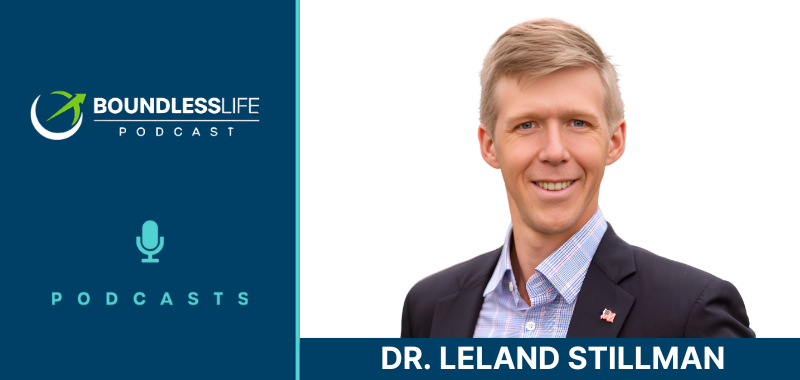
Home » Podcast » Light As Medicine, Metabolic Typing, COVID Controversies, Polar Bear Fitness, Healing Yourself With Laughter & More With LIFE Network Expert Dr. Leland Stillman

Light As Medicine, Metabolic Typing, COVID Controversies, Polar Bear Fitness, Healing Yourself With Laughter & More With LIFE Network Expert Dr. Leland Stillman

Listen on:

Reading time: 6 minutes

What I Discuss with Dr. Leland Stillman:

  • Lifestyle choices, environmental pollution, and toxins like glyphosate and EMFs in determining why some people become more severely ill from COVID…06:04
  • Tactics to reduce EMF exposure at home—everything from hardwiring technology to using Faraday canopies…07:54
  • Practical, actionable solutions for immune support and long-term health, emphasizing the need to look beyond debates and focus on real change…09:39
  • Why some people don't get as sick when exposed to the same virus, and how foundational health practices and environment impact an individual's susceptibility…10:43
  • How heavy metals, poor methylation, and nutrient imbalances can make people more sensitive to their environment—including EMFs and chemicals—and why tailored nutrition is important…12:53
  • Why addressing light, nutrition, toxins, electromagnetics, and more is key to truly recovering difficult cases…14:11
  • The critical role of sunlight, indoor light, and circadian biology, including common mistakes people make with sunglasses, lighting, and their effect on mood and hormones…16:27
  • Melatonin production, when to supplement, why red and infrared light matter for antioxidant health, and what nighttime routines best support restorative sleep…19:41
  • Measuring and optimizing indoor lighting (including bulb selection), and real-world solutions for individuals with different age, vision, or lifestyle needs…31:10
  • Practical lessons from examining cold exposure, circadian extremes, and what mammals can teach you about metabolic health…36:55
  • Balanced Protocol by Anthony Beck, how advanced lab work helps personalize nutrient and diet plans, and why it’s crucial to address each person’s unique biochemistry…41:06
  • Why breathwork is more than just relaxation—covering oxygen physiology, nervous system balance, and longevity, with specific tips drawn from Buteyko and practical walking exercises…44:01
  • Diet must be personalized, how nervous system balance and lab testing inform food choices, and why cultivating hope, gratitude, and mindset is essential for health…50:22

From the science behind sunlight, circadian lighting, and EMFs to practical tips on breathwork, cold exposure, and personalized nutrition, this wide-ranging conversation with Dr. Leland Stillman is packed with actionable insights. You'll discover why optimizing your external environment—light, air, water, and even mindset—is just as vital as what you eat, plus you'll explore how environmental factors can impact everything from immune health to sleep quality. Whether you're a health enthusiast or simply curious about enhancing your well-being, this episode offers a blend of cutting-edge science and practical strategies that will inspire you to rethink your daily routine.

Dr. Leland Stillman is interested in everything from how polar bears use cold thermogenesis and hibernation to enhance longevity to how your environment drastically shapes your health, no matter how hard you exercise or how perfectly you eat.

He became interested in natural and integrative medicine at an early age. After majoring in environmental health at Connecticut College and earning his medical doctorate from the University of Virginia School of Medicine, Dr. Stillman completed his training in internal medicine at Maine Medical Center. Board-certified in internal medicine and specializing in integrative medicine, he has a passion for doing whatever it takes to discover the root cause of his patients' medical problems through advanced laboratory testing and then addressing those imbalances with dietary or lifestyle interventions. Dr. Stillman focuses not only on the patient but on all aspects of the environment they live in.

Want to Hear More from Dr. Leland Stillman and Other Leading Health Experts?
LIFE Network

Inside LIFE Network, you can follow trusted wellness experts like Gary Brecka, Dr. Leland Stillman, Dr. Sandra Kaufman, Shawn Wells, Sarah Beth Yoga, Renee Belz, and more, all in one place to help you build a healthier, more intentional life.

When you join LIFE Network for FREE, you'll receive instant access to:

Ready to stay consistent all year?

Upgrade to LIFE Premium ($12.99/month, new lower price) for:

  • Daily TRIUMPH programmed workouts from my coaches.
  • Monthly group coaching calls for accountability and real guidance.
  • Unlimited messaging with Ellen—your 24/7 health transformation assistant—for ongoing support.
  • A completely ad-free experience.

Start the year supported, focused, and moving forward (one intentional step at a time).

Please Scroll Down for the Sponsors, Resources, and Transcript

Episode Sponsors: 

Troscriptions: Explore Troscriptions' revolutionary buccal troche delivery system that bypasses digestion to deliver pharmaceutical-grade, physician-formulated health optimization compounds directly through your cheek mucosa for faster onset and higher bioavailability than traditional supplements. Discover a completely new way to optimize your health at troscriptions.com/BEN or enter BEN at checkout for 10% off your first order.

LVLUP Health: I trust and recommend LVLUP Health for your peptide needs as they third-party test every single batch of their peptides to ensure you’re getting exactly what you pay for and the results you’re after! Head over to lvluphealth.com/BGL and use code BEN15 for a special discount on their game-changing range of products.

Qualia: Support better aging with Qualia Senolytic and boost brain health with Qualia Mind—two of my favorites! Visit qualialife.com/boundless and use code BOUNDLESS for 15% off your order.

Ultimate Longevity: Ready to hack your sleep and stay grounded while recovering? Head to ultimatelongevity.com/ben to get your hands on grounding mats for your mattress, pillow, blankets, and other valuable tools to help you bring down your inflammation and jumps start your healing.

Resources from this episode: 

– Dr. Leland Stillman:

– Podcasts And Articles:

– Books:

– Gear and Supplements:

– Other Resources:


Upcoming Events: 

CREATE 26 — January 28–30, 2026

Join me in Tucker, Georgia, at CREATE 26, a high-level gathering of founders, creators, and leaders focused on building scalable businesses, powerful networks, and aligned lives. This immersive multi-day experience blends strategy, leadership, and personal optimization with real-world execution and high-impact connections. You’ll also have the opportunity to join me for select sessions and a special Health Panel Q&A on Thursday, January 29. If you’re serious about growth in both business and life, this is a room you want to be in. Grab your ticket here.

Keep up on my LIVE appearances by following bengreenfieldlife.com/calendar!
Do you have questions, thoughts, or feedback for Dr. Leland Stillman or me? Leave your comments below, and one of us will reply!

Ben Greenfield [00:00:00]: Today's podcast Replay features Life Network expert Dr. Leland Stillman as we dive deep into light, air, water, emfs and why your environment and nutrition matter more than you think. From cold thermogenesis and circadian lighting to breathwork and nutrition, there's a big, wide ranging practical discussion for anyone serious about their long term health. Full shownotes are at BenGreenfieldLife.com LnLeland as in LifeNetwork Leland L E L Andy for more about all of our Life Network experts, you can Also visit join lifenetwork.com let's jump in. Leland, that's an interesting name. What's the background of the name, by the way?

Leland Stillman [00:00:40]: Funny you should ask. So my great great grandfather was named Jacob Davis Babcock Stillman Jr. And he was a physician in California. He was the physician to Governor Leland Stanford, senior governor of California in the 1800s, drove the golden spike in at Promontory Point in Utah, which united the east and west coast by railroad. Anyway, he had a son who unfortunately died in his teenage years of a spontaneous bacterial infection while he was traveling the world. My Great great grandfather, J.D.B. s, as we call him, named his son Leland in honor of Governor Stanford. And so that's how the name got passed down through the family.

Ben Greenfield [00:01:20]: Okay, interesting. Wow, that's quite the genealogy. And where do you actually practice?

Leland Stillman [00:01:25]: Right now, 99% virtually. My practice is in Richmond, Virginia. But last September, RFK Jr. Posted a video of me talking about lockdowns and COVID 19 and that went viral. And then that gave me a lot of people coming in looking for help virtually. And since then I've been very busy taking care of people all over the country. And I also collaborate with a physician, Dr. Ruxan, in MMVR in New York City.

Leland Stillman [00:01:49]: She has a practice called Pretty Healthy. And right now we're collaborating to come up with some pretty exciting stuff. And my clinical mentor, Dr. Anthony Beck, you've interviewed in the past.

Ben Greenfield [00:02:00]: So Anthony Beck, that's super interesting. And you said somebody actually announced that you had some kind of like video go viral on Covid.

Leland Stillman [00:02:10]: Right. So I was at a protest in Richmond, Virginia against mandatory vaccination. And so the background for people who don't know is that in Virginia, the executive order governing Covid restrictions includes a clause that allows the governor to force vaccinate everyone in the state or give them a Class 1 misdemeanor. And they're floating the idea repeatedly of mandatory vaccination, which really upsets a lot of people for obvious reasons. As your listeners may be Aware there's links to aborted fetal stem cells in the vaccine. There's a lot of people who are concerned about safety, etc. Etc. I said, I don't think this is ethical, and I don't think we should do this.

Leland Stillman [00:02:51]: And what I said there went viral through a website called LifeSite News.

Ben Greenfield [00:02:55]: And so. So that kind of blew you in the limelight. Do you get a lot of phone calls from people then, if you're operating virtually, who, because I get asked this all the time, are saying, and we might be opening up a can of worms here early on in our podcast, don't get me Canceled, dude, by the way, who are saying, well, like, Leland, are you going to get vaccinated?

Leland Stillman [00:03:13]: I'm not going to get vaccinated.

Ben Greenfield [00:03:14]: Okay. And is that because you just don't believe vaccinations in general are the right way to trigger immunity, or is it because this particular vaccine is problematic for you?

Leland Stillman [00:03:27]: Wow. We could talk about this all the whole episode.

Ben Greenfield [00:03:30]: Oh, gosh, I just opened up a can of worms. I didn't even. Well, you opened up the can of worms by bringing up the RFK issue and getting this video going live. But, you know, we might as well talk about it since we can talk about anything on this show. And just to really give you background on that, I personally am not 100% opposed to the idea of vaccination, but as you just alluded to, everything from aborted stem cell lines to a lot of the adjuvants, to the fact that I don't think this is technically even a vaccine, it's more like an MRNA modification dictate me being pretty nervous about this particular vaccination. But I'm just curious what you kind of are doing for yourself personally.

Leland Stillman [00:04:16]: Doing for myself, as far as why I am not interested in getting vaccinated or doing for myself to maintain optimal health and fitness to resist the virus.

Ben Greenfield [00:04:25]: Both. We got time.

Leland Stillman [00:04:26]: Okay, cool. So as far as the science behind the vaccine, the history of medical science is so fraught with people getting burned by ideas they thought were good and were sure were safe. How many times has the FDA approved drugs that later got taken off the market completely because they were too dangerous? And every time the same thing happens, the experts in the white coats get up on TV and say, this thing is awesome. It's going to make your lives better. It's totally worth the risks and benefits. And then it rolls out, it kills a bunch of people. Finally, the safety data piles up that it's not safe, and it gets pulled from the market. I, I haven't studied the detail on adverse reactions to this vaccine.

Leland Stillman [00:05:04]: In the detail, I would like to come out and say I'm sure this thing is not worth the risk or benefit, but there's always been a fundamental ethical principle of medicine where we don't force people to do things because we don't always know what the risks and benefits are. And so people like to say that vaccines are safe and effective, and I like to say that my car is safe and effective, but I can still die in a car crash and people will still die of vaccines. There is no medical therapy or intervention on planet earth in the history of the world that has been completely without risk. And if you don't have a clear explanation of what the risk is, you have no business forcing people to accept it. And the whole premise of we have to vaccinate to protect people. Well, who are we protecting? Most of the people, the overwhelming majority, in fact, who've died, have made choices that made them susceptible to illness, that led to organ dysfunction, that predisposed them to not have really the physiologic reserve to survive a viral illness, or they.

Ben Greenfield [00:06:04]: Lived in an environmental situation that could aggravate it as well. Which I actually talked with Dr. Zach Bush about areas that are rife with whatever glyphosate, herbicide, pesticide, poor air quality. And I guess if you want to get into a book like the Invisible Rainbow, even high, high amounts of EMF all could produce or at least aggravate the inflammatory firestorm brought on by Covid. Or the susceptibility for it to become more problematic.

Leland Stillman [00:06:31]: Exactly. And I put out a video on exactly that theory that non native EMF could drive inflammatory cascades, yielding cytokine storms. Last spring it got the most views vending video I've ever gotten. It went very far on social media. It got taken down.

Ben Greenfield [00:06:47]: Yeah, I was going to say, how can you even still be on YouTube with videos like that?

Leland Stillman [00:06:50]: So what I did just last week, there's a paper that's in preprint, hasn't been accepted, hasn't been completed. The peer review process by a PhD biophysicist named Beverly Rubik and an MD who's a radiologist named Robert Brown. And it's called, I'm gonna paraphrase here, but COVID 19 and exposure to wireless radiation. And the question they're really asking in this paper is given the temporal and geographic association between the 5G rollout and the severity of deaths that are attributed to COVID 19 is there a relationship to increasing density of non native emf, driving morbidity and mortality? And we went for an hour, an hour or more, talking about the ins and outs of the science here and really what people need to know about whether or not this is a clear and present danger to their health. And if there's truly a link to COVID19, again, not implying causation, I don't think COVID19 is created by non native EMF. But you can't tell me that people who are being baked by microwave radiation at a level you usually only find inside your microwave are, are not going to be negatively affected by it in some way?

Ben Greenfield [00:07:54]: Yeah, well, I mean, and even if Covid didn't even exist, we could be having this conversation about the general health of high exposure to those type of things anyways, you know, like, you know, I know you're in your office right now recording with me, but do you use a lot of like EMF mitigation tactics in your own office or is that something you encourage your patients to do?

Leland Stillman [00:08:14]: The whole house is hardwired, aluminum siding, concrete foundation, very low EMF levels here.

Ben Greenfield [00:08:19]: Nice. Have you looked into like biogeometry or anything along those lines as far as some of these, some of these more fringe methods of quelling emf? And I asked this because I just had like a two hour discussion with Paul check that I released about, you know, these Egyptian biogeometry concepts and have a team coming to my house in June to kind of implement a few of those tactics.

Leland Stillman [00:08:39]: I am going to fall down that rabbit hole at a future date.

Ben Greenfield [00:08:42]: Okay, got it. What about Faraday? You sleeping in a Faraday cage right now? Faraday canopy right now.

Leland Stillman [00:08:47]: The levels in my bedroom are not bad enough for me to bother with it, but it's, it's a canopy that's underneath my bed and I'm ready to set it up whenever I feel like it.

Ben Greenfield [00:08:56]: Okay, got it. Yeah. Like, we literally just got done tearing the fan down from our ceiling and we have our canopy coming in a couple of weeks. It took me a long time to convince my wife and she had to like design the whole canopy herself and didn't want to ruin the feng shui of the bedroom. But we're actually going to, we're, we're going to be sleeping in an extremely protected environment now. And even though we don't have a ton of cell phone towers and radio waves bomb starting our house 24 7, I had a guy named Brian Hoyer from Shielded Healing come through and do an analysis. And there was enough going on during the night of sleep to where I'm like, you know what, those eight hours for every 24 hour cycle that I want my nervous system to repair, get recovery, be disconnected from anything whatsoever. Kind of makes sense to just sleep in a cage.

Leland Stillman [00:09:39]: So amen to that.

Ben Greenfield [00:09:41]: So anyways, back to Covid. We could, as you alluded to, talk about a lot of the controversial aspects of it until we're blue in the face, which I think many, many others are already doing. It almost becomes a bit of an echo chamber, it seems, to a certain extent. But what I like to focus on are solutions. And so obviously if you're not going to get vaccinated or that's not something you're encouraging your patients to do with your background in immunology and the immune system, and correct me if I'm wrong, you actually have a particular interest in that, right? I do, yeah. What, what are some of the, the key things that you're doing when it comes to either people who get Covid or Covid prevention or even, you know, like addressing something like long haul Covid, which seems to be an issue these days.

Leland Stillman [00:10:32]: Right. So number one, I. And let's start with just some basics of virology that I think are forgotten and that I think are really informative for how we look at how to prevent and mitigate the effects of these diseases. So when they had the 1918 flu going around in 1918, they tried to get people with the virus to infect people who didn't have the virus. And what they were shocked to find is they couldn't infect everybody. And everybody's experienced this. Like one person gets flu in the family, somebody else comes down a couple days later. But a bunch of family members don't get the flu.

Leland Stillman [00:11:05]: So what's that about? And when you talk to people who get the flu routinely, who are constantly sick, who have some diagnosis like chronic fatigue syndrome or fibromyalgia or whatever, they'll tell you that they get sick periodically and these have these kind of windows of, well, I feel a little bit better in between these episodes when it's really bad, they're just chronically sick. They're just always feel that poorly. I can't tell you the last time that I got sick. And when you talk to people who really get their diet, lifestyle environment mindset, which is the whole balance protocol framework that, that I use now that I'm a training with Dr. Beck, you dial in everything so that people are as close to bulletproof as possible. I'm a little bit jealous of Dave Asprey for a season on that and his marketing materials, because it's basically what I want to do with my patients.

Ben Greenfield [00:11:48]: I was going to say. Aren't you supposed to say TM now when you say that word?

Leland Stillman [00:11:51]: I hope not. Right. So I look at the environment in totality, and that's where my background in environmental health, and I'm glad you brought that up, is so important, because what I found when I was going through my undergraduate training was I was looking at the environment as a whole. Well, what are all the different factors that determine whether or not somebody gets sick? And the more I studied this, the more I became convinced that there was no element of the environment, no matter how microscopic or undetectable or small, that didn't have some effect on human health. And the rest of the story is really dialing in. Well, how big of a deal is that? Right. I have patients who can barely use a cell phone because they're so electrosensitive. I have other patients who have no sensitivity to it.

Leland Stillman [00:12:32]: They've all got different biochemistry underlying that. And one of the things I've found, since we're on the topic in people who are electrochemically or electrosensitive or who perceive a lot, have a lot of issues with sensitivity to things like smells and their environment is they have nutritional imbalances underlying that.

Ben Greenfield [00:12:47]: Or if I could throw in there, something I've noticed is high metal accumulation, like high levels of mercury, lead, aluminum, which sounds silly, but it actually seems to turn people into a little bit more of an antenna for this electro hypersensitivity. And the other one that I've noticed is a lot of people who have poor genetic methylation patterns also seem to be somewhat susceptible to this as well. And I've seen a lot of people who will have either some stealth infection like Lyme or mold or mycotoxin, some type of metal accumulation, poor methylation status, and it seems like electrohypersensitivity kind of is the fourth leg of that stool over and over again. I tend to see it on a lot of folks.

Leland Stillman [00:13:30]: That is a very astute observation that is totally lost on most people in the health and wellness space, which is one reason why people listen to you. And I became convinced this after seeing so many patients. And my first job out of training was with this doctor named Rick Spinogle in Tampa, Florida, who ran a Lyme mold clinic where we did a lot of IV therapy. And this is far more intensive than anything that People are getting from their average neighborhood wellness. Dr. I've never spoken about this publicly, and he's very, let's just say, secretive about what he does. And I won't give any away, any of his trade secrets on this show, but the bottom line is this. He hit people with amazing amounts of IV nutrition based on very sophisticated lab testing.

Leland Stillman [00:14:11]: I saw people go from unable to function, get out of bed, and he's documented all this. People who doubt me, go to his testimonials page. You'll see photos and videos of people before and after, basically unable to function beforehand and then in the pink of health after. And I was amazed by what he was doing. And I was obsessed with figuring out, well, why does this work? But then when I got down there, I started to see that a lot of patients didn't respond and didn't improve. And it doesn't matter if you're talking about Dr. Spinagle or Dietrich Klinghardt or the St. George Clinic in Germany.

Leland Stillman [00:14:40]: And as a result of taking care of these patients, I met people who'd been to all these clinics and done all these incredibly extreme things in order to try and reclaim their health. And what I became convinced of is when they were failing, they weren't addressing all aspects of the environment. And that's when I became fascinated by light, because one of these patients turned me onto the work of Dr. Jack Cruz, another very controversial figure. Then I got into his work and got obsessed with light. And then I started to see that it wasn't everything to my patients. That's when I found Dr. Beck, and he showed me really, where the rubber meets the road of light meeting biochemistry.

Leland Stillman [00:15:16]: And now I have a very integrated approach, which is what balanced protocol is, and I'm very happy with. With the results. Your observation of heavy metals as basically getting out of control in people who have electrochemical sensitivity definitely have seen that.

Ben Greenfield [00:15:31]: So for you, if I could paint with a broad brush. A big part of what you do comes down to optimizing a patient's not just their internal environment, but something that a lot of doctors don't do. Their external environment.

Leland Stillman [00:15:43]: Exactly.

Ben Greenfield [00:15:44]: Okay. All right. With phototherapy or photobiomodulation or light exposure being one component of that.

Leland Stillman [00:15:51]: Right?

Ben Greenfield [00:15:51]: Okay.

Leland Stillman [00:15:52]: Exactly.

Ben Greenfield [00:15:52]: All right. So when it comes to Covid, obviously cleaning up air pollution, not consuming a high amount of herbicides, pesticides, glyphosate, shopping organic, choosing food correctly, positive emotions, cleaning up metals, other stealth infections, all those things that might relate to both internal and external environment would all be important. I would Imagine in your approach. But I'd like to hone in on light for a little bit since you really seem to prioritize that as one of the main things that you mentioned. What does that look like exactly in terms of when a patient comes to you, what type of questions you're asking, or what you're doing to optimize specifically the lighting environment or the use of light to optimize one's biology.

Leland Stillman [00:16:37]: So, first of all, I try to quantify what their light environment is to the best of my ability. Most people have never bothered to do this. And one of the things I like to tell my patients to do is get on your smartphone, download an app that measures the light in your environment, and just see how much light you're exposed to. People are shocked to realize that outside in the sun, even in the dark, even on a cloudy winter day, there's thousands, sometimes more light in the external environment outside their home than there is in their home office. And so we've got these diagnoses of sunlight, of seasonal affective disorder. Well, what is that except sunlight deficiency? And I start to ask them about, well, what kind of glasses are you wearing? Are you wearing contacts? Do you wear sunglasses? Because people don't realize, right? If seasonal affective disorder is a disease in which your mood and energy levels decline because you have low levels of neurotransmitters and hormones because of a lack of a light stimulus, then what are sunglasses but a great way to induce seasonal affective disorder?

Ben Greenfield [00:17:31]: Yeah, it's a good point. I've always. Well, not always, but for the longest time, just kind of eschewed sunglasses based on the idea that lack of exposure of the retina to adequate amounts of uva, UVB and infrared could downregulate some of the melanin production in the skin and render one more susceptible to sunburn or less able to harness vitamin D from sunlight. But what you're saying is it goes even beyond that and could even affect emotions and induce seasonal affective disorder, et cetera, if one is constantly in a low light environment or wearing sunglasses regularly.

Leland Stillman [00:18:08]: Exactly. And there's a really wonderful paper on this that we should post in the show notes called Melatonin and the Optics of the Human Body. That basically blow this whole paradigm up for people so they really understand how melatonin is working in their bodies. Melatonin being, of course, the hormone of light. Because, you know, when you're. What people don't realize about light and biology is that you need bright light during the day. This is the stimulus for your hormones and neurotransmitters to be produced, including melatonin. And melatonin controls all those other hormones and neurotransmitters because of its interactions as the main timekeeper of the, of your circadian rhythms.

Leland Stillman [00:18:46]: Right. And so if you don't get bright light during the day, you're not going to have optimal melatonin levels, you're not going to have high neurotransmitter and hormone levels, and this is associated with premature aging. Then at night, if you've got excess blue and green light in the environment, you delay the melatonin release from your tissues. What it's supposed to do in nature is come out into your bloodstream and run around the body turning on rest, regeneration or repair programs. And you're constantly bombarded with artificial light, as we are in our artificially lit world. And you already have deficient melatonin because you don't have the right frequencies in your life, that is infrared, red, and to a certain extent, visible light. You're setting yourself up for a total body lifelong deficiency of melatonin. Which explained to me finally when I put all those pieces that puzzled together and that right there in like, you know, less than a minute is like three or four years of reading in the photobiomodulation and circadian biology literature.

Leland Stillman [00:19:40]: When I put that together, it finally made sense why I had these patients who could take bottle after bottle of glutathione and B vitamins and whatever and do ozone and sauna and blah, blah, and still not get better.

Ben Greenfield [00:19:49]: Yeah, and it's interesting too. I think a lot of people don't realize that despite the fact that a lot of these light boxes that you'll put on your desk for seasonal affective disorder, or like the one for the ears, the human charger, or there's a pair of glasses I have called the re timers that also work well for this. Those are useful for, I think, some of the seasonal affective disorder and also some of the circadian rhythm alignment advantages you can get from blasting yourself with light during the day if you're in a low light environment. But many of them do not emit any near infrared photons. And the near infrared photons are what stimulates antioxidant production. That's what causes the production of subcellular melatonin, which is going to act as one of your body's primary antioxidants, supplying you with this antioxidant reservoir that will enhance your ability to be able to quench free radicals. And things along those lines. And so even if you're using these light box or surrounding yourself with these type of biohacks, so to speak, in your internal environment, say like in your home or in your office, if you're not also introducing either sunlight or some form of near infrared into that scenario, you're actually missing out on a lot of the antioxidant benefits of light.

Leland Stillman [00:21:04]: You are exactly correct. And your understanding of light is far more sophisticated than pretty much any clinician that I speak to on a regular basis when I explain to people how melatonin works in the human body. And this is what, you only get this when you start to read the papers on how melatonin is produced, why it's produced, where it's produced, when it's produced, all this stuff. Right. I now look at melatonin in the body and its role the same way I look at water in your house. You could live with very little water consumption, but you would be miserable. You would smell bad. Let's not even go there.

Leland Stillman [00:21:34]: But when you use water in your home, you don't turn on the kitchen sink to take a shower in your bathroom, just like you don't turn on the sink in your bathroom at the same time of day. Maybe that you use the right. You use water in discrete, finite quantities in different parts of your home in different quantities at different times of day. And melatonin is the exact same way. So when people come to me and say, oh, my melatonin level is high, and I see sky high melatonin levels all the time in people who are quite ill. And what they're trying to do is basically say, all right, I'm going to turn on my garden hose and shoot it through the front door to do the dishes.

Ben Greenfield [00:22:09]: Yeah, that makes sense. Now, in terms of melatonin, do you also encourage supplementation of melatonin, like in the evening especially? It's a recommendation I made in the past to aging individuals who produce a little less melatonin as they age anyways, you know, people who are like, I'm getting older, my sleep seems to be declining, their sleep habits haven't changed. Small doses of melatonin seem effective. But I'm curious your take on that as a physician.

Leland Stillman [00:22:33]: So, number one, I want to always copy nature. And you know, Hippocrates said the greatest medicine of all is teaching people how not to need it. And over and over in my career, I've seen people go down this road of let's circumvent what the body is supposed to do and do it a different way. That always ends with people figuring out why nature did it the way nature did it. And so it's not necessarily the wrong answer. And I do use melatonin therapeutically in certain contexts. But the number one thing I want to do with my patients Is get them into a light environment Where I know they're getting adequate red and infrared light, Usually from a photobiomodulation device or light panel or sunlight. If they're at the right latitude.

Leland Stillman [00:23:09]: And they can withstand strong UV light. That may obviously give them sunburn. People should not sunburn. That's. That is true. And then I want them to be in a naturally lit environment at night. And when I say naturally lit, I mean warmly lit with minimal blue and green light so that it won't shut down their melatonin rhythms. And then I want to make sure that they're not being exposed to anything that's going to really suck up that melatonin in an unnatural way.

Leland Stillman [00:23:32]: I see abnormal labs and people who are vaping, who are using ozone generators for air purification. That will create drag on their melatonin system and an abnormal demand. And so you got to really go through everything. I mean, I'm asking patients, what's your air handler like? What's in there? How does it work? Oh, you've got a ozone generator in your h VAC unit. Well, maybe this is why your lipid peroxides are high. And that's linked to heart disease and neurodegeneration and metabolic syndrome and whatever. And I get people to unplug these things and stop using things that make them sick, and they just get better on their own. Once I've optimized the environment, that's when we can start to talk about supplementing.

Leland Stillman [00:24:11]: But then you got to get into, well, wait a minute. Why is your melatonin low? Do you have enough tryptophan? Have you got enough B6? Is there enough magnesium? Because you need all these CO factors and raw materials in order to make the melatonin in the first place. Well, hello.

Ben Greenfield [00:24:24]: I want to interrupt today's show to tell you about what I would consider to be the funnest, most helpful water. Kind of like water biohacking website that exists. It's called water and wellness. I've interviewed the guy who runs the website, Robert slovak, who I consider to be one of the world's leading experts on water. And he's got everything from hydrogen water tablets to the best water filters, to ways that you can take purified water and optimally remineralize it to the that the Quinton formula, which is basically very much like human plasma when you drink it. You know, like coconut water on steroids. They've got everything over there and what they have is their Aqua True bundle which gives you their Aqua True countertop reverse osmosis water filter gets you $100 off an Aqua Tru and a 30 day supply of their Quinton minerals, the same ones I use. That's a savings of $144.

Ben Greenfield [00:25:17]: If you go to waterandwellness.com greenfield and you use code greenfield if you just want the Quinton and not the water filter, they'll give you a three month supply for the cost of only two months which saves you almost fifty bucks for that same code code [email protected] greenfield so if you're looking for some cool stuff to upgrade your hydration experience, water and wellness is the place to go. And then finally, I also want to give you a discount on something I've been using almost every day and that's bee pollen. Now this company, Beekeepers Naturals, they harvest a ton of different things from the bees, from their honey to their royal jelly to their propolis. But the bee pollen, I love it. I put it on smoothies, I put it on salads, I put it on casseroles. I use it almost the same way I use salt. But it's just chock full of not only all these free formed amino acids, but a ton of stuff that boosts your immune system and gives you clean energy with not many calories at all. You've probably had bee pollen before, like maybe on smoothies at a juice bar.

Ben Greenfield [00:26:17]: But man, just having a few bottles of this stuff in your fridge is amazing. I put on everything and I'll even like put a little spoonful in my mouth before I go to bed at night if I've still got the munchies. And it just craves your appetite as so 15% off of any of the products including that bee pollen I just told you [email protected] Ben that's be k e e p e r-s naturals n a t u r a l s.com Ben beekeepersnaturals.com Ben will get you 15% off of any of the fine bee products from Beekeepers Naturals. All right, let's go talk to Leland again. Yeah, and melatonin is interesting. I mean, just because a lot of people don't realize that it can, with regular high dosages be problematic in Some people, like I've seen some evidence that it might increase light induced damage to retinal photoreceptors. It can actually be something that can down regulate fertility in women, et cetera. Yet at the same time it's a pretty potent antioxidant, anti inflammatory.

Ben Greenfield [00:27:20]: It's something that I'll use in higher dosages when I'm traveling, for example, or like I mentioned, recommend to aging people to use in smaller like 0.3 to 3 milligram dosages just for regular sleep enhancement. But I've also, and I have zero, well I shouldn't say zero data, but I've talked quite a bit with a physician in Sarasota named Dr. John Laurence about this so called melatonin reset, meaning using high dose melatonin in people who have severe sleep architecture issues and insomnia to almost like reboot the system and retrain the body how to sleep. And in that case like it's 100 to 300 mgs of melatonin, usually suppository or liposomal based for about a month. And then you bleed off those dosages, you lower the dosages back down, get a person down to like 0.3 to 3 or even none. But this idea of a short term high dosage melatonin use actually seems to do a really good job, at least in the people I've recommended it to, with almost like resetting sleep architecture, getting them to the point where they can get a solid seven to eight hours again and then they kind of wean themselves off those higher dosages. Have you ever experimented much with like super high dose melatonin is almost like a circadian reset?

Leland Stillman [00:28:38]: I've not ever had to do that with a patient. I've always been able to get their sleep back to optimal with what I do with light, environment and other things in the environment to help them sleep. But the whole concept makes so much sense and it goes back to this guiding principle of my practice, which is where I used to look at things as good and bad. And so many people end up falling into this myopic way of thinking about things like, oh well, Dr. Stillman said exogenous melatonin is bad. Well, hang on a minute. Dr. Stillman said that you're supposed to get it from light based on the nutrients in your diet and et cetera, et cetera, right? This is a tool, just like sunglasses.

Leland Stillman [00:29:15]: We jumped on sunglasses earlier. But what's funny is that the use of eyewear for humanity has always been a tool to improve our performance. Right? Try and survive in the wild. If you've got out of control astigmatism and terrible nearsightedness, you're not going to be bringing down the elk at like 100 yards with your longbow, are you? And so we've got to look at everything we've got in our environment, whether it's a supplement coming off of a shelf or it's a light that you're flipping a switch on as a tool to achieve optimal. And that is what I love doing in my practice with my patients.

Ben Greenfield [00:29:45]: Hmm. It's interesting. It's also interesting how it's kind of yoked to temperature to a certain extent. One of my friends, Dr. Andrew Huberman at Stanford, he actually has this concept of the temperature minimum that occurs about two hours before you tend to wake up. You know, like, let's say you're a 7am riser, your temperature minimum usually. And you could measure this even with like a, you know, wearable, like an aura ring or something, kind of see what your body temp is doing during your night of sleep. But if you can identify where that temperature minimum occurs, you can actually expose yourself to low levels of temperature, like cold, for example, and it shifts that temperature minimum forward.

Ben Greenfield [00:30:23]: If you, if say you're someone who wants to begin staying up later and getting up slightly later because it annoys you that you keep waking up at 4am, you can actually get exposed to cold or. I'm sorry, I'm reversing that. You get exposed to light during some point at that temperature minimum and it somehow shifts the circadian clock forward because it's telling your temperature minimum to occur at a later point in the morning. And so he's got some interesting theories on using temperature minimum combined with light to actually reset the circadian rhythm.

Leland Stillman [00:30:56]: That is fascinating. Yeah. And it's all tools in the toolbox. And what do you really want therapeutically for the patient? But it all goes back to don't try to reinvent nature because it can become a tool, but it can also become a liability.

Ben Greenfield [00:31:10]: Yeah. What's the light meter, by the way, that you mentioned that you'll recommend to people to analyze light in their personal environment. Is that like an app?

Leland Stillman [00:31:18]: Yeah, I'm using, can't remember what it's called, but if you just put in light meter on the app Store or the Play Store, if you're using Android like me, it'll come up. I'm using an app called Lux on my Android.

Ben Greenfield [00:31:30]: Okay. These are the same type of apps that like a photographer would use to analyze light prior to photography. Right, okay.

Leland Stillman [00:31:36]: And of course I have the sophisticated light meter that actually gives me the actual readout and spectral analysis, which is a lot more money that usually only photographers have. Like you said before, it's amazing to measure LED lights and see that they're not producing hardly any red, let alone any infrared. And this whole visible only light as it's called Vol. Lighting is I think a disaster. It's why I wrote this blog post called Indoor Lighting Causes more skin cancer than the Sun. Because when you look at this data. So it's very concerning that we're irradiating ourselves constantly with visible light only without the balance of near infrared light that stimulates melatonin production. That is an anti cancer agent.

Ben Greenfield [00:32:12]: Yeah, yeah. And the other interesting thing about this is you could pair it with something like, I think it's called a dminder apps. You could also see when sunlight exposure is going to get you adequate amounts of vitamin D, which I also think is kind of a handy little tool. And obviously we're talking about the use of, you know, some of these photobiomodulation devices, you know, like you mentioned light panels, you know, and I certainly use one called a joovv. And I also have a sauna, you know, like a full spectrum sauna. But I still believe that, you know, getting that balance of UVA and UVB during the day along with the full spectrum from sunlight is important. And you just alluded to something interesting, this idea of LED or modern fluorescent lighting which so many people's homes are actually lit with. I'm curious what you use in your home.

Ben Greenfield [00:32:59]: I personally am a fan of the full spectrum incandescent. And then actually I'm using red incandescent in all the bedrooms and the master bathroom. But do you have a particular light bulb that you tend to recommend people switch to when it comes to getting off of LED and fluorescent lighting in the home?

Leland Stillman [00:33:16]: Yes. But what I always counsel my patients is these are tools. And so we got to figure out what your goal is. If somebody comes to me and is say a young, healthy 20 something year old who really has sleep problems, I'll say, look, look, you got good eyesight, you've got good dexterity. Use a red headlamp. When you wake up in the middle of the night, go to the bathroom, navigate your house, make sure you got blackout curtains on. That's the only light you should be using in the hours before bed. And then if you wake up in the middle of the night, because it's really going to reduce the amount of circadian disruption.

Leland Stillman [00:33:45]: You see, because what's amazing when you go into the literature is you'll find all these weird results. Like you'll find papers where 98% of people didn't have a chrono disruption due to exposure to red light at night, but two people did. Well, what's wrong with them? I have no idea. I haven't done their genetic analysis. It must be a genetic thing, right? So we have all these interesting personal factors that come into play. And when I got into this with patients, there became so many other factors that were important. Right. Example, my mother is 76 years old.

Leland Stillman [00:34:14]: She's not that steady on her feet. She has osteoporosis. I don't want her to break a hip in the middle of the night because her son told her to navigate to the bathroom with a red headlamp. This kind of detail kind of sounds pedantic, but it's important because I do counsel a lot of older patients. And so I said, mom, I want you to use the Hygge LED lighting. I've tested it. It's very, very low, if any, green emission. And it's also people got to remember right now we're using recessed lighting.

Leland Stillman [00:34:41]: So the light bulb sockets are not always built for the high wattage and heat production of an incandescent. You could easily start a fire in your house if you use the wrong bulb or the right bulb in the wrong socket. So I told her, I tell her and my patients to use those at night if they're worried about, obviously their ability to navigate at night. And then it also comes back to, you know, what's your goal? Because the reality is, if somebody goes outside at night with their friends and they're out and they're partying and they want to have a good time, but they're wearing their blue blockers, they're going to slow down, fall asleep and be boring. And if they want to have a good time, well, you know, they can decide to burn that candle at both ends that night to have a good time. And it all becomes what it's worth to them. Because you can't go to some high performing Fortune 500 CEO and say, hey, listen, it's time for you to sleep with the rhythms of nature and for you to go to sleep at 7 o' clock at night in the winter, because that's what is normal for your circadian biology at your latitude in the winter. They say, no, thanks.

Leland Stillman [00:35:36]: I need you to come up with a solution that allows me to still get quality sleep, but that still allows me to work into the evening as I have to in order to do my job.

Ben Greenfield [00:35:45]: Right. Yeah, I've seen those Hugo lamps before on Amazon. Those are like the dimmable LED lamps that don't produce a lot of the blue light.

Leland Stillman [00:35:52]: Right. And then the other lights that I use are incandescents that are 2100-2300 kelvin. Very, very warm, very amber.

Ben Greenfield [00:36:00]: Yeah, that's very, very similar to what we have in most of the cans in our house. My only concern about the, you know, that even the dimmable LED is that the trade off is anything dimmable or any of those type of devices, they tend to produce a larger amount of emf. And so having them plugged into like a dirty EMF filter or at least, you know, making sure that they're unplugged or off, you know, during sleep, etcetera, Is something you should be aware of, because any light dimmer is going to kick off a little bit more emf. At least that's what we found when we went through and tested my house. And there were a few dimmer style switches in the house, and those were the areas the highest EMF was where those dimmers were located.

Leland Stillman [00:36:39]: That's right. And that's why you've got to test your EMF environment, because if you're just paying attention to your visible light, you can create some really significant hazards with electrical, magnetic, and RF radiation in your home and not even realize it.

Ben Greenfield [00:36:51]: Awesome. Well, I want to talk about a few other things. You. For some time, when I was, when I was stalking you and preparing for this interview, I noticed that you had a program called like a Polar Bear Fitness or a Polar Bear Program for Optimizing Health. That seems to have since been discontinued, but I would imagine some of the practices within that would still be something that you're using or recommending. And I'm curious what exactly that whole polar bear program was.

Leland Stillman [00:37:19]: Yeah. So when I first found Dr. Cruz's work on light, I became totally fascinated. Dove and read a lot of his blogs, listen to a lot of his podcasts, and he said something that really struck me. And I, like controversial people, have really extreme opinions because it tests your own hypotheses in a really, really powerful way. I think you do too. But anyway, he said, eat like a shark, live like a polar bear. And what he's alluding to is this really strong literature in longevity science that if you're that like, for example, the longest living mammal on planet Earth is the Bowhead whale that lives in the Arctic, Arctic waters.

Leland Stillman [00:37:55]: And the longest living vertebrate is the Greenland shark. These are animals that live at a very low temperature, imbibing a very small amount of oxygen periodically. Right. This is why I get into like breath holding and breath work with patients to optimize oxygen physiology and really oxygen delivery around their body. Free diving is actually one of my passions. I love freediving therapeutically as well. Yeah, it's a really powerful therapeutic tool. Yeah.

Leland Stillman [00:38:21]: And so that's part of it. And then I got into the cold exposure literature, which shows that there's a longevity benefit and potentially all kinds of other benefits, like anti cancer benefits from cold exposure. And so I put together a course called Polar Bear Fitness. Because in my experience at the time, what people were missing from the health and wellness dialogue was really a robust understanding of circadian physiology, which we've really gone over in a fair amount of detail today. And so I basically used the polar bear as a teaching example because it's the mammal that lives at the highest latitude that's very closely related to us, at least as far as being an omnivorous mammal that lives on land and eats a very indiscriminate diet. And so I used it as an example of what happens to human physiology in extreme light environments. When you put a human being in a very long light cycle artificially, that is, you use a lot of artificial light at night. What do people do on a population level? They tend to eat a lot of food that's high in carbohydrates, and they gain a lot of weight and they don't sleep well, and they get diabetes and all this other stuff.

Leland Stillman [00:39:24]: When you look at polar bears and other animals at high latitudes and live in cold environments, they have many of the same metabolic abnormalities as humans who eat too much carbohydrate. And those metabolic abnormalities are actually adaptations that allow them to survive cold, freezing temperatures in the winter. Because the polar bear has to gain, I think it's like 100% of its body weight every summer in order to then burn that fat off and survive in the Arctic winter. Because if the polar bear doesn't gain that way, the polar bear freezes to death. I basically just taught all the principles of circadian biology that I was learning, as well as teaching people cold exposure and cold therapy. I discontinued the program when I found out about balance protocol. And I saw my own labs interpreted through the lens of balance protocol, shall we say? And I saw that every pathway. And I never talked about this publicly, but I'M letting people know exactly what I went through because I always practice what I preach.

Leland Stillman [00:40:23]: I had burned out every metabolic pathway that you need to have in order to withstand cold exposure. I had really severe issues burning fat. I didn't have adequate tyrosine levels. I didn't have adequate CO factors to turn that tyrosine into thyroid hormone, dopamine, norepinephrine, epinephrine. I stopped doing cold exposure. I started using the balanced protocol supplement protocol, really. And I repleted all those levels of nutrients and saw really amazing improvements in my overall level of my overall feelings, of my emotions, my energy levels, my sleep. And it blew me away because I realized, wow, light and cold do not explain.

Leland Stillman [00:41:05]: It cannot be used to treat everything. You've got to make sure that the patient has the right biochemical substrates in order to use the electromagnetic energies in their environments in a positive way. Since then, I've found so many examples of people who just didn't realize what they were doing that was creating problems, like people having high mercury levels because they're eating too much tuna, people who have really severe magnesium deficiencies because no one's ever checked their magnesium, people who have undiagnosed copper, zinc, B6, B12 deficiencies just because people aren't doing the right testing or aren't using the right supplements. That's where. Now, my approach is so comprehensive that really things like cold exposure and more advanced phototherapy, like UV light, which I still use a lot, actually, are actually pretty far down the pipe for any of my patients.

Ben Greenfield [00:41:53]: Hmm. Now, I'm very curious about this protocol that you just referred to with the tyrosine, etc. What did you say that protocol was called?

Leland Stillman [00:41:59]: So when I treat patients nutritionally, I use balanced protocol. And so Dr. Beck, my clinical mentor, who I've alluded to, he has a protocol based on his interpretation of nutritional labs to replete people of different nutrients. And it's a full spectrum. There's really no nutrient that we don't address using this protocol.

Ben Greenfield [00:42:20]: Okay, got it. And did you say that protocol has an actual title? If people wanted to look it up or if I could link it, it's just called the balanced protocol. And that one's by Anthony Beck.

Leland Stillman [00:42:30]: Yep. Dr. Anthony Beck.

Ben Greenfield [00:42:31]: Okay, cool. And so that's basically just like a lab testing combined with replenishment of certain nutrients.

Leland Stillman [00:42:38]: Right. But also, very importantly, a comprehensive approach to the environment. And, you know, I spent my whole career trying to find what I would describe as the holy grail of health and wellness. You know, what absolutely is the protocol that gets people better. And there's so many things out there, and it's frankly, it's exhausting. Right? I mean, I'm 32 years old. I got interested in health and wellness. I was 15.

Leland Stillman [00:43:00]: And it's been pretty pedal to the metal. I've been obsessed with this for that long. And I was looking all along for a protocol that addressed everything, because, like I've mentioned before, if you get your nutrition totally right, but you're living in the wrong light environment, it's going to create problems. If you're living in the perfect light environment with a good nutrition, but you don't have the right EMF environment, you can still get sick if you're breathing wrong, if your H VAC system's got an infestation of mold. So if you're not addressing all these different factors, you don't get good results. And it led me, too, from. From moving away from the time for money model of medicine where you're dealing with people in this way. It's like, okay, we got an hour here today, and we got an hour next month.

Leland Stillman [00:43:39]: An hour next month to this more concierge retainer model where I just say, look, if I'm going to get you a good result, I need to have a lot of time with you over a period of months because we're going to get into every aspect of your environment and we're going to turn over every rock under which some problem could be hiding so that we can really get you better.

Ben Greenfield [00:43:56]: Okay, got it. Now, you also mentioned breath work, and I'm curious what that actually looks like. Well, specifically for you, are you doing breath work on a daily basis, or how are you weaving breathwork into your own life?

Leland Stillman [00:44:07]: Breathwork is something I do on a daily basis, yes. And I've studied this with Patrick McKeown, whose work I got turned onto by Dr. Beck. And I got into the work of Russian physician named Vladimir Buteyko, whose basic premise was that a lot of disease is caused by chronic hyperventilation. And I immediately seized on his hypothesis and went back to all the patients I'd seen over all the years who were sick. And I realized the sickest patients at the youngest ages were breathing quickly and rapidly. And this goes back to stuff I'd read because of my fascination in traditional Chinese medicine and traditional Chinese martial art. The ancient Taoists and Chinese scholars noted that the animals that lived the shortest took the most shallow and rapid breaths.

Leland Stillman [00:44:52]: And the deeper and the longer your breaths and the fewer breaths per Minute you take, the longer you live. Period, End of story. This is why the bowhead whale is the longest living mammal. This is why the Greenland shark is the longest living vertebrate. They have a very low rate of oxygen exposure, and they also have optimized their oxygen physiology to maximize its use for production of energy rather than the production of free radicals that create cellular damage and oxidative stress that lead to cellular senescence, aging, cancer, et cetera, et cetera. That's also why whales have an extremely low rate of cancer, which I find fascinating. And so when I approach breath work, it's from the perspective of, okay, breathing, we gotta fix your breathing mechanics, nasal breathing, diaphragmatic breathing, particularly if you want to activate the vagus nerve, you want to be taking deeper breaths, but over longer periods of time. And box breathing, or combat breathing is one of the techniques that I'll use, measuring the control pause.

Leland Stillman [00:45:57]: But the bottom line is basically I want to get people's respiratory systems back into optimal breathing mechanics because that optimizes oxygen delivery around the body, it optimizes the immune system, it optimizes all these things. And it's amazed me to see illnesses and diseases just melt away when I just got people to fix their breathing mechanisms.

Ben Greenfield [00:46:18]: Yeah, yeah. And, and I, you know, I've been interviewing a lot of these folks like James Nestor and Patrick and a guy named Niraj, the so called renegade pharmacist, and have been kind of a student of breathwork. And like, you love free diving and I've taken my freediving cert course and everything like that. But of course, you know, when it comes down to the practical nitty gritty like the boots on the streets of, well, how do I find the time to do this? How do I, you know, put it into my daily life? For me personally, I do a lot when I'm walking. I do a lot of breathwork practice when I'm walking. Just because I'm in nature, I'm getting the sunlight that we talked about, all the near infrared and the UVA and UVB exposure and the full spectrum and the fresh air and, you know, all that jazz. But the one, one thing I've been doing lately to kind of combine both of Patrick McCown's principles on carbon dioxide retention, right? Not being an over breather and even kind of stabilizing the nervous system by exhaling for a longer period of time than one inhales, with the idea of doing a better job at mobilizing the psoas and improving mindfulness of diaphragmatic use when, when breathing. So one thing I've been doing lately for my walks, and I don't even know if I've shared this on a podcast recently, although I did an Instagram post about it, is there's this thing called a breath belt, which is kind of like a tight belt, almost like a corset that you can wear, that you can put a couple of lacrosse balls into so that you're mobilizing the psoas and activating the glutes as you walk.

Ben Greenfield [00:47:48]: And it's almost impossible not to breathe diaphragmatically when you're wearing that. But then I combine that with this other small, very simple device called a relaxator, which was developed by another breath expert named Anders Olson. And it's a small device, almost like a whistle that you put in your mouth that resists your exhale and also has no inhale function, meaning you must breathe through your nose and then take a longer exhale. So I can go for a walk wearing the breath belt and then I'll have the relaxator in my mouth and a half hour walk like that. Something as simple as that. Assuming you don't have to talk on the phone or anything like that. For me, that, that's been a really, really cool way for me to be able to practice a lot of both the biomechanical and the physiological aspects of breath work, but kind of have it, you know, for, for me, if I've got like a tool or a toy that I can use, it makes it a lot easier for me than just saying whatever. I'm going to breathe through my nose, take a longer exhale, and focus on my diaphragm while I'm on this walk.

Ben Greenfield [00:48:46]: You know, when I'm putting on a breath belt using a relaxator, it sounds gimmicky, but it does kind of like forced me to think a little bit more intensively about the way I'm breathing and some of this carbon dioxide tolerance and less breathing as championed by the guy like Patrick McCown, like you mentioned.

Leland Stillman [00:49:05]: That is a really interesting way to combine a lot of those things. I assume you're walking around in nature. Do you get a lot of weird looks? I assume, are you in the woods?

Ben Greenfield [00:49:13]: Yeah, I live out in the sticks, so I'm just walking on old farm roads and barely anybody cares. So it's, it's, it's been okay for me. And occasionally, you know, when I do go to a big city like whatever, L. A and I'm walking through Santa Monica like that, I Mean, I don't know. People, we always. We always think everybody's watching us. Like, this is the classic, I'm at the gym, I'm embarrassed by my body, et cetera. Nobody's really looking at you.

Ben Greenfield [00:49:38]: They're all focused on their own thing. So it's not something I worry about too much. Anyways, though, that's. That's really fantastic and refreshing to hear from a physician who's optimizing external environment with some of these things, like cold and light and breathing, but then also combining it with what it sounds like, some of more of the quantified laboratory testing based on some of this work that you've learned from Anthony Beck. I may have to eventually get Anthony back on the show to talk about this balance protocol and take a deeper dive into that. But it's possibly related to another question I wanted to ask you about what kind of nutrition or dietary approach that you utilize with yourself or with your patients. What's your approach when it comes to eating?

Leland Stillman [00:50:25]: So, number one is we got to figure out if there's anything that somebody absolutely cannot eat. And this gets into the whole elimination diet thing, which a lot of people don't know the history behind, which I find deeply informative about how we should use elimination diets. So elimination diets arose in the 1920s, 30s, 40s, not actually as a therapeutic tool, but actually as a way of studying diseases like anemia. And so I'm fascinated by carnivore, and I want to make something really clear before I go on. I am so happy for people who eliminate something from their diet and get an amazing health improvement. But I've had patients who eliminated meat who got better, and I've had patients who eliminated plants who got better. And so I'm an agnostic when it comes to saying this food is bad for people. That's the number one premise for me, is there's no food that's gonna absolutely kill you right now on the spot.

Leland Stillman [00:51:19]: And some of them may be poison over long periods of time, but we gotta ask questions like why? Okay, number one reason is for there to be an immunological reaction to that food. And that's one of the first things I gotta figure out with people. Are they actually having a genuine immune reaction to a food? What testing I do in order to determine that depends upon their exact presentation. Because food allergy testing is so fraught with false positives and false negatives, and sometimes people are reacting to foods and they're blaming, say, the gluten, but what about the dough? Conditioner or the artificial flavoring or the artificial preservative. I mean, the number of things we put into our food these days is absolutely dizzying. And one of the biggest paradoxes of immunology that I don't think conventional immunologists really appreciate adequately is that the immune system seems to be able to have weird reactions to all kinds of things in ways that we can't explain. Right. And you'll have people who have sky high levels of immunoglobulin to a food who don't react to it.

Leland Stillman [00:52:20]: And some people have no immunoglobulin reaction to a food and obviously react to it. So I do test for people's food allergies in order to figure out what they actually have to absolutely avoid and also why. And then I want to figure out, okay, what's their nutritional profile looking like? Because they may have too many saturated fatty acids, they may have too many Omega 3s, they may have not enough B6, they may not have enough arginine. And then I'm tailoring their diet and trying to come up with foods that are going to supply them most with the nutrients that they don't have. One of my favorites, because I see a lot of this is chia and flaxseeds. So chia and flaxseeds are rich in arginine. They're also rich in omega 3 fatty acids. Many people don't have enough omega 3 fatty acids.

Leland Stillman [00:53:03]: I also have a lot of patients come to me who have gut issues. When you soak chia and flax seeds, they get this nice mucilage that comes out of them that can be very healing and soothing to the gut. So what do I tell them to do? Soak the chia and flaxseeds, put them in a blender, blend them up. That way you absorb the Omega 3s, you get the arginine, and you get the healing properties of the mucilage coming through your gut lining. So that's just one example of how I do this. But it's tailored to everything, you know, because let's say somebody has got a B12 deficiency, but they've also got an excess of zinc. Well, I don't want them to take eat oysters, because if they eat oysters, they're going to get the B12, which is great, but they're also going to get all this zinc, and they're already overloaded. And let's say that they've got a vitamin A deficiency, but they've also got a high copper level.

Leland Stillman [00:53:46]: Well, If I give them beef liver to fix their vitamin A deficiency, I'm going to make their copper excess worse with the beef liver. I just got labs back on a patient who has low vitamin A and a super high copper level. And I was like, what are you eating? She's like, a lot of liverwurst. I'm like, stop it. Knock off the liverwurst. You get all these constellations when you do comprehensive testing that inform you of, I think, at this point, an undeniable clinical reality, which is nobody's the same. They all need to have their diet tailored to them. And I now run the test that I use the Nutrival plasma every three months.

Leland Stillman [00:54:18]: I'm getting ready to do another one. And like I said, I've been amazed by the results of really dialing in my diet based on my lab testing. It's much more satisfying and efficacious than anything I've done heretofore in my clinical career.

Ben Greenfield [00:54:30]: I recently finished a book by Nick Gonzalez called Nutrition and the Autonomic Nervous System. And I think I saw an article or heard you mention that at some point. And it's based on this idea that it's too simplistic to say that everybody's like a sympathetic nervous system person or a parasympathetically driven person. But the gist of it was essentially that, you know, people who are more sympathetically driven tend to become even more sympathetically driven when they eat very sympathetically stimulating food, such as particularly, let's say, like a carnivorous or paleo meat based approach. And therefore plants and fruits and vegetables seem to kind of balance those people out. Whereas people who are more parasympathetically might need more stimulus from something like meat, for example. And I'm curious, having heard you mention that, if that's an approach that you use at all, this kind of like nervous system testing and customization of diet based on someone's parasympathetic versus sympathetic status.

Leland Stillman [00:55:37]: So I heard about Nick and his work. And for people who don't know, Nick Gonzalez was a medical doctor in New York City who used enzymes and dietary modifications in order to treat very advanced late stage cancer. And a lot of people have accused him of pseudoscience and quackery and whatever I heard about him through with the Weston A. Price Foundation, I actually wrote him a letter, went and shouted at his clinic, shook the hands of his patients who he'd saved, many of whom just said, look, this guy saved my life. I would have had to have my prostate cut out or my pancreas removed and wouldn't have had any quality of life if it weren't for this man. So I really believe in what Nick did. I've read his books, I've talked to his patients, and I, for a long list of reasons, I didn't end up working with him. But I thought about it very strongly, and I absolutely still use this.

Leland Stillman [00:56:22]: Nick's approach was predicated on very sophisticated interpretation of hair mineral analysis to get to the bottom of what somebody's metabolism was and what their autonomic nervous system balance was. And without getting into too much of the weeds on what the autonomic nervous system is, he basically wanted to give people the foods that were going to balance their neurotransmitters so that they functioned optimally. One of the reasons I didn't, I decided not to work for him is that as I got out of my training, I became aware of all this research on light and EMF and so on and so forth. And I looked back on my experience shadowing him, and I looked back at his office. It was in a New York building with very little visible light that was kind of dark in terms of the tones in the room. And he didn't know anything about light, didn't teach his patients anything about light therapy. And he ended up dying very young. And some people imply foul play.

Leland Stillman [00:57:15]: I don't want to get into conspiracy theories about that. But I looked at the guy in front of me, and I thought, there's something this guy's missing as far as his health, because he was overweight and he was balding, and he didn't seem like he was very happy. And I became convinced that what he was missing was what I ended up ultimately researching with light and breath work and all this stuff. But he still managed to cure people's cancers using diet and enzyme. And if you can do that, whoa, what can you do when you integrate light and EMF and breathwork and getting the right water and all these other things that I now work on with my patients. And so his approach was using the autonomic nervous system, which is actually something that we do pay a lot of attention to in balance protocol, which is one of the reasons why I love it, but it's only one of many factors. That being said, I've had patients come to me who were very strongly parasympathetic dominant, and I told them that they needed to have red meat and legumes in their diet in order to feel normal, and they'd call me back in two weeks and say, Dr. Stillman, I followed your advice.

Leland Stillman [00:58:10]: I was on the verge of tears last week for no apparent reason and I sat down and had a cheeseburger. I felt so much better. I've had patients on the other side of the spectrum who are sympathetic, dominant, come to me and say I just didn't feel right after eating all these heavy foods. I was trying to go carnivore or whatever and it just wasn't working for me. I followed your advice, Dr. Stillman, and I had a salad with some light protein and I felt so much better. There's a reality to this that is so powerful and so underappreciated in the alternative medical community and I'm just so grateful to be aware of it because it gets me such good results.

Ben Greenfield [00:58:43]: Yeah, I mean, anecdotally I've certainly seen that there's something to it. I ask many of my incoming clients about how they feel from a high fat, high protein meal versus a more vegetable based meal when they're hungriest and try to do a little bit of old school question based metabolic typing. And for myself, for example, I just did a five day juice fast and I'm really not a big proponent of a pure vegan or plant based diet, but did that fast to experiment with it. Just a little bit of immersive journalism, a little bit of sheer curiosity about how the body feels on something like that. And my wife just crushed it. Great energy levels in the flow, creative, wonderful brain function. Slept like a baby and I was a wreck and my HRV pain plummeted and all I could think about was rib eye for like five days in a row. And I feel just absolutely fantastic on, on meat.

Ben Greenfield [00:59:41]: And the interesting thing is, even though a lot of people think of me as like a hard charging, high achieving, very sympathetically driven person, if you actually look, you take a deeper dive into, for example, my HRV metrics, my heart rate variability metrics. You know, I have one app that I use called Nature Beat that allows me to put on a Bluetooth enabled heart rate monitor and look at both the low frequency and high frequency of hrv. So I can see the parasympathetic and sympathetic balance. My parasympathetic score or my high frequency HRV score is always through the roof, meaning I'm a very parasympathetically dominant person. And therefore the idea that high intake of plants and fruits and vegetables and produce kind of leaves me a little sluggish with energy and yet one bite of meat and it's like lifeblood surging through my body lends a little bit of credence, at least anecdotally for me, to this idea of looking at your sympathetic, parasympathetic balance and then kind of choosing a diet if you tend to be really skewed in one direction or the other. That might allow for energy stabilization, based on those metrics.

Leland Stillman [01:00:45]: Absolutely. And I've had such profound experiences with this in my practice that I couldn't go back to practicing without it.

Ben Greenfield [01:00:53]: And are you using any type of equipment to test the nervous system, or are you using things like questionnaires?

Leland Stillman [01:01:02]: It's a combination of. And I actually don't integrate any questionnaires because I don't have a lot of adhd, if you hadn't noticed. And so I actually listened to your podcast with the author of Driven, which blew my mind.

Ben Greenfield [01:01:15]: I was like, Doug Brackman.

Leland Stillman [01:01:16]: Yeah. I was like, this is me. And so I just can't focus on the questionnaire for long enough. Besides which, I don't really care about all the answers to the questionnaire. I care about getting enough answers to be sure of what the patient is, and then I make a recommendation, and then if my recommendation gets the result that I expect, it confirms my hypothesis and we just go from there. But I do the lab testing that I do. The Nutrival plasma has markers for dopamine, norepinephrine, and epinephrine. So you can infer from those levels what somebody's autonomic nervous system is doing.

Leland Stillman [01:01:44]: It gets a little tricky when people get out on the. Pretty far out on the axes, but that's. That's something to really take care of in an individual clinical context.

Ben Greenfield [01:01:54]: Got it, Got it. Now, I just had a couple kind of fringe questions I wanted to ask you, and one is going to backpedal a little bit and be related to light. We talked about environmental sources of light, but what about internal sources of light? I've talked with guys like Matt Marucca, who is also an understudy of Jack's, and a friend of mine who has a blue light blocking company called raw. And for me personally, if I'm getting up and turning on the lights and using the bathroom at night or getting up early in the morning, I've always got his red lenses on. And that's my hack. Related to your talk about switching on one of these Hugo lamps at night, I just flip on whatever lights are around and put on his red light glasses, for example. But totally unrelated to the glasses, one thing that he talked about was the capability of the human body itself, itself to produce light. And that's an interesting fact, if it is true that, you know, we can measure the amount of light produced by the body or specifically by the mitochondria.

Ben Greenfield [01:02:55]: And it's interesting that the body is producing some form of photonic energy. But do you think there's any application there from a health standpoint or anything interesting that you found when it comes to the actual photonic production of light by the body itself?

Leland Stillman [01:03:08]: Oh, without a doubt. It's actually interesting that you're bringing this up right now, because I was just looking in the literature for papers on measuring light emission from mitochondria. But it's very hard to measure light emission from the human body at a cellular level because cells deeper than your skin are going to be emitting light that passes through other cells. So how does that change the wavelengths of the light? Right. And our bodies are really built to try and retain a lot of this light. And then, of course, they have very complicated mechanisms to get rid of heat. If you're overheating a la sweating, breathing through your mouth, all these things you can do in order to get rid of excess heat. But there's no question that mitochondria emit light.

Leland Stillman [01:03:43]: And the paper that I cite is a paper by Nick Lane that we can include a link to about how hot mitochondria seem to run. Based on our most recent data, he suggests that mitochondria may be optimized for a temperature of 50 degrees Celsius, which is 10 degrees at least higher than body temperature, which, when you step back and think about it, is unbelievable. We're talking about a organelle within the cell operating at 10 degrees higher than the rest of the cell. That's amazing. And it tells you something about the heat production in the mitochondrion. This is something about physics that people don't appreciate, is that the like light is a form of energy. And so infrared light that we sense from the sun or from a light bulb, that's heat. We perceive that as heat.

Leland Stillman [01:04:27]: They're not totally equivalent because it's. And that gets into some nitty gritty physics that I won't pretend to know all the details of. But basically, mitochondria emit an enormous amount of infrared light that's created as they combust substrates in the citric acid cycle and as they transfer protons and electrons along the electron transport chain. And that gets into some very complicated physiology with uncoupling proteins and deuterium and, you know, electron Chain transport and hacks with CoQ10 and methyl and all this stuff that the biohackers get into and that they're fascinated by. Fundamentally, what they're doing, aside from the biochemical realities, is they're also changing the light that's coming out of the mitochondria. It's very well established in the biophotonics literature that cells emit UVC light in order to drive cell division. We've known that for 100 years. It just isn't taught to doctors and biochemists.

Leland Stillman [01:05:19]: And so they have no idea. And my citation for that is Roland Van Wook's book, Light Shaping Life. And that's why you'll see in a lot of my social media, my taglines often, light shapes life, period. How is it shaping yours? Because it's a question I'll ask my patients. Because it's such a powerful one.

Ben Greenfield [01:05:33]: Yeah, well, it's interesting for two reasons. I think this idea of the body being able to produce light. We know the mitochondrial matrix is really densely packed with proteins, and the conformational states of the proteins are stabilized by the water within the mitochondrial matrix, which if structured, is, you know, a little less free to move, but needs to move when a protein kind of changes its shape. And so the ability of the light produced by the mitochondria to be able to properly kind of like vibrationally excite these water molecules could be enhanced if the water within one cells are structured. Meaning, you know, lower amounts of deuterium present from mitigation of herbicide and pesticide consumption, or lower intake of starchy compounds, or even consumption of this newfangled deuterium depleted water, or even the higher consumption of minerals or of structured water. I have a hunch, and again, I've seen no studies on this, that the ability of a lot of these proteins to be properly folded in response to what's going on in the mitochondria could be enhanced by ensuring that your hydration is really more of like a deuterium depleted, mineral enhanced, structured water type of, type of approach when it comes to hydration. And then the other thing is that if you know, like water and heat and light is interacting with the outer membrane of the mitochondria, that would by definition mean that the light produced by the mitochondria would be better able to produce a lot of the heat production across these membranes if the membranes were structured properly, which would come down to a real mitigation of fats that might occur in the cardiolipin component of the Mitochondrial membrane, specifically, like high intake of omega 6 fatty acids or vegetable based fatty acids, and higher intake of perhaps some of the monounsaturates or some of the omega 3 fatty acids in combination with adequate hydration, specifically in terms of like minerals, deuterium depletion, et cetera, could cause the body to respond to the light produced by the mitochondria, specifically from a metabolic standpoint, in a very favorable way. So I suspect that there are ways that you can kind of like hack your ability to be able to harness the light produced by the mitochondria in a really helpful way, metabolically.

Leland Stillman [01:08:01]: I entirely agree. And most of the therapeutics that I have something to do with balancing out the mitochondria so that they can generate that light optimally. Because when you look at how the TCA cycle and electron chain transport work, if you're missing any component, you're going to kick off metabolites in excess or over consume metabolites to try and feed pathways that are deficient. You're going to end up with imbalances in organic acids, say. And then this can, from this you can infer what vitamins or minerals the patient is deficient in. And one of the most profound experience has been getting people who have already got a pristine light environment on the right nutritional protocol for them. Because, you know, like magnesium, for example, necessary for energy generation in the cell, it actually complexes with ATP and a whole lot of water molecules around it in order to do its work. And so when you don't have magnesium in the cell, energy generation is going to be impaired no matter what your levels are of other substrates, amino acids, phosphate, let alone your light environment.

Leland Stillman [01:09:03]: So we've got to get the right components into the mitochondria for it to be the most efficient and effective heat engine to drive life.

Ben Greenfield [01:09:11]: Hmm. Yeah, it's fascinating. Now there's obviously so many things when it comes to the environment and we actually, we did a good job touching on several of them. You know, briefly on air quality, but then also water obviously and light of course. We talked about EMF a bit, we talked about food a bit. We didn't touch too much on, on sound. Although I believe that both sound pollution as well as the introduction of more healing wavelengths of sound is a real crucial part of the environment that's also often neglected. And so this whole idea of like air, water, light, sound, emf, food, you know, all of these environmental considerations, I'm just, I'm so impressed that, that you're working those into the protocol of the Patients who you're working with.

Ben Greenfield [01:09:55]: And I wish more doctors would take that kind of stuff into account. But I'm also curious if there's any other kind of like non negotiables. We haven't yet had a chance to discuss that for you or for your patients you kind of consider really necessary for being optimally healthy. Like the kind of things that you're just like, yeah, if you're not doing this, you're totally not taking advantage of either some low hanging fruit or something that's really going to move the dial for you from a health or an energy standpoint.

Leland Stillman [01:10:22]: It's funny that you mentioned that because I have a whiteboard over there where I'll put down things that I need to think more about and it says choose gratitude every day. And when people, so many people come to me who've got a toxic mindset and it's been poisoned by different people, their family, their friends. So often the people in our lives who we are most attached to are actually poisoning our efforts to get well with their negative. And if I'm encountering somebody and working with somebody and everything I'm doing to fix their physical reality, to optimize their health is running up against resistance and they're not getting better, then we have to look at what's going on inside their head. Because thoughts truly can create disease. And this is something that really became apparent to me as I dealt with EMF mitigation and patients who were electrosensitive because they get into this really terrible sort of spiral where they may have real sensitivity or at least perceived sensitivity to these things, which of course we can never prove in any meaningful way. Right. But then they have this constant worry and rumination on it where they're constantly worrying about it.

Leland Stillman [01:11:28]: And every cell tower they see, every time they pick up their cell phone, they're getting this stress response. And so they end up with this really negative mindset about life and about, about society and about what's going to happen to them. And they can get kind of hopeless. And one of the things that's amazed me in my clinical career is the best results are obtained always by the patient who has the most hope, the most faith, the most positive mindset. And so it's non negotiable for me for the patient to have a positive mindset and an expectation that they're going to get better. This is something that I think a lot of doctors shy away from because they think it's the placebo effect. And I just. And that was certainly How I was, it was treated in my training, which is we're not going to talk to the patient about their mindset.

Leland Stillman [01:12:08]: We're not going to talk to them about what goes on in their head. And part of that is because I trained in internal medicine. We're concerned about the body, its vital organs, and not so much the brain. We left that to the psychiatrists, but the psychiatrists very often pay lip service to it and don't do anything more than that. And for me, it just became a. Now I consider myself a mercenary to whatever gets the patient better. If it provides me therapeutic leverage, I will consider it, I will study it, and I will use it. And that includes enlisting the patient's brain and getting them better.

Leland Stillman [01:12:39]: I will do everything possible with that because the placebo effect is free and you can make it yourself. So why wouldn't you use it?

Ben Greenfield [01:12:47]: Yeah, it's kind of funny. I'm writing an article right now on a book that I just read called Anatomy of an Illness by Norman Cousins, who had a pretty debilitating case of ankylosing spondylitis and a very painful collagenous disease. And this was actually back in the 70s. And he wound up curing himself with, with laughter. Actually, it was laughter. And I think he also had some high dose vitamin C as part of his program as well, like intravenous vitamin C. But vitamin C aside, it's actually a really fantastic read about, you know, how laughter and humor is so important for healing. You know, he was like watching Candid Camera and a bunch of other comic films and self inducing, like, like manic bouts of laughter similar to one might get from modern day, like laughing yoga or stand up comedy.

Ben Greenfield [01:13:32]: And you know, that's kind of an interesting twist on Bruce Lipton's whole biology of belief just using laughter. But it's super interesting. I may have finished that article before this podcast is actually released, but that's just been a super interesting book when it comes to just one single emotion and the effect that that can have on the body. In this case, just laughing your ass off at something.

Leland Stillman [01:13:52]: My thoughts on this were shaped by papers that I read by a Japanese researcher whose last name is Kamada. His first name escapes me. He wrote papers on the effects of different energies and frequencies on the human immune system as measured by skin prick testing and a variety of other metrics. He also looked at oxytocin levels and melatonin levels and he looked at them given different emotional stimuli. So for example, he did one paper where he measured the Allergic responses of the skin in patients, one group of which was exposed to Beethoven and the other one was exposed to Mozart. Mozart reduced the allergic response. Skeptics are going to say these are too small scale. They haven't adequately controlled for other variables.

Leland Stillman [01:14:30]: I get it. These are small scale studies. They haven't been replicated in large, robust ways. But the more you look at these mechanisms, the more you see that there is so much behind them vis a vis. LAUGHTER Release of oxytocin from the posterior pituitary. This results in a cascade of effects through your hormones that results in a cascade of effects in your immune system. Diseases like ankylosing spondylitis are strongly linked to a combination of immune dysregulation and then these potentially chronic occult infections. If you can influence the immune system to finally clear the infection, maybe you can make the disease go away.

Leland Stillman [01:15:04]: So there's all these links that you see in the literature, but academics in particular just want to say, oh, these are interesting associations. More studies are needed. Guys like me say, let's take this information, act empirically and get the patient better. And if that means telling the patient to have their wife tickle them every day for a week and a half and see what happens, what do you have to lose? Worst thing that can happen is you get better.

Ben Greenfield [01:15:26]: Tickle therapy. I like it. That could catch on. You know, you want to make sure that your malpractice insurance is really dialed in, though, before you start opening up your office for tickle therapy. I'll just warn you. All right, sounds good. All right, folks. Well, I'm Ben Greenfield, along with Dr.

Ben Greenfield [01:15:39]: Lee Leland Stillman. Have an amazing week. Hit subscribe, leave a ranking, leave a review. If you got a little extra time, it means way more than you might think. Thank you so much.

Ben Greenfield

Ben Greenfield is a health consultant, speaker, and New York Times bestselling author of a wide variety of books.

What's Blocking You From Living Boundless?

Thoughts on Light As Medicine, Metabolic Typing, COVID Controversies, Polar Bear Fitness, Healing Yourself With Laughter & More With LIFE Network Expert Dr. Leland Stillman

One Response

  1. I was wondering why Dr. Stillman did not talk about the x39 Lifewave patch? I was excited to see he was being interviewed by Ben (which I’ve tried to get to look at how the Lifewave patches work in the past, even sent him a months worth of x39). Dr. Stillman is all about light as medicine… and supposedly a big believer and supporter of Lifewave? The patches (especially x39) are a lot cheaper than all the fancy biohacking tools talked about that most normal people cannot afford. Just wondered why he did not mention them?

Leave a Reply

Your email address will not be published. Required fields are marked *

Related Podcasts

Best Of Optimized Living WP

The *Best Of* Protocols to Reset Your Brain, Boost Energy & Break Mental Limits: Best Of Optimized Living

Listen on: Reading time: 6 minutes What I Discuss: Dr. Trish Leigh – Rewiring Your Dopamine System Explanation of how...

Kyal Van Der Leest YT

The Coolest, Craziest Oral Peptides (& Where To Get Them), Boosting Testosterone Without Drugs & More With LIFE Network Expert Kyal Van Der Leest

Listen on: Reading Time: 8 minutes What I Discuss with Kyal Van Der Leest Kyal’s quick reference guide for understanding...

RAW 12 NSDR podcast WP

Ben’s #1 “Sleep Simulation” Tactic: The Art & Technology of Non-Sleep Deep Rest (NSDR) – LIFE Network: RAW Podcast #12

Listen on: Reading time: 4 minutes What I Discuss in this RAW episode: How chronic slight sleep deprivation can quickly...