Home » Podcast » How To Microdose GLP-1 (& How To Make Eating Less EASY Even After You Stop Your Peptides) With Geoff Cook of Noom

How To Microdose GLP-1 (& How To Make Eating Less EASY Even After You Stop Your Peptides) With Geoff Cook of Noom

Listen on:

Reading time: 7 minutes

 What I Discuss with Geoff Cook:

  • How Noom helps people feel better today and live longer by focusing on mindset, vitality, and the use of very small GLP-1 microdoses to quiet food noise without extreme dieting or appetite loss…03:31
  • Why Noom chooses semaglutide for microdosing, how FDA-regulated compounding ensures safety and flexible dosing, and why current regulations suggest continued access to these medications…07:28
  • The real monthly cost of microdosing semaglutide with Noom, why low doses combined with behavior change reduce side effects, and how using GLP-1 as “training wheels” can help people build habits that last beyond the medication…13:49
  • How Noom builds lasting habits through simple daily actions and how GLP-1 microdosing may support not just weight loss, but overall health, inflammation reduction, and better control of cravings…24:18
  • How lowering inflammation and food noise can improve fat loss, brain health, and focus, while freeing up mental energy to build healthier habits beyond just eating less…29:59
  • How Noom keeps microdosing safe by using regulated compounding pharmacies, third-party testing, and low, carefully guided doses to reduce risks and side effects…38:04
  • How Noom makes microdosed GLP-1s easy and safe to use at home, tracks real health changes with simple blood tests, and works to make these medications more affordable while supporting lasting behavior change…42:56

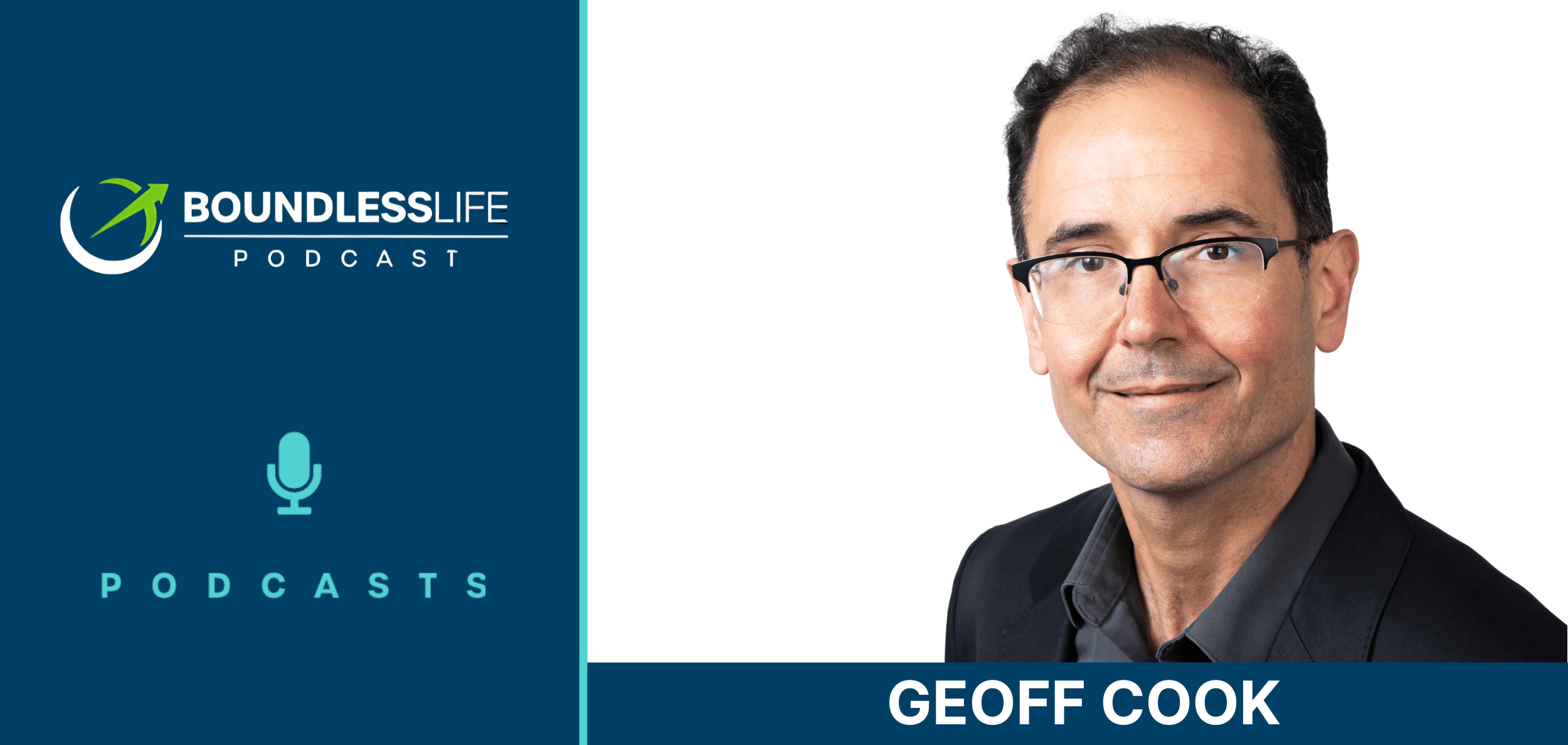
In this episode, Geoff Cook, CEO of Noom, talks about the science and practicalities of GLP-1 microdosing for weight loss and longevity. He breaks down what microdosing means, how Noom combines low-dose GLP-1 with behavior change programs to promote sustainable results, and the broader health benefits beyond just weight loss—such as improved metabolic markers and reduced inflammation. The conversation also covers safety, affordability, and Noom‘s new at-home blood testing for tracking progress.

Geoff Cook is the CEO of Noom. He is also a serial entrepreneur and long-time public company CEO. He co-founded The Meet Group, a NASDAQ-listed social dating and live-streaming company connecting millions of active users globally. Geoff served as The Meet Group’s CEO from 2013 to 2023, leading it through its sale for $500 million in 2020.

Under Geoff’s leadership, The Meet Group was early to social networking, mobile apps, live-streaming video, and the creator economy. A driving force of industry consolidation, Geoff acquired four companies and was acquired twice.

With product and strategic vision, he acquired and turned Tagged into a live-streaming video leader. With Livebox, he created a successful enterprise creator economy service powering some of the top-grossing social apps in the U.S.

While building culture, Geoff also drove efficiency, realizing major cost synergies while growing top-line revenue at every acquisition target, through a combination of off-shoring and building a single shared services platform to power multiple apps.

Geoff is the Ernst & Young Entrepreneur of the Year Award Winner for the Philadelphia Region. Geoff graduated from Harvard University in 2000 with a BA in Economics. Geoff's company, Noom, is a platform for preventive health and longevity, and recently announced the launch of Proactive Health Microdose GLP-1Rx, a first-of-its-kind program that reframes GLP-1 medications as tools for whole-body health—beyond weight loss.

The new offering combines personalized microdoses of GLP-1 medication, regular at-home biomarker testing, and Noom’s digital healthy habits platform to empower people with data, insights, personalized action plans, and the motivational support to take control of their long-term well-being.

Noom Health partners with top health plans and employers to offer a suite of solutions, including Noom Med, Noom Med with SmartRx, Noom Weight, Noom Weight with GLP-1Rx, Noom Diabetes, and Noom Diabetes Prevention Program, to millions. Noom has received multiple National Institute of Health grants and was the first mobile app recognized by the CDC as a certified diabetes prevention program.

You can visit Noom and use the code BGNOOM to save 10% off.

Please Scroll Down for the Sponsors, Resources, and Transcript

Episode Sponsors: 

BON CHARGE: BON CHARGE is a holistic wellness brand with a wide range of products that naturally address the issues of modern life. Their products can help you sleep better, perform better, recover faster, balance hormones, reduce inflammation, and so much more. Go to boncharge.com/GREENFIELD and use coupon code GREENFIELD to save 15%.

Timeline: Give your cells new life with high-performance products powered by Mitopure, Timeline's powerful ingredient that unlocks a precise dose of the rare Urolithin A molecule and promotes healthy aging. Don’t let another year go by feeling less than your best. Grab 35% off your one month subscription of Mitopure Gummies at Timeline.com/BEN35 while the offer lasts.

Organifi Shilajit Gummies: Harness the ancient power of pure Himalayan Shilajit anytime you want with these convenient and tasty gummies. Get them now for 20% off at organifi.com/Ben.

Hiya: Give your kids the full-body nourishment they need to grow into healthy adults. I’ve secured a special deal with Hiya on their best-selling children's vitamin—get 50% off your first order today! To claim this deal, you must go tohiyahealth.com/BEN (it is not available on their regular website).

Troscriptions: Explore Troscriptions' revolutionary buccal troche delivery system that bypasses digestion to deliver pharmaceutical-grade, physician-formulated health optimization compounds directly through your cheek mucosa for faster onset and higher bioavailability than traditional supplements. Discover a completely new way to optimize your health at troscriptions.com/BEN or enter BEN at checkout for 10% off your first order.

Resources from this episode: 


Upcoming Events: 

CREATE 26 — January 28–30, 2026

Join me in Tucker, Georgia, at CREATE 26, a high-level gathering of founders, creators, and leaders focused on building scalable businesses, powerful networks, and aligned lives. This immersive multi-day experience blends strategy, leadership, and personal optimization with real-world execution and high-impact connections. You’ll also have the opportunity to join me for select sessions and a special Health Panel Q&A on Thursday, January 29. If you’re serious about growth in both business and life, this is a room you want to be in. Grab your ticket here.

Keep up on my LIVE appearances by following bengreenfieldlife.com/calendar!

Do you have questions, thoughts, or feedback for Geoff Cook or me? Leave your comments below, and one of us will reply!

Ben Greenfield [00:00:00]: My name is Ben Greenfield, and on this episode of the Boundless Life podcast.

Geoff Cook [00:00:04]: The side effect profile of the GLP1 is really problematic for a lot of people. Eight out of 100 people after three years are still on the med. The data is quite clear. You're not going to be on this medication forever, so why dose up to a dose that potentially makes you sick and that when you then remove that food, noise, is just going to come roaring back.

Ben Greenfield [00:00:26]: Welcome to the Boundless Life with me, your host, Ben Greenfield. I'm a personal trainer, exercise physiologist, and nutritionist. And I'm passionate about helping you discover unparalleled levels of health, fitness, longevity, and beyond. In this episode, I interviewed Jeff Cook of the company Noom about GLP1 microdosing and the landscape of peptides and drugs. And in general, if you kind of want to wrap your head around what microdosing is and how it works and what to look for, this one's for you. All the shownotes are at BenGreenfieldLife.com NoonPodcast N O M Podcast Here we go. My guest is Jeff Cook, and Jeff is actually immersed in something that is a big topic in America and the rest of the world right now. And so I'm pretty interested to hear his take on this topic.

Ben Greenfield [00:01:32]: He's a serial entrepreneur. He is a longtime public company CEO. He's led many successful ventures. But the one that we are going to talk about today is this company called noom. N o M. One of the things that NOOM specializes in is providing microdoses of GLP1. Now, I know that you've probably, if you've been listening for a while, kind of heard me talk about GLP1 before, and you've probably heard me talk about microdosing it, but I haven't really taken a deep, deep dive on a podcast besides one that I did a few months ago with Dr. Tina Moore.

Ben Greenfield [00:02:19]: That's going to be a good one to listen to. In addition to this one, if you want to really be a smart cookie about the landscape, all of the show notes are going to be at BenGreenfieldLife.com NoonPodcast N O O M Podcast Jeff, welcome to the show, man.

Geoff Cook [00:02:35]: Thanks for having me. I'm excited.

Ben Greenfield [00:02:37]: Yeah, yeah. Okay. So I got to get this out of the way right away. I kind of briefly describe what NOOM is, but how do you describe NOOM to people?

Geoff Cook [00:02:45]: Sure. So noom's a leading preventative health platform. You know, we're best known for weight Loss known for. It's not a diet, it's a mindset. So this kind of whole person, holistic approach to weight loss, we've been recently broadening beyond weight loss into broader health and longevity generally. And so it's actually microdose GLP1 that we view as kind of the front door to healthy aging and longevity and allows us to, to really expand into the longevity category. The way we define our mission is. Our mission is to empower everyone everywhere to live better, longer every day.

Geoff Cook [00:03:24]: And so we come at this concept of longevity not through this concept of healthspan, which can be an abstraction to a lot of people who are not, you know, real optimizers, but, but through the lens of vitality. You know, feeling better today. And what are those things that can help you feel better today, but then also lead to longevity tomorrow?

Ben Greenfield [00:03:47]: Right, get out of bed without pain versus live to 200 years old.

Geoff Cook [00:03:51]: Exactly.

Ben Greenfield [00:03:51]: Yeah, I hear you. Okay, so first of all, and I kind of want to hear your personal experience with this stuff as well, but just laying the foundation so that we get some terms and definitions out of the way here, how would you define a microdose of GLP1? And I would especially kind of like to hear that contextualized between the microdose and what you get if you go to the average doctor and just get a GLP1 prescription for a standard dose.

Geoff Cook [00:04:20]: So we have a pretty broad definition of microdose at noom. There is no agreed upon dose and that that qualifies as microdose it, but the way we use it is 2% to 25% of the high maintenance dose that you would typically be on for these medications. So 2% to 25%. 2% is quite small. So that would be on semaglutide. That would be, I believe, 0.05 milligrams. 25% would be closer to 0.6 milligrams.

Ben Greenfield [00:04:58]: Okay, so then a standard dose roughly would be 2.4 like 5 milligrams ish for a large standard dose of. Of semaglutide.

Geoff Cook [00:05:10]: So, yeah, the high maintenance dose of semaglutide is 2.4 milligrams.

Ben Greenfield [00:05:14]: Okay, 2.4. Yeah.

Geoff Cook [00:05:15]: So 0.05. You can see how much smaller that is, right?

Ben Greenfield [00:05:19]: Yeah, it's a lot smaller.

Geoff Cook [00:05:20]: 50 times smaller.

Ben Greenfield [00:05:21]: Yeah, yeah. I mean, my own personal history, Jeff, is even though I don't use a GLP agonist right now, frankly. So long story short is I microdose with retatrutide for about eight weeks that's kind of a triple agonist. And maybe you can explain, you know, what, what a GLP one is versus a GLP, you know, three, for example, and standard dose of that is 2.5 milligrams. I was taking about 0.25, so around a tenth on a Monday, Wednesday and Friday. I felt great. I kind of liked the quieting of the food noise without the complete suppression of appetite. And then I decided I wanted to get into a muscle gain phase and I just wanted to be voraciously hungry at every meal.

Ben Greenfield [00:06:11]: So despite some of the pleiotropic system wide benefits of something like that, I kind of cut it for a little while just so I could put on some muscle at a faster pace than I might be able to if I was kind of quieting the food noise. So anyways, back to the microdose thing. So, um, you said it's about 2 to 25%. And at Noom, you guys are recommending semaglutide. And that kind of leads to what I just alluded to. Why semaglutide versus any of these other ones that are out there where there's like four or five of them, right?

Geoff Cook [00:06:48]: Yeah. So we prescribe, you know, generic GLP1. We prescribe compounded GLP1 and we prescribe branded GLP1. So we actually have a pretty broad formulary. We don't prescribe anything that's not been through the FDA process. So it has to be either FDA approved or compoundable in a 503A. So that wouldn't include some of the more recent compounds that may not be approved yet. I also have a history of microdosing this.

Geoff Cook [00:07:23]: I've been microdosing since. Since about a year ago, actually. And I was doing it in part because, you know, I'm a product CEO. I believe in kind of eating your own dog food, so to speak. And I was going to build this.

Ben Greenfield [00:07:36]: Feature, or at least microdosing with your own dog food.

Geoff Cook [00:07:39]: Exactly. And I was taking some of the blood tests that were planning to launch soon and was kind of concerned that my A1C was actually quite high. It was 5 6. And I knew I had some weight to lose. And so I thought, well, this is a great excuse. I'll be kind of the N of 1 here. And it was a profound improvement in A1C. So my A1C went from 5.6 to 5.

Geoff Cook [00:08:11]: 3. What was interesting was I just naturally started avoiding snacks that I previously may have gone to. You know, I lost 10 pounds. I started working out more, you know, instead of, you know, a few days a week. I'm active every day now. And so, you know, I felt like habit stacking became easier for me. So it's been a, you know, and I've continued to do it more or less every, every week. And I take the weekly injection.

Geoff Cook [00:08:44]: I know you're doing it every couple of days.

Ben Greenfield [00:08:46]: You're doing weekly semaglutide.

Geoff Cook [00:08:48]: Yeah.

Ben Greenfield [00:08:49]: Okay, got it. Now you said something interesting about the compounding pharmacies and this fact that you guys don't use anything that's not, I think you said, approved for production by a 503A compounder. So you said.

Geoff Cook [00:09:02]: Yeah, yeah.

Ben Greenfield [00:09:04]: And so does that mean that There are certain GLPs that you can kind of like still get and have made by a compounding pharmacist and others that you can't?

Geoff Cook [00:09:15]: Yes. So there's some of the newer GLP1s that you might be able to find that are kind of research grade, which we wouldn't suggest anyone do, but they are available on websites, not at noom. But the way the regulatory framework in this country works for compounding is it has to be compounded by either a 503A or a 503B compounding facility. That, and those facilities have to, you know, are, are either state regulated by the board of pharmacy. They, they, there's requirements that they, they get the active pharmaceutical ingredient like the actual, you know, semaglutide or tirzepatide that they, they, they get that only from a green listed by the FDA green listed provider. And so there's just more regulation and scrutiny than going, you know, a kind of out of that system.

Ben Greenfield [00:10:09]: Okay, got it. So you guys are using semaglutide because that's one of the ones you can actually have made by a compounding pharmacist and thus you can have it made in any dose that you want.

Geoff Cook [00:10:18]: Yes, correct.

Ben Greenfield [00:10:19]: Okay. Okay, got it. Do you think that there's a chance that there will be some type of a restriction of even things like semaglutide? I don't know what the pharmaceutical landscape is right now in terms of lobbying efforts or FDA regulations are looking like. But holding a crystal ball, like are you concerned at all? Do you think you'll just be able to continue to work with a compounder?

Geoff Cook [00:10:44]: It's a good question. You know, I think I was at the MAHA summit pretty recently, so the Make America Healthy Again summit. You know, many different academics were there, different industry people. The vice president spoke RFK Jr. The health secretary, Dr. Oz and among others. And what struck me, and this was only last month, what struck me about that was no big pharmaceutical company CEO was on stage at the event. They didn't seem like they were invited, but the person that spoke or the panel there was a number of speakers who spoke directly after the FDA.

Geoff Cook [00:11:25]: Commissioner Makari was a 503A, a 503B and another kind of somebody in the compounding business. And so, you know, it's. I don't know if that's reading tea leaves or not, but it seems to me this administration is quite, they've recently come out with this FDA green list concept where 503 as must and bees must, must source their API through green listed providers. And that was widely thought that they were doing that to help, you know, ensure that there's a quality bar with respect to compounding. And so if you were about to stop it or restrict it, you wouldn't need to take steps like that. So people in the industry generally thought that was quite positive.

Ben Greenfield [00:12:19]: So.

Geoff Cook [00:12:19]: So, you know, I think you just never know to some extent. But, but I do think that because the administration seems to want access to medications affordably and has really been making that a push, that because the compounded medications are typically the most affordable version and if you can drive some quality to keep that safety profile reasonable, you know, that, that seems like their approach, but you know, you can't obviously speak for the regulator.

Ben Greenfield [00:12:51]: Yeah, I think some people aren't even aware of what the cost would be. I mean, you know, I realize you've got plenty more to fill you in on what your company does, and this might be putting the cart before the horse, but let's just say somebody wanted to start microdosing with Semaglutide. Like how much approximately would it cost them per month?

Geoff Cook [00:13:11]: So for Noom, it's 99 to start and that's the first month. And that includes the doctor's visit, the prescription, and then the NOOM behavior change program and then it's 199. So it does go up in dose, but then it stays at 199. And that is actually fundamentally different. What NOOM does, it's quite different than what other providers do. In our space is the behavior change bit. So on our microdose program, 40% of the monthly users are using the behavior change program every day. So they're actually active in the app every day, 40% of the monthly users.

Geoff Cook [00:13:53]: So it's actually quite. And that engagement or that behavior change program is really aimed at driving movement, get people moving. Resistance training, there's a muscle defense aspect of that. Try to prevent muscle lean mass loss. Nutrition, of course, protein intake. I felt this really manifestly when I started taking the microdose myself was like, wow, I can really understand how people might not get enough protein because if your eating habits were already quite poor and instead of eating a half bag or a bag of Doritos, you eat half a bag, but now you're full for six hours, you know, you're not going to be getting pro, you're not going to get your protein target.

Ben Greenfield [00:14:35]: The idea of that kind of appetite suppression is really a good point. You know, like I mentioned, I just stopped cold turkey microdosing to put on like extra mass, like super physiological mass more than I'd be able to just eating, you know, a slight amount of excess calories. And I just wanted every advantage I could get in terms of not shutting down appetite. But it is a good point. So you know, it's kind of just a little bit of resistance to eating and it therefore requires just a certain amount of self awareness when you're sitting down to consume a meal, especially for, as you noted, the protein piece. But it's nowhere near because before I did the microdose, Jeff, I did full dose just to see what it felt like and I was nauseous and I couldn't eat for a while. I mean I could eat but it was force feeding and I could get down maybe 800 calories a day for three or four days in a row and I didn't feel well and gastric motility slowed. So I was constipated and then once that wore off, I had diarrhea and just did not feel well on that standard dose.

Ben Greenfield [00:15:48]: And I know people gradually get used to the standard dose, but the microdose is still something that you got to have self awareness around with food. But, but it's way different than that mega dose that completely repressive, shuts down appetite and then you don't want to go to the gym. Right. It's like you hear people say, well, eat enough protein, go to the gym, but when you can't even eat calories, much less protein, you're flat when you go to the gym. And so it creates kind of this negative feedback cycle.

Geoff Cook [00:16:15]: Yeah, I do think there's something to that. I did a half marathon recently and that was one of the weeks I skipped because I did not want to, to have any kind of appetite suppression ahead of, ahead of that. But I would say the side effect profile of the GLP1 is really problematic for a lot of people. Right. Like, it's when you look at how many people actually stay on the medication. There was a recent study by Prime Therapeutics. It showed only 90 or showed only 8 out of 100 people after three years are still on the med. And only I think it was 15 out of 100 at two years.

Geoff Cook [00:16:59]: So they just keep kind of falling off. And so Nooma's obviously been doing behavior change and dive for, well, predating the recent GLP1. But the way we look at it is if most of the people who start on a GLP1 with us or with anyone are eventually going to come off of it. And so the trick for us is how do you use the GLP1 to spark a window of change? Like, basically the GLP1 opens the window where you're going to be able to get weight off quickly and it's going to be more than you've seen in the past. You've probably someone who struggled with losing weight in the past. And if you're combining that with the healthy habits, what we've always noticed is the people are most likely to have success are the ones who have had early success. And so like, you know, success begets success. And so we use the GLP1 to spark that journey.

Geoff Cook [00:17:55]: I those habits over like two to five months become an identity. And then, you know, ideally that's how you produce change at last. So like that, that's, that's the aim of the program and why we've wrapped Microdose in. Because our view is like, look, your odds are the data is quite clear. You're not going to be on this medication forever. So why dose up to a dose that potentially makes you sick and that when you then remove that food, noise is just going to come roaring back. So we, we, we, we, we really emphasize the microdosing aspect.

Ben Greenfield [00:18:26]: Yeah, it's the training wheels type of concepts. And I think you can kind of look at it two ways. Right. That you can look at it the way that you just described where, okay, you're using this to realize what it means to eat less, to set up good boundaries, to begin to kind of create habit loops that you can sustain on the microdose that then you should be able to sustain off the microdose once they're kind of cemented in place. And then there's the flip side of, and I would love to hear your thoughts about this, the people who get on the GLP and kind of view that as like the magical injection that's keeping them from eating too much. And then once it's no longer in their fridge and they're no longer injecting, they feel like they don't have their superpower anymore and they start to eat more again. I don't even know if this has been researched or if you see a difference in weight regain with certain things that are followed like certain habit building mechanisms or whatever you do at noom. But what are your thoughts on that kind of parallel in terms of how people actually respond or think about it psychologically?

Geoff Cook [00:19:32]: Yeah. So it's interesting if you look at the data coming from the pharmaceutical companies own studies, they show very rapid weight regain on med discontinuation, more or less to the point where you regain it.

Ben Greenfield [00:19:46]: All over something that's with a standard dose. Right.

Geoff Cook [00:19:49]: That's with the standard dosing. And also those studies are all done on very high BMI populations. So they're kind of cherry picked in that regard. There was a study by the EMR EPIC that looked at this in a real world population and it actually found about 50% of the people at a year kept post discontinuation, kept the weight off, which was I think eye opening for a lot of people who didn't think it could be that good. With noom, we believe it should be higher still. So we're putting together that data. We'll definitely publish it in 26. But there's another behavior change program that's worth looking at called embla.

Geoff Cook [00:20:33]: They published their data recently out of Europe and they showed extremely high kind of weight maintenance at a year when the behavior change was actually built as part of the program.

Ben Greenfield [00:20:47]: What's that mean to build behavior change into the program?

Geoff Cook [00:20:51]: So I mean most people, by far, you know, most people who begin on a GLP1, they're getting it from a doctor or for some online clinic and that's it. Like there is no, they may think they're going to try to do something differently but there's no built in structure. There's, there's nothing they're, they're, they're necessarily doing. With respect to noom, the way we, we think about it is like inside of the NOOM application we're giving you tasks every single day to hit and you, you check them off and you know that might be a protein objective, a step goal, even mental health aspects like an art therapy bit, but you're doing your daily tasks and we find that people actually do them. And you know, 40% of people are doing every day. And so like if you're, if you're providing and doing the structured stuff, then you're going to be more likely to actually for that habit to become entrenched. Because we think it takes like two to five months for a habit to really get entrenched. And so we take it from, let's get you to do the microhabit, the littlest thing we can, chunk and then start building up from there.

Ben Greenfield [00:22:07]: Okay, got it. There's at least a dozen listeners who are putting on their tinfoil biohacking hats and thinking about downloading the neumap and combining that with their sold for human research only chemicals from some other peptide company, I guarantee you. But that issue aside, we've talked a little bit about weight loss and appetite suppression. Jeff, but what are, you know, and I use the word pleiotropic or like system wide effects earlier. What are some of those effects that would go beyond appetite control or weight loss that are good?

Geoff Cook [00:22:43]: Yeah, I mean, so there's heart health effects, right. Like the studies suggest cardiac muscle improvement, I think that was in heart attack victims. But cardiac blood flow seems to be impacted by, in a good way, bismaglutide. The inflammation change from these medications is a clear reduction in inflammation often shown through the high sensitivity C reactive protein biomarker which falls markedly in the first few weeks before often there's any weight loss effect and that inflammation can show up in, you know, your knee trouble resolves. And you know, I think it's more complicated than saying, well you lost some weight so of course your knee problem resolved. It's that the, the underlying inflammation is going down and you lost some weight. So it's actually improving in multiple ways. Inflammation may well have something to do with Alzheimer's.

Geoff Cook [00:23:52]: There was a recent Alzheimer's kind of a report with respect to semaglutide that didn't look as good. But that was in folks with I think more advanced Alzheimer's who are actually in the disease. There's this viewpoint that once the disease pathways get going, this may not be something that stops it, but it may be the sort of thing that helps if done more proactively. Earlier on fertility and pcos, there's data showing improvement there. And then basically the reward center of the brain is being addressed by the GLP1. And so alcohol abuse disorder, addictive gambling, even those sorts of behaviors have also shown improvement. And I think there was a study by a guy named Z who, who looked at, who looked at that. But you know, it's there are extraordinary medications.

Geoff Cook [00:24:58]: And you know, I, I've been dabbling doing on the side a master of science program at Tufts and in their nutrition school. And why I came across this recently was this study that basically showed in fmri, so people were in an FMRI scanner and there was basically a chocolate milk study. And they found that the GLP1 increased the liking for a food but decreased the wanting. So wanting went down, but liking went.

Ben Greenfield [00:25:39]: Up, which is very odd because you'd assume with a dopaminergic response, both liking and wanting would increase.

Geoff Cook [00:25:45]: Yeah, yeah, it was remarkable. And when you think about like, well, what the disease of obesity might have associated with it, you know, it is this thought, well, you eat but you're not satiated, so you're, you want and you crave, but then you eat, but you're not satiated, so you eat more over nutrition. Right. And so if the GLP one seems to decrease the craving, decrease the wanting, but then also increases the liking, which is remarkable. Now of course, I'm sure that has something to do with dose. I'm sure if you just saturate your reward pathways with GLP1, you probably could affect both.

Ben Greenfield [00:26:25]: There'd be a point at which the no likey mechanism would kick in, I would imagine. It's kind of interesting how there's a lot of tendrils that snake throughout the biological system. From some of the things that you described, it's like, well, you lower inflammation and yeah, you're going to potentially reduce joint pain, reduce inflammatory cytokines. But also it's a pretty well known fact now that inflammation inhibits fat cell autophagy. So once you've shut down inflammation, you've got a double whammy on fat loss because fat cells are mobilized to release more fatty acids and you're also eating less. So you're emptying them out more quickly and filling them up less quickly. Or with something like brain health, not only would I say dementia is related to inflammation, but of course also glucose utilization by the brain. And maybe if you're eating less, you are burning more fats as a fuel and you're creating more ketones as a byproduct to burning those fats.

Ben Greenfield [00:27:25]: And thus the brain has an appreciable source of alternative energy to glucose. So you've got less, less glucose being utilized by the brain, more stable pathways. So yeah, you can kind of see how there's a lot of ways that these things kind of weave throughout the body.

Geoff Cook [00:27:42]: Absolutely. You know, just, just picking food, noise for one.

Ben Greenfield [00:27:46]: Right.

Geoff Cook [00:27:47]: Like there's this question of well, what is food noise? And, and you know, the best theory I've heard is basically the default mode network of the brain, which is what your brain is doing when it's not doing something else, which people are generally in half the time. It's generally always simulating futures. Futures, right? So like what am I going to do next? What am I going to do? And that could be the source of anxiety for some it's implicated in depression, depressive disorders. But food noise is basically maladaptive thinking about the future prospection. And so what happens when, when you're not spending 50% of your time or some, some high portion of your time thinking about your next meal or that you're hungry, what do you, what does that free up cognitive bandwidth to then go and do. And you know, we're, we're looking at this from a research perspective. We have a research team here, but we were curious like does it increase naturally mindful behaviors? Right? Like are you just do some, is it mind, is it a mindfulness shot in some regard? Does it enhance mindful behaviors if they're done alongside of them? So what exactly is the decrease in food noise? What might that be freeing up cognitive bandwidth to do? It seems because many people do begin a health journey or deepen it, that if you're not constantly thinking about food, that may allow some positive prospective futures. So things like, you know, my habits or you know, I'm going to work out a little bit more and so like that, that does seem to have some, something there.

Geoff Cook [00:29:32]: But we're trying to show that. So that'll be, we're curious to see it.

Ben Greenfield [00:29:39]: A significantly high percentage of the high performers I know on their busy days set up some type of system or environment in which they're eating less. Basically fasting on the most demanding days for productivity. I had a 36 hour fast last week and obviously my most productive day of the week was that 12 hour span where not only did I have a solid three extra hours from not preparing and sitting down to a meal, but also just the focus when you're not thinking, which is another significant number of minutes about the next meal or the meal that you've just had. So I can see the banners now at noom. Increase productivity, make more money, get a better career, get a raise. There is something to that though. The reduction of food noise goes beyond just eating fewer calories.

Geoff Cook [00:30:35]: I was just going to say NOOM is this mindful eating program. And so we came at it from the point of View of food noise could be handled through mindfulness. Right. And so like if you become aware of your kind of interoceptive body cues, you can notice that you're feeling a hunger pang and then kind of dismiss it or reorient the brain. You could handle it in basically a top down way. And then with the GLP1 we see that as a more bottoms up, you know, it's changing your reward pathway. Um, and so you're, you're, you're, you're just not as allured by that bag of chips as you used to be. And so if you combine those two things, you get some, you can really get a lot of power out of that in part because what the GLP one may not help with as much is like stress eating.

Geoff Cook [00:31:26]: Right. Like if, if you're eating because you're not, because you're feeling some kind of stress or it's a psychological eating, it may not be affected by your reward pathways. Right. So combining those two is actually quite helpful.

Ben Greenfield [00:31:45]: Yeah, yeah. Some people might be concerned about the safety piece. You talked about these confounding pharmacies and how they do have certain hoops they need to jump through that sold for human research purposes only. Companies do not. But if someone's sitting back thinking, gosh, I heard my friend had low blood sugar or some kind of shock or sepsis like reaction when they injected a peptide, I'm scared, I don't want to go through that. How do they know that your peptides are safe? Or what do you look for to know if something like a microdose is safe?

Geoff Cook [00:32:22]: For one thing, they're compounded in this regulatory framework, the 503A, which is, I think it was the Food, Drug and Cosmetic act, that, that, from that, that set that up. And Those companies, those 503As can only use the API of a green listed provider. And they have to have the certificate of authenticity, the COA on file attesting to the purity of the API. And then when they compound it, they do it in batches and each batch is sampled and then sent to a third party test which then only releases the batch on that batching, that test being concluded. And so this is some of the key ways we, we try to do everything we can to, to, to, to be in compliance. But, but the, the other way is just how we dose it. So, so a lot of the side effect profile of the medication is related to maybe overdosing the, the, the, the, the med or your, your body just doesn't need as much. So we have this low, we call it the low and slow titration protocol, where we'll start people very low on a microdose program.

Geoff Cook [00:33:47]: Our lowest start could be as low as.05. And then we only titrate up based on a combination of bmi, your BMI as well as your side effect profile and your kind of desired bmi. But what we're trying to avoid is you losing more than two to three pounds a week. When you lose weight too quickly, that's when you get more of that weight. And studies show this when you get more of that weight coming off as lean mass. And so we call the titration schedule. We use Smart dose. But in any event, what it's meant to do is minimize or find a healthy balance of weight loss speed.

Geoff Cook [00:34:34]: So we're not actually trying to get you to lose weight as quickly as possible. We're trying to do it in, in a sustainable way and one that is designed to minimize side effects.

Ben Greenfield [00:34:45]: Yeah. Okay. So if I were doing a normal peptide in one of those little bottles, I might pull it back to whatever tick mark I've been instructed to do, or let's say it's a 15 tick mark on a 100 tick mark insulin syringe. And for a lot of people, I don't think they quite understand how important it is to very precisely use that reconstitution liquid. When you reconstitute and know the dose that you put in there. And then when you pull back, some people will be like, well, it says 15 ticks. What harm could five extra ticks cause? And that can be the difference between getting the effects you want and heart rate racing, flushing, irritability, collapsing in bed, et cetera. And so I actually don't know the answer to this question, but I'm guessing you have some kind of like preloaded pen or dose delivery that goes beyond just pulling it back into an insulin syringe.

Geoff Cook [00:35:39]: So we have a vial and it's a liquid you don't have to reconstitute. So there's no powder. But what we do is inside of, as part of the smart dose procedure, inside of the application, it tells you what your next titration step is, and it will actually show you the, the syringe and where exactly you're supposed to pull it up to. Because people do have this issue with, of, well, how units milligrams it can be. It could be a lot for someone to understand. It's like fill it up to this line. That's much easier for people to understand.

Ben Greenfield [00:36:14]: Right. Okay, good. Yeah. And again, if you're listening, please, word of caution. I think some people don't realize when you're dealing with micrograms, there's a big difference between the 20 tick marks mark and the 15 tick mark. So that's good that you guys include those instructions because I see people making a lot of mistakes there. So with Noom, you've got the app and I get my peptide. Does that ship to my house or do I need to go pick that up from a pharmacy?

Geoff Cook [00:36:42]: Yeah, it's shipped to your house, typically within about seven days of filling out your intake.

Ben Greenfield [00:36:47]: Okay, all right, got it. And then I was actually curious about the whole blood testing piece. Obviously a lot of people are going to want to know beyond just say appetite regulation, if it's working. You mentioned your hemoglobin A1C went from 56 to 5 3, which is great for people listening. That's just a three month snapshot of your average blood glucose levels. And sometimes it's better than just a single blood glucose reading. But what do you guys do about, I guess like testing or tracking what's going on in someone's body when they're using your product?

Geoff Cook [00:37:25]: So we include labs with all of our GLP1 offerings. But what's most interesting is actually what's coming out on Monday. We have a big announcement and it'll be the first time where we're wrapping in to the microdose program. Easy at home labs. So we actually will send you, in addition to the medication, a tasso device which is, you know, it's. Yeah, it's cool. It's a cool device. And so you put it on your arm, you hit the button, it's virtually painless.

Geoff Cook [00:38:02]: It collects, you know, a little vial of blood. You put that in the FedEx and you get your results back, you know, typically a matter of days. And then every four months you'll get another package. And so instead of just waiting, you know, a year for your next physical, you can actually see the, the what you kind of how your health is transforming based on both the habits and the GLP1 program. And so, you know, we're thrilled to kind of see that data. You know, it's also just going to be an interesting data set from a point of view of, you know, really seeing what low levels, what microdose levels of GLP1, how it impacts blood work and APOB LIPO A A1C. You know, there'll be 17 biomarkers. It's, it's a small quantity of blood.

Geoff Cook [00:38:56]: That's why it's not like 100 biomarkers. But it'll be done regularly.

Ben Greenfield [00:39:00]: Yeah. So basically your. Your general markers of. Of lipid and metabolic health.

Geoff Cook [00:39:04]: C reactive protein. High sensitivity C reactive protein is in there, a measure of inflammation. We also get testosterone free tea.

Ben Greenfield [00:39:15]: That'll be interesting to see, like the. The endocrine response to GLPs.

Geoff Cook [00:39:19]: Yeah, no, it's. At least in my own blood work, you know, I saw a pretty significant improvement across the board. But I would say what improved the Most was the A1C and the triglycerides. Just like. It's like, unbelievable how quickly that felt. C RAX protein did too. Things like cholesterol. I think that's harder to move.

Geoff Cook [00:39:40]: I wouldn't necessarily expect to see that.

Ben Greenfield [00:39:42]: Yeah, it kind of depends. I mean, you do tend to see an uptick of cholesterol as a way to battle inflammation in the body of someone who's inflamed. So if inflammation drops, you would expect some kind of a drop in total cholesterol levels and probably back to your measurement of testosterone. Inflammation can also suppress the metabolic activity of the Leydig cells in the testes. So I wouldn't be surprised if there was a little bit of an impact on testosterone as well. This TASO device, by the way, if you're listening to what Jeff is describing here, it's like this circular device that you stick, for example, on either shoulder. Then you put a little tube on the end of the device that you stick to your shoulder, which is like smaller than a cell phone, and it just drips the blood into the tube. Take the tube off, put in the bag, and send it off.

Ben Greenfield [00:40:34]: I don't know if you guys do this, Jeff, but the ones I've gotten in the past have, like, a little heater that you put on the shoulder to get blood flow first.

Geoff Cook [00:40:41]: Yep, we do. We have that. It's actually important to have that. We used multiple different heaters. The first one wasn't hot enough, and the blood didn't come out, you know, in our testing. And so we had to upgrade our heater pad.

Ben Greenfield [00:40:56]: Yeah. Tip. For those of you who do home blood testing now, any morning I'm doing a test. First thing I do when I get up is I go turn the infrared sauna on, and then I bring all my testing equipment in there and do my blood draw, my finger prick or my tasso inside the sauna. And you fill up everything way more quickly when there's a little bit of heat going on. So the other thing I noticed, Jeff, on your bio and this NOOM announcement that came through is that you guys are working on, on getting big Pharma to actually lower drug prices without a law or a new regulation. I didn't really quite know what that meant, but can you describe what you guys are doing?

Geoff Cook [00:41:35]: Yeah, sure. So, so for like more than a year we've been pretty vocal on the issue of drug pricing. In particular that until recently, you know, the price of these medications were maybe $99 in London and $499, you know, in New York. And we actually took out multiple Wall Street Journal back covers basically proposing a high priced drug list. And so if the pharmaceutical company. So the way that the drug regulation works now is a 503B pharmacy, which can compound an enormous amount at a very large scale with great safety parameters. But they can only compound when something's in shortage. And so what's, what we proposed was, well, a medication is effectively in shortage if people can't access it.

Geoff Cook [00:42:35]: And if the price is higher than some basket price, let's say 2x the price of western country drug prices, well then let the 503Bs compound that medication because that will basically provide an escape valve for more or less an otherwise broken system. Right, because the drug companies really just exploiting their monopoly, their patent monopoly. And that's fine. You know, there should be some capability, of course, to get paid for innovation. But at some point you're gouging the public, right? If you're, if you're five, ten times more. So what we have seen is the prices have started to come down, but they are still quite a bit higher. And so we'll continue to call for those prices to fall, but we're generally just on the side of access to GLP1s because ultimately we want to wrap our program around whatever GLP1 people can take. And then ultimately the more affordable the program, the more people will consider it.

Ben Greenfield [00:43:40]: Okay, so this 503B, I'm saying that, right, 503B because this 503 pharmacy could make a drug if that drug were in some kind of a shortage or if there was increased consumer demand for it. But for them to start doing more of that, there doesn't have to be some kind of like new law or regulatory adjustment made.

Geoff Cook [00:44:04]: No, our interpretation is simply that HHS health and you know, the HHS secretary would just have to say that when they, when they look at demand for the drug, they're evaluating the demand at a given price, which I think makes a Lot of sense. Like how do you. How do you determine demand if not at a price? And so rather than just let the drug manufacturer say, well, it's not in shortage, see, you know, nobody's buying it at $1,000 a dose. You can say, well, when you're charging everybody else $100, what would the demand be at that dose? Right.

Ben Greenfield [00:44:41]: Yeah, there's a huge lineup of people would love to buy it at 100 or 200 compared to the thousand it's currently at. Okay, that makes sense. Interesting. Jeff, this is pretty cool what you guys are doing. I really like how you are including the app for the behavior change component, which I think is missed a lot of the time. And not that I want to cheapen what you guys are doing, but it's almost like kind of like McDonaldizing, the easy process of getting what you need from a microdose GLP standpoint in kind of like a predictable and easy way. So, yeah, when I heard about you, I knew I wanted to get you guys on the show. So this is pretty interesting stuff.

Ben Greenfield [00:45:20]: And Noom gave all of us, gave us a 10% discount. I'll link to that in the show [email protected] NoonPodcast N O O M Noom podcast. You can leave your questions and your comments and your feedback over there as well. I read all of those. And Jeff, thanks so much for doing this, man.

Geoff Cook [00:45:44]: Well, thank you, Ben. It was my. It was absolutely my pleasure. Appreciate it.

Ben Greenfield [00:45:47]: All right, cool folks, I'm Ben Greenfield along with Jeff Cook of Noom, signing out from BenGreenfieldLife.com have an incredible week to discover even more tips, tricks, hacks and content to become the most complete, boundless version of you, visit BenGreenfieldLife.com.

Ben Greenfield [00:46:15]: In compliance with the FTC guidelines. Please assume the following about links and posts on this site. Most of the links go into products are often affiliate links of which I receive a small commission from sales of certain items. But the price is the same for you and sometimes I even get to share a unique and somewhat significant discount with you. In some cases, I might also be an investor in a company I mentioned. I'm the founder, for example, of Kion llc, the makers of Kion branded supplements and products, which I talk about quite a bit. Regardless of the relationship, if I post or talk about an affiliate link to a product, it is indeed something I personally use, support, and with full authenticity and transparency recommend. In good conscience, I personally vet each and every product that I talk about.

Ben Greenfield [00:47:01]: My first priority is providing valuable information and resources to you that help you positively optimize your mind, body and spirit. And I'll only ever link to products or resources, affiliate or otherwise, that fit within this purpose. So there's your fancy legal disclaimer.

Ben Greenfield

Ben Greenfield is a health consultant, speaker, and New York Times bestselling author of a wide variety of books.

What's Blocking You From Living Boundless?

Thoughts on How To Microdose GLP-1 (& How To Make Eating Less EASY Even After You Stop Your Peptides) With Geoff Cook of Noom

One Response

Leave a Reply

Your email address will not be published. Required fields are marked *

Related Podcasts

Ben-Greenfield-Luke-Cook-2

Fireside Chat with Marvel’s Luke Cook: Cyclical Keto, Ketones, Cold Plunges, Nootropics, Peptides & Living Vital to the End

Listen on: Reading time: 2 min In this special live-recorded episode, actor Luke Cook—known for Chilling Adventures of Sabrina and...

Josh Clemente WP

The Weirdest, Most Shocking Things You Can Learn About Your Body From A Blood Glucose Monitor with Josh Clemente

Listen on: Reading time: 5 minutes What I Discuss with Josh Clemente: How his love of coffee began at SpaceX,...

Dylan Gemelli WP

Heart Hacks, Diet Myths Debunked & Straight Talk About Custom Nutrition with Dylan Gemelli

Listen on: Reading time: 5 minutes What I Discuss with Dylan: How factors like genetics, hormones, and microbiome diversity make...