Home » Podcast » Biohacking Gadgets You’ve Never Heard Of (& A Preview of The World’s TOP Health Optimization Event) With Tim Gray

Biohacking Gadgets You’ve Never Heard Of (& A Preview of The World’s TOP Health Optimization Event) With Tim Gray

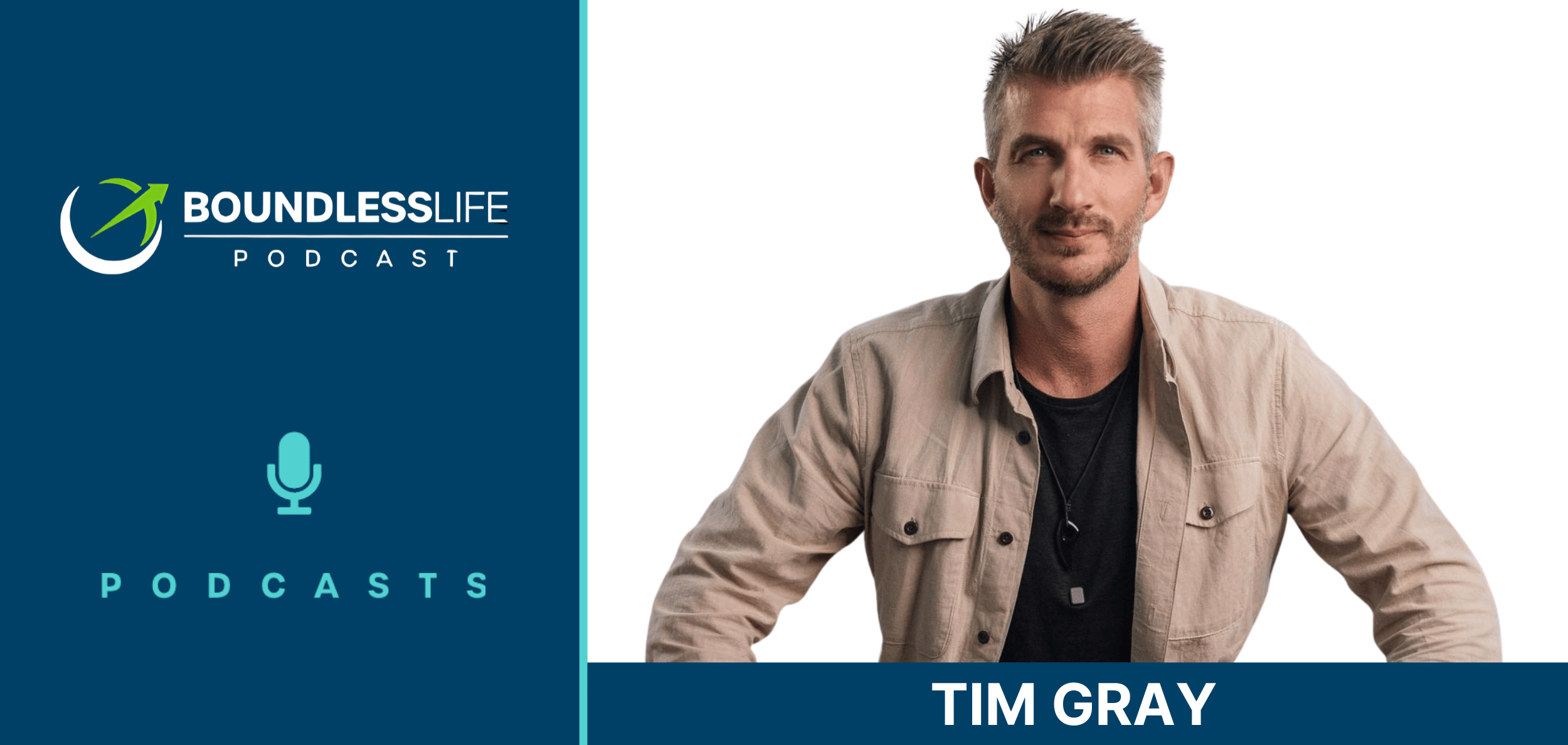
Boundless Life Podcast promotional graphic featuring a headshot of Tim Gray, a smiling man with short hair wearing a tan jacket over a dark shirt, against a light background with the podcast logo and microphone icon.

Listen on:

Reading time: 10 minutes

What I Discuss with Tim Gray:

  • Why spending a week in Tuscany with no devices, no supplements, and no protocol reminded Tim that most of the technology he relies on in London exists purely to undo the damage caused by living in London…01:56
  • Why he believes removing microplastics, mold, heavy metals, and environmental interference is now more important than adding supplements or devices…04:25
  • Why experienced biohackers are stripping things back, and how Tim went from 50 supplements a day down to five or six…07:18
  • Why the average person now has the equivalent of two to three credit cards worth of plastic sitting in their brain, and the protocol he uses to try to clear it…11:50
  • How sulforaphane may help clear microplastics from your cells via the digestive system, why most broccoli supplements cannot deliver it reliably, and what makes BrocElite® different…15:27
  • Why the peptide industry is still the wild west, what Tim sees happening with purity and sterility in compounds sourced from China, and why cycling matters as much as dosing when receptor saturation kicks in…20:53
  • The first-ever three-day format at the Health Optimisation Summit (HOS) 2026: what the Friday Business of Health Day looks like, the Shark Tank-style investor sessions, a major unannounced headline speaker, and how last year's pitch competition launched a new oral microbiome company…24:58
  • Bear Grylls as the keynote for the weekend, full-body MRI screening on-site at a 70% discount, and the Gym of the Future zone featuring a hyperbaric chamber you can actually exercise inside…30:08
  • InhaleH2: why hydrogen inhalation at the highest safe concentration delivers full-body saturation in around 30 minutes, what Tim notices in his HRV and sleep when he uses it regularly, and why he considers it one of his favorite devices at the summit…33:34
  • How bio-energy stimulation technology (B-E-St) uses electrical pulses to dramatically boost your cells' energy output, speed up protein synthesis, and reduce inflammation and pain…35:43
  • The Gharieni wellness bed, combining infrared heat, quartz therapy, sound therapy, and vibration for nervous system regulation and recovery…38:20
  • What Dezawa MuseCells® are, and why they cause no immune reaction and home precisely into damaged tissue…41:45
  • STEMREGEN® as an oral stem cell mobilization supplement for people who want to support stem cell release from bone marrow without injections, and why Tim cycles it…44:14
  • The Pulsetto hands-free vagus nerve stimulation, why bilateral neck stimulation may outperform the single-ear approach used in most studies, and how I layer it with Hoolest headphones and a meditative audio track on flights…45:11
  • Why the difference between low- and high-power PEMF matters for results, what the inventor of PEMF told Tim about marketing, and how HOCATT HUGO PRO, Pulse Centers, and Dr. William Pawluk's devices compare for injuries and muscle cramps…47:17
  • The Human Regenerator med bed: cold atmospheric plasma at 30,000 volts of static electricity as hyper-grounding, how it clears warts and suppresses cold sore breakouts in Tim's own experience, and why I get on it every year at HOS to reset my nervous system…52:46

In this episode with repeat guest Tim Gray, you'll hear why the smartest biohackers are now removing more than they are adding, what paying attention to microplastics and environmental toxins in your own home and blood actually reveals, and why sulforaphane is making a comeback as a potential microplastic clearance tool.

You'll also get a breakdown of the most interesting technologies coming to HOS (use code BEN for 10% off registration) this September, now in its first-ever three-day format, from hydrogen inhalation and bio-energy stimulation to hands-free vagus nerve stimulation, PEMF, STEMREGEN, and a full-body MRI trailer parked outside the venue, and find out why Bear Grylls is headlining the keynote.

Tim Gray is the founder and CEO of the Health Optimisation Summit, one of the world's largest health and longevity events, now expanding to multiple international locations. Known globally as The Health Community Guy, he is also the host of the Health Optimisation Podcast, an early-stage investor in breakthrough wellness brands, and the founder of London's first private hyperbaric oxygen clinic. He has built multiple seven-figure health businesses and is recognized as Europe's leading biohacker and a global authority in health optimization.

If you want to experience HOS yourself, you can use code BEN for 10% off registration here.

For more insights, you can listen to my previous episodes with Tim:

Episode Sponsors

Manukora: You haven't tasted or seen honey like this before — so indulge and try some honey with superpowers from Manukora. If you head to manukora.com/ben or use code BEN, you'll automatically get $25 off your Starter Kit.

Troscriptions: Explore Troscriptions' revolutionary buccal troche delivery system that bypasses digestion to deliver pharmaceutical-grade, physician-formulated health optimization compounds directly through your cheek mucosa for faster onset and higher bioavailability than traditional supplements. Discover a completely new way to optimize your health at troscriptions.com/BEN or enter BEN at checkout for 10% off your first order.

Organifi Shilajit Gummies: Harness the ancient power of pure Himalayan Shilajit anytime you want with these convenient and tasty gummies. Get them now for 20% off at organifi.com/Ben.

Qualia Stem Cell: Qualia Stem Cell is a science-backed supplement designed to support your body's natural repair system by enhancing stem cell function, helping you recover, renew, and maintain healthy tissues as you age. Taken just four days per month and formulated with premium, clinically supported ingredients, it's an easy way to support long-term healing and vitality. Visit qualialife.com/boundless and use code BOUNDLESS for 15% off.

Episode Resources

People

Events

Companies & Products

Studies and Research


Upcoming Events:

Boundless Live Tour Presented by FormulaIQ | Summer 2026

Join the world premiere of Boundless: The Man Who Became Human, a new feature documentary that follows 20 years of body optimization colliding with life's immeasurable moments—marriage, family, and faith. Experience a live podcast recording and intimate Q&A with my family and me in Los Angeles, New York, Austin, and Moscow, ID, one night in a room full of people chasing the same thing. Purchase tickets here. 

Health Optimisation Summit | September 11–13, 2026

I'm speaking at the Health Optimisation Summit in London (September 11–13, 2026) at the Business Design Centre. This isn't your average health conference. HOS unites the best minds in biohacking, longevity, nutrition, fitness, and medicine, with one goal: to actually make people healthier. With 35+ world-class speakers, 120+ cutting-edge brands, and 4,000 like-minded people all under one roof, it's two days that could genuinely change how you approach your health. Get your ticket here and use code BEN to save 10% off registration! 

Eudēmonia | November 5–8, 2026

I'm speaking at Eudēmonia (November 5–8, 2026, in West Palm Beach, FL), a prevention-focused, science-based health, well-being, and longevity summit designed to add years to your life and life to your years. Across 3 days and 15 venues, you'll experience 200+ talks from 120+ experts, 300 treatments, and 160+ brands covering everything from biohacking, longevity, and hormonal health to gut health, brain health, peptides, mobility, and more. I'll be leading a talk and a movement session alongside some of the brightest minds in health today. Use code BGREENFIELD-EUD-100 for $100 off when you register here!

The Boundless Couples Retreat | November 10–14, 2026

Ready to reconnect and recharge with your partner in paradise? Join the Greenfields at the stunning Prana Maya resort in Belize for the Boundless Couples Retreat, November 10–14, 2026. It's a five-day, all-inclusive escape designed to deepen your relationship, restore your vitality, and create memories that last a lifetime. From relaxation and adventure to intimate relationship coaching with Jessa and me, every detail is crafted to send you home with a stronger bond and a reinvigorated spirit. Spots are limited, so discover more and secure yours here today!

The Manzo x Ben Greenfield Table Private Dinner | Throughout 2026

If you want to taste one of the world's rarest cuts of beef and experience my North Idaho biohacking compound firsthand, my family and I are hosting The Manzo x Ben Greenfield Table, an intimate, chef-catered VIP dinner on a few limited 2026 dates. The evening includes biodynamic wine, a live cooking demo, a multi-course Piedmontese feast finer than Wagyu, and a night of deep sleep in an EMF-free, fully grounded, circadian-optimized guest room. Anyone who reserves a half or whole Piedmontese bull from Manzo qualifies for a spot, so reserve your allocation and dinner here.

Stay tuned for future updates—and you can always keep up with my LIVE appearances by checking out bengreenfieldlife.com/calendar!

Do you have questions, thoughts, or feedback for Tim or me? Leave your comments below, and one of us will reply!
Ben Greenfield: My name is Ben Greenfield, and on this episode of The Boundless Life Podcast,

Tim Gray: people have as much plastic in their brain as two or three credit cards in terms of the amount of plastic. When there's that level of exposure in your body, it's probably best to get something done.

Ben Greenfield: In today's podcast, I'm interviewing the founder and CEO of one of the world's largest health optimization and longevity summits in London, the Health Optimization Summit. My guest is Tim Gray, also known as Tim Biohacker. The summit is incredible, but Tim always has new toys, new gadgets, new technologies, new approaches, and a really great view on the health world in general.

Tim Gray: My heart rate variability is always better whenever I use the H device, because I'm breathing better, meaning that I'm more rested, more vasodilation, and then sleep better as well as a result.

Ben Greenfield: We have this annual catch-up where we also release a big old discount code to get you into the summit, so if you want to come party, hang out, and be there, check out the show notes at BenGreenfieldLife.com/Tim2026. And let's go talk to Tim. Welcome to The Boundless Life with me, your host, Ben Greenfield. I'm a personal trainer, exercise physiologist, and nutritionist, and I'm passionate about helping you discover unparalleled levels of health, fitness, longevity, and beyond. Hello everybody, this is the annual meetup between Tim Gray and I. Do you still call yourself like UK's leading biohacker, or are you doing the healthy community guy now? What's your title?

Tim Gray: You had to go there, didn't you? Thanks, mate.

Ben Greenfield: Yeah.

Tim Gray: I would say I'm not even a biohacker these days, but unfortunately the biohacker branding remains.

Ben Greenfield: Yeah.

Tim Gray: I would say, like most of us, we're getting back around to nature as much as possible, but using tech in the meantime.

Ben Greenfield: Yeah, actually, talk to me about that. I mean, because you're in Tuscany, you're obviously doing like the natural living hippy-dippy thing there. You've still got, of course, like the conference, you know, in September, the Health Optimization Summit, where it's just like, you know, Gadget Central, like the Consumer Electronic Show of biohacking, so where do you fall on the spectrum of, I guess, the fundamentals versus the gadgets right now.

Tim Gray: To be honest, it's quite a big reflection moment for me, being in Italy last week, because I realized how little biohacking I actually did. It was ridiculous. Like, as I said before we started recording, I was sitting on the beach, having, you know, Mediterranean food, walking, grounding, and I realized how much tech I relied on. So, I would say, when I'm in the city, I rely on so many biohacks and so much tech and so many supplements, but when I'm actually in nature, I hardly need anything, and I think that's just the typical balance of juggling life, you know, using technology to reverse the damage of technology.

Ben Greenfield: Yeah, well, I was hoping you would go there. It's like when you're living in that post-industrial, you know, electrical soup with air pollution, light pollution, water pollution, and electrical pollution, you almost need to pull out the big guns. When you're in that environment, it's just harder to get out in pristine, clean nature, anyways.

Tim Gray: Yeah, for sure. But the thing is, I do really appreciate all of the devices that I use when I'm in London, and I can't imagine how I'd actually be able to operate at this level without them, but at the same time, you know, I can't imagine sitting on the beach with a red light device.

Ben Greenfield: Yeah, yeah, exactly. Just drag this out here and set this little red light square in my lap while the big sun shines overhead. So, when it comes to this idea of like optimization, do you think it's equally important to remove barriers like microplastics or mold or heavy metals, or even just like environmental stressors, versus the additives, you know, supplements, whatever, stem cells, peptides, red light, PEMF, hyperbaric? I mean, how much do you focus on one versus the other?

Tim Gray: Well, that's a really good point. I mean, if you think back again, going back evolutionary, we wouldn't need to remove anything because we wouldn't have any of the pollutants or any of the toxicities, and nowadays having to remove stuff is so important. I mean, if we think about, I'm going to quote Gary Brecka here, but if we look at what's in the cell that shouldn't be and what isn't in the cell that should be, the cell operates correctly, right? And then it's like, you can keep on adding hyperbaric oxygen therapy, but in the first place, why would we need that? And I think adding nature, or should I say fresh air in the forest and breathwork, that's what you would add there, whereas in the city you're just adding something different. So it's selective, depending on where I am or my zip code at the time, as to what approach I have. And I would imagine you probably do the same, right? I mean, if you weren't recording a podcast, you'd probably be on a call on your phone walking out in the woods or something, but when you're recording a podcast and you're stuck, you're getting your steps in in the office like you are right now. So, I think it's just very, very contextual, and I add whatever I need whenever I need it. And it sounds like everything and nothing of what I just said, very high level, but really, for instance, the person that goes to the gym seven days a week, why is he doing that? Is it actually moving forward, or is the person on the beach actually needing, you know, a grounding bed sheet? So I'd say I move around the planet so much, six to eight months of the year, that my routine is adaptive, depending on where I am at that moment in time.

Ben Greenfield: So, you don't paint yourself into the corner of doing the same thing day in, day out. You'll look at your environment, look at where you're at in the world, and then make a call on the fly about what your body needs, what you need to add, what you need to subtract.

Tim Gray: Exactly, and I think there are so many people that just, for instance, I said to someone a few weeks ago, "Why do you take this supplement?" And they said, "I can't remember, I started taking it like three or four years ago, and I just take it every day." Like, yeah, but surely that's kind of missing the point. It's when a habit becomes a habit, and you don't even question why you do it.

Ben Greenfield: As we say, "'cuz," spelled C-U-Z, just 'cause.

Tim Gray: And I think that's a thing that biohackers like you and I, who've been around the block a bit these days, have moved past, you know, however many supplements in your mouth or how many IVs a week, or whatever. But it's kind of like, well, actually, you figure out where things land and then do what you need. And yeah, I think a lot of people that are getting into this space, because it's growing very quickly, health has become fashionable lately, very fashionable, and I think people just want this supplement, I want this supplement, I want this technology, this technology, and they're in the playground that we've been in for 10 plus years now. So, yeah, I think if I were to summarize everything that we've just been saying, I would say really look at what you need and question everything every day. And in fact, our mutual friend Dr. Dom Nischwitz, the biological dentist, every single day, with every single supplement, he does muscle testing, kinesiology, with his wife or his kids, and says, do I need this supplement or do I want this food, and sees how his body responds to it in that moment. And he probably takes two or three supplements, and I probably take five or six these days, whereas rewind seven, eight years ago I was taking 40, 50, 60 a day.

Ben Greenfield: Yeah, I think the way I think about that is, if you open up my pantry, there is a wall, and it probably has like 50 different bottles of random supplements in it, and I think that people should have a goal to gain enough wisdom and understanding in the industry to know when to use what. Like if you go to the immune section of the pantry, there's AHCC and beta-glucan, and like a whole foods vitamin C and oil of oregano, and I would choose the bigger guns of those if I were traveling or if someone in the house were sick, right? I'd take beta-glucan, or if I've been swimming in a fresh body of water that I know is somewhat polluted or has a parasitic load, I might take oil of oregano that day, and if I really want the big guns and I'm going to have a heavy travel day, off to a conference, sleeping six hours a night, around a ton of people, doing a book signing, shaking 100 hands, I might inject thymosin alpha-1 as a peptide. Or, you know, another example might be, methylene blue is certainly there on the shelf. If I know I'm going to have a day in the sunshine, a nice hike in the woods, exposure to a great deal of a full light spectrum, I would take methylene blue because I know it could assist with ATP production, or if I know it's a sauna day, like a heavy sauna day, two days a week I have a pretty heavy sauna day, I'll add minerals to my morning glass of water. Other mornings I would use less. So, I think it's an understanding that, you know, we don't use everything every day, in the same way you wouldn't eat every single food group in your refrigerator every day.

Tim Gray: I agree. I think the problem is, though, there's so many new people coming into the space or learning that supplementing and eating clean is good for you, because it's very, very popular right now. They don't necessarily have that awareness yet, and they're just doing more and more and more, and adding in, and then taking 30, 40, 50 supplements a day, and stressing their liver, and ruining their digestion, and actually, it's counterproductive. So I'll tell you one thing, it was absolutely hilarious. Yesterday, I went into Whole Foods, and you know how Whole Foods sets out all the fruits and everything, beautiful oranges with the green stalks coming off of them, and then on top of it, vitamin C liposomal sachets. So it's like,

Ben Greenfield: Yeah.

Tim Gray: I can just imagine people going, oh, I'm gonna have the orange, actually, no, I'll just have the product instead. And I just like, this is bonkers. I mean, it's an ingenious, genius cross-sell, and how to take someone from having a $1 orange to a $6 sachet.

Ben Greenfield: Yeah, and frankly, the sad truth is, most people take the shiny, crinkly packaging with the claims on it, because the orange doesn't have a label, per se. You know, obviously a lot of this is pretty esoteric, big picture, but you know, getting down to brass tacks, and double-clicking on a few of these things that have come up, like microplastics, for example. Obviously, you know, maybe that's the second most searched term in the entire health industry, besides peptides. Have you, because I know you've done blood filtration, you've done forms of plasmapheresis, ozone, etc. Have you come across anything that seems reasonable when it comes to reducing microplastic load in the body, or something that actually seems to work?

Tim Gray: Yeah, I mean, since that documentary came out on Netflix, it's gone wild with microplastics. Lululemon and Nike and all these brands are being called out now for having pretty much 100% plastic clothing, and I've actually done some content around this over the last couple of weeks. I heard yesterday that kimchi specifically is really good at binding microplastics in the gut. I haven't looked into the mechanism yet.

Ben Greenfield: Kimchi, like the spicy fermented cabbage?

Tim Gray: Yeah, that stuff, yeah. I haven't looked into the mechanisms yet, because I saved it, put a pin in it to read. But isn't it interesting that everyone's kind of now looking at the microplastic angle? I mean, the traditional things such as sauna, obviously, exercise, sweating, obviously, but I think it really depends on your level, because when you look at the amount of plastics, I think they said that people have as much plastic in their brain these days, because of all the microplastics, as two or three credit cards in terms of the amount of plastic, which is nuts when you think about it. So I think when there's that level of exposure in your body, it's probably best to get something done, like apheresis or blood filtering, EBO2 or something like that. And actually, I'm flying to Zurich, Switzerland on Friday to a brand new clinic opening up that does apheresis and stem cell apheresis and hyperthermia treatments and things like this to help deal with all your toxicities, you know, from viral all the way through to microplastics. So it's going to be a really interesting whole week of it.

Ben Greenfield: Yeah, a lot of people are familiar with the term plasmapheresis, like a, you know, almost like a dialysis machine, where you have your blood pulled out and plasma filtered and back into the body. You just used the term apheresis, is that you're saying

Tim Gray: Apheresis? Yes, one of the brands, it's one of the brands that does plasmapheresis. Yeah.

Ben Greenfield: Okay, so it's just a brand that does plasmapheresis.

Tim Gray: Yeah, really, really good clinic where you basically go in and have it three to five times in one week with, you know, maybe, as I say, hyperthermia treatment or various other things, and then finishing up at the end of the week with stem cells, full body stem cells made from your own stem cells.

Ben Greenfield: Okay, gotcha. So basically you're combining hyperthermia and filtration. I'm assuming hyperthermia would speed up the amount of blood that would flow in and out of the body, and then once you've pulled a lot of the stuff out, you're kind of replenishing with stem cells.

Tim Gray: Exactly, exactly, obviously while remineralizing, because you're filtering a lot of blood through that week, and apparently you have to have an awful lot of downtime, so it's going to be interesting filming all of this next week.

Ben Greenfield: I've seen a lot of these companies that are focusing on reducing microplastic load using some kind of a binder strategy in the gut, which obviously could reduce some of what you're exposed to orally, and then yesterday I was speaking with someone in the sulforaphane research industry, and they were basically alluding to a study that they have going on right now that indicates that the upregulation of the Nrf2 pathway by sulforaphane, like broccoli sprout extract, or like concentrated broccoli seed or broccoli sprout extract, was mobilizing plastics out of cells, not just in the gut, and then allowing for them to pass out via the feces, which is super interesting. I mean, that's great news for a lot of people who might not be able to afford, you know, like a plasmapheresis.

Tim Gray: Yeah, it's funny, I haven't heard the term Nrf2 for a while. There was a while where there was an MLM going around saying, "Have you heard of the Nrf2 pathway?" And, you know, the broccoli sprout juice was a big thing here five or six years ago. I don't know if you still, if you still do it.

Ben Greenfield: I think the issue with it was stability, and now there are companies like, there's one out of France, there's one in the US called Broc Elite, and they've kind of figured out how to stabilize sulforaphane to allow for better upregulation of that so-called master antioxidant pathway, the Nrf2 pathway. So it's interesting that that's one to keep an eye on, and then when it comes to just the world of detoxification in general, specifically related to the Health Optimization Summit, are there any vendors there, or anything new in that category?

Tim Gray: Oh, there are so many, so many new people. I mean, to be honest, the space has exploded in the last year, and we've got so many new brands that I've been vetting throughout the whole year. There are probably four or five different companies that support detoxification, whether it's from new NAD treatments with the pen, through to Swedish digestive bitters and various other things as well. So there's a lot of good stuff on the floor this year around detoxification specifically. I can't pinpoint one that comes to mind right now.

Ben Greenfield: What's the NAD thing with the pen?

Tim Gray: So, I mean, you know, obviously peptides these days you can get with the vial, which you have to reconstitute with

Ben Greenfield: sterile water reconstitution solution.

Tim Gray: Now, because it's becoming so consumer-friendly, or needs to be more consumer-friendly, people are developing pens that you dial up, like the typical pre-filled growth hormone pens, where you dial up the dose, and then you use it with a fresh pin every day. There's an NAD brand, the name will come to me in a minute, that now you just use a pen that you can carry around with you in an ice pack and use it every day, instead of having to draw up and do it yourself.

Ben Greenfield: You mean like a pre-loaded subcutaneous NAD injection strategy.

Tim Gray: Exactly.

Ben Greenfield: Yeah, interesting. Okay.

Tim Gray: Yeah. So that's looking really nice, and I think this is one of the big problems with, for instance, when we're used to either injecting ourselves or having needles put in us and having all sorts of crazy treatments, I think the general consumer that is now becoming more health conscious isn't quite such a fan of having needles in them. So everyone's thinking of all these fancy ways to draw blood or get these compounds into you. For instance, I was at a forum in December last year, and they had a new device that kind of sticks to your arm, goes in, does the pin, draws the blood out into a little bottle, and you take it off, and it's absolutely

Ben Greenfield: The Tasso. A lot of at-home blood testing companies are doing that now, you know. Usually they come with like a little heater pack, you know, like you'd use it for skiing, and it goes on, for example, the shoulder, heats the skin, you slap the patch on there that has a tube insert for the blood that draws the blood, you ship that off. The amount of variables you can measure with an at-home test like that is always going to be more limited than, at this point, driving to a Quest or LabCorp and giving, you know, 15, 18, 20 vials of blood, but you can actually get a decent amount of information, and it's for a lot of people way more comfortable than just the finger prick, you know.

Tim Gray: Yeah. And then they're everywhere now. I always question the finger prick method, because it's like people are literally milking the finger, and I'm like, what does that cause, inflammation-wise, and does that skew the blood results? There's a brand called GlycanAge that does age testing based on your glycans, and some of the results seem to be sometimes very high and very low, and one thing I've noticed is, if people are dehydrated, they're milking the finger, they're squeezing the blood out, getting it onto the thing, and it gives them maybe a skewed age range because the inflammation markers are slightly higher, whereas when you're fully hydrated the blood comes out much easier. So I think some of these devices that are coming out now, like you've just described, are significantly better for giving good results, but still not the same, obviously, as a blood draw in a proper clinic. But then, you know, how is it handled? How is it stored? Does it need to be centrifuged before it's shipped? Whereas at home, it is significantly more limited. But the thing is, you know, every pretty much every week now, I'm hearing of a new company that's bringing out some new technology or solution to this, and it is growing quite quickly. And also, with scale comes more resource, and at-home blood draws are so much cheaper now, because there's so much more demand for it, especially here in London. I guess it's like that in the States already.

Ben Greenfield: Yeah, you brought up a forum, and it seemed like every third vendor there was some kind of a peptide vendor. That's something I already mentioned is probably one of the most Googled terms in the health industry, if not the world as a whole. What's the peptide scene like in the UK right now, and are peptides going to be featured in any way at the Health Optimization Summit this year?

Tim Gray: Yeah, we do. We have one peptide brand at the show. It's a very interesting space right now, the whole peptide space, because of, you know, GLP-1s and all the noise around those, and how mainstream they've gone, and everyone seems to know five people on Ozempic or equivalent. And then of course that's then given a rise to other peptides, the more natural body response ones that are more mainstream for us, like copper peptides, or BPC-157, TB-500, etc. The thing is, because it's kind of like early day crypto, it's a free for all, everyone's running to grab the brand, the manufacturing process isn't necessarily as trustworthy as it should be. There's a lot of it coming out of China. A lot of stuff that was tested didn't even have any of the peptide it claimed to have in it. So it's really a very difficult ground to navigate right now. I think pretty much three times a week at the moment I'm being asked to be an advisor or invest in or be part of some peptide company, I'm sure you are as well. As time goes on, it's going to filter out the rubbish, and we're going to be left with much better stuff. So I think it's good. However, there's so much money being made by the pharmaceutical industry on, you know, things like Ozempic that I don't think it's going to be long before they start saying, well, actually we're going to start bringing out some of these other compounds ourselves and doing it properly, which then gives you the Pfizer assurance of quality compared to some Chinese lab that doesn't have anything in it. So it's definitely going mainstream right now, and I think I see five to ten influencers a day talking about peptides and having their accounts taken down on Instagram because compliance is so early.

Ben Greenfield: Yeah, it's kind of a cash cow for influencers right now who have their affiliate code for any random peptide company. Unfortunately, most of them being sold as "for human research only" companies, which doesn't make them bad per se, but back to what you were alluding to, in many cases these things have failed lab tests for purity, not to mention that sterility and shipping is an issue, sterility in consumer application is an issue, in terms of people just not understanding, you know, proper alcohol swabbing, proper mixing tactics, proper injection protocols. So yeah, I think they hold a great deal of promise, but unfortunately the industry is still pretty rife with tainted product or people who don't know what they're doing, or the other issue is just poor consumer education, and people just not understanding, for example, like receptor saturation with peptides. It sets in super fast, so almost every single one that exists needs to be cycled. Back to our earlier discussion, you know, you don't take every supplement every day. Peptides are very similar. I mentioned thymosin alpha-1 for the immune system. Yeah, it's great for the immune system, but if you use it every day, you're eventually not going to have much thymus response at all to the injection, and the same could be said for the blood flow response to BPC-157, or the tendon or ligament response to TB-500. I mean, many of these need to be cycled, and that's a concept that, A, it's difficult to educate people on, and B, it's technically illegal for the "for human research" peptide companies to educate people on, because they're not supposed to be giving out prescriptive advice. It's illegal.

Tim Gray: Yeah, yeah, I know. However, they're still doing it, and it's everywhere. I mean, yeah, click the link in my bio.

Ben Greenfield: Still the wild west. I would love to talk a little bit more about what's going on at the Health Optimization Summit this year. We've alluded to it a couple of times. For those of you listening, I'll link to it at BenGreenfieldLife.com/Tim2026, if you want to dig into the details or attend yourself. But walk me through what's new this year, Tim, as far as the format.

Tim Gray: Oh man, so the space, as I've said a couple of times now, has grown significantly in the last year, probably 30-40% bigger this year, the amount of people that are coming into biohacking or health optimization or longevity or whatever. And we've got, you know, Gary Brecka and Bryan Johnson and all these other guys that are helping make it go mainstream. The Blue Zones has also helped quite a lot in the last year. And as a result, you know, where there's more demand and things are going mainstream, more money starts flowing in, and a lot of funds or new startups are coming in to fulfill the problems that the world is facing. For instance, you know, the MAHA movement has grown quite a lot, and politics to one side, but Make America Healthy Again has been a really good initiative for health, and as a result, it's showing how certain things like laundry detergent brands or products have got loads of things in them that they shouldn't, and brands are popping up. So as a result, there are a lot of people coming into the space that aren't actually health advocates like you and I, that aren't geeking out on every technology or supplement, and they don't want to spend a weekend at a show. They want to go on a day when they're paid. So this year for London, I decided to create the first ever three-day format. The Friday is the business of health, so if you want brand sponsorships, you'll find your brands. If you're a brand that needs influencers, they'll be there. If you're an investor looking to invest in health startups or companies, likewise. And the same if you're a brand looking to raise money, and putting everyone into a room and making sure that the connecting is proper. And as a result, there's not going to be four and a half thousand people like there are on the weekend. It's going to be probably about 700 people on the business day.

Ben Greenfield: Is that like limited, are you vetting or curating who's in the room, as far as like you've got to be a business owner, you've got to be an influencer, however you categorize that, or is it just like whoever wants to get a ticket can get a ticket?

Tim Gray: So it's vetted for business purposes only, because when you're walking around the exhibition floor, and this is a problem I've found over the last few years, I can't go three meters without being stopped and spoken to, and that's fine, because it's obviously my show, but the point is I don't get to enjoy the show myself or get to go around the vendor hall. And having around 600 people in a hall that holds 5,000 people means you can get around and enjoy the show.

Ben Greenfield: Yeah, those

Tim Gray: all the big deals are being done, you know, where the big technologies are meeting distributors and wholesalers and things like that, and it gives you a bit more time to enjoy the floor as a VIP as well. So it's a very strong business day. We've got some really great speakers coming along. We've got Lestat, who's the founder of health.com here in the UK. We've got Daniel Priestley speaking. We've got a massive headliner, which I'm not allowed to announce just yet for the business day. So that's that. I mean, we have Shark Tank-style investor sessions, sessions focused on scaling health and longevity brands, networking events so you can meet co-founders, operators, strategic partners, and things. And then, yeah, quite a lot going on there. And then across the weekend, oh well,

Ben Greenfield: By the way, let me stop you with the Shark Tank-style investor thing, you know, where different companies in the health sector are pitching. I know you always have a few good investors there on the panel. In terms of who's won that in previous years, has that actually been like a rocket booster or anything like that for any of the businesses, or are there any that have kind of risen from the ashes based on winning the pitch or being close to winning the pitch at the Health Optimization Summit?

Tim Gray: Yeah, it has actually. Because last year, I think it was a 50,000 or 75,000 pound prize for the winner, and it was actually Dr. Victoria Sampson's oral microbiome testing company that won last year for London. Actually, I recently recorded with her, that's gone out. And so there was a cash prize and a whole load of marketing that comes with it, and that worked really well for them last year. And also, I think it was the previous year, we also had someone that created a mental health app for teenagers that were struggling in life that didn't get the support they needed, and that won, and that's done very well as well since. So, you know, it's really helping get the right people to help the right brands to really grow the things that move the needle, or are really needed in the world, as opposed to just another compound that doesn't really help more than 0.1% of people in the world.

Ben Greenfield: Well, if we have a teen mental health app that works better than GPT, I know there's some controversy about that going on right now. What about apps? So the business day is going to be, does it go Friday, Saturday, Sunday, the whole event?

Tim Gray: Yeah, it does. Yeah, so Friday's,

Ben Greenfield: So.

Tim Gray: Saturday and Sunday is the usual run of show. Okay, we're just about to announce Bear Grylls as our headlining keynote this year. He's a proper legend in the space, as you know, and he hasn't really spoken at a biohacking event before, so I'm really excited.

Ben Greenfield: Like if an earthquake or the power goes out or anything like that, we'll have a survival expert around to help us all out, help us build a shelter and make some fire, catch a fish. That's great.

Tim Gray: Yeah, so Bear Grylls is one of our headline keynotes. Okay, yeah, but the weekend has actually expanded quite a bit. Because the space has changed quite a lot in the last year, I was like, how can we evolve the show to make it even more immersive and have more fun and connect with more friends? So we've evolved it quite a lot with breakout areas and chill-out areas, and it's not just a VIP room for the VIPs anymore. There are just so many things spread around the whole show. So it's evolving. And also we're going to have full-body MRI screening outside. We've got a massive trailer for MRI screening, so you can do a full-body scan while you're at the summit, which is going to come in at a really special price, about 30% of the price that most full-body MRIs charge. So that's going to be a really interesting feature. In fact, I took my mum about three weeks ago to have a full-body MRI at 76, which was good, and she's in better shape than me.

Ben Greenfield: Wow, I bet she enjoyed that, lying in the tube. I saw on my notes that you're going to have like a gym zone there as well. What's going to be in that?

Tim Gray: Yeah, that's Gym of the Future. So I think one of the other things with the space growing so quickly is, over here, our Equinox is called Third Space here in the UK. Third Space is kind of like the better gym, and they've recently announced that they're doing biohacking and recovery technologies, and they've got a flagship location coming up, and all the sports and gym shows are all starting to have biohacking technologies in. And because it's grown so much, it's like, well, actually, I want to build the Gym of the Future, I want to have the technologies, recovery things, everything in one place, so that you could expect to see in a gym soon. And in America it's much more normal and commonplace to have gyms that have a hyperbaric chamber in, but in the UK, you know, we're five, six, seven years behind for the most part. So yeah, we're pulling that together and having the Gym of the Future, so you can come in and do a workout and work around and use all the different technologies.

Ben Greenfield: Are you going to actually have the hyperbaric chamber that you can exercise inside of? Yeah? Oh, that's cool. I've worked out in one. I don't have one, I've still got just the soft shell at my house, but Gary Brecka has the hard shell with the rowing machine, dumbbells. It's something else to work out in a pressurized, oxygen-rich environment.

Tim Gray: Yeah, I mean, I saw Gary's at Christmas when I was over there, and he's got a rowing machine in there, he's got the weights, and he's also got a camera and a TV, so he can work in the hyperbaric while rowing. It's just wild. So yeah, we've got one like that coming in at the show as well, which is going to be super, super exciting.

Ben Greenfield: All right, cool. I want to popcorn a little bit, because I took a look at some of the other vendors that you have there, and there's some cool tools. So, obviously, hydrogen therapy is a big thing right now. What are you looking at in terms of the expo space, as far as like what's coming down the pipeline for hydrogen technologies?

Tim Gray: Well, so there's a brand called Inhale H, which is by a mutual friend of ours, Alex Tanava. I can never say that correctly. So that's the H mask, so you can sit down and breathe it. You don't have to just drink a tablet or carry a bottle around with you. In fact, I really love the device. In our retreat we did in Corfu about a month ago, Alex flew over some of the devices and had it in the recovery lounge, which was really good.

Ben Greenfield: Yeah, I have one, by the way. It's the highest concentration of hydrogen you can inhale without risk of explosion, which is nice. You know, have that insurance, that peace of mind that you're not going to spontaneously combust. But from what I understand, after talking with them, within 30 minutes you get full-body saturation. That's kind of the equivalent of drinking like dozens of bottles of hydrogen water.

Tim Gray: Apparently. So yeah, I mean, it's so powerful because, obviously, it's a selective antioxidant and anti-inflammatory. It's such a powerful thing. I actually really love it. I find that my sinuses and my workouts are better when I've used it quite significantly. I find that sometimes when I'm in the city, my sinuses are not as clear as I would like, and decongestion spray works very well, obviously, but you can't live on that stuff. And inhaling H works so, so, so well. And in fact, my heart rate variability is always better whenever I use the H device, and I think that's because I'm breathing better, meaning that I'm more rested, more vasodilation, and then sleep better as well as a result. So that gives me about eight to ten percent better sleep as a result of using it. So I really love that stuff. However, you know, when you're on the move, I use one of those Echo water bottles, which

Ben Greenfield: I bounce back and forth between those and the tablets, which are both good. I saw a picture on the website of like this bio-energy thing where somebody was like holding two nodes against somebody's skin. I forget the name of it, but can you describe that to folks? Because from what I understand, it's going to be at the expo, but I don't quite know what it is.

Tim Gray: You talking about BEST? Yeah, yeah, the bio-energy stimulation?

Ben Greenfield: Bio-energy stimulation, yeah.

Tim Gray: That's exactly right. So it puts an electrical pulse through your body, increases ATP production by around 500-600% somewhere around there, helps improve protein synthesis, and also helps by reducing inflammation and pain. So it's a technology that has actually been around quite a while, and we've had it at the show, I think two or three years in a row now. As you know, electrical medicine is really making a big comeback, and it's been kind of shunned or belittled for many years, but I think with the rise of the longevity space and how many electrical technologies are coming through, especially with the biochar, for instance, and how well these things are working. So this is, yeah, this is a really good device. I like those guys. Third or fourth year in a row that they've been with us.

Ben Greenfield: How does it work exactly? Do you know?

Tim Gray: I don't actually know. All I know is the results I get from it, and from what I hear from everyone. It's fantastic. So all I know is it's bio-energy stimulation, that's it.

Ben Greenfield: So it's like two different electrical nodes that are attached to the skin, I'm assuming they're just pushing different frequencies through the body.

Tim Gray: Exactly, exactly. Yeah.

Ben Greenfield: Interesting. Okay, cool. What about the one, it's called, like, Gary any... it says that it's doing infrared heat, quartz therapy, sound therapy, and vibration. Is that like a bed, or,

Tim Gray: Yeah, it is. Yeah, it's like a funky bed, a really funky bed. Yeah, actually, I met them at a forum in December, and it's really nice. It's a little bit more woo in some cases, but it's actually a really nice technology. I only had about 10, 20 minutes on it at that forum. There are a few funky things like it. I'm trying to remember another brand. I think it's gone from my mind. I don't know why. I can't remember right now. It'll come to me in a minute, I'm sure.

Ben Greenfield: Well, what's it do? What's the one you're thinking of? What's it

Tim Gray: do? So it's got crystals and different stones under it, such as, oh, you mean

Ben Greenfield: like the bio mat?

Tim Gray: Yeah, kind of like that, yeah. And then warmth comes off of it on your skin and works in a resonance way. So that's a brand new one, actually. I think we signed those up last week, and I've only used it once. But I think some of the things that are really, really great are things like the stem cells. So, we've got Dr. Toby talking about drawing blood, taking out 10 million stem cells and putting in about 200 million of your own stem cells back in within four hours. So, that's going to be featured at the summit again this year.

Ben Greenfield: So talk to me about how that works. So they're literally taking out blood and somehow growing stem cells from your own blood.

Tim Gray: Have we not discussed this? So when I went to the Superhuman event in Stockholm last year, where Brian Johnson was speaking, I met this Swedish doctor, Dr. Toby, and he told me that when he was drawing blood throughout the day, he would test to see stem cell levels in people naturally. And he said he was generally looking at eight to ten million per sample, but he said he spun them, stored them in the fridge, and then through the night he was testing the samples to see what the average stem cell count was for the attendees. The further he got through the night, the higher the levels seemed to be. And when he looked, actually, from drawing the blood, spinning it, storing it in the fridge for four hours, the stem cells would multiply, probably through hormesis, i.e. without any manipulation or enzymes or anything, not culturing the stem cells, because that's obviously illegal, but you could draw out around eight to ten million and put back in about 200 million within four hours. And so when I heard this, I was like, okay, I need to know a bit more about this, and then I'm going to jump on a plane and go see you, and get this done. And in fact I actually did, and when he drew the blood out for me, eight million stem cells came out, 186 went back in me. And as I left the clinic,

Ben Greenfield: 186 million?

Tim Gray: Yeah, exactly.

Ben Greenfield: Wow.

Tim Gray: As we were walking down the road to go for a steak after the clinic session, I said to him, I think I'm probably going to have to go back to my hotel, because my hip is clicking and my tennis elbow from six months ago is flaring up really badly, and I'm just not feeling

Ben Greenfield: like it got reinitiated.

Tim Gray: Exactly, and he said, no, this is completely fine. You know, when you mobilize stem cells one way or another, you know, they find what's broken, cause a bit of inflammation as they start going to work, and yeah, within 10 days, my tennis elbow that I'd been fighting for six, seven months vanished, it's literally gone, and my hip stopped clicking and stopped aching all over. It's really fantastic. So he'll be speaking.

Ben Greenfield: Is there a name for that protocol? Do you know whatever he's doing with the stem cells?

Tim Gray: No, there's not.

Ben Greenfield: And so he's talking about it at the event, but he's not like, is he going to be offering that procedure to people?

Tim Gray: No, but I'm sure we can both get it done. Interesting. Wow, yeah, so it's a very, very cool treatment, actually. I've had it done twice already, and I really feel fantastic from it. But for those, essentially, it's, I would say, democratizing stem cell treatments. It's making it available to a lot more people, because it's basically a blood draw, store, and then put back in. So I think you can have the equivalent of 20 or 30K worth of stem cells for four or five K, something like that. So it's actually pretty, pretty accessible.

Ben Greenfield: By the way, speaking of stem cells, have you had a Muse cell treatment before, or have you come across those? No? So I think that's like the future of stem cell therapy right now. They're tiny. It's like they extract in the same way as you would get mesenchymal stem cells from umbilical tissue, but then they fractionate just the very, very smallest portion called Muse cells, which stands for something like multilineage-differentiating stress-enduring cells, something like that. Anyway, so there's no immune reaction, meaning you actually don't get a lot of that kind of painful flu-like irritation, inflammation reaction, no carcinogenicity. They home very precisely into tissue, even if they're done via IV, and the results that people are getting right now with them are incredible. So I've had two infusions, and then one knee injection, and they are game changers. A lot of regenerative medicine doctors now are talking about them, at least in the US.

Tim Gray: Muse cells?

Ben Greenfield: Yep, Muse cells. They're definitely more expensive than regular stem cells, but as far as efficacy, I think they're unparalleled as far as anything I've come across.

Tim Gray: Interesting. So, when I spoke to Dr. Toby yesterday, I said to him, how's it going? And he basically sent all of his findings off, and he's been published now, but one of the things he said, the samples that he sent off and had re-verified had all three pluripotency markers. And one of the interesting findings was a huge amount of even smaller cells in the mix, but the pluripotency cells are in the range that were measured in the lab with his methods. So, basically, yeah, you get the pluripotency and smaller cells, and in fact, he said, "My cell counter only sees cells from one micrometer and up." Apparently the mix has huge amounts of significantly smaller cells too, so it sounds, I've just messaged him while we're talking now, just to say

Ben Greenfield: I'd be curious if he knows much about the Muse cells. We've certainly strayed a little bit from fresh air and sunshine and the fundamentals, but that's okay. This is fun. What else that is interesting is going to be at the expo that you've come across lately?

Tim Gray: Yeah, no, I mean, one thing, obviously stem cells are something that our body naturally releases from our bone marrow, right? And one of the brands that I really rate that I take probably five or six days a month is StemRegen. So that's a natural supplement that helps you mobilize your own stem cells from your bone marrow. So if it is something that you do want to dip your toe into the water with, but not necessarily have your blood drawn and have hundreds of millions of stem cells put back in, StemRegen is a really good

Ben Greenfield: one, and then that's like an oral capsule-based supplement, right?

Tim Gray: That exactly. Yeah. I would say, like you said, about injecting certain peptides, you don't want to, I don't think you should do it month-round, year-round. I think it should be, you know, you do it five days a week, and then probably three weeks a month, and then have a couple of months off. I find that to be very good. In fact, I find StemRegen to be awesome. So they're going to be there in a big way. We've got a, oh, a vagus nerve stimulator, Pulsetto, exhibiting as well. I don't know if you've seen, have you seen these ones where most

Ben Greenfield: is this the one that you wear around the neck, and it's kind of like a hands-free electrical vagal nerve stimulation?

Tim Gray: Exactly, so most, in fact, the studies were done on vagal nerve stimulation from one side, on one ear, right here, which is the end of the vagus nerve, basically. But Pulsetto have said, well, actually, yeah, just because the studies are done there doesn't mean that you shouldn't actually stimulate both sides. So they've created a device that goes around your neck here, and sends very gentle impulses to the skin, and I find that after a really overly stimulated day in the office, so to speak, and I sit on the sofa and I'm still wired, and I don't want to sit down, and I just want to go for a run, or lift something, or do whatever, and I need to wind down. I put on the Pulsetto, and it really does work. It really does work. It gets me into a calm state pretty quickly.

Ben Greenfield: Well, a lot of these devices you've got to hold up with a hand to your neck, and they're not bad. True Vaga is one example. There are a few others, but I'm kind of in the same boat as you, like hands-free vagal nerve stimulation, especially if you're going to nap or meditate. I have a pair of headphones called Hulist, H-O-O-L-E-S-T, and you can put them on and listen to tracks, like let's say New Calm or some other meditative track, but then there are nodes that come out from underneath the headphones, and on either side of the neck, kind of similar to where the Pulsetto sits, it does vagal nerve stimulation. But then you're wearing headphones simultaneously, and that's one, you know, I'll rock like a New Calm track on an airplane while doing the vagal nerve stimulation, and you just, like, you know, it's like smoking a joint without smoking a joint, like your whole body just kind of melts, relaxes. For people who haven't messed around with vagal nerve stimulation, you know, that goes back to electrical modalities versus say supplements or drugs. I think they're incredible.

Tim Gray: One thing I want to ask you about is, what do you think about PEMF specifically?

Ben Greenfield: I think the lower power devices may have an impact on things like depolarization of cells, blood flow, maybe a little bit of an anti-inflammatory effect, but my number one use case for PEMF is with the higher power devices, because any muscle, like let's say the lower back, that's in a cramped or spasmic state, as soon as a higher power PEMF, like the ones that you can actually hear, like the Hugo, or the Pulse Centers, or a few of Dr. William Pawluk's devices, those are three examples of manufacturers that make higher power devices. It is probably one of the top things in my toolbox for injuries, cramps, or spasms. The lower frequency ones, you kind of keep your fingers crossed that they're working, because you can't actually feel the frequency, but the ones that you actually feel in terms of injuries or tight spots or sore spots, I'm a huge fan.

Tim Gray: I love that you said that, actually, because there's a brand that comes to our conference every year called Cellerate, and they have a device about this big, which is frequency, and I sat down with the founder, Andy, a few weeks ago at the Corfu retreat, and we had a panel discussion, I guess, or a fireside talk about it. And he actually had a frequency measuring device that could measure how much power this thing was giving off, and in fact you could measure it for like six, eight feet around you, almost from this one low-power device. And then compare it to the higher power ones. Yeah, I think, so I said to him originally when they didn't have the high-power one, there is an element of placebo here as well, because if you're not twitching as the machine's going off, you don't think it's working, and yet you can actually measure these things with a device to show that they actually are, but not necessarily having such a physiological response to it. I think it's the same when people are taking a multivitamin versus a painkiller. They know the painkiller is working, so they take it. They don't know if the multivitamin is. They don't, in fact they probably need the multivitamin and don't need the painkiller in the long term. And I think the same with PEMF. I have one of these devices, and I meditate, journal, whatever, every morning with it when I'm in the city. Obviously I don't need it when I'm on the beach or in Tuscany. Yeah, I find it to be really good. And I actually dug a little deeper, and I spoke to Bob Dennis, who was the inventor of PEMF.

Ben Greenfield: Yeah.

Tim Gray: He's a great, great guy. And I said to him, tell me a bit more about it. He said, "Well, Tim, I can't quite understand, because I don't even have to market my product, it just seems to sell." And I said, "Well, if it's a ball bearing, you're going to have a hard time selling it, but if it's a device that's really working, then you're not going to need to market it too much." And this is the case, I think, with PEMF in general. And then I dug into it, and he said to me, have a look at the, I think it was a chicken bone damage study that they did, where they cut out a chunk of bone of a chicken and used a PEMF device on it, and how it helped the bone heal significantly. Yeah, I find, so I find this again, it comes back to the electromedicine side of things that we were discussing earlier on. And the best device you're talking about earlier, I'm really fascinated by it, to be quite honest. And when I look at how, after a 10-hour flight, how my red blood cells are all clumped together when I look under a darkfield microscope, for instance, as you do after a

Ben Greenfield: flight.

Tim Gray: Exactly, and then you go grounding for an hour, you'll see how different your red blood cells are. Well, actually I find the same from using a, you know, low-frequency PEMF device. Yeah.

Ben Greenfield: That's how I'll sometimes describe PEMF, is kind of like grounding on steroids, and even the low frequency ones. Beyond that, so, the higher power devices, I shouldn't say frequency, I should say power, the higher power devices, you certainly feel more in terms of tight muscles or an injured spot, for example. And then if you look at the research that you were alluding to on osteoblastic stimulation for bone cells, stem cell mobilization, and then also something we didn't bring up, which is induction of certain brainwave states. The lower power devices do have good research behind them. Like Cellerate, for example, you know, they have a controller that can then attach to a mat, and you can literally, if you're traveling and don't have room for the mat, you can put the controller underneath your pillow in sleep mode or meditative mode, and you can actually feel a little bit of the pulse through the pillow. It's very slight, but it's enough to induce like this relaxation state. You could do the same thing by, say, putting it behind your lower back while you're on an airplane or in a car. So that Cellerate device, I like it, and I don't know if you've noticed when using it, you can actually feel a little bit of the contraction coming out of

Tim Gray: it, very, very slightly, yeah, yeah. No, I'm a big fan of this, actually. And again, when I'm traveling, I don't even think about it. The moment I'm back on my sofa, or in London working here, I tend to feel like I really, really benefit from it. However, I think there's actually another device that I'm a big fan of, which works in a similar manner, in a different manner, but with a similar output, and that is the Human Regenerator, which is, I don't have, have you used this yet? You know, the big funky, looks like Apple, it's a big white device with green,

Ben Greenfield: I've not been in it, like, three times. It's not necessarily, from an affordability standpoint, a consumer-friendly at-home device, but yeah, it's like a giant, you know, it fits into this whole wellness bed category, right?

Tim Gray: Yeah, exactly. I mean, there's plenty of them on yachts and in Monaco, and I think they're about $150,000 a bed. But essentially what it is, have you heard of cold atmospheric plasma?

Ben Greenfield: Yeah, yeah, only as it relates to the Human Regenerator, but yes.

Tim Gray: Okay, so cold atmospheric plasma has been used in, you know, more localized therapies for years, but in essence, when you're on the med bed, you are grounded and in a 30,000-volt static electricity field, which is essentially almost like hyper-grounding, the amount of electrons, free electrons, that you'll get going into the body. And it's like, people, I remember one person telling me that they had had, you know, warts all over their hands for years and couldn't get rid of them, trying all the different funky treatments on them, and they wouldn't go, and then they did the Human Regenerator five days in a row, and for the first time they started vanishing. So I think what it does on a mitochondrial level must be quite significant to have that sort of an impact, because you know, if you're not grounding and you're not sleeping properly, people with warts or things like that typically get worse and worse and worse. Like for instance, how many people get a cold sore breakout, and in fact, I do. If I go three nights without proper sleep, I have a cold sore breakout. Oh,

Ben Greenfield: Wow.

Tim Gray: And that kind of always tells me that I'm teetering on the edge of pushing it too hard. But with the Human Regenerator, it seems to just completely quash that, so I'm really excited to have them back, actually, this year.

Ben Greenfield: Yeah, that's a good one. If you can squeeze into that, if you're at the expo, it will reset your nervous system for sure. I've laid on it, I think, every time I've gone to the summit at some point during a busy day, and it definitely, definitely pushes the reboot button. Hey, what are the dates this year for the summit?

Tim Gray: It's the 11th, 12th, and 13th of September this year.

Ben Greenfield: London. Okay, cool. And then what I'll do in the show notes, and by the way, I'll be there. I would love to see some of you listening there. I consider it to be one of, if not the best, health event of the year that I attend. If you go to BenGreenfieldLife.com/Tim2026, I will put a link in the show notes. We've got a discount code that you can use for a discount on registration. There are options. I'm assuming you guys have like a VIP room and stuff as well, Tim, this year for people, the upgrade. Yeah?

Tim Gray: VIPs this year.

Ben Greenfield: Yeah, incredible. All right, so BenGreenfieldLife.com/Tim2026. Tim, this is fantastic. I can't wait to see you in September.

Tim Gray: Yeah, likewise, man. It's fun to have our yearly catch-up. Yeah.

Ben Greenfield: Exactly. And more to come in September, folks. Leave your questions, your comments, your feedback where the show notes reside again at BenGreenfieldLife.com/Tim2026, where you can also sign up for this year's Health Optimization Summit coming in September to London. Have an incredible week. To discover even more tips, tricks, hacks, and content to become the most complete, boundless version of you, visit BenGreenfieldLife.com. In compliance with FTC guidelines, please assume the following about links and posts on this site. Most of the links going to products are often affiliate links, of which I receive a small commission from sales of certain items, but the price is the same for you, and sometimes I even get to share a unique and somewhat significant discount with you. In some cases, I might also be an investor in a company I mention. I'm the founder, for example, of Kion LLC, the makers of Kion branded supplements and products, which I talk about quite a bit. Regardless of the relationship, if I post or talk about an affiliate link to a product, it is indeed something I personally use, support, and with full authenticity and transparency recommend in good conscience. I personally vet each and every product that I talk about. My first priority is providing valuable information and resources to you that help you positively optimize your mind, body, and spirit, and I'll only ever link to products or resources, affiliate or otherwise, that fit within this purpose. So, there's your fancy legal disclaimer.

Ben Greenfield

Ben Greenfield is a health consultant, speaker, and New York Times bestselling author of a wide variety of books.

What's Blocking You From Living Boundless?

Thoughts on Biohacking Gadgets You’ve Never Heard Of (& A Preview of The World’s TOP Health Optimization Event) With Tim Gray

Leave a Reply

Your email address will not be published. Required fields are marked *

Related Podcasts

#502 WP

How To Maintain Muscle On A GLP-1, Why Protein Stops Working As You Get Older, The Truth About Eating “Before Bedtime” & More! Solosode #502

Listen on: Reading time: 4 minutes What I Discuss: Why tinnitus is not a single condition but a symptom with...

Mazen Karnaby WP

What Happens When A *Pharmacist* Decides To Start A *Supplements* Company (WARNING: Be Careful With Your Creatine Gummies!)

Listen on: Reading time: 4 minutes What I Discuss with Mazen Karnaby: How he went from filling prescriptions behind the...

Boundless Life Podcast promotional graphic featuring a headshot of Tom Benson, a smiling older man in a dark blazer, against a light background with the podcast logo and microphone icon.

Is Mitochondrial Transplantation The Longevity Intervention Of The Future (OLD Mice Climbing Up Walls Like YOUNG Mice!) With Tom Benson of Mitrix

Listen on: Reading time: 3 minutes What I Discuss with Tom Benson: Why Tom decided to address damaged mitochondrial DNA...