Home » Podcast » Could *This* Molecule Be the KEY To Reversing Immune Aging & “Supercharging” Your Mitochondria? With Dr. Anurag Singh

Could *This* Molecule Be the KEY To Reversing Immune Aging & “Supercharging” Your Mitochondria? With Dr. Anurag Singh

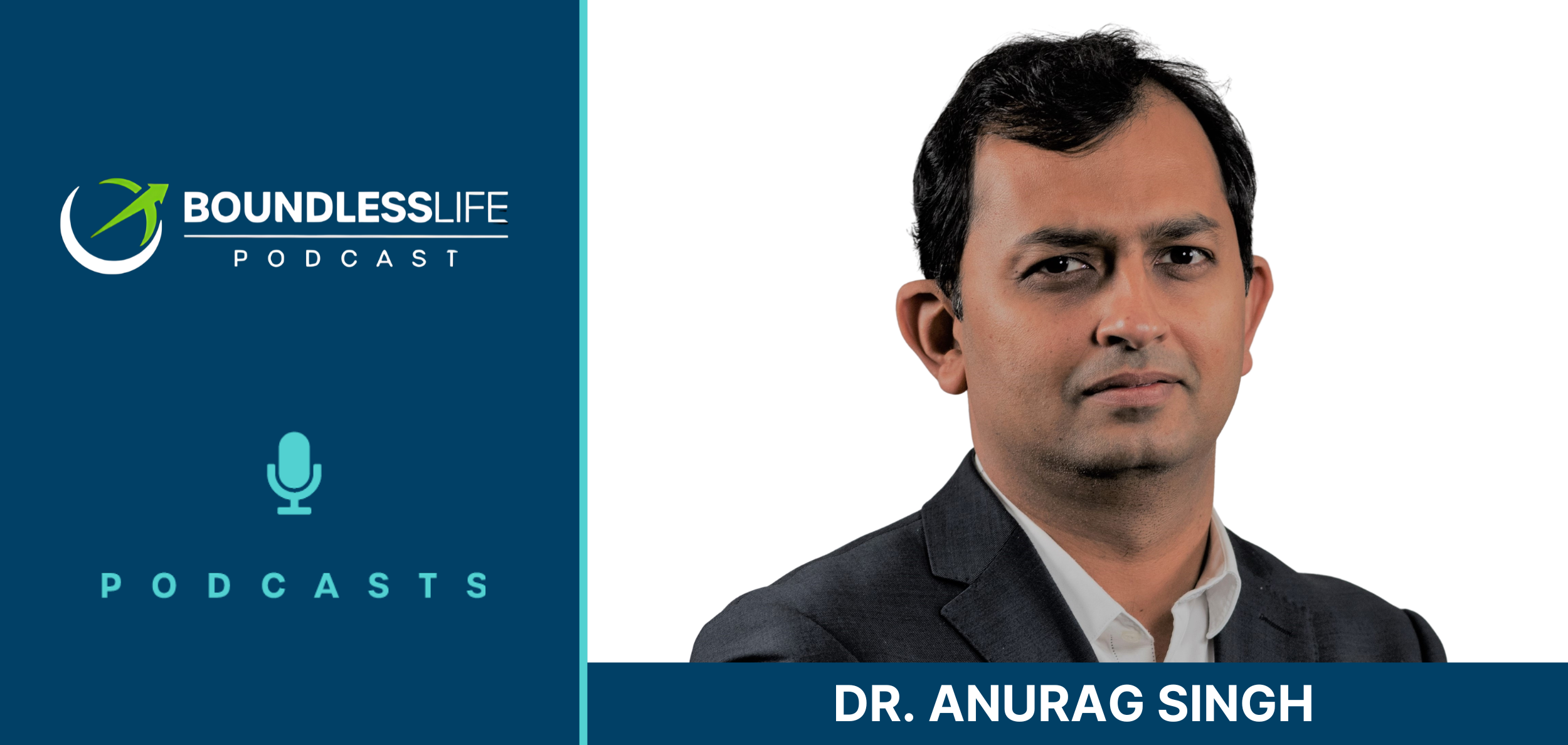
Boundless Life Podcast promotional graphic featuring a headshot of Dr. Anurag Singh, a smiling man in a dark shirt, against a light background with the podcast logo and microphone icon.

Listen on:

Reading time: 5 minutes

What I Discuss with Dr. Anurag Singh:

  • The discovery and main benefits of urolithin A, mitophagy activation, and its links to performance, endurance, and strength…07:04
  • How much urolithin A you get from diet versus supplements, why most people might need to supplement, and how Timeline's Mitopure delivers a precise clinical dose…10:08
  • The mechanisms of immune system aging, what inflammaging and immunosenescence mean, and how T cells and other immune cells age…12:47
  • Why immune decline sits at the center of aging, and how mitochondrial dysfunction and inflammaging are more interconnected than most people realize…18:51
  • The three ways to power up your mitochondria, and why urolithin A's role in mitophagy is the missing piece most people aren't addressing…21:43
  • How exercise, fasting, and nutrition stack with urolithin A supplementation, and why combining lifestyle interventions amplifies the impacts and mitochondrial benefits…27:51
  • Advanced blood profiling from the MitoImmune clinical trial revealing increased energy and improved age-predictive markers across key immune cells…31:07
  • Robust immune cell function may contribute to cancer resistance, and how urolithin A could support therapies targeting T cells and natural killer (NK) cells for cancer…33:59
  • Ongoing studies into urolithin A's effects on the brain and cognition, plus clinical trials targeting urolithin A's role in neuroprotection and cognitive aging…35:12
  • Best delivery systems, efficacy of different forms (gummies, powder, and softgels), and what clinical research shows about how the body absorbs and utilizes the supplement…41:45
  • Existing and in-development blood tests that help determine urolithin A status after supplementation or diet…44:12
  • The future of healthspan research, cognition, and the adaptogenic role of urolithin A…51:09

In this special “replay” episode with repeat guest Dr. Anurag Singh from Timeline Nutrition, you'll explore the science of cellular health and longevity, including why mitochondrial function affects everything from energy and muscle performance to cognitive clarity and how well you age. Dr. Singh explains how urolithin A, a postbiotic compound derived from foods like pomegranates and berries, activates mitophagy, the body's cellular clean-up system that clears out worn-out mitochondria and replaces them with new ones, and how clinical research shows it can support muscle strength, endurance, immune resilience, and cognitive function. You'll also hear how diet, gut health, exercise, sleep, and recovery work alongside compounds like urolithin A to build a stronger, more resilient physiology over time.

Dr. Singh is Chief Medical Officer at Timeline Nutrition, where he develops next-generation nutritional and skincare products targeting improvements in mitochondrial and cellular health. With an M.D. in internal medicine and a Ph.D. in immunology, his career spans senior roles at Nestlé and Nestlé Health Science as well as biotech startups like Amazentis/Timeline. He has authored more than 50 scientific articles, been awarded over 20 patents, and designed and led more than 50 randomized clinical trials. His decade of research on the postbiotic urolithin A (Mitopure®) and its health benefits has paved the way for multiple clinically validated products that bring cutting-edge longevity science directly to consumers.

For additional insights, you can check out my previous show with Dr. Singh here: Unveiling the Newly Studied Molecule That Supercharges Your Mitochondria, Turns Back the Clock on Aging, and Battles Sleep Deprivation, With Dr. Anurag Singh from Timeline Nutrition.

Episode Sponsors: 

BON CHARGE: BON CHARGE is a holistic wellness brand with a wide range of products that naturally address the issues of modern life. Their products can help you sleep better, perform better, recover faster, balance hormones, reduce inflammation, and so much more. Go to boncharge.com/GREENFIELD and use coupon code GREENFIELD to save 15%.

Troscriptions: Explore Troscriptions' revolutionary buccal troche delivery system that bypasses digestion to deliver pharmaceutical-grade, physician-formulated health optimization compounds directly through your cheek mucosa for faster onset and higher bioavailability than traditional supplements. Discover a completely new way to optimize your health at troscriptions.com/BEN or enter BEN at checkout for 10% off your first order.

Timeline: Give your cells new life with high-performance products powered by Mitopure, Timeline's powerful ingredient that unlocks a precise dose of the rare urolithin A molecule and promotes healthy aging. Mitopure now starts at $79 when you go to timeline.com/BEN.

Just Thrive: If you've accepted bloat, cravings, and sluggish digestion as normal, the Just Thrive Gut Essentials Bundle pairs a probiotic clinically proven to arrive 100% alive in your gut with Digestive Bitters, a blend of 12 science-backed herbs that support digestion and GLP-1 production. Visit justthrivehealth.com/BEN and save 20% with promo code BEN, or get a full refund if you don't notice a difference.

Young Goose: To experience the transformative power of Young Goose's cutting-edge skincare products, visit younggoose.com and use code BGF10 at checkout to enjoy a 10% discount on your order.

Manukora: You haven't tasted or seen honey like this before, so indulge and try some honey with superpowers from Manukora. If you head to manukora.com/ben or use code BEN, you'll automatically get $25 off your Starter Kit.

Episode Resources: 

People

Timeline Nutrition (use code BEN for 20% off)

Companies

Books

Studies & Research


Upcoming Events:

Ultimate Men Over 40 Health Summit | June 8–14, 2026

If you're a man over 40 looking to improve your strength, energy, health, hormones, recovery, longevity, and performance, I'm speaking at the Ultimate Men Over 40 Health Summit (June 8–14, 2026), a free 7-day virtual event featuring 100+ experts across 7 core pillars. I'll be presenting “Optimizing the Human Machine for 40 and Beyond” alongside some of the best minds in men's health today. You can register for free here now!

Health Optimisation Summit | September 11–13, 2026

I'm speaking at the Health Optimisation Summit in London (September 11–13, 2026) at the Business Design Centre. This isn't your average health conference. HOS unites the best minds in biohacking, longevity, nutrition, fitness, and medicine, with one goal: to actually make people healthier. With 35+ world-class speakers, 120+ cutting-edge brands, and 4,000 like-minded people all under one roof, it's two days that could genuinely change how you approach your health. Get your ticket here and use code BEN to save 10% off registration! 

Eudēmonia | November 5–8, 2026

I'm speaking at Eudēmonia (November 5–8, 2026, in West Palm Beach, FL), a prevention-focused, science-based health, well-being, and longevity summit designed to add years to your life and life to your years. Across 3 days and 15 venues, you'll experience 200+ talks from 120+ experts, 300 treatments, and 160+ brands covering everything from biohacking, longevity, and hormonal health to gut health, brain health, peptides, mobility, and more. I'll be leading a talk and a movement session alongside some of the brightest minds in health today. Use code BGREENFIELD-EUD-100 for $100 off when you register here!

The Boundless Couples Retreat | November 10–14, 2026

Ready to reconnect and recharge with your partner in paradise? Join the Greenfields at the stunning Prana Maya resort in Belize for the Boundless Couples Retreat, November 10–14, 2026. It's a five-day, all-inclusive escape designed to deepen your relationship, restore your vitality, and create memories that last a lifetime. From relaxation and adventure to intimate relationship coaching with Jessa and me, every detail is crafted to send you home with a stronger bond and a reinvigorated spirit. Spots are limited, so discover more and secure yours here today!

Stay tuned for future updates—and you can always keep up with my LIVE appearances by checking out bengreenfieldlife.com/calendar!

Do you have questions, thoughts, or feedback for Dr. Anurag Singh or me? Leave your comments below, and one of us will reply!

Ben Greenfield: My name is Ben Greenfield, and on this episode of The Boundless Life Podcast.

Dr. Anurag Singh: You know, when you take Urolithin A, not only are you hitting mitochondria in your skeletal muscle cells, but what we are discovering is that the mitochondria inside the immune cells, they get recharged and they kind of propel the immune system in a much better way.

Ben Greenfield: Welcome to The Boundless Life with me, your host Ben Greenfield. I'm a personal trainer, exercise physiologist, and nutritionist, and I'm passionate about helping you discover unparalleled levels of health, fitness, longevity, and beyond.

Ben Greenfield: There is one molecule that's kind of been taking the health, longevity, and mitochondrial world by storm lately. You may have heard of it before. You'll hear more about it in today's show in deep-diving detail. There's your alliteration for the day. My podcast is with Dr. Singh. We're gonna be talking about… drum roll, please. You're about to find out what it can do for boosting muscle and endurance and reversing immune aging. So, these show notes are going to be at BenGreenfieldLife.com/timeline-replay. That's BenGreenfieldLife.com/timeline-replay. Let's jump in. Dr. Singh, welcome back, man.

You might be familiar with my book, Boundless: Upgrade Your Brain, Optimize Your Body, and Defy Aging. It got a little out of control writing it. The original manuscript was over 1500 pages. I got it down to about 700 pages and released it about a year ago. The fully updated version of Boundless is kind of like the Bible of biohacking, a cookbook for everything you'd ever want: hormones, gut, digestion, and more. And I realize it's a little bit intimidating to pick up and read. So here's why I'm telling you all of this. If you would like the audiobook version of Boundless on Audible or elsewhere, to download and listen to at your convenience, in the gym, on your commute, on your hike, while you're cleaning your kitchen, in the bathtub, whenever you listen to an audiobook, and you want me to make that happen so you can have it in your ears wherever you go, go to BenGreenfieldLife.com/BoundlessAudio. Your opinion matters.

Dr. Anurag Singh: Pleasure, Ben. Absolute pleasure to be back on.

Ben Greenfield: Yeah, yeah. And in our last show, we talked a lot about the human performance-enhancing effects of Urolithin A, especially related to strength and endurance. I've been supplementing with it at about 500 to 1000 milligrams a day since I talked with you. Fortunately, it's a little tastier now. I'm kind of addicted to these little 250 milligram gummies that you guys make, these strawberry gummies. I just had them in my smoothie, but now it appears there is immunity data. I want to dive into that, but just for people who didn't hear our last podcast, what is the scope of the effects in terms of human performance when you look at something like Urolithin A?

Dr. Anurag Singh: Sure, so just as a reminder, you know, this is 15 years of very in-depth biotech research that basically discovered this postbiotic molecule. So Urolithin A is the molecule in Mitopure, sort of its branded name, and so 15 years in a snapshot, what we started finding was that this postbiotic Urolithin A activates a process within our bodies that slows down with aging, and this process is called mitophagy, which is basically cleaning up of damaged zombie mitochondria, similar to autophagy at the cell, right. And so, what happens with this sort of reactivation of mitophagy, if you're supplementing with Urolithin A or Mitopure, is that the damaged mitochondria get sort of recycled into healthier ones that basically produce more energy, and so instead of getting fatigued, instead of having poor endurance with aging, what we see across species and in multiple randomized trials now is that with regular supplementation for up to two to four months, we see in healthy adults — whether it's 40s, 50s, 60-year-olds, or even older adults — primarily a big benefit on improved muscle strength in the legs, and we see better endurance, so better peak VO2, better recovery from exercise, etc. So that's the scope and depth of the trials we had talked about.

Ben Greenfield: And just to interrupt real quick, was that at about 1000 milligrams?

Dr. Anurag Singh: Yeah, so we studied what is called dose-finding clinical studies, and we find that the sweet spot is between 500 milligrams to about a gram. The 500 milligram dose is where we start seeing the activation of mitophagy and the improvement in mitochondrial health and, with longer-term usage, improvements in strength, but the gram dose really takes it up a notch in terms of the benefits we start seeing. In addition to the strength benefits, we see better endurance, and we can talk about its impact on systemic aging and systemic organs, such as immune aging.

Ben Greenfield: Yeah, I want to talk about that. I know some people might be wondering, well, why would I need to pop a pill? Could you find this stuff in nature? I believe I've heard before pomegranates would be one source. Describe to me how much is in food sources, especially comparative to this 1000 milligram that you're finding to have the most effects on human performance.

Dr. Anurag Singh: Yeah, yeah, so we did this clinical study, and we've looked at Italians, French, Canadians, Americans, even my country of birth, India, and the exposure to this molecule from diet is very variable. So French and Italians, a lot of Mediterranean diet, fermented foods — we see about one in three adults are already getting it from diet. Whether they're getting enough, that really depends. If you're eating a bowl of berries or a bowl of nuts, or for example, 30 pomegranates, which is probably the equivalent of juicing them, it will give you 500 milligrams equivalent.

Ben Greenfield: Okay, so 1000 milligrams, basically you're juicing 60 pomegranates.

Dr. Anurag Singh: Yeah, 60, yeah, you'll need to drink about 10 to 12 glasses of pomegranate juice, and that'll give you a lot of sugar as well.

Ben Greenfield: Okay, yeah, it's carpal tunnel syndrome, and a lot of sugar, yeah.

Dr. Anurag Singh: Yeah, true. So, what we see is in the sort of healthy Mediterranean diet cultures, about one in three; in Canada and the US, we see one in 10, so only 10–12% of healthy adults who think they're eating right, or whatever — about one out of 10 have circulating levels of Urolithin A, which could be giving health benefits. So it's really two-pronged: one, you need to be eating, as we discussed, enough pomegranates, berries, or nuts, which have the precursors that our gut microbiome will use to generate Urolithin A; or you need to have the right gut microbiome — having now studied my home country, a lot of it is seeded early on in life, and the rapid antibiotic usage in some of these countries takes away a lot of this beneficial gut microbiome. So what we see is very variable responses, and yeah, not everybody is getting exposed to it, so we need to supplement, and that's why we created a supplement.

Ben Greenfield: Okay, got it. Now I want to address the elephant in the room here, just because I think it's important people understand immune aging before we talk about Urolithin A and what it has to do with that. So, how do you describe immune aging? You know, I hear terms like inflammaging and immune senescence and immune cell exhaustion. Can you walk us through what all these things actually mean?

Dr. Anurag Singh: Yeah, so I'm a trained immunologist. After my MD, I did further training in immunology, so immune aging to me is everything you just mentioned. Immune aging is sort of the sequela, and there are three key hallmarks to this sort of phenomenon. One is inflammation, which means as we get older our cells are getting fatigued and damaged, and these sort of damaged zombie-like cells become triggers of inflammation in our cells and organs and body, and that kind of keeps increasing as we age. So, from our 30s, 40s to our 50s, 60s, our bodies, as my professor would say, are swimming in a sea or soup of these soluble factors that we call immune cytokines, and these are basically damaging our organs. So that is inflammation in a broad context. Then there are these terms like immunosenescence, which really means your immune system just does not have the ability to be what it was in our 20s and 30s, and that's primarily because we have this organ called the thymus, you know, up right here, and around our 20s it starts involuting, meaning shrinking. As it shrinks — and that's the organ that makes a lot of immune cells — the most common immune cells it makes are something called T cells. Immunologists are not very creative people; they just thought about a few cells and call them A, B, C, D all the way to T. And so these are T cells, which basically — think of them as the elite forces of the army of the immune system, and they are patrolling all the organs for when the next big threat is coming, whether it's autoimmunity or an infection or even cancer. And so these kind of disappear and become very fatigued, and that's the phenomenon called immunosenescence. And then there's a third term called immune resilience, or immune fatigue. What happens is that these immune cells — T cells, B cells, all the sort of alphabetical names that come with these immune cells — they have mitochondria that over time get fatigued, and they just don't have enough metabolic capacity to keep fighting cancer, keep fighting infection, and so that's sort of all encompassed in immune aging.

Ben Greenfield: Okay, so when we talk about longevity and anti-aging — and I'm not one of those guys who endorses the idea of just trying to live no matter what to 200 years old, I'm more in the camp of live as healthy as possible, as close as possible to the day that you die — but when we talk about the immune system, how much of an impact does that actually have on longevity, like declining immune health? You know, because you hear about declining mitochondrial health, or declining brain health. How big of an impact does declining immune health have on longevity?

Dr. Anurag Singh: So, I mean, it's probably been talked about in your podcast before, this whole idea of hallmarks of aging, right? So, biological hallmarks of aging are these very interconnected biological pathways that all decline together with aging, and I believe there are two or three key ones among these — there are 12 of them now. You know, they range from our genes getting altered, or the environment impacting our genes, or poor nutrient absorption in our cells, but the two main ones I believe are mitochondrial dysfunction and chronic inflammation — or inflammaging, or immune aging — and I think they're really linked together very closely. And when I say linked together very closely, I mean I personally believe that immune aging is sort of the central piece, and that's the trigger for a lot of these hallmarks of aging. So, if you slow down immune aging — immune cells are in all organs, and if they go problematic, then you're impacting what I call the organ rate of aging, or cellular aging. We are finding evidence that things like changing exercise regimens, or diet, or even mitochondrial interventions actually alter these two key hallmarks, and they're very closely linked: mitochondrial health and immune health.

Ben Greenfield: So, why is it that — I mean, you say that immune aging and mitochondrial health are kind of very much related, but why is that? What's the link between the two?

Dr. Anurag Singh: Yeah, so you know, as I was starting to mention, the immune system, the way I see it, is almost like a policeman of the entire body. All the organs — the immune cells are everywhere. So, when something goes wrong in a bigger picture, who comes in? The police come in, right. And so, as we age, when the cells in our organs are not optimally functioning, the immune cells kind of come in to survey if everything's going all right, if all the organelles are intact, etc., inside the cells; and the neighboring cells, they're talking to each other, and so they're almost like a surveillance program, this immune system. And what happens is, as soon as the cellular health declines — okay, so as soon as all the different hallmarks start declining — the immune system is the first to put its hand up and say, "Hey, there's something going wrong," and it starts to survey deeper, and at a certain point it cannot, because it just gets overwhelmed. And so I believe the immune system is like the sentinel of our health-span decline, and as soon as we hit our 30s, 40s, and the first wave of biological changes happens, the immune system is the first one that fires that shot and says "problem." And the connection between mitochondrial health and immune cells and immune health — there's a field we call immune metabolism. So the policemen, in this case the immune cells, need energy to be able to survey all the organs, the key metabolic organs that decline with aging, and so they run out of gas, they run out of fuel, because mitochondria power them up. And so one of the fixes we think is by sort of re-energizing or rewiring the immune system by boosting the mitochondria, and that's the connection.

Ben Greenfield: Okay, so in the case of Urolithin A, then, does it have more of an impact on the mitochondria, or is it working on some other element of the immune system?

Dr. Anurag Singh: Yeah, so Urolithin A, from the time you take it orally, will hit mitochondrial health in every cell that has mitochondria, and all our cells, except the red blood cells, have mitochondria. Now, the more metabolic ones, like the neurons or the skeletal muscle cells, get hit the hardest. So, the things that happen most frequently with aging are problems getting up from a chair, problems walking, and that's mostly because your muscle cells do not have the right energy source — mitochondria — able to power them up. Same with neurons: the first thing that will happen is a decline in cognitive health, and equally things like Alzheimer's. I believe that when you take Urolithin A, not only are you hitting mitochondria in your skeletal muscle cells, but theoretically in your neuron cells, and you can even target brain health via that. But what we are discovering is that the mitochondria inside the immune cells, these T cells and B cells, get recharged and they kind of propel the immune system to start surveillance in a much better way, and so that kind of links to aging and mitochondrial health.

Ben Greenfield: Okay, got it. Let's get into the mechanism of action here. You use words like hitting the mitochondria, recharging the cell, but in terms of a little bit more of a scientific explanation of what that means — hitting, recharging, etc. — what is Urolithin A doing to the mitochondria?

Dr. Anurag Singh: Yeah, so you can power up your mitochondria three ways today, or at least three known ways to scientists and doctors. One is a process we call mitochondrial biogenesis. So this is the sort of pathway — if you're doing exercise, it's a well-known way to induce mitochondrial biogenesis. It means just create new healthy mitochondria that create more new energy, more healthier energy, and you power your cells up. That's one way. And there are compounds like NAD modulators, things like resveratrol. These are all known mitochondrial biogenesis agents. The second bucket is: you have your healthy pool of mitochondria. You know, I see you're exercising, so you're already inducing biogenesis, but how do you keep these healthy mitochondria up and running and become more efficient? And those are things like creatine, CoQ10. Now, what Urolithin A / Mitopure is doing is hitting what I started to describe — a process called mitophagy, which is basically clearing damaged zombie mitochondria. So as we are aging, our immune cells are aging, their mitochondria get more and more damaged because they just can't keep up with, for example, all the viruses and bacteria — the onslaught that happens with aging and/or cancer-type mutations that start happening — and so they need to be recycled. And that's what we are seeing: when we take the immune cells, these T cells, out from people who are aging, or 78 years old, we see exhaustion in these immune cells, and what that means is basically the mitochondria are not able to produce properly the energy currency, which is ATP. When we give them Mitopure — whether in our randomized trials, which we can talk about, or in cell culture — we see more PGC-1α, or biomarkers linked to better mitochondrial health, starting to show up in these immune cells, and when we put, for example, these immune cells with bacteria, they kill them better. So that's the sort of biology that we are seeing happen, which is really mitophagy. We had started with muscle cells, and we focused on endurance and performance and strength benefits, but what we are actually discovering now as a sort of additional benefit is that you lower inflammation, you recharge your immune system, and even in athletes — for example, athletes are well known to have a lot of overtraining-induced inflammation — we're seeing that get blunted, so that's the connection.

Ben Greenfield: Okay, I've actually never heard it explained that way before. So, you have mitophagy — that's one of the three things you said, that's the last one that Urolithin A focuses on, like the mitochondrial cleanup. You said mitochondrial biogenesis, I think you said that one's more triggered by things like exercise.

Dr. Anurag Singh: Yeah, exercise, fasting — okay, known modulators, yeah.

Ben Greenfield: Okay. And what was the third one?

Dr. Anurag Singh: The mitochondrial efficiency. So this process — you know, you always have in your cells this yin and yang of healthy mitochondria and damaged mitochondria, and this sort of balance in between, and that's always going on. Even when we're healthy and young, we always have this process continuing, but what happens with aging is mitophagy slows down, biogenesis slows down, and so you're basically shifting the balance towards all damaged mitochondria. And so what we see is that mitophagy is the actual trigger to clean out that waste — almost like the Pac-Man of cleaning shows up and cleans the waste — and now that is recycled and triaged and put back as the building blocks of new healthy mitochondria, which is biogenesis in many ways.

Ben Greenfield: Okay, so like in an ideal scenario, you're exercising, you're fasting, you're doing things for mitochondrial biogenesis, you're getting some fuel in with things like NAD, creatine, healthy diet, etc. for the mitochondrial efficiency, and then for the mitophagy, you're introducing a component like Urolithin A.

Dr. Anurag Singh: Yeah, and actually, I described it one after the other, but I think — think of a little town, right, where you have x amount of buildings you can have. Unless you clean the damaged buildings, or the damaged portion, out, you can't really build new stuff, and that's what mitophagy or autophagy is. You have to clean out the damaged cell, damaged cellular machinery, and that again gives way to real estate, and now you can do the building blocks. So we have thought about — we have combined Urolithin A, we've tested it in different models of aging, where we have combined exercise with Urolithin A, and we get a better, augmented response. We've combined calorie restriction with Urolithin A supplementation, and we've got a better response. We've actually done now two or three randomized trials in athletes, where people are training, and they're finding in these different trials — some of them are published, some are not — that Urolithin A actually augments even the performance of exercise, or the impact of exercise.

Ben Greenfield: Yeah, that's actually what I wanted to ask you about, because, like, three months ago you guys sent me the new RCT, I think it's called Mito Immune. That's what got me interested in this whole topic of mitochondrial immune aging in the first place. Tell me about this RCT.

Dr. Anurag Singh: Yeah, so this is a long collaboration with two of the pioneers in the field of studying immune aging. One is Professor Eric Gordon [name to verify], who's the CEO of the Buck Institute for Research on Aging, and has been studying immune health and the impact of immune aging on healthspan for the last 35 years; and the other is actually a cancer researcher who many years back came to us and basically, in different models of cancer, what he saw was that the immune system was failing, and it was failing in part because of what I was describing — surveilling the cancer-prone cells — because of mitophagy issues. So, mitophagy declined and cancer incidence in these models went up. So he came to us, and he said, "You've published" — and at that time we had just published that Urolithin A was a mitophagy agent and enhanced muscle health — but he was very interested in using it as a way to sort of recharge the immune system in the fight against cancer in these models. And so he published, actually, two or three years back, when we first spoke, in a very prestigious journal — but it was an animal study in a model of colorectal cancer. When he supplemented with Urolithin A, he saw basically a better immune system and more mitochondria in the immune cells, that would then lead to sort of better cancer survival in these models. And so we said, well, we don't want to do cancer yet. Let's start and see what happens with this molecule in healthy middle-aged adults, because we had seen the effects on muscle in middle-aged adults. So we ran a trial where we selected from hundreds of people, about 50–60 years of age — they were a bit overweight, some of them were exercising, some were sedentary — and we randomized them into two groups. Another way top-tier clinical trials are done is you have a control group, a placebo group. So we took 25 participants and gave them placebo, and 25 participants we put on a gram of Urolithin A / Mitopure, and we did serial blood draws. So before they started the supplementation, we took their blood and we ran something called complete immune profiling. Now this is not what your standard medical doctor will do, but this is a technology that, from a small amount of blood, lets me profile all your immune cells in your body — and there are trillions of them — and I can see the immune-age score of all these cells. And so this professor we are collaborating with, the CEO of the Buck Institute for Research on Aging [Professor Rotta — name to verify], he profiled them, and what we saw was really shocking: we saw the 50-year-olds' immune cells that were fatiguing, that were inflamed, almost reverse back to probably what a 30–40-year-old person's immune system would look like.

Ben Greenfield: And in these — when you see immune cells, these are the T cells.

Dr. Anurag Singh: Yeah, so when you do a blood draw, you get total blood cells, and you can take the red blood cells out, and what you're left with is what we call white blood cells, or leukocytes. Now, the main immune cells in our body are the T cells. They're about 10 to 20% of your immune cells. Then there are the B cells, which make antibodies, and these are another 20–30%. And then there are cells called neutrophils, which are — they're not the police, but they are kind of the first responders, and so they give the first shout out to these immune cells. And there's something called dendritic cells, which are basically immune cells but with tentacles, and they are always surveilling whatever infection or cancer-prone cells are loitering around. So we actually profiled all of them, and amazingly the mitochondria in all of them went up, which means now the immune system has more energy to function. But what struck us was two kinds of cells that are needed to fight cancers and that decline very fast in the aging process. These are the T cells — specifically what we call the cytotoxic T cells — they fight cancer, they fight flu, they fight any virus that you have growing up. You have lots of them, and as you age, you kind of lose all of them, and so we saw them kind of coming back, almost like repopulating in the body, and then the inflammation was much subdued in these people. So these are the three key findings from this trial.

Ben Greenfield: You know, this just makes me think about this. A lot of people, whether for cancer or — I mean, I've done this just as almost like a longevity play — they'll go overseas for killer cell infusions. Have you heard of this?

Dr. Anurag Singh: Yeah, of course. So, you know, I didn't want to get too nerdy, but we look at something called natural killer cells, which is abbreviated to NK cells. So the two main cells — if your body just loses them, your chance of getting cancer is like 1000-fold higher — are these cytotoxic T cells and the killer cells. The killer cells are about 1% to 2% in your body, and we see their mitochondria also getting recharged, and we see an increase in these NK cells, the natural killer cells, and their cytotoxicity. So, as an immunologist, I think these are the two main cells you have. And so, of course, what you are seeing today, if you go all the way to cancer treatment, is two kinds of therapies, as you were saying: NK cell or killer cell infusions, or something called CAR-T cell infusion, which is basically where you take a T cell and you artificially put the cancer signal on it, and then you inject it into the cancer patient, and because now they've seen it in a dish, they'll multiply and they'll kill off the cancer. So, these are the two main cells we're seeing the effects on.

Ben Greenfield: Yeah, Tony Robbins and Peter Diamandis described that CAR-T cell infusion, or protocol, when I interviewed them about their book, Life Force. It's fascinating, but I guess where my mind is going now is, if that were not doable for somebody — whether financially, logistically, or otherwise — they could potentially at least support something like NK cells with Urolithin A.

Dr. Anurag Singh: Yeah, and so the way I see it is — first we found the impact on muscle health, now we're finding the impact on immune health. I think the real missing piece of the puzzle is the impact Urolithin A has on cognitive health, which a lot of groups have started to publish in different models of neurocognitive decline with aging. And I see these three as the key organs — muscle, immune, brain — as the three key organs that you can hit to improve health span. And Peter Diamandis, you mentioned — he has a $100 million XPRIZE dedicated to this: to find a solution that simultaneously improves muscle health, immune health, and cognitive health by 10 years.

Ben Greenfield: Oh, I didn't realize those are the three that he's combined. Interesting.

Dr. Anurag Singh: Yeah, so in a randomized clinical trial, you need to show improvements in all three organ systems, and we were actually one of the selected finalists of this competition, which is now engaging in a long-term trial to see the effect of Mitopure long-term on all these three organs. And so what we are actually describing — this Mito Immune trial — is just a part of the puzzle, which is how does it work in the immune system. And it doesn't work that differently from what we are seeing on muscle cells. It activates mitophagy, clears the damaged mitochondria out, the cells have more fuel, they function better, whether it's muscle or immune. And I hope in the future, when we are now conducting our cognition trials, we see the same in the brain cells.

Ben Greenfield: Okay, and I might have missed it, you might have said it, but for the Mito Immune trial, for the T cell piece, what was the dosage?

Dr. Anurag Singh: It's a gram. So, you know, sometimes it's serendipity. In all the three trials we did in the older adult population — the first trials, which I came to your podcast two years or two and a half years back to discuss — one trial was done in 70–80-year-olds, one trial was done in 40-to-60-year-olds, and one trial was done in athletes. In all these three trials, we took the blood, and we looked in the blood and plasma at what was changing, and you know, of course, strength was better, endurance was better. But there was one biomarker that moved across in every trial, and it moved at the one-gram dose, and that was C-reactive protein — which, you know, to a medical doctor, they've heard about it, they track it regularly as a marker of whole-body inflammation. But to me, what it means is that your body is inflamed, it's stressed; now, that could be because of fatigue, it could be because of cellular damage. I think these are all, as I mentioned, not hallmarks that exist in isolation. It's like a metro station — and I believe there are multiple metro stations — and the common big one is the immune system, and that's where they all come in. And that's how I see the whole of cellular health, and how Urolithin A might work: it gets the immune cells surveilling and policing better. Everybody else stays in check, the cells are behaving with each other, the problematic cancer cells stay away, and so that has a bigger benefit on the whole body as an impact. And that's where I think the immune cells — the Mito Immune story — is so cool, but it's at a gram.

Ben Greenfield: Yeah, yeah. Did you guys ever try, like, a dose response to like one and a half grams, two grams? Do the positive effects keep improving?

Dr. Anurag Singh: [Long story short:] So the way we came to this dose was we actually brought in a cohort of older adults and we gave them 250 milligrams. We saw Mitopure come in the blood, and as we discussed, you needed to drink three, four glasses of pomegranate juice, and that was the equivalent, but it took a while to see the effects on mitochondrial turnover and biogenesis markers like PGC-1α. So we went a little higher, we went to 500 milligrams in four weeks. When we did the blood work, when we took the muscle biopsies, we saw the mitochondrial machinery just turned on, and there was more healthy mitochondria, there was more energy. And so we went again, a third time around, with a gram, and we saw a beautiful increase in those responses. But when we jacked it up to two grams, we did not see the linearity of the response. So, now, what does that mean? It means that the body can only absorb a certain amount at a given time. So, I haven't done 500 split into two doses in a day for a gram total, or I haven't done a gram in the morning and a gram in the evening to keep up the response.

Ben Greenfield: I was gonna say, like, spreading out the dosage to see if you—

Dr. Anurag Singh: —can afford. We haven't done that, but to answer your question — did we increase beyond a gram? We did, but the body has to absorb and then take away whatever it doesn't need, and that response sort of plateaued. So that's what I think, but, you know, back to what we were just saying — or what you were saying — maybe we split out the dose, and we will get better results.

Ben Greenfield: Yeah, yeah, or your next product needs to be the Urolithin A IV or patch.

Dr. Anurag Singh: Yeah, I know that's getting a lot of traction in the vitamin infusions and the NAD therapies.

Ben Greenfield: I mean, in all seriousness, could you do that with Urolithin A? Like, is it something you could get intravenously?

Dr. Anurag Singh: Yeah, so it will only be soluble in a few matrices. It likes MCTs a lot, so that's why we put it in these soft gels. It likes good fat, which is MCTs; it likes protein or things like this to mix with. So for IV, you would need a sterile IV, and you'd need to mix it in water, and I think that's one of the limitations. But there are workarounds that we're thinking about right now; it's just what would be the regulatory status of an IV infusion. It's probably like a drug.

Ben Greenfield: Might have implications, though, for the whole cancer research, T cell piece.

Dr. Anurag Singh: Yeah, so there's a fascinating publication — it doesn't come from us — and they actually screened about 4000 medical drugs and 4000 more natural compounds, sort of supplements. They only found two that could recharge CAR-T cells and induce better tumor responses. There's a study that just came out a few weeks back. They haven't done the trial yet, but it's all done in a dish, and the two compounds that they found — one, of course, on the supplement side, is Urolithin A, and on the medicine side is a GLP-1, which is tirzepatide. So they actually found — and it makes sense — both are hitting metabolism, right? Tirzepatide, and it's not really…

Ben Greenfield: Yeah, you mean tirzepatide?

Dr. Anurag Singh: Yeah, the Ozempic kind of drugs. So they have an impact on metabolism like crazy. People haven't really gone into the details of the cellular biology, but they know, and they've done these trials where people rapidly lose weight and fat. And so I think there is — and this is a new feature — the immense metabolic shift causes the immune system to wake up. And we can go a bit nerdy here: the shift of fuel from using glucose to more burning fat has a kind of waking-up effect, and that's what might be happening. When we look at muscle cells, it just uses fatty acids more than it would use glucose, and that shift kind of causes a rejuvenation effect, and it's in every cell type.

Ben Greenfield: Yeah, that's interesting too, considering it combines well with MCT oil, which is going to push you into a little bit more ketone utilization as well. Yeah.

Dr. Anurag Singh: But fascinating idea. I mean, we haven't thought about an IV formulation yet, but probably. The question is the regulatory pathway.

Ben Greenfield: Obviously not as palatable either for a direct-to-consumer product. So, a few logistical questions. You describe how you have the powder, you have a soft gel, and now you have the gummies — that's been my preferred delivery mechanism. Any advantage of one versus the other? Like, have you guys compared them as far as absorption?

Dr. Anurag Singh: Right, you know, I am an evidence-based person, and I wouldn't let our commercial marketing friends put out any product until I have clinically tested them. So we use something called bioequivalence clinical testing, and what that means is you take 12 to 15 healthy adults in one group, 12 to 15 healthy adults in a second group, and a third group, potentially. And we give one group the powder containing 500 milligrams of Urolithin A, which is one sachet. And the second group, we give them two soft gels, each soft gel being 250 milligrams for a total dose of 500. And then we have these gummies, each gummy being 250 milligrams, and we give them two, so they get 500 as well. And then we let these people take the product, and then I bleed them — sounds bad, I know — but basically I take a small amount of blood over time, and I look at the absorption of Urolithin A in the blood, and I want to see that the kinetics are identical. And that's what it is: the powder, the gummy, and the soft gel are all identical, and they all give, you know, within a plus-or-minus 10 to 20% range, but we get very good data in all of them, and that's what convinces me. And then I'm also doing a thorough blood biochemistry and safety profile of all formats, and that's how we call them bioequivalent, meaning one product is replaceable with the other, and you can kind of mix and match, and they'll give you the same impact.

Ben Greenfield: Another practical question. Let's say I want to test my levels. I seem to recall at one point you guys had sent me a blood test. I've seen Urolithin A on stool panels before as well. If someone wanted the gold-standard measurement for Urolithin A, what do you recommend?

Dr. Anurag Singh: So there are some companies that are starting to tell you whether or not you may have a certain group of bacteria that are involved in, let's say, Urolithin A transformation — if you're healthy and you're eating a bowl of berries and nuts every day, or drinking, as we discussed, six to 10 glasses of juice every day. The second thing is, nobody yet has a great test to tell you the precise levels of Urolithin A in blood, urine, or stool. We have developed a blood-based test, which uses a finger prick, so with a few drops of blood that you blot on a small filter paper. It's a test — it's not yet a commercial test. We are still testing its reproducibility in different subjects over time, and so this is a trial. I mean, if you want, or your listeners want, they can sign up, and I can send the link to this clinical study. You'll get a kit, you'll get a glass of juice, you drink the juice, and you can do the finger prick. It will tell you whether you make Urolithin A or not, and if you do, what levels; and then you'll also get one shot of the Urolithin A powder, and you mix it in your smoothie, and you drink it the next day, and you'll be able to see the impact it has. But we are on that path; it just requires a bit more clinical validation, and I'm pretty confident we will have a test soon. I mean, we have — we're just testing it in a clinical study, not commercially.

Ben Greenfield: So, it sounds to me like you can see the test results acutely, meaning as soon as I take it, I could see an increase in my blood.

Dr. Anurag Singh: No, you'll have to send the filter card with your blood spot.

Ben Greenfield: What I mean is acutely after dosing, you would see an increase.

Dr. Anurag Singh: Of course. You'll see the full curve.

Ben Greenfield: Yeah, earlier you were saying you still see… gosh, I don't remember if you said two to four weeks or two to four months for some of the effects on the immune system, strength, endurance, et cetera. Is that correct? They kind of have to dose over time to see the actual mitochondrial effects, versus just the acute levels in the bloodstream.

Dr. Anurag Singh: So the acute effects will be just the absorption effects, right? So you take one shot, you see your blood levels are here, you take it, your blood levels go this high. And then — this is not a magic pill that in one or two shots suddenly reverses years and years of cellular damage. I think the turnover and the impact on mitochondria takes about two to four weeks to have an impact, and that's when we start picking up all these changes in immune cells or muscle cells when we do a biopsy. Longer out, two to four months, is when we start seeing whole-body effects that, as we discussed, improve strength and endurance. What I really want to do now is go longer, and that's the health-span study that we are doing now — beyond just the muscle effect, beyond just the immune effect, beyond just the mitochondrial effect. What is the long-term effect? I've heard a lot of people on it say, "Oh, I feel within a few days more energy and better recovery from exercise," and that may be possible. It's just that we haven't done the trials yet. So, okay, yeah.

Ben Greenfield: All right. Gosh, I would be remiss to have an immune expert on the podcast and not ask what might be a stupid question, but I'm gonna ask it anyway. So, as your immune system gets stronger, would you tend to see — from an effect standpoint — would you tend to get sick less or get sick more? Like, does a stronger immune system mean you have better sentinels, and you get a fever and a flu-like reaction, congestion, etc. more readily as you get better at fighting something off? Or would it mean you're more resistant to infection?

Dr. Anurag Singh: Yeah, so the immune system itself is a double-edged sword, so you're correct there. If you have too weak an immune system, you're going to be sick all the time, you're gonna have a lot of runny nose, and you see that with kids. You know, kids, having their immune systems — I remember my little one, when she was going to daycare, every week she was sick, she would bring it home; the immune system's still getting educated.

Ben Greenfield: Same thing with our kids. You know, we had the little bulb to get the boogers out of their nose, and the constant congestion.

Dr. Anurag Singh: Yeah, so it's still learning, it's still learning what's out there. And, you know, same with old people. I always say the immune system is probably the same when you're 75–80 years old as what it was in the first year of life — it's lost its ability to recognize or surveil, so it's weak, and if you stimulate it, it will now become better at surveillance. But the immune system, as I say, is a double-edged sword. In certain cases, it may overreact, and if it triggers an overreaction, then it could induce things we call autoimmunity, as an immunologist — which means it gets so wired in that it even recognizes some parts of your own body as foreign, and so that's when it will trigger.

Ben Greenfield: That's where you'd see things like lupus, MS, myasthenia gravis, like—

Dr. Anurag Singh: —arthritis. These are some of the common ones. Now, both are two real extremes of the immune system, and what I believe is — you know, 25–30 years back, when I was training as an immunologist, my professor, who not only looked like Santa Claus but actually was in behavior too, he would always tell me, "Anurag, the immune system just needs to be in what we call a homeostatic state." And that word, homeostasis — if you can find compounds that can maintain the balance of the immune system… And so I see Urolithin A — and we talked about it quite a lot as an immune modulator — when it's weak, the immune system is fatiguing, and it kind of shifts the balance back to the middle; and when, for example — there are many publications coming out on models of multiple sclerosis, and a fascinating paper on inflammatory bowel disease with Urolithin A — when it goes into auto-reactive mode, it kind of brings it back in check. So, you're talking about police and elite forces a lot — it kind of keeps the police in check, that's the word. So it's like an immune modulator, similar to how reishi or rhodiola adaptogens might help to modulate stress…

Ben Greenfield: …by increasing — or decreasing cortisol. Urolithin A is almost like a little bit adaptogenic regarding the ecosystem.

Dr. Anurag Singh: Yeah.

Ben Greenfield: Okay. Interesting. This is fascinating, and a lot here in terms of the science, and the previous chat that we had — I guess it was a couple years ago. Time flies. I'm going to link to that at BenGreenfieldLife.com/timeline-replay, but in the meantime, Dr. Singh, is there any other research, anything else that people should know at this point about Urolithin A?

Dr. Anurag Singh: Well, they should know that there's a lot of upcoming research, and we started to get into it on brain health and cognitive decline. And I really think, as a trialist, as a physician-scientist — again, there is no one magic pill, so the way I see it is there'll be more and more trials with multi-pronged interventions. We'll be doing trials with exercise, with caloric restriction, with what is the additive effect of Urolithin A. But I think the research that really excites me — and we talked about it — is this sort of health-span research. How long can I, you know, being on this particular intervention that is hitting the two central hallmarks — can I be 80 years old but with this behave like a 70-year-old? And that's really where the research is going. We are partnering with a company called TruDiagnostic, where we're looking at immune cells at an epigenetic level to see what this immune age is, and we are seeing in all the clocks that we are having an effect — things like PhenoAge and GrimAge. We are reversing this just in four weeks, so maybe longer, perhaps. And, you know — you'd mentioned Peter Diamandis — his vision is not too far. So that's where I see it, but I think cognition and showing benefits in cognition is really key, and that's where we are headed.

Ben Greenfield: Well, in the meantime, if you're listening in and you want to try the gel caps, the powder — the gummies are my go-to for a morning in my smoothie. They taste good, not too sweet, but they're actually fantastic, and strawberry flavored. So that's really got me on the 1000 milligrams a day bandwagon. I'll link to all that at BenGreenfieldLife.com/timeline-replay, where you can leave your questions, your comments, your feedback, and let Dr. Singh and me know what you think, and any other questions that you have. Dr. Singh, thank you so much for doing this, and for the research that you're putting into this fascinating little molecule.

Dr. Anurag Singh: Perfect. Always a pleasure to be back, and happy to come back when we have more data.

Ben Greenfield: All right, thanks for listening, everybody. To discover even more tips, tricks, hacks, and content to become the most complete, boundless version of you, visit BenGreenfieldLife.com. In compliance with the FTC guidelines, please assume the following about links and posts on this site: most of the links going to products are affiliate links, of which I receive a small commission from sales of certain items, but the price is the same for you, and sometimes I even get to share a unique and somewhat significant discount with you. In some cases, I might also be an investor in a company I mention. I'm the founder, for example, of Kion LLC, the makers of Kion-branded supplements and products, which I talk about quite a bit. Regardless of the relationship, if I post or talk about an affiliate link to a product, it is indeed something I personally use, support, and with full authenticity and transparency recommend in good conscience. I personally vet each and every product that I talk about; my first priority is providing valuable information and resources to you that help you positively optimize your mind, body, and spirit, and I'll only ever link to products or resources, affiliate or otherwise, that fit within this purpose. So, there's your fancy legal disclaimer.

Ben Greenfield

Ben Greenfield is a health consultant, speaker, and New York Times bestselling author of a wide variety of books.

What's Blocking You From Living Boundless?

Thoughts on Could *This* Molecule Be the KEY To Reversing Immune Aging & “Supercharging” Your Mitochondria? With Dr. Anurag Singh

Leave a Reply

Your email address will not be published. Required fields are marked *

Related Podcasts

Philipp & Ian WP

You Wouldn’t Believe That “Quantum Energy” Works Until You Hear This & See THESE Photos.

Listen on: Reading time: 8 minutes What I Discuss with Philipp Samor von Holtzendorff-Fehling & Ian Mitchell: How Philipp uses...

Boundless Life Podcast promotional graphic featuring a headshot of Lucy Goff, a smiling woman with blonde hair wearing a black blazer, against a light background with the podcast logo and microphone icon.

Light Engineering That Makes You Look YOUNGER (& Beauty Lasers Vs Face Masks!) With LYMA’s Lucy Goff

Listen on: Reading time: 4 minutes What I Discuss with Lucy Goff: How a near-fatal case of septicemia after childbirth...

Boundless Life Podcast promotional graphic featuring a headshot of Mickey Trescott, a smiling woman with short curly hair wearing a navy sleeveless top, against a light background with the podcast logo and microphone icon.

Gas, Bloating, Fatigue & Other Post-Meal Issues? Discover The NEW Autoimmune Protocol With Mickey Trescott

Listen on: Reading time: 5 minutes What I Discuss with Mickey Trescott: How Hashimoto’s disease and celiac left Mickey bedridden...