Home » Podcast » Are “Poop Pills” The Ultimate Bowel Biohack Of The Future? The Science of Fecal Microbiota Transplants (FMT) with Jason Klop.

Are “Poop Pills” The Ultimate Bowel Biohack Of The Future? The Science of Fecal Microbiota Transplants (FMT) with Jason Klop.

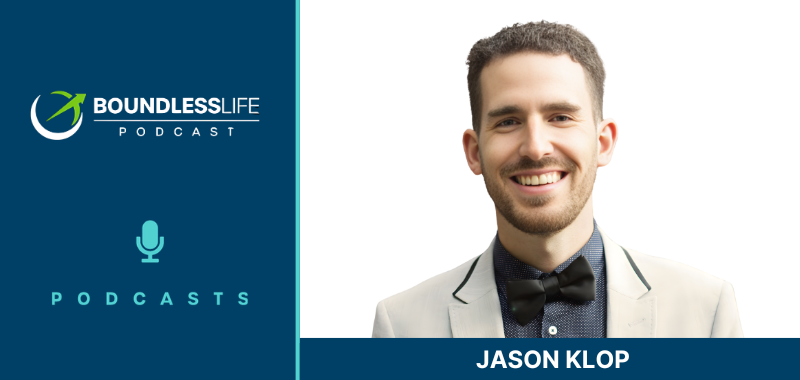
Boundless Life Podcast guest graphic featuring Jason Klop. The left side has a dark navy blue background displaying the Boundless Life Podcast logo and a teal microphone icon labeled "Podcasts" beneath it. The right side shows a professional headshot of Jason Klop, a young man with short dark hair and a warm smile, wearing a light beige blazer and a dark bow tie against a plain light background. He is looking directly at the camera. His name, "Jason Klop," appears in bold white text on a dark teal banner spanning the full width of the bottom of the graphic.

Listen on:

Reading time: 6 minutes

What I Discuss with Jason Klop:

  • What fecal microbiota transplantation (FMT) actually is, why the name is scarier than the reality, and how Novel Biome processes donor stool down to an odorless capsule…03:35
  • The evolution of FMT delivery, from 4th century China and Hadza tribe field experiments to colonoscopies, enemas, and today's more accessible oral capsule protocols…05:30
  • Why oral capsule delivery outperforms enemas for Clostridioides difficile (C. diff) cure rates, double-encapsulation and enteric coating explained, and why repopulation extends beyond the colon…10:13
  • Donor selection at Novel Biome: lifetime antibiotic exposure, genetic and health screenings, psychiatric history, and why less than 1% of applicants make it into the donor pool…14:53
  • The three-phase FMT protocol: clean-out, loading dose, and maintenance, plus which supplements and antimicrobials to avoid and why…18:30
  • Can FMT change your mood or personality? The heart transplant phenomenon, gut-brain axis, and how gut healing affects neurotransmitter production and GABA…21:40
  • Why almost anyone is a candidate for FMT, how immunocompromised patients and active oncology cases are assessed, and the emerging research on FMT improving cancer drug response rates…24:40
  • How to access FMT through a physician, why pharmacies aren't in the picture, and why treatment is out-of-pocket for everything outside of C. diff…26:22
  • My personal FMT protocol experience and results: bowel frequency, stool consistency, dietary diversity, and early signs of reduced leaky gut…28:58
  • Jason's analysis of my pre- and post-FMT microbial ecology and food sensitivity panel results: an 85-fold increase in Faecalibacterium prausnitzii, a near-elimination of Klebsiella, and an approximately 80% reduction in IgA food reactivity…32:01
  • The role of Prevotella in plant fiber digestion, Oxalobacter formigenes in oxalate clearance, and why FMT may be the only way to restore certain lost microbial species…40:33
  • The long-term microbiome consequences of overly restrictive diets like carnivore and low-FODMAP, and why short-term gut wins can become long-term species loss…50:05

I'll be honest: I never thought I'd devote a full episode to poop transplants… 

But after doing a complete fecal microbiota transplant (FMT) protocol myself using capsules from Novel Biome through my friend Dr. Matt Cook at BioReset Medical, and running pre- and post-treatment Genova stool panels alongside a food sensitivity test, I had too much data and too many questions not to.

In this episode with Novel Biome founder Jason Klop, you'll get an unflinching look at fecal microbiota transplantation (FMT), from 4th-century China and Hadza tribe field experiments to odorless oral capsules you can take at home. If you've been struggling with bloating, food sensitivities, leaky gut, mood issues, or a microbiome that just won't respond to the usual interventions, FMT is worth exploring. While it used to mean an invasive hospital procedure, this episode is your clearest, most practical starting point for what's now a surprisingly simple protocol.

You'll discover why donor screening is so rigorous that less than 1% of applicants qualify, how oral capsules outperform enemas for Clostridioides difficile (C. diff) cure rates (one of the most common hospital-acquired infections in the world, notoriously resistant to standard antibiotics, and far more likely to affect you or someone you love than most people realize), and what the three-phase protocol looks like in practice, including why you ditch antimicrobials and standard probiotics during treatment.

Plus, I share my own pre- and post-FMT lab results: an 85-fold increase in the keystone butyrate producer Faecalibacterium prausnitzii, a five-fold rise in Prevotella, a seven-fold jump in Oxalobacter formigenes, the elimination of a drug-resistant Klebsiella strain, and roughly an 80% reduction in IgA food reactivity across legumes, grains, and meats (with Jason breaking down exactly what drove every change).

Jason Klop is a naturopathic doctor turned healthcare entrepreneur who spent years treating patients with FMT in clinical practice before building the infrastructure he wished had existed the whole time. He is the founder and CEO of Novel Biome, Canada's first licensed FMT manufacturer, and has personally treated hundreds of cases spanning C. diff, IBD, SIBO, neurological conditions, and oncology support. His focus is on making microbiome restoration therapy safe, standardized, and accessible to clinics and patients who need it most.

Novel Biome is Canada's first licensed manufacturer of FMT products, supplying high-quality FMT capsules to clinics, hospitals, and clinical trials around the world. Most of their clinical partners are functional and integrative medicine practitioners using microbiome restoration as a core part of their treatment protocols.

For more information on healing your gut health, you can reach out to the BioReset Medical team.

Episode Sponsors:

ULTRA: ULTRA is a clean, nicotine-free, and caffeine-free pouch designed to deliver smooth, sustained energy and focus using clinically backed nootropics and adaptogens without the jitters, crashes, or sleep disruption. With flavors like their new Blue Razz, it's a simple, effective way to stay sharp throughout the day. Visit takeultra.com and use code BENGREENFIELD for 15% off.

Qualia Stem Cell: Qualia Stem Cell is a science-backed supplement designed to support your body's natural repair system by enhancing stem cell function, helping you recover, renew, and maintain healthy tissues as you age. Taken just four days per month and formulated with premium, clinically supported ingredients, it's an easy way to support long-term healing and vitality. Visit qualialife.com/boundless and use code BOUNDLESS for 15% off.

Young Goose: To experience the transformative power of Young Goose's cutting-edge skincare products, visit younggoose.com and use code BGF10 at checkout to enjoy a 10% discount on your first order.

BlockBlueLight: BlockBlueLight BioLights are the only lights extensively tested and recommended by building biologist Brian Hoyer as truly flicker-free, ultra-low EMF, and circadian-friendly, with three modes (day, evening, and night) that support natural rhythms and optimize sleep quality. Get 10% off your first order at blockbluelight.com/Ben (discount auto-applied at checkout).

Episode Resources:

People

Companies & Products

Tests

Studies & References


Do you have questions, thoughts, or feedback for Jason Klop or me? Leave your comments below, and one of us will reply!
Upcoming Events:

Ultimate Men Over 40 Health Summit | June 8–14, 2026

If you're a man over 40 looking to improve your strength, energy, health, hormones, recovery, longevity, and performance, I'm speaking at the Ultimate Men Over 40 Health Summit (June 8–14, 2026), a free 7-day virtual event featuring 100+ experts across 7 core pillars. I'll be presenting “Optimizing the Human Machine for 40 and Beyond” alongside some of the best minds in men's health today. You can register for free here now!

Health Optimisation Summit | September 11–13, 2026

I'm speaking at the Health Optimisation Summit in London (September 11–13, 2026) at the Business Design Centre. This isn't your average health conference. HOS unites the best minds in biohacking, longevity, nutrition, fitness, and medicine, with one goal: to actually make people healthier. With 35+ world-class speakers, 120+ cutting-edge brands, and 4,000 like-minded people all under one roof, it's two days that could genuinely change how you approach your health. Get your ticket here and use code BEN to save 10% off registration! 

Eudēmonia | November 5–8, 2026

I'm speaking at Eudēmonia (November 5–8, 2026, in West Palm Beach, FL), a prevention-focused, science-based health, well-being, and longevity summit designed to add years to your life and life to your years. Across 3 days and 15 venues, you'll experience 200+ talks from 120+ experts, 300 treatments, and 160+ brands covering everything from biohacking, longevity, and hormonal health to gut health, brain health, peptides, mobility, and more. I'll be leading a talk and a movement session alongside some of the brightest minds in health today. Use code BGREENFIELD-EUD-100 for $100 off when you register here!

The Boundless Couples Retreat | November 10–14, 2026

Ready to reconnect and recharge with your partner in paradise? Join the Greenfields at the stunning Prana Maya resort in Belize for the Boundless Couples Retreat, November 10–14, 2026. It's a five-day, all-inclusive escape designed to deepen your relationship, restore your vitality, and create memories that last a lifetime. From relaxation and adventure to intimate relationship coaching with Jessa and me, every detail is crafted to send you home with a stronger bond and a reinvigorated spirit. Spots are limited, so discover more and secure yours here today!

Stay tuned for future updates—and you can always keep up with my LIVE appearances by checking out bengreenfieldlife.com/calendar!


Ben Greenfield [00:00:00]: My name is Ben Greenfield and on this episode of the Boundless Life podcast.

Jason Klop [00:00:04]: So most of the research around FMT is doing some sort of a clean out phase to wipe the slate clean and make a larger sort of real estate or more space for these new microbes to come in and graft and there's less competition.

Ben Greenfield [00:00:21]: Welcome to the Boundless Life with me, your host, Ben Greenfield. I'm a personal trainer, exercise physiologist and nutritionist and I'm passionate about helping you discover undefeated, unparalleled levels of health, fitness, longevity and beyond.

Ben Greenfield [00:00:41]: So I have never done a podcast before devoted to poop transplants or so called FMTs, but the field has changed quite a bit and this is super interesting. So I interviewed Jason Klopp of Novel Biome. You'd be shocked at what a fecal microbiota transport plant can do to your gut and how easy it is to do now. So anyways, benfieldlife.com fmt or all the show notes are Here we go. All right, I've been getting a lot of questions about fmt. Fmt, that stands for fecal microbiota transplant, and those of you who are familiar with that term might picture someone getting someone else's poop and some kind of a slurry shoved up their backside. There's much more to it than that. And the field has actually grown, believe it or not, in terms of clinical precision.

Ben Greenfield [00:01:43]: I've had my eye on the field of FMT for a while because it went from being something that might be indicated for someone with some pretty severe colonic inflammatory type of issues to being something that seems to now be accessible to people who might just have irritable bowel issues or some microbiome problems leading up to this podcast. Being the good little immersive journalist that I am, I actually did an FMT protocol. I did a capsule fmt, which is capsulated stool from healthy donors and tested before and after the Genova stool test all the inflammatory markers and bacterial composition, et cetera, of my gut. And I also did a pre and post food allergy food sensitivity test to see how an FMT would affect that. Now, the product that I used for this was created by a company called Novel Biome, which is Canada's first licensed FMT manufacturer. I went through a friend of the podcast Bioreset Medical in San Jose to actually secure my FMT capsules because you need to go through a doctor for these. And what Novel Biome does is they make high quality fecal microbiota transplant capsules for Clinics and clinical trials around the world. The CEO of Novel Biome is here with me to shoot the shit for the next hour.

Ben Greenfield [00:03:29]: Jason Klopp. Welcome to the show, man.

Jason Klop [00:03:31]: Thank you. Yeah, this is very exciting. You set this up really well. And I'm glad we're able to clear up some of the myth around fmt, because although the name does include fecal, the. The way that it's processed, and I'm happy to get into the weeds on you with this one. Really means that we're getting rid of a lot of the waste product that's typically in the FMT or in a stool, and we're concentrating for the microbes within the microbiome. And so at the end of the day, it really looks simply just like a, you know, a probiotic pill. I brought some here.

Jason Klop [00:04:04]: I don't know if there's a visual, but, I mean, look. Looks like a probiotic. You know, it's a powder. Doesn't have any smell, doesn't have any taste.

Ben Greenfield [00:04:13]: I know I've. I've. I've taken a lot of those over the past past couple of months just. Just to do my full fmt and we can talk about my results later on. But for people who might not be familiar with FMT and kind of like how the landscape of it has evolved, I was at a conference probably about 10 years ago with a guy. I actually forget his last name. His first name was Jeff, but he was one of those guys who's kind of like an epidemiologist and a little bit of an Indiana Jones type of character. He was describing to me how he had visited.

Ben Greenfield [00:04:51]: I believe it was the Hazda hunter gatherer tribe and had actually had, like, a Hasda warrior sample of crap shoved up his backside and hung upside down in the village to repopulate his flora and to see how his biome actually changed after doing that. And I made mental notes that that was interesting, but probably not accessible for the average person. But some people might have heard that story or heard of people, you know, flying overseas to get a protocol like this done. But all I did was take a couple of months of capsules at home. So tell me about the evolution of fmt.

Jason Klop [00:05:33]: Yeah, I mean, the story goes back a long ways. I mean, the earliest writings on FMT are actually 4th century China, where they were essentially using it to treat what today we know as C. Diff, which is a pretty serious case of diarrhea. So they called, like, diarrhea back then was like a yellow soup, and they used it the more modern emergence of this is in 1950s, 60s, where it starts being used again. And that's where, you know, we start seeing more case studies and trials. And then in the last 10, 15 years, it's evolved much further. And so to your point, yeah, it was typically done rectally. Colonoscopy was a standard approach.

Jason Klop [00:06:15]: Gastroenterologists were really the ones leading the field. And most of the early research was in C. Diff, which has an amazing cure rate, about 90%. And antibiotic resistance as a category is going up significantly. But again, colonoscopies are not all that accessible. And although a colonoscopy works great for C. Diff, someone dealing with more severe IBS or ulcerative colitis or neurological diseases or oncology, we need to treat over a longer period of time. And you're not gonna wanna be treating with a colonoscopy on a repeated basis.

Jason Klop [00:06:50]: So from colonoscopies emerged enemas. And there's some advantages to enemas. Of course, it's easy to administer, or fairly easy in comparison to a colonoscopy. The issue only with an enema is you're only getting the discomfort.

Ben Greenfield [00:07:04]: By the way, can I interrupt you real quick? When you're saying colonoscopy, do you mean colonic?

Jason Klop [00:07:09]: No. Like a gastroenteroenterologist would go in with a.

Ben Greenfield [00:07:12]: Okay. Literally administered by a gastroenterologist. Okay, interesting. Okay. So then you were saying you get to enema.

Jason Klop [00:07:18]: Yeah. So the enemas were sort of the next version of a colonoscopy, which is, you know, you can administer them even as a patient. Of course. Of course a doctor could administer them. But the issue with the enema is you're only getting the distal part of the colon. And we know the microbiome, I mean, it stems from your mouth all the way to your anus. There's just different categories and different growths in different parts, but there's a microbiome throughout. And so if we're only inoculating the distal part of the colon, we're not going to have the same benefit.

Jason Klop [00:07:47]: And so that was being done for a very long period, and people were doing several of them or multiple over a period of time and still showing benefit, but not the same benefit as what we're seeing now with an oral treatment. So when I got started, I started as well, doing enemas. But then in 20, 19, 20, we switched to doing more enema combination with oral capsules. And that has evolved. So again, looking at the research, we're seeing from about 2019 on to today, way more of the treatments being done orally. And patients as a preference, definitely prefer oral treatment over rectal delivery. And the key distinction, or the key advantage is that you're able to treat over a longer period of time without having to continually readminister. That lowers the cost, lowers the barrier.

Jason Klop [00:08:35]: And as you pointed out, it's something that can just easily be done at home versus colonoscopy and enema. If they're done in a treatment center or a hospital. There's, you know, very exhaustive protocols that go into place in doing that. The whole ward has to be in a cleaned out. Like there's all these protocols that just make it really complicated versus the doctor Bain will say, hey, here's the bottle, go home, take 15 capsules a day for two days, and you know, one or two per day thereafter. So the protocol and the ease of access in that regard has improved dramatically as well. Shell stable, you know, easy to store in fridge temperature. And so really the barriers to access have evolved and changed significantly over time.

Ben Greenfield [00:09:16]: Yeah, that's exactly what I did. I had five bottles I took and each bottle had 30 capsules. So I took, I went through, I believe, the first two bottles over two to four days. And then, and then it was like one to two capsules a day after that. So I think for me it was about a month and a half or so. And I did travel a couple times during that time period, but I just had a little, you know, a little soft cooler that I could easily put a couple ice packs in just to make sure the FMT capsule stayed cold, which I understand is.

Jason Klop [00:09:50]: And that's a bonus, but not even a requirement. I mean, the studies that we're doing show that it's stable at shelf temperature. We just encouraged longer term storage. So, you know, you were being a good student.

Ben Greenfield [00:10:02]: Okay, good, good. And we'll get into some of the things I personally experienced for those of you who are interested in that. But back to the capsules. And you know, you said that it's important to repopulate the flora or seed, you know, the gut beyond just the colon, which you might get from an enema. But is there any actual research on the capsules and whether they do that or the extent to which they might populate, you know, the upper areas of the colon or I don't know if they even populate the small intestine or anything like that?

Jason Klop [00:10:36]: Yeah, definitely. I mean, so the way that we do the a part of our release is capsule Disintegration testing. So the capsules are double encapsulated and terracotted. And so we test them to make sure that they begin opening when we want them to. We actually want them to open in the start of the small bowel. Oftentimes people sort of have the assumption that just because there's proportionately significantly more microbes in the large bowel or colon, that means the small intestine is in comparison, almost sterile. But it's not a sterile organ. And we absolutely want to have microbes taking hold and transplanting there as well.

Jason Klop [00:11:14]: So as for the research they've compared, and most of the research, to be transparent, is in the world of C. Diff. It's evolving and many more conditions, including IBS and SIBO and IBD and neurological diseases and oncology are all coming on board. But in these CDIP trials, they compared enema colonoscopy and capsules, and what they found is that enema have about a 60% cure rate for C. Diff. Colonoscopies and capsules are around 90% cure rate. So we know that enemas are not that effective in curing C. Diff, although still amazing.

Jason Klop [00:11:51]: I mean, 60% is phenomenal, but not nearly as good as. Because a colonoscopy, you're going all the way. Like they're going almost to the transition between the small and the large bowel. Whereas a capsule will begin opening up in the small bowel and make its way all the way through. Like, I mean, like everything you put it in, it's got to come out. So it'll trans go through the whole digestive tract and begin having an effect in whichever environment those bugs are needed. See, the environment within the gut is going to be favorable to some microbes over others. And so you'll get a seeding in an area where it's needed or beneficial, not in an area where it's not needed or not beneficial.

Jason Klop [00:12:32]: So, you know, again, we'll, we'll talk about your results later. But just for example, Prevotella being something you want in the earlier part of the gut, not the later part of the gut, because you want the plant fibers to digest early. If they digest too late in the colon now you have more gas producers breaking down those plant fibers and you get more gas production, more bloating, and you're not getting the nutrition from those plants that you would if that engraftment took place and was earlier in the track or the movement of the food through the gut. Wow.

Ben Greenfield [00:13:09]: Okay. I know people are probably wondering about the elephant in the room here. Where the heck does the poop come from? Like, that was one of the first questions my wife asked me. She's like, whose poop is that in our refrigerator?

Jason Klop [00:13:25]: Yeah, this is great. You know, and you mentioned the hadzas, right. And those tribes and, you know, imagining, of course, I'm in this space, people ask me the question all of the time. I would personally, as you know, being a little bit bent, I consider you probably consider yourself a little bent and quirky. I would totally do that. But I absolutely would not recommend that for most people who are going to be beneficiaries of fmt, because what these tribes that are untouched have are parasites and things that would probably kill the average American who's got a weak immune system. No, you know, real diversity. And so although it's a cool concept, we actually wouldn't want someone to come from that tribe to be a donor in a program like ours, because they just wouldn't, you know, there's such a difference.

Jason Klop [00:14:15]: And as well, I would say that most of what we're transplanting probably wouldn't stick around because our sort of western diet, even if you're doing a good job of it and eating more diversity and things.

Ben Greenfield [00:14:26]: That's a good point.

Jason Klop [00:14:27]: So different from there. So. Right.

Ben Greenfield [00:14:30]: It's got. It's kind of like if I decided I wanted to get like Dwayne the Rock Johnson's fecal capsules transplanted into me, but I wasn't following his diet. Whatever whey protein and steak, they might not survive in the climate of my gut.

Jason Klop [00:14:45]: There you go. And that's another discussion we can go on later. Is the carnivore diet and everything, you know, related there? But yeah, the donor piece is a really important one. I think there's two things that have an effect on safety and efficacy. The main one is, of course, the donors. The other piece is something you mentioned, you know, the manufacturing. That is a really important piece. You want to make sure you're not introducing new microbes from the environment into the sample.

Jason Klop [00:15:13]: But the donors, you know, there's sort of language around super donors. I think there's, you know, there's a certain standard that health regulatory bodies like Health Canada, the FDA in Australia, the tg, they all have a standard. The standard is fairly low in my estimation. Most of those standards would allow for someone to have had an antibiotic, say within three to six months. Well, we know it takes potentially years to recover from an antibiotic, especially some strains will not recover. They'll be gone. Like Oxalobacter bacteria, for example, are very sensitive to antibiotics and can completely be lost with a single round. And so our donors, we're looking at a lot of variables, but primarily breastfed, vaginally born, limited or in many cases, no lifetime use of antibiotics.

Jason Klop [00:16:04]: We're looking at their diet, we're looking at their physical activity, their BMI or, or screening out for anything that could be related, like anxiety, depression. We're looking at their family medical history. So is there any early onset of neurological diseases, autoimmunity, autism, adhd, early cancers? So we're looking at a lot of variables. And then of course, we're doing all of the standard blood, urine, stool, screening out for anything pathogenic, potentially infectious, their vaccine history. So we're really going into the weeds and all of these things. And less than 1% of people who apply to be a donor actually make it into the donor pool. And so when we get them, we really don't want them to go anywhere. We try to treat them really well.

Jason Klop [00:16:48]: And yes, we do pay them, unfortunately.

Ben Greenfield [00:16:51]: I was going to say that the college students listening in who are looking for a few extra quarters might, might be perking up now.

Jason Klop [00:16:57]: Yeah, well, they have to be local to us, which is the challenge, you know, so potentially there's some listeners who are more local. You know, we're in the Fraser Valley, closer to Vancouver, Canada, so. Yeah, but, but it's, you know, there's a lot that goes into being a donor and staying a donor, and we're on top of making sure that they're the best possible donors. But they do represent the North America. And that was the, you know, the, the Hadza tribe. Like, it's just so far removed from where we are that there's probably not going to be a lot of benefit comparatively to someone who's living and is very healthy within an environment and sort of food chain that is similar. Representative. Yeah.

Ben Greenfield [00:17:41]: And it makes sense that you wouldn't want someone who had kind of like nuked their bacteria with a recent dose of antibiotics. But then on the flip side, before I started my protocol,

Jason Klop [00:17:52]: I believe I

Ben Greenfield [00:17:53]: had gone through a dose of, I think it was rifaximin. And I'm not sure if that was kind of like to create a clean slate in my gut. But then during the protocol, the instructions were actually to avoid some of the antimicrobials, a lot of the things people might be familiar with, like berberine, oregano, et cetera. So walk me through some of the do's going into the Protocol and the don'ts during the protocol and why those exist.

Jason Klop [00:18:27]: Yeah, so usually the treatment is divided in three phases. So the pre treatment is actually some cleanup. And that's where using the stool testing like you did is insightful because you can see, is there anything pathogenic, is there a lot of dysbiosis, is there an overgrowth of clostridia, is there a fungal overgrowth, what's going on? And if there is, you can be somewhat proactive in trying to clean the plate. It would be like the analogy of a garden, right? Like you could just go plant your seeds in a garden that was full of weeds, but you're going to get less of it growing. And the same concept is true here. And so most of the research around FMT is doing some sort of a clean out phase to wipe the slate clean and make a larger sort of real estate or more space for these new microbes to come in and graft. And there's less competition because the, you know, these sort of bad bugs, we'll call them, they don't want to be gone, right? They're protective over their environment. And so if there's a new bug that wants to come in and take hold, they're going to play a role in trying to squeeze them out, get rid of them.

Jason Klop [00:19:30]: And so that clean out phase is an example of being making more space for the new microbes to engraft and having less competition. As for during the treatment, you're going to generally want to avoid things like even herbal antimicrobials. Although they are more selective to bad bugs, they still over time will kill off good bugs. And so in the early stages of a transplant we don't. And when it's in a very sensitive state, we don't want to put more sort of antimicrobial things that would potentially kill off a fragile new microbe versus something that's really engrafted and will have very little effect on. So and the same goes for probiotics is that we generally suggest avoiding a probiotic because it's skewing like we're trying to give your microbiome. Here's what a healthy community looks like, not a healthy community plus 10 billion lactobacillus. Right? That doesn't, that's not skewing healthy, that's skewing unhealthy.

Jason Klop [00:20:33]: So we generally suggest avoiding, although in theory it probably does little to nothing in the grand scheme of things. But it's something to think about. And so phase one, clean, phase two is generally a loading dose, so a higher amount of capsules. And the whole concept is like you're overwhelming the system. You're putting in a whole bunch. It's like overseeding of a lawn. You're just putting in so much, and you're hoping that a majority of them stick and it can overpower potentially bad dysbiotic bugs and displace them quickly. And then there's that, the third phase, which is really the maintenance piece, where you're trying to maintain with a daily dose for a period of time, which could be, you know, four to six weeks in some protocols, all the way up to three to four months in other protocols, with the idea being here's a daily dose as a reminder.

Jason Klop [00:21:23]: This is what healthy looks like every day. And in the meantime, you're really trying to convene your lifestyle to support this new microbiome. And the primary way to do that is through the diet, expanding the diet to include more diversity. To feed these bugs.

Ben Greenfield [00:21:38]: Yeah, interesting. You know, one of the things, this is kind of a fringe question, but you read about people getting like a heart transplant, and their behavior actually seems to change to be a little bit more like the person from whom they received the organ transplantation. And it's kind of like this idea that maybe there are things that we carry with us, anatomically or biologically, that have kind of a psychosomatic effect. And I'm curious if, beyond controlling IBD or SIBO or colitis or C. Difficile or some of these other things you've already mentioned, if you ever see people experience a mood change when they do an fmt?

Jason Klop [00:22:24]: It's a great question. I get this one all the time, especially because it's a really sort of interesting thought experiment. I've treated hundreds of cases, and what I would say is that. And as a company, we provided product to thousands of patients. I don't think that's a real thing here. What I will say, though, is that when a patient goes from being in pain, having gas or bloating or brain fog or, you name the, like, frequent bowel movements, 15, 20 bowel movements a day, they can, they can be kind of miserable. And so clearing that up, yeah, they become happier, but I don't think they're happier because they have a microbiome from a happy person. I think they're just generally happier because now they're no longer suffering.

Ben Greenfield [00:23:12]: And, and, and maybe, maybe a change in neurotransmitter production. You know, serotonin. There's a gut brain access piece that's that's dependent on a healthy microbiome significantly.

Jason Klop [00:23:22]: Yeah. So it's a. Yes. You're changing the sort of building block. You're getting more of the neurotransmitter production. You're getting all of those things. But that's just playing into your general psychosomatic, you know, place as it is. Now what, what is important about that question though is, is that we're removing anybody from the donor pool that would have a proclivity to anxiety, depression, any of these mood based disorders.

Ben Greenfield [00:23:50]: Oh, yeah.

Jason Klop [00:23:50]: Because we don't want to potentially introduce a microbiome that is not supporting them. Right. Like if someone's really anxious, potentially they're not producing a lot of GABA as an example, and via the butyrate producers. And so that's happening. That's of concern. And we want to be, you know, calculating that in. But as a shifting their like, spirit or you know, some of those. I don't think so.

Jason Klop [00:24:12]: I've never seen it. I know people have mentioned to me like, eye color changes and yeah, don't see it. I don't know.

Ben Greenfield [00:24:20]: I was wondering if you could charge more for a stool from a Zen Buddhist monk or something like that maybe. Okay. All right. So the other thing I want to ask, and then I would love to kind of using me as a case example, point out some things that might change in the gut or symptomatically. Are there risks or other people who come to you and you're just like, no, you can be a candidate for any reason?

Jason Klop [00:24:45]: Essentially no. And this is the great thing about FMT is that the safety profile is just so high. Right. Like has the word transplant in it. And so you're thinking like, wow, this is a big procedure. I've treated kids as young as three and adults into their 80s. The only case where I would have some pause would be if someone literally had no immune system. And I don't mean like low white blood cell counts or something like that, but literally no immune system.

Jason Klop [00:25:17]: And that can happen for some people in some diseases. Outside of that, there's really not a case point where I would say, absolutely don't do that. When I was still actively practicing as a naturopathic doctor, I would avoid active cancer patients. And that was really for two reasons. One, I just didn't have a lot of experience and didn't want to be sort of messing up what was going on in their cancer treatment protocols. Since then, there's been a significant amount of research in the use of FMT during oncology. Protocols and actually allowing drugs that didn't work before. Now the patient responds from the same drug just because they did a fecal transplant.

Jason Klop [00:25:58]: So now if I had someone in my family or a doctor, and we do, we have oncologists in functional integrative doctors who treat a lot of cancer using FMT during the cancer protocols, pre and post chemo, radiation, so on and so forth. So at this stage, I'd be kind of hesitant in some of these really severely immunocompromised people. Outside of that, no.

Ben Greenfield [00:26:22]: Now, if someone's listening or watching and they have an existing, an existing diagnosis of, let's say IBD or colitis or Crohn's or. Or C Difficile, like I mentioned, I went through BioReset Medical and I'll put links in the show notes if you go to BenGreenfieldLife.com FMT. This isn't like Walgreens where you can just wander in and buy FMT capsules over the counter. You do have to go through a doctor. But if someone were to, and I don't know if you know the answer to this question, Jason, if they were to like, call or write into BioReset, for example, to, to talk about an FMT, if they have an existing diagnosis, are they able to just get a prescription and kind of to piggyback on that question, does insurance cover any portion of this?

Jason Klop [00:27:13]: No. So as of right now, for C Diff, that's a different story. There's two companies that have an approved drug and FMT is approved for that. Outside of that, there's no approvals for, say, IBD or, you know, SIBO or these types of things. So it would be a cash pay thing. And it's not a typical prescription in the sense that the doctor writes a prescription and the patient takes it to a pharmacy because the pharmacies aren't fulfilling this. This would be something that, if they're working with novel biome, we would be the fulfillment partner for the doctor and the doctor, you know, and if there's doctors listening, I mean, it should have come with proper, informed patient consent, right? FMT is approved for C Diff. There's essentially enforcement discretion outside of C Diff.

Jason Klop [00:28:00]: And so as a doctor with a patient in an N of one basis can say, all right, this is exploratory, it's experimental, there's a bunch of research on X condition, it's really positive. But here you're taking it with this knowledge knowing. And so we act as like an on demand contract Manufacturer for that doctor in the individual patient case.

Ben Greenfield [00:28:23]: Okay. And if a doctor is listening in or a potential patient who has a doctor who they wanted to look into this, if they weren't going to go through say Bioreset Medical, could the doctor just like reach out to you to become, I don't know, what would it be called? Like a provider?

Jason Klop [00:28:39]: Yeah, like a clinical partner of ours. Yeah. They could just go through our website, novelbiome.com and there's a spot where they just register and become a partner. And as long as they meet our standards, we would approve their account and educate and train them and get them protocols and everything else that they need to get to get running.

Ben Greenfield [00:28:57]: Okay, cool. Let's talk about my results. Symptomatically, I had a little bit of sibo esque symptoms a few months ago, some gas and bloating that would mostly predominate in the afternoon and a few food sensitivities. And I'll publish all of my pre and post food sensitivity results and pre and post Genova diagnostic stool panel results to the show. Notes with my phone number blurred out for people who want to see what those look like. But I went through the protocol the first few days, I would say of the fmt, I would say that I experienced an increase in bowel movement frequently. I actually had to go to the bathroom more for about the first two or three days. And then symptoms began to gradually improve by the time I finished the couple of months of the protocol.

Ben Greenfield [00:29:57]: The main things I noticed were that I could withstand a wider variety of foods. Like dietary diversity seemed to be something that my gut did a better job with, particularly as related to gas bloating and the quality and consistency of the next day's morning bowel movement. Like I was tending towards like a thinner consistency in the morning bowel movements, less formed stool and the, the Bristol stool scale, so to speak, improved as far as more well formed stool. And then I also, um, noticed interestingly the, my, my stool smelled different. I mean, I, I guess that's not really a surprise and not in a bad way. I would say a little less of like a, like a sulfurous smell and maybe a little bit more of just like. I guess, I guess the, the best word I could use to describe is like a little, little bit more of, of a sweeter smell in the stool. And I also noticed that markers of what might be described as leaky gut seem to improve.

Ben Greenfield [00:31:09]: Namely that when I looked at my stool, I didn't take a picture and upload it to seemypoop.com or did I

Jason Klop [00:31:16]: thought it was going to be in the show notes?

Ben Greenfield [00:31:18]: No, no, but a little bit less formed foods in the stool again for the morning bowel movement, even though the stool consistency was a little bit more solid. I know I'm probably grossing some people out right now describing my poop, but I want to be very specific about these symptomatic improvements. So overall positive from that standpoint. But then we also of course have the actual results here and that's where I wanted to hear some of your comments, Jason, because I sent all this to you the pre and post and I'm just wondering if anything leapt out to you as far as what you saw and or like what you've seen in other patients who have submitted similar results.

Jason Klop [00:32:01]: Yeah. So just to comment on the sort of process, what you described is normal and typical in the sense that especially when you're doing the loading dose portion, like I mentioned, it's a large amount of microbes and when that happens, you're going to be displacing, I hate using the word bad, but you're going to essentially be displacing like dysbiotic or bad bacteria. And in some cases when you're displacing them, they'll be dying off is essentially what we're meaning. And when they die off, they're going to be releasing toxins like as a part of their cellular wall. There's lipopolysaccharides and other things in the cell wall. And when they die off, it's considered a toxin for the body. And for some people that might actually cause an increase in bowel frequency simply because the body is just programmed eliminate toxicity. So more bowel movements.

Jason Klop [00:32:52]: Now there's a difference between a slight increase in like full blown diarrhea that was, you know, long term like this is very different. It's a very transient change. For other people they might trend to a little more constipation than they would have previously. So some change in bowel frequency and consistency is very normal, especially in those initial days. And what we'll begin to notice first is usually changes in digestive symptom symptoms first. So that might mean more consistent, more regular in your context like a better smell. So that sulfur smell is sort of consistent with the sulfur type sibo where there's an overgrowth of those sulfur producing

Ben Greenfield [00:33:30]: compounds or which is by the way, the type of SIBO that I had.

Jason Klop [00:33:33]: Okay. Or also, you know, because, and I'm glad you're posting everything so people can see this but you had not a lot of Prevotella for example. And Prevotella is what's breaking down the plant fibers. But if they're not broken down later on in the digestive system, more of the gas producing bacteria will start to break them down. But they do it less efficiently and produce more gas as a result, which can be sulfurous gas as well. So the sort of process that you went through is quite a normal one as far as the symptoms one. And then anybody you know from your context, you're already operating on a very high level. But if someone was dealing with more like extreme fatigue or brain fog or anxiety or other things like that, we would see that following.

Jason Klop [00:34:21]: So first we see the improvements in the GI symptoms and this all makes sense, right? Like you heal up the gut lining, you have less inflammation, the immune system can calm down, and now you have less of these immune sort of inflammatory markers circling throughout the body, passing through the blood brain barrier and creating neuro excitatory responses, neuroinflammation, et cetera. So that's the typical trend. Usually in the first couple of weeks you'll see the GI symptom improvement. A few weeks later you'll see the sort of brain related type improvement. For some people that might mean like less brain fog, or it could even just mean thinking clear, thinking faster, having less, you know, anxiety or depression or panic, you name the thing. There's a few things that really stood out for me and we'll sort of call them out specifically. The first one was the fecal bacterium Presnuutsi. So that's like a keystone species.

Jason Klop [00:35:21]: You know, there's sort of this idea that there's several bacteria categories that are more like keystone type bacteria. And in your case there was about an 85 fold increase, so that's significant. And these F prasnuti, they actually help fuel the colonocyte so they produce the butyrate. So these short chain fatty acids are being produced by the fpresnutci. So in your case that went up significantly. And the importance of that is if you have butyrate production, that's basically like an anti inflammatory and it's a fuel source for the cells that line the whole digestive tract. So now it can begin to heal and it upregulates the proteins for tight junctions which are the junctions between all of these cells. And so you start to get like a leaky gut begin to heal.

Jason Klop [00:36:13]: And that's what this fpresnuti plays a large role in, is improving this leaky gut type situation.

Ben Greenfield [00:36:21]: Okay, so basically that was an increase in one of my major anti inflammatory butyrate producers.

Jason Klop [00:36:29]: Yes. And a keystone species like one that we recognize as being really critical to a balanced functional gut. And so then along with that you saw an increase in Roseburia. So that in the initial test was flagged as low or potentially not even there. It's now in range. And why that's interesting and also important is that it works synergistically with the F. Prasnuti that we talked about previously and works along the same line as a short chain fatty acid producer, lowering anti inflammatory markers and actually plays a role in satiety. So there's some role of the microbiome, of course, in obesity and metabolic diseases and disorders.

Jason Klop [00:37:19]: And there's been fat mouse, skinny mouse, skinny mouse, fat mouse. There's a lot of really interesting studies in that role. So that was one that alongside the Fpresnutci came up. I found that very fascinating and I think all of this plays along and sort of is the explanation for why we're seeing changes in the symptoms as well, which at the end of the day is really what matters the most. And then three other categories that I thought were really interesting, particularly in this test was the Bifidobacterium longus. So that's one of the ones that is really one of the first bacteria that begins to seed our gut, especially in breastfed infants, but is also one that is very sensitive to antibiotics. So in a world where a lot of antibiotics are used, it's one that's easily lost. And taking the Bifidobacterium longi and the results of the food sensitivity test, it's a very interesting story.

Jason Klop [00:38:22]: So the Bifidobacterium plays a real role in immune education. And so your testing in the food sensitivity panel was for iga. That's the one pre post that we can compare. And the Bifidobacterium longi plays a key role in educating this immunoglobulin response to things that would be considered like is this a problem or is it not a problem? Should we fight this? Should we not fight this? And your food sensitivity panel is telling the story that you're becoming less reactive to foods and the bacteria very likely play a role in that as a category. Yeah.

Ben Greenfield [00:39:02]: I especially noted that the sensitivity to legumes, beans and pulses basically disappeared on the post food intolerance test. You know, one that disappeared, that didn't and that I know symptomatically I'm still very sensitive to are a lot of Dairy products and milk. I think for me it's a true sensitivity and no matter what I do with my bacteria in my gut, I just have to be super careful with dairy. But a lot of the other ones improved as far as my tolerance to certain grains, fruits, legumes, beans, pulses, even meats.

Jason Klop [00:39:37]: Right. Yeah. There's a roughly like an 80% reduction in your food sensitivity panel, which is pretty dramatic. And I would, I would think that had, you know, if you repeat this again, that might even shift further in a positive way, especially if you can continue to do some of the dietary things that will support these new microbes. We'll get to that.

Ben Greenfield [00:39:58]: By the way, I actually am doing another test in two weeks, so.

Jason Klop [00:40:02]: Oh. Oh, great. Yeah. That this will give us even more insight because that would be the one thing that I would just sort of, you know, thinking for the future, anybody who wants to develop a protocol for themselves or for a patient is generally, we're going to suggest retesting about a month post fmt, because we're still in this really transitory zone just following fmt. And so to get a better picture of where we're at, it's going to be about a month post fmt. But then the other two are the Prevotella and the Oxylobacter for Minges. And Prevotella is another one, something that, you know, you're getting early and is really associated with the hunter gatherer tribes, the Hadza and Papua New guinea and other places like that where they have a higher Prevotella. And so that's an indication now.

Jason Klop [00:40:55]: And there was about a five times increase. So that's the one that really plays a large role in plant fiber digestion. And so, you know, it'll help, it helps produce the enzymes that play a role in breaking these plants apart and allows you now to better extract the nutrients from these plants as a result of it. So that, that was pretty cool. And then about a seven times increase in the Oxalobacter from Injies, which is, you know, it helps to degrade oxalates, which is these oxalate digesting bacteria play a really important role in breaking apart oxalates. And someone who's, you know, I consider you to be like an athlete. The way that you train, you tend to be, you know, athletes tend to be more dehydrated. And so the more dehydrated you get, especially in short sprints, right.

Jason Klop [00:41:47]: Even if you're adding like hydration during training, over longer training periods, you can actually have more dehydration and you can get damage from the oxalates if you can't properly break them down. And then it just, you know, reduces your risk of kidney, you know, kidney stones and other things like that. But there are patients that totally have no oxalates at all and they can't even eat foods that are high in oxalates. You know, chocolate as an example, kale. Some of these green leafies have high oxalates in them. And if they do that, they'll have, you know, urinary tract pain, inflammation, it'll lead to kidney stones and other problems. So FMT as of now is the only way to replace these oxalate degrading microbes. There's no oxalate probiotic that will even come close and do the job of these bugs.

Ben Greenfield [00:42:39]: Yeah, interesting. You know, one of the other things I noticed, I don't know if you saw this on the pre post Genova diagnostics test was Klebsiella was markedly elevated on the pre test. And I think they refer to that as the PP bacteria, which from what I understand is bacteria that act as kind of like potentially signaling hormones. And I know Klebsiel is kind of considered to be pathogenic and that disappeared.

Jason Klop [00:43:09]: Yeah, and that was a very interesting and positive development. Likely FMT just crowded it out. You know, sometimes people say, oh well, FMT must be an antibiotic then, right? Like, hey, we got rid of Klebsiella, it's an antibiotic. No, it's telling a different story. I think it's telling us that this new microbiome was able to go in and overcrowd it. See, that's the way it's so magical. I have so much respect for the microbiome because it works in such intelligent fashion where they understand if something's bad, they can work together to help eliminate it, get rid of it. So the combination of the microbiome with the immune system should actually take care of a lot of these pathogenic things.

Jason Klop [00:43:55]: But in your case, it definitely knocked it out and it was showing it was resistant to ampicillin and a bunch of drugs. And so it was listing Cipro as an example of something you could use. Which of course, you know, I highly recommend, unless it's life and death, you avoid Cipro. I mean, it's horrible for you, but

Ben Greenfield [00:44:19]: yeah, I know I was once on Cipro. I mean, the things I've done to my body. I was once on Cipro while racing half Ironman world championships in Florida. You know, finished the race with sunburn and intense joint pain. And. And it was horrible.

Jason Klop [00:44:36]: Wow. Yeah. Some people just don't come back from it. The two things that I'll be really interested to see in your other test is we did see a decrease in Akkermansia and ruminococcus.

Ben Greenfield [00:44:54]: And so after the FMT we saw,

Jason Klop [00:44:56]: I don't know why that is. You know, it's kind of unusual to have something and then for it to in essence go to a lower level. Of course there's going to be some variable changes during the course of your diet. Right. Like over time if you're eating more or less of something. And the same thing is true for the food sensitivity testing as well. Like you're going to see some fluctuations just depending on what you're eating on a day to day basis and the days leading up to the actual test. But seeing those go down, of course I'd love to see that having stayed the same or gone up, it's not like, oh, this is a critical problem, but it is an interesting artifact.

Ben Greenfield [00:45:38]: Yeah, it is interesting though because the probiotic that I was taking and stopped taking was the pendulum probiotic, which has a great deal of Akkermansia in it. And so of course I cut all probiotics during the course of this protocol. So I'm guessing that that's probably one of the reasons Akkermansia dropped.

Jason Klop [00:45:58]: Okay. Yeah, because it, it was probably detecting it from the actual probiotic that you were taking initially. And. Okay, so that, that is an interesting one. I would say, you know, try to focus on a like fairly high polyphenol type diet in the lead up in the next little while and see if you can't bring it back in the absence of using any probiotic. But yeah, I would have hoped that, that we would have seen some engraftment with fmt. Of course we know probiotics don't engraft. So you could take those until the cows come home and it's just not going to engraft.

Jason Klop [00:46:31]: But. But yeah, so that to me was an interesting one from, from that standpoint. The other thing that was interesting is, is there was some mycology growth. So basically, you know, fungus, that's not a bad thing. You know, we usually think of the microbiome as being like, oh, it's all about the bacteria, but really there's a whole other story going on in the fungal microbiome. Not micro, micro with a Y is just a fascinating space and I think something so under. Understood, underutilized. But, but our, the mycobiome is a whole nother.

Jason Klop [00:47:07]: It's like, like mushrooms, right? Like, you know, people are starting to understand them and use them more consistently in clinical work. And the research there is just fascinating. But it's the same in the, in the microbiome. So we're seeing some microbiome, you know, growth happening, but it's not a candida thing. And people typically associate candida with a, you know, a problem. But the going, you know, sort of tying these two together, the stool test results and the food sensitivity panel. So, you know, the positive on the food sensitivity panel is we see about an 80% reduction in your IGA reactivity to a bunch of foods. And people can see those foods when they're listed.

Jason Klop [00:47:56]: Why we see that, I think is because of the bacterial changes. So we see more short chain fatty acid or butyrate producing microbes and those as we've talked about, help to heal the gut lining. Also we saw the increase in the Bifidobacterium longi, which plays a role in that immune educating side of things. And so as your gut heals and as the immune system that is directly interplays with it, it's called the gut associated lymphatic tissue. So as that lymphatic tissue that interplays with the immune system, as that becomes less reactive, so you become less reactive to the foods. And so gut healing, more anti inflammatory compounds being produced. Now your immune system can calm down and not think that all of these foods are invaders and pathogens. And over time that response should decrease the only, you know, so there's been a really interesting case report where a patient actually had a C.

Jason Klop [00:49:03]: Diff and they had a severe, you know, gluten sensitivity, but severe, you know, the celiac form. And they did FMT for C. Diff, they resolved the C. Diff and they resolved the gluten intolerance. Oh wow. No longer had celiac disease. So there are random case reports showing that these more like true food allergies can be resolved with FMT, including peanut allergies and like type 1 allergies. But in my experience generally I think there's some genetic type component, especially with dairy, where there's an interplay there between the genetics and just your, your lack of ability to properly digest that.

Jason Klop [00:49:50]: And it might not be a full picture of, of primarily being a microbiome issue.

Ben Greenfield [00:49:57]: Yeah, I'm sure just like lactose or lactase enzyme production alone.

Jason Klop [00:50:02]: Something.

Ben Greenfield [00:50:02]: Yeah, yeah, yeah. Very genetic. Hey, one other question. You had briefly mentioned the carnivore diet. What have you seen, if anything, as far as what type of microbiome might exist in someone who's eating purely meat, or do you have any thoughts on that and whether or not you consider it to be sufficient for a healthy microbiome?

Jason Klop [00:50:26]: Yeah, so I mean, I think anytime someone, especially if they're sick, makes a shift in their diet that's dramatic, including, you know, being omnivore to a carnivore or carnivore to like just eating like a vegan or vegetarian. Like basically anytime you clean up your diet and get rid of a lot of shit and junk food, you're gonna see some change. The problem is simply that any of these diets that are overly restrictive, and I'll include medical diets as well, right? Like SIBO diets, like low fodmap, very restrictive. And so any of these highly restrictive diets that are only relying on a very small amount of food groups are gonna have long term consequences because these bacteria, the way they live is through digesting fiber. That's their food, that's their fuel source. And so if you restrict the amount of fibers and fuel sources you're giving them, they'll eventually die off. And so in the short term, you can see some actual improvements on a microbiome panel with say a carnivore based diet because you're getting rid of a lot of pathogenic bad bugs, fungus overgrowths and things like that. But long term, you're going to start to see a loss in species.

Jason Klop [00:51:42]: There's only so long they can hang around and actually stay there. But over the long term, I've seen negative outcomes from a very, like a rigid diet. I don't care what it is, I'm just saying like anything that's super restrictive, you'll start to see long term consequences of a loss, a total loss of species. And then when you try to reintroduce, it might be too late. Right? Like the body doesn't want to make something that it doesn't need. And so if it's like, well, this is gone and it seems to be gone permanently, we're going away. And so to bring that back now can be really challenging. And that concept is the very same for alcohol.

Jason Klop [00:52:21]: Like if you haven't drank alcohol in years and you start again, well, the alcohol dehydrogenase and other enzymes, they can come back again. But that's the whole cheap drunk idea. So in the context of a really restrictive diet, over time you will lose those species and they may be gone. And so short term, I think it can be a great way to like, reset someone's gut, reset their immune reactivity and things like that. But long term, if that's the only way that you're able to stay functional, it's painting a totally different picture. There's a problem and the solution's not just being on a super restrictive diet. That's only a band aid.

Ben Greenfield [00:52:57]: Yeah. I've noticed a trend over time of a lot of people doing a carnivore diet combined with fermented vegetables like kimchi and sauerkraut, or fermented carrots, fermented beets, et cetera. And perhaps it is because people are noting those type of microbiome deficiencies or they just want to be like rfk, who knows? But it seems to be an increasing trend. This is super fascinating. I know a lot of you probably have questions. Is this right for me? How can I try this? Et cetera. In the show notes, if you go to BenGreenfieldLife.comFMT I'll link to Jason's website, Novel Biome, but then also to Bioreset Medical, where that's who I went through to get my FMT there, at least the provider I worked with and I can vouch for them. That's Dr.

Ben Greenfield [00:53:46]: Matt Cook. Many of you might be familiar with him because he's been a guest on this podcast many times. But in the meantime, Jason, this is really fascinating. I'm glad I discovered you. I'm glad I can introduce Novel Biome to my audience because I think it'll help a lot of people. I just want to thank you for coming on the show.

Jason Klop [00:54:06]: Thank you. Yeah, this was a lot of fun. And I again, I really just love a. That you did a lot of this data collection and then your willingness to be just transparent about it as far as seeing the pre and post, you know, because. But, but at the end of the day, I mean, what's most important is how you're feeling. And I think there's. There's a real distinction between someone like you who's already functioning at a very high level. There's a whole element here of actually disease prevention.

Jason Klop [00:54:35]: So I'll just say from my side, like, I have a risk on my father's side of developing colon cancer. Very common. It happens all the time. I've had uncles, you know, grandpa, like, they're all coming from colon cancer. And FMT is something that can be preventative, especially if, you know, there's a family history of something. So when you're a wellness type person, you're already biohacking and you're at a high level. Actually more of your improvement might be in disease prevention as a complete category versus simply symptom improvement, which is of course awesome. But long term, that's really what we care about, right? Live longer, have a quality of life while we do it.

Ben Greenfield [00:55:13]: Yeah, the ultimate bowel biohack. All right, well this has been another episode of Shooting the Shit with Jason Klopp and it's actually the Boundless Life Show. Leave a Rating Leave a review if you enjoyed this episode. Leave your comments, your questions, your [email protected] fmt and have an incredible week.

Ben Greenfield [00:55:37]: To discover even more tips, tricks, hacks and content to become the most complete boundless version of you, visit BenGreenfieldLife.com. In compliance with the FTC guidelines, please assume the following about links and posts on this site. Most of the links going to products are often affiliate links, of which I receive a small commission from sales of certain items. But the price is the same for you, and sometimes I even get to share a unique and somewhat significant discount with you. In some cases, I might also be an investor in a company I mention. I'm the founder, for example, of Kion llc, the makers of Kion branded supplements and products, which I talk about quite a bit. Regardless of the relationship, if I post or talk about an affiliate link to a product, it is indeed something I personally use, support and with full authenticity and transparency recommend. In good conscience, I personally vet each and every product that I talk about.

Ben Greenfield [00:56:39]: My first priority is providing valuable information and resources to you that helps you positively optimize your mind, body and spirit. And I'll only ever link to products or resources, affiliate or otherwise, that fit within this purpose. So there's your fancy legal disclaimer.

Ben Greenfield

Ben Greenfield is a health consultant, speaker, and New York Times bestselling author of a wide variety of books.

What's Blocking You From Living Boundless?

Thoughts on Are “Poop Pills” The Ultimate Bowel Biohack Of The Future? The Science of Fecal Microbiota Transplants (FMT) with Jason Klop.

One Response

  1. This was a very informative episode, thank you. I am curious if this could help address significant phlegm
    in the body. I have a constantly runny nose which i understand may be genetic but I wonder if this procedure could help alleviate it.

Leave a Reply

Your email address will not be published. Required fields are marked *

Related Podcasts

Boundless Life Podcast promotional graphic featuring a headshot of Dr. Anurag Singh, a smiling man in a dark shirt, against a light background with the podcast logo and microphone icon.

Could *This* Molecule Be the KEY To Reversing Immune Aging & “Supercharging” Your Mitochondria? With Dr. Anurag Singh

Listen on: Reading time: 5 minutes What I Discuss with Dr. Anurag Singh: The discovery and main benefits of urolithin...

Philipp & Ian WP

You Wouldn’t Believe That “Quantum Energy” Works Until You Hear This & See THESE Photos.

Listen on: Reading time: 8 minutes What I Discuss with Philipp Samor von Holtzendorff-Fehling & Ian Mitchell: How Philipp uses...

Boundless Life Podcast promotional graphic featuring a headshot of Lucy Goff, a smiling woman with blonde hair wearing a black blazer, against a light background with the podcast logo and microphone icon.

Light Engineering That Makes You Look YOUNGER (& Beauty Lasers Vs Face Masks!) With LYMA’s Lucy Goff

Listen on: Reading time: 4 minutes What I Discuss with Lucy Goff: How a near-fatal case of septicemia after childbirth...