Home » Podcast » What Happens Behind The Scenes At A “Detox Clinic” (& The Link Between EMFs, Smart Phones & Toxins!) with Nick Pineault

What Happens Behind The Scenes At A “Detox Clinic” (& The Link Between EMFs, Smart Phones & Toxins!) with Nick Pineault

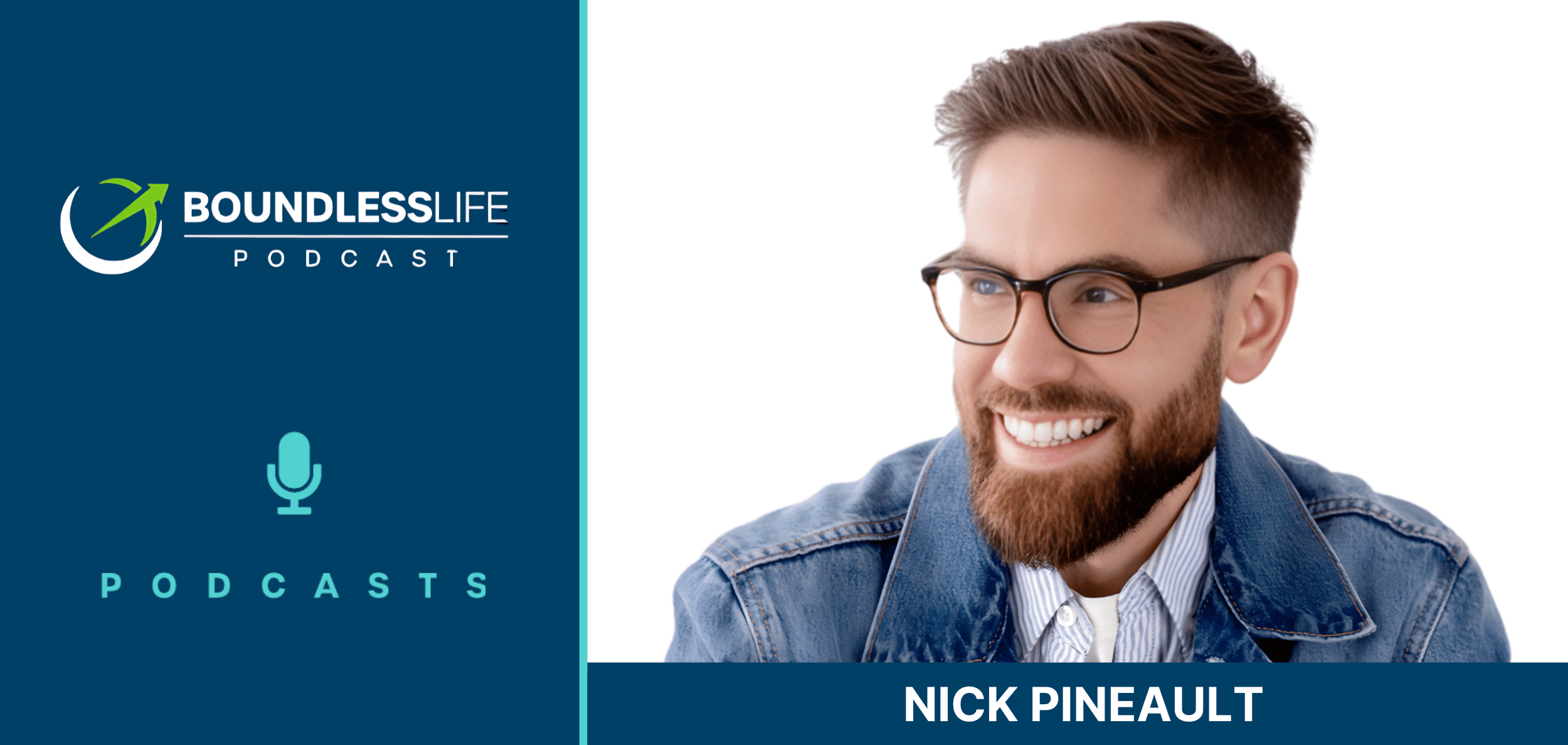
Boundless Life Podcast promotional graphic featuring a headshot of Nick Pineault, a smiling man with a beard and glasses wearing a denim jacket, against a light background with the podcast logo and microphone icon.

Listen on:

Reading time: 7 minutes

What I Discuss with Nick Pineault:

  • Nick Pineault's background as an EMF expert, his book The Non-Tinfoil Guide to EMFs, and his new documentary Body Burden: The Toxins We Carry on hidden environmental toxin exposure…04:59
  • The latest EMF research, including what the $30M National Toxicology Program study found about radiofrequency radiation and tumor development in rats, and why regulatory bodies like the FCC still haven't updated safety guidelines…06:51
  • Why some scientists believe radiofrequency radiation should be classified as a Class 1 carcinogen on par with smoking, and what Andrew Huberman's review found about cell phones, testosterone, and fertility…10:42
  • How a visit to an environmental medicine clinic revealed his lead levels were 34x higher than normal, why standard testing almost completely missed it, and how the field's 1980s pioneers first developed protocols for lifetime toxic accumulation…16:48
  • How lead stored in bone creates a generational ticking time bomb, with research tracing up to 80% of a child's lead burden directly to the mother's reserves, and why some people store toxins instead of clearing them…27:52
  • Why EMFs may amplify toxin exposure through “toxic synergy,” with research showing combined exposures can increase oxidative stress and deplete glutathione beyond single-agent effects…30:50
  • Why glutathione is a go-to in environmental medicine, the problem with oral forms for sulfur-sensitive people, and how transdermal options like Auro offer a workaround…35:08
  • Why high metal burden may increase EMF sensitivity, and how environmental medicine physicians view it as rarely a standalone condition but usually the final straw…37:15
  • Treatment at the Deeper Healing medical center, from urine mycotoxin and provoked heavy metal tests to therapies like intermittent hypoxic hyperoxic training using LiveO2…41:48
  • How the Juvent Micro-Impact Platform uses NASA-derived low-amplitude vibration to support lymphatic drainage, and why sauna use in a parasympathetic state may enhance detox through sweating and cellular waste removal…50:23
  • How advanced detox approaches like plasmapheresis, young plasma exchange, and ozone therapy may help reduce toxin and microplastic burden…55:49
  • Why coffee enemas and colonics remain controversial, and how I use coffee enemas myself for detox support, with noticeable improvements in energy and clarity…1:00:32
  • The patience required for detox: how it took a few months for Nick to experience steady gains in brain function, mood, and motivation through physician-guided chelation therapy and consistent sauna use…1:03:05
  • How to find an environmental medicine physician near you, and where to watch Nick's documentary Body Burden…1:09:13

In this fascinating episode, Nick Pineault, also known as “The EMF Guy,” breaks down the latest science on radiofrequency radiation, including findings from the National Toxicology Program, the WHO classification of EMFs, and emerging evidence linking device exposure to oxidative stress and reduced sperm health. The conversation also highlights why current safety standards may not reflect real-world, long-term exposure.

You'll also discover the concept of “body burden,” which is the accumulation of heavy metals, mycotoxins, and environmental toxins that can build up silently over time. Nick shares his own experience discovering high levels of lead, mercury, and mold toxins despite being physically fit, along with the changes he noticed after addressing detoxification through sauna therapy, oxygen cycling, and chelation.

If you're dealing with brain fog, low energy, or unexplained symptoms, this episode connects the dots between modern environmental exposures, from EMFs to microplastics, and how they may be influencing your overall health.

Nick Pineault is an investigative health advocate, author, and educator. He is the author of The Non-Tinfoil Guide to EMFs and has spent over a decade researching the health effects of electromagnetic fields and modern environmental exposures. His work focuses on translating complex scientific data into practical strategies for reducing risk in a technology-driven world.

He is also the creator of the documentary Body Burden, which explores the hidden accumulation of toxins in the human body and the emerging field of environmental medicine.

You can sign up to stream Body Burden for free here.

For additional insights, you can listen to my previous episode with Nick below:

The Non-Tinfoil Guide to EMFs: How to Fix Our Stupid Use of Technology, The Real Research On WiFi Health, Cell Phones, Dirty Electricity, and More!


Episode Sponsors:

Young Goose: To experience the transformative power of Young Goose's cutting-edge skincare products, visit younggoose.com and use code BGF10 at checkout to enjoy a 10% discount on your order.

BIOptimizers MassZymes: MassZymes is a powerful best-in-class enzyme supplement that improves digestion, reduces gas and bloating, and provides relief from constipation. Go to bioptimizers.com/ben and use code BEN15 for 15% off your order.

ZBiotics Pre-Alcohol Probiotic: The world's first genetically engineered probiotic that helps break down the toxic byproduct of alcohol, ZBiotics Pre-Alcohol allows you to enjoy your night out and feel great the next day. Order with the confidence of a 100% money-back guarantee and 15% off your first order at zbiotics.com/BEN15.

Fatty15: Fatty15 is on a mission to optimize your C15:0 levels and help you live healthier, longer. You can get an additional 15% off their 90-day subscription Starter Kit by going to fatty15.com/BEN and using code BEN at checkout.

Resources from this episode:

People

Films

Books

Devices & Products

Studies & Articles

Organizations


Upcoming Events:

Ultimate Men Over 40 Health Summit | June 8–14, 2026

If you're a man over 40 looking to improve your strength, energy, health, hormones, recovery, longevity, and performance, I'm speaking at the Ultimate Men Over 40 Health Summit (June 8–14, 2026), a free 7-day virtual event featuring 100+ experts across 7 core pillars. I'll be presenting “Optimizing the Human Machine for 40 and Beyond” alongside some of the best minds in men's health today. You can register for free here now!

Health Optimisation Summit | September 11–13, 2026

I'm speaking at the Health Optimisation Summit in London (September 11–13, 2026) at the Business Design Centre. This isn't your average health conference. HOS unites the best minds in biohacking, longevity, nutrition, fitness, and medicine, with one goal: to actually make people healthier. With 35+ world-class speakers, 120+ cutting-edge brands, and 4,000 like-minded people all under one roof, it's two days that could genuinely change how you approach your health. Get your ticket here and use code BEN to save 10% off registration! 

Eudēmonia | November 5–8, 2026

I'm speaking at Eudēmonia (November 5–8, 2026, in West Palm Beach, FL), a prevention-focused, science-based health, well-being, and longevity summit designed to add years to your life and life to your years. Across 3 days and 15 venues, you'll experience 200+ talks from 120+ experts, 300 treatments, and 160+ brands covering everything from biohacking, longevity, and hormonal health to gut health, brain health, peptides, mobility, and more. I'll be leading a talk and a movement session alongside some of the brightest minds in health today. Use code BGREENFIELD-EUD-100 for $100 off when you register here!

The Boundless Couples Retreat | November 10–14, 2026

Ready to reconnect and recharge with your partner in paradise? Join the Greenfields at the stunning Prana Maya resort in Belize for the Boundless Couples Retreat, November 10–14, 2026. It's a five-day, all-inclusive escape designed to deepen your relationship, restore your vitality, and create memories that last a lifetime. From relaxation and adventure to intimate relationship coaching with Jessa and me, every detail is crafted to send you home with a stronger bond and a reinvigorated spirit. Spots are limited, so discover more and secure yours here today!

Stay tuned for future updates—and you can always keep up with my LIVE appearances by checking out bengreenfieldlife.com/calendar!

Do you have questions, thoughts, or feedback for Nick Pineault or me? Leave your comments below, and one of us will reply!

Ben Greenfield 0:01

Ben. My name is Ben Greenfield, and on this episode of The Boundless life podcast,

Nicolas Pineault 0:07

the loss of fertility in men has become an epidemic. It is likely that cell phones and pockets is one of the underappreciated factors that is an endocrine disruptor. You kind of have this almost ticking time bomb of reserve of lead, so you pass it down to your kids. This is this idea of generational toxicity.

Ben Greenfield 0:28

Welcome to the boundless life with me. Your host, Ben Greenfield, I'm a personal trainer, exercise physiologist and nutritionist, and I'm passionate about helping you discover unparalleled levels of health, fitness, longevity and beyond. My guest today, Nick the EMF guy, Nicolas Pineault, is the number one best selling author of the book, The Non-Tinfoil Guide to EMFs. He's an advocate for safe technologies, and a real expert on all things EMF. He just came out with a new documentary called body burden, and I watched it. It was really cool. So all the show notes, go to bengreenfieldlife.com/emfguypodcast where you can also leave your thoughts, your comments, your questions. Let's dive in.

Nicolas Pineault 1:19

Thanks, Ben.

Ben Greenfield 1:20

I mean, you've been on my radar on and off ever since I read your book, The what's it called, The Non-Tinfoil Guide to EMFs. Yeah, it's a great book. I still recommend that all the time as kind of a way to protect yourself from the polluted electrical soup that we live in, and then you popped up on my radar a few weeks ago when you emailed me about this detoxification journey that you went on that's always a weird buzzword in the industry that we're in, of course, and I know we'll get into that. I'd love to hear your thoughts on what actually occurred and your perspective on detoxification in general, but the link between that and electromagnetic pollution is pretty interesting. So I would love to get into all things electricity and detox, if that's a good enough combination here.

Nicolas Pineault 2:18

Sounds good? Yeah, it's a it's a perfect toxic synergy here.

Ben Greenfield 2:21

Let's just get toxic. Let's be positive right from the get go. Hey, if you're listening in, I'll link to the documentary that Nick made. Our previous podcast, his book and everything else. We go to bengreenfieldlife.com/emfguypodcast. That's bengreenfieldlife.com/emfguypodcast. Before we jump into this documentary, the body burden, documentary journey that you went on, Nick, what's the latest since? I mean, gosh, it was, I think it was 2018 Yeah, we did our podcast. So what, like, seven or eight years now, in terms of what's going on in the EMF world, but give me the bird's eye overview of some of the major findings or research that has occurred since our last show.

Nicolas Pineault 3:11

A lot has happened, and at the same time, not a lot a lot on the scientific standpoint and my own understanding, but not a lot has happened on a policy standpoint, not a lot of us has changed, and that's been the frustration doing this 10 years. And you know, not a lot has changed as far as how much the governments are telling citizens to be prudent towards the everyday devices that we use. So for example, you know you had the major US funded study called the NTP study. At the end of 2018 we had the final reports, and essentially what it showed is clear evidence of EMFs, especially radio frequency radiation, which is the radiation emitted by phones, Wi Fi, Bluetooth, cell towers. Their conclusion was there is clear evidence that it's increasing certain tumors in rats and mice. So in the end, you know, some people argued, oh, this is not a significant study. It is the best that we have, that we have funded. And when I say we, of course, I'm just Canadian, but the US government has funded this for $30 million and it was originally the FDA who couldn't study this agent or this consumer product called the cell phone, and said to the NTP, which is a branch of the NIH can you study this agent? It took around, you know, 20 years from the ideation to the final report, and what it found is clear evidence that this is a carcinogen. Then the FDA said, we don't think that rats studies apply to human even if they originally asked the NTP to do the toxicology, and toxicology is done on rats, so go figure. So all the politics around that were kind of maddening. Hmm, but it led certain groups to try to move things on a political standpoint, and say to the FCC, the Federal Communication Commission, you know, they the FCC in 2021 was supposed to review the evidence around radio frequency radiation and health and citizens and scientific groups and, you know, activists essentially took to the task and decided to send them the latest data on what they thought is the most important thing to include in this review. 11,000 pages of scientific documents were added to the docket, and the FCC said, You know what we have done our review, nothing changes. So after that, the FCC was brought to the court and lost in court where the judges said, three judges said, Well, essentially, you did not review the data. But that this, that decision is from almost five years ago at this point, and has been sitting, sitting there, and now groups are trying to argue, now we're going to sue the FCC again to make sure that now they redo the review with the proper science. So I know it's technical and it's legally. Is what it means, essentially, is that we're completely running or flying blind at this point on EMF regulations. All we know is that the number one agency that's supposed to assure us citizens that things are safe when it comes to your cell phone and Wi Fi and Bluetooth, has not looked at the science. That's all we can say.

Ben Greenfield 6:32

Okay, so when you're saying you're there's, there's been these studies on rats, you said monkeys also, how close is it to the real world conditions in which humans use their phones, or whatever, their computers, appliances, whatever, on a daily basis. Because, you know, I know it's one thing to whatever hold a cell phone and have full power up to the ear of a rat for eight hours, you know, and maybe humans are talking on a, I don't know, like, like a wired or Bluetooth head with the phone farther away from their head. I know not everybody does that, but do you know what I'm saying? Like, how close is it to to the way humans actually interact with their phones?

Nicolas Pineault 7:16

That's important. And the study was designed the NTP, if I recall correctly. It was designed to mimic 30 years of exposure in humans and people can argue about the dosage and this and that, but zooming out of the NTP study, the study is not the one study that exists about potentially radio frequency being an agent that is a carcinogen in 2011 IARC at the WHO which is International Agency for Research on Cancer, classified based on the current data, in 2011 this agent called radio frequency radiation as a class 2b carcinogen. So after that, scientists reviewing the data of the NTP said, Well, we have this decision, we have new rat studies, we have several different threads of evidence, including epidemiology in humans who have more elevated risk of ipsilateral cancer. So you talk on the right side and you get a cancer of the head region or neck region, you know. So there is a strong correlation that was seen in data. So some scientists in 2018 said, if we have another review at the who this will be declared a class one carcinogen. But that was in 2018 and since then, things have been stalling and stalling because, of course, you know what tech industry entity at this moment would accept a classification that says your phone is essentially as bad as smoking. So it has been extremely charged. On a political standpoint. Some scientists say, you know, this is the next smoking, but this is just cancer. And it led me to, you know, reviewing the evidence. It blown me away. You know, Huberman. Everyone knows him. He's a he's a scientist. He has a large following in 2023 he decided to review, what is the data around keeping a cell phone in the pocket and a loss of fertility or reduction of testosterone,

Ben Greenfield 9:09

and just to interrupt, you mean, specifically without it being in airplane mode?

Nicolas Pineault 9:14

Yes, exactly. And he looked at both the heating the heating effect, because, you know, testicles can be very sensitive to heat changes in temperature, but also the non heating effect, so just the oxidative stress triggered by radio frequency radiation. And what he said in his review, and it was just for his members, but it's still findable on YouTube, he said, well, the data is more convincing than BPA that this is an endocrine disruptor. And he also said, Well, I don't like the idea of AirPods because of the lack of data. And that's kind of been my point, even in my book, is, I mean, why don't we have more data about consumer devices that are used worldwide, nonstop, right? This is really the point. Right is the lack of data, the data we do have points in a direction that is concerning and right. We are in a day and age where the loss of fertility in men has become an epidemic, and it's something very concerning for you know, some could say the survival of the human species, like we need to conceive, we need to have sufficient sperm count and good mobility and all these things, and then testosterone is also pretty much in an extremely bad place for men. So at least we could argue that it is likely that cell phones and pockets and our over overall use of wireless is one of the underappreciated factors that is an endocrine disrupter, and that prevents us from having normal hormones.

Ben Greenfield 10:44

Yeah, maybe the hidden blessing of agentic AI is that because we'll be able to put our computers to work for us, we might have to spend less time with our devices.

Nicolas Pineault 10:52

I hope so. I hope so. But you know, what is maddening is these solutions already exist, like if people you know want to go away, go away from the conversation that's doom and gloom. They just have to ask, okay, well, what? What could we do about it anyway? Well, it's simple. You ask Apple and Samsung and phone manufacturers to have a proximity sensor that already exists, and when it's close to the body, it doesn't emit, it doesn't emit as much, or is shielded in a manner that minimizes cell phone radiation towards the user. And these, some of these early patents are from the early 2000s and they've been shelved because it's not a requirement. So again, you have bad EMF safety guidelines, essentially determined by industry a lot of lobbying to keep them the same status quo, and then you have users that will know better, and you have the impact that that is happening. At a minimum, we should be cautious and start reducing the exposure from our phones. But what we're seeing is at we're not even there yet, where the cell phone rules and the radiation the EMET is just the same year after year.

Ben Greenfield 12:02

Yeah, my phone annoys me anyways, which is why I have it in airplane mode like 50% of the time during the waking day, simply because I don't want Voxer and messages and slack and a Sonic, even if I have the notifications off, I just don't want that bugging me while I'm working, while I'm working out, etc. And so for me, it's kind of like, Man, I don't want it on anyways, until I'm actually ready to roll up my sleeves and work with probably the only exception being my, my wife and I will sometimes watch some funny like stand up comedy short or or silly thing, you know, in bed before we go to sleep at night. But, you know, we could talk about phones, of course, till we're blue in the face. I know you outline a lot of this on your website and your podcast on a regular basis, so I'll link to that in the show notes for those of you who want to keep up with all the updates that Nick is obviously on top of but the topic of toxins and toxin accumulation, and the potential link between that and EMF is something I haven't talked about much on the show before. So you made this documentary, and from what I recall, even though it's been a few weeks since I saw it, you actually had, like, a high burden of I believe it was metals,

Nicolas Pineault 13:16

very high lead and very high mercury and very high okra toxin, a which is a mycotoxin. We're

Ben Greenfield 13:24

doing a lot sushi and coffee. Nick,

Nicolas Pineault 13:26

yeah, well, of course, I love it. And, I mean, I spent my my fair share of time in Japan. I went to Saudis Asia for a total of probably two years, until in the last 15 so, I mean, where did I get this right? It was kind of a personal shock, but it was not the beginning of this journey. Essentially how I came about this is I heard about this branch of medicine called Environmental Medicine. And I said, Okay, well, what's different about it? And some of these physicians understood that EMFs is an important factor. And I said, Oh yes. Finally, I have doctors that confirm that, you know, EMF radiation should be minimized at home. So it meant a lot for me. I'm like, Oh, well, these physicians probably understand and the reason they understood these things is that in the 1980s the early pioneers of environmental medicine, two of them being Dr William Ray, who passed away in around 2019 another one is Dr Walter crinion. They were essentially physicians that were seeing a lot of patients from different professions. Some of them were factory workers. Some of them worked with pesticides handling, for example. And they got these patients when they were in a very bad shape, and they started looking into, okay, how do these toxins accumulate in the body? And not a lot of data was available. And this is where these pioneers started using things like sauna and looking at the data on sauna use specifically to start minimizing. Body's burden of certain pesticides or endocrine disruptors. And you know, it was before our understanding was better. Now we know that, for example, sauna use can be helpful with microplastics, but that's just data from the last few years. So they were really pioneers 40 years ago in starting to understand, Okay, well, if we see people that do not have an acute poisoning, but they have a lifetime of poisoning, what do we do? Is it possible to support them in a way that is going to get them better? And these these people fell to the cracks, so I ended up being invited to go to one of these clinics where these physicians do exactly that. Have an a focus on looking at what's in a patient's environment first. And when I say environment, it is the environment at home. What are you exposed on a constant basis? Also, you know, what do you use to to heat your food? Is it you know? Do you cook with aluminum pans or with Teflon? Right? All of these questions from everyday exposures, because it gives them a good snapshot of, okay, we think that this factor is important. And then the user principle of just, you know, precautionary principle, we should filter your air. We should filter your water. I mean, it's everything you've been saying for the last 20 years professionally, right? So, but physicians that tell their patients, okay, this is the most important thing, including EMF minimization, and this is one fold of their work, and the other fold is okay. But what about what's been already accumulating in the body? So for example, for me, a big burden that I discovered. Because, honestly, I had no idea, even shooting the documentary. I had no idea this was in my body. When we tested my urine, just, you know, normal urine test, it was within the reference range of, you know, that's, this is the doctor's data metals test. It's our toxic metals panel, very available. A lot of people have done it. And you know, without any provocation, agent like EDTA or DMPS or these pharmaceuticals that are going to take metals from your tissues or from bone and excrete it. So without the provocation, it was 0.62 which is, you know, the reference range is like 0.6 so it was standard. So I could stop there and say, oh, you know, lead is not a problem for me. The problem with lead is that about 95% of it is stored in bones. And when I looked into it, I said, Okay, well, it's stored in bones. How much of a problem is that? Well, the problem is that as we age, the bone turnover becomes greater, and we can start having a lot of this come back into into blood, but also it is stored in bones for a couple of weeks. With the bone turnover, it returns in circulation. So you might have relatively low levels in the blood. But in reality, you kind of have this almost ticking time bomb of reserve of lead, and we don't know exactly what is the safe level of that lead stored in the human body, right? So in the end, when I provoked it with these agents, I had essentially 19 times more more lead than that reference or non provoked test, and then later on, a few months later, I was at 34 times so very elevated levels. And what surprised me, of course, I wasn't, you know, very well versed into what the data says about these things in Environmental Medicine. They have their own assessment of how urgent is it to treat a patient that has these levels? And what he said is, look, you're 37 at the time when I did the first test. You're athletic, you're fairly healthy, but we think you're going to feel much better if you get this out. So started looking into it, and in the end, they compared these levels to, you know, someone who worked in an industry their entire life. They asked me, Nick, did you, did you, did you, are you a welder? Or did you get exposed to obvious sources of lead? My answer was, No, I don't know where it comes from. So essentially, it was the beginning of a journey for me to try to understand, Okay, where am I exposed to lead in my everyday life? And I couldn't find a lot of sources, and also start focusing on opening up my detoxification pathways and doing chelation. A lot of things, but it really opened my eyes. And in the end, the reality is that for most people, their lead burden, in particular lead, because it's stored in bones, is just completely hidden, and we don't know exactly how much is it inhibiting their ability to live, you know, as healthy as they want, or

Ben Greenfield 19:45

at least when they get older and it gets released, how's that going to affect them? The interesting thing that you said was you didn't know where you got exposed. Did you ever figure that out?

Nicolas Pineault 19:56

To this day, I don't know. I know that in certain South Asian countries. Trees there, there still is leaded gasoline, or huge sources of lead exposure. But in the end, you know, our parents, you know, my mom is almost 70, she was part of the lead generation, leaded gasoline, leaded you know, paint on the walls. So maybe it's part generational that could be part of it, but also I probably got exposed through foods. It could be my love for chocolate. I know that certain types of chocolate have been found to be very elevated in lead, but I'm suspecting at this point, I really want to dive deeper in my understanding of genetic and epigenetic testing. And I know you're well versed in that, but I'm probably just a poor eliminator of lead, and that's kind of the it's one of the things in today's testing framework that's really missing, is that we can say that maybe there's a such thing as a tolerable amount of toxin, but the reality is that Person A, person B and Person C will have different abilities to eliminate lead, right? So in the end, in my body, my conclusion is, well, it's very likely that I just store lead instead of being able to clear out whatever little amount of lead I'm exposed to on a daily basis. That's my theory, at least for now,

Ben Greenfield 21:21

yeah,

Ben Greenfield 21:21

maybe there was some ancestral advantage to storing lead that no longer serves us, such as resistance of bone to shattering upon being, I don't know, hit with a spear or sword or something like that.

Ben Greenfield 21:31

You

Ben Greenfield 21:32

never know.

Nicolas Pineault 21:33

And look, it's all it's also very linked to calcium status. That's the thing like, and I still need to look into that. Look into, okay, well, maybe I need a calcium supplement, because lead will preferably displace calcium in bones, which, in the end, are decent. There's a decent amount of data on, you know, your bones not being as strong when we use lead instead of calcium, which is not surprising. You use kind of the wrong building block here. But in the end, it is concerning for a lot of reasons, and I even looking into it this morning, I found a study that said that the measured toxins in cord blood and 80% of the lead could be directly linked to the mom's reserve of lead. So essentially, when you form a fetus, you have 80% of the burden of lead that has been found to be directly linked to what the mother had stored in her bones or her body. So you pass it down to your kids. This is this idea of generational toxicity that is also something very concerning for me, because, I mean, if we don't have a generation that starts cleaning itself up. We have something. We have a problem that's societal and that can get worse over generations.

Ben Greenfield 22:48

Yeah, you, um, you hinted a couple of times at the potential link between I EMF exposure or electrical pollution and toxic accumulate, or toxic accumulation, or toxin accumulation, I've come across the idea that sympathetic nervous system stimulation, due to excess stress, including something like electrical stress, could inhibit detoxification pathways in the body. I don't know if that's kind of where this road leads, or if you found other things in terms of the link between EMF and toxins,

Nicolas Pineault 23:27

there's a lot of threads of evidence that show that there is not only an additive effect between, let's say, wireless radiation from cell towers, cell phones, Wi Fi, Bluetooth, and different toxins, oftentimes what we see is a multiplicative effect. So there are a lot of animal studies on that, and a lot of in vitro studies. And one of the scientists that I've been studying is called Dr Ronald Kosta, and he has an entire chapter of a scientific textbook on it, and essentially he talks about these toxic synergies. And the problem, he says, is, look, we need toxicology, and we need these single agent studies where we will feed rats a certain amount of lead and then look at their kidneys and then declare something like, Okay, well, at a certain dose, it does kidney damage. The problem is that if we study things in a vacuum, it tells us nothing about what happens if you have lead, but you also have cell phone radiation. When we do these studies, we often find that a certain dose of lead that was safe at certain levels is all of a sudden unsafe. If we add a second toxic agent, and there's a lot of reasons that could explain it, both will create oxidative stress, so maybe after a while, it goes over a threshold where the rat's body is unable to cope with both. But also, there is a lot of threads of evidence that show that radio frequency radiation will, over time, deplete your reserves of glutathione. So if your your inner antioxidants are. Trying to just cope with the environment, and now you add another thing that is requiring glution to deal with, well, maybe at one point you simply do not have the right inner defenses to fight. That's another possibility. There's a lot of different explanation on a scientific standpoint that could explain why is there a synergy between all these different environmental toxins? But the point is, this is that Kosta said, you know, we should try to, I don't know. Maybe they're going to put it in AI and say, Okay, what is the toxic synergy between these 10,000 known carcinogens and chemicals that can have an endocrine disrupting effect, and now, what is the safe dose given these toxic synergies, we might just find that the save those is next to none, or is much lower than what we think is reasonable. And that's, that's kind of the point here in Environmental Medicine, and even in, I think, in your own life, it's okay. Well, if we know that something might have a detrimental effect, let's try to minimize it. Because you know, even if you tell me there's there's such thing as a tolerable dose, well, how much can I tolerate of agent B, C, D and E and I mean, in the end, if you want to maximize your health, you should minimize the things that you know for sure are likely to harm it. So in the end, it's the problem we have right now, is that we're still stuck in this toxicology model, where single agents are with single study endpoints or very, you know, siloed type of research projects are being done, and this is the best we have, but it misses the point. According to Kosta, and I agree with him, where it's becoming, you know, this toxic soup that we have is very hard to study, so therefore, I think the case for minimizing all of our exposures as much as possible, which is kind of one of the frameworks that environmental medicine physicians are trying to put forward, I think is just the smart thing to do nowadays.

Ben Greenfield 27:06

Is there any link between antioxidant intake that you know, of, like taking glutathione or something like that, and lowered metal or toxin burden?

Nicolas Pineault 27:16

Good question. I don't know for sure. I haven't looked into like large, large data sets, where you take glut ion, and you know, you have measurably lower levels of metals over time. I don't know where the data is at with that, to be honest with you, but I know in Environmental Medicine, you know, one of the doctors told me, Nick Take, take five milliliters of liposomal glutathione for as long as you have a breath. And I said, Okay, well, Doc, I think I'm going to take it daily. In their view, it is something that they use very regularly. And I know it's not necessarily for everyone. I've heard contra education for certain people who have a hard time processing it. But, you know, I think, I think they're doing the best they can to recommend something that is likely missing. And you know, the reason it's missing, it's probably because we are assaulted with so many things. But what is difficult to study is, you know, since we have all of these factors, and almost all of us are now, you know, just bathing in in these stressors all day, every day, all around the world, there's no solid control group that would be exposed to no heavy metals, to no EMF. It makes the the research very blurry. So it is difficult to to kind of do these large studies, but it will be interesting to look in that data, specifically glutathione status or supplementation.

Ben Greenfield 28:44

Yeah, you're right that some people don't do well with oral glutathione due to the amino acids that it's broken down into, along with often genetically based sulfur sensitivities. And you can kind of skirt that issue with transdermal glutathione, like a topical glutathione. There's one company called Oro, a, u, r, O, that's run by Dr Patel, a former pharmacist who has some good formulas on his website, is kind of a workaround for that. But then the other thing that kind of comes to mind here, related to the link between EMFs and metals, is this concept of metal accumulation, or metal burden in the body, potentially increasing sensitivity to EMFs, like an electro hypersensitivity, brought on by your body, I guess being more of a conductive antenna. Is that just gobbledygook, or is there anything to that idea?

Nicolas Pineault 29:40

I mean, I've heard the Yeah. I've heard the biophysics explanation that if you have more heavy metals in your tissues, you're kind of an antenna for EMFs. I haven't found this to be very solid, but what is solid is that, again and again, when the test people who declare. Are themselves electro hypersensitive. They say I suffer from electro hypersensitivity, which now has been renamed the EMR syndrome. What they say is they find that a lot of them have high metals. So in the end, when I talk to environmental medicine physicians, I asked them about the electro hypersensitivity. I asked them about these EMF sensitive patients. And in really, that's something that that may be hopeful, because a lot of people who contact me told me, Nick, you know, I hold the phone in my hands. I feel it. I feel very sick. I cannot even live in a city. I mean, you would be very a lot of your listeners would be very surprised that the stories I hear where people are are so sick from EMFs that they cannot be near it, and they don't feel like they can go back to a normal state of health, right? Because imagine being celiac. You are celiac, but you walk around and there's flour everywhere in the air, you would constantly get sick. That's kind of, you know, akin to being electro hypersensitive, or suffering from the AMR syndrome, and being in a city where you are constantly near something that triggers you and it's very difficult to get better if you are always being triggered. That being said in Environmental Medicine, they say, Okay, you see this agent called EMFs, and this thing seems to be triggering you. However, it is only what broke the camel's back that was kind of what I learned from one of the physicians, Dr Michael Barr Schmidt. He told me, maybe this is the thing that you realize made me, made you go over the edge to a symptomatic standpoint, where you're completely shattered. Now your health is bad. That being said, it was also the mold accumulation. It was also the metals. It was everything before that made your body unable, eventually, to cope with the totality of it. So what they do is they don't treat a single problem. They won't say, Okay, well, you're EMF sensitive, you avoid EMFs. If you're mold toxic, you avoid mold. And we treat for mold. What they say is, everything matters all the time, and it makes it a little bit like, Okay, well, where do you start? And essentially it's by taking but by asking the patient, what do you feel is your main trigger? Well, I think I've been exposed to more than this. So they go by history, and then, of course, they do testing where they would they would see that the person reacts to EMS. Even Dr William Ray had a sort of provocation test for electro hypersensitivity back in the days. I don't know if it's still being done now that he passed away, but he wrote a textbook on electro hypersensitivity, a medical textbook, I think it's still the first in the world at this point that has been published. But essentially, what they tried to do is identify maybe the agent that is the worst for you. But you kind of have to look at it from multiple angles, because, again, nothing exists in a vacuum. So all that to say is long winded, but if you have high metals, yes, it's been found again and again that you are more likely to react to other agents. And the same is true for people who say, I cannot smell perfumes. If I go to a Walmart, I feel a headache because of all the plastics, and I feel sick. A lot of environmental medicine doctors told me these patients are in a very, very aggravated state. Their nervous system and their body cannot cope with it, and it's likely that they will also react to EMFs and other things, including foods, right the they seem to have its environmental intolerance, and then it becomes eventually intolerant to everything across the board, for some of them, at least,

Ben Greenfield 33:46

yeah, what was the name of the clinic that you went to to start to address all this for yourself?

Nicolas Pineault 33:51

Yes, it's called the deeper healing Medical Center in Charleston, South Carolina.

Ben Greenfield 33:57

So walk me through what they did.

Nicolas Pineault 33:59

Yeah. So essentially, when I went there, they started with a history, and they take just basic measurement. And they said, you know, your metabolic health seems good. You have low body fat, you're athletic, this is good. This is kind of in surface. Then I did a few just basic tests that they have me do. One of them, I don't recall the name of the test, but was essentially trying to walk in a straight line with my eyes closed. And I remember my physician, Dr Stephanie McCarter, who now practices in Dallas. She said, Nick, you probably have high metals. And I said, Okay, what? You know? Why? She said, Well, you know that's how your neurology reacts to your eyes being closed, and I can predict you have high middles. I said, Okay, whatever.

Ben Greenfield 34:43

Like, a lot of people are gonna be skeptical if they hear that. Is that, is that like a test based on,

Nicolas Pineault 34:48

I have to find a source? Sorry, I just came to mind. But it is not something that is deterministic. But it was just like, okay, she has a hunch right based on just the things that she sees. And also, also my same thoughts.

Ben Greenfield 35:01

So

Ben Greenfield 35:02

basically, what you're saying is, like, balance, bad, poor proprioception, clue that you might have some kind of a toxic

Nicolas Pineault 35:08

burden. Yeah, and then food intolerance, acne, brain fog. So I came at it as an athlete. You know, I just had completed a bunch of Spartan Races. I know you've been See, you understand, like the 21k in the mountains format, in under three hours, I was performing very at a very high level, personally, in the best of my life, but I felt like, my god, I cannot concentrate at a computer. So a lot of neurological symptoms, just brain fog and gut issues and what the heck is happening with me? So I wasn't at my best health. I was at my best performance, but mentally speaking, feeling very frustrated at the computer, so I came at it, you know, as a, you could say, a fairly healthy patient with no diagnosis of anything chronic illness. And when we started, we started testing for urine mycotoxins, because it was something suspected, just based on my history. Okay, let's test this. And we did a metal test before provocation and after provocation, and had the test of that, and it was part of just the baseline that they did. And if the the had saw someone that is way sicker than they get into specific tests, depending on what type of toxin the they think is the worst for them or is likely will be found. So after that, I kind of experience part of their protocol is three modalities in particular that they kind of stack together. And it was interesting, because, you know, when it comes to detoxification, I was always questioning, like, Okay, well, where should you start? Like, there are so many products out there, so many approaches, and a lot of physicians go at it at different angles. But what was interesting is I got on the live o2 which is essentially just a system to have create an hypoxic situation where you have very low oxygen for a certain amount of time.

Ben Greenfield 37:06

The live o2 is two air concentrators with an air bag. I have one, by the way, I use it in my gym a lot, next to the cardio bike, and so it allows you to breathe high concentration of oxygen, but then with the flip of a switch, go to, kind of like, you know, top of a high mountain type of scenario with low oxygen. So it's a form of intermittent, hypoxic, hyper oxic training. And I have seen, you know, their claims that it somehow flushes the body from a from a blood flow standpoint. So they actually did that on

Nicolas Pineault 37:41

you. They actually did that, and it's part of their protocol has been for a while now. And basically they talk about, specifically the micro circulation being hindered in a lot of people, where the micro capillaries at the very end that are irrigating, you know, the the end of all the the circulation in your body is essentially closed, and this, this sort of push pull mechanism with low oxygen. High oxygen kind of opens up these capillaries. And the science is actually solid on that, but how much is it contributing to detox? I don't I couldn't find a lot of data, but we what they saw clinically is that if you open this up, then you you just increase oxygenation. And Dr Barr Schmidt in particular was like the number one thing is oxygen. And it surprised me, because, I mean, where should you start for detox? Is it, you know, treating the kidneys, this or that? For him, it was oxygen. So for me, as an athlete, I had to push my body. So that's why in the movie, you see me run on there. But for certain people, it is light. Walking is enough for them to desaturate and see on the on the pulse oximeter, that they actually have a real impact, not just walking. There's units like the cell gym where you just do I HHT, well, seated, well, sedentary, like meditating or in a lounge chair. So you're right, there's like this, this pulsing effect, right? Like a vasoconstriction, vasodilation effect that increases circulation and oxygenation. I don't know what the hard data is on, like a lowering of metal or microplastic accumulation in response to something like that, but the mechanism of action kind

Ben Greenfield 39:30

of makes sense.

Nicolas Pineault 39:30

Yeah, exactly. And there, there's larger trials to to be done. I think in Environmental Medicine, they're they're very happy to look at something that could work in principle, and experiment on their patient with modalities that are safe and that are supported in other fields. So I know athletes are using them, and that I mean, as long as it's adapted to how people react to it, so very, very weak people would. Walk, or, you know, barely do any movement, where I had to sprint at one point, because my body, you know, had had to really get a big hit before, with all this endurance training that I, that I did, to really get the real impact. And when I, when I started feeling the real impact, you can feel the flushing. It was interesting when I really pushed it with the live o2 I could feel my entire body completely flush, like as if you have a sort of, I don't know, see, it's very profound. It's very interesting,

Ben Greenfield 40:30

pretty cool. I've been using it for eight years, two to three times a week. And of course, the basic version is breath work in the sauna, for example. But the live o2 definitely turns it up a notch.

Nicolas Pineault 40:41

Yeah, and after that, they also use something called the juvent and that's a micro impact platform. And I started looking to it like, what makes this different from, you know, just a vibration plate. In the end, the difference is that a vibration plate has enough amplitude to start creating these muscle contractions. The juven does not it has a very, very low amplitude and follows a certain frequency that is based on that is different. But the basis of the science has been developed by NASA originally, which is like a super popular thing to do when it comes to devices, isn't it, but it's true. It's the early research for NASA astronauts that wanted to to maintain bone mass. But essentially the idea was that you can shake, if I understand it correctly, and I don't have all the right scientific verbiage here, but it's as if you're shaking the inside of a cell and not contracting the muscles. So it is a very subtle impact, and we know that this can have a beneficial effect on maintaining bone mass, but does it have an effect on lymph which is why environmental medicine physicians use it. There's a question mark, but it is possible in theory, what they have found is, you know, this is a great way to do limb circulation after the level two, and that's about all I know about it. But a lot of people told me they swear by it, so that's something to further explore.

Ben Greenfield 42:17

Yeah, it's my by the way. It's this idea, similar to rebounding that G forces may enhance lymph circulation and that some of that circulation might be inhibited if it is concomitant, like, like simultaneously occurring during a muscle contraction. So it's kind of like light rebounding without intense muscle contraction, or light vibration platform at a certain frequency may allow for better lymph flow compared to like a power plate vibration platform or something you might use for, like priming a muscle before or during a workout.

Nicolas Pineault 42:58

This is way, better stated than I just did then. And on top of that, keep in mind that a lot of their patients are already weak or environmentally injured. So if you give them, you know, a vibration plate, yeah, it can work. And I know it's also, there's decent data for vibration plates, and there's a place for them, but the juvent was specifically thought for lymphatic drainage, and after that, I went in the sauna. I knew about sauna use. You know, I've been listening to your podcast. It doesn't mean I was applying my knowledge, and that's really my problem in my own life, is that, you know, how much time did I spend in Asana in the last 10 years since we last spoke? I don't know. I did it like once a month, twice a month. It wasn't sufficient. And this is really what they told me, is Nick look, you know, you could sweat more. And in my workouts, I do a lot of very heavy strength training. I do running, but it's not the same thing if you do it while relaxed, or at least that's my understanding, if you do it, then you're

Ben Greenfield 44:06

nervous,

Ben Greenfield 44:07

more parasympathetic state to enhance,

Nicolas Pineault 44:09

yeah, exactly,

Ben Greenfield 44:10

cellular waste removal. I am totally on board with the sauna, honestly, especially after reading Bill Gifford's new book. He co wrote the longevity book with Peter rotta, he just released a new heat book. It's called Heat span, or something like that. Anyways, it was a good reminder about the multitude of benefits of a sauna. Yeah, I mean, I'm in there twice a day. Often. I do an infrared in the morning a lot of times post workout, and then dry sauna in the afternoon. So I sweat a lot, but you mentioned something earlier about microplastics and sauna What have you come across related to that? Because, you know, I've seen, like Brian Johnson's anecdotal data, but no hardcore data on saunas and microplastics.

Nicolas Pineault 44:59

Yeah, it was just. Say emerging data, that's that's probably part of what I saw. I know the microplastic, the best data I saw is the accumulation of microplastic, not the elimination, to be honest with you. But I saw this, this headline on a scientific journal that that said, you know, they tried to find how much microplastic is in the human brain and identified we have, on average, one plastic spoon, is my understanding, and you kind of saw this brain with a plastic spoon, and I said, Oh, my god, is that bad? So I don't know. I would love to see large scale studies on like, what is the best way to eliminate microplastics? You know? Is it you know? Is it true sweat, or is it true simply supporting elimination pathways? I know there is also something else that I think you might have experienced yourself, you know, this plasma. Phrenicis, with certain clinics in Europe, doing it frequently in patients and filtering the plasma, which is in itself, I think, in early research, but

Ben Greenfield 46:07

it's expensive. You know, plasma paresis, where you're filtering your plasma and getting it replaced with albumin, and typically, like a nutrient, mineral and vitamin IV afterwards or inosparesis, is very popular in European biological medicine, where they take the plasma out, filter that, and then you get your own plasma back. There's young plasma exchange, where, assuming the donor had low microplastics, which were usually filtered and screened, you get your plasma taken out, and young donor plasma. And then there's the the idea of just trying to approximate that, which some clinics are doing. Now, you take your plasma out, then you get the albumin back, plus things like stem cells, exosomes and biologics like peptides. But as you can imagine, like your starting point for the cheapest form of that is like eight to 10k so not you know, it's really not scalable. And then with the sauna, you know, like, microplastics are like 100 to 1000 Daltons in size, and your sweat glands can pass about 100 Dalton sized particle. So it's like, yeah, you could sweat a little bit of it out, but the larger, more problematic particles really comes down to either paying a bunch of money to filter the blood and plasma. Option B would be like reducing your exposure and preventing accumulation. And then the final option might be some of these newer companies that are developing like gut microbiome based products that you would consume that would allow the bacteria to produce postbiotics that remove the metals, but again, that's only from the gut, and that also wouldn't address, like, your existing burden kind of, kind of similar to the metal piece. So, so yeah, it's a problem. It's kind of like, you know, how big of a paycheck Can you write to get rid of your microplastics, which doesn't seem fair, but that's, that's kind of the best solution I've come across so far.

Nicolas Pineault 48:02

Yeah, and I hope, I mean, it's always like that with, you know, medical technologies, if it can start being more popular, maybe there are better manufacturing practices, and eventually the price goes down to become affordable. I know that. I know genetic testing is an example, but there's a lot of examples where technologies have become more powerful, and maybe, maybe it can be something that can be sustainably used in populations. But I agree with you, it's, it's discouraging if you, if you see treatments that are exciting or have potential to save lives, and it's 510, $1,000 it's simply too cost prohibitive for the vast majority of the population. But at least it's good to see that maybe these technologies will, in the end, be brought to the US. I know in Environmental Medicine, they wanted to take some of the biological medicine technologies from Europe and start seeing if there's the regulatory framework to bring them back, that's they're always on the cutting edge. And another thing that they brought that I know you talked about several times, but they had me try this, basically, ozone and ultraviolet blood irradiation. Ubi, so what is it, major auto hemotherapy. So essentially, they did a little quantity. They extract blood, the basically add ozone in, and then pass it through UV. And they had good results. I heard, I heard some people at least, seem to have a sort of body wide infection that wouldn't go away and had immense results from from this sort of therapy. But I know there is even an ozone movie being being in the works right now about the pioneers of ozone research. So that's another rabbit hole that I haven't gone into too much, but I. Know that there, there's something to it, definitely. So it's part of the tools that they have available at the clinic, at a minimum,

Ben Greenfield 50:07

yeah, more more specific to like bacteria, viruses, mold, mycotoxins, absolutely. And then you can get a form of ozone dialysis, where the filtration medium might remove some metals and potentially microplastics as well. So there's kind of, like levels of ozone treatment, like there are levels of plasmapheresis or blood filtration treatments. But, yeah, the ozone piece, I think, is really good if you have, like a mold mycotoxin, or even, like a lime based burden. So so they did, ihht like a live o2 they did vibration frequency, they did sauna, they did ozone. Were there any other kind of, like, major treatments that were notable?

Nicolas Pineault 50:50

There one thing that some of them swear by is colonics. You know, the I'm still, you know, I have a question mark about it. I mean you and I think you've experimented with coffee enemas. And, yeah, I mean,

Ben Greenfield 51:04

yeah, I will admit guilty. I do a coffee enema about twice a month.

Nicolas Pineault 51:08

Okay? I mean, if, if, if I was, you know, as diligent as I should be, I would do it every weekend. I don't know what it is to this day. And some people always, Ryan, raise an eyebrow. People laugh about it, but you know, I think there's something to it. The colonics part is, I don't know. I don't I haven't even looked at the science around colonics. Maybe it's still in controversial state, but

Ben Greenfield 51:34

yeah, it's kind of like the mechanism of action you get increased peristalsis, move things through the digestive tract. If you're gummed up or constipated, it could help with that, and in the case of coffee, induced endogenous glutathione production we've already established might be important from an antioxidant standpoint. I think as far as speeding up toxin elimination and potentially something like plastic or metal accumulation through the stool. There is a plausible mechanism of action for it that hasn't really been established well in research, because it's probably just difficult to do a large scale human clinical trial on coffee enemas. But when I say twice a month, I mean like I wake up, I take an activated charcoal and zeolite based binder. About a half hour later, I'm doing a coffee enema with like, good, organic, mold free coffee, which is important, at the right temperature. And then I go and sweat in the sauna for about 30 minutes after that. And you know, I do ongoing testing, I've always been pretty low in metals, urinary or salivary rather, microplastic. Burden has also been low every time I tested and again, like, that's totally anecdotal. I don't know how much it's doing, but I can tell you, you just feel bright and clean and alert and incredible the rest of the day after you do one of those things

Nicolas Pineault 52:55

I don't know to this day. Like, I don't. I talked to my one of my health coaches. Back in the days, Anthony DiClemente told me, Nick, you know, I've tried every machine out there. I've tried the most expensive supplements. I spent 50k on, all these tools, and yet the good old coffee enema makes me feel like, you know, it makes me feel incredible. So I said, Okay, well, I agree with you. So he had me do them, and I agree with him. So I don't know what it is. Maybe it's all in our heads. But

Ben Greenfield 53:23

so what happened, like at the did you actually do like a test retest to see how much this moved the dial?

Nicolas Pineault 53:30

We didn't test at the clinic. In fact, the the heavy metal test came after we shot. So my goal was to go to an Environmental Medicine Clinic show how they do things. What's the philosophy? Because I I wanted to get all of this in camera, and in the end, you know, I thought it was a good reflection of, like, how the philosophy of environmental medicine. But then when I got the results, I said, Okay, guys, we need to have a call. Like, what's up with that? Like, elevated lead, where does it come from? What do I need to do? I started almost panicking, to be honest with you, so at this point, I just started on some of the protocols they recommended, and it was a long journey, but I didn't feel much different for about 12 to 14 weeks of doing certain protocols that they told me about. But at just before Christmas, it wasn't September, and just before Christmas, I started feeling much brighter and started getting, you know, clearer and clearer. And in the end, they did recommend to seek local help. So I started seeking one of the very rare environmental medicine physicians in Montreal, Dr Vicki, and I started working with them. I found another doctor who could do chelation therapy in Ottawa, because in Quebec, it's actually illegal to do chelation therapy at this point, has been

Ben Greenfield 54:50

Yeah,

Nicolas Pineault 54:51

I would imagine,

Ben Greenfield 54:54

sorry to interrupt some concern about freeing up heavy metals, and potentially via like. You know, poorly administered chelation. I know some people have, you know, potential osmotic transfer of metals into neural tissue, things like that. So I think, I think chelation does, it does justify some regulation, but it's not rocket science.

Nicolas Pineault 55:16

Yeah, exactly. I think in Quebec, it's just like my overall view of what's happening here. By, you know, I live in Montreal still to this day, and they're just very, very focused on mainstream medicine and kind of have this witch hunt against anything alternative. But there is decent evidence. I to this day, I would never dare recommend that anyone do chelation therapy without the use of a physician, I really felt the difference after a couple of sessions and and I started, you know, experiencing things that were very bizarre, like, like waking up in the morning and feeling motivated without anything having happened, or my ambition coming Back. Like, Hey, maybe I could, you know, study this topic and and maybe I could have bigger objectives for my business. And it's something then I realized, wait a minute, it's been 567, years since I had these thoughts. So what's happening to me? Right? So my brain kind of being different. And I remember, you know, meeting Dr Chris shade at a conference when, when I was at the Health optimization last year in Austin, and he said we kind of talked about my mental burden. And I told him, yeah, I have high lead, high mercury. He said, Oh, okay, so you're one of these lucky people who who is both depressed and anxious. And I said, Yeah, with a pretty much, pretty much sums it up. So I had, like, a psychological change, but even to this day, it's starting to get better and better and better. So I what it made me realize is just like I wasn't really focused on the right thing for my help, focusing on performance was something fun for me, and I really, you know, achieve new heights in my physical performance as an amateur athlete. But is it what really mattered to me? Not that much. What mattered to me is to feel good, be present with my family, and think clearly, and I was just in a bad state mentally, like my brain wasn't what it used to be. And I swear I was able to write for about two hours per day, and then I was done feeling very unmotivated, a lot of friction from just my brain not being on the way I like it to be. And I didn't know what was wrong with me, but I can tell you when I started really focusing on detox and started sauna three times per week. I still to this day, do three long sessions of 45 minutes. I swept my my butt off three times per week, no matter what. And a year and a half later, I'm getting constantly better. My body is still, you know, aching. I feel like it's too much time at the computer. I could be better on like the physical aspect, but I do see a steady improvement in my brain function, and that has been kind of my my North Star is okay. How much can I get done? How much can I be present? What is my baseline of happiness? And it's much, much, much higher than before.

Ben Greenfield 58:19

Yeah, I thought the documentary was pretty intriguing when it came to seeing firsthand what a lot of these protocols look like. And sure, there's certain things people might not have in their home, like a like a live oh two, or the right kind of vibration platform, but a lot of this stuff, you know, having good stool movements, breath work, sauna or sweating frequently movement for lymph flow. I'm kind of a fan of daily detoxification, rather than just effing yourself up and waiting until January 1 to do some massive 30 day protocol. Yet some people might find themselves in exactly the same shoes you were in, high lead, high mercury, high mold. And I think stepping into a clinic like that to have a little bit more of a sledgehammer approach, if done the right way, is something that would benefit a lot of people. So the show notes, I'll put those at bengreenfieldlife.com/emfguypodcast. Also link to the documentary The previous shows we've done on EMF. I still think your book is fantastic, the tinfoil hat one so and Nick as usual, your wealth of information, man.

Nicolas Pineault 59:31

Thank you. I appreciate it. Then I can send people towards you know, if they want to find a physician, there are, there are a lot of clinics around the world in Environmental Medicine. There's the European Academy for Environmental Medicine that exists, and also the American Academy of environmental medicine, or even the National Association of environmental medicine. All of them, you know, have sections on their website where you can find providers there. There's a lot of pioneers throughout the US that all. Are often talking together in these organizations and helping each other. And to be honest with you, Ben, the only reason I didn't go to three or four of these clinics, because I know these physicians, is just I didn't have 150k in my back pocket to film all my experience. But I hope that people who watch the documentary are simply inspired to start taking things seriously, like, Okay, what could be in my body? Do I feel my at my best, or do I feel foggy? Because at 37 I was just in a bad spot mentally, and I just realized that a lot of my, you know, lack of motivation and ambition and kind of low level depression, a lot of it was due to just, you know, the accumulation that I had in my body and and the wrong focus in my life. You know, should I run, you know, more ks this week and go faster? Or should I get rid of more toxins and feel happy for now, at least, my priority is continuing to, you know, get my body in the right spot. And I feel like maybe a lot of people could resonate with that,

Ben Greenfield 1:01:05

yeah. Well, I agree. And I think if you get a little bit of time this weekend, whenever you're watching this, check out the show that Nick made. So it's, it's a I thought it was pretty interesting. So Nick, thanks for doing this, man.

Nicolas Pineault 1:01:18

Thank you, Ben, thank you for having me.

Ben Greenfield 1:01:20

All right, folks, thanks for tuning in to discover even more tips, tricks, hacks and content to become the most complete, boundless version of you visit ben greenfieldlife.com in compliance with the FTC guidelines, Please assume the following about links and posts on this site. Most of the links going to products are often affiliate links, of which I receive a small commission from sales of certain items, but the price is the same for you, and sometimes I even get to share a unique and somewhat significant discount with you. In some cases, I might also be an investor in a company I mentioned. I'm the founder, for example, of Keon LLC, the makers of Keon branded supplements and products, which I talk about quite a bit, regardless of the relationship, if I post or talk about an affiliate link to a product, it is indeed something I personally use support and with full authenticity and transparency, recommend, in good conscience, I personally vet each and every product that I talk about. My first priority is providing valuable information and resources to you that help you positively optimize your mind, body and spirit. And I'll only ever link to products or resources affiliate or otherwise that fit within this purpose. So there's your fancy legal disclaimer.

Ben Greenfield

Ben Greenfield is a health consultant, speaker, and New York Times bestselling author of a wide variety of books.

What's Blocking You From Living Boundless?

Thoughts on What Happens Behind The Scenes At A “Detox Clinic” (& The Link Between EMFs, Smart Phones & Toxins!) with Nick Pineault

Leave a Reply

Your email address will not be published. Required fields are marked *

Related Podcasts

Boundless Life Podcast promotional graphic featuring a headshot of Dr. Anurag Singh, a smiling man in a dark shirt, against a light background with the podcast logo and microphone icon.

Could *This* Molecule Be the KEY To Reversing Immune Aging & “Supercharging” Your Mitochondria? With Dr. Anurag Singh

Listen on: Reading time: 5 minutes What I Discuss with Dr. Anurag Singh: The discovery and main benefits of urolithin...

Philipp & Ian WP

You Wouldn’t Believe That “Quantum Energy” Works Until You Hear This & See THESE Photos.

Listen on: Reading time: 8 minutes What I Discuss with Philipp Samor von Holtzendorff-Fehling & Ian Mitchell: How Philipp uses...

Boundless Life Podcast promotional graphic featuring a headshot of Lucy Goff, a smiling woman with blonde hair wearing a black blazer, against a light background with the podcast logo and microphone icon.

Light Engineering That Makes You Look YOUNGER (& Beauty Lasers Vs Face Masks!) With LYMA’s Lucy Goff

Listen on: Reading time: 4 minutes What I Discuss with Lucy Goff: How a near-fatal case of septicemia after childbirth...