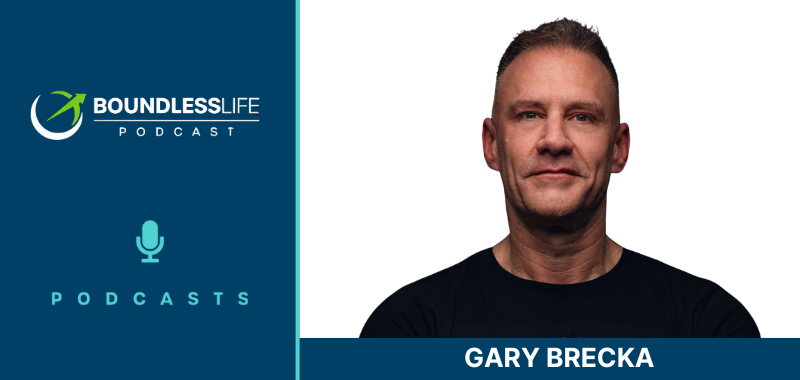
The SUPERHUMAN Protocol That Declumps Cells, Hyperoxygenates The Body, Restores Cellular Wellness & *Much* More, With Gary Brecka (Best of LIFE Network’s Experts!)

Affiliate Disclosure

Anti-aging, Biohacking, Body, Health & Wellness, Immunity, Longevity & Age Reversal, Podcast, Podcast-new, Self-Quantification, Supplements

Listen on:

Reading time: 8 minutes

What I Discuss with Gary Brecka:

  • Gary's invigorating morning, which includes breathwork in the sunshine, Pranayama-style techniques, and Egoscue stretching to realign the body and stimulate cerebral spinal fluid…01:14
  • The concept of “snacking on exercise”—brief, frequent activity sessions—to maintain clarity, alertness, and overall well-being…02:31
  • The Four Corners walking exercise details the value of natural sunlight and bare feet on the ground, plus explains the theory of “aging as the aggressive pursuit of comfort”…04:31
  • Hormetic stress, debunking the “all stress is bad” myth, and encouraging exposure to discomfort to strengthen both body and mind…06:40
  • Working with massive epidemiological datasets, identifying hypoxia as a universal risk factor for disease, and explaining how insurance databases offer unparalleled insight into mortality…08:44
  • Hypoxia emerging as a central cause in multiple diseases, including cancer and diabetes; the duo explains how movement and an active lifestyle protect against these silent threats…13:08
  • Muscle’s role in metabolism and longevity, the dangers of sarcopenia and chronic anemia, and their connections to conditions like Alzheimer’s…18:43
  • How actionable genetic testing can identify deficiencies impacting energy, mood, and disease susceptibility…23:36
  • Gary warns about unnecessary supplementation, focusing instead on precise, need-based approaches—such as methylated B vitamins for those with particular genetic mutations…28:42
  • The critical importance of morning light for wakefulness and health debunks myths about vitamin D synthesis, and addresses the disproportionate impact of vitamin D deficiency in people with dark skin…38:28
  • Gary’s three-step protocol for optimizing energy and longevity, outlining “superhuman” strategies involving PEMF, oxygen therapy, and red light exposure for cellular health and increased energy…44:35
  • The two pillars of Gary’s assessment process: 10X Health—64 blood biomarkers and genetic testing…51:17
  • “Oxygen tax” of carbs, describing how low-carb, high-healthy fat eating (with unprocessed oils and nutrient-rich foods) better maintains oxygenation…55:05
  • The advantages of PEMF mats, portable devices, grounding shoes, and ways to counteract the harmful effects of modern environments…59:45
  • The logic behind short, controlled bursts of high-oxygen exercise and easy alternatives for those without specialized equipment…1:03:52
  • The impact of light beds, infrared sauna pods, and cold plunges, plus a preview of advanced recovery techniques like IV ozone and carnosine…1:07:41

    • A brief Egoscue video highlighting four effective exercises for improving posture and strength.

According to my guest on today's podcast, Gary Brecka, misdiagnosis is the third leading cause of death in the country, behind cardiovascular disease and cancer.

In Gary's previous career, he was not allowed to have any contact with the patient or the treating physician. So, even if he saw life-threatening medication interactions, he couldn't pick up the phone. Needless to say, this was gravely troubling.

That early career was as a mortality modeling expert in the insurance industry, utilizing medical records and demographic data to predict mortality (the likelihood of someone dying) to the month.  After selling that company, he wanted to utilize the information he had gathered to help people improve their quality of life.

Leaving this career deepened Gary’s interest in blood chemistry and the longevity biomarkers found in human blood work. He then launched his obsessive and relentless pursuit of ways to improve and extend life by optimizing these biomarkers.

Simply put, Gary began a worldwide search for the ultimate ways to optimize human life.

Today, Gary Brecka is a leading expert in human biology and longevity with over 20 years of experience in biohacking and functional medicine. As the former Chief Human Biologist and co-founder of 10X Health System, he developed innovative wellness protocols that optimize performance and restore balance in the body. Now, through The Ultimate Human brand (you can check out our podcast together here), Gary continues his mission to help people take control of their biology using measurable, science-based methods. Specializing in serum blood and genetic biomarkers, he enhances human performance through personalized nutrition, advanced supplementation, movement protocols, and technologies such as oxygen therapy and red light treatments.
Gary works with a hand-picked clinical team of board-certified physicians (M.D.s), Ph.D. researchers, business leaders, functional medicine experts, motivators, and scientists—all united by one mission: to discover and deliver the safest, fastest ways to optimize the mind, body, and spirit through modern science.

As a former competitive triathlete and consultant, Gary has worked with top performers across the UFC, NFL, boxing, entertainment, and corporate worlds. His mission is to provide science-based, research-backed tools that help people live their best lives. He holds a B.S. in biology from Frostburg State University and a B.S. in human biology from the National College of Chiropractic.


🎧 Want to Hear More from Gary Brecka and Other Leading Health Experts?

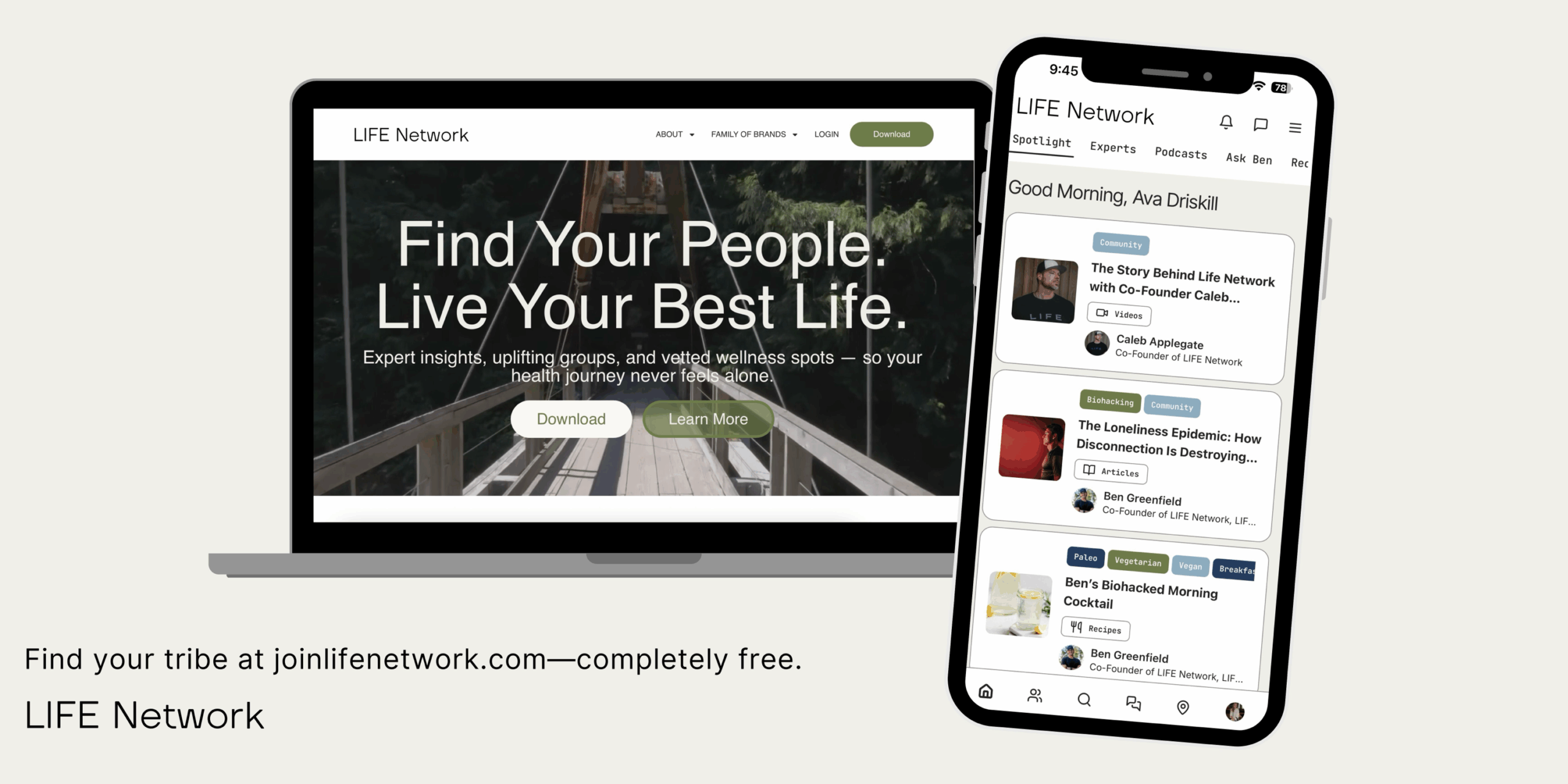
You can now follow Gary inside LIFE Network, alongside Dr. Amie Hornaman, Dr. Leland Stillman, Dr. Sandra Kaufman, Shawn Wells, Sarah Beth Yoga, Renee Belz, and many more leaders in health, fitness, and longevity—all joining together to help you live your best life.

🌿 When you join LIFE Network for FREE, you'll receive instant access to:

  • Ask Ben AITrained on decades of my content, podcasts, and articles—you can message it anytime with your health or fitness questions.

  • Groups Connect with your community on topics like biohacking, nutrition, longevity, and more.

  • PlacesDiscover healthy restaurants, organic cafés, eco-friendly spots, and other wellness-focused locations near you.

  • And thousands of podcasts, videos, articles, recipes, and more to help you thrive every day—no strings attached. 

Click Here to Join LIFE Network for Free

💎 You can upgrade to LIFE Premium ($14.99/month) to unlock:

  • TRIUMPH Coaching Train with my elite coaches in small groups of fewer than 15 people to reach your health and fitness goals. Get personalized nutrition plans, accountability, and a supportive community—all inside one easy-to-use app.
  • Ad-Free PodcastsEnjoy every episode of Boundless Life (and many of your other favorite health and wellness shows) without interruptions.

  • Unlimited Ask Ben AI Voice CallsGain deeper, tailored guidance to optimize your sleep, nutrition, workouts, and overall longevity.

Sign Up for LIFE Premium & Start Coaching


Please Scroll Down for the Sponsors, Resources, and Transcript

Episode Sponsors:

Gameday Men’s Health: Gameday Men's Health offers science-backed, physician-led men's health optimization with personalized protocols for testosterone, peptide therapy, ED treatment, and more—helping you perform at your best whether you're training hard or keeping up with life. Visit gamedaymenshealth.com/bengreenfield for a free testosterone test and consultation at a clinic near you.

Timeline Nutrition: Give your cells new life with high-performance products powered by Mitopure, Timeline's powerful ingredient that unlocks a precise dose of the rare Urolithin A molecule and promotes healthy aging. Go toshop.timeline.com/BEN and use code BEN to get 20% off your order.

Ketone-IQ: Ketone-IQ delivers science-backed performance fuel that increases power output by 19%, reduces fatigue by 10%, and naturally boosts EPO production for better oxygen delivery—trusted by elite athletes like Jon Jones and Olympic champions. Save 30% on your subscription plus get a free gift with your second shipment at Ketone.com/BENG

BEAM Minerals: If you want to up your mineral game, give BEAM Minerals a try. Go to beamminerals.com and use code BEN at checkout for 20% off your order.

Quantum Upgrade: Recent research has revealed that the Quantum Upgrade was able to increase ATP production by a jaw-dropping 20–25% in human cells. Unlock a 15-day free trial with the code BEN15 at quantumupgrade.io.


Gary Brecka:

Podcasts and Articles:

Resources from this episode: 

Ben Greenfield [00:00:00]: Chopping it up good today with my friend Gary Brecka. This is a Life Network expert replay. Gary's one of the top minds in longevity and health optimization. From his days modeling mortality in the insurance industry to 10x health, Gary breaks down the biomarkers that matter most in this show and how oxygen, movement, and genetics all tie into living longer and stronger. All the resources are going to be at BenGreenfieldLife.com LN Gary. Gary is featured as one of our experts within the Life Network. So check it out at BenGreenfieldLife.com LNGary and learn more about all our Life Network featured experts@join lifenetwork.com so all right, folks, I'm here with Gary Brecker. We're finally doing it.

Ben Greenfield [00:00:49]: We've spent.

Ben Greenfield [00:00:50]: Gosh. This morning so far has been fantastic.

Gary Brecka [00:00:52]: Oh, my God.

Ben Greenfield [00:00:53]: I don't know if every morning for you has been, but let's give folks the rundown just in case they're curious.

Gary Brecka [00:00:58]: Super biohacking morning.

Ben Greenfield [00:00:59]: So for those of you who are not familiar with Gary or who didn't listen to my introduction to Gary for this podcast, he knows a lot about human biology. In particular, how to harness a lot of the elements of things like air and light and water and electricity to optimize the body. And so we began today with some beautiful breath work out in the sunshine.

Gary Brecka [00:01:25]: Amazing. That was great. Led by yourself.

Ben Greenfield [00:01:27]: More than a little hop a and then did did a little kind of like a Pranayama s breath work session. You did some Agoscu stretching.

Ben Greenfield [00:01:36]: Yeah.

Ben Greenfield [00:01:36]: And we got time. We can go through your whole little morning routine because it's fantastic.

Gary Brecka [00:01:40]: Sure.

Ben Greenfield [00:01:40]: Tell me about the egoscue stretching. Why you start that off?

Gary Brecka [00:01:43]: It's just a postural realignment. You know, pigeon toeing the feet in and then using some rear circles with your. With your delts to put some stress on the delts and kind of realign the traps and changes the kyphotic and lordotic curve in the spine, get the cerebral spinal fluid going. And then you'd use a pursed hand pressed over top of your head, staring right at your middle fingers to just kind of stretch and get that cerebral spinal fluid going. I mean, the credit really goes to Agoscue, not to me. And I use it every morning as a way to warm up for breath work or cool down after.

Ben Greenfield [00:02:16]: We have a mutual friend. Brian. Is it Brian? Is that his name?

Gary Brecka [00:02:20]: Brian? Can't remember his last name.

Ben Greenfield [00:02:22]: Sorry, Brian, if you're listening. But anyways, I had discovered egoscoo when someone had Mentioned it to me on a podcast. And There's a little five minute video on YouTube. It's like five minutes to banish low back pain or something like that. And some of those moves we did out on your porch.

Gary Brecka [00:02:38]: Exactly.

Ben Greenfield [00:02:39]: I learned them at a classic.

Gary Brecka [00:02:41]: I went to a Tony Robbins event. And then afterwards, I met Brian.

Ben Greenfield [00:02:44]: Yeah.

Gary Brecka [00:02:45]: And Brian gave me just some simple realignment techniques to use on a daily basis. And I've used them every sense.

Ben Greenfield [00:02:51]: Well, Brian taught my sons, my twin sons, how to do some of these exercises. And we went to a Tony Robbins event in New Jersey, and we're sitting out there with whatever, 50,000 people in the stadium, and he asked if the Greenfield boys can come up. They were, like, 9 years old. They got up there on stage with all the flashbulbs in the arena, and I still have a little video of it. They're up there on stage leading the whole arena through the Egoscu exercise.

Ben Greenfield [00:03:16]: Yeah. Yeah.

Ben Greenfield [00:03:17]: And I still throw them. I don't know about you, but I do a little movement snacks throughout the day.

Gary Brecka [00:03:21]: I do, too. I believe in snacking on exercise. I think that's just one of the greatest tools.

Ben Greenfield [00:03:25]: Yeah.

Gary Brecka [00:03:26]: Just to stay mentally clear and alert and physically focused. I say physically focused, too, because if you're. If you're not in physically good shape or your body's tired, your mind's tired.

Ben Greenfield [00:03:36]: Yeah.

Gary Brecka [00:03:36]: So snacking on exercise throughout the day is an amazing way to just keep a level of clean, clear, cognizant kind of waking energy sustained throughout the day.

Ben Greenfield [00:03:46]: Yeah.

Ben Greenfield [00:03:46]: And even though we'll get into some of the sexy biohacking technologies, you got, you got some amazing tools sprinkled around your house that I think people will absolutely be intrigued with. What I appreciated about you and I haven't hung out so much, but what I appreciated about you was one of the very first things we did after the breath work was we went outside and connected with nature, not just the technologies. Tell me about what your morning walk routine is like.

Gary Brecka [00:04:11]: So right across from me and right below the.

Ben Greenfield [00:04:13]: Careful. Everybody's gonna know where you live now.

Ben Greenfield [00:04:15]: Yeah.

Gary Brecka [00:04:17]: 1000 muse in Miami. But right across is a huge open air park. It's got a dog park in the middle, museums on either side, and two thirds of it surrounded by water. So in the mornings, I go out there, take my shoes off, and I. And I do these squares around the park, and I call it Four Corners. And in each corner, I just do a different basic exercise, some of which I learned from you this morning, but an air squat, stretching, Move. Push up static. Know a static squat hold plank.

Gary Brecka [00:04:47]: And each one of those corners, it makes the walk go fast. It breaks it up. You're not crushing your body. It's a great way to wake up. I'm a big believer in earthing and grounding because we actually discharge into the earth as.

Ben Greenfield [00:04:59]: You know what you did, you slipped your shoes off. Took my shoes off after neener neener, because I was wearing the. I was wearing the cheating sandals or the earth runner sandals with the carbon.

Gary Brecka [00:05:08]: I'm in downtown Miami, so.

Ben Greenfield [00:05:09]: God strange. I don't know where all the syringes and the condoms are.

Ben Greenfield [00:05:13]: I keep.

Ben Greenfield [00:05:13]: I keep the feet shoddy.

Ben Greenfield [00:05:15]: Yeah, but.

Ben Greenfield [00:05:15]: And I was telling you, they even make these straps now, they're called earth erthe. You put them on any existing tennis shoe and they turn the shoe across train or whatever, and they earth it, they ground it.

Gary Brecka [00:05:26]: I'm all about that.

Ben Greenfield [00:05:27]: That's an option to go with. But you take your shoes off and you walk around the park after that.

Gary Brecka [00:05:31]: I walk around the park and do some breathwork at first light in the morning. And I love the sun. Comes right up over Miami beach, right off the horizon of that water. So I do breath work in the morning, do that. A goscue method. I usually have a cup of black coffee or maybe with a little fresh organic coconut powder. And then I do this thing I call Four corners, which is go to the park, take my shoes off, and then walk the four corners of the park doing a different exercise at each location.

Ben Greenfield [00:05:58]: Yeah, yeah.

Gary Brecka [00:05:59]: Very simple, you know, I take my shirt off, I get. I get natural sunlight. I do it. I've done it in the rain before, too. I do it when it's cold. I just let. I don't let the weather dictate whether or not I do it because one of my core beliefs is that aging is the aggressive pursuit of comfort. And the more aggressively we pursue comfort, the faster we age, we just collapse all of our defense mechanisms.

Gary Brecka [00:06:21]: We could go into a whole podcast on that alone. But if it's raining, I do the same thing. If it's hot, I do the same thing. If it's cold, I do the same thing. I don't let the weather dictate whether or not I'm out there. I actually kind of prefer some of the real inclement weather because the park's by itself. I walk out there when it's wet and I'll walk out there when it's dry.

Ben Greenfield [00:06:40]: What does that mean? I might derail. Tell you a few times. Here as we go through your morning routine. But when you say we derail our defense mechanisms, I assume you're talking about just not allowing ourselves to tap into hormetic stress or something like that.

Gary Brecka [00:06:55]: Hormetic stress being the big one. But, you know, we, we have a tendency to believe that stress is very bad for the body. Right. So we have to stop telling grandma not to go outside. It's too hot, not to go outside, is too cold.

Ben Greenfield [00:07:07]: Yeah.

Gary Brecka [00:07:08]: Just to lay down, just to relax, to eat at the first pang of hunger. Because, as you know, when. If we don't load our bones, they don't strengthen. If we don't tear a muscle, it doesn't grow. If we don't challenge the immune system, it weakens. So in almost every case, you know, physical stress strengthens the body, but it also strengthens the mind.

Ben Greenfield [00:07:29]: Yeah.

Gary Brecka [00:07:29]: I mean, sick, fat, tired people don't build empires, Right. Yeah. And so it really begins in the body before it travels to the mind. Same thing with neurotransmitters and, and gut health. That, that gut brain connection is very much the same as a physical brain connection.

Ben Greenfield [00:07:49]: Yeah.

Gary Brecka [00:07:49]: And so I believe that healthy hormetic stresses, thermal stresses, weight bearing stresses, are very good for the body. I mean, you want to live a long time, and I happen to have a core competency and in law, in the science of longevity and mortality, you know, lift heavy weight and stress the body on a regular basis.

Ben Greenfield [00:08:09]: Yeah.

Ben Greenfield [00:08:10]: When you talk about your history in the science of mortality and longevity. And don't worry, we'll get back to some of the other cool things that we got up to this morning after the walk. But I would love to hear a little bit more about what got you interested in this, because before I came to Miami, you and I talked on the phone. And I always thought you were just some biohacker who was interested in the body and eventually took all the things you learned and started to do with other people. But. But you had a very interesting start. You were in, like, insurance adjusting or something.

Gary Brecka [00:08:44]: A very specific area of insurance, which was the science and the predictability of mortality. It's called probabilistic mortality modeling.

Ben Greenfield [00:08:54]: Okay.

Gary Brecka [00:08:55]: So, you know, if we got five years of medical records on you and five years of demographic data, we could tell the insurance company how long you had to live to the month. You see, because the database. To the month. To the month.

Ben Greenfield [00:09:08]: This wasn't like methylation clocks and Horvath aging and telomeres. This was just looking at epidemiological data.

Gary Brecka [00:09:15]: Epidemiological Data. But with the one thing you have to remember that insurance companies have that no other clinical study has, no other medical enterprise has, no other published trial has, no medical enterprise of any type has, is that they know the day, the date, the time, the location, and the cause of death for everyone, that they've issued an annuity, a life insurance, or a reinsurance policy on even a reverse mortgage. You wouldn't believe the number of financial services products that are actually based on how many more months you have left on Earth. And so when you have the endpoint, you can trace it back to causality. You see, in a clinical study, we know that, for example, obesity shortens your lifespan by X number of years. You know, type 2 diabetes shortens your lifespan by X number of years. This is all data that's used on actuarial tables. How do we put somebody on an actuarial table? But when you talk about specific mortality, they have tens of millions of deaths and they trace that endpoint back to its causality.

Gary Brecka [00:10:22]: If this database could see the light of day, it would permanently change the face of humanity. It would upend modern medicine in a way that would absolutely be catastrophic.

Ben Greenfield [00:10:32]: Information's like, private.

Gary Brecka [00:10:34]: The insurance companies are the polar opposite of Google and Facebook. They collect voluminous amounts of information, but they don't share it with anybody. They use it to price financial service products against you. I mean, think about it. If they're going to take out a $25 million or $50 million life insurance policy on your life, like we're talking.

Ben Greenfield [00:10:51]: Like a term life insurance policy, we're.

Gary Brecka [00:10:53]: Usually talking about universal life policies, okay, that are going to last until the day that you, that you die. So they don't expire after 10 years or 20 years.

Ben Greenfield [00:11:01]: They're trying to predict when that date is going to occur so that they don't get stuck with the bill.

Gary Brecka [00:11:05]: Exactly. But if you think about it, they're taking 25 million or $50 million worth of risk on one variable. There's only a single variable that matters, and that's how many more months do you have left on Earth? How many more months are they going to predict are that they're going to collect that premium?

Ben Greenfield [00:11:21]: Okay.

Ben Greenfield [00:11:22]: And you're working for one of these companies.

Gary Brecka [00:11:23]: I was actually working for multiple companies. So we did life expectancies and we did these probabilistic models to, to basically take a portfolio of life insurance that one life insurance company is going to acquire and, and let them know if the mortality predictions were accurate or not.

Ben Greenfield [00:11:43]: Okay.

Gary Brecka [00:11:44]: Because think about it, if you're. If you put $25 million worth of risk on somebody's life and you don't collect enough premiums to offset that risk because your mortality prediction was wrong.

Ben Greenfield [00:11:54]: Shitty business model.

Gary Brecka [00:11:55]: It's kind of a really shitty business model. And if you want to know how accurate they are, just look at the last financial services crisis we had. 364 banks failed. Not a single life insurance company failed. Not one.

Ben Greenfield [00:12:08]: Really?

Gary Brecka [00:12:09]: Not a single life insurance company failed. This is how accurate and well reserved they are because they have perfected the science of mortality.

Ben Greenfield [00:12:17]: So what'd you find out?

Gary Brecka [00:12:19]: If I was to boil my entire career down to one sentence, I say this all the time. It would be that the presence of oxygen is the absence of disease.

Ben Greenfield [00:12:29]: Presence of oxygen is the absence of disease.

Gary Brecka [00:12:31]: Yes. We didn't, we did not find a single disease etiological pathway that did not either have its roots in the absence of blood oxygen or was not severely exacerbated by the absence of blood oxygen.

Ben Greenfield [00:12:45]: Can you give me an example?

Gary Brecka [00:12:46]: Hypoxia. You know, all cancer begins in a hypoxic environment. Type 2 diabetes begins in a hypoxic Warburg effect.

Ben Greenfield [00:12:54]: Cancer generating energy, anaerobically producing lactic acid.

Gary Brecka [00:12:58]: Tissue acidosis, and then springing upon you to create that angiogenic effect.

Ben Greenfield [00:13:02]: Okay.

Gary Brecka [00:13:02]: To eventually provide oxygen to grow a tumor. But the genesis of that tumor begins in hypoxia.

Ben Greenfield [00:13:08]: Okay.

Gary Brecka [00:13:08]: I mean, how does cancer decide where it's going to metastasize to? It looks for a focal area of hypoxia and it sets up shop in that area.

Ben Greenfield [00:13:15]: Okay.

Gary Brecka [00:13:16]: And if you look at anemia, sedentary lifestyle, these are leading causes of all cause mortality. Sitting is the new smoking. But why is sedentary lifestyle and why is sitting become the new smoking? Because sedentary lifestyle is a foundation for hypoxia. The less we move, the less we breathe, the more poorly we manage oxygen. Not only the faster we're accelerating towards the grave, but the faster the parabolic curve of all cause mortality. So we could predict the onset of and the severity of disease based on your hypoxic condition. If you have anemia, for example, and it's non responsive, because you have the MTHFR gene mutation, you don't respond to folic acid, you only respond to methylfolate, for example, and you have a cardiovascular condition, atherosclerosis, arteriosclerosis, you can predict how much more quickly that will accelerate based on a normal table of atherosclerotic. Really Progression.

Ben Greenfield [00:14:17]: Okay.

Ben Greenfield [00:14:17]: And I know if I'm wondering this, other people might be also. But of course, we seek out in some cases as health enthusiasts, hypoxia. Like you and I, when we were doing the breath workout in the porch, like we got to certain sections where we were blowing all of our air out and holding that for as long as possible or some people will do. I don't know if you've ever been like a CVAC chamber which is hypoxic, or. I even do like you do exercise with oxygen therapy. But I have a little switch on that. That therapy device I use that pulls me into hypoxia, gets my pulse O2 down, like my blood oxygenation down, and then it goes back up once I get that surge of oxygen. But you're not saying that all hypoxia is bad, right?

Gary Brecka [00:15:05]: No.

Ben Greenfield [00:15:06]: There's a kind of like a hormetic effect to having periods of time with low oxygen.

Gary Brecka [00:15:09]: No, systemic hypoxia is long duration, hypoxia is bad. Short term exposure to hypoxic conditions or even altitude can actually improve oxygen transport. If you look at the way that a healthy body responds to a hypoxic condition, it increases erythropoiesis. Right. So that increase in erythropoiesis offsets altitude. Okay, but if you weren't. Weren't offsetting that altitude and you put yourself in a hypoxic environment, your body didn't offset that oxygen deficit, you would have severe long term consequences for that.

Ben Greenfield [00:15:41]: Now, besides a hypoxic state, and this might be a loaded question, I don't know, but. I'm sorry, besides a sedentary state like you alluded to with the sitting is the new smoking, what type of other factors have you identified that seem to be pretty associated with people being in this hypoxic state?

Gary Brecka [00:15:57]: Anemic conditions, age related sarcopenia that actually collapses the. The respiratory rate, the respiratory volume, muscle.

Ben Greenfield [00:16:04]: Loss, and the inability to carry oxygen to. Lack of muscle.

Gary Brecka [00:16:07]: Yes, lack of. I mean, muscle is our metabolic currency.

Ben Greenfield [00:16:10]: Yeah.

Gary Brecka [00:16:10]: I mean there's a direct correlation between early onset disease and even early onset death. And. And your, Your muscle volume, the percentage of muscle that you have. I mean, muscle really is our metabolic currency. We're realizing now that muscle is more important in older ages.

Ben Greenfield [00:16:27]: Yeah.

Gary Brecka [00:16:27]: Than flexibility.

Ben Greenfield [00:16:28]: I've been starting to pay attention to that. Dr. Gabriel Lyon.

Gary Brecka [00:16:32]: Right.

Ben Greenfield [00:16:32]: Does a lot of. She calls it muscle centric medicine. I think she's writing a book about. I'll have to get around.

Gary Brecka [00:16:36]: I'm a big fan. I follow her on Instagram too.

Ben Greenfield [00:16:39]: Yeah, so. So sarcopenia or loss of muscle would be one thing associated with hypoxia. Sedentary lifestyle anemia. And I assume by anemia you don't just mean low iron. I don't just mean like because there's that guy Morley Robbins now talks about the iron copper ratios and the issue and some people supplement with iron and it causing things like hemochromatosis without adequate copper on board. So I assume it comes down to more than just like supplements.

Gary Brecka [00:17:07]: Yes, it comes down. I mean that's a broad category. I mean there's a lot of people that we would find that had an anemic condition. Low red blood cell, low hemoglobin and they were non responsive to therapy. So for example, take a, take a patient that has a homozygous MTHFR gene mutation. They're, they're poor folate metabolizers. These people don't respond to conventional therapies. Folic acid, B12 and iron, which is normally what they would give somebody who's an anemic condition.

Gary Brecka [00:17:35]: And so these become chronic and now chronic anemia. If you look at the type 3 diabetes, one of the early links to Alzheimer's. In fact, in my 22 year career I didn't see a single early onset Alzheimer's patient, not one that did not have at least 10 years of elevated blood sugar prior to. And this myth that people are losing their memory is not really true. They're losing access to their memory. So it's not the memory that's actually fading, it's the access to the memory that's fading because neurosynaptic junctions get full of eventually amyloid plaques. But that viscosity changes a long time before you actually have these issues with.

Ben Greenfield [00:18:20]: With memory, which is why a more stable source of fuel like ketones or coconut oil, etc can be very benefic beneficial for Alzheimer's or dementia because it's staving off the diabetic condition in the brain. You know what else I think?

Gary Brecka [00:18:33]: Insulin resistance in the brain.

Ben Greenfield [00:18:34]: And I don't know if you've thought about this much at all before, but I think part of it, in addition to the presence of too much carbohydrate and glucose in neural tissue, it's also the lack of choline precursors that one gets from lots of healthy fats. There's a guy named Duane Goodenow who wrote a book called Breaking Alzheimer's and that book goes into plasmalogen deficiencies plasmalogen being these tiny fat based molecules that he has found are heavily associated with onset of this type 3 diabetes. Turns out that the main precursor for plasmalogens is the type of choline that we'd find in eating a lot of grass fed beef or walnuts and other seeds and nuts and avocados and olive oil and all these things we know are healthy foods for the brain. So it's kind of like that 1, 2 combo of sugar excesses and plasmalogen deficiencies that seems to result in this type 3 diabetes onset.

Gary Brecka [00:19:33]: No question.

Ben Greenfield [00:19:34]: And so back to the oxygen piece. So we got a sedentary lifestyle, we got sarcopenia, we have some form of anemia. Not necessarily everybody needs to go rush out and buy iron, but something related to MTHFR or iron, copper or. That's why I put raw liver in my smoothie every morning, which I'm gonna get you on the bandwagon for.

Gary Brecka [00:19:53]: I'm not quite there yet.

Ben Greenfield [00:19:55]: Smoothie this morning.

Gary Brecka [00:19:56]: I feel pretty good right now.

Ben Greenfield [00:19:57]: So we'll, we'll get to the smoothie eventually because we got back from the walk and then we eventually got to that. But what, what other biggies, while we're talking about the reasons for hypoxia do you think you could recognize as the main ones for people to think about? If there's any others?

Gary Brecka [00:20:11]: Poor methylation porn. Poor. Poor use of mitochondrial nitric oxide and oxygen at the mitochondrial level.

Ben Greenfield [00:20:19]: Okay.

Gary Brecka [00:20:19]: And if you look at older ages and respiratory volume, you know, one of the things that we would look at is how well they ambulated. So if you take a patient that had, we had what was called morbidities and comorbidities.

Ben Greenfield [00:20:34]: Okay.

Gary Brecka [00:20:35]: So if you had a certain disease condition, if you had type 2 diabetes and you would get a diet, you would get a debit. If you were morbidly obese, you would get a debit. If you were hypertensive, you would get a debit. But if you put all of these debits into the same body, it's not 1 plus 1 plus 1 equals 3, it's 1 plus 1 plus 1 equals 10. And so we realized that the presence of oxygen was the absence of disease and that the deficiency in oxygen was the presence of a lot of diseases. Not only the onset of, but the severity of disease. And towards the tail end of my career, we started to delve deep into methylation pathways. And I think that methylation is one of the most overlooked areas in all of modern medicine because it doesn't assume that what goes into your body and goes into mine and goes into.

Gary Brecka [00:21:21]: To everyone listening to this podcast is treated exactly the same.

Ben Greenfield [00:21:25]: Yeah, right.

Gary Brecka [00:21:26]: That's the biggest fallacy in modern, modern medicine.

Ben Greenfield [00:21:28]: If I was going to come to you, how would you test me for methylation? Is this like one of those salivary genetic tests?

Gary Brecka [00:21:33]: It's a salivary genetic test, methyl detox profile, okay? You can get way down the rabbit hole of methylation. So what I prefer to do is look at the big five genes of actionable genes of methylation, because it's no use looking at genes where you can't supplement for their deficiency, right?

Ben Greenfield [00:21:53]: So you know, the actual. Would this be the alleles that you're.

Gary Brecka [00:21:57]: Looking at the genes and their sub alleles. So, for example, MTHFR has two big alleles, C677T A1298C. Those are the big known ones, okay? But you look at people that have homozygous breaks, meaning both parents gave them the gene mutation, okay? And depending on where that allele is, they have a predictable deficiency. And it's that deficiency that leads to some of the most common conditions that we accept as a consequence of aging. I mean, most people listening to this podcast are walking around right now somewhere between 55 and 60% of their true state of normal. And what I mean when I say that is if they haven't looked at their own methylation pathways, if they're not supplementing for certain deficiencies. I'm not a huge believer in just supplementing for the sake of supplementing. I believe that we supplement for deficiency in the human body and when we do, magnificent things happen.

Gary Brecka [00:22:54]: You know, the majority of disease that we believe is genetically inherited disease doesn't have a genetic link at all. The majority of disease that's passed from generation to generation, hypertension, hyperlipidemia, hypercholesterolemia, hypothyroidism, depression, anxiety, add, adhd. These conditions that run in families do not have a gene directly associated with that deficiency, okay? What they have is a methylation pathway deficiency, okay? And so what this means is they can't refine a certain raw material, they can't turn folic acid into methylfolate. Now they have a deficiency in methylfolate.

Ben Greenfield [00:23:36]: Which is why if you're having like a multivitamin or a cereal fortified with folic acid, again, could be doing more harm than good.

Gary Brecka [00:23:42]: The worst thing, I mean, most people don't even realize that folic acid is an entirely man made chemical, right? When you can't find folic acid anywhere on the surface of the earth. It doesn't occur anywhere naturally in nature. Neither does. You know the most common form of B12, right? Cyanocobalamin, hydrogen cyanide based B12. You know, three forms of B12 occur naturally in nature. The adenosol, the hydroxy and the methyl. But the cyano, the cyanide based form, which generally comes from human sewage. From the sludge from human sewage.

Gary Brecka [00:24:14]: When you bind hydrogen cyanide to the cobalt metal and create a B12 molecule, the body not only doesn't recognize that, but has to convert it into a natural form of B12 to even use it. So a lot of times our supplements, because we use something called single dose toxicity in the United States or one of the few civilized nations in the world that uses single dose toxicity.

Ben Greenfield [00:24:39]: Right.

Gary Brecka [00:24:39]: Which means that if I give you something in a capsule or a pill and there is some arsenic in there, or there's some hydrogen cyanide in there, or there's some other toxic chemical in there, as long as it doesn't have an effect on you in that dose, then it's safe to give it to you. But we don't take into account cumulative dose toxicity. Right. Nobody gets mercury poisoning from one sushi meal.

Ben Greenfield [00:25:03]: Yeah, we don't test what happens over time is what you're saying.

Gary Brecka [00:25:06]: We don't test what happens over time.

Ben Greenfield [00:25:07]: By the way, did you see that B12, one of the synthetic forms of it is constituted from human sludge.

Gary Brecka [00:25:13]: Like human sewage.

Ben Greenfield [00:25:14]: Yeah.

Gary Brecka [00:25:16]: So when we process human sewage, there's a foamy yellow substance that they discard and it's called sludge. And that sludge is, is almost purely hydrogen cyanide. And so we can take that sludge. Not, not we, Certainly not me. But you can take that, that sludge, you can dry it into a powder, you bind it to the cobalt metal, which all B12 is cobalt metal. You bind it to the cobalt metal and now you have cyanocobalamin, cyanide base B12.

Ben Greenfield [00:25:47]: Wow.

Gary Brecka [00:25:47]: And I, And a lot of people say, oh, Gary, it doesn't matter, that dosage won't harm you. But it's. Again, it's not the. Or the dosage determines the poison. That's not true. The cumulative dosage determines the poison. If you're okay putting small amounts of mercury in your body every day, it won't be the small amounts that you put in every day. It will be the accumulation of that heavy metal that causes.

Ben Greenfield [00:26:08]: Okay, so obviously we can talk about methylation alone for a couple yeah, we.

Gary Brecka [00:26:13]: Go way down the rabbit hole.

Ben Greenfield [00:26:14]: I want to give people the big bird's eye overview of some of these issues related to hypoxia. So we talked about sedentary lifestyle, we talked about sarcopenia, we talked about the methylation issues and anemia related issues. One thing I've noticed that you're also very keen on is light exposure. Is there a link between light exposure and a hypoxic state?

Gary Brecka [00:26:37]: Well, there's not a direct link between light exposure and a hypoxic state, but most people don't wake themselves up in the morning. They use stimulants to wake themselves up instead of waking naturally. So you know about first light. I'm not teaching you anything that you don't know, but that first 45 minutes of the day is very special blue light, not like the blue light that comes from your phone. Yeah, there's no uva, there's no uvb, you can't look straight at the sun, but you can absorb those rays. You still create cholecalciferol. Right. You still actually will generate vitamin D3 in the morning from morning light, but.

Ben Greenfield [00:27:10]: You don't have the really, you can still generate cholecalciferol even when it's kind of like red ish outside.

Gary Brecka [00:27:15]: Oh, you can still generate cholecalciferol on the cloudiest of days. You don't need much sunlight to generate vitamin D3.

Ben Greenfield [00:27:21]: A lot of people say you got to go out between like 10am and 2pm to really get vitamin D, but.

Gary Brecka [00:27:26]: You actually get it in the morning to get the highest. I use times spent. But that's patently false. I mean, you generate cholecalciferol even through diffuse light that's passing through windows. Yeah, on a very, very, you know, on a much more conservative basis. And then obviously it also depends on pigment of the skin. I mean, one of the reasons why we heard in that Covid disproportionately affected minorities had nothing to do with their minority status. It had to do with the pigment of their skin and clinical deficiencies in vitamin D3.

Ben Greenfield [00:27:55]: Really.

Gary Brecka [00:27:55]: So insurance companies have been on this for years. I mean, if I saw dark pigmented, you know, patient that was submitting for a life insurance policy that was clinically deficient in vitamin D3, had maintained this deficiency for a number of years, I would essentially extend that condition to being chronic. And so, you know, one of the second things we discovered in the mortality space was not just that the presence of oxygen was the absence of disease, but the Majority of conditions that people faced were what we called modifiable risk factors. What drove me crazy about my previous career was that I wasn't allowed to have any contact with the patient or any contact with the treating physician. So even if I saw life threatening drug interactions, I couldn't pick up the phone.

Ben Greenfield [00:28:42]: Your hands are tied. You're just sitting there knowing all these issues and seeing the big picture that all these people who are dying early are hypoxic. And you at that point, were you trained in biology and I was a human biologist. You knew all this out of grad school, but you were just handcuffed. All you could do is look at the data. You could do anything about it.

Gary Brecka [00:29:01]: And even, you know, I, I made more than one trip to human resources to say, I need to call this patient.

Ben Greenfield [00:29:07]: Yeah.

Gary Brecka [00:29:08]: Because they've been misdiagnosed or they're about to take a contraindicated medication that's going to cause a thrombolytic event.

Ben Greenfield [00:29:15]: Okay.

Gary Brecka [00:29:16]: And, you know, threatened with prosecution if I had contacted that patient. They said, we'll not only fire you, will prosecute you.

Ben Greenfield [00:29:22]: Yeah.

Gary Brecka [00:29:24]: And I understand because I'm not licensed to practice medicine. So they didn't want some, you know, human biologist sitting in a room looking at medical data. But I promise you, if I had called their doctor or called that patient and said, hey, stop taking the corticosteroid, start taking some vitamin D3, and I think you'll see that your joint pain goes away. Because there's a perfect example of what I'm talking about with deficiencies leading to conditions people don't have. You know, misdiagnosis is a third leading cause of death in America. I won't say modern medicine is the third leading cause, but modern medicine's misdiagnosis kills more people than morbid obesity and diabetes combined. And it's third only to cancer and cardiovascular disease. Right.

Gary Brecka [00:30:11]: So misdiagnosis kills more people with the exception of cardiovascular disease and cancer. And what I assume you're not talking.

Ben Greenfield [00:30:18]: About somebody operating on your left leg of your right leg because it's labeled improperly. What would be an example of a misdiagnosis that was.

Gary Brecka [00:30:25]: Take a, take a patient that has a severe deficiency in vitamin D3, for example. If you clinically deplete that nutrient from the human body for a decade or longer, that person will present with rheumatoid arthritis, like symptoms. Their history will read exactly parallel to rheumatoid arthritis. So more than hundreds of times I saw patients with long term clinical deficiencies in D3. Go into the primary care physician and they would say, look Doc, you know, the soles of my feet, my ankles are sore when I get out of bed in the morning, my hips are stiff every day. My knees have been hurting for the last two and a half years. It's steadily increased. I mean, recently it's hard for me to make a fist.

Gary Brecka [00:31:05]: And then Doc goes, you know what? You've got rheumatoid arthritis. I'm going to hit you with some high dose prednisone. I'm going to put you on what's called a corticosteroid and you're just going to take these orally for the rest of your life and you're going to be fine. Well, we knew in the insurance space because we had mortality data that you, if you started corticosteroids, you had six years and one day until you're having a joint replacement. It was so accurate, Ben, that we would. If you were a 60 year old female misdiagnosed with rheumatoid that you didn't have because you had a deficiency in D3, I would advance your age six years in one day. I would schedule your joint replacement and then I would begin to reduce what was called your ambulatory profile, how well you ambulated. As I reduce motility, mobility, I can actually bring in all the diseases that exacerbate with a reduction in mobility.

Gary Brecka [00:31:54]: So now you can predict the onset of and the severity of disease. And now this person has been diagnosed with a condition they don't have, put on a medication they didn't need, which caused them to have a joint replacement that wasn't required, that reduced their ambulation and it brought all cause mortality closer from the future. Yeah, so now they were dying of conditions they never should have had because they had surgeries that they never needed from medication that was never required, from a diagnosis that was based on their history.

Ben Greenfield [00:32:30]: Interesting. Back to muscle centric medicine. This, this is a study that I saw a couple of months ago. I don't recall what journal it was in, but it was highlighting a lot of the reasons for sarcopenia. And you know, there are multiple in the lack of lifting weights and I think vitamin D may have been in there, et cetera. But the two biggies were low amounts of bioavailable protein. And then the other one, and this one really leapt out to me. I was like, huh.

Gary Brecka [00:32:59]: I never really thought about it that way.

Ben Greenfield [00:33:00]: But it is interesting. It was gradual loss of muscle and fitness due to periods of immobility related to surgery, medical treatments or injuries. Meaning let's say that you're a nice, robust, like 30 year old muscular gal or guy listening to this and maybe five years from now you gotta get a little surgery for, I don't know, a kidney issue. And maybe a colonoscopy puts you up for three or four, five days after that and then maybe you break your leg. So all these things string together and you have like these periods of time over, let's say when you're 30 to 60 during any given year where you're just totally down and out for like 20 days. And those build up year after year after year. And it kind of makes sense intuitively, but until I saw it in this study in front of me, like, oh. Periods of inactivity related to medical issues are in addition to low bile protein, the number one cause for sarcophagus wycopenia.

Gary Brecka [00:33:53]: That's why all the, you know, all the great biohackers talk about consistency over time.

Ben Greenfield [00:33:57]: Yeah, it's consistency. It is keeping yourself in the game, which, which is that it's huge. Versus doing the, you know, marathon workout on the weekends or whatever. Now I want to learn a little bit more because I'm intrigued about where you got to where you're at now with this whole 10x health and I. You're probably aware of this, you're kind of blown up. Like I've been seeing you all over the place. What you're doing is obviously working or you're paying the right people the right amounts of money. I'm just kidding.

Ben Greenfield [00:34:22]: I'm.

Ben Greenfield [00:34:22]: I'm just kidding. And, and so the question I have for you though, kind of like back to the science of the hypoxia thing and back to the light and, and what you were explaining about with the light, the importance of first light, the importance of natural spectrum sunlight. If you would have walked into my room this morning, I'm increasingly becoming like this, like I'm like a red light addict, right? So I travel with a red light headlamp lamp and that's the only way I use to get around the house during the day or during the morning, right? So it's all red light plus my red light glasses, right? So my body's just basically bathed in sunrise. Even if at a hotel or I gotta walk down to the lobby to get a coffee or whatever, it's all red light for like the first hour of the day before I hit the big lights, you know, because typical, I'm up around 5 or so. So my reasoning is until the sun actually comes up, I want to keep fooling my body that we're in no sun or sunrise. And then I showed you that wraparound red lights thing that I have. I forget the name. It's Kineon is the name of the company that makes it.

Ben Greenfield [00:35:20]: I wrap that around my neck, right? And this is in the first hour after I'm getting up. So all of the blood going through my neck and my karate is getting blasted with red light. And then I have a little travel based red light. People have probably seen like juve makes one called the Go. I have one that Dr. John Lawrence gave me last week that's got little red. And so it basically is like putting the sunrise on in your bedroom. And so I'm all red light for that first hour of the day.

Ben Greenfield [00:35:47]: Now these are all technologies. We'll talk more about some of the cool technology you have here.

Gary Brecka [00:35:51]: Like some full, huge fan of technology.

Ben Greenfield [00:35:53]: So for this concept of first light, do you think that there's an advantage to that? That I'm still getting benefit from that versus what we did this morning and going out in full spectrum sunlight and sitting on your balcony. Do you use these red light devices when you first wake up?

Ben Greenfield [00:36:08]: I do.

Gary Brecka [00:36:09]: I, you know, I do the first light, I do the walk in the morning. And I believe in doing weights when I'm fed. So I usually do weight workouts later.

Ben Greenfield [00:36:17]: In the year, which we're going to go do after this. We'll be, we'll be crushing the weights.

Gary Brecka [00:36:21]: So we're going to go crush it. But then I get back and I do what's called the superhuman protocol, which is essentially taking all of the good things from the outside and bringing it in. I believe we get three major things from mother nature. We get magnetism, we get oxygen, we get light.

Ben Greenfield [00:36:37]: Magnetism, oxygen and light.

Gary Brecka [00:36:40]: Those are the three big things we get from mother Nature. And the further we get away from those three things, the faster the onset of all cause mortality.

Ben Greenfield [00:36:48]: It kind of begs the question real quick. Sorry to interrupt.

Gary Brecka [00:36:50]: No, it's okay.

Ben Greenfield [00:36:51]: But when you say magnetism, oxygen and light, and you found in these insurance actuarials that hypoxia was one of the big issues associated with mortality, do you think, think that magnetism and light should have been on that list as well? Or a magnetism and light kind of.

Gary Brecka [00:37:07]: Like the precursors to oxygenation, they're, they're precursors to oxygenation. Because if you think about how oxygen's transported in the body and then the delivery system not only just to the cell wall, but into the mitochondria, which actually occurs more through the water, mitochondrial water, than it does through direct oxygen entering the, the mitochondria. But, but if you look at the degradation of the oxidative state of the body, Right. A lot of this has to do with the charge, the polarity on the surface of the cell.

Ben Greenfield [00:37:38]: Okay.

Gary Brecka [00:37:38]: And not to get too technical, but if you look at a red blood cell. Okay, so let's get technical for a second. So if you look at a red blood cell, and we're going to do some dark field microscopy here after, after this. If you look at a red blood cell and the surface of that cell has a charge, and just like a magnet, if, if two cells have similar charges, they repel. If they have opposite charges, they attract. It's a com. You know, PH stands for potential hydrogen. This is a charge.

Gary Brecka [00:38:02]: Right. That's why it's a complete fallacy that we can get alkaline from drinking alkaline water. We get alkaline by changing the charge of the body through logos current, through grounding, through earthing. I mean, discharging into the earth or discharging through a PEMF mat logmf mat is the safest and the most natural and the fastest way to alkalis repolarize the charge of the cellular structures in the body.

Ben Greenfield [00:38:28]: I never really thought about this. So you're basically making the case that alkalization is synonymous with or linked to repolarization.

Gary Brecka [00:38:37]: No question. It's linked to potential hydrogen. That's ph. The scale of ph is based on the potential of hydrogen. So what this means is, let's say you have a group of red blood cells and they're all hanging out the bloodstream together and they have similar charges. They will repel, they'll slide around like, like hard boiled eggs, like protons with a positive charge, Tons of the positive charge. So what happens is you have a lot more surface area. Now for that cell to take in nutrients, to expel nutrients, to have oxygen from the, from the serum of the blood, enter, enter a cell.

Gary Brecka [00:39:14]: So for a, for cells to shuttle oxygen through the bloodstream, they need to have more surface area to increase, increase the surface area, you need to crease, create cellular separation. To create separation, you need to have.

Ben Greenfield [00:39:25]: The right charge and a higher pH, meaning higher potential hydrogen. More of these protons pushing each other apart, expanding the cell.

Gary Brecka [00:39:32]: Right. Or else they start to clump up.

Ben Greenfield [00:39:34]: Yeah.

Gary Brecka [00:39:34]: And everywhere they touch, you lose that surface area twice. You lose it on the cell or you lose it on either cell that's touching. Now what happens when these cells start to travel around the bloodstream in clumps? I'm not talking about coagulated blood. I'm talking about coalesced red blood cells. So now you have these because they haven't done earthing or grounding or red light or PMF and they've been traveling and they live in a condo like I do on the 27th floor and they fly three days a week and get a lot of a static electricity. They're, they're wearing 2 inch thick sole rubber soled shoes so there's no discharge going on. So now if you look at this blood, you'll see that the red blood cells are kind of all clumped, pumped up and stuck together like too many cars trying to.

Ben Greenfield [00:40:13]: You see that through these microscopes you have sitting right over here. He's not joking, folks. His whole condo is like literally the microscopes and crazy. It's like half, half lab, half biohacking condo. So you, so you could see this.

Gary Brecka [00:40:25]: I made my cameraman do it last week. I, I actually pricked his finger, put the blood on there. And you could see because the microscope's looking down through the blood, you could see all the blood kind of stacked up and clumped together. Now you lay on a PEMF mat and take your blood 5 minutes after getting off a PMF mat. Just do a 20 minute logo session and you'll see that all the red blood cells have separated. Now I have more surface area for oxygen and that's why I do ewat exercise with oxygen therapy after getting on a PMF med alkaline.

Ben Greenfield [00:40:57]: That's why first I was wondering about the order because we, we slept on PMF mats last night. You're one of the few guys who have hung out with who actually has a PMF matt under their bed.

Gary Brecka [00:41:06]: Your brand and in my guest bed. You got use of it on your.

Ben Greenfield [00:41:09]: Guest bed, which was amazing. And by the way, I just realized for those of you listening, I didn't yet tell you where the show notes are. We'll have a video of all this stuff, but it's BenGreenfieldLife.com breca that's Gary's last name. B R E c k a BenGreenfieldLife.com breca so by utilizing the PMF and of course by going outside barefoot like we did today with the earthing and the grounding, we're reducing the amount of clumping. By allowing for popular, popular depolarization of the cells. And that then allows for better oxygen flow and a more alkaline state. And would that theoretically be something that is accelerated by exposure to light photons or is that something that allows the light photons to kind of like charge up the mitochondria better?

Gary Brecka [00:41:53]: Allows them light photons to charge of the mitochondria. So remember I said we get three things from other nature, magnetism, oxygen, oxygen and light. We get magnetism from the earth. Yeah, Earthing, grounding, it's a very real thing.

Ben Greenfield [00:42:03]: Yeah.

Ben Greenfield [00:42:03]: Or PMF is bad. I like to think of as like earthing on steroids.

Gary Brecka [00:42:05]: Yes, it's earthly on steroids. And, and if you live in a condo or you spend a lot of time on a plane, you have to have a pmf.

Ben Greenfield [00:42:11]: Yeah.

Gary Brecka [00:42:13]: So you get magnetism from the earth, which actually creates alkalinity. And then you, you move to this EWAT exercise with oxygen therapy. So we use 95O2 under mild oxygen. Just what you did this morning. Three minute cycle with the 30 second sprint. This will raise not only your partial pressure, you know, essentially the volume of oxygen in the bloodstream, but it will also your SpO2. This will also raise your pulse oxygen, the amount of oxygen in the red blood cell. And now once you flood the blood with oxygen, then under mild exercise, because we want to create an oxygen demand, then you lay in a red light therapy bed.

Ben Greenfield [00:42:53]: So it's pmf. Then the exercise with oxygen therapy or some type of oxygen protocol, then it's red light. That's the gold standard.

Gary Brecka [00:43:01]: That's why we call it superhuman.

Ben Greenfield [00:43:02]: I'm going to repeat that one more time for people. That is basically if you take nothing else from this interview. This is Gary's superhuman protocol, pmf. And if you don't have access to that earthing or grounding, and then let's say you don't have exercise oxygen therapy, you could at least do breath work. Yes, Anything that's going to introduce more oxygen to the body. We'll talk about EWA a little bit more here briefly. And then you finish that up with red light or sunlight, take your shirt off and get outside if you're totally free, if you like, you don't have the money or you don't have all the fancy biohacking equipment and you're listening in. You could literally go outside barefoot or lay on your back outside and then you could do breath work in that same scenario.

Ben Greenfield [00:43:39]: Do a breath work walk and be doing that in the sunlight or Finish up with red light and that 1, 2, 3 protocol. If somebody could do that every day, they'd feel better.

Gary Brecka [00:43:47]: Better. Oh my God, they would feel so much better.

Ben Greenfield [00:43:49]: And then the biohacks. Stack that and concentrate and make it more effective.

Gary Brecka [00:43:52]: Exactly. I mean, you stack it with that equipment. One of the reasons why, you know, I, I started a wellness franchise seven years ago with my fiance. When I left, the mortality space was called Streamline Medical Group. We ended up treating a patient named Grant Cardone. And Grant Cardone. Grant Cardone.

Ben Greenfield [00:44:10]: Okay.

Gary Brecka [00:44:10]: And Grant Cardone had such an astounding response to the therapeutic protocol we put him on that he and his partner Brandon decided to acquire us September of last year and we became 10x health. And so now we're 10x health. And the idea is to take expensive modalities like, you know, that equipment's 150 grand. I mean, I don't expect anyone to put 150, 000 with equipment in their house.

Ben Greenfield [00:44:35]: You'd be surprised. You ought to meet some people listening to this podcast.

Gary Brecka [00:44:37]: Okay, so go to at Gary Bracker on my Instagram and I'll, and I'll be happy to sell you the equipment. But the idea is, you know, if I really wanted to touch the face of humanity, really, really make an impact on mankind, it's got to be available to everybody at a reasonable price. So we're putting a thousand of these clinics around the country, 20 in every state. And essentially, you know, Grant Cardone has helped to bankroll that and Brandon Dawson's helped to build a foundation for it for us to scale so that there'll be 20 of these locations in every state. People can come in and use it for a monthly fee instead of, you know, paying to have the equipment in their house. Yeah, so that's the whole, was the whole idea behind 10x health and, and that combined with blood testing, combined with genetic testing, which I'm a huge fan of, there's lots of great genetic tests out there. We do one through Cell Science Systems. It looks at the five actionable genes and the sub alleles.

Gary Brecka [00:45:34]: You can get 85% of the people, 90 of, you know, to their destination of optimal health.

Ben Greenfield [00:45:42]: That's why I was telling you on our walk, I like to cut through the genetic confusion. There's one called strategene by Dr. Ben Lynch. It identifies the nine so called dirty genes like the nitric oxide pathways, methylation pathways, histamine processing pathways, etc, because I mean, a lot of people don't need to know where that propensity for brown eyes or blue eyes.

Gary Brecka [00:46:00]: Exactly. Or detached earlobes.

Ben Greenfield [00:46:02]: I mean, actionable data.

Ben Greenfield [00:46:04]: Exactly, yeah.

Ben Greenfield [00:46:05]: So you're doing, you're doing quantification as well on a pretty robust level. If someone were to come to you and work with you or someone to go to one of these new 10x health systems, they're going through a whole battery of tests.

Gary Brecka [00:46:15]: They're going to go through mainly two tests upfront. They're going to get 64 biomarkers looked at in the blood.

Ben Greenfield [00:46:20]: Okay.

Gary Brecka [00:46:21]: Going to get five genetic markers looked at in the, in their genes and the alleles in those 64 biomarkers. We're basically looking for hormone balance, glycemic control, blood sugar control, and nutrient deficiencies.

Ben Greenfield [00:46:34]: Okay.

Gary Brecka [00:46:34]: And then in the genetic test, which is what I love so much because you do it once in your lifetime, you know, it's your genes, they'll never change. So you don't have to guess at what you're deficient in. You can know what your body is incapable of methylating. Some people do better on certain forms of B12B complexes, SAM E's and, and methylated folates, you know, five of the folates. And it's astounding what happens to human beings when you just put the raw material back into their body so that it can do what it was designed to do. I mean, you know, MTHFR has been proven linked to all kinds of conditions that we just accept as a consequence of aging. Add, adhd, ocd, manic depression, bipolar mood and emotional disorders. These neurotransmitters, imbalances, come very often from methylation.

Gary Brecka [00:47:30]: We take simple amino acids like tryptophan and phenylalanine, and we methylate these into neurotransmitters. And if methylation is broken, we have these deficiencies mainly in our gut. But if you don't have serotonin in your gut, you can't have serotonin in your brain. And so there's lots of books written on the gut brain connection, but the gut brain connection is a connection of methylation, and it's very simple to fix this. I mean, a lot of people are walking around, like I said, 55 or 60% of their true state of normal because they're guessing at what they need to supplement with. They have a compt mutation, for example, catechol O methyltransferase. These people have one of two types of sleep patterns, Ben. They'll either lay down exhausted to go to bed, and they can't fall asleep because Their mind keeps them awake or they fall asleep and their mind wakes them up.

Gary Brecka [00:48:23]: Because it's important to understand. And I know that you know this, but we don't just create thought in our mind. We also dismantle thought.

Ben Greenfield [00:48:31]: Right.

Gary Brecka [00:48:31]: And it's just as important to be able to dismantle thought, degrade thought as it is to create it. If not, the mind gets clouded. We call this adhd. Right. There's attention deficit disorder, or attention deficit hyperactivity disorder is not an attention deficit at all. It's an attention overload disorder. It's not that people that have ADD have an inability to pay attention. They have an inability to pay attention to so many things.

Ben Greenfield [00:48:55]: Yeah.

Gary Brecka [00:48:56]: And so what if we could actually degrade thought at the same pace that we create thought? You'd stop hearing people say things like, I work well under pressure. Because when you say I work well under pressure, what you really mean is I lack the ability to set priorities internally. So I use external pressure to set my priorities.

Ben Greenfield [00:49:15]: Yeah.

Gary Brecka [00:49:16]: And we would be able to lay down to go to sleep, and our mind would quiet instead of waking up.

Ben Greenfield [00:49:24]: Right.

Gary Brecka [00:49:24]: Because people have a COMPT gene mutation, this catechol O methyltransferase gene mutation. They don't degrade catecholamines.

Ben Greenfield [00:49:32]: Right.

Gary Brecka [00:49:33]: And so they have this excitatory state in the mind, but the body's exhausted.

Ben Greenfield [00:49:36]: Yeah.

Gary Brecka [00:49:37]: And so they have a hard time quieting their mind. And. And so if they put the right amino acid balance into the body, they find that they actually. The mind quiets. That's why I'm a huge fan of your amino acids.

Ben Greenfield [00:49:48]: I was gonna say it's kind of funny because, like, a lot of what I do from a supplementation standpoint, it's probably. Probably big three that come to my mind you're talking about right now is the essential amino acids. You know, I had a big cup of those kion aminos.

Gary Brecka [00:50:00]: I have one around here somewhere.

Ben Greenfield [00:50:02]: So great for the neurotransmitters, for a lot of the methylation issues, like the shotgun approach. And then raw liver in my smoothie every morning.

Gary Brecka [00:50:11]: Still working on that one. Still working on that one.

Ben Greenfield [00:50:14]: I'll give you the recipe. I swear you're eating ice cream. It's amazing. Once you get the right stuff in it and then the last one. And this is one that I think one reason you and I feel so good today that kind of amplifies a lot of the things we've been talking about when it comes to the light and the oxygen, because it donates Electrons to the mitochondrial transport chain pairs very well if you have enough NAD in your system is methylene blue. So you and I took some oral methylene blue this morning and then charged up with the red light. Yeah, and that stuff's fantastic. I think it pairs very well with what you're doing with this superhuman protocol.

Gary Brecka [00:50:48]: Oh, no question. I mean in the superhuman protocol, you know, the magnetism, oxygen, light, when you get in red light, certain wavelengths of red light, I mean basically all wavelengths of light do the same thing. They just do it at different depths. Right. So some are very good for collagen, elastin, fibrin in the skin. Others are good for circulation, microvascular circulation. Other wavelengths are good for inflammation. Probably the most therapeutic in my opinion is the 810 nanometers because that's generally considered the deepest depth of penetration.

Gary Brecka [00:51:17]: But what that wavelength does, that's astounding, is it passes through the mitochondrial wall, it kicks out a gas called mitochondrial nitric oxide and forces oxygen to dock. And you know what happens in the mitochondria when you, when you allow oxygen to enter that cycle? You have a 16 fold increase in cellular energy. So imagine if we had a 16 fold increase in cellular energy in 32 trillion cells. Imagine the level of waste elimination, repair, detoxification, regeneration and this, these are simple things. Using red light to force oxygen into the mitochondria, to upstage the mitochondria so it can eliminate waste, repair, detoxify and regenerate.

Ben Greenfield [00:52:04]: So when it comes to the testing that you do, you got these five genes that you'll test for, you've got the 64 blood markers and then obviously it's going to change from person to person. But do you have like a specific diet slash supplementation program that you find yourself referring to over and over again? As far as like the general broad based diet, seems we're work well for a lot of these people who have hypoxia related conditions.

Gary Brecka [00:52:30]: I do, I mean, a lot of it has to do with lowering high glycemic carbohydrates. No, no earth shattering, you know, information there. Because if you look at, you know, you have to remember that the digestive tract is like a 30 foot long conveyor belt and what you put on it at one end before it exits the opposite end as it exits the stomach and then makes its way to the rectum and exits the rectum in that 30 foot long span. The, the level of high glycemic carbohydrate is directly related to the amount of Oxygen that is diverted to your gut. Remember, the amount of level of high.

Ben Greenfield [00:53:08]: Glycemic carbohydrate intake is directly correlated to the amount of oxygen that your gut needs. Meaning the more sweet carbs you eat, the more oxygen gets diverted to your gut.

Gary Brecka [00:53:17]: No, no doubt that's exactly right. Interesting. So high glycemic meals require significantly more oxygen to digest.

Ben Greenfield [00:53:26]: Really?

Gary Brecka [00:53:27]: And they will require more blood flow as well. So if you actually stood in front of a thermograph and you ate a very high glycemic meal versus, let's say, a purely ketogenic meal, you would see that your head, which is normally glowing red and orange, and there's an orange red area around your heart. Nice warm blood showing a concentration of blood around the heart in the brain. You would see these areas begin to cool. You'd actually see them start to turn yellow and green because the amount of blood in the system is fixed. So it can't be here and be here at the same time. It can't be in the gut and be in the brain at the same time. So if you divert it with high glycemic carbohydrates, you will steal it from the brain.

Gary Brecka [00:54:04]: It has to borrow from somewhere.

Ben Greenfield [00:54:06]: Yeah. Right.

Gary Brecka [00:54:06]: And so the simple truth is that you have to decide if, if that food's serving you or, or. Or stealing from you. And so, I mean, try to eat a, you know, a big bowl of pasta and, and some, you know, some half a loaf of bread and see how you feel after that meal.

Ben Greenfield [00:54:25]: Yeah.

Gary Brecka [00:54:26]: You know, the energy drain is. Because you have reduced the oxidative state.

Ben Greenfield [00:54:30]: Yeah.

Gary Brecka [00:54:30]: You become marginal.

Ben Greenfield [00:54:31]: I usually just feel Italian after me.

Gary Brecka [00:54:33]: Like you just start speaking with an exercise.

Ben Greenfield [00:54:36]: Yes.

Gary Brecka [00:54:38]: Well, I don't know, maybe you'd be able to survive. Most people are exhausted, but. Yeah, so this is why, in general, I try to just avoid high glycemic foods. And because you have to decide, do you want energy or do you want taste? And very often people are not. They don't look at food as service. They don't look at a food item and say, is this going to serve me or is this going to steal from me?

Ben Greenfield [00:55:00]: Yeah.

Gary Brecka [00:55:00]: And we let these thieves into our house and they do exactly what they're designed to do, which is steal from you.

Ben Greenfield [00:55:04]: Yeah.

Gary Brecka [00:55:05]: And. And so this, this type of eating also exacerbates hypoxic condition. So people that have low blood oxygen to begin with will eat a high glycemic meal and then they'll crash.

Ben Greenfield [00:55:18]: So you tend to be More low carb. A little bit like keto in your approach from a dietary standpoint, low carb.

Gary Brecka [00:55:23]: High healthy fat, no seed oils. I mean, very basic in, in my opinion, I eat, I eat a tremendous amount of coconut oil, olive oil, nuts, avocados.

Ben Greenfield [00:55:33]: Yeah, I saw that. Even a beef tallow.

Gary Brecka [00:55:36]: Tallow.

Ben Greenfield [00:55:37]: Yeah.

Gary Brecka [00:55:38]: And, and I don't eat a lot of high glycemic fruits and high glycemic foods.

Ben Greenfield [00:55:42]: Now what about water? Is there a certain kind of water that would allow you to be more oxygenated or certain things you should pay attention to from a hydration standpoint?

Gary Brecka [00:55:49]: Yes. So I have a water filtration system. It's a hydrogen. Hydrogenated water.

Ben Greenfield [00:55:54]: Okay, Right.

Gary Brecka [00:55:54]: Because remember, if you have excess hydrogen, you actually can change polarity. Right. You can change charge. Okay. So hydrogen water can alkalize you.

Ben Greenfield [00:56:03]: Yeah.

Gary Brecka [00:56:03]: Alkaline water does not alkalize you.

Ben Greenfield [00:56:06]: Right.

Ben Greenfield [00:56:07]: Because there's not, there's not higher amounts of hydrogen in just alkaline water.

Gary Brecka [00:56:10]: Right.

Ben Greenfield [00:56:11]: It's just passing over metal plate and, and using electrolysis to alkalize it. But there's not increased hydrogen content.

Gary Brecka [00:56:17]: That's right. Because, and you think about it, in chemistry, something cannot donate its properties and also maintain proper them.

Ben Greenfield [00:56:23]: Yeah.

Gary Brecka [00:56:23]: So. So if it were true that alkaline water would transfer its properties, then it would by design become acidic if it gave up the properties that made it alkaline.

Ben Greenfield [00:56:32]: Yeah, it's a good point.

Gary Brecka [00:56:34]: So you know, you can't have a glass of salt water and a glass of regular water and take the salt out of one and put it to the other and still have it in its origin.

Ben Greenfield [00:56:41]: Right.

Gary Brecka [00:56:42]: So this is why, you know, the alkaline water theory falls apart super.

Ben Greenfield [00:56:45]: Into homeopathy or something like that. Water maintains the information.

Gary Brecka [00:56:48]: I feel like we're not getting too sciency for these guys and putting them to sleep and somebody.

Ben Greenfield [00:56:53]: No, this is great.

Gary Brecka [00:56:54]: But the, you know, the, the truth is that hydrogen water, I'm a huge fan of hydrogen water because, you know, it can donate properties and it improves emulsification and gut bio kinds of things.

Ben Greenfield [00:57:06]: Is it true that you could dissolve oxygen in water? Because like, I've heard about that. I'm like, I'll tell you my experience.

Gary Brecka [00:57:13]: With it, which was pretty profound because the human biologist in me says no. Right. I mean, if you take a, you know, if you pop a top off a Perrier, you get the, you know, and then if you shake it up and keep doing it, pretty soon it's going to flatten out. So in theory, you know, suspending a gas in a liquid is long term, is not possible. But there is a type of water called cake. When water or cocoon water, Dr. Lyons research is pretty.

Ben Greenfield [00:57:41]: What was the other thing called? Caken.

Gary Brecka [00:57:43]: K a Q U N. But it's pronounced cocoon, but it's K a Q U N. And there's actually one of these facilities and they have baths full of this water in, in, in Vegas. And I went out to this facility, highly skeptical, although I had read Dr. Lyons research and was excited to go out and bathe in an oxygen tub that was profused with oxygen through a patented method of suspending oxygen and water, linking oxygen molecules together. O2 linked to O2 linked to O2 linked To O2. And in theoretically, you know, the partial pressure of water on your, on your skin is 600 millimeters of mercury. The partial pressure in the veins about 140.

Gary Brecka [00:58:26]: So this gradient allows for oxygen driving.

Ben Greenfield [00:58:29]: It through the grade, high to low.

Gary Brecka [00:58:31]: Yes, driving it from.

Ben Greenfield [00:58:33]: By being submerged in the water.

Gary Brecka [00:58:35]: Being submerged in the water.

Ben Greenfield [00:58:36]: Interesting.

Gary Brecka [00:58:37]: So when I got there, I said, okay, if this oxygen is moving from that water through my skin into my bloodstream, I should be able to measure it in a few ways. Right. I should be able to measure my pulse. Oxygen.

Ben Greenfield [00:58:50]: Yeah.

Gary Brecka [00:58:50]: Should skyrocket. I should be able to measure my partial pressure, my SpO2, how much oxygen's in my bloodstream. I should see a reduction in my blood pressure. Both systolic and diastolic should. Should marginally come down and my resting pulse should also fall. And I was skeptical that all of those things would happen. And without an exception, every single one of those metrics moved dramatically and not drinking it. Drinking.

Ben Greenfield [00:59:21]: So you could technically, like, create some kind of like a water filtration system that puts this stuff in, like, bath.

Gary Brecka [00:59:26]: That's what he's done.

Ben Greenfield [00:59:27]: Hot tubs or like cold pools or something like that.

Ben Greenfield [00:59:29]: Yeah. Yes.

Gary Brecka [00:59:29]: And so you bathe in this obviously, for, for wounds. But I mean, there's some tremendous outcomes they've had with, with cancer patients, certainly with surface conditions, eczema, psoriasis, and, and, and wounds.

Ben Greenfield [00:59:45]: Yeah.

Gary Brecka [00:59:46]: But the fact that I was able to measure an increase in my partial pressure while I got an increase in pulse oxygen. Right. So the oxygen had to be coming from somewhere because when I was breathing, it wasn't moving. And then a reduction in my blood pressure and a significant drop in my pulse rate. My pulse rate went from resting in the low 60s, 6061, into the low 40s.

Ben Greenfield [01:00:11]: Is this stuff available already? This ability to be able to bathe in this stuff.

Gary Brecka [01:00:15]: Yeah, you can bathe in it. And you can go to Las Vegas and bathe.

Ben Greenfield [01:00:18]: I'll find links for you guys. For me. You guys want to try? It's a cool spot. Okay, so. So I was telling you when we were walking because we haven't spent a lot of time together. We've talked on the phone a few times. I finally flew in last night. We've hung out a little bit.

Ben Greenfield [01:00:30]: I see that you practice what you preach. I'm not just blowing smoke. I appreciate that. A lot of guys don't. They write the blogs and do the podcast, but they don't actually do it. You having such deep experience and having all these things that we've already tried today, I don't know about you. I feel fantastic.

Gary Brecka [01:00:46]: I feel great, dude. I really do. I was saying that earlier, man.

Ben Greenfield [01:00:49]: I feel.

Ben Greenfield [01:00:50]: I mean, we did freaking amazing. We did the breath work and the methylene blue on the outside walk. But then we started to use some of your biohacking technologies. And so I want to ask you a few kind of like rapid fire questions based on this superhuman protocol, if that's cool. Yeah, so. So step one is we want to get polarization occurring properly and declumping the cells through some form of grounding or earthing or pmf.

Gary Brecka [01:01:13]: Yes.

Ben Greenfield [01:01:14]: Talk about going outside barefoot. I talked about maybe putting some straps in the bottom of your shoes using those earth runners course. Obviously it's not rocket science to get outside and be in touch with the planet right now when it comes to the technologies that you think work really well for pmf. What are some of your favorites for like biohacking technologies?

Gary Brecka [01:01:31]: So my favorite is the Pure Wave. I've looked at a lot of different PMF technologies. I'm not saying that other PMF technologies are not great.

Ben Greenfield [01:01:38]: That's a mat.

Gary Brecka [01:01:39]: It's a mat. Okay, so I like that one for. Because I measured the logos current and we actually did some dark field testing of our own and we actually found significant improvements in blood viscosity and also in the clumping of red blood cells. And that's visible. And then, you know, the, the E Watt system. Exercise with oxygen therapy. I use a Hypermax, which is essentially an oxygen concentrator with a timer on it. You turn the timer on it.

Ben Greenfield [01:02:11]: Actually, before we get to Ewa, I want to talk about that. But what about. So I've got this necklace on somewhere that makes pm. What about portable pmf, which. Because a lot of people are going to Travel with the map. I travel a lot. I want PMF when I travel. This one I like and there's like lightweight grounding masks.

Ben Greenfield [01:02:26]: But this thing's called a bubble. This is the bubble tropics.

Gary Brecka [01:02:29]: Yeah. It's the smallest PMF in the world.

Ben Greenfield [01:02:31]: Some passive use the flex pulse by Dr. William Pollock. This thing's kind of cool. You just hang it around your neck.

Gary Brecka [01:02:36]: Hanging around your neck, 7 hertz. And it's creating a pulse electromagnetic field all the time.

Ben Greenfield [01:02:41]: Okay.

Ben Greenfield [01:02:41]: So you don't have to wait till your home. You can wear PMF and you can have that as a mat. You could obviously travel grounding and earthing mats. I don't know if you've traveled those before, but they're pretty light.

Gary Brecka [01:02:51]: Yeah, they're very light.

Ben Greenfield [01:02:52]: And I was.

Gary Brecka [01:02:53]: PMF is pretty light.

Ben Greenfield [01:02:54]: Yeah. One thing to think about is the alternating current frequencies that go through a lot of homes and condos like this. I'm a fan of using dirty electricity filters. If you're going to use PMF or grounding or earthing mats. I just think it's smart. Just you reduce the amount, amount of power surges. But nonetheless, you said the power wave, this bubble thing. And then grounding your earthing.

Ben Greenfield [01:03:13]: Grounding, earthing shoes, getting outside barefoot. And then you start talking about the Ewa. Tell me about the protocol we did today and what all you use for. For exercise. Exercise with oxygen therapy, right?

Gary Brecka [01:03:23]: Yes, exercise with oxygen therapy. And we do this with a lot of our professional athletes that we're trying to get to the next level. I'm working with a lot of athletes that are playing in the league right now that are dominating their game. Some of them are very public about their relationship with me, some are not. But we are measuring their performance using magnetism, oxygen and light, which is NSF certified. It doesn't. It's not considered performance enhancement. It's considered reparative, regenerative.

Gary Brecka [01:03:52]: And we're seeing incredible results with tissue repair, regeneration, protein synthesis, increase in protein synthesis and muscle repair and performance. But not, you know, Ewan is a 10, 11 minute time frame where you're.

Ben Greenfield [01:04:10]: Went by super fast, hyper, not drained afterwards like after a big workout.

Gary Brecka [01:04:14]: Too much oxygen over too long a period of time will actually drive red blood cell.

Ben Greenfield [01:04:18]: Yeah.

Gary Brecka [01:04:19]: Count down. And that's the opposite of what you want, but for a short period of time. It took you 10 and a half minutes to do it today, right?

Ben Greenfield [01:04:25]: It was 3 minutes, 30 seconds effort after each. Breathing pure oxygen.

Gary Brecka [01:04:32]: Yeah, breathing not pure oxygen. 35 high oxygen.

Ben Greenfield [01:04:34]: And it's just like a, you have an air dying bike, you have a mask next to it. I'll put pictures for [email protected] Brecka I told you my, my protocol is kind of sexy too. Like I got the Vasper, which is the blood flow restriction.

Gary Brecka [01:04:48]: Right.

Ben Greenfield [01:04:48]: And the grounding in the earthing because you're grounded to the, to the plates on the Vesper and then the full body exercise and I keep the live O2 next to that because I got a switch. And so during my recoveries, like the long periods you go hypoxia and then during the efforts you go hyperoxia and flood the tissue oxygen and that's 21 minutes. I felt as though your 12 minute protocol beat me up a little less than, maybe I'm going too long with the Vasper protocol. But nonetheless, the takeaway message here for people is it's high intensity interval training with periods of time during that high intensity treating where you have some kind of a mass determination, deliver higher amounts.

Gary Brecka [01:05:26]: Of oxygen to the body and, and, and ten and a half minutes is all you need. You breathe 900 liters of 95% O2.

Ben Greenfield [01:05:34]: Now something I've always wondered, what if you were to use, let's say you didn't have the money or you don't have access to the oxygen delivery system mask that you wear. What if you just during the easy periods were to wear something like a training mask, you know, or like resist the oxygen intake or even breathe through a straw. Do you think you could still get some effects by then during the heart efforts like opening your mouth and taking the training mask off and breathing?

Gary Brecka [01:05:58]: I absolutely do. I mean if you look at the, you know, cyclical breathing methods of Wim Hof, you look at exercise with oxygen therapy, a lot of these have the same foundational concept, which is one, create a demand and then two, answer that demand. And what I mean by that is we know that we can't just eat a bunch of calcium and have strong bones. Right. You have to load a bone.

Ben Greenfield [01:06:19]: Yeah.

Gary Brecka [01:06:20]: And then have calcium there to help build it.

Ben Greenfield [01:06:22]: Yeah.

Gary Brecka [01:06:22]: Right. We know that you can't just eat a bunch of protein and build big muscles. Right. You have to tear a muscle, then you have to have the protein available to repair it.

Ben Greenfield [01:06:30]: Right.

Gary Brecka [01:06:30]: The same thing is true with oxygen. You just can't sit and hyperventilate and, and flood the body with oxygen. What you have to do is create an oxygen demand. So the idea behind Ewan is, is exercise is putting an oxygen demand on the body.

Ben Greenfield [01:06:46]: Yeah.

Gary Brecka [01:06:46]: And then when it's same as a breath hold in a, in a WIM HOF method, for example, exhale. Breath hold. Why is, why are we exhaling and holding our breath? Well, you're resetting carbohydrate or carbon dioxide receptors. You're actually driving the level of that gas up. Now when you breathe in, the tissues just, they take it up.

Ben Greenfield [01:07:05]: So it might not be perfect, but you could, you could. Basically the way you want to think about it is this. During an exercise session, try to deprive yourself of oxygen. Then throw in a few high intensity intervals where you're just opening up the portals and flooding yourself with oxygen and you're at least even if you know the fancy equipment. Kind of like going outside barefoot gives you a taste of the pmf. Doing that will give you a taste.

Gary Brecka [01:07:27]: Of the Ewok can Hold your breath and do push ups to exhaustion.

Ben Greenfield [01:07:30]: That's a great idea.

Gary Brecka [01:07:30]: Breath work. Then hold your breath and do push ups to exhaustion.

Ben Greenfield [01:07:33]: Yeah.

Gary Brecka [01:07:33]: To failure.

Ben Greenfield [01:07:34]: Okay.

Gary Brecka [01:07:35]: And then you know, breath work again.

Ben Greenfield [01:07:37]: Got it.

Ben Greenfield [01:07:38]: Now the last part of this superhuman protocol and I want to be sure we touch on this is the light. Now I, you know, people have seen me stand in front of these juv light panels. I told you about the thing where around my neck you have some interesting light things. You got like this sauna that massages and does light and you have this whole bed. Tell me about your light stuff.

Gary Brecka [01:07:56]: So the light stuff is, you know I, I tested a lot of light beds. I did like meter testing. We did nitric oxide, mitochondrial nitric oxide testing to actually see if that light was actually kicking the gas out of the mitochondria which you can pick up in the blood because you know if the gas is leaving that oxygen's docking. And so we use the 10X. Our, our company, we actually acquired a stake in, in a distributor named Da Vinci medical. We acquired a 15 medical. Da Vinci.

Ben Greenfield [01:08:30]: Okay.

Gary Brecka [01:08:31]: Like the Da Vinci Code. Da Vinci Medical. And we source a Therlite 360 light bed. One of the most powerful light bed on the market right now. It's about 125 milliwatts of irradiance, more powerful than anything else you get on the market. It's got 45000 light diodes. It has a top and a bottom. They actually change the light intensity to make up for the arc in the, in the bed.

Gary Brecka [01:08:56]: And you lay in this thing for 20 minutes and just like you experienced today, I mean there's nothing like it It. And.

Ben Greenfield [01:09:02]: And I can feel the nitric oxide, like, coming out my fingertips. It's pretty crazy.

Ben Greenfield [01:09:06]: Yeah.

Ben Greenfield [01:09:06]: Nothing's powerful.

Gary Brecka [01:09:07]: And when it. When it's blowing nitric oxide out like that, it. That means oxygen is taking its place.

Ben Greenfield [01:09:13]: Yeah.

Gary Brecka [01:09:14]: And when you just do ewat and then you lay in that red light bed, it's like plugging yourself before too. I know. That's why I feel so. I can barely sit still right now.

Ben Greenfield [01:09:22]: Yeah, yeah.

Ben Greenfield [01:09:24]: And then what about the one that has the. The is like a sauna? Like, I climbed inside it. Almost like. It almost looked like one of those hyperthermic units they use in cancer treatment.

Gary Brecka [01:09:33]: Yeah.

Ben Greenfield [01:09:33]: But it's like a pod and you climb inside.

Gary Brecka [01:09:36]: Oh, that thing's like being in your mother's womb. It's. I love that thing. You. It's called the Hyper T sauna. And essentially Hyper T. Hyper T. Okay.

Ben Greenfield [01:09:47]: Right.

Gary Brecka [01:09:47]: It's also by Da Vinci. 10 10x. We have a version of this. And it's a pod that you get in and you open it and you close it. There's three things I like about it. Number one, it's infrared near infrared sauna. It has a massage unit. So it's actually vibrating and it has heat.

Ben Greenfield [01:10:07]: Not. Yeah.

Gary Brecka [01:10:08]: So it's not just the infrared, near infrared, but it also actually has heat vents that will heat you up while your head stays cool. You know, I see a lot on, you know, Instagram and circulating around in social media. These guys that get in 37 degree water for prolonged periods of time, they go under, they breathe through a straw, they breathe through a snorkel. And sometimes they'll stay underwater for 10, 12 minutes, 16 minutes at 37 degrees. Not a big fan of cooling the brain off like that or heating the brain up too hot.

Ben Greenfield [01:10:40]: Right.

Gary Brecka [01:10:41]: I mean, when you're in a. In a hot sauna, 180, 200 degrees, and you're in there for really prolonged periods of time, that's not necessarily the best thing for your brain.

Ben Greenfield [01:10:51]: Right.

Gary Brecka [01:10:51]: And.

Ben Greenfield [01:10:52]: Well, obviously the hypoxia induced by long term cold for the brain could reduce oxygen delivery to the brain if overdone.

Ben Greenfield [01:11:00]: Yeah.

Ben Greenfield [01:11:00]: And then if we know that hyperthermia as used in oncology is cytotoxic, the cells, theoretically, the fragility of the cells and neural tissue could respond in an unfavorable manner in a very unfavorable way in that environment. So the head is sticking out, that stays cool, but the body's in there just getting blasted with light.

Gary Brecka [01:11:19]: Yeah, your body's getting blasted Your head stays cool. So now you get your sweat on. And then I go right from that into the cold plunge.

Ben Greenfield [01:11:26]: Yeah.

Gary Brecka [01:11:28]: Which we did today. Yeah.

Ben Greenfield [01:11:29]: Yeah.

Gary Brecka [01:11:29]: We actually got in there together.

Ben Greenfield [01:11:30]: Yeah.

Ben Greenfield [01:11:31]: Good job, man. We'll have videos of this all up for you guys. I know you probably have tons of questions for Gary. I know, I know we're starting to run up against time here, but I'm gonna put all the show notes and the video and [email protected] Brea and Gary, just to keep people a little bit intrigued here, because I'm intrigued. So from here, we're going on to do your.

Gary Brecka [01:11:54]: Your.

Ben Greenfield [01:11:55]: You have a special, like, ozone treatment or something like that that you do. Okay.

Ben Greenfield [01:11:59]: Yeah.

Gary Brecka [01:11:59]: We're going to do ozone IV therapy after this. Got one of our nurses coming over.

Ben Greenfield [01:12:03]: Great for energy.

Gary Brecka [01:12:04]: Great for energy. We're going to do about 65 Gamma 2 passes.

Ben Greenfield [01:12:08]: Okay.

Gary Brecka [01:12:09]: And then we're also going to do some L carnitine. L carnosine.

Ben Greenfield [01:12:14]: Okay.

Gary Brecka [01:12:15]: L carnosine via iv and the combination of those two is just amazing. So that's our. That's our next body.

Ben Greenfield [01:12:22]: What's the carnosine for?

Gary Brecka [01:12:24]: So it's carnistine's actually used in for a lot of different. It delayed on, you know, onset muscle soreness, you know, doms. And I mean, she actually significantly reduces doms. It's also an amino acid that's excellent when you're doing other modalities like Myers cocktails and other vitamins. I mean, it's a readily available amino acid. Improves athletic performance. I actually just like to run carnosine on its own before I do ozone. Yeah, you feel absolutely amazing.

Gary Brecka [01:12:59]: And ozone therapy is, you know, there's nothing novel about ozone therapy, but that third oxygen molecule is really like a missile for inflammation and free radical oxidation. That's why you feel so good after ozone. I mean, some of the clinical studies where they used it in Covid treatments and for viral pathogens.

Ben Greenfield [01:13:18]: Yeah.

Gary Brecka [01:13:19]: Are really astounding. I mean, efficacy above 90%.

Ben Greenfield [01:13:24]: Wow.

Gary Brecka [01:13:25]: So we're going to do some ozone.

Ben Greenfield [01:13:27]: Some carnosine, and then you lift weights.

Gary Brecka [01:13:29]: And then we're going to lift weights.

Ben Greenfield [01:13:30]: This guy practices what he preaches, folks. That's why I like Gary and I'm just now getting to know him. But he's the real deal. And if you aren't following what he does, I'll link to his 10x health systems, his website, his Instagram, as well as the video that accompanies this show. Because we had a video crew following us around a couple of fantastic guys who, who filmed some of these modalities that we're doing. So I'll put that in the show notes as well. Hit subscribe, leave a ranking, leave a review. If you got a little extra time, it means way more than you might think.

Ben Greenfield [01:14:01]: Thank you so much.

Ben Greenfield [01:14:19]: Sa.

Upcoming Events: 

Do you have questions, thoughts, or feedback for Gary Brecka or me? Leave your comments below, and one of us will reply!


Ask Ben a Podcast Question

One thought on “The SUPERHUMAN Protocol That Declumps Cells, Hyperoxygenates The Body, Restores Cellular Wellness & *Much* More, With Gary Brecka (Best of LIFE Network’s Experts!)

  1. Dennis says:

    “And maybe a colonoscopy puts you up for three or four, five days…” What kind of pussy is out for any length of time after a colonoscopy? Hell, I was awake during mine. Drove myself to and from the hospital. Watched the procedure on a monitor. There was no downtime after the procedure. That was horrible example you used. Or maybe you were talking about yourself. Hilarious.

Leave a Reply

Your email address will not be published. Required fields are marked *